博客

  • Most Venezuelan city in the US rallies to help after quakes

    Most Venezuelan city in the US rallies to help after quakes

    Nestled in South Florida, the city of Doral stands out as home to one of the largest concentrations of Venezuelan residents in the United States. With over 40 percent of its population tracing their roots back to the South American nation, this tight-knit community has sprung into immediate action following a series of devastating earthquakes that struck Venezuela.

    When news of the seismic damage, collapsed infrastructure, and displaced families reached Doral, residents wasted no time in organizing collective support. Local community centers, faith groups, and small business owners coordinated collection drives, gathering essential supplies ranging from bottled water, non-perishable food, and first-aid kits to temporary shelter materials and warm clothing. Donations poured in from across the city, as both Venezuelan-origin families and long-term Doral locals contributed funds, goods, and volunteer hours to the relief effort.

    This outpouring of solidarity reflects the deep emotional and cultural ties that Doral’s Venezuelan community maintains with their homeland. For many residents, the disaster hits close to home, with family members, friends, and loved ones directly affected by the quakes. What began as a spontaneous response has quickly grown into a structured aid operation, with organizers working alongside international relief groups to coordinate shipping and ensure that supplies reach the hardest-hit regions of Venezuela as quickly as possible.

    The unified effort in Doral demonstrates how immigrant communities leverage their local connections to respond rapidly to crises abroad, turning shared heritage into life-saving support for those in need.

  • South Korean court sentences ex-first lady Kim to 7 years for taking luxury gifts tied to favors

    South Korean court sentences ex-first lady Kim to 7 years for taking luxury gifts tied to favors

    In a landmark ruling that caps months of high-profile political fallout following the ouster of former South Korean President Yoon Suk Yeol, Seoul Central District Court has sentenced ex-first lady Kim Keon Hee to seven years in prison after convicting her on multiple charges of bribery and influence peddling. Friday’s verdict adds a second major prison term to Kim’s ongoing legal troubles, coming several months after an appellate court handed her a four-year sentence in a separate case involving gifts from the Unification Church and illicit gains from a stock manipulation scheme. In delivering the judgment, presiding Judge Jo Soon-pyo emphasized the unique ethical obligations that come with being a first spouse, noting that a president’s partner is expected to maintain extraordinary levels of self-discipline and public accountability. “Nevertheless, defendant Kim Keon Hee neglected that social responsibility and repeatedly accepted valuables by exploiting her influence as a means of brokering favors,” Judge Jo stated. Alongside the prison sentence, the court ordered the full confiscation of all luxury gifts Kim was found to have received, including a high-value Van Cleef & Arpels diamond necklace, a Tiffany & Co. brooch, a Dior handbag, a storage case for a gold turtle figurine, and a celebrated painting by renowned Korean artist Lee Ufan. Clad in a gray business suit and white face mask, Kim bowed her head silently throughout the reading of the verdict. She has long acknowledged accepting the items in question, but has consistently denied any connection between the gifts and promises of political favor. Kim has remained in ongoing litigation across several separate cases since her arrest in August 2025, and her legal team has not yet issued a public statement on whether they will challenge Friday’s ruling. This conviction is the latest development in a sweeping political shakeup that reshaped South Korea’s leadership earlier this year. Yoon Suk Yeol, a conservative incumbent, was removed from office in April 2025, just months after he was impeached following his controversial and short-lived declaration of martial law in December 2024. The move came amid a bitter political standoff with the liberal opposition, which held a legislative majority and had blocked most of Yoon’s policy agenda during his term. Yoon was arrested in July 2025 and is currently facing trial across multiple criminal cases. He has already appealed a life sentence for rebellion charges connected to the martial law declaration, as well as a separate 30-year prison term for allegations that he ordered unauthorized drone flights over North Korea’s capital Pyongyang to stoke cross-border tensions and justify his domestic power grab. After winning a snap presidential election to replace Yoon, liberal President Lee Jae Myung authorized a series of wide-ranging investigations into the martial law declaration and a host of other allegations against Yoon, his administration, and his spouse. The bribery charges that led to Friday’s conviction were brought by a special prosecutor in December. The most high-profile count centers on a 2022 bribe: Kim was found guilty of accepting the Van Cleef & Arpels necklace and other luxury goods totaling 138 million won (equivalent to roughly $90,000) from Lee Bong-kwan, chairman of Seohee Construction, in exchange for using her influence to secure a government position for Lee’s son-in-law. Lee Bong-kwan also received a one-year prison sentence in Friday’s ruling, which has been suspended for two years. Beyond the construction chairman’s gifts, the court convicted Kim on four additional bribery counts: accepting a luxury watch from Seo Seong-bin, a business owner seeking government backing for his robotic dog enterprise; a Dior handbag and other gifts from Pastor Choi Jae-yong, who wanted a spot on a government-funded civilian diplomatic delegation; a gold turtle figurine and traditional Korean painting from Lee Bae-yong, a former head of the National Education Commission who lobbied for Kim’s informal policy influence; and the 140 million won ($90,900) Lee Ufan painting from Kim Sang-min, a former senior prosecutor who sought the ruling conservative party’s nomination for the 2024 legislative elections. All other co-defendants received lenient penalties: Seo Seong-bin and Lee Bae-yong were given suspended prison sentences, while Choi Jae-yong was ordered to pay an 8 million won ($5,200) fine.

  • Ferrari’s Hamilton faces Mercedes in Austria hoping to turn F1 win into a title shot

    Ferrari’s Hamilton faces Mercedes in Austria hoping to turn F1 win into a title shot

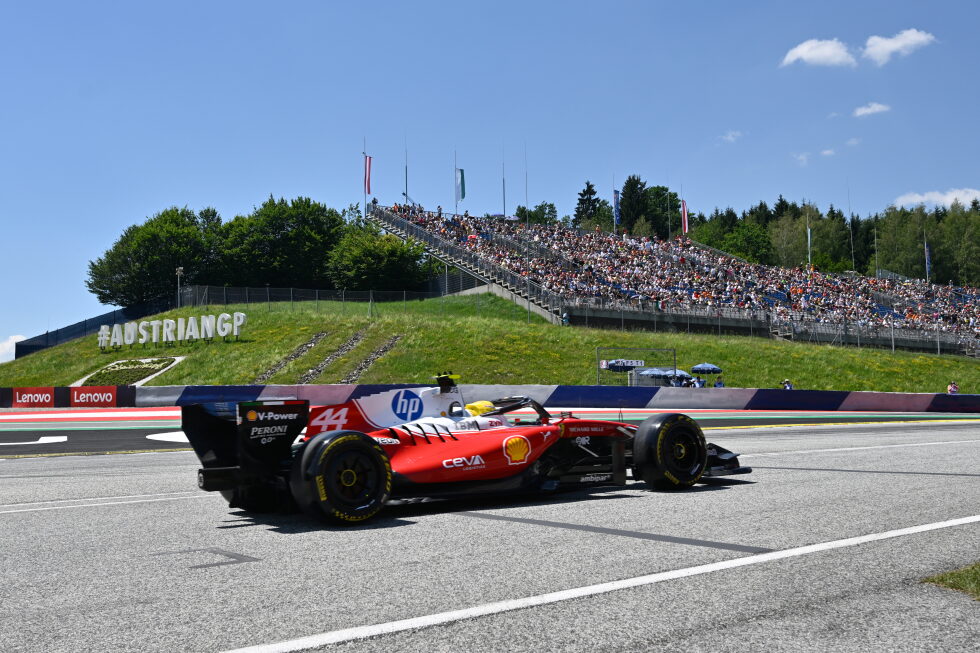
    The 2026 Formula 1 world championship battle has evolved into one of the most compelling generational clashes in the sport’s modern history, pitting 41-year-old veteran Lewis Hamilton against 19-year-old rising phenom Kimi Antonelli for the season’s biggest prize.

    Hamilton, who made history earlier this season by becoming Formula 1’s oldest race winner since 1950 with his victory at the Circuit de Barcelona-Catalunya, is now gunning for an unprecedented eighth world title. A win would cement his status as the sport’s oldest champion since 1957, capping a remarkable comeback year following his high-profile move to Ferrari. On the opposite side of the title fight, the teenage Italian Antonelli, driving for Mercedes, currently sits atop the drivers’ championship standings. If he maintains his lead through the final races of the season, he will secure his place as the youngest world champion in F1 history.

    This weekend’s Austrian Grand Prix, already classified as an official “heat hazard” event amid the record-breaking heatwave sweeping across Europe, will prove a critical turning point in the title race. Speaking ahead of the opening practice sessions, Hamilton made clear he was undaunted by the challenge ahead. “I’ve been here before. I know what I have to do, and there’s a long way to go,” the seven-time champion said. “We have a real battle on our hands, and it’s going to take everyone for the rest of the year to even come close to competing with (Mercedes), but I don’t think it’s impossible.”

    Antonelli wasted no time proving his title lead is well-deserved during Friday’s opening practice sessions, outpacing the entire field in both outings. In the first session, he led a Mercedes one-two finish, edging teammate George Russell by just 0.04 seconds. In the second session, he extended his advantage, beating McLaren’s Oscar Piastri by 0.237 seconds and Lando Norris by 0.325 seconds. Hamilton, meanwhile, posted a fifth-place finish in both sessions.

    Friday’s practice brought little joy for the Cadillac team, with Sergio Perez forced to stop on track during both sessions and Valtteri Bottas dealing with a small undercarriage fire that cut his running short.

    Hamilton’s surprise Barcelona win two weeks prior — his first victory for Ferrari after 18 months of underperformance and frustration — was the product of a perfect combination of clever race strategy, uncharacteristic reliability issues from Mercedes, and groundbreaking aerodynamic innovation from the Italian squad that rivals have already rushed to replicate. Ferrari has brought another upgraded power unit to Austria, signaling the team’s momentum is continuing to build.

    Russell, Antonelli’s Mercedes teammate and Hamilton’s former Mercedes teammate, admitted he had been caught off guard by the speed of Ferrari’s development under Formula 1’s strict cost cap regulations, but maintained his squad remains the team to beat. “At the end of the day, we’re still the team to beat. So this will be another good weekend to see if Ferrari are still on that good form or if that was a one-off,” Russell said. He added that critics who had written Hamilton off following his slow start at Ferrari were clearly wrong, saying: “For sure, he is a big threat. Ferrari are a huge threat. Kimi is still very much the driver out front and is performing really incredibly and consistently. Ferrari feel like they’re coming and Lewis is at the forefront of that.”

    For Antonelli, this weekend’s race at the Red Bull Ring is more than just another title round — it’s a chance to prove how far he has come in just 12 months. Three corners into the 2025 Austrian Grand Prix, a rookie mistake saw the teenager collide with Max Verstappen, ending both drivers’ races on the spot. Though Verstappen graciously accepted Antonelli’s apology, noting that every driver makes similar early-career errors, the points lost that day ultimately cost the four-time champion the 2025 title.

    That crash kicked off a disastrous summer stretch of results on European tracks for Antonelli, who later admitted he was overwhelmed by frustration. After Mercedes team principal Toto Wolff publicly described the teenager’s performance at his home Italian Grand Prix as “underwhelming”, widespread speculation emerged about the young driver’s future with the squad. Instead of breaking his confidence, however, the criticism pushed Antonelli to turn his season around. He used Wolff’s remarks as motivation to improve, scoring more points in the final eight races of 2025 than he had accumulated in the previous 16 rounds. That late-season form laid the groundwork for his breakout 2026 campaign that has put him in control of the championship fight.

    The Austrian round also brings ongoing uncertainty around Verstappen’s future, marking the third consecutive year the four-time champion has arrived at Red Bull’s home race without a clear long-term commitment. His current Red Bull contract runs through 2028, but includes clauses that would allow him to exit the team early. Speculation around his future has been fueled by long-rumored interest from Mercedes and public comments from Verstappen expressing frustration with the performance of 2026-specification cars, leading to questions about whether he could walk away from the sport entirely. In both 2024 and 2025, Verstappen eventually reaffirmed his commitment to the team that has supported him throughout his entire F1 career.

    Finally, controversy continues to simmer around the Monaco Grand Prix three weeks after the checkered flag fell, with final results still not confirmed. McLaren and Red Bull are both protesting the ruling that restored Alpine driver Pierre Gasly to third position after his time penalty was overturned. Multiple drivers received penalties after race officials misconfigured the circuit’s timing system, but only Gasly’s penalty was rescinded. If the original ruling is reversed, Red Bull’s Isack Hadjar would move up to third, with McLaren’s Piastri dropping to fourth.

  • Australia plans to strengthen laws banning children from social media

    Australia plans to strengthen laws banning children from social media

    Australia’s federal government is prioritizing legislative reforms to toughen a landmark national ban on social media use for children under 16, after mounting data and expert analysis confirmed the original policy has failed to block underage users from major platforms, Prime Minister Anthony Albanese has confirmed.

    First implemented last December 10, Australia’s ban was a global first — no other country had previously codified an age-based prohibition on under-16s holding social media accounts on major platforms including Meta-owned Facebook and Instagram, Alphabet’s YouTube, and ByteDance’s TikTok. But in the seven months since the rule took effect, overwhelming evidence has shown the policy has fallen far short of its goals. Leading the push for stronger powers, Australia’s top online safety regulator eSafety Commissioner Julie Inman Grant has already signaled she is considering taking major platforms to court for failing to meet their obligations under the current law.

    Speaking to Parliament Thursday, Albanese confirmed his administration is actively reviewing all options to strengthen the existing framework. “We’re working on that as a priority because this is something that other generations didn’t have to deal with, which is why it is complex,” he told lawmakers. In a follow-up interview with the Australian Broadcasting Corp. Friday, Albanese added that the government is assessing whether existing laws are robust enough, and whether Inman Grant’s office currently has full authority to enforce the ban effectively.

    Independent data backs up claims that the original ban is not working. Internal data released by the eSafety office in March found that 70 percent of underage Australian children still maintain active accounts on major platforms including Facebook, Instagram, Snapchat and TikTok. A separate study published Wednesday in the *British Medical Journal* went further, finding that 85 percent of Australian teens aged 12 to 17 continue to access platforms they are barred from using under current law.

    Lisa Given, an information sciences expert at Melbourne’s RMIT University, told the Associated Press that the government’s push for reform is a direct response to this overwhelming evidence of failure. “I do think it’s failing,” Given said. “Many kids in the media have reported that they also think that this is really a failed exercise.”

    The *Sydney Morning Herald* reported in early June that Inman Grant told a private interview that she currently lacks “potent powers” to enforce the ban, noting that “a regulator is only as good as the tools and the resources that they are given.” The AP requested comment from Inman Grant’s office Friday to verify the reporting, but did not receive an immediate response.

    Given explained that the current regulation puts the onus on platforms to take “reasonable steps” to remove underage accounts, but the law does not clearly define what qualifies as reasonable steps. If platforms fail to comply, they can face maximum fines of 49.5 million Australian dollars, equal to roughly $34 million U.S. — but enforcement has stalled without clear regulatory authority. “Either the eSafety Commissioner needs more powers or we’ve got to have some other approach to enforcement,” Given said, adding that courts will likely need to ultimately clarify what the law requires of platforms.

    Albanese confirmed that alongside strengthening the under-16 ban, the government will move forward with a broader digital duty of care law, which would hold social media companies legally accountable for foreseeable harms to users caused by platform content and algorithmic recommendation systems.

    Australia’s push to toughen age-based social media restrictions is part of a growing global trend. Just last week, the United Kingdom announced its own plans to ban children under 16 from most major social media platforms, framing the rule as a necessary protection for young people against harmful online content and excessive screen time. Canada, Brazil and Indonesia have already introduced similar age-based legislation or restrictions, while France, Spain, Denmark, Thailand and South Korea are all currently developing or studying comparable regulations to limit children’s social media access.

  • Asia stock markets slide as tech shares slump

    Asia stock markets slide as tech shares slump

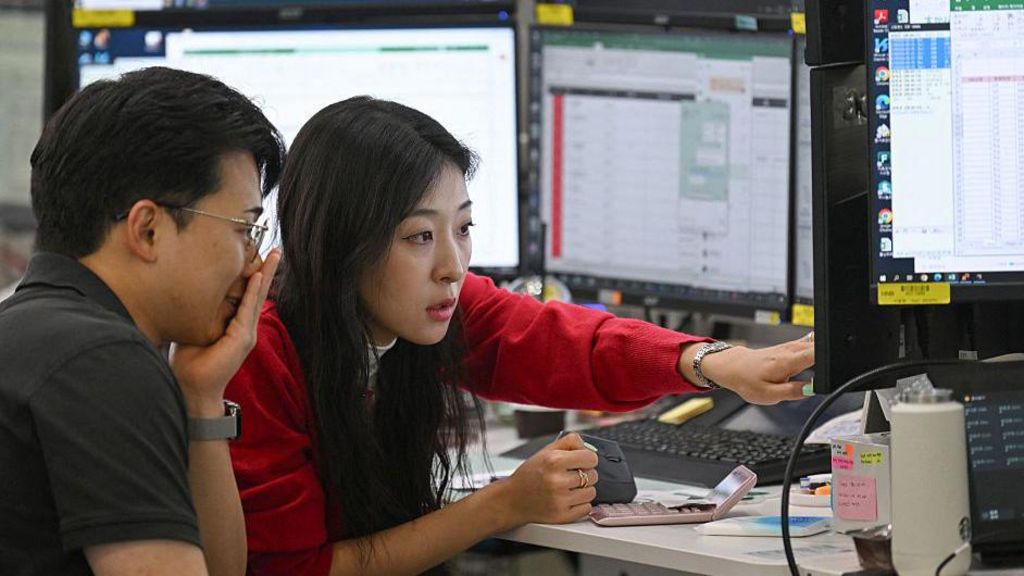
    A widespread sell-off across the technology sector dragged Asian stock markets into steep negative territory on Friday, as investors grew increasingly wary that the multi-month rally in tech shares had outpaced realistic fundamentals.

    The downturn rippled across the region, starting with severe declines in South Korea’s benchmark Kospi index. An 8% intraday drop triggered the market’s automatic circuit breaker mechanism, designed to stem panic-driven trading, halting all transactions for 20 minutes. By the closing bell, the index had settled 5.8% down. This marked the third time this week alone the circuit breaker has been activated, and the fifth such event in 2026, highlighting the extreme volatility that has gripped South Korean equity markets in recent months.

    Friday’s sell-off followed sharp declines in major U.S. tech stocks the previous session. Apple saw its share price plummet 6% on Thursday — its largest single-day drop in over 12 months — after the company announced it would hike prices for its iPad and MacBook product lines to offset skyrocketing computer chip manufacturing costs. Microsoft also recorded losses after it revealed price increases for its Xbox gaming consoles, blaming elevated component costs. These moves stoked broader market fears that rising input costs will dampen consumer demand for tech devices, which could in turn cool demand for semiconductors, undoing much of the recent growth the chip sector has enjoyed amid the AI boom.

    Japan’s Nikkei 225 was not spared from the downturn, closing 4% lower, led by a 12.5% plunge in shares of SoftBank, the Japanese investment giant that has positioned itself as a leading backer of AI startups and infrastructure. Major regional benchmarks in Taiwan and mainland China also posted double-digit percentage declines for the session, deepening the regional market rout.

    Market analysts point to two core drivers of the correction: escalating input costs across the tech sector and growing skepticism over lofty valuations for AI-focused companies. David Makaryan, senior partner at global investment firm Alpha Pacific Group, noted that many traders are moving to lock in profits after months of steady gains, while the broader market is reassessing how much growth AI investment will actually deliver. “The long term investment case for AI remains compelling, but investors are becoming far more selective about which companies can justify the valuations the market has assigned to them,” Makaryan explained.

    Concerns are also growing over the hundreds of billions of dollars that large tech firms have earmarked for AI infrastructure buildout this year. Raymond Woo, an analyst with Kyoto University Innovation Capital, pointed out that the steep costs of commercializing new AI tools are already being passed downstream to consumers. This dynamic “naturally raises questions” about whether consumer demand will scale fast enough to match the massive current investment in AI, and whether current tech stock valuations are rooted in realistic growth projections, Woo said.

  • Venezuelans hope online posts will bring news of missing after devastating earthquakes

    Venezuelans hope online posts will bring news of missing after devastating earthquakes

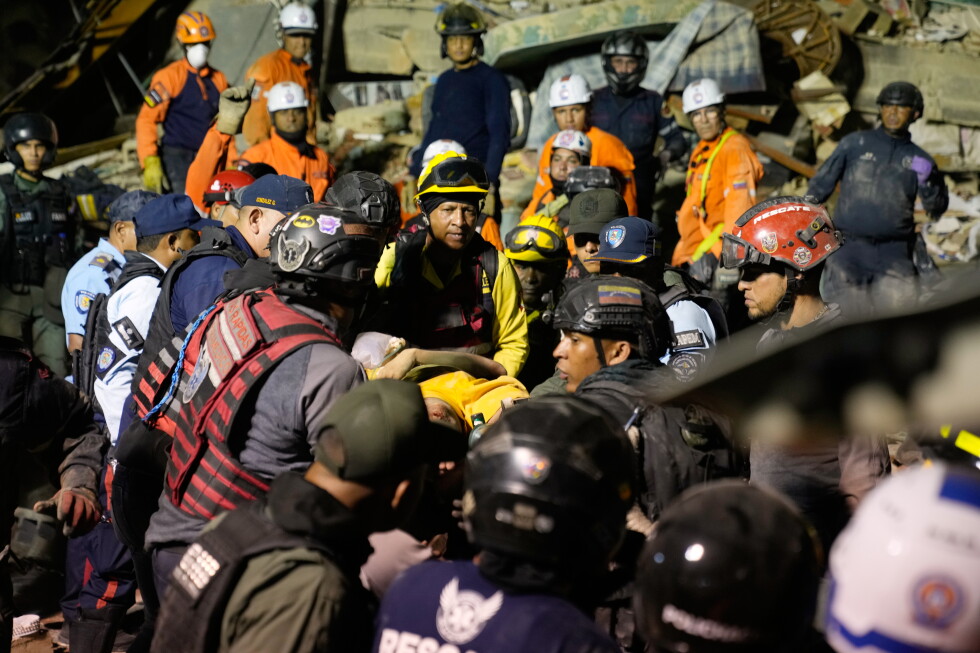
    Two massive back-to-back earthquakes, measuring magnitudes 7.2 and 7.5, struck Venezuela on Wednesday evening, leaving a trail of widespread destruction, hundreds dead, and thousands of families trapped in agonizing uncertainty as they search for missing loved ones. By late Thursday, Venezuelan Health Minister Carlos Alvarado confirmed the national death toll had climbed to approximately 235, with no fewer than 4,300 people recorded as injured. Experts note these quakes rank among the most powerful seismic events to hit the South American nation in over a century, and officials warn casualty numbers will likely continue to rise as rescue teams reach remote and hard-hit areas.

    Across hard-hit regions such as La Guaira state, located just north of the capital Caracas, rescue teams and local residents have been digging through the rubble of collapsed structures by hand, desperate to pull survivors from the wreckage. For thousands of relatives both inside Venezuela and among the 8 million Venezuelan migrants living abroad, broken and patchy communication infrastructure has turned social media and independent online registries into the only reliable lifeline for information about missing family members.

    Official government data on missing persons lags far behind crowdsourced independent records, which document as many as 40,000 unaccounted-for people across the country. Relatives have flooded platforms including WhatsApp, Facebook, and X with digital missing person flyers, pairing photos of their loved ones with last known locations and contact details in the hope that someone, somewhere, has information.

    One of those sharing appeals from abroad is 31-year-old Vanesa Marcano, who posted photos of her missing uncle and aunt from her home in Madrid. The couple, who reside in heavily damaged La Guaira, had been hosting their daughter and 7-year-old grandson, who were visiting from the United States. All four have not been heard from since the quakes struck. “It’s a feeling of impotence and uncertainty,” Marcano explained in a phone interview. “I know you must stay calm and focus on the actions you can take. But it’s very easy to fall into despair.” From thousands of miles away, she says she can do little more than share posts and wait for updates, even as she tries to stay calm for her 1-year-old daughter.

    For Venezuelans inside the country, the search effort was initially complicated by long-standing restrictions on social media platforms. Back in August 2024, then-President Nicolás Maduro had blocked access to X and messaging app Signal to suppress communication among opponents disputing his claim of victory in that year’s presidential election. By January 2025, Maduro was captured and removed from power by U.S. forces, with former Vice President Delcy Rodríguez stepping into the role of acting president, but the platform restrictions remained in place immediately after the quakes.

    On Thursday, the United Nations human rights mission to Venezuela issued an urgent public statement calling on the acting government to lift the social media blocks, noting that timely access to accurate, actionable information is a critical factor that can save lives in disaster response. Shortly after the U.N. appeal, access to X was restored for users within Venezuela, a shift that has already helped speed up the sharing of missing person appeals and rescue updates.

    In Catia La Mar, a northern coastal city hard hit by the quakes, Jhoyser Concalves lost contact with his partner and her daughter just minutes before the shaking began. It was the last conversation he would have with them. When the seismic activity stopped, Concalves rushed to their sixth-floor apartment, only to find the entire building reduced to rubble. He shared a missing person flyer on X and Facebook, holding out hope that his family will be found alive: “They are pulling people out of the building alive. So I still have hope that they are in there alive.”

    For the large Venezuelan diaspora, these platforms are an even more critical lifeline. Millions of Venezuelans who left the country in recent years have been unable to travel to the disaster zone to join search efforts, leaving them dependent on online updates. Elibel Tovar Lanas, a 38-year-old Venezuelan who has lived in Chile for 23 years, was scheduled to meet his 70-year-old father Saturday for their first reunion in a decade. His father, Félix Ramón Tovar Hernández, had been in La Guaira for business when the quakes hit, and Lanas has had no word of his fate since. “I feel powerless because I don’t know how this is affecting him: the shock, the decisions he’s having to make, whether he is physically okay, or even whether he is still alive,” Lanas said via WhatsApp from Chile. “Being in Chile makes it very difficult to get information, and everything we see feels confusing.”

    As rescue efforts stretch into a second day, families across Venezuela and across the globe remain stuck between fragile hope and crippling uncertainty, clinging to digital appeals as their best chance of finding their loved ones alive.

  • Ukraine unleashes one of its heaviest drone bombardments of Russia

    Ukraine unleashes one of its heaviest drone bombardments of Russia

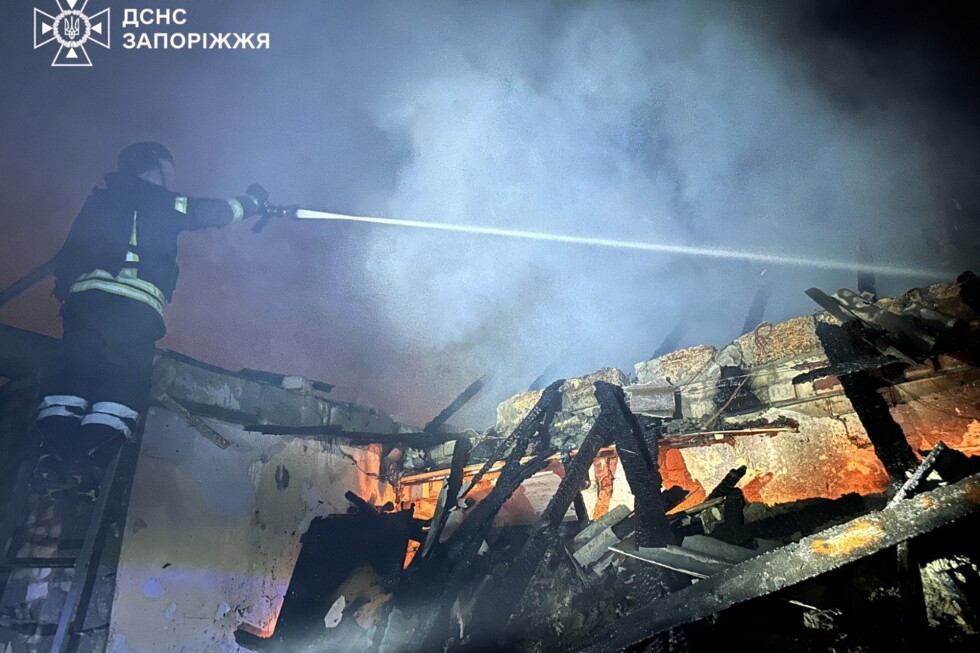
    In one of the most significant escalations of cross-border drone strikes since Russia launched its full-scale invasion of Ukraine in February 2022, Ukrainian forces launched a massive overnight drone attack targeting 12 Russian regions, the Russia-held Crimean Peninsula, and adjacent Black and Azov Sea areas, Russia’s Defense Ministry confirmed Friday.

    Russian air defense systems successfully intercepted 660 Ukrainian unmanned aerial vehicles in the assault, marking a clear jump from the previous record for a single Ukrainian drone attack in the past year: the 556-drone strike carried out on May 17. The scale of the operation underscores Ukraine’s accelerating campaign to strike deep behind Russian front lines in a bid to turn the tide of the grinding war of attrition that has defined much of the conflict.

    For months, Ukraine’s long-range drone campaign has targeted key Russian infrastructure, including oil production facilities and energy networks deep inside Russian territory. Western defense officials and independent analysts note that this sustained pressure has disrupted Russian fuel logistics and military supply chains, slowed Russian territorial advances on the battlefield, and increased political pressure on Russian President Vladimir Putin.

    In the hours leading up to the large-scale strike, Ukrainian President Volodymyr Zelenskyy announced on social platform X that he had ordered a 40-day intensification of offensive operations. The operation, Zelenskyy said, is intended to “compel Russia to end the war” after 12 months of U.S.-led peace diplomacy failed to produce any breakthrough toward a negotiated settlement. News of the successful strikes, which reached targets as far north as Moscow and St. Petersburg, has lifted morale across Ukrainian military and political circles.

    Zelenskyy also confirmed that he secured new pledges of foreign military support during his recent appearance at the G7 summit, including commitments from U.S. leadership. The Ukrainian leader stated that this promised assistance will enable Kyiv to further scale up its pressure campaign to push Russia to the negotiating table. A NATO summit scheduled for next month is widely expected to bring additional commitments of military support for Ukraine’s defense efforts.

    As initial reports of damage emerged from across Russia, official statements from Russian authorities have remained limited, in line with past practice of withholding details of targeted sites and the extent of destruction from Ukraine’s drone strikes. The first confirmed damage report came from Tula Governor Dmitry Milyaev, who said that a private home was damaged in the region south of Moscow, one civilian woman was wounded, and a power line and an unspecified industrial facility in the city of Novomoskovsk sustained damage. Independent Russian outlet Astra reported that the damaged industrial site is a local chemical plant, which caught fire after the strike, alongside a nearby hydroelectric plant. The Associated Press was unable to independently verify the unconfirmed claims, and no official confirmation of the chemical plant attack has been issued by Russian authorities. Moscow Mayor Sergei Sobyanin confirmed that 47 drones heading toward the Russian capital were downed, with no reported casualties or damage in the city.

    In a tit-for-tat escalation following Ukraine’s large-scale drone assault, Russian forces carried out retaliatory attacks across Ukraine over the preceding 24 hours. Overnight, Russian strikes on the northeastern Kharkiv region killed two civilians and wounded seven more, regional governor Oleh Syniehubov announced Friday. Russian forces used guided aerial bombs and a fleet of drones to strike the city of Kharkiv and 16 additional settlements across the region, Syniehubov added.

    Ukrainian air force officials reported that their air defense systems intercepted 174 out of 189 Russian drones launched in the retaliatory wave, but four out of seven Russian Iskander-M ballistic missiles penetrated Ukrainian defenses to strike multiple unspecified locations. Ukrainian officials confirmed that the Russian strikes caused damage to energy infrastructure, residential buildings, and other civilian sites in Kyiv, the southern Odesa region, and the northeastern Sumy region.

    More detailed coverage of the ongoing Russia-Ukraine conflict is available from the Associated Press at https://apnews.com/hub/russia-ukraine.

  • Quantum firms shun entanglement as Trump vows to outrun China

    Quantum firms shun entanglement as Trump vows to outrun China

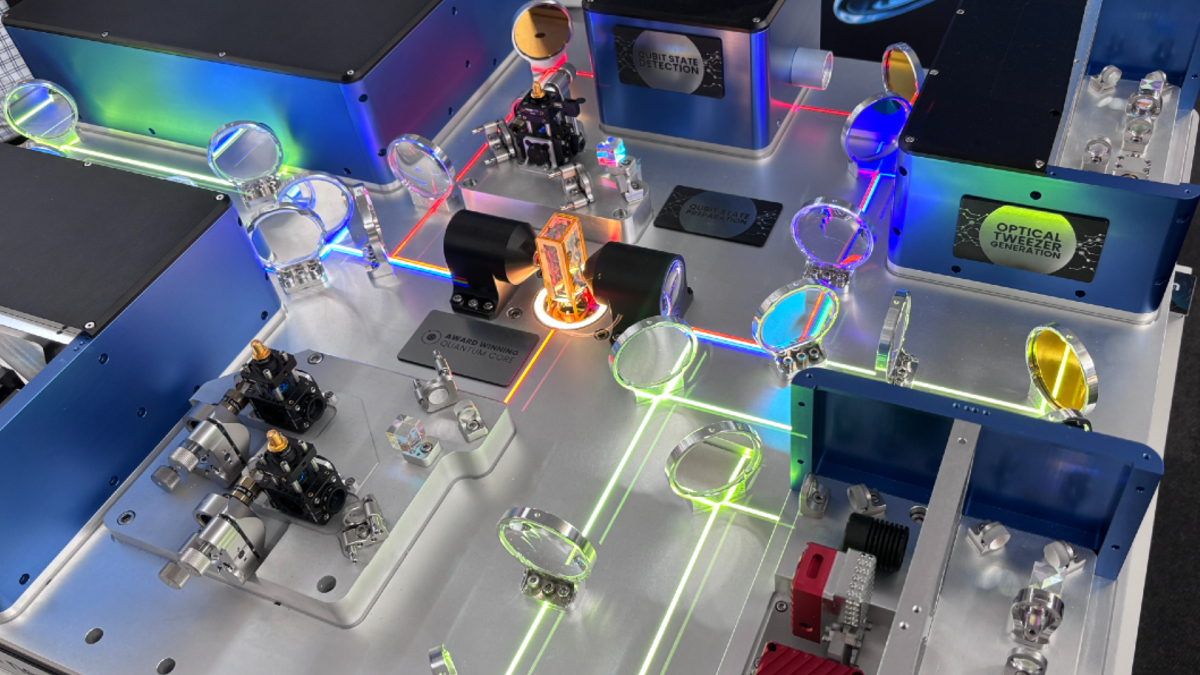
    As the United States and China deepen their competitive standoff over cutting-edge quantum technology, private sector players across the global quantum ecosystem are rapidly reshaping their operational models to avoid being swept up in geopolitical crossfire. Tactics range from building localized domestic manufacturing hubs to splitting regional operations into independent units that can serve non-Western markets without triggering regulatory penalties.

    While physicists in laboratories race to master quantum entanglement – the bizarre physical phenomenon that binds particles across unlimited distances – corporate leaders in boardrooms are working overtime to avoid a far messier entanglement: the geopolitical split between Washington and Beijing.

    The most recent major escalation came this week, when US President Donald Trump signed an executive order mandating that federal agencies reinforce domestic quantum supply chains and manufacturing capacity, update the country’s national quantum development strategy, and beef up counterintelligence protections for the emerging technology. The order frames international competitors, specifically labeled adversarial nations, as direct threats to America’s goal of retaining global quantum leadership.

    Against this shifting regulatory and geopolitical backdrop, quantum firms are adopting vastly different strategies based on their geographic positioning. US-headquartered companies are prioritizing local customers and localized supply chains, while European and British industry players are positioning themselves to capture market share in both allied and non-aligned nations. For Taiwanese companies, stuck between the world’s two largest superpowers, the priority is to build sovereign domestic quantum capabilities before tightening export controls close off the window for development entirely.

    Industry leaders gathered at the 2026 Commercializing Quantum Global conference in London, hosted by Economist Enterprise, shared their adaptive strategies with Asia Times on the event’s sidelines. Participants included executives from Quantum Computing Inc. (QCI), Infleqtion, and ORCA Computing, alongside a board advisor from major manufacturing giant Foxconn.

    Yuping Huang, chairman and CEO of publicly traded US quantum photonics firm QCI, explained that his company has prioritized building out domestic US manufacturing to mitigate geopolitical risk. “Right now, we are not subject to export control restrictions, but that could change. When there are restrictions, we just have to follow the rules,” Huang said in the interview. “Quantum technology is open. We should use the open approach to studying and commercializing quantum. The quantum industry can benefit from reduced interference from geopolitical factors.”

    QCI is currently expanding a thin-film lithium niobate foundry in Tempe, Arizona, to produce both active and passive photonic chips, part of a planned domestic manufacturing footprint that spans multiple US states. When asked about plans to launch a separate overseas division for non-Western markets, Huang noted the company has not yet considered that structure. A US citizen who graduated from the University of Science and Technology of China in 2004 before earning his PhD in quantum physics from Michigan State University, Huang founded quantum photonics startup QPhoton in 2020 before merging it with QCI in 2022, and he remains the firm’s largest single shareholder.

    For Infleqtion, a US-based neutral atom quantum technology firm, the strategy centers on clear alignment with allied security frameworks. Ryan Hanley, the company’s UK chief technology officer, told the outlet that Infleqtion only partners with allied nations, aligned with shared national security values, and is well integrated into the AUKUS security partnership between Australia, the UK, and the US. He acknowledged that China boasts one of the world’s largest state-backed quantum investment programs and can scale technology rapidly thanks to its concentrated strategic focus, but Infleqtion has opted to align exclusively with allied blocs rather than attempt to straddle both sides of the rivalry.

    To balance market access and regulatory compliance, Hanley added that the firm has structured its UK and US operations as fully independent entities. This split structure allows products developed in the UK to be sold to a wider range of markets than those permitted under US export control rules. “That is a conscious business decision to do things separately, such that we can serve different parts of the market because of that export control,” he explained.

    The trend of US export restrictions on quantum technology has built incrementally over the past two years. During the Biden administration, Washington moved to cut off China’s access to advanced quantum tools, implementing export controls on quantum computers, critical components and related software in September 2024, followed by a ban on most US investments in China’s quantum sector that took effect in January 2025. In March 2025, the Trump administration added roughly 80 companies to its US export blacklist, more than 50 of which are Chinese, including six subsidiaries of Inspur Group that were accused of acquiring US technologies to advance military AI and quantum development. On May 21, 2026, the administration announced $2 billion in federal incentives through the CHIPS and Science Act for nine domestic quantum companies, including $1 billion for IBM to build a quantum-grade superconducting wafer foundry and $375 million for GlobalFoundries to establish a domestic quantum manufacturing facility.

    Speaking at the London conference, Ann Dunkin, a distinguished professor at the Georgia Institute of Technology and former chief information officer at the US Department of Energy, argued that the US faces structural challenges in the quantum race that go far beyond a lack of funding. “The US is very good at innovation, but not scaling things, and so we need to get in early to scale, or China will outpace us,” she said. “China is very good at scaling things, and you have seen industries where we have lost that battle.”

    Dunkin added that Western control of quantum manufacturing capacity is a critical strategic priority: “We want to be in a position where if there are going to be a handful of global foundries, we want the West to have that handful, or at least some of that handful. From a geopolitical standpoint, we run the risk otherwise of the same problem we have right now in many technologies, where we are dependent upon China for high-tech goods.”

    Multilateral cooperation among Western aligned nations has already formalized in recent years. In July 2024, the US and nine allied nations launched the Quantum Development Group (QDG) to coordinate quantum policy and build resilient cross-border supply chains. The bloc expanded to 13 members during its fourth meeting in Tokyo in September 2025, and at its fifth meeting in London in March 2026, members committed to deeper collaboration on research security, supply chain resilience, and global quantum standards development. Current QDG members include Australia, Canada, Denmark, Finland, France, Germany, Japan, Korea, the Netherlands, Sweden, Switzerland, the UK, and the US.

    Manjari Chandran-Ramesh, a partner at global deep-tech investment firm Amadeus Capital, expressed hope that geopolitical rivalry would remain background noise rather than a permanent barrier to industry progress, pointing to the QDG as proof that multilateral quantum cooperation remains achievable. She noted that European firms are uniquely positioned to benefit from the US-China split, thanks to robust research and manufacturing clusters across the continent that can support multiple qubit technology modalities. The existing foundry ecosystem anchored by institutions like Belgium’s imec, France’s CEA-Leti, and Finland’s VTT gives Europe the flexibility to serve a wide range of quantum hardware developers across different technology paths, she added.

    London-based photonic quantum computing firm ORCA Computing embodies the European open market approach. Co-founder and CEO Richard Murray noted that US policy has increasingly prioritized domestic firms and focused investment on homegrown players, while the UK’s framework is far more open to global participation. “The UK’s approach is better because it’s much more open,” Murray said. “The UK’s target is to attract globally leading quantum companies to build their systems in the UK, as well as supporting UK companies.”

    ORCA positions itself as a competitive global player in this open market, with existing customers spanning allied nations across Europe, North America, and Asia, including the UK Ministry of Defense, the UK National Quantum Computing Center, Poland’s Poznan Supercomputing and Networking Center, and Montana State University in the US. The firm recently notched a major commercial milestone, deploying its PT-2 photonic quantum system at a major Japanese enterprise in partnership with trading house Toyota Tsusho. The company calls the installation the world’s first commercial deployment of a quantum computer in a live enterprise setting; the PT-2 fits in standard 19-inch server racks, requires no specialized cryogenic cooling, and was fully deployed in less than a week.

    While the US builds restrictive regulatory frameworks to limit Chinese quantum progress, Beijing is investing heavily to build out a fully domestic quantum ecosystem, from academic research to commercial deployment. Guo Guoping, a professor at the University of Science and Technology of China and secretary-general of the Chinese Computer Federation’s quantum computing committee, noted last year that tightened export controls on quantum chips and semiconductor manufacturing equipment from the US and Netherlands have made full indigenous development of the entire quantum technology chain a core strategic necessity for China.

    No region faces a more complicated balancing act than Taiwan, which is cut off from China’s quantum ecosystem by political tensions and excluded from the QDG’s allied framework, forcing it to pursue quantum development largely independently. Ching-Ray Chang, a board member at Taiwan-based manufacturing giant Hon Hai Precision Industry (better known as Foxconn) and director of the quantum information center at Taiwan’s Chung Yuan Christian University, said the geopolitical context for quantum development is fundamentally different from the era when Taiwan built its world-leading semiconductor industry.

    “Fifty years ago, when Taiwan started to make semiconductors, there was no classification at all. Everybody shared the knowledge with each other. But right now, even though you can pay money, sometimes you cannot get any technology transfer,” Chang explained. “Every country is trying to build its own quantum technology because this is some kind of sovereignty issue. You need to develop and control many things yourself; you cannot rely on others. Not only the patents, but also the production.”

    Chang acknowledged that Taiwan was late to enter the quantum race, as all of its top talent, capital, and resources remained tied to its dominant semiconductor industry, but the Taiwanese government and major local firms including Foxconn have already begun pouring investment into the sector. While Foxconn remains in an early development stage relative to global leaders, the firm plans to launch a prototype quantum computer as early as 2027.

  • Reflecting Pool liner cut with sharp knife or razor, National Park Service says

    Reflecting Pool liner cut with sharp knife or razor, National Park Service says

    One of Washington DC’s most iconic national landmarks, the Lincoln Memorial Reflecting Pool, has unexpectedly become a flashpoint of political controversy after official court documents confirmed deliberate vandalism to its newly renovated structure earlier this month. The National Park Service (NPS) has publicly detailed the extent of the damage for the first time in a legal filing tied to an ongoing lawsuit over the site, ending weeks of conflicting claims about the incident.

    According to Frank Lands, NPS Deputy Director of Operations, the damage was first reported to U.S. Park Police on June 9. The incident targeted the newly installed tinted polyurea liner, a core component of the multimillion-dollar rehabilitation project ordered by the Trump administration to prepare the site for the United States’ 250th founding anniversary. Court documents confirm the liner’s foam sealant was deliberately cut with a sharp-edged tool such as a knife or razor, in addition to the delamination and destruction of surface coating. Offenders also dumped roughly 70 removed fence post tops into the pool’s waters. Notably, the filing does not specify an exact timeline for the vandalism nor name any persons of interest connected to the act.

    The renovation work that wrapped up in June after two months of construction was designed to resolve decades of persistent problems plaguing the 1920s-built basin, which stretches 2,030 feet between the Lincoln Memorial and Washington Monument. Chronic issues including persistent leaks, decaying infrastructure, outdated pipe systems, recurring algae overgrowth and accumulated bird waste prompted the full rehabilitation. The new liner was specifically installed to waterproof and protect the pool’s aging concrete base. However, just days after the basin was refilled following construction, new problems emerged: widespread algal blooms turned the clear water murky, and the custom deep blue bottom paint began chipping and peeling across large sections.

    Weeks before the NPS released its official court filing, former President Donald Trump first brought the incident to national attention, claiming vandals had left a 300-foot gash in the liner and even added fertilizer to the water to spur the algal bloom. During a question-and-answer session with CBS News, Trump pledged to provide evidence backing up the allegations in court, putting public pressure on federal officials to release official details of the damage.

    To date, U.S. Park Police has made five arrests tied to vandalism of the Reflecting Pool, with five additional individuals receiving federal citations for unauthorized activity at the site. The damage disclosure comes as part of a lawsuit filed by a non-profit organization that aims to halt the Trump administration’s renovation work on the historic landmark, marking the first public confirmation of the vandalism on official government record.

    Moving forward, NPS has scheduled a second draining of the pool immediately after Independence Day celebrations on July 4. This post-holiday closure will allow engineering teams to conduct a full assessment of the liner damage, complete necessary repairs and resolve the ongoing paint and algae issues that have marred the newly completed project. As of June 21, public photos already showed visible chipped paint and algal growth across the pool’s surface, turning a landmark beloved by millions of visitors annually into an unexpected global talking point.

  • Myanmar torches $600 million in seized heroin, meth and other drugs

    Myanmar torches $600 million in seized heroin, meth and other drugs

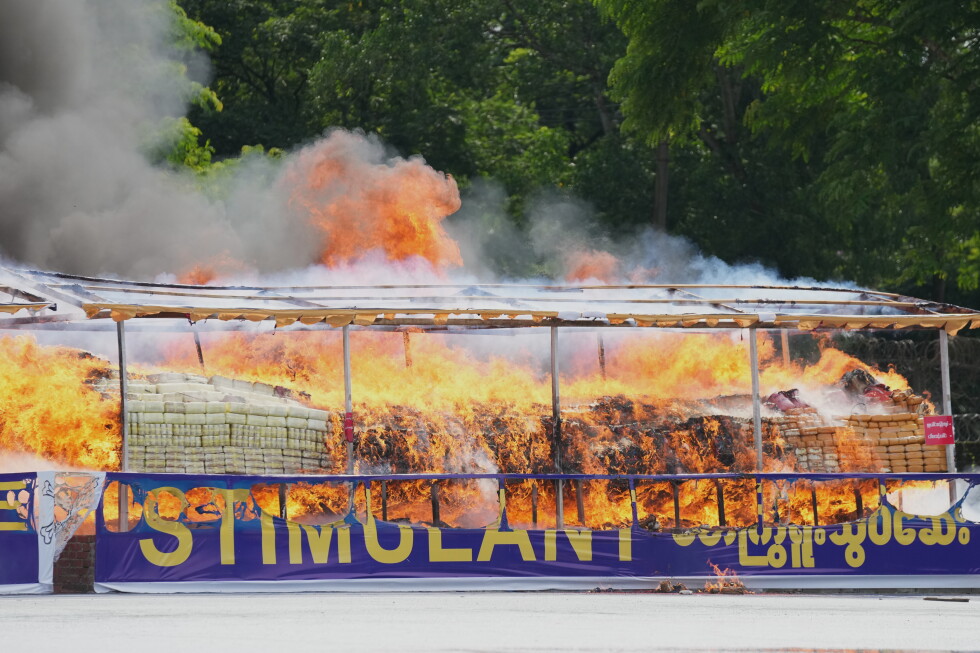
    YANGON, Myanmar – On Friday, towering plumes of black smoke rose over the outskirts of Myanmar’s most populous city as authorities incinerated more than 50 tons of seized illicit narcotics to mark the United Nations’ International Day Against Drug Abuse and Illicit Trafficking. The destroyed drugs, which included heroin, opium, ketamine, methamphetamine, marijuana and crystal meth, carried a combined street value of roughly $600 million across all destruction events held nationwide. Of that total, $321 million worth of 31 distinct types of narcotics were burned at the Yangon site alone, according to Police Lieutenant Colonel Aung Myat Soe of Yangon’s Anti-Narcotics Police Force. Speaking to reporters at the bus station compound on Yangon’s edge where the burning took place, Aung Myat Soe noted that the 2024 total street value of destroyed drugs is more than double the amount destroyed in 2023. Parallel drug destruction ceremonies were also hosted in Mandalay and Taunggyi, the capital of eastern Myanmar’s Shan State – regions located much closer to the country’s major drug production hubs.

    Myanmar has long grappled with large-scale illicit drug production, a crisis deeply tied to decades of political instability and economic uncertainty rooted in ongoing armed conflict across the country. For generations, the nation has ranked among the world’s top producers of heroin and methamphetamine, and it remains a primary supplier of illegal narcotics to markets across East and Southeast Asia, even after repeated government crackdown attempts.

    Drug production has accelerated sharply since the 2021 military coup that ousted the democratically elected government led by Aung San Suu Kyi, experts confirm. The coup plunged the country into a widespread civil war that pits the military-run State Administration Council against pro-democracy opposition forces and a coalition of ethnic armed organizations, most of which control large swathes of territory outside central government rule. In early 2024, the military government announced that it had carried out the largest illicit drug seizure in Myanmar’s recorded history, confiscating vast amounts of narcotics and drug manufacturing equipment from 12 production sites during raids across northern Shan State.

    The military government asserts that ethnic militias operating in contested border regions rely on the illegal drug trade to fund their insurgencies against state forces, and have little incentive to join national peace negotiations because of the massive profits the trade generates. While the military’s claim holds true for many armed groups, it is not universal: some anti-government factions have also carried out their own anti-narcotics operations. The Ta’ang National Liberation Army (TNLA), an ethnic armed group that seized large sections of northern Shan State during early civil war offensives before agreeing to a ceasefire with the military in October 2023, announced Thursday it would destroy approximately $5.5 million worth of seized narcotics in areas under its control. The 2024 general election held earlier this year, which the military won by a landslide, was widely dismissed by international observers as neither free nor fair, given that all major opposition groups were barred from participating and widespread voter intimidation was reported.