博客

  • Australia and Fiji seal a new mutual defense pact in a push to counter China in the Pacific

    Australia and Fiji seal a new mutual defense pact in a push to counter China in the Pacific

    In a significant development reshaping geopolitical dynamics in the South Pacific, Australia and Fiji have formalized two landmark bilateral agreements, marking the second major diplomatic breakthrough for Australian Prime Minister Anthony Albanese’s administration in its efforts to counter growing Chinese influence across the region within a 12-month period.

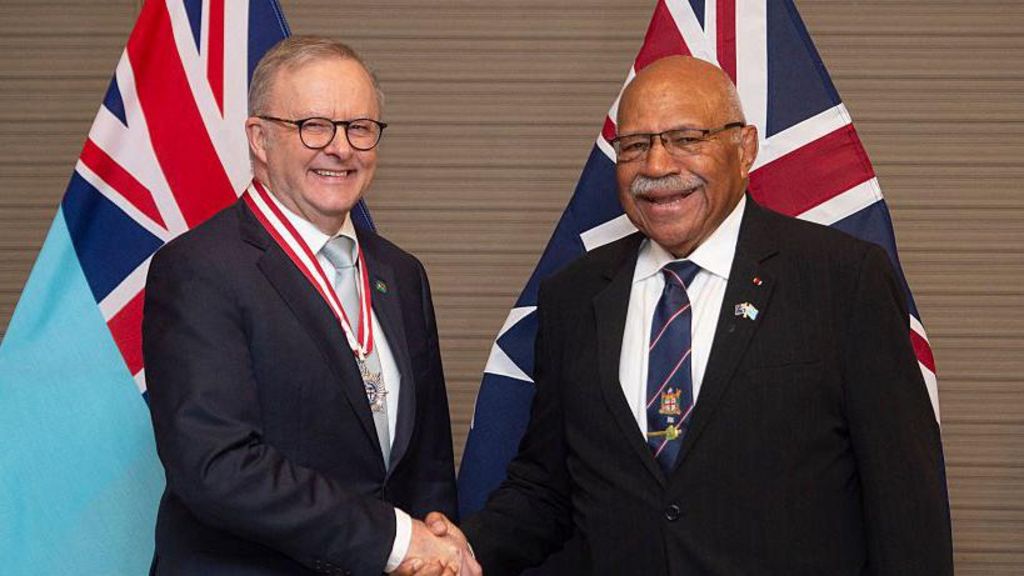
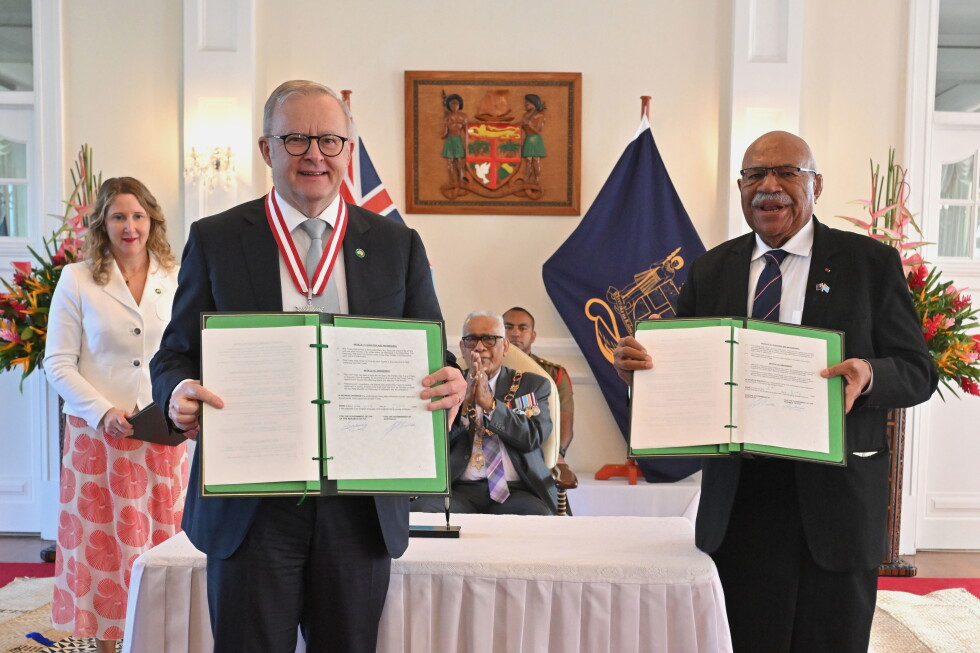
    The signing ceremony took place in Fiji’s capital city of Suva, where Albanese and Fijian Prime Minister Sitiveni Rabuka put pen to paper on the historic Ocean of Peace Alliance — Fiji’s first ever binding mutual defense treaty, and Australia’s fourth such defense agreement globally. The two leaders also signed the Vuvale Partnership, an economic cooperation treaty that commits Australia to injecting more than 1 billion Australian dollars, equivalent to roughly $693 million, into Fiji’s economy over the next decade.

    Addressing reporters following the signing, Albanese emphasized the core commitment enshrined in the defense pact: “The Ocean of Peace Alliance introduces a mutual defense obligation, and there is no higher obligation than to come to each other’s aid at a time of need.”

    Rabuka, for his part, downplayed expectations of harsh pushback from Beijing over the new agreements. He stressed that the pacts do not undermine either nation’s existing diplomatic and economic ties with China. “I do not expect China to have any severe pushback on either government. And I believe that they will welcome the understanding that is between Australia and Fiji,” Rabuka told journalists. “It does not threaten Fiji’s relationship with China nor Australia’s relationship with China.”

    The new agreements are built on three foundational pillars: deepened security collaboration, closer economic integration, and stronger people-to-people connections between the two nations. Rabuka framed the pacts as a clear statement of shared purpose amid growing global instability: “This is a clear affirmation of Australia’s sustained commitment to the stability, resilience and prosperity of the Blue Pacific region at a time of global uncertainty. These treaties reflect our shared understanding of the evolving and interconnected challenges that are facing our region.”

    The flurry of new security agreements across the South Pacific comes in response to a 2022 secretive security deal between China and the Solomon Islands, a pact that sparked widespread international concern over the potential for China to establish a permanent naval presence in the region. Since that deal was reached, Australia has moved aggressively to solidify its position as the preferred security partner for Pacific island nations.

    Following his visit to Fiji, Albanese is scheduled to travel to the Solomon Islands on Tuesday to hold talks with new Prime Minister Matthew Wale, whose administration announced last month that it would conduct a full review of the 2022 security agreement with China. The two governments have already agreed to open new negotiations on a bilateral security pact between Canberra and Honiara.

    Later this week, Albanese will host the leaders of Papua New Guinea and Tonga in the Australian city of Brisbane. Wednesday will mark the official entry into force of Australia’s bilateral defense treaty with Papua New Guinea, signed last year as Canberra’s third major defense pact.

    The flurry of diplomatic activity follows just one week after Australia and Vanuatu signed a long-delayed bilateral security and economic agreement, the Nakamal Agreement, which includes provisions intended to block China from establishing a military outpost on Vanuatu’s territory. The deal was finalized nine months after the Vanuatuan government rejected an earlier draft, over concerns that the original text would limit the island nation’s ability to attract critical infrastructure investment from global sources. Following the signing of the Nakamal Agreement, China publicly expressed concern that the pact was specifically designed to counter Beijing’s growing influence in the region.
  • Another Philippine senator arrested on allegations of large-scale plunder

    Another Philippine senator arrested on allegations of large-scale plunder

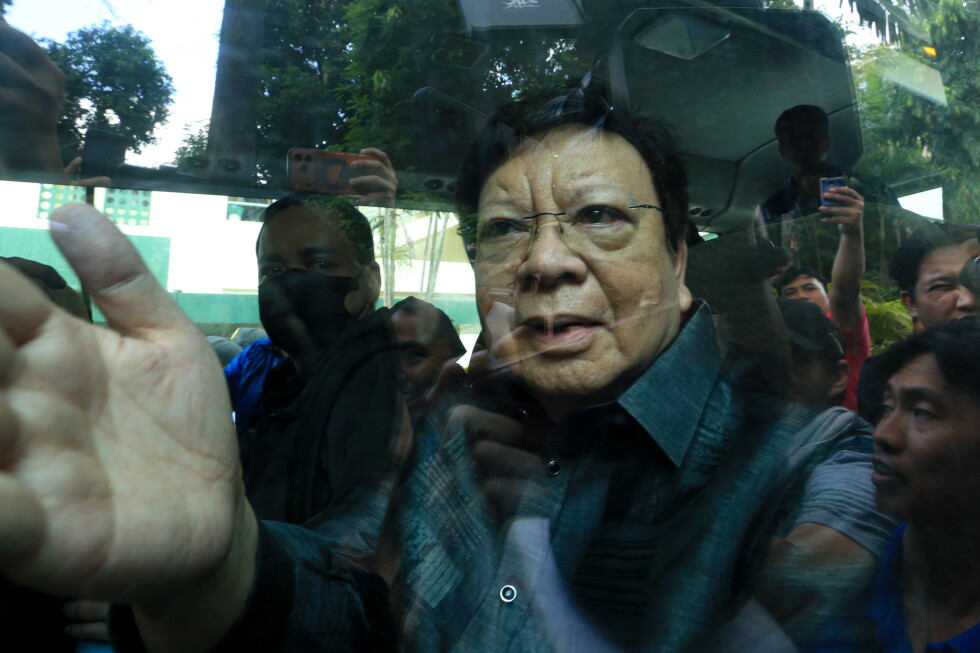
    MANILA, Philippines — A second Philippine senator has been taken into custody on non-bailable plunder charges, marking the latest high-profile detention of a top legislator in a sweeping corruption crackdown that has unfolded over the past month and shaken the country’s political landscape.

    Seventy-one-year-old Sen. Rodante Marcoleta, a veteran lawyer who has repeatedly denied all allegations against him, was taken into police custody Monday at the Sandiganbayan, the country’s specialized anti-graft court, located in Quezon City, a Manila suburb. Marcoleta appeared at the court alongside his legal team, where he intended to challenge the charges filed against him and request a delay to his arrest warrant.

    Following the court’s ruling to approve the arrest order, Marcoleta told waiting reporters outside the courtroom that all parties must abide by judicial process. “Let’s respect that,” he said, before being escorted away by law enforcement officers. Under Philippine law, plunder charges do not qualify defendants for bail, meaning Marcoleta will remain in custody throughout his trial.

    The arrest comes days after the country’s Office of the Ombudsman, the independent anti-corruption prosecutorial body, formally filed the plunder charge against the senator. Prosecutors allege Marcoleta received roughly 75 million Philippine pesos, equivalent to $1.2 million, in unreported campaign contributions from three political supporters. The funds were never disclosed on the mandatory asset declaration forms that all public officials are required to file under Philippine law.

    Marcoleta is a prominent member of the Iglesia ni Cristo (Church of Christ), a powerful influential religious organization known for its ability to mobilize mass demonstrations. In a show of force ahead of the arrest, the group organized a three-day rally drawing more than 15,000 members at a key democracy monument along Manila’s busiest arterial highway. The demonstration snarled rush-hour traffic across the capital region for days, creating widespread disruption. The protest was large enough to prompt President Ferdinand Marcos Jr. to cancel two scheduled official outings on Tuesday, citing security concerns related to the demonstration.

    Marcoleta’s arrest comes just over a month after another high-profile detention: his political ally, Sen. Jinggoy Estrada, was also arrested and detained on a non-bailable plunder charge last month. Estrada, 63, stands accused of accepting more than 570 million pesos ($9.3 million) in kickbacks from a government flood-control infrastructure project. The allegations against him were brought forward by a former public works department engineer, which Estrada has vehemently denied.

    Both Marcoleta and Estrada are long-time political allies of former Philippine President Rodrigo Duterte and his daughter, Vice President Sara Duterte. Their detentions come as the Philippine Senate, acting as an impeachment court, prepared to convene Monday to begin the impeachment trial of Sara Duterte. The impeachment case was forwarded to the Senate in May after an overwhelming majority vote in the House of Representatives approved moving the case forward. Sara Duterte has denied all allegations against her, which include charges of amassing undeclared personal wealth and making public threats to assassinate President Marcos Jr.

    The string of legal actions against Duterte-aligned politicians does not end with the two detained senators. A third Duterte loyalist, former national police chief and current Sen. Ronald dela Rosa, has remained in hiding since the International Criminal Court issued an arrest warrant for his role in the former president’s brutal anti-drug crackdown. Dela Rosa is named as a co-perpetrator alongside Duterte in the mass killings of mostly low-income suspected drug users and dealers that took place during the crackdown, which Dela Rosa oversaw as national police chief. Duterte himself was arrested last year on the ICC’s orders and extradited to the Netherlands, where he is scheduled to stand trial starting November 30 on charges of crimes against humanity.

  • Nine killed in Russian strikes on Kyiv on eve of Nato summit in Turkey

    Nine killed in Russian strikes on Kyiv on eve of Nato summit in Turkey

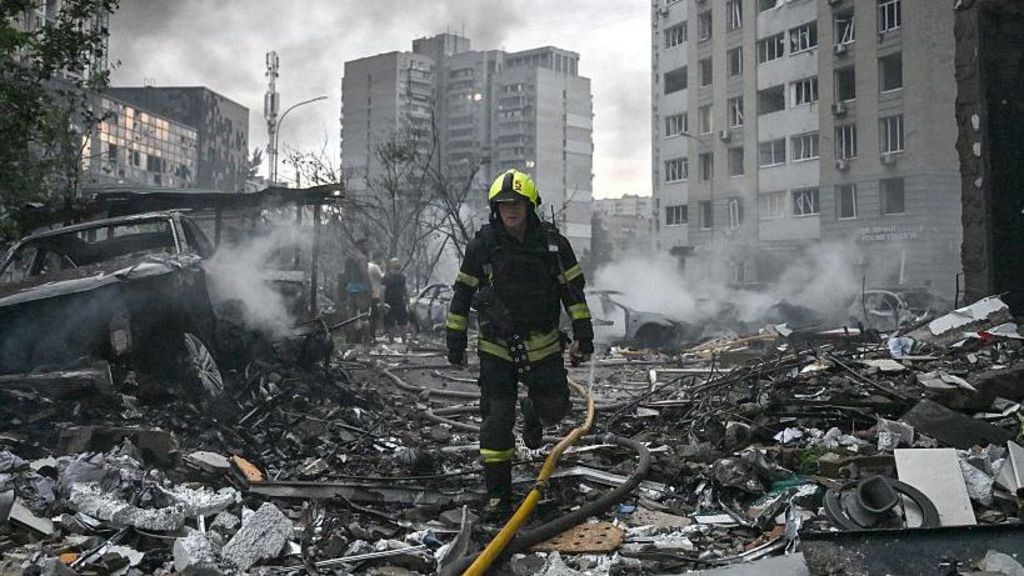
    Rescue teams in the Ukrainian capital Kyiv are working tirelessly at dawn on Monday to extract trapped survivors from the rubble of bombed residential buildings after the second major Russian missile assault on the city in just one week. Monday’s attack claimed the lives of at least nine people and left 46 others wounded, including at least five children, according to Kyiv’s top military administrator Timur Tkachenko.

    The coordinated missile barrage comes just 24 hours before the much-anticipated NATO summit scheduled to open in Turkey, where Ukrainian President Volodymyr Zelenskyy is set to hold high-stakes bilateral talks with U.S. President Donald Trump. In a prescient warning issued just hours before Monday’s strikes, Zelenskyy cautioned that Russian forces were planning a follow-up massive attack on Kyiv, just days after an earlier assault on Thursday killed 30 people across the capital.

    Kyiv Mayor Vitaly Klitschko confirmed that Russian ballistic missiles impacted multiple locations across the city, sparking destructive blazes in several multi-story residential apartment complexes. Beyond civilian housing, the strikes also left warehouses and a local garage workshop heavily damaged. Visual evidence from the capital shows smoldering wreckage scattered across affected neighborhoods, with charred civilian vehicles abandoned along city streets. Footage captured on Monday morning shows emergency response crews systematically searching through collapsed building rubble for any remaining trapped survivors.

    Thursday’s initial wave of Russian attacks, which included a combination of drones and missiles, forced tens of thousands of Kyiv residents to flee to underground metro stations for shelter as air raid sirens wailed across the city through the early hours of Friday. Ukrainian officials have repeatedly condemned Russia for intentionally targeting civilian infrastructure in these attacks, a charge Russia has denied. Moscow maintains that all of its strikes are aimed exclusively at military and energy-related targets, framing the recent assaults as retaliation for what it says are recent Ukrainian attacks on Russian power stations and energy infrastructure inside Russian territory.

    Cross-border strikes targeting energy infrastructure continued over the weekend: overnight, power services in Sevastopol, a port city located on Russia-occupied Crimean Peninsula, reported temporary full power outages across the city.

    In the lead-up to the NATO summit, Zelenskyy has stepped up pressure on Western allies to speed up deliveries of long-range missiles that Ukraine can use to counter Russian offensive operations. In a post on the social platform X, Zelenskyy emphasized the human cost of delayed military support, writing: “Any delay with missiles for our air defense… means the loss of lives, and it encourages Russia to continue the war.” The Ukrainian leader has also made a formal request to the United States to grant manufacturing licenses that would allow Ukraine to produce its own Patriot air defense missiles domestically.

  • Australia to spend $1bn as it signs new defence alliance with Fiji

    Australia to spend $1bn as it signs new defence alliance with Fiji

    In a major step to expand its strategic footprint across the Pacific Islands region, Australia has formally signed a new defense pact with Fiji, establishing the Ocean of Peace Alliance that marks Canberra’s fourth formal security alliance in the region, following existing partnerships with the United States, New Zealand, and Papua New Guinea. For Fiji, the agreement represents its first ever formal defense alliance with another nation.

    Australian Prime Minister Anthony Albanese announced that the 10-year pact will be supported by more than AUD 1 billion in Australian government funding, earmarked for countering transnational crime, upgrading Fiji’s public health infrastructure, and advancing general development projects across the island nation. Albanese described the agreement during the signing ceremony alongside Fijian Prime Minister Sitiveni Rabuka as “one of the most significant endeavours” Canberra has pursued with any partner nation.

    Rabuka characterized the historic signing as a “defining moment” for bilateral ties between the two countries, noting that it represents a substantial upgrade to the long-standing relationship between Suva and Canberra. When questioned by reporters about potential pushback from Beijing over the new alliance, Rabuka struck a measured tone, stating that he believed China would welcome the new understanding between Australia and Fiji. “It does not threaten Fiji’s relationship with China nor Australia’s relationship with China,” Rabuka told the Australian Broadcasting Corporation in official remarks following the signing.

    This new alliance comes as Australia has accelerated its diplomatic and security outreach across the Pacific in response to shifting regional dynamics, particularly after China signed a landmark security pact with the Solomon Islands in 2022. That agreement sparked widespread concern in Canberra that Beijing could eventually establish a permanent military presence in the region, prompting Australian leaders to prioritize strengthening ties with Pacific island nations.

    Just one week before the Fiji alliance signing, Albanese concluded months of negotiations to sign Australia’s first ever comprehensive strategic agreement with Vanuatu. That deal designates Australia as Vanuatu’s primary international policing partner and includes an explicit clause banning any foreign power from establishing a military base on Vanuatuan territory.

    Albanese’s current Pacific tour will next take him to the Solomon Islands on Tuesday, where he is scheduled to hold talks with newly elected Prime Minister Matthew Wale on a new bilateral treaty. He will also make history as the first foreign leader to attend the Solomon Islands’ annual independence day celebrations. Wale, who took office after winning election in May, has long been an open critic of the 2022 China-Solomon Islands security pact and first floated the idea of a new regional security arrangement during a visit to Canberra last month.

    Following his trip to the Solomon Islands, Albanese will return to Australia to host the leaders of Tonga, Samoa, and Papua New Guinea in Brisbane on Wednesday. The summit will mark the official entry into force of the PukPuk security treaty between Australia and Papua New Guinea, which was originally signed last October. That agreement grants Australian military forces access to PNG defense facilities and allows up to 10,000 Papua New Guinean personnel to serve in Australia’s armed forces.

    The recent string of new security agreements aligns with public comments from senior Australian officials framing the country’s posture in the Pacific. Last month, Australian Foreign Minister Penny Wong openly acknowledged that Australia and China are engaged in a “permanent contest in our region”, underscoring the strategic context driving Canberra’s accelerated diplomatic push across the Pacific islands.

  • Prince Harry’s UK trip sparks media buzz over whether Meghan and kids will join him

    Prince Harry’s UK trip sparks media buzz over whether Meghan and kids will join him

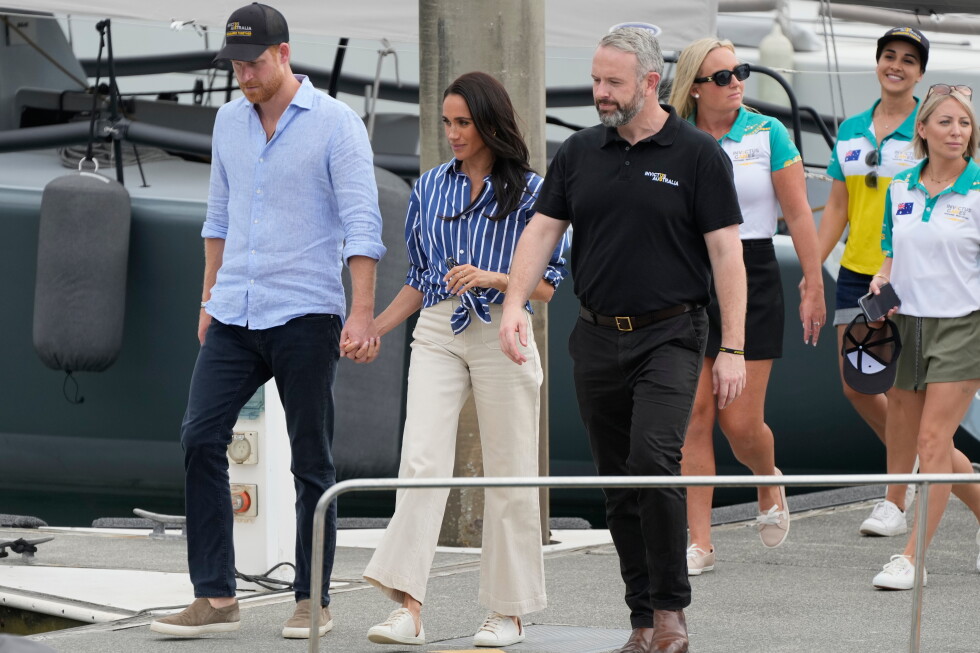
    LONDON – As Britain prepares for Prince Harry’s long-awaited return to his home country this week, British media has erupted with fevered speculation, far overshadowing the official charitable purpose of his trip. The Duke of Sussex is set to kick off a slate of charity engagements on Tuesday, timed to mark one year out from the Invictus Games — the adaptive sporting event he founded to support wounded military veterans across the globe in their recovery journeys. But for royal observers and tabloid outlets alike, the charity work has become secondary to two burning questions: will his wife Meghan Markle join him, and more critically, will their two young children, Prince Archie and Princess Lilibet, travel to the UK to build a relationship with their grandfather, King Charles III?

    That question remains completely unresolved, tied directly to a years-long dispute over state-funded security protection for Harry and his family. Since Harry and Meghan stepped back from formal working royal roles and relocated to California six years ago, the British government has held that the prince no longer qualifies for publicly funded police protection, with security arrangements assessed on an individual, trip-by-trip basis, consistent with protocols for any high-profile public figure. The final ruling on Harry’s latest request for protection falls to the Royal and VIP Executive Committee (Ravec), a little-known government body that oversees security for at-risk individuals.

    Initial media reports that Archie, 7, and Lilibet, 5, would travel to the UK quickly unraveled after outlets including the Daily Telegraph revealed Ravec had once again rejected Harry’s appeal for taxpayer-funded security. The Times of London reported Harry was left “distraught” by the decision, telling close contacts he would never allow his children to be hounded by paparazzi on London’s streets. As of Sunday, it was confirmed Meghan and the children would not join Harry when he arrives in London on Monday, though a last-minute join later in the trip has not been completely ruled out.

    Adding another layer of drama to the visit, a major legal milestone is also set for Tuesday: London’s High Court will deliver its verdict in Harry’s privacy invasion lawsuit against the publisher of the Daily Mail, a case that has already stoked further tensions between the prince and the British tabloid press.

    For Harry, the core personal goal of the trip extends far beyond charity appearances and legal proceedings. Since stepping back from royal duties, relations between Harry and the rest of the House of Windsor have grown increasingly fraught, reaching a breaking point after the 2023 publication of his explosive memoir *Spare*, which included damning accusations of internal toxicity, media manipulation, and fractured relationships within the palace. Most notably, Harry levied sharp criticism against Queen Camilla, claiming she leaked private conversations to the press to improve her public image following her decades-long relationship with Charles before he became king.

    Despite this rift, Harry has openly stated he is desperate to reconcile with his 77-year-old father, who is currently undergoing treatment for an undisclosed form of cancer. The two children last saw Charles during the late Queen Elizabeth II’s Platinum Jubilee celebrations in 2022, when they were too young to retain clear memories of the meeting. Harry has emphasized he wants Archie and Lilibet to get to know their grandfather while they are old enough to remember the time together, telling the BBC recently: “I would love reconciliation with my family. There’s no point in continuing to fight anymore. I don’t know how much longer my father has.”

    The security dispute has also created a tricky political and public relations bind for both the government and the royal family. The monarchy has already spent months weathering negative press surrounding the late disgraced financier Jeffrey Epstein’s connections to Prince Andrew, Charles’ brother, who stepped back from public life over the scandal. Royal commentator Tina Brown noted on social media platform X that amid ongoing anxiety over further revelations tied to Andrew, both Ravec and senior palace figures are terrified of public backlash if they agree to use public funds for Harry’s family protection. “The issue is not a hill that either the king or the government wants to die on, and who can blame them?” Brown wrote.

    With just days to go before Harry’s first public event, almost nothing about the visit is confirmed. As the Telegraph put it, for Archie and Lilibet to meet the king, this opportunity may be “now or never.”

  • Hemingway’s century-old ‘The Sun Also Rises’ still inspires Americans to run with bulls in Pamplona

    Hemingway’s century-old ‘The Sun Also Rises’ still inspires Americans to run with bulls in Pamplona

    One hundred years after Ernest Hemingway’s *The Sun Also Rises* catapulted the future Nobel Prize-winning author to literary stardom and turned the small Spanish city of Pamplona into a global bucket-list destination, the 2026 San Fermin festival is drawing crowds of Hemingway admirers and curious travelers alike to honor the iconic novel’s legacy.

    Published in 1926, *The Sun Also Rises* quickly cemented its place as a foundational work of the American literary canon, standing alongside F. Scott Fitzgerald’s *The Great Gatsby* as a defining text of the Jazz Age. The novel follows a circle of disillusioned American and British expatriate bohemians as they wander Europe, chasing distraction from their unmet inner longings through wild travel, heavy drinking, and the heartache of unrequited love. It popularized the term “Lost Generation” to describe the cohort of interwar writers who made Paris their home, and Hemingway’s signature sharp, concise prose redefined the trajectory of American writing forever.

    For thousands of visitors, the novel’s vivid depiction of Pamplona’s nine-day bull-running festival has been life-changing. Bill Hillmann, a 44-year-old Chicago-based writer and professor who now teaches *The Sun Also Rises* at East-West University, was just 19 when he first read the novel. He read through the night, finishing it in a single sitting, and left the experience determined to become both a writer and a bull-runner. That fateful reading sparked a decades-long obsession: Hillmann has now run with bulls hundreds of times across Spain, across dozens of events beyond Pamplona, and despite being gored three times — including a 2014 incident that nearly killed him — he says he would never miss this year’s centennial festival.

    Hillmann is far from alone in his devotion. Americans make up the largest group of foreign participants in the festival’s iconic bull runs, according to Pamplona City Hall data. In 2022, 16% of all registered runners were American, four times the share of the second-largest foreign group from neighboring France. Bruce Anderson, a Dallas-based tour operator whose company Running Of The Bulls has organized trips for thousands of American visitors over decades, says Hemingway’s work turned a little-known regional festival into a must-see global event. This year alone, his company is bringing 1,400 attendees, two-thirds of whom are American. A lifelong Hemingway fan who bears a striking resemblance to the author, Anderson is often called “Papa” — Hemingway’s famous nickname — by locals when he visits Pamplona, particularly when he stops at Café Iruña, the art deco drinking spot that features heavily in *The Sun Also Rises* and now displays a life-size statue of Hemingway at the bar.

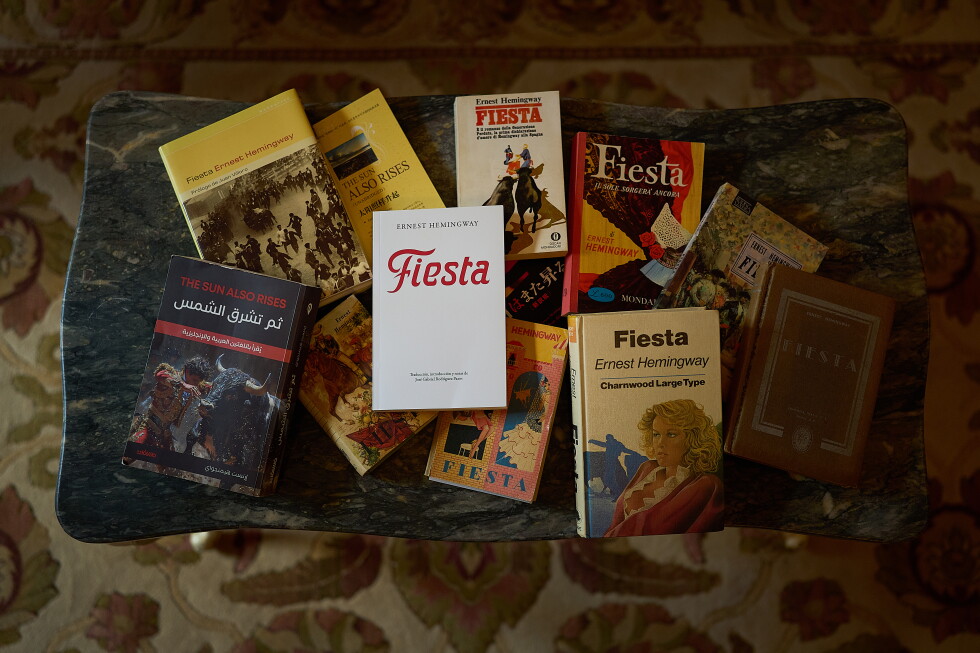
    Hemingway’s presence is impossible to escape across Pamplona. Hotels and bars display busts and commemorative plaques marking where the author ate and drank during his visits. A large statue stands outside the city’s bullring, where a centennial banner hangs bearing one of Hemingway’s most famous lines about the festival: “At noon of Sunday, the 6th of July, the fiesta exploded. There is no other way to describe it.” The suite where Hemingway stayed during his final visits to the city at the Perla Hotel remains preserved with 1950s-era furniture, overlooks the bull run route, and houses two glass bookcases filled with dozens of copies of *The Sun Also Rises*. “Hemingway did a lot for Pamplona because he made it known around the world,” said Fernando Hualde, a former 40-year receptionist at the hotel.

    Yet for all its enduring fame, Hemingway’s legacy in Pamplona is far from universally celebrated. Critics have pushed back against his hyper-masculine public persona from a feminist perspective, while animal rights activists condemn his glorification of bullfighting — a subject that takes up far more space in *The Sun Also Rises* than the bull runs themselves. “Hemingway wrote about many, many themes that today would not be accepted into society. He writes about hunting, about war, and we don’t want to be appreciating these themes today,” animal welfare activist Brook Spurling said during a recent protest against the festival’s bullfights.

    Many locals also blame Hemingway for the overtourism that has transformed the once-sleepy provincial city of 200,000 residents. Every year, more than a million additional visitors flood into Pamplona for the festival, and many follow the excessive drinking culture Hemingway depicted in his novel. Some local businesses even lean into the backlash: one popular bar displays a sign reading “Hemingway was not here,” a point of pride for locals seeking to avoid the tourist crowds. Gabriel Insausti, a literature professor at Pamplona’s University of Navarra, notes that commercialization has overshadowed the novel itself for many visitors. “In general, Hemingway has become a product of a franchise associated with San Fermin festival that has obscured his novel,” Insausti said. “People know who Hemingway is, but they haven’t read his novel.”

    Still, admirers argue that the core themes of Hemingway’s work remain as relevant today as they were 100 years ago. Hillmann, who has repeatedly returned to running even after life-threatening injuries, says there is a quiet art to bull running that many casual observers miss, a nuance Hemingway captured perfectly in his prose. Mariel Hemingway, the author’s granddaughter and a well-known actress, says her grandfather’s exploration of identity, love, grief, and purpose after devastating loss gives his work enduring power. “Identity, love, purpose, and how to rebuild after profound loss … those themes haven’t ever changed. That’s what’s great about my grandfather,” she told the AP from her home in Idaho. “I think he captured something that will never go away.”

  • Trump won big spending promises from NATO last year. This week in Turkey, he’ll try to enforce them

    Trump won big spending promises from NATO last year. This week in Turkey, he’ll try to enforce them

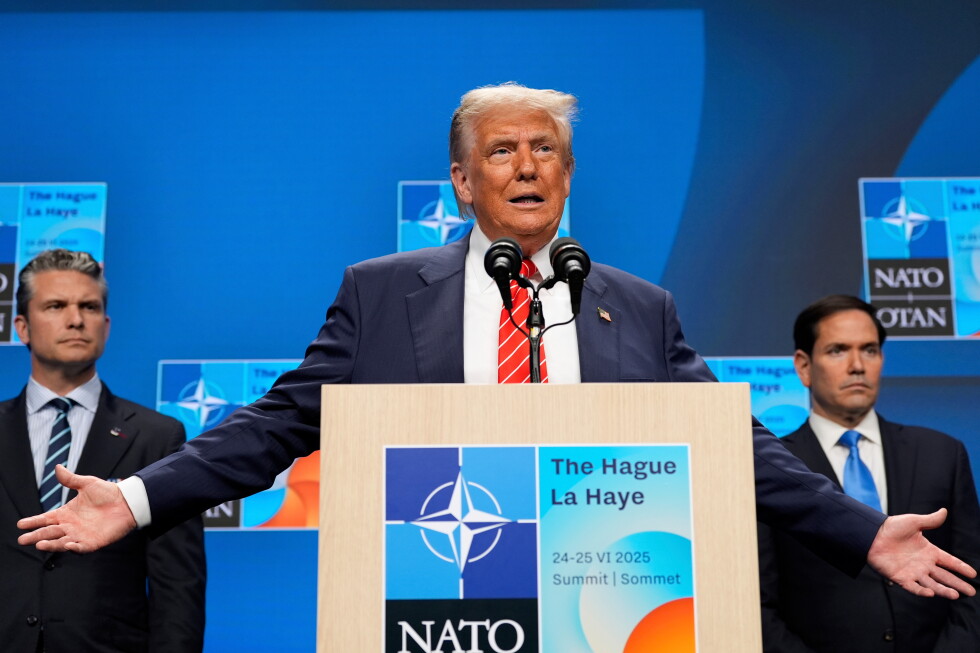
    As U.S. President Donald Trump prepares to depart for the 2025 NATO summit in Ankara, Turkey, his primary objective is clear: hold alliance members accountable to the sweeping defense spending commitments they agreed to at last year’s gathering, a deal he secured after years of pressure on European partners.

    A year ago in The Hague, Trump won a major diplomatic victory when most NATO members acquiesced to his demand to adopt a target of spending 5% of annual gross domestic product on defense by 2035, with 3.5% allocated to core defense activities and the remaining 1.5% covering related security infrastructure and costs. That agreement marked a historic shift for the alliance, underscoring the extent to which Trump has reshaped NATO’s priorities to align with his longstanding critique that the U.S. carries an unfair share of the bloc’s defense burden. Now, the Ankara summit will serve as the first official check-in on member progress toward that ambitious goal.

    “President Trump fully expects that all allies will step up immediately and get on the path to 5% and do it with urgency,” U.S. Ambassador to NATO Matt Whitaker told reporters during a pre-summit briefing, laying out the Trump administration’s core message for the gathering.

    Trump, who departs Washington Monday evening, has spent the days leading up to the summit reigniting longstanding grievances over alliance defense contributions, even after NATO Secretary-General Mark Rutte attempted to preempt criticism last month during an Oval Office meeting. During that encounter, Rutte presented large custom charts highlighting what he dubbed “The Trump Trillion” — the cumulative $1 trillion in increased defense spending commitments allies have made since Trump took office in 2025, a deliberate effort to acknowledge the president’s role in driving the shift.

    Washington-based conservative think tank Hudson Institute senior fellow Luke Coffey framed the Ankara gathering as nothing less than a “first report card” for the alliance following last year’s landmark spending agreement. “If NATO members play their cards right — if the leaders show up demonstrating a commitment and a reasonable plan to meet these spending targets — then it’ll allow President Trump to take a victory lap,” Coffey explained.

    Beyond defense spending, the summit will tackle a series of pressing global security issues, chief among them the five-year-long war in Ukraine. The White House confirmed that Trump will hold a bilateral meeting with Ukrainian President Volodymyr Zelenskyy on the summit’s sidelines Wednesday, following separate phone calls Trump held with both Zelenskyy and Russian President Vladimir Putin on July 4. At last month’s G7 summit in France, Trump secured broad backing from fellow leaders for a preliminary interim agreement to de-escalate the Iran war, and participants also agreed to ramp up security assistance for Kyiv, a outcome Trump hailed as a demonstration of alliance unity.

    Trump also plans to hold a separate meeting with Syrian President Ahmad al-Sharaa, whose rebel forces recently ousted longtime former president Bashar al-Assad. While the White House has not publicly outlined specific goals for the talks, the meeting comes after Trump publicly suggested Syria should take a larger role in combating Hezbollah in Lebanon — a proposal al-Sharaa has already rejected. The president will also hold one-on-one talks with Turkish President Recep Tayyip Erdogan, the summit’s host, whom Trump has repeatedly described as a close personal friend. Notably, no other bilateral meetings with other NATO leaders are currently on Trump’s official schedule.

    That absence of additional talks comes as no surprise, given that Trump reignited multiple feuds with allied leaders immediately following the comparatively positive tone of last month’s G7 summit. Shortly after returning to Washington, Trump publicly predicted British Prime Minister Keir Starmer would step down, arguing Starmer had “failed badly” on immigration and energy policy — a prediction that came true days later. He also sparked a major diplomatic row with Italy after claiming that Prime Minister Giorgia Meloni had “begged him for a photo”; Meloni’s team issued a ferocious public denial, and Italy canceled a planned visit by its foreign minister to the U.S. in retaliation. Trump doubled down on the clash over the weekend, posting a photo of Meloni smiling at him on social media with the caption “RESTRAINING ORDER NEEDED.”

    Tensions also remain high between Trump and Canadian Prime Minister Mark Carney, and while French President Emmanuel Macron sought to charm Trump with a lavish state dinner at the Palace of Versailles last month, relations between the two leaders have historically been fraught.

    To counterbalance Trump’s often caustic approach to the alliance, a bipartisan delegation of U.S. senators is traveling to Ankara alongside the official presidential delegation, aiming to highlight the broad, cross-partisan support for NATO that exists on Capitol Hill. “They are our best allies, they are our best trading partners, they are critical to our national security, to our economic success, and we need to encourage those relationships,” said Sen. Jeanne Shaheen, a New Hampshire Democrat leading the delegation. “That’s part of what Congress understands that the administration doesn’t seem to.”

    The summit arrives as the Trump administration pushes its vision for “NATO 3.0,” a strategic restructuring that calls for European members to take on full primary responsibility for their own security, allowing the U.S. to reorient its military focus to other global hotspots. The framework was first laid out earlier this year by U.S. Undersecretary of Defense Elbridge Colby during a meeting of NATO defense ministers. Last month, Defense Secretary Pete Hegseth amplified that pressure in a sharply worded speech to fellow defense ministers, announcing the U.S. would launch a six-month comprehensive review of all American forces deployed in Europe — a move that caught many alliance members off guard, as they had expected a more coordinated transition of force posture with the new administration.

    Trump himself added to widespread uncertainty earlier this year when he sent conflicting signals on U.S. force levels in Europe, announcing he would deploy 5,000 additional troops to Poland just weeks after ordering 5,000 existing troops to withdraw from the continent.

    Shaheen argued that the NATO 3.0 concept reflects a persistent failure by the Trump administration to recognize the direct threat Russian President Vladimir Putin poses to European security, and by extension, to U.S. national security.

    While most member states have moved to increase spending in line with last year’s agreement, not all have embraced the 5% target: Spain immediately stated it could not reach the threshold when the target was adopted, and several other countries have privately voiced reservations about the ambitious timeline. Even among those that have increased commitments, experts warn that most European states remain heavily dependent on U.S. military backing to honor Article 5, NATO’s core principle that an attack on one member is an attack on all.

    “This is the reality for most Europeans,” said Liana Fix, senior fellow for Europe at the Council on Foreign Relations. “Most are far from being able to defend themselves without the United States, even if they’re starting to develop all that.”

    Beyond defense spending, NATO has already adjusted a number of its initiatives to align with Trump’s priorities. Earlier this year, the alliance launched “Arctic Sentry,” a large-scale military exercise focused on countering Russian and Chinese activity in the Arctic region. The exercise also addresses Trump’s repeated threats to annex Greenland, the semiautonomous Danish territory that Trump has insisted the U.S. must acquire for strategic security purposes.

    Associated Press correspondents Michelle L. Price in Washington and Lorne Cook in Brussels contributed reporting to this article.

  • With poor ventilation and children packed in, UK’s outdated schoolhouses swelter in the heat

    With poor ventilation and children packed in, UK’s outdated schoolhouses swelter in the heat

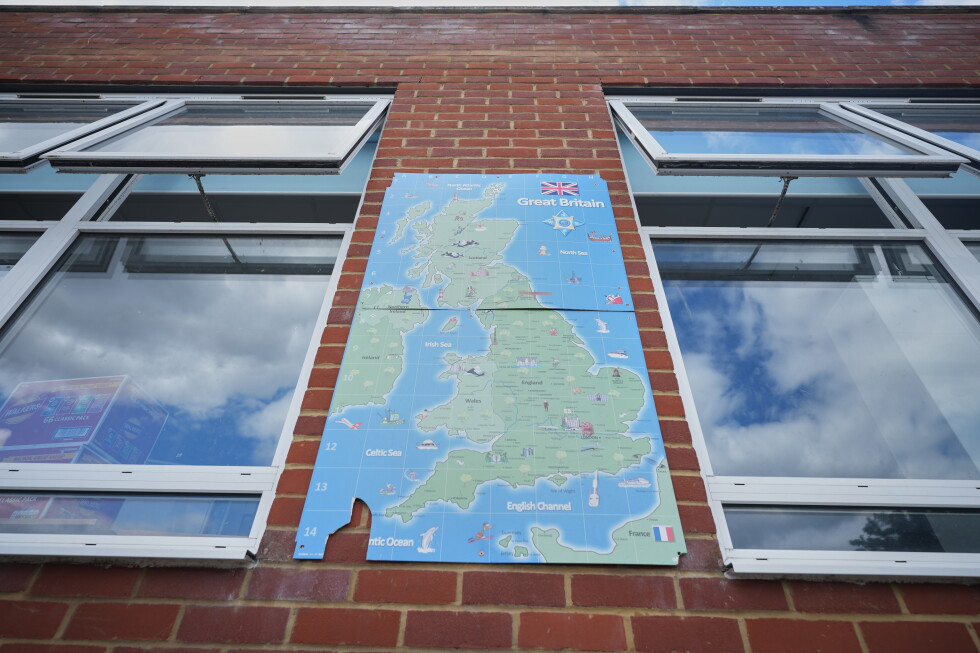
    When record-shattering heat gripped Western Europe in late June 2023, pushing temperatures in Wales to an all-time high of 35.9°C (96.6°F), Mark Morris’s secondary school joined hundreds of other educational institutions across the United Kingdom in shutting its doors. For Morris, a design and technology instructor who teaches hands-on skills ranging from woodworking to food preparation, keeping the school open was never a viable option. Most classrooms at his school lack cooling systems such as air conditioning or even portable fans, and large south-facing windows, many of which are jammed partially open or fully sealed, trap overwhelming amounts of solar heat. “Even in a typical cool British summer, that side of the building becomes unbearably hot,” Morris explained. “If I need to turn on an oven for a cooking lesson? That’s completely out of the question – no one could focus or work safely in those conditions.”

    By the end of the heatwave, more than 1,000 UK schools had either closed entirely for multiple days or dismissed students early, upending in-person learning and creating ripple effects across the national economy as working parents were forced to scramble for last-minute childcare or take unpaid time off work. Climate experts and education leaders say the mass closures have laid bare a critical gap in the UK’s ability to adapt to what climate scientists have labeled the “new normal”: more intense, more frequent heatwaves driven by global warming.

    Aging, chronically underfunded public infrastructure – including schools, hospitals, and adult care facilities – is among the most vulnerable to rising temperatures, experts note. Air conditioning remains extremely rare in British educational settings, and poor building design leaves most indoor spaces trapping heat to dangerous levels. The UK Climate Change Committee (CCC), an independent statutory body that advises the government on climate action, emphasized in a May 2023 report that the nation’s existing public buildings were engineered for a climate that no longer exists: constructed to retain heat through frigid British winters, with no design consideration for prolonged periods of extreme summer heat.

    For schools that did stay open during the June heatwave, staff and students relied on makeshift, low-tech coping strategies to beat the heat. Teachers passed out handheld mini fans and water spray bottles, swapped hot lunch menus for cold salads and frozen popsicles, pulled closed every blind to block sunlight, and even encouraged students to lie on the cool floor of classrooms or soak their bare feet in buckets of water. Even these emergency measures were not enough to eliminate health risks, however: with an average of 30 students packed into each small classroom, rising indoor temperatures quickly turned routine lessons into dangerous heat exposure scenarios.

    Wayne Bates, health and safety spokesperson for the NASUWT, one of the UK’s largest teachers’ unions, says the union has received dozens of reports of educators falling ill from extreme heat while on the job. “We’ve had members teaching in dangerously hot conditions, to the point that some have actually passed out in their classrooms while trying to lead lessons,” Bates said. Along with other public sector unions, NASUWT has long pushed the UK government to introduce a legal maximum workplace temperature, a standard that currently does not exist in the country.

    Many of the UK’s most heat-vulnerable school buildings date back to the mid-20th century, Bates explained, and are well past their intended service life. Compounding the problem, four out of five schools still contain asbestos in their building materials, a toxic substance that makes retrofitting cooling systems complicated, risky, and far more expensive. Surprisingly, it is not just aging school properties that struggle with extreme heat. Dave Woods, head teacher at Beaconsfield Primary School in west London and vice president of the National Union of Headteachers, says the newest wing of his campus – completed in 2013, just a decade ago – actually retains far more heat than the school’s original 1908 building. The older structure, with its high vaulted ceilings and thick exterior brick walls, stays significantly cooler indoors even during heat peaks. “You would think that by 2013, architects and planners would have accounted for rising global temperatures that we already knew were coming,” Woods said.

    Woods has explored installing air conditioning for at least the highest-risk parts of his school, but systemic underfunding has made the project unachievable. After a decade of austerity cuts to public education funding in the 2010s that was never reversed, UK schools have been left with chronically tight repair and improvement budgets. Woods’ school receives just £7,000 (roughly $9,350) per year for all campus repairs and upgrades – a sum that barely covers urgent fixes like a leaking roof, let alone a full air conditioning installation that could cost close to £20,000 ($26,700). The school is exploring cheaper long-term fixes, including planting more shade trees around the campus, adding external screening to heat-trapping windows, and installing solar reflective film on glass, but Woods warns none of these solutions can be implemented quickly.

    Looking ahead, the CCC warns that extreme heat will only become a bigger threat to UK education. The group’s May 2023 report projects that by 2050, when global average temperatures are expected to rise 2°C above pre-industrial levels, heatwaves exceeding 40°C (104°F) will become regular events in southern England. Without major adaptation work, the report estimates that the number of days per year when indoor school temperatures reach 35°C will jump by 70% compared to current levels, leading to more lost learning days and worse long-term educational outcomes for students.

    The CCC recommends that schools prioritize low-cost passive cooling measures like blinds and external shading as a first step, but it also calls for widespread installation of low-carbon air conditioning systems, such as reverse-cycle heat pumps that provide both heating and cooling, in the highest-risk public buildings (including schools, care homes, and hospitals) over the next 25 years. Richard Millar, the CCC’s director of adaptation, says urgent government investment and planning are required now to address this growing threat.

    “For a long time, the UK didn’t think of extreme heat as one of the major weather or climate hazards we have to prepare for,” Millar explained. “But the events of the last few weeks make it clear: we need to start treating heat as a critical risk. Right now, we have a major gap in national planning for this, especially when it comes to public services. This isn’t some distant future problem – the impacts are here right now. We aren’t prepared for today’s heat, let alone the higher temperatures coming tomorrow.”

  • ‘I ate ketchup and cheese’, says Venezuelan girl trapped under quake rubble for 32 hours

    ‘I ate ketchup and cheese’, says Venezuelan girl trapped under quake rubble for 32 hours

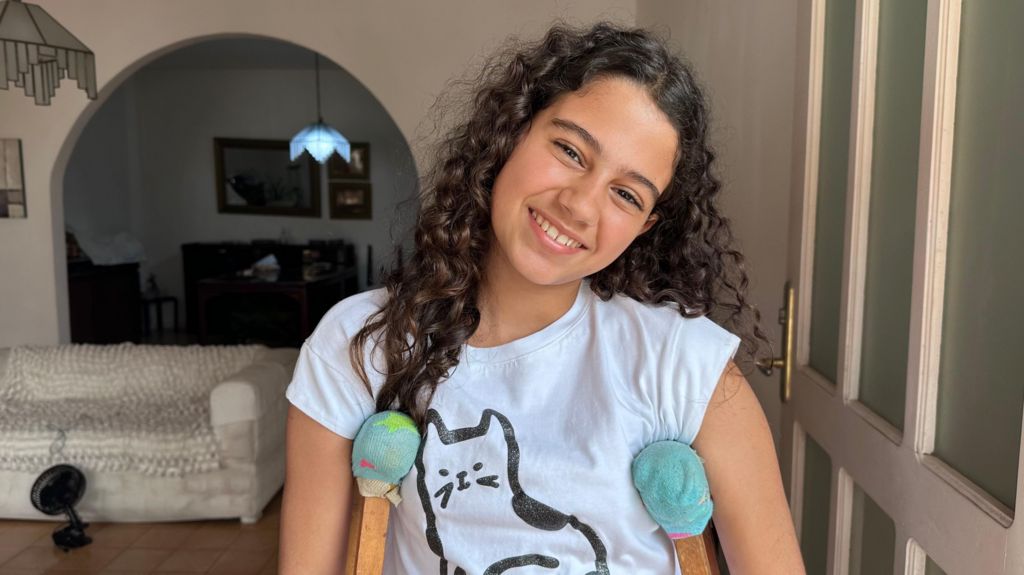
    On June 24, two devastating back-to-back earthquakes shook Venezuela, leaving a trail of catastrophic destruction and thousands of fatalities across the country. The second of the two tremors registered a magnitude of 7.5, marking one of the most powerful seismic events to strike the South American nation in more than a century. Among the countless stories of loss and despair that emerged from the disaster, a remarkable tale of survival has captured the nation’s attention, centered on 12-year-old Fabiana and her mother Karina Blanco.

    Karina, a spinning instructor, was moments away from starting one of her scheduled classes when the ground began to shudder violently. As the shaking intensified, she fled the building with other participants, only to be overcome with terror when she realized her only child was alone at their home in Caraballeda, a coastal town in northern Venezuela’s La Guaira state. “When I realised the magnitude of it, I started screaming ‘my daughter, my daughter’. I sat in my car and drove as fast as I could,” Karina recalled of the frantic rush to reach her daughter.

    When Karina arrived at her 10-story apartment building, what she saw left her speechless: half of the entire structure had collapsed into a heap of rubble, leaving an empty gap where the building’s midsection once stood. At the time of the quakes, Fabiana had been hiding in the kitchen of their first-floor apartment, clinging to a counter as the walls caved in around her and threw her to the ground. “I saw things shaking, falling, breaking, and then the walls cracked. The wall separating my apartment from a friend’s collapsed. At that moment, I thought, ‘I’m going to die. I won’t survive this. No-one is going to rescue me,’” Fabiana said of the terrifying initial moments of her entrapment.

    What followed was an agonizing 32-hour wait for rescue, a test of endurance that would push the 12-year-old to her limits. Trapped on her back with rubble surrounding her on all sides and the fallen ceiling just inches from her face, Fabiana, who normally struggles with anxiety and claustrophobia, experienced an unexpected wave of calm that she later attributes to shock and quiet faith.

    A breakthrough came early, when a nurse who had been caring for Fabiana’s upstairs neighbors called out through the rubble after locating Fabiana by sound. The nurse was rescued six hours after the quake, and before being pulled from the debris, she passed along a critical message to volunteer rescuers: 12-year-old Fabiana was still alive inside the collapsed building.

    For Karina, the news shifted her from abject despair – she had already surrendered to the thought of rebuilding her life without her daughter – to wild hope. As search teams began to narrow their search, Fabiana made use of what little resources she had trapped under the rubble: after adjusting her cramped, painful position and suffering minor cuts, she stumbled on a bottle of ketchup and a portion of grated cheese, which she ate to stay conscious. She also located her damaged mobile phone; though cellular networks had collapsed across the disaster zone, she recorded a desperate video message outlining her location and situation, hoping someone would eventually find it.

    Initial search efforts by firefighting teams failed to reach Fabiana, leaving Karina swinging between hope and heartbreak repeatedly. It was only when a local volunteer named Viktor, who would later become the family’s hero, stopped to ask Karina about her search that the effort gained new momentum. Viktor climbed through the unstable rubble and called out to Fabiana, this time loud enough for the trapped girl to hear. Once again, the confirmation that Fabiana was alive sent a wave of energy through the gathered crowd of volunteers and onlookers.

    Even with the exact location confirmed, rescue efforts faced repeated setbacks: initial firefighting teams said reaching Fabiana through the unstable rubble was impossible and withdrew, and a second team also failed to break through to her. Reinforcements were called from the capital of Caracas, but they arrived after nightfall, leaving the search without light. Karina ran through the dark disaster zone begging for help, and eventually gathered seven motorcycles and several private cars, which pointed their headlights at the collapsed building to light the dig.

    Rescuers chipped away at the rubble bit by bit, until finally they cleared a hole large enough to see Fabiana. Footage of the moment, which shows the 12-year-old smiling through the gap, quickly went viral across social media in Venezuela, giving a moment of light amid the national tragedy. At around 2 a.m. local time on Friday, 32 hours after the earthquakes first struck, rescuers cleared a tunnel wide enough to pull Fabiana out. She walked out of the rubble supported by her rescuers, and immediately collapsed into her mother’s waiting arms.

    The miracle rescue comes amid a staggering human cost from the June 24 quakes. By Sunday, official counts put the confirmed death toll at 3,342, with tens of thousands more still unaccounted for across the affected regions. Of the nearly 50 residents who lived in Karina and Fabiana’s apartment building, only three survived the collapse. Fabiana escaped with surprisingly mild injuries: only a fractured left foot and minor cuts and bruises, with no other lasting damage. She is currently staying with her grandmother while the family recovers, and says she is still processing the trauma of her ordeal.

    For Karina, the grief of losing neighbors and friends to the disaster remains raw, and the long process of rebuilding lies ahead. But for the grieving mother, the survival of her daughter is the only outcome that matters. “There is a great sadness outside of this house. I feel so much pain when I think of my neighbours and my friends. It will take us a while to recover. But we will move on,” she said. “What more can a mother want? My daughter is alive.”

  • Backlash after China bubble tea firm ordered to pay Louis Vuitton $1.5m

    Backlash after China bubble tea firm ordered to pay Louis Vuitton $1.5m

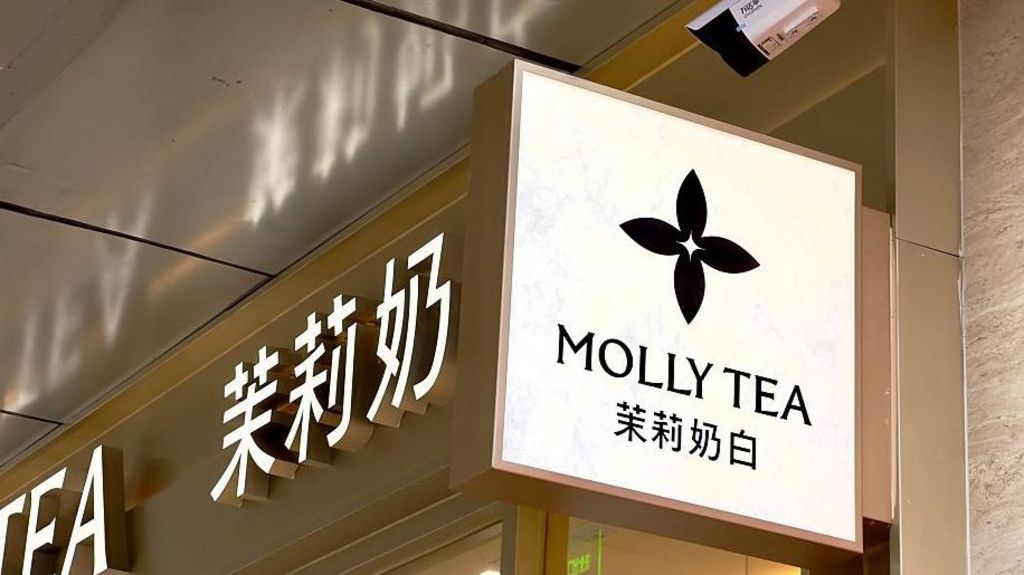
    A recent court ruling in eastern China has placed intellectual property protection in the global spotlight after popular domestic tea chain Molly Tea was found guilty of trademark infringement against French luxury giant Louis Vuitton, ordering the beverage brand to pay 10.3 million yuan (equivalent to £1.1 million or $1.5 million) in compensatory damages.

    According to state-owned Chinese newspaper China Daily, the Suzhou City Intermediate People’s Court in Jiangsu Province handed down the verdict, which also requires the Shenzhen-headquartered Molly Tea to immediately cease all use of the infringing four-petal flower logo and issue a formal public apology to Louis Vuitton. The outlet further confirmed that Molly Tea and its associated enterprises had previously submitted multiple trademark applications to the China National Intellectual Property Administration, most of which were rejected. Only the textual trademark containing the Chinese characters for “Molly Tea” was ultimately approved for registration.

    The ruling quickly went viral across Chinese social media platforms, splitting public opinion and generating heated nationwide discussion. As of this reporting, a hashtag tied to the case has accumulated over 400 million views and tens of thousands of public comments, with neither side backing down from their positions.

    Many social media users have voiced support for Molly Tea, pushing back against the court’s conclusion. Critics of the verdict argue that simple four-petal floral geometric patterns have been a common design element across global cultures for centuries, long before Louis Vuitton registered its trademark. Others have pointed to a history of Western luxury brands drawing inspiration from traditional Chinese art and cultural artifacts without formal licensing or credit, noting that many historical patterns originating in China were never formally patented by their creators. One Weibo user publicly pledged to “drink a cup of Molly Tea daily” as an act of solidarity with the brand, while another commentator on Chinese social platform RedNote echoed the sentiment that basic geometric shapes cannot be claimed as exclusive intellectual property by any single brand.

    On the opposing side, many online commentators have backed the court’s ruling and Louis Vuitton’s legal action. Supporters of the verdict emphasize that trademark law is clear: Louis Vuitton’s four-petal monogram was formally registered and legally protected, regardless of the historical origins of floral patterns. Many argue that all brands, domestic or international, are required to respect established intellectual property rights, and that imitation cannot be justified regardless of industry differences between a luxury fashion house and a domestic tea chain. One Weibo user noted that critics of the ruling should familiarize themselves with Chinese intellectual property law first, arguing that the legal standing of Louis Vuitton’s claim is unambiguous.

    The BBC has reached out to both Molly Tea and Louis Vuitton for official statements responding to the verdict and subsequent public discussion, but no comments have been released as of this update. The case has reignited broader conversations in China about intellectual property protection, the balance between global IP standards and cultural design legacy, and the growing frequency of legal disputes between international luxury brands and domestic Chinese consumer companies.