
LOS ANGELES – In an emotionally charged opening day at the highest level of professional baseball, catcher Eliézer Alfonzo made his long-awaited Major League Baseball debut for the Los Angeles Dodgers on Sunday, a milestone clouded by uncertainty over his stepmother and sister, who remain missing following the catastrophic earthquakes that struck his native Venezuela. The 26-year-old prospect took the ninth spot in the Dodgers’ starting lineup, handling catching duties for starting pitcher Emmet Sheehan during the team’s home interleague clash against the San Diego Padres. Alfonzo’s 16-year-old sister Eliana and stepmother Patricia have been unaccounted for since a series of powerful quakes devastated coastal Venezuela on June 24. Multiple Latin American media outlets published reports Sunday claiming that the pair’s bodies had been recovered from the rubble of the La Guaira hotel where they were staying when the disaster struck. As of first pitch, the Los Angeles Dodgers organization confirmed that no official verification of these reports has been received, leaving Alfonzo in limbo as he stepped onto the major league diamond for the first time. Speaking roughly two hours before game time at Dodger Stadium, Dodgers manager Dave Roberts shared that he had not yet spoken directly with Alfonzo about the developing situation, and struggled to put the catcher’s ordeal into words. “Outside of my heart goes out to him and his entire family, I don’t really know what to say about it,” Roberts told reporters. “He is with the team today, and he’s going to play, but obviously calling this a heavy heart doesn’t even begin to cover it. I don’t want to go too deep into this, because I’ll get emotional. I know it’s unbelievably tough for him right now.” Alfonzo’s path to the majors has been nearly a decade in the making. After logging 581 appearances across nine seasons of minor league play, the Dodgers called him up to the active roster Saturday, marking his first ever opportunity to compete at baseball’s top tier. He spent the majority of his professional career in the Detroit Tigers’ farm system, climbing as high as the team’s Triple-A affiliate in Toledo last year. Last November, Alfonzo signed a minor league free agent contract with the Dodgers, and turned in an impressive performance at Triple-A Oklahoma City to earn his call-up, posting a .313 batting average with 17 runs batted in through his play this season. The Dodgers’ roster move came amid a growing need behind the plate: veteran starting catcher Will Smith has been out of commission for nearly a month with a nagging neck injury. Dalton Rushing has stepped in as the team’s primary starter at catcher, with veteran Chuckie Robinson serving as his backup, but the Dodgers elected to hand Alfonzo a shot in the starting lineup this weekend. Alfonzo is following a family legacy of professional catching: his father, Eliézer Alfonzo Sr., appeared across parts of six MLB seasons between 2006 and 2011, suiting up as a catcher for four different major league clubs, and even spent one season in the Dodgers’ minor league system early in the former backstop’s career.
博客
-

Marine Le Pen appeal verdict: Why this moment matters for France
As France prepares for the 2027 presidential election, all eyes turn to Paris on Tuesday, where a high-stakes appeal court ruling will shape the trajectory of one of the nation’s most influential political figures: Marine Le Pen, leader of the far-right National Rally (RN). Scheduled to hand down its decision at 13:30 local time (11:30 GMT), the court will determine whether to uphold a 2025 embezzlement conviction that currently bars Le Pen from running for the country’s highest office.
At 57, Le Pen is no stranger to presidential campaigns, having already stood three times and finished second behind incumbent Emmanuel Macron in both the 2017 and 2022 races. With less than 10 months remaining before the first round of voting on April 18, 2027, she currently holds a lead in national opinion polls. Should the court confirm her ineligibility, 30-year-old RN chairman Jordan Bardella — Le Pen’s handpicked political protégé — will step in as the party’s candidate, making Tuesday’s outcome one with far-reaching consequences for the future of French politics. Political analysts broadly agree the verdict will effectively fire the official starting gun for what is already shaping up to be a deeply divisive presidential race.
The conviction at the center of the appeal dates back to March 2025, when a lower court found Le Pen guilty of diverting €1.4 million (£1.2 million) in European Parliament public funds between 2004 and 2016. Le Pen served as a Member of the European Parliament (MEP) from 2004 to 2017, and prosecutors alleged the funds were illegally used to pay party staffers rather than legitimate parliamentary assistants. The original ruling handed down a five-year ban from public office, a four-year prison sentence with two years suspended and two years to be served at home under electronic monitoring. Judges concluded Le Pen either explicitly approved or tolerated the fake employment scheme, automatically disqualifying her from the 2027 election.
During appeal hearings held earlier this year in January and February, Le Pen stopped short of denying wrongdoing entirely, but rejected claims she organized the fraudulent scheme. She did acknowledge making “a mistake” that allowed some parliamentary aides to work “for the benefit of the party.” Prosecutors have asked the appeal court to retain the original five-year public office ban, while modifying the prison sentence to one year of electronically monitored home detention and three suspended years. Le Pen has already publicly noted that even if she were technically eligible to run, being required to wear an electronic monitoring tag would make a successful campaign impossible, as it would restrict her ability to travel for rallies, public meetings and voter outreach.
The original trial judges left no room for ambiguity about Le Pen’s role in the scheme, concluding she was “at the heart” of the fake jobs system first established by her father, Jean-Marie Le Pen, founder of the party previously named the National Front. Marine Le Pen took control of the party from her father in 2011 on a promise to “detoxify” its far-right brand, ultimately cutting ties completely with him in 2015 over his controversial statements about the Holocaust. She rebranded the organization as the National Rally in 2018, and despite two presidential defeats against Macron, led the party to its best-ever legislative showing in 2024, when a hard-right RN alliance won 143 seats in the 577-seat National Assembly.
Le Pen has framed the legal proceedings against her as political persecution, claiming she faces “differential treatment” compared to other party leaders who have been found guilty of similar fraud offenses. A number of different outcomes are possible from Tuesday’s ruling, each with distinct political ramifications. An outright acquittal — which most political observers consider an unlikely result — would clear Le Pen to run with her political reputation fully intact. If the court upholds her conviction and retains a public office ban of more than two years (dated from the original conviction in March 2025), she will remain disqualified from running. However, a guilty verdict with a reduced ban of two years or less would allow her to appear on the 2027 ballot.
If the court follows prosecutors’ sentencing recommendations, Le Pen would still face one year of electronic monitoring. She has already emphasized that this would effectively end her presidential bid, saying, “When you are a presidential candidate you must be completely free to move about… I can’t rely on a judge to allow me to hold a rally or go to a market.” Should the verdict go against her, Le Pen technically has the right to launch a further appeal to France’s highest court, the Court of Cassation, within 10 days. But she has indicated she will not pursue this route, as the process would take several months and derail any coordinated campaign planning. Prosecutors could also launch their own appeal to the top court even if Le Pen is acquitted.
Ahead of the ruling, Le Pen has struck a defiant tone, saying she does not feel fear and remains calm regardless of the outcome. She has acknowledged that being barred from running would “undoubtedly be painful,” but added, “Whatever happens I won’t be dead, whatever happens I’ll continue to fight for my ideas.” If barred, she would step back from the presidential race to remain an activist for the party’s platform. Immediately after the verdict is released Tuesday, Le Pen will address the nation in a prime-time interview on France’s main 20:00 news broadcast to outline her next steps.
Bardella, who has been part of Le Pen’s inner circle since joining her 2017 presidential campaign as a 20-something, has served as RN party chairman since 2022. After Le Pen’s 2025 conviction, he was formally named her stand-in candidate, cementing the party’s contingency plan. Over the weekend, Bardella reaffirmed his unwavering loyalty to Le Pen, telling supporters, “I want to reiterate my total support, my total friendship, and that I’m committed to her in politics, to see her elected president of the republic.” Le Pen has said if she is elected president, Bardella will serve as her prime minister, and she would throw her full support behind him if she is forced to cede the top of the ticket to him.
The RN has projected an image of unified leadership regardless of the outcome, and recent polling shows the contingency plan has done little to damage the party’s standing: Bardella currently polls marginally better than Le Pen in first-round voting projections, with both candidates polling above 30%. Political opponents have questioned whether Le Pen would truly cede power to Bardella if she is barred, and have argued that Le Pen remains a far more threatening general election candidate than her young protégé, due to his relative lack of national political experience. Conservative Republicans candidate Bruno Retailleau previously joked that while French voters elected 40-year-old Macron, they would be hard-pressed to embrace a 30-year-old president.
Le Pen is not the only RN figure involved in the case. Of the 25 original party defendants tried in 2025, 12 were convicted and 12 have also launched appeals against their convictions. The list includes high-ranking RN officials such as Vice President and Perpignan Mayor Louis Aliot, former National Front Secretary General Nicolas Bay, veteran figure Bruno Gollnisch, former Le Pen aide Catherine Griset, and former party treasurer Wallerand de Saint-Just, all of whom received various combinations of prison time and public office bans in the original ruling.
-
The African fishermen who blame Chinese trawlers for their woes
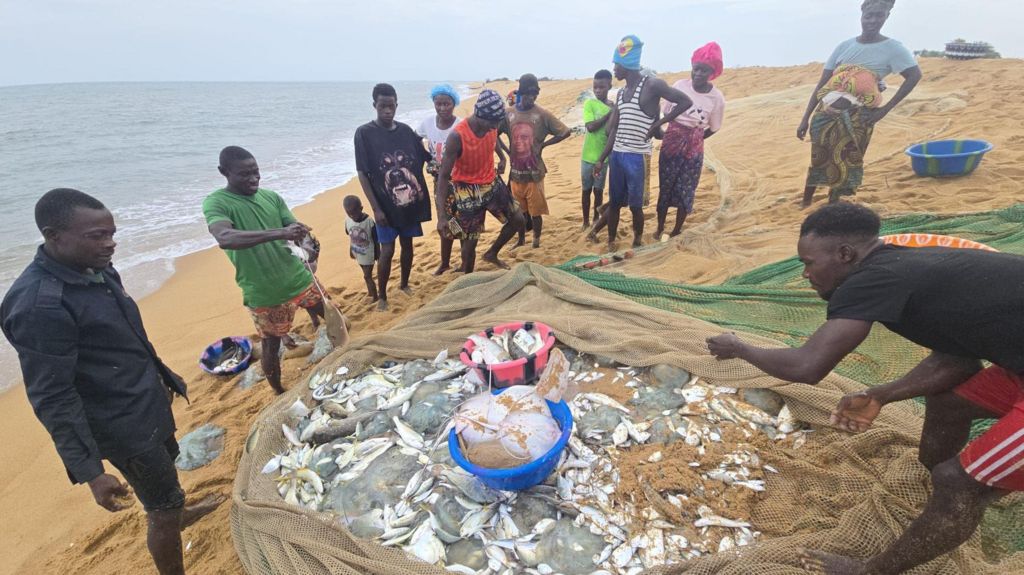
On sun-baked beaches along Sierra Leone’s Sherbo Island, 120 kilometers south of the capital Freetown, the age-old ritual of collective shore fishing unfolds much as it has for generations. A dozen villagers strain against thick ropes, shouting in coordinated bursts as they haul a heavy net bulging with snapper, mackerel, barracuda and rays out of the Atlantic surf. But where this communal work once yielded enough to feed local families and earn steady incomes, today’s hauls tell a story of growing crisis: small-scale local fishermen across the country say their catches have plummeted in recent years, and they point to one clear culprit – large, unregulated foreign trawlers operating illegally inside protected coastal waters.
Marie Pierre, one of the local workers sorting sardines from discarded jellyfish after the net comes ashore, says illegal international vessels have been violating the country’s official seven-mile exclusion zone – an area reserved exclusively for small-scale domestic fishing – in growing numbers. For many fishermen, the incursions go far beyond just stealing fish. Musa Gassimo, a local Sherbo Island fisherman, alleges that foreign trawlers deliberately cut the lines of small-scale fishing nets when local crews return to shore overnight. Each replacement net costs up to $250, a catastrophic expense for low-income artisanal fishermen who rely on their gear to make a living.
West Africa has long been recognized as the global epicenter of illegal, unreported and unregulated fishing. A 2024 global analysis estimates that 40% of the world’s unlicensed fishing catch is harvested from the region’s waters, costing West African governments a combined $10 billion in lost annual revenue while putting the food security of more than 30 million people who depend on local fishing at risk. Industry observers note that little progress has been made to reverse the crisis in the two years since the report was published.
Thomas Turay, president of Sierra Leone’s Fishermen’s Union, confirms the severity of the decline, saying average catches for local members have dropped by roughly 40% since illegal incursions surged. Speaking from Tombo Harbour near Freetown, Turay points to large foreign vessels anchored just outside the exclusion zone, saying these ships slip into protected coastal waters almost every night under cover of darkness. Multiple local fishermen who spoke with reporters shared personal accounts of damage and loss: 70-year-old Abou Waisissé described an incident where dozens of small local boats had their nets cut in a single incursion, while 55-year-old Mohamedi Kamara said his small fishing craft was badly damaged in a collision with a large international trawler.
When asked about the nationalities of the illegal vessels operating off Sierra Leone’s coast, Steve Trent, CEO and co-founder of the global advocacy group Environmental Justice Foundation (EJF), says the vast majority are flagged to China. While vessels from South Korea, Taiwan and European countries have operated illegally in the region in the past, Trent says Chinese trawlers now overwhelmingly dominate unlicensed fishing activity across West Africa.
Local fishermen say they have repeatedly reported illegal incursions to Sierra Leone’s Ministry of Fisheries, but their complaints have gone unanswered. Turay blames systemic corruption for the lack of enforcement, saying operators of illegal trawlers bribe government officials to avoid penalties. “I know that somebody who is doing this illegal business has the money to bribe and pay,” he says. “Government authorities are afraid to help the local fishermen.”
These allegations of widespread unenforced regulation are strenuously denied by Sheku Sei, director of Sierra Leone’s Ministry of Fisheries. Sei acknowledges that illegal fishing was once a major problem, but argues that new regulatory measures have reduced incursions significantly. He says all international vessels operating in Sierra Leone’s waters are now required to carry transponders to track their movements, and government inspectors conduct routine checks on foreign fleets. When asked about the common global practice of vessels turning off transponders to avoid detection of illegal activity, Sei claimed this does not happen in Sierra Leone’s waters. He also argued that steep financial penalties for violating the seven-mile exclusion zone act as a strong deterrent, but could not name a single instance where penalties had actually been applied over the past 10 years.
The Chinese Chamber of Commerce in Sierra Leone did not respond to BBC requests for comment on the allegations. Last month, however, the Chinese Foreign Ministry issued a blanket denial after similar claims of illegal Chinese fishing in Latin American waters, saying “China is a responsible fishing nation, strictly enforcing the regulation of its distant-water fishing activities and engaging in mutually beneficial fisheries cooperation with relevant countries in accordance with international law.”
Trent from EJF rejects this claim, arguing the Chinese government has adopted a deliberate “head-in-the-sand” approach to the crisis. “It’s simply not credible for them to carry on in this way. China, to date, still is not doing nearly enough to control its fleet. In fact, I would say they’re enabling it, through subsidies, through a lack of oversight and control.”
Trent says the solution to the crisis requires two key changes: improved global tracking of commercial fishing vessels, and increased international pressure on the Chinese government to enforce regulations on its distant-water fleet. He notes that fish illegally harvested from West African waters are sold to consumers around the world, giving everyday shoppers the power to drive change by choosing only legally and sustainably sourced seafood, a choice that protects the livelihoods of vulnerable small-scale fishermen in poor coastal nations.
-

Police arrest 14 activists at London protest marking Palestine Action ban
On Saturday, 14 political activists were taken into custody by Metropolitan Police officers in central London following a provocative demonstration marking the first anniversary of the official ban of pro-Palestinian advocacy group Palestine Action. The protest, organized by the grassroots civil disobedience network Defend Our Juries, was staged directly outside New Scotland Yard — the Metropolitan Police’s central headquarters — where demonstrators distributed public leaflets that actively called on serving police officers to become members of the now-proscribed Palestine Action.
Unlike previous police responses to similar demonstrations by Defend Our Juries, which primarily relied on Section 13 of the UK Terrorism Act (an offense covering the display of symbols that raise reasonable suspicion of support for a banned group), Saturday’s arrests were carried out under the more severe Section 12 of the legislation. This section explicitly criminalizes any act that invites public support for a proscribed organization, and carries a maximum custodial sentence of 14 years behind bars. This shift in policing marks a clear escalation of official crackdowns on the year-long campaign against the ban of Palestine Action.
Among those detained was 83-year-old Reverend Sue Parfitt, an Anglican priest and decades-long peace campaigner who has been a consistent fixture in UK anti-war and pro-Palestine movements.
Defend Our Juries confirmed the protest was held to also mark 12 months since the group launched its “Saving Lives is Not Terrorism” campaign, a direct challenge to the UK government’s 2024 ban on Palestine Action. Since the campaign launched, the group reports that more than 3,500 activists have been arrested under counter-terrorism legislation for participating in acts of civil disobedience supporting the proscribed group.
In an official statement following the arrests, a spokesperson for Defend Our Juries framed the invitation to police officers as a deliberate, if lighthearted, act of provocation — one that authorities responded to with disproportionate force. “It may seem tongue-in-cheek to invite the police to join Palestine Action, but the police haven’t seen the funny side. They have arrested everyone under Section 12 of the Terrorism Act. Fourteen years in prison is no joke,” the spokesperson said.
The group called on British law enforcement to redirect its resources away from targeting peaceful pro-Palestine protesters, and instead prioritize investigating the UK operations of Elbit Systems, an Israeli defense manufacturer that Defend Our Juries identifies as a key drone supplier to the Israeli military.
“The ongoing attempt to silence peaceful opposition to genocide will continue to backfire,” the spokesperson added. “Britain is a country full of decent people, appalled by Israel’s crimes against humanity. The more the Labour government uses repression to mask its complicity, the faster the resistance movement grows.”
Saturday’s demonstration is the latest action in a sustained 12-month campaign by Defend Our Juries, which has organized repeated acts of public civil disobedience to challenge the ban on Palestine Action, encouraging supporters to openly defy the legislation and accept arrest as part of their protest. At the time of this report, the Metropolitan Police has not issued any official statement in response to requests for comment on the arrests.
-

Queiroz leaves Ghana following World Cup exit
Veteran football manager Carlos Queiroz has ended his tenure as head coach of Ghana’s men’s national team, stepping down just three months after accepting the role following the Black Stars’ early elimination from the 2026 FIFA World Cup at the round of 32 stage.
The 73-year-old coach was appointed to lead Ghana back in April this year, and steered the side to a third-place finish in their Group L during the group stage, which earned them a spot in the knockout round. Their run in the tournament was cut short, however, after a narrow 1-0 defeat to Colombia in the first knockout fixture, which saw the Ghanaian side exit the competition.
Queiroz boasts an extensive resume in elite football management, including a notable spell as assistant manager to Sir Alex Ferguson at English Premier League giants Manchester United. He held the assistant position at Old Trafford across two stints: first from 2002 to 2003, before returning to the club from 2004 to 2008, where he contributed to multiple major trophy wins during his time at the club. This World Cup marks the fifth consecutive major tournament where Queiroz has held a head coaching position at the competition; he previously led the national teams of Iran, Portugal, and Egypt at World Cup finals.
Queiroz was not the only head coach to part ways with his national team on the day of the announcement. Following his departure, it was also confirmed that the Jordan Football Association had split with head coach Jamal Sellami, after Jordan finished the tournament in fourth place in their Group J bracket. The dual departures add to the wave of post-tournament coaching changes that typically follow early elimination from the FIFA World Cup.
-

World Cup what to know: US faces Belgium after Balogun’s suspension rescinded
As the World Cup’s knockout round heats up, the most highly anticipated match-up of Monday’s slate is not the iconic Iberian rivalry between Spain and Portugal, but the high-stakes Round of 16 clash between the host United States and Belgium in Seattle – a game that already carries off-field drama and could literally move the Richter scale.
Seattle’s Lumen Field, already known as one of the loudest venues in North American professional sports, made waves during the U.S. men’s national team’s group stage win over Australia, where crowd roars were intense enough to register as detectable seismic activity. With a quarterfinal spot on the line and a home crowd of more than 80,000 raucous fans expected, that shaking could reach new levels when the two sides kick off Monday evening.
The biggest pre-match shake-up came in an unexpected reversal from FIFA, which overturned American star forward Folarin Balogun’s automatic one-game suspension for a red card picked up in the team’s final group stage win over Bosnia-Herzegovina. Balogun, who leads the U.S. with three tournament goals – tying Landon Donovan’s 2010 total for the second-most by an American man at a single World Cup, trailing only Bert Patenaude’s four goals at the inaugural 1930 tournament – was suspended after stepping awkwardly on Bosnia’s Tarik Muharemović late in the match, which the U.S. played 30 minutes down a man. The reversal, which came after U.S. President Donald Trump placed a direct call to FIFA President Gianni Infantino, has left the Royal Belgian Football Association publicly “astonished” but delivered a massive boost to the American side ahead of their biggest match in modern history.
U.S. captain Christian Pulisic emphasized that the Seattle fanbase has already delivered unmatched energy throughout the tournament, and their support will only grow with Balogun’s return. “(Seattle) fans are going to bring it, no matter what,” Pulisic said. “I think that’s what they’ve shown this trip, this tournament so far. I’m sure when (Balogun) walks out, they’re going to give that much more of a roar.”
For the U.S., a win on Monday would mark two historic milestones: it would be the first time the men’s side has won two consecutive knockout matches at a World Cup, and push them into the quarterfinals for the first time since 2002. Though Belgium hammered the U.S. 5-2 in a March warm-up friendly, the Americans enter the clash on a hot streak, having opened the tournament with a rousing 4-1 win over Paraguay before topping their group.
Belgium, for their part, calls Seattle a home away from home: the side has been based at the Seattle Sounders’ training facility since June 13, and has already played two matches at Lumen Field, earning a 1-1 group stage draw with Egypt before a 3-2 extra-time win over Senegal in the Round of 32. Belgian midfielder Dodi Lukébakio said that dramatic win has given the side extra confidence heading into Monday’s match, while defender Maxim De Cuyper noted the team is prepared to block out the hostile home crowd. “If you play against 80,000 supporters or with 80,000, you have to try to do the same,” De Cuyper said. “And I think that’s what we’re going to try (to do).”
Though the U.S.-Belgium clash has stolen the day’s headlines, the earlier match between Iberian neighbors Spain and Portugal carries its own historic weight, as 41-year-old Portuguese icon Cristiano Ronaldo confirms this tournament will be his final World Cup appearance. “Regardless of what happens tomorrow, Cristiano is going to be leaving with a clear conscience, not a hundred percent but a thousand,” Ronaldo said in translated remarks. “I gave everything to football. I didn’t do it out of need. It’s because of the passion that I play on this national team because I love to play football.”
The two sides have a 105-year rivalry full of memorable matches: nearly a year ago, Portugal beat Spain in a penalty shootout to claim the UEFA Nations League title, and eight years ago in Russia, Ronaldo notched his only World Cup hat trick to secure a 3-3 group stage draw against La Roja. Portugal is aiming for back-to-back quarterfinal appearances, and has only advanced past that stage once, in 2006, when they reached the semifinals.
Spain, by contrast, enters the match as the only team yet to concede a goal in the tournament. The 2010 World Cup champions, who have not reached the quarterfinals since their title win, opened their campaign with a scoreless draw against underdog Cape Verde (who captured the world’s attention by advancing to the knockout round before pushing defending champion Argentina to extra time in a 3-2 loss), then went on to beat South Korea, Uruguay and Austria by a combined 8-0. “We know that every game is a final and it’s difficult,” Spain midfielder Rodri said in translated remarks. “We’re going game by game. We don’t think much further. We have a very tough rival, and if we’re able to beat Portugal, then we’ll be one step closer.”
Monday’s doubleheader kicks off the Round of 16, with two more matches scheduled for Tuesday: Argentina faces Egypt in Atlanta at noon EDT, while Switzerland takes on Colombia in Vancouver at 4 p.m. EDT.
-

A global hub for fake luxury goods, Vietnam cracks down on its black market
Early this year, Vietnamese law enforcement carried out a dramatic raid on two unassuming warehouses on the outskirts of Ho Chi Minh City. Inside, they uncovered more than 23,000 pairs of counterfeit slippers emblazoned with the registered logos of global brands including Nike, Adidas, Crocs, and Gucci – products that the legitimate brands had never authorized for production or distribution in the facilities. The seized goods carried an estimated street value of VND 2 billion, equal to roughly $76,000 USD, marking one of the first major busts in a sweeping new national campaign against the country’s booming counterfeit trade.
Thirty kilometers away, in a crowded tourist flea market in central Ho Chi Minh City, near-identical counterfeit slippers – knockoffs of designs that retail for up to $900 in international markets – are openly displayed for $57 per pair. They sit alongside racks full of other fake luxury goods: imitation Chanel handbags, counterfeit Prada t-shirts, and replica Rolex watches, all part of an industry that has turned Vietnam into one of the world’s most well-known hubs for cheap designer knockoffs, operating openly for decades. Now, facing growing international pressure and the threat of punitive trade measures, Vietnamese authorities have launched an aggressive nationwide crusade to reverse the country’s reputation as a counterfeit capital.
On May 7, the Vietnamese government officially rolled out a nationwide crackdown on intellectual property rights violations, encompassing counterfeit physical goods, online piracy, and trademark infringement. While periodic public raids on counterfeit vendors have long been a standard part of local enforcement efforts, the current campaign marks a sharp escalation in activity. The driving force behind this intensified crackdown comes from international pressure, most notably from the United States, which has placed Vietnam at the top of its list of global IP violators.
In April, the Office of the United States Trade Representative designated Vietnam as a “priority foreign country” for its “persistent failure to resolve long-standing concerns about IP protection and enforcement” – the first time any country has received this harsh designation in 13 years. The U.S. also labeled Vietnam the world’s worst offender for intellectual property rights violations, opening the door to steep new tariffs on Vietnamese exports. Facing this economic threat, Vietnamese authorities pledged to increase the number of IP violation busts by at least 20% in May compared to the same period a year earlier.
One of the main targets of the campaign has been Saigon Square – the popular street market where pseudonymous vendor Thanh Truc sells replica clothing – and the adjacent Ben Thanh Market, two sprawling bazaars long known as Vietnam’s largest centralized hubs for counterfeit goods. In mid-May, a series of surprise inspections led to the confiscation of thousands of fake goods and total fines of more than $19,000. But many local vendors, who have adapted to decades of periodic enforcement, remain unfazed. Thanh Truc, who recently sold a replica Loewe t-shirt (retailing for $500 authentic) for just $17, explained that vendors have long established warning systems: “Usually, before inspectors arrive, someone here blows a whistle to warn everyone. Some stores display fewer logo-branded items now, but they still keep full stock in the back. Business is still continuing.”
Vietnam’s counterfeit supply chain is deeply entrenched, linked closely to manufacturing networks across its northern border in China, where most counterfeit goods are produced. Vietnamese wholesalers import bulk shipments of popular counterfeit designs and distribute them to small street vendors across the country. Vietnam’s position as a manufacturing hub for authentic global luxury brands also strengthens the black market: pre-cut materials, skilled labor, and manufacturing expertise meant for legitimate goods often leak into counterfeit production networks, creating a shadow industry that has proven extremely difficult to shut down entirely.
Despite these challenges, the Vietnamese government has framed its recent crackdown as a major success, reporting more than 1,400 IP infringement cases processed in the final three weeks of May alone. The U.S., however, has continued to ramp up pressure, launching a formal investigation in late May to determine whether Vietnam’s failure to eliminate IP violations qualifies as “unreasonable” trade practice that harms U.S. commercial interests. In response, Vietnamese authorities have expanded their raids beyond major tourist markets, targeting manufacturing and distribution rings across the country. On June 10, police in Thanh Hoa province dismantled a large counterfeit jewelry ring that produced more than 10,000 fake pieces imitating brands including Bvlgari, Cartier, Louis Vuitton, and Tiffany & Co., generating an estimated $1.14 million in illicit profits.
The crackdown has split public opinion in Vietnam, creating winners and losers across the retail sector. For independent local designers like Huong Thi Nguyen, who sells custom-made clothing through her own stores in Ho Chi Minh City and Da Lat, the crackdown is a long-overdue correction for a market that has devalued legitimate local craftsmanship. “The counterfeit industry makes Vietnam’s retail market chaotic and turns it into something of a joke,” she explained. “Customers will pay $75 for a fake designer dress that looks real, but complain when they are charged $37 for a custom piece made with high-quality fabric and expert tailoring. Vietnam has no shortage of highly skilled tailors and hand embroiderers, but many are overlooked, and many end up working in factories producing counterfeit goods.” Now, as counterfeit sellers are forced out of business, Huong plans to expand her business and raise her prices, saying: “I feel more confident operating in a business environment that is cleaner, more transparent, and fairer. This isn’t about winners and losers. It’s about restoring fairness.”
For low-income consumers and casual buyers, however, the crackdown threatens to eliminate an accessible option that fits within their limited budgets. Huy, an office worker in Da Nang and a regular buyer of counterfeit athletic clothing and footwear, says: “Arresting the vendors does not solve the problem. If I can still buy fakes easily, I will keep my old habits.” His perspective is shared by many Vietnamese consumers: with 60% of the population living in rural areas and an average monthly income of just $225, authentic luxury goods are completely out of reach for most of the country.
Thi Thanh Huong Tran, an associate professor at SKEMA Business School and a specialist in ethical consumption who grew up in Vietnam, notes that the counterfeit market is fundamentally underpinned by these economic realities. “Even though people know it’s fake, in a context where they don’t have the money to afford the real thing, for them it’s the most suitable option they have,” she said. She also argues that the economic harm to global luxury brands is minimal, since there is almost no overlap between counterfeit buyers and authentic luxury consumers: “Even without the counterfeit products, the low-income customer will never buy the authentic brand anyway, because they cannot afford it. They cannot see why they have to pay hundreds of dollars just for a bag.”
Counterfeit goods are also a major draw for international tourists, who make up a large share of customers at most major fake markets in the country. Many analysts, including Thi Thanh Huong Tran, argue that the Vietnamese government has very little chance of fully eradicating the counterfeit trade, because sellers have already developed countless workarounds to evade IP enforcement. Common tactics include making minor adjustments to brand names and designs – changing “Nike” to “Mike”, for example – that stay just inside the letter of the law while retaining the recognizable look and feel of the original brand. “Whatever regulation or actions the government takes, sellers will find a way to go around it and continue,” Thi Thanh Huong Tran explained. “The demand of the customers is always there. And if there is demand, of course, there will be sellers.”
-

Australia give improved England plenty to ponder one year out from Ashes
The historic Lord’s Cricket Ground did not add another iconic English sporting triumph to London’s recent legacy, following in the footsteps of nearby Wembley and Twickenham. Instead, Australia women’s cricket team reclaimed the T20 World Cup title with a dominant seven-wicket win over the host side in the 2026 final, leaving England confronting questions about squad strategy and personnel just one year out from the next Ashes series.
England entered the final with high hopes, framed as a chance to replicate the recent international success of England’s other women’s national teams, the soccer Lionesses and rugby Red Roses. The home side advanced to the decider but crumbled at the decisive moment, producing their most underwhelming batting and bowling performance of the entire tournament. Batting lacked variation in tempo, while bowling displays were uncharacteristically loose, falling well short of the ‘perfect performance’ England admitted they needed to topple the Australian side.
For Australia, the win marked a long-awaited redemption after exiting the previous two World Cups empty-handed. Captain Sophie Molineux, whose laid-back, approachable leadership style has drawn sharp contrast to her more decorated predecessors Meg Lanning and Alyssa Healy, noted after the match that her experienced squad has not yet hit its peak, signaling Australia will remain a dominant force in global women’s cricket for years to come.
The defeat leaves England head coach Charlotte Edwards facing a defining moment analogous to that of Michael Vaughan ahead of the iconic 2005 men’s Ashes series. Vaughan opted for a full squad reset to shake off the baggage of repeated losses to Australia, and Edwards has now opened the door to potential major personnel changes ahead of next summer’s home Ashes. Appointed just 15 months ago in April 2025, Edwards stressed that a full review of the squad will take place at the end of the summer, acknowledging the team stuck with experienced core players for this tournament who had delivered consistent results throughout the group stage.
Despite the lopsided final score, the tournament marked clear progress for an England side that has climbed back from rock-bottom in recent years. Just 20 months ago, England crashed out of the T20 World Cup in the group stage, followed by a humiliating 16-0 clean sweep defeat in the 2024-25 Ashes and a rocky group-stage exit at the 2025 50-over World Cup. This run to the final has re-established England as the second-ranked team in global women’s cricket, a status that had slipped away after three underwhelming World Cup campaigns.
Several emerging and existing players have proven their value to the squad during the tournament. Young talents Freya Kemp and Dani Gibson have added much-needed power to England’s middle order, while Alice Capsey has transitioned from promising prodigy to reliable top-order batter. Star spinner Sophie Ecclestone also returned to near her best form after inconsistent outings in recent seasons, while 35-year-old Heather Knight silenced critics who argued her international career was winding down. Captain Nat Sciver-Brunt also shrugged off concerns over a recent two-week calf injury to produce consistent performances throughout the event.
The tournament also highlighted growing leadership depth within the squad, a promising sign for the future. When Sciver-Brunt was sidelined with her calf injury earlier in the campaign, vice-captain Charlie Dean stepped up seamlessly to lead the side, proving she is a ready replacement when Sciver-Brunt eventually steps down. Gibson also got a valuable leadership trial during an intra-squad camp in South Africa earlier this year, and will lead Sunrisers Leeds in the upcoming Hundred season, with many tipping her as a future international captain.
That said, clear weaknesses were exposed in the final that cannot be ignored. The most pressing issue is the form of veteran wicketkeeper-batter Amy Jones, who notched five single-figure scores in seven innings at the tournament. While Jones’s glovework has never been questioned, she has failed to deliver consistently with the bat in her role as an opening batter, managing just two centuries in 260 international matches. England currently lack clear established replacements, with domestic keepers Kira Chathli and Ellie Threlk yet to force their way into contention, leading to calls for a bold shake-up: moving current back-up keeper Alice Capsey into the full-time wicketkeeper role, which would open up a spot for exciting 18-year-old talent Davina Perrin to come into the side as opening batter alongside tournament leading run-scorer Danni Wyatt-Hodge. Uncapped squad member Tilly Corteen-Coleman is also expected to get opportunities in the coming international windows.
Edwards has pushed back against calls for an immediate overhaul, saying she remains excited to work with the current squad over the next 12 months to build on their progress. She also noted that the team has already won back public support after the heavy backlash following the 2024-25 Ashes defeat, and has successfully re-established England as a legitimate contender in global women’s cricket. Now, her biggest challenge remains: closing the gap with a dominant Australian side and pulling off an Ashes upset on home soil next summer.
-
Israel eyes return to Gaza war within months, Channel 12 reports
A new assessment from senior Israeli officials indicates that active hostilities could return to Gaza within the next 60 days, a timeline that would place renewed conflict before Israel’s scheduled October national elections, according to an exclusive report published Saturday by Israel’s prominent broadcaster Channel 12. Citing anonymous official sources, the outlet laid out a clear pathway that could lead Israel back to large-scale military operations in parts of Gaza it does not currently control, centered on the U.S.-led framework known as the Board of Peace.
Under the terms of the existing ceasefire agreement that paused major fighting, the Board of Peace — established in January 2025 on the initiative of former U.S. President Donald Trump, who chairs the body — is tasked with monitoring compliance from all parties. Israeli officials told Channel 12 that the board is on track to rule within two to three months that Hamas has violated the terms of the ceasefire by failing to meet its requirement to disarm. Such a formal finding would create diplomatic cover for Israel to restart military raids across the strip.
Channel 12 also obtained new details from a senior Israeli political source about previous delays to this process. The source confirmed that the board’s director-general, Nikolay Mladenov, was prepared to formally announce that Hamas was in breach of the agreement as early as two months ago, but ultimately held off on the declaration at the request of international mediators working to preserve the fragile ceasefire. The source added that unless a major shift in Hamas’s position occurs in the coming 90 days, Mladenov will move forward with the finding that the group has failed to uphold its end of the deal.
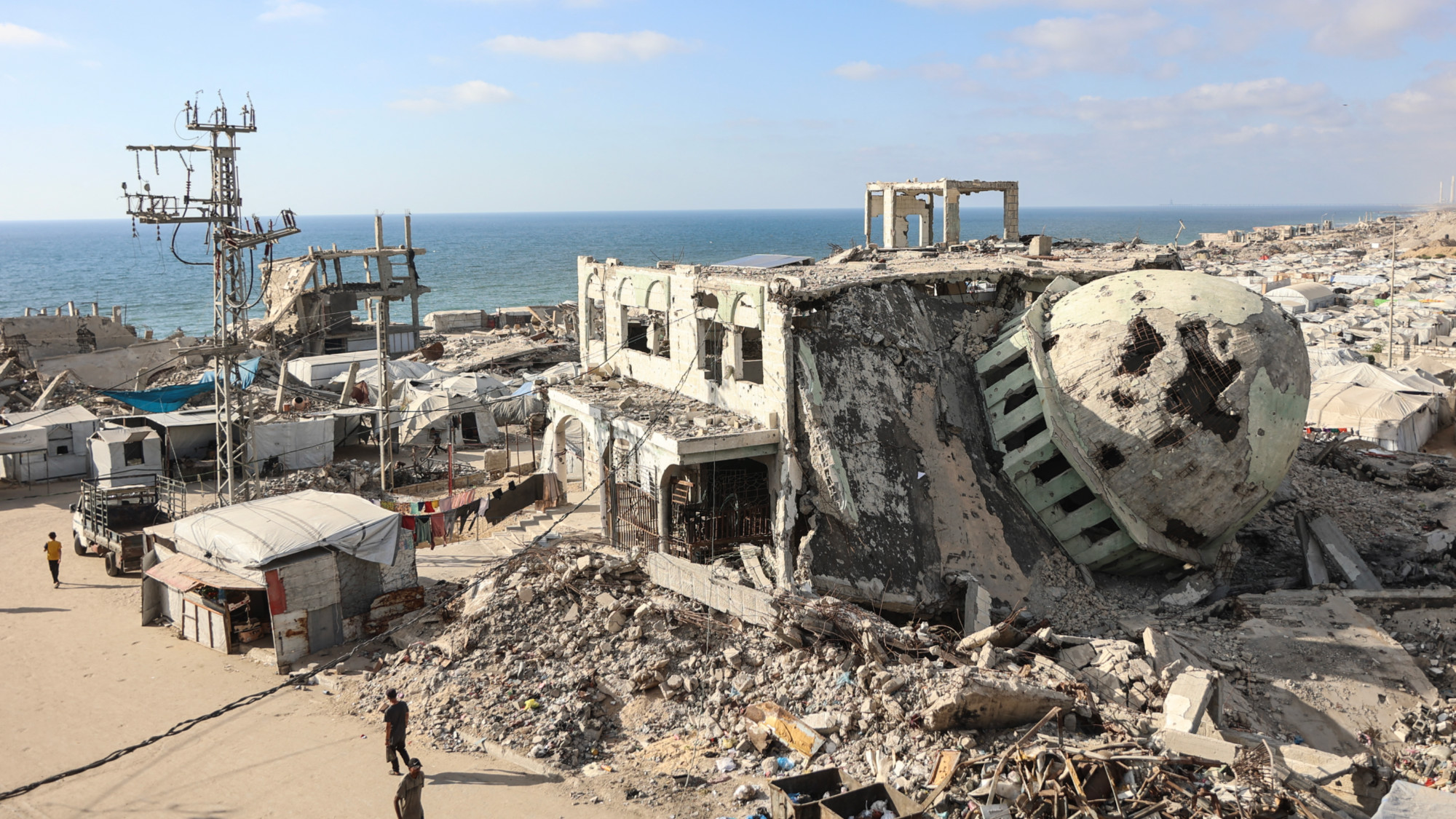
The current ceasefire was first reached the previous October, after two years of sustained Israeli military operations in Gaza that left nearly 72,000 Palestinians dead, reduced much of the densely populated territory to rubble, and created what is widely recognized as one of the world’s most severe ongoing humanitarian catastrophes. While the ceasefire halted large-scale ground operations, the report notes that violations of the truce have been ongoing on the Israeli side: since the ceasefire took effect, more than 1,000 additional Palestinians have been killed by Israeli forces, the Israeli military has expanded its controversial buffer zone inside Gaza, and the country has maintained harsh restrictions on the entry of life-saving humanitarian aid into the blockaded territory.
For its part, Hamas has repeatedly stated that it will not enter negotiations on disarmament until Israel fully meets all of its own obligations laid out in the first phase of the ceasefire agreement, including easing the aid blockade and withdrawing from occupied areas of the strip.
This reporting comes from Middle East Eye, a media outlet that produces independent, in-depth coverage of political and humanitarian developments across the Middle East, North Africa, and surrounding regions.
-

Fierce winds hit US Pacific territories as Super Typhoon Bavi makes landfall near Guam
On Monday local time, a powerful Category 5 super typhoon named Bavi slammed into Rota, a small U.S.-owned island in the western Pacific that is part of the Northern Mariana Islands, located northeast of Guam. The weather event brought catastrophic, life-threatening conditions to the region, including 180-mile-per-hour sustained winds and gusts reaching as high as 215 miles per hour, alongside torrential downpours that have forced widespread shelter-in-place orders across the archipelago.
The U.S. National Weather Service (NWS) confirmed that the storm began moving across Rota, home to fewer than 2,000 residents, early Monday. Alongside the extreme wind warning that remained in full effect for Rota, official typhoon warnings were extended to neighboring Guam, Tinian and Saipan, while other smaller surrounding islands remained under tropical storm watches and warnings. The entire region is still in the process of rebuilding and recovering from the impact of Super Typhoon Sinlaku, another powerful cyclone that hit the same area in April this year, which was previously recorded as the strongest tropical storm of 2024 to hit the Pacific.
Edwin Montvila, an NWS meteorologist, emphasized the imminent danger the storm poses to human life. Officials have urged all residents across affected areas to move to reinforced interior rooms of their homes or shelters immediately, and to stay far away from windows and exterior walls. “Entering outside can result in death from flying projectiles. Utility poles and associated power lines will be down,” Montvila explained, stressing that all residents should stay indoors and avoid unnecessary travel at all costs.
While Bavi was moving at a relatively fast forward speed on Monday morning, giving forecasters hope that its most severe impacts would be short-lived, Montvila noted that the storm’s large size means tropical storm-level conditions, including heavy flooding rains, could persist across the islands through at least Monday night. The storm also proved difficult to track in the hours leading up to landfall: Montvila reported that Bavi’s path was “a bit erratic” overnight, shifting north and south repeatedly as it moved west toward the Northern Mariana Islands.
Guam Governor Lou Leon Guerrero released a social media video Sunday urging all residents on the island to shelter in place and avoid road travel. “Here we are experiencing another severe force of winds on our island, but as we know, we are always ready and prepared in our planning and our protection of our people,” she stated.
Local long-term residents expressed a mix of caution and experience with the frequent Pacific typhoon season. The Rev. Francis Hezel, a Guam-based priest based in Dededo, reported hearing winds howling outside his home for hours starting before dawn on Monday. He noted that most homes on Guam are built from reinforced concrete, which he hopes will limit widespread structural damage, though he acknowledged the high risk of multi-day power outages that have followed recent severe storms. He added that long-term residents are accustomed to preparing for typhoon season, and suggested that officials could moderate warnings to avoid unnecessary public anxiety, framing the event as more of a major inconvenience than an unprecedented catastrophe for the region.