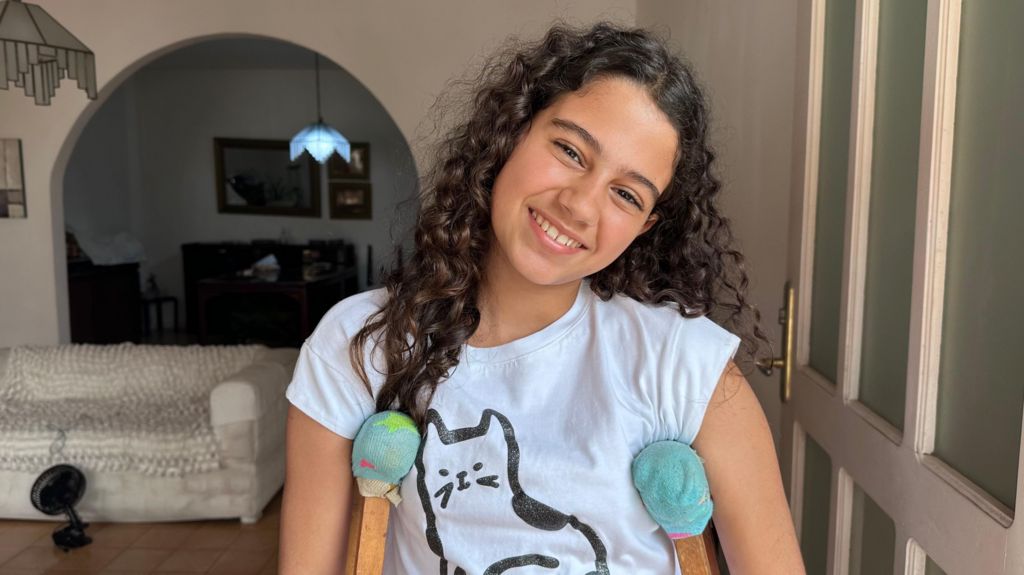
On June 24, two devastating back-to-back earthquakes shook Venezuela, leaving a trail of catastrophic destruction and thousands of fatalities across the country. The second of the two tremors registered a magnitude of 7.5, marking one of the most powerful seismic events to strike the South American nation in more than a century. Among the countless stories of loss and despair that emerged from the disaster, a remarkable tale of survival has captured the nation’s attention, centered on 12-year-old Fabiana and her mother Karina Blanco.
Karina, a spinning instructor, was moments away from starting one of her scheduled classes when the ground began to shudder violently. As the shaking intensified, she fled the building with other participants, only to be overcome with terror when she realized her only child was alone at their home in Caraballeda, a coastal town in northern Venezuela’s La Guaira state. “When I realised the magnitude of it, I started screaming ‘my daughter, my daughter’. I sat in my car and drove as fast as I could,” Karina recalled of the frantic rush to reach her daughter.
When Karina arrived at her 10-story apartment building, what she saw left her speechless: half of the entire structure had collapsed into a heap of rubble, leaving an empty gap where the building’s midsection once stood. At the time of the quakes, Fabiana had been hiding in the kitchen of their first-floor apartment, clinging to a counter as the walls caved in around her and threw her to the ground. “I saw things shaking, falling, breaking, and then the walls cracked. The wall separating my apartment from a friend’s collapsed. At that moment, I thought, ‘I’m going to die. I won’t survive this. No-one is going to rescue me,’” Fabiana said of the terrifying initial moments of her entrapment.
What followed was an agonizing 32-hour wait for rescue, a test of endurance that would push the 12-year-old to her limits. Trapped on her back with rubble surrounding her on all sides and the fallen ceiling just inches from her face, Fabiana, who normally struggles with anxiety and claustrophobia, experienced an unexpected wave of calm that she later attributes to shock and quiet faith.
A breakthrough came early, when a nurse who had been caring for Fabiana’s upstairs neighbors called out through the rubble after locating Fabiana by sound. The nurse was rescued six hours after the quake, and before being pulled from the debris, she passed along a critical message to volunteer rescuers: 12-year-old Fabiana was still alive inside the collapsed building.
For Karina, the news shifted her from abject despair – she had already surrendered to the thought of rebuilding her life without her daughter – to wild hope. As search teams began to narrow their search, Fabiana made use of what little resources she had trapped under the rubble: after adjusting her cramped, painful position and suffering minor cuts, she stumbled on a bottle of ketchup and a portion of grated cheese, which she ate to stay conscious. She also located her damaged mobile phone; though cellular networks had collapsed across the disaster zone, she recorded a desperate video message outlining her location and situation, hoping someone would eventually find it.
Initial search efforts by firefighting teams failed to reach Fabiana, leaving Karina swinging between hope and heartbreak repeatedly. It was only when a local volunteer named Viktor, who would later become the family’s hero, stopped to ask Karina about her search that the effort gained new momentum. Viktor climbed through the unstable rubble and called out to Fabiana, this time loud enough for the trapped girl to hear. Once again, the confirmation that Fabiana was alive sent a wave of energy through the gathered crowd of volunteers and onlookers.
Even with the exact location confirmed, rescue efforts faced repeated setbacks: initial firefighting teams said reaching Fabiana through the unstable rubble was impossible and withdrew, and a second team also failed to break through to her. Reinforcements were called from the capital of Caracas, but they arrived after nightfall, leaving the search without light. Karina ran through the dark disaster zone begging for help, and eventually gathered seven motorcycles and several private cars, which pointed their headlights at the collapsed building to light the dig.
Rescuers chipped away at the rubble bit by bit, until finally they cleared a hole large enough to see Fabiana. Footage of the moment, which shows the 12-year-old smiling through the gap, quickly went viral across social media in Venezuela, giving a moment of light amid the national tragedy. At around 2 a.m. local time on Friday, 32 hours after the earthquakes first struck, rescuers cleared a tunnel wide enough to pull Fabiana out. She walked out of the rubble supported by her rescuers, and immediately collapsed into her mother’s waiting arms.
The miracle rescue comes amid a staggering human cost from the June 24 quakes. By Sunday, official counts put the confirmed death toll at 3,342, with tens of thousands more still unaccounted for across the affected regions. Of the nearly 50 residents who lived in Karina and Fabiana’s apartment building, only three survived the collapse. Fabiana escaped with surprisingly mild injuries: only a fractured left foot and minor cuts and bruises, with no other lasting damage. She is currently staying with her grandmother while the family recovers, and says she is still processing the trauma of her ordeal.
For Karina, the grief of losing neighbors and friends to the disaster remains raw, and the long process of rebuilding lies ahead. But for the grieving mother, the survival of her daughter is the only outcome that matters. “There is a great sadness outside of this house. I feel so much pain when I think of my neighbours and my friends. It will take us a while to recover. But we will move on,” she said. “What more can a mother want? My daughter is alive.”