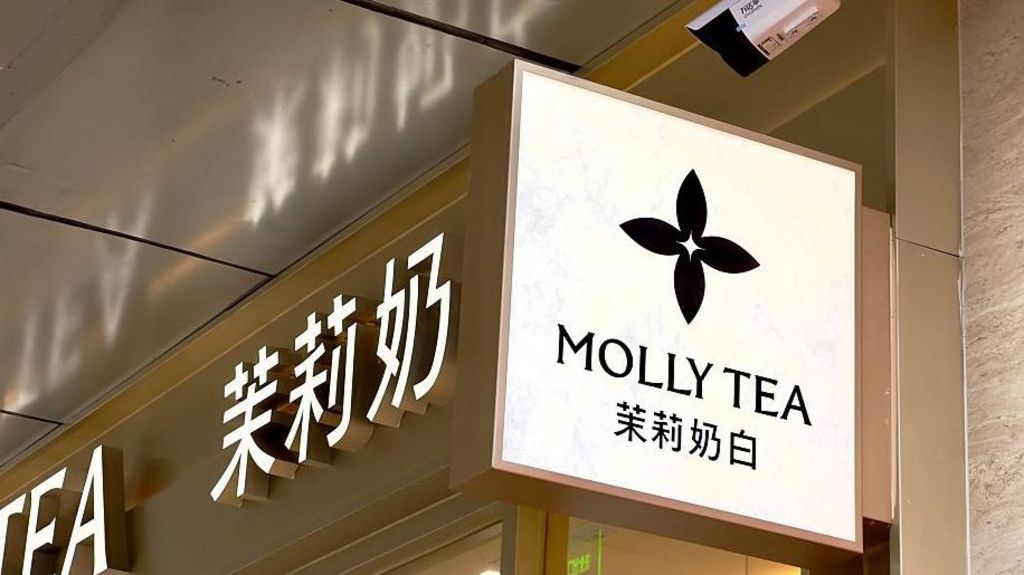
A recent court ruling in eastern China has placed intellectual property protection in the global spotlight after popular domestic tea chain Molly Tea was found guilty of trademark infringement against French luxury giant Louis Vuitton, ordering the beverage brand to pay 10.3 million yuan (equivalent to £1.1 million or $1.5 million) in compensatory damages.
According to state-owned Chinese newspaper China Daily, the Suzhou City Intermediate People’s Court in Jiangsu Province handed down the verdict, which also requires the Shenzhen-headquartered Molly Tea to immediately cease all use of the infringing four-petal flower logo and issue a formal public apology to Louis Vuitton. The outlet further confirmed that Molly Tea and its associated enterprises had previously submitted multiple trademark applications to the China National Intellectual Property Administration, most of which were rejected. Only the textual trademark containing the Chinese characters for “Molly Tea” was ultimately approved for registration.
The ruling quickly went viral across Chinese social media platforms, splitting public opinion and generating heated nationwide discussion. As of this reporting, a hashtag tied to the case has accumulated over 400 million views and tens of thousands of public comments, with neither side backing down from their positions.
Many social media users have voiced support for Molly Tea, pushing back against the court’s conclusion. Critics of the verdict argue that simple four-petal floral geometric patterns have been a common design element across global cultures for centuries, long before Louis Vuitton registered its trademark. Others have pointed to a history of Western luxury brands drawing inspiration from traditional Chinese art and cultural artifacts without formal licensing or credit, noting that many historical patterns originating in China were never formally patented by their creators. One Weibo user publicly pledged to “drink a cup of Molly Tea daily” as an act of solidarity with the brand, while another commentator on Chinese social platform RedNote echoed the sentiment that basic geometric shapes cannot be claimed as exclusive intellectual property by any single brand.
On the opposing side, many online commentators have backed the court’s ruling and Louis Vuitton’s legal action. Supporters of the verdict emphasize that trademark law is clear: Louis Vuitton’s four-petal monogram was formally registered and legally protected, regardless of the historical origins of floral patterns. Many argue that all brands, domestic or international, are required to respect established intellectual property rights, and that imitation cannot be justified regardless of industry differences between a luxury fashion house and a domestic tea chain. One Weibo user noted that critics of the ruling should familiarize themselves with Chinese intellectual property law first, arguing that the legal standing of Louis Vuitton’s claim is unambiguous.
The BBC has reached out to both Molly Tea and Louis Vuitton for official statements responding to the verdict and subsequent public discussion, but no comments have been released as of this update. The case has reignited broader conversations in China about intellectual property protection, the balance between global IP standards and cultural design legacy, and the growing frequency of legal disputes between international luxury brands and domestic Chinese consumer companies.