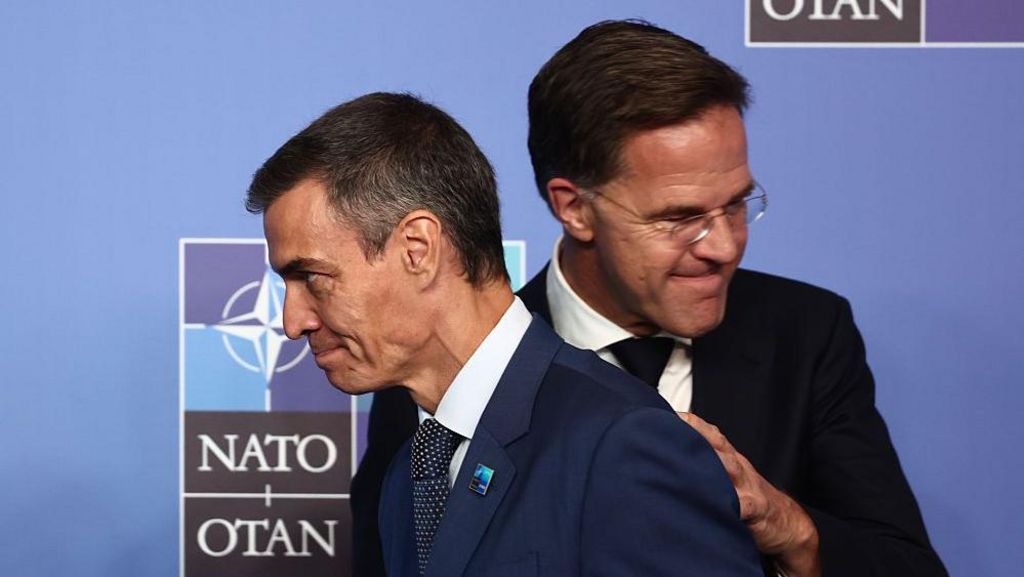
The 2026 NATO summit hosted in Ankara has become a stage for fresh diplomatic friction, as U.S. President Donald Trump launched a new public criticism of alliance member Spain and reignited his long-stated ambition to acquire the self-governing Danish territory of Greenland. Speaking alongside newly appointed NATO Secretary General Mark Rutte, Trump issued a stark threat to cut off all bilateral trade with Spain, labeling the Southern European ally a ‘wasted cause’ and a ‘terrible partner’ within the transatlantic defensive alliance. He also framed NATO allies’ widespread opposition to his Greenland takeover plan as a major sticking point for U.S. interests. The public outburst stems from long-simmering tensions between the Trump administration and Spanish Prime Minister Pedro Sánchez’s socialist government. Earlier this year, Sánchez refused U.S. requests to access Spanish military bases at Morón and Rota for operational missions tied to the conflict with Iran, a stance that already drew Trump’s anger. The U.S. president has also repeatedly pushed Spain to ramp up its defense spending to 5% of gross domestic product, a demand Sánchez has rejected as unreasonable and counterproductive. Currently, Spain meets the existing NATO defense spending target of 2% of GDP, a benchmark many members have only recently hit. This is not the first time Trump has threatened Spain with trade restrictions: he issued an identical warning back in March 2026, after Sánchez publicly stated his opposition to joining military action against Iran. That threat never translated into actual policy changes, and economic data points to the mutually beneficial nature of the bilateral trade relationship. According to figures from the U.S. Congress, total two-way trade between the two nations reached $75 billion in 2025, with the U.S. holding a $3 billion trade surplus over Spain – a fact Madrid has repeatedly highlighted to emphasize the imbalance works in Washington’s favor. Despite the sharp public rebuke from Trump, Spanish officials have responded with deliberate calm, stressing that bilateral relations remain stable and constructive. Following the public confrontation, Sánchez told reporters that he had an informal, friendly chat with Trump during the summit focused on the ongoing FIFA World Cup, and denied any atmosphere of tension between the two leaders. Madrid government sources reaffirmed that Spain has no plans to adjust its long-standing, robust social, cultural and economic ties with the U.S. and will maintain its policy positions unchanged. The European Union has quickly stepped forward to back Spain, with European Commission spokesperson Olof Gill noting that EU-U.S. trade is deeply integrated and delivers mutual benefits for both blocs. Gill emphasized that the European executive will always fully protect the interests of the EU and all its member states, reminding stakeholders of the comprehensive EU-U.S. trade agreement finalized last year that establishes structured tariff rules for cross-Atlantic imports. Beyond his attack on Spain, Trump used the summit platform to repeat long-held grievances against NATO allies, claiming that the alliance has failed to meet its commitments to the U.S. even as Washington has shouldered massive defense costs to protect Europe from Russian aggression. ‘We’ve been there for them, but they weren’t there for us,’ Trump told reporters, asserting that the U.S. has poured more than $1 trillion into European defense efforts in recent years. The U.S. president also once again pushed his controversial plan to acquire Greenland, arguing that the Arctic territory is strategically critical for U.S. national security, and claiming it holds little value for Denmark. Greenland is a semi-autonomous territory that remains under Danish sovereignty, and both Copenhagen and Nuuk have repeatedly rejected any suggestion that the territory is up for sale. On the sidelines of the NATO summit, Danish Prime Minister Mette Frederiksen reaffirmed that long-standing position, while the European Commission stressed that any decisions regarding Greenland’s status are exclusively for Greenlandic and Danish stakeholders to make. Danish Foreign Minister Lars Løkke Rasmussen later noted that while Trump raised the topic publicly with reporters, he did not bring up the acquisition proposal during closed-door summit negotiations. Despite the public drama generated by Trump’s comments, NATO Secretary General Mark Rutte characterized the summit as a tremendous success, highlighting that all 32 member states reaffirmed their unwavering commitment to the alliance’s Article 5 mutual defense clause, which frames an attack on one member as an attack on all.
Trump takes aim at ‘wasted cause’ Spain and revives Greenland claim at Nato summit