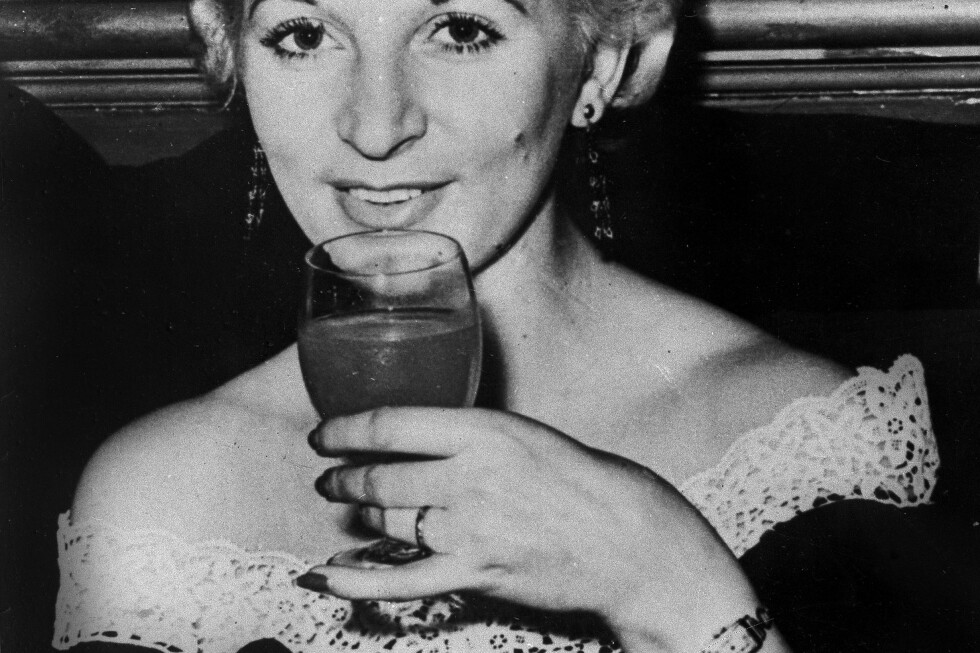
LONDON – Seventy-one years after Ruth Ellis became the final woman executed in Britain, the UK government has granted her a posthumous conditional pardon, recognizing a profound miscarriage of justice in one of the nation’s most infamous 20th-century legal cases.
Ellis, a 28-year-old nightclub hostess and single mother, was hanged at London’s Holloway Prison on July 13, 1955, after being convicted of murdering her abusive partner, race-car driver David Blakely. The fatal shooting took place outside the Magdala pub in North London’s Hampstead neighborhood on April 10 that same year, following months of escalating abuse that the trial would never consider as a mitigating factor.
Deputy Prime Minister David Lammy announced the long-awaited pardon this Wednesday, clarifying that the executive action does not dispute that Ellis killed Blakely, but instead revises her original sentence: replacing the unlawful by modern standards death penalty with a life imprisonment sentence to correct a clear historical injustice. “This exceptional case exposed a gaping flaw in the mid-century British justice system that cannot stand,” Lammy noted in his official statement.
The killing and subsequent rapid trial sparked immediate national outcry. When Ellis was led to the gallows, nearly 1,000 members of the public gathered outside Holloway Prison for a silent vigil protesting the sentence, turning the case into a cultural and political cause celebre that reshaped British criminal law. Just two years after Ellis’s execution, Parliament passed a landmark bill introducing the diminished responsibility defense, a change legal experts widely trace back to public outrage over the shortcomings of her trial.
For decades after the execution, Ellis’s family campaigned for justice, with her grandchildren leading the modern push to revise her conviction. Last year, legal representatives from Mishcon de Reya submitted a formal pardon application on the family’s behalf, presenting extensive evidence that Ellis met the modern diagnostic criteria for battered woman syndrome. As the firm outlined, multiple witnesses including Ellis’s close friends and treating physicians confirmed Blakely subjected her to repeated brutal abuse: public assaults that left her covered in bruises, a push down a flight of stairs that caused severe injury, and one severe blow to her abdomen that resulted in a miscarriage. Blakely also repeatedly threatened to kill Ellis, leaving her in constant fear for her life.
During the 1955 trial, however, jurors were explicitly barred from considering any evidence of Ellis’s abuse at Blakely’s hands. The entire proceeding lasted little more than 24 hours, and the jury returned a guilty verdict in under 30 minutes. Pardon campaign legal teams argue that if the 1957 diminished responsibility law had been in place at the time of Ellis’s trial, she would likely have been convicted of manslaughter rather than murder, avoiding the death penalty entirely.
Speaking after the pardon announcement, Laura Enston, one of Ellis’s grandchildren, said the acknowledgment of injustice ends a decades-long fight for her family. “Justice has finally been done,” Enston said. “This pardon does not undo what happened 71 years ago. It does not restore the lives that were broken — the children left behind, the years lost. But it says, formally and finally, that Ruth should not have been executed; that the justice system failed her. That acknowledgment matters profoundly to our family.”
Enston also detailed the intergenerational trauma caused by Ellis’s execution. Ellis’s two children never recovered from their mother’s death: her son died by suicide, and lifelong trauma left Ellis’s daughter unable to care for her own children during much of their childhood. “The shadow of Ruth’s execution has fallen across two generations. We have carried shame that was never ours to bear,” Enston added.
The UK formally suspended capital punishment for murder in 1965, and fully abolished the death penalty across all offenses in 1970. Ellis’s case has remained a cultural touchstone in Britain in the decades since her death, inspiring the 1985 feature film *Dance with a Stranger* and a 2024 ITV miniseries titled *A Cruel Love: The Ruth Ellis Story*.