At the NATO summit held in Turkey, U.S. President Donald Trump delivered an unusually harsh verbal attack against Iran, issuing a stark new threat of expanded military action that has sent fresh shockwaves through already tense Middle Eastern geopolitics. In unvarnished remarks, Trump dismissed Iran’s leadership as “scum” and “sick, vicious people,” claiming the regime would immediately use a nuclear weapon if it acquired one, and declaring that diplomatic efforts to resolve the standoff were effectively finished. “It’s over,” he told reporters, before doubling down on the threat of new attacks hours later: “We will probably hit them harder again tonight. I gave them a little warning. We’re going to hit them hard again tonight.”
Trump’s shifting rhetoric on the conflict has been well-documented: he has alternated between declaring victory over Iran, threatening the complete destruction of Iranian civilization, and signaling openness to negotiated settlement. Even in his latest bellicose remarks, however, the president left the door open for ongoing talks. When asked whether the recent escalation of strikes between U.S. forces and Iran had ended negotiations, Trump noted that his chief negotiators Steve Witkoff and Jared Kushner could continue discussions if they chose, adding “I don’t care, they can talk. But I think they’re wasting their time,” and labeling Iranian leaders “a bunch of lying guys.”
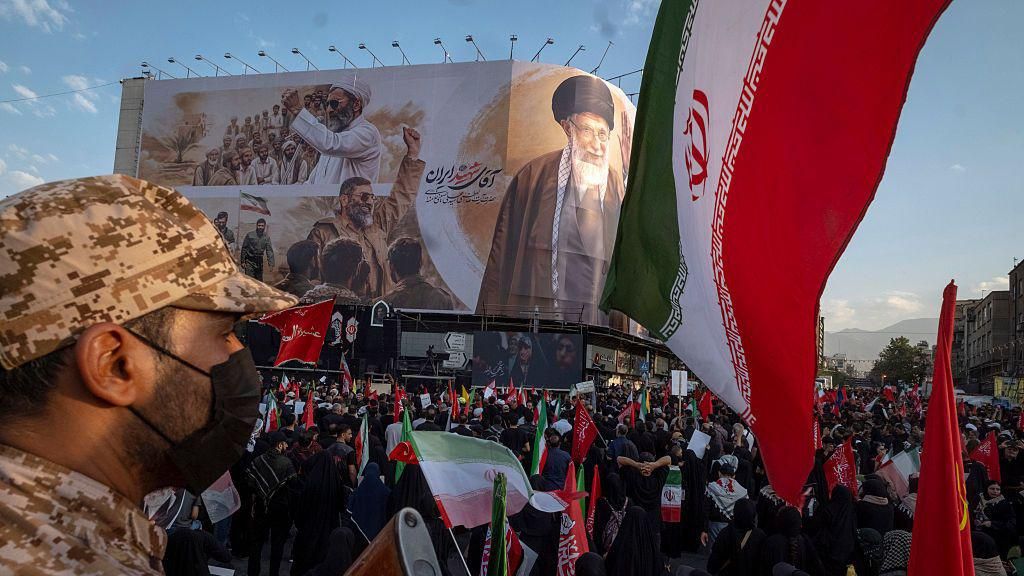
This mixed messaging underscores a core reality: despite months of joint military operations by the U.S. and Israel, the two countries have failed to topple the Islamic regime in Tehran, leaving diplomacy as the only viable path forward for Washington. The current crisis comes amid a period of national mourning in Iran, which this week held funeral rites for former Supreme Leader Ayatollah Ali Khamenei, who was killed in a U.S.-Israeli airstrike on the first day of the war on February 28. Negotiations had already been paused to accommodate the funeral period, and the new round of threats has dealt a significant blow to already fragile diplomatic efforts.
Mediators working to broker a negotiated settlement described the recent escalation as “a setback for sure,” noting the atmosphere between the two sides is “very tense.” The deep lack of trust between Washington and Tehran means even minor escalations can derail progress, as neither side believes the other will uphold the terms of any final agreement. No one disputes that the U.S. retains overwhelming military capacity to inflict massive damage on Iranian targets, but successive strikes have failed to break the Iranian regime’s resolve to defend its core strategic demands, chief among them full Iranian control over the Strait of Hormuz.
The strait remains the central sticking point in all negotiations. Roughly one-fifth of the world’s global oil and gas supplies pass through its waters, giving Iran unparalleled leverage over the global economy – a far more practical strategic asset than an unbuilt nuclear program. Tehran has made clear it will not surrender authority over the strait, even if that means walking away from a proposed memorandum of understanding (MOU) that includes significant economic incentives for Iran, such as the unfreezing of billions in overseas assets and the lifting of restrictions on Iranian oil exports. The regime has been emboldened by the failure of U.S. and Israeli forces to eliminate it, and Khamenei’s well-attended funeral demonstrated that the Islamic government retains a strong base of domestic support. While domestic opposition to the regime still exists, a brutal crackdown on mass protests in January that killed thousands of demonstrators has forced opposition groups into hiding, eliminating any immediate domestic challenge to Tehran’s leadership.
The framework for a potential final agreement has already been outlined by mediators. In exchange for international recognition of Iran’s authority over the Strait of Hormuz, the unfreezing of overseas assets, and the normalization of Iranian oil exports, Tehran would agree to new limits on uranium enrichment, allow the return of United Nations nuclear inspectors, and account for existing stockpiles of highly enriched uranium – which Trump has labeled “nuclear dust.” Even as the broad outlines of a deal remain on the table, however, the past 24 hours of escalation have underscored how difficult it will be to bridge the gap between the two sides and reach a lasting, stable resolution to the conflict.