博客

  • Businesses report blocked payments from Saudi Arabia to the UAE, raising fears of worsening ties

    Businesses report blocked payments from Saudi Arabia to the UAE, raising fears of worsening ties

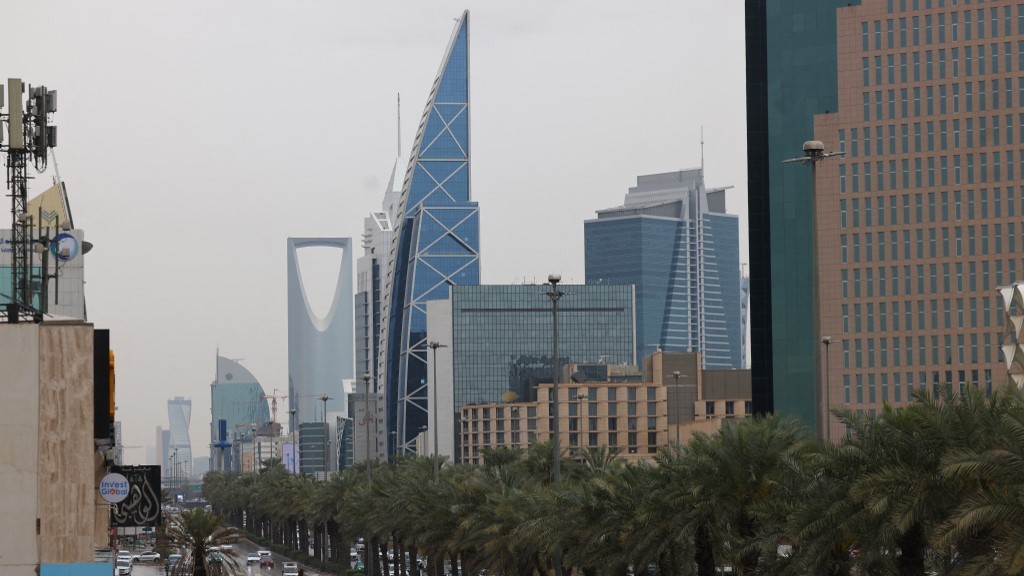
    Rumors of delayed or frozen cross-border money transfers from Saudi Arabia to United Arab Emirates-based accounts have sparked growing alarm that long-simmering political tensions between the two wealthy Gulf neighbors are finally spilling over into their critical bilateral commercial relationship. Multiple anonymous sources speaking to the *Financial Times* confirmed that starting in May, payments routed through Saudi banks to UAE accounts held by Dubai-based companies and individual clients have been repeatedly held up or returned, in most cases with no formal explanation provided for the hold. One Western executive working for a Dubai-headquartered healthcare firm told the outlet that since mid-May, Saudi financial institutions have blocked and reversed multiple payments coming from a long-standing Saudi customer of the company.

    In an official response to inquiries from the *Financial Times*, Saudi Arabia’s central bank issued a denial, stating it had not put in place any “direct restrictions on specific countries” as part of its routine financial oversight.

    The reported disruptions have hit one of the most economically significant bilateral partnerships in the Gulf region. Though the two nations have long been framed as formal allies, their relationship has been fraying for years over a growing list of regional policy disagreements. Most notably, the UAE has built a close strategic alliance with Israel, a step Riyadh has refused to take, as the Saudi government still does not formally recognize Israeli statehood. Saudi policymakers also have publicly opposed the UAE’s support for separatist political movements active in both Somalia and Yemen.

    As the two largest economies in the Arab world, their commercial ties carry massive regional weight: Saudi Arabia boasts a gross domestic product of roughly $1.2 trillion, while the UAE’s economy totals around $550 billion, and annual bilateral trade between the two already tops $20 billion. For decades, international and regional companies have used Dubai’s business-friendly ecosystem as a regional hub to access the Saudi market, but in recent years Riyadh has pushed aggressively to encourage firms to relocate their regional operations to the kingdom as part of its Vision 2030 economic diversification plan, which aims to retain more domestic business, job opportunities and foreign investment within Saudi borders.

    Kristian Coates Ulrichsen, a Middle East fellow at Rice University’s Baker Institute, noted that strategic and economic competition between the two powers is nothing new, and past periods of tension have not resulted in a permanent breakdown of ties. “There has always been economic competition between the two sides and this is not the first time that such measures have reportedly been deployed to raise the stakes, and the relationship survived previous bouts of tension in the late 2000s and in 2021 as well,” Ulrichsen told *Middle East Eye*. The most severe recent escalation of tensions dates back to last December, when Riyadh accused Abu Dhabi of backing a secessionist Yemeni faction that launched an offensive against military forces aligned with Saudi Arabia. The confrontation eventually forced the UAE to withdraw its own military personnel from Yemen, after Saudi forces launched targeted attacks on UAE-backed Yemeni groups. At the time, Saudi Arabia stated that the UAE, once its core partner in the Saudi-led coalition that entered Yemen’s civil war in 2015 to fight the Houthi movement, had threatened Saudi national security by supporting the secessionist offensive. The years-long Yemeni conflict has failed to defeat the Houthis and has already claimed the lives of hundreds of thousands of Yemeni civilians and combatants.

    That December dispute triggered the worst diplomatic rupture between the two Gulf states in decades, and brought long-simmering rivalries over trade strategy, oil policy and regional influence out into the open. Tensions were temporarily sidelined after the United States and Israel launched their campaign against Iran, as Gulf states moved to present a unified front following Iranian strikes on regional targets in retaliation. Ulrichsen explained that the underlying disagreements never truly resolved themselves, only faded from immediate focus. “It’s likely that the tensions never really went away but the immediacy and urgency of the Iranian attacks on the Gulf meant that they faded into the background during the war,” he said.

    Early this year, the UAE surprised neighboring Gulf states with its announcement that it would withdraw from OPEC, the oil exporting cartel that is effectively led by Saudi Arabia. While Abu Dhabi framed the decision as a reflection of its independent “economic vision and evolving energy profile,” the move was widely interpreted as a major strategic snub to Riyadh. Despite mounting diplomatic friction, Saudi officials have repeatedly maintained that political tensions with the UAE will not damage bilateral trade and economic ties.

  • The Pitt leads Emmy nominations, but Stranger Things snubbed in top categories

    The Pitt leads Emmy nominations, but Stranger Things snubbed in top categories

    The stage is set for the 78th annual Emmy Awards, television’s most prestigious honor in the United States, and two standout series have surged to the top of this year’s nominee lineup. HBO Max’s gripping new medical drama *The Pitt* claims the highest number of nominations with 25 total nods, while the farewell season of HBO Max’s beloved comedy *Hacks* trails closely behind with 24 nominations, cementing both shows as the frontrunners heading into the September awards ceremony.

    A notable contingent of British acting talent has earned recognition across multiple categories this year. Leading the pack is Welsh star Matthew Rhys, who made history as the only nominee to land two lead acting nods: one for Best Lead Actor in a Comedy for Apple TV+’s *Widow’s Bay*, and a second for Best Lead Actor in a Limited Series for Netflix’s *The Beast In Me*. Rhys is joined by fellow British nominees including Riz Ahmed for *Bait*, Carey Mulligan for *Beef*, Gary Oldman for *Slow Horses*, and Rufus Sewell for *The Diplomat*, all of whom earned nods in major acting categories.

    However, this year’s nomination round has also brought several high-profile snubs that have already sparked industry conversation. Two of Netflix’s biggest hit series, *Stranger Things* and *Euphoria*, both wrapping their final seasons, failed to secure a spot in the coveted Best Drama Series shortlist. *Stranger Things* walked away with seven total nominations, all of which are in technical categories such as cinematography and editing, while *Euphoria* lead Zendaya is the only cast member to earn a main acting nomination, picking up a nod for Best Lead Actress in a Drama Series.

    Another surprise omission came for *The Bear*, the critically acclaimed FX on Hulu comedy that just concluded its run. While the series earned a spot on the Best Comedy Series shortlist, its lead star Jeremy Allen White – who took home the Emmy for Best Lead Actor in a Comedy in both 2024 and 2025 – was left off this year’s nominee list.

    The full list of nominees spans all major television genres and platforms, with *Widow’s Bay* (19 nominations), *Pluribus* (18 nominations), and *Beef* (16 nominations) rounding out the top five most-nominated shows this year. In the Best Drama Series category, nominees include *The Diplomat* (Netflix), *The Gilded Age* (HBO Max), *A Knight Of The Seven Kingdoms* (HBO Max), *Paradise* (Hulu), *The Pitt* (HBO Max), *Pluribus* (Apple TV+), *Slow Horses* (Apple TV+), and *Your Friends & Neighbors* (Apple TV+).

    For Best Comedy Series, the lineup features *Abbott Elementary* (ABC), *The Bear* (FX/Hulu), *Hacks* (HBO Max), *Margo’s Got Money Troubles* (Apple TV+), *Nobody Wants This* (Netflix), *Only Murders In The Building* (Hulu), *Shrinking* (Apple TV+), and *Widow’s Bay* (Apple TV+). The Best Limited or Anthology Series category nominees are *All Her Fault* (Peacock), *The Beast In Me* (Netflix), *Beef* (Netflix), *DTF St Louis* (HBO Max), and *Love Story: John F Kennedy Jr & Carolyn Bessette* (FX/Hulu).

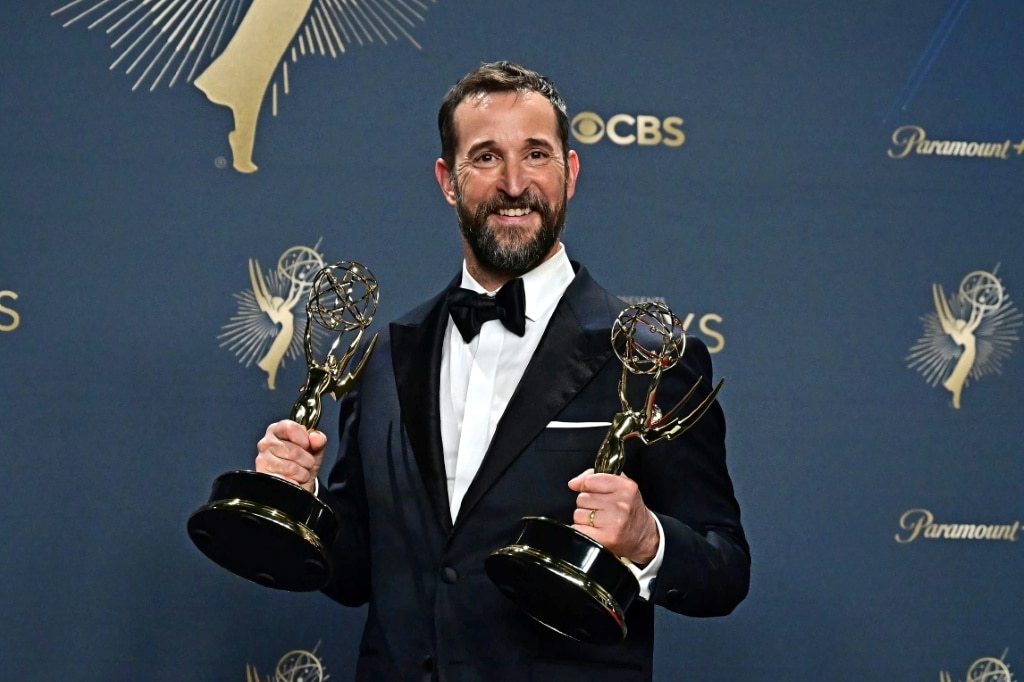
    For *The Pitt*, lead star Noah Wyle earned a triple nomination this year: he is up for Best Lead Actor in a Drama, in addition to nods for directing and co-producing the series, marking a career high for the actor. *Hacks* also saw multiple cast members recognized, with Jean Smart and Hannah Einbinder both earning comedy acting nominations.

    Winners across all 78th Emmy Award categories will be announced during a live ceremony hosted in Los Angeles on September 14. Additional related content from this year’s nominee class includes exclusive interviews with Noah Wyle, Matthew Rhys, and Carey Mulligan, alongside deep dives into fan-favorite series that wrapped their runs this season.

  • Ukraine to get licence to produce Patriot missiles, Trump says

    Ukraine to get licence to produce Patriot missiles, Trump says

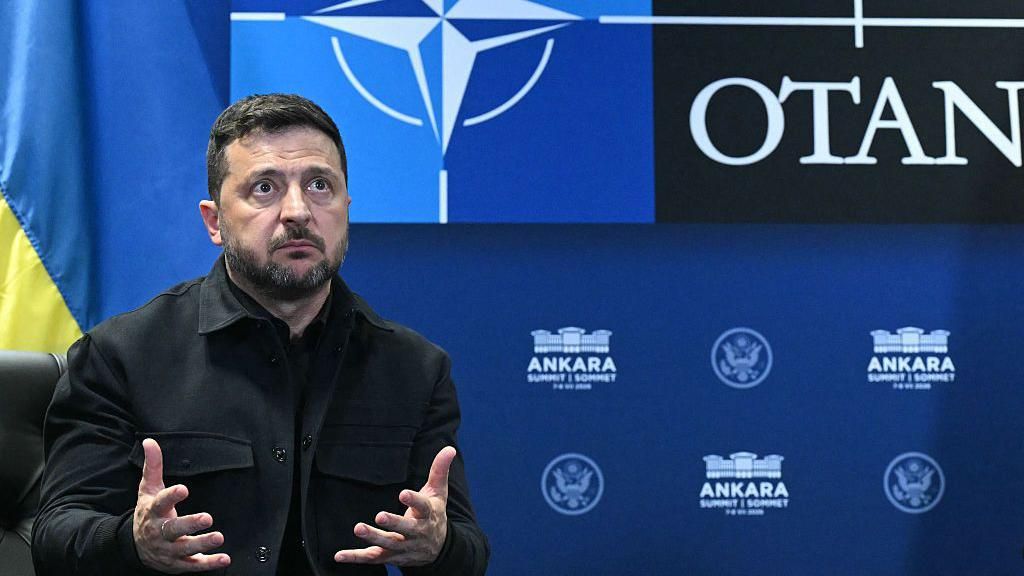
    At Wednesday’s NATO summit held in Ankara, U.S. President Donald Trump made a landmark announcement to Ukrainian President Volodymyr Zelenskyy: the United States will grant Ukraine a license to domestically produce Patriot air defense interceptor missiles, a critical capability Kyiv has urgently sought to fend off intensifying Russian ballistic missile attacks.

    “We are gonna give you a licence to make Patriots,” Trump told Zelenskyy during the meeting. “I think they can produce them very quickly once we explain it.” The U.S. leader added that he had not yet notified the two primary manufacturers of the Patriot system—defense giants Lockheed Martin and Raytheon—of his decision, but expressed confidence that the plan would move forward smoothly.

    The Patriot system, globally recognized as one of the world’s most capable air defense platforms, is designed to detect and destroy incoming hostile missiles. However, it is also one of the most expensive: a full single battery, including its complement of interceptors, carries an estimated price tag of roughly $1 billion. Production of the missiles is also a slow, complex process, with U.S. Department of Defense data showing only 600 interceptors roll off production lines annually.

    Washington has been unwilling to draw down its existing stockpile of Patriots for Ukraine, a reluctance underscored by data from the Center for Strategic and International Studies (CSIS), a Washington-based think tank. The group notes that the U.S. already depleted more than half of its Patriot stockpile during its conflict with Iran earlier this year. “We have Patriots, but we don’t have that many. We need them for ourselves too,” Trump acknowledged.

    For Ukraine, the need for additional Patriot interceptors could not be more pressing. Over recent months, Russia has dramatically ramped up its ballistic missile campaign against Ukrainian targets, with dozens of fatalities recorded in Kyiv alone in the week leading up to the NATO summit. As far back as late May, Zelenskyy publicly confirmed that Ukraine had submitted a formal request to the U.S. for authorization to produce Patriots under license.

    After more than four years of full-scale war, frontline fighting has largely stagnated, and maritime activity across the Black Sea remains at a standstill. Ukraine has also developed effective tactics to counter the nearly nightly waves of Iranian-designed Shahed drones Russia launches at its infrastructure. But ballistic missiles remain Russia’s “last major advantage,” as Zelenskyy has framed them: they travel at hypersonic speeds along steep trajectories, making them far harder to intercept than slower drones, and many routinely breach Ukraine’s overstretched, under-resourced air defense networks.

    Just days before the summit, the Ukrainian Air Force revealed that a severe shortage of interceptor missiles left its defenses unable to shoot down a single one of the 23 Russian ballistic missiles fired in a major Sunday night attack. The strike killed more than 20 civilians.

    Trump framed the license offer as a solution to Ukraine’s repeated calls for more air defense capabilities, saying it would mean Ukraine “couldn’t complain that we’re not giving them enough.”

    Despite the announcement, however, skepticism remains widespread in Kyiv about the feasibility of producing the advanced interceptors on Ukrainian territory amid ongoing war. Military expert Ivan Stupak, a former Ukrainian security service officer, told the BBC that while Patriots are irreplaceable for Ukraine’s national defense, domestic manufacturing is not currently possible. “Unfortunately, Ukraine is not able to produce such kinds of advanced munition, because it’s really sophisticated, cutting-edge equipment,” Stupak explained.

    Stupak argued that any licensed production would most likely be relocated to other European soil under Western supervision, a shift that would add many months to the process. He added that security concerns make production in Ukraine impossible right now: “We have no safe place on the entire Ukrainian territory.”

    Beyond the Patriot announcement, the summit discussion also covered Ukraine’s recent long-range strike campaign, which has successfully hit Russian targets thousands of kilometers behind the front line. Trump acknowledged that the strikes represent an escalation of the conflict, but argued that the pressure could ultimately help bring the war to a close: “It’s an escalation, but it’s also an escalation that can help lead to an end.”

    U.S. Secretary of State Marco Rubio, who joined Trump for the meeting, echoed that framing, saying Ukrainian strikes on Russian oil refineries are necessary to demonstrate to the Kremlin that its own airspace is far from impenetrable, creating greater incentive for Moscow to negotiate an end to the conflict.

    Trump also repeated his longstanding claim that Russian President Vladimir Putin, with whom Trump says he speaks regularly, is open to striking a peace deal to end the full-scale invasion that began in 2022. The U.S. president has made similar assertions repeatedly, but his past efforts to broker peace talks between Kyiv and Moscow have yet to produce any tangible progress.

    As he has done in the past, Trump raised the possibility of a direct meeting between Zelenskyy and Putin to negotiate an end to hostilities. Putin has repeatedly stated he would be open to such a meeting, but has insisted it be held in Moscow—a condition widely viewed as a provocation, since the Kremlin knows Zelenskyy would never agree to travel to the Russian capital for talks. When Trump asked Zelenskyy directly if he would be willing to travel to Moscow, the Ukrainian president responded with a characteristic quip: “It’s difficult – there are a lot of Ukrainian drones there.”

  • France coach Didier Deschamps says Michael Olise’s World Cup yellow card appeal failed

    France coach Didier Deschamps says Michael Olise’s World Cup yellow card appeal failed

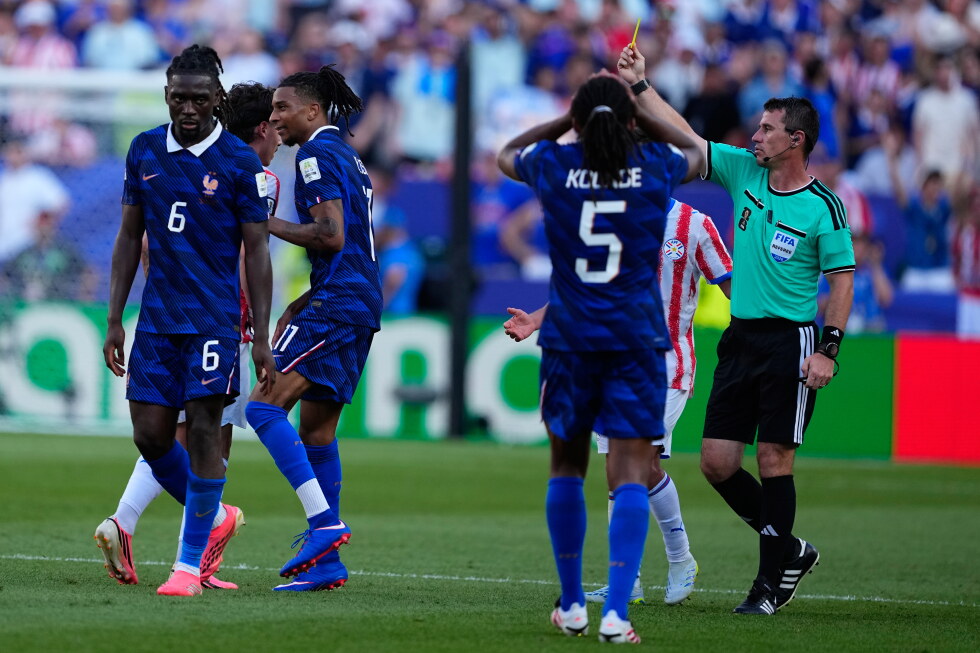
    FOXBOROUGH, Mass. – As France prepares for a highly anticipated World Cup quarterfinal showdown against Morocco on Friday, head coach Didier Deschamps confirmed Wednesday that FIFA has turned down the French Football Federation’s appeal to overturn a controversial yellow card issued to star winger Michael Olise during Les Bleus’ narrow 1-0 Round of 16 victory over Paraguay.

    “We received FIFA’s official ruling this morning, and Olise’s yellow card stands unchanged,” Deschamps told reporters at France’s pre-match press conference. The upholding of the caution means Olise will be at risk of automatic suspension for a potential semifinal spot if he picks up another booking in Thursday’s do-or-die clash with Morocco.

    The yellow card in question was handed to Olise in the 97th minute of the knockout stage match, following a brief altercation with Paraguayan midfielder Matías Galarza. Galarza fell to the turf during the exchange, but television replays offered no clear evidence of aggressive foul play from Olise, only showing the French attacker lightly grabbing Galarza’s jersey before the opposition player tumbled.

    France’s appeal gained added context from a recent high-profile precedent: last week, former U.S. President Donald Trump personally placed a phone call to FIFA President Gianni Infantino to lobby against a red card suspension for U.S. striker Folarin Balogun, who was set to miss the Stars and Stripes’ final group stage match against Belgium. FIFA ultimately reversed the suspension and cleared Balogun to play, though the decision did not save the U.S. team, which was eliminated from the tournament with a lopsided 4-1 defeat despite having Balogun in the starting lineup.

    Olise’s appeal outcome dominated the opening of Deschamps’ Wednesday press conference, with France bidding to become just the third men’s national team in history to reach three consecutive World Cup semifinals, joining Germany (which recorded three straight semifinal runs from 1982 to 1990, and four consecutive from 2002 to 2014) and Brazil (three straight from 1994 to 2002). Beyond the booking controversy, Deschamps was forced to address a string of off-field issues that have cast a shadow over France’s buildup to the massive quarterfinal tie, including racist remarks targeting superstar Kylian Mbappé, widespread concerns about refereeing, and questions about his own upcoming departure from the national team after the tournament.

    The racist comments targeting Mbappé came from a Paraguayan senator following Paraguay’s elimination by France in the Round of 16. Mbappé publicly condemned the remarks earlier this week, and Deschamps said Wednesday that the 35-year-old forward has remained focused on the upcoming match despite the abuse.

    “Kylian is fine. He is incredibly strong, both mentally and physically, and he does not want to waste energy looking back on this ugly incident,” Deschamps said. “His full attention is on tomorrow’s game, nothing else.”

    The Paraguayan match also drew referee criticism after three French players received cautions, while no Paraguayan players were booked despite the game’s physical, ill-tempered tone. Deschamps, however, played down concerns about officiating bias heading into the Morocco match.

    “Officiating is completely out of our control, and I trust the referees to do their jobs,” Deschamps noted. “Some decisions will always spark debate, that’s part of football, and different people will have different views. Our opponent tomorrow is Morocco, not the referee. The referee is there to apply the laws of the game fairly, that is all we ask.”

    Deschamps also pushed back on repeated questions about his impending departure from the French national team, a role he has held for 14 years. The 55-year-old won the 2018 World Cup as head coach, and he lifted the trophy as captain of France’s 1998 World Cup-winning squad as a player. He is set to step down after this tournament regardless of the team’s final result.

    “Thank you for the questions, but I am not thinking about what comes next right now,” Deschamps said. “Every game at this stage could be my last in charge, and that is exactly how I am approaching it. My entire focus, and the entire focus of our technical staff, is on beating Morocco tomorrow. That is our only goal. There are many possible outcomes in football, but right now we are only thinking about getting the win.”

    Ahead of the match, French law enforcement has already mobilized thousands of officers in anticipation of potential post-match unrest no matter the result, underscoring the high stakes of the clash between the two sides, who previously met in the 2022 Qatar World Cup semifinals.

  • Five crew remain missing after plane wreckage found in Pakistan

    Five crew remain missing after plane wreckage found in Pakistan

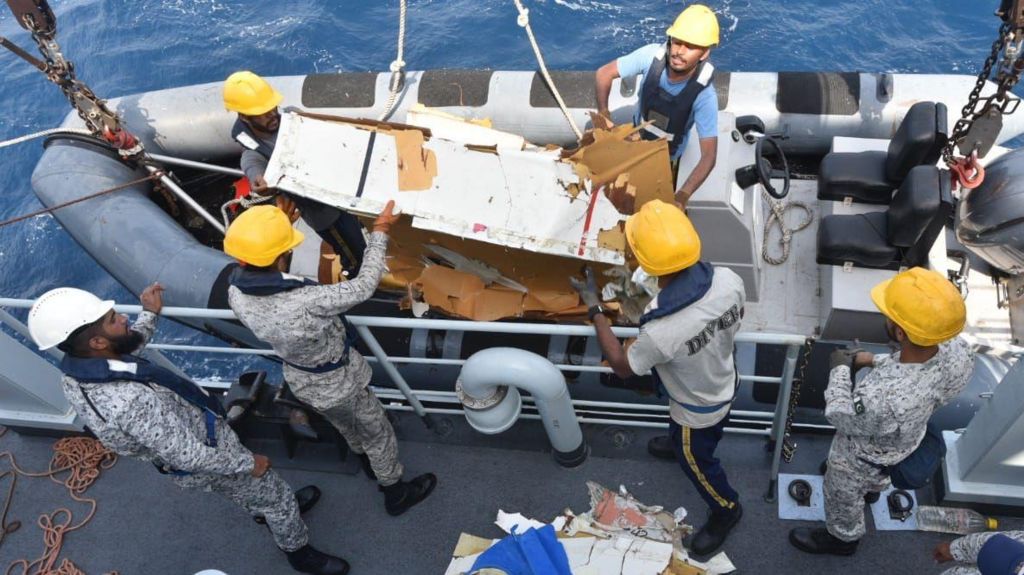
    A multiagency air and sea search operation has located the wreckage of a missing private cargo plane off Pakistan’s Arabian Sea coast, 12 hours after the Boeing 737 lost contact with air traffic controllers mid-flight, national aviation officials confirmed. All five crew members on board the aircraft, which was operated by Pakistani carrier K2 Airways, remain missing as rescue efforts enter a new phase.

    The cargo jet departed Karachi, Pakistan’s southern coastal commercial hub, on Tuesday bound for Sharjah, United Arab Emirates. According to official statements from the Pakistan Airports Authority, the plane suffered a sudden, rapid descent and cut off communication with ground control at 21:21 local time (16:21 GMT). Only minutes before the unexpected descent, the flight crew had reported a critical failure in the aircraft’s navigation systems, authorities added.

    Search teams pulled the wreckage from waters 53 nautical miles south of Ormara, a small port town situated roughly 223 miles west of Karachi, the plane’s departure point. The 12-hour search operation deployed both maritime and aerial assets to scan the remote stretch of Arabian Sea before debris was located.

    The incident marks the first major aviation accident in Pakistani airspace in nearly six years. The last major tragedy occurred in 2020, when a Pakistan International Airlines domestic passenger flight crashed on approach to Karachi’s main airport. Out of the 99 people on board that flight, only two survived the crash.

    Authorities have not yet released details on potential causes of the 2024 incident, nor an updated timeline for the ongoing search for the missing five crew members. Rescue teams are continuing to comb the crash site in hopes of recovering additional debris and locating the crew.

  • From the 2010 Olympics to the World Cup, Vancouver has pioneered Indigenous inclusion

    From the 2010 Olympics to the World Cup, Vancouver has pioneered Indigenous inclusion

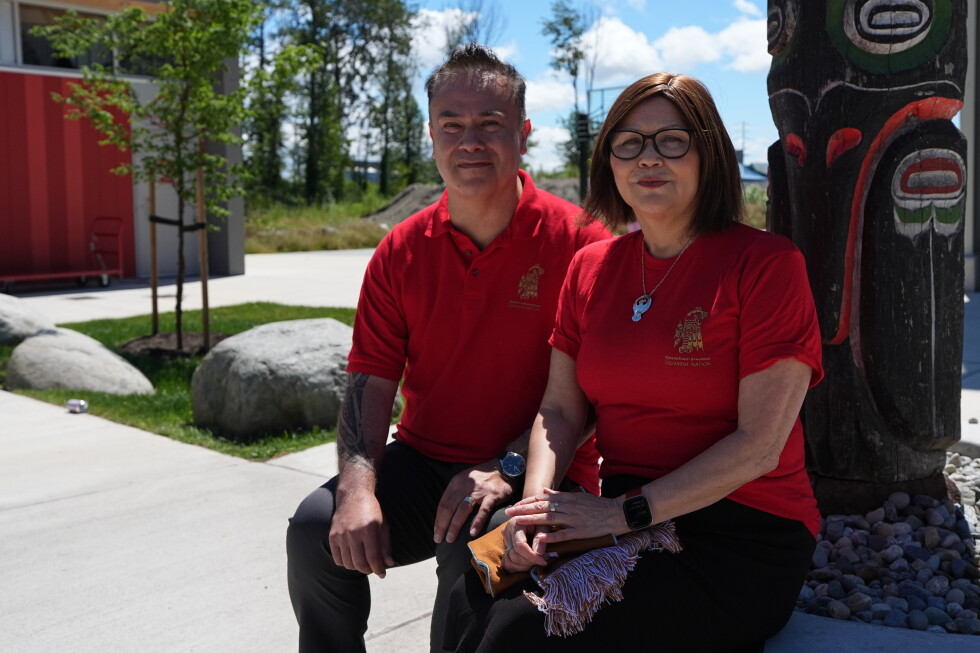
    As soccer fans pack Vancouver’s 2026 FIFA World Cup fan festival, filling the air with cheers broadcast on giant screens and the aroma of local Canadian specialties like poutine, one element sets this fan zone apart from those of many past major international tournaments: curated exhibits highlighting the three Indigenous nations that have lived on this land since time immemorial — the Squamish, Musqueam, and Tsleil-Waututh peoples. This inclusion is no afterthought: the three First Nations hold formal partnership status with the local World Cup organizing committee, building on a groundbreaking precedent set at the 2010 Vancouver Winter Olympics.

    This model of centering Indigenous voices in mega-sporting events has become an increasingly common industry standard, spreading from the 2023 Women’s World Cup co-hosted by Australia and New Zealand to the upcoming 2028 Summer Olympic Games in Los Angeles. For Vancouver organizers, the core goal was to move beyond performative recognition, seat Indigenous leaders at the planning table from day one, and create a sustainable platform that elevates public awareness of local Indigenous communities while leaving long-term, tangible benefits for future generations.

    “What we learned from the 2010 Games, and what we carry forward today, is that a key message of this partnership is to share the incredible cultural diversity that shapes this region,” explained Tewanee Joseph, who leads major events strategy for the Squamish Nation and previously served as CEO of the Four Host First Nations for the 2010 Vancouver Winter Olympics. “We are not a people who only exist in history books. We are still here, we are living, and our cultures are thriving today.”

    The 2010 Winter Games marked a historic turning point for Indigenous inclusion in global sports: it was the first time the International Olympic Committee formally granted Indigenous groups status as official co-host partners for the event, which was held on the traditional territories of the Squamish, Tsleil-Waututh, Musqueam, and Lil’Wat nations.

    Vancouver is not the only 2026 World Cup host city to embed Indigenous leadership in its planning. In Seattle, the Puyallup Tribe holds the title of official Presenting Legacy Sponsor for the city’s 2026 World Cup host organization, SeattleFWC26. Toronto opened its 2026 World Cup welcoming ceremonies with performances by Indigenous dancers and Grammy-nominated Peguis First Nation musician William Prince, while the city’s fan festival hosts the Tkaronto Market, which showcases handcrafted goods and art from local Indigenous creators. South of the border in Mexico, FIFA has partnered with the National Fund for the Promotion of Handicrafts to elevate Indigenous artisans, who create unique soccer-themed folk art for the tournament.

    FIFA has formalized this commitment for the 2026 tournament, naming Indigenous engagement as a central pillar of its global sustainability and human rights strategy, with a mandate to build respectful collaborative relationships with Indigenous communities across all three 2026 host nations: Canada, the United States, and Mexico. This policy builds on work the governing body launched in 2023, when it partnered with the Office of the United Nations High Commissioner for Human Rights to run the Unite for Indigenous Peoples campaign.

    The 2023 Women’s World Cup in Australia and New Zealand served as a test case for this new inclusive framework. Led by an advisory panel of six Indigenous women, FIFA fully integrated First Nations culture in Australia and Māori culture in New Zealand into every level of tournament operations. Indigenous place names and terminology were added to all official signage, Indigenous flags were flown full-time at match stadiums, New Zealand featured the traditional Māori karanga welcome call before every match, and Australia included formal Welcome to Country ceremonies led by Aboriginal or Torres Strait Islander elders at all pre-match events.

    The push for deeper Indigenous inclusion extends far beyond FIFA’s World Cup events. Organizers for the 2028 Los Angeles Olympics drew on the Indigenous origins of lacrosse to reinstate the sport as an official Olympic medal event for the first time in more than a century, since the 1908 London Games. The Haudenosaunee Confederacy, which is widely recognized as the original creator of lacrosse, has lobbied for years to compete as an independent delegation at the Olympics, though that bid has not yet been successful.

    For British Columbia’s Indigenous tourism sector, the World Cup partnership is more than a symbolic win — it delivers meaningful economic opportunity. Data from Destination British Columbia shows Indigenous tourism generates CAD 1.1 billion in annual economic activity for the province, with 31% of international travelers actively seeking out authentic Indigenous cultural experiences during their visits.

    Indigenous Tourism BC’s Paula Amos notes that the fan festival exposure is designed to create long-term demand, not just short-term buzz during the tournament. “We’re telling visitors that once the final whistle blows on the World Cup, the experience doesn’t end here,” Amos explained. “We want to inspire people to come back with their families, to explore authentic Indigenous tourism experiences across the province. Vancouver is the perfect gateway to British Columbia, so we’re using this platform to highlight destinations and experiences across every region of the province to encourage longer, deeper visits.”

    As formal planning partners, each of Vancouver’s three host First Nations will receive CAD 6 million to fund community legacy projects. The Squamish Nation has already announced plans to use its allocation to build a public youth soccer field in West Vancouver. But community leaders say the most important impact of the partnership cannot be measured in dollars or infrastructure.

    For Joseph, the most meaningful outcome is seeing Indigenous community members participate openly and proudly in the global tournament. “My favorite part of this whole experience is seeing our nation’s members walking the streets of Vancouver, joining in the fan festival, gathering at our community watch parties, and carrying themselves with such pride,” he said. “Visitors ask questions about our culture, they want to learn about our role on this land, and that recognition means everything. To see our people front and center, standing tall and proud of who they are — those are the memories that will last. This is all about people, and the connection between different cultures that comes from this work.”

  • ‘The Pitt,’ ‘Hacks’ lead Emmy nominations

    ‘The Pitt,’ ‘Hacks’ lead Emmy nominations

    The 77th Primetime Emmy Awards, the most prestigious honor in the television industry, unveiled its full list of nominations on Wednesday, with gritty Pittsburgh-set medical drama *The Pitt* and hit intergenerational comedy *Hacks* claiming the top two spots in total nods, capping a standout year for streaming platform HBO Max, home to both fan-favorite series.

    *The Pitt*, the real-time medical thriller that blends the urgent hospital stakes of classic series *ER* with the ticking-clock tension of *24*, secured an impressive 25 total nominations, including a nod for Outstanding Drama Series. A follow-up to last year’s drama winner, the series follows overstretched emergency department staff through high-stakes 60-minute shifts, weaving searing commentary on divisive contemporary issues ranging from abortion access and immigration enforcement to gun violence and mass public shootings. After a low-key premiere, the show grew into a viral word-of-mouth sensation, earning widespread critical acclaim for its unflinching look at American healthcare. Lead star Noah Wyle, who first rose to global fame as a core cast member of the original *ER*, already claimed an Emmy for his role on the series and is once again in the running for Outstanding Lead Actor in a Drama Series this year.

    Not far behind, the fifth and final season of *Hacks* locked in 24 nominations, including a spot in the Outstanding Comedy Series category. The beloved comedy follows legendary Las Vegas stand-up Deborah Vance, played by Jean Smart, as she rebuilds her career alongside her sharp, dysfunctional young millennial writer Ava Daniels, portrayed by Hannah Einbinder. Smart, a four-time Emmy winner for her portrayal of Vance, earned another lead acting nomination, while Einbinder – who took home her first Emmy for the role last year – also secured a repeat nod. The one-two nomination finish for *The Pitt* and *Hacks* marks a major victory for HBO Max, which has reemerged as a dominant force in prestige television this awards cycle.

    The next most-nominated drama series is *Pluribus*, the highly anticipated post-apocalyptic thriller from Breaking Bad creator Vince Gilligan, which picked up 18 nominations for Apple TV+. Set in a world where an alien virus has transformed nearly all of humanity into a docile collective hive mind, the series follows the 13 remaining immune outliers fighting to hold onto their individual identities. Lead actress Rhea Seehorn, who already claimed a Golden Globe and Critics Choice Award for her role on the series earlier this year, is widely considered the early favorite to take home the Emmy for Outstanding Lead Actress in a Drama Series. Rounding out the Outstanding Drama Series lineup are political thriller *The Diplomat* starring Keri Russell, acclaimed British spy series *Slow Horses*, and the *Game of Thrones* prequel *A Knight of the Seven Kingdoms*.

    In the comedy category, *Hacks* faces stiff competition from breakout horror-comedy newcomer *Widow’s Bay*, which earned 19 nominations – the third-highest total across all categories this year – for Apple TV+. Starring Matthew Rhys as an eccentric small-town New England mayor working to boost tourism on a remote island locals believe is haunted, the freshman series has already made a major splash with audiences and critics. Other top contenders include Apple TV+’s therapist drama *Shrinking*, starring Jason Segel and Harrison Ford, and the third and final season of Chicago restaurant-set dark satire *The Bear*, which has claimed 21 Emmys over its run including two lead acting awards for Jeremy Allen White – though White notably missed out on a nomination this year.

    In the limited and anthology series race, Netflix’s *Beef* topped the field with 16 nominations. For its second installment, the acclaimed anthology casts Oscar Isaac and Carey Mulligan as one half of a pair of couples locked in an explosive, toxic dynamic that unravels over the course of the season. Controversial limited series *Love Story: John F. Kennedy Jr and Carolyn Bessette*, which revisited the couple’s public romance and tragic early deaths, generated massive audience attention and tabloid drama but only secured six total nominations.

    The Emmy Awards gala is scheduled to take place on September 14 in Los Angeles, with long-time *Law and Order: SVU* star Mariska Hargitay set to host the ceremony, marking her first time leading the industry’s biggest night for television.

  • WHO warns movement of infected people driving Ebola outbreak in DRC

    WHO warns movement of infected people driving Ebola outbreak in DRC

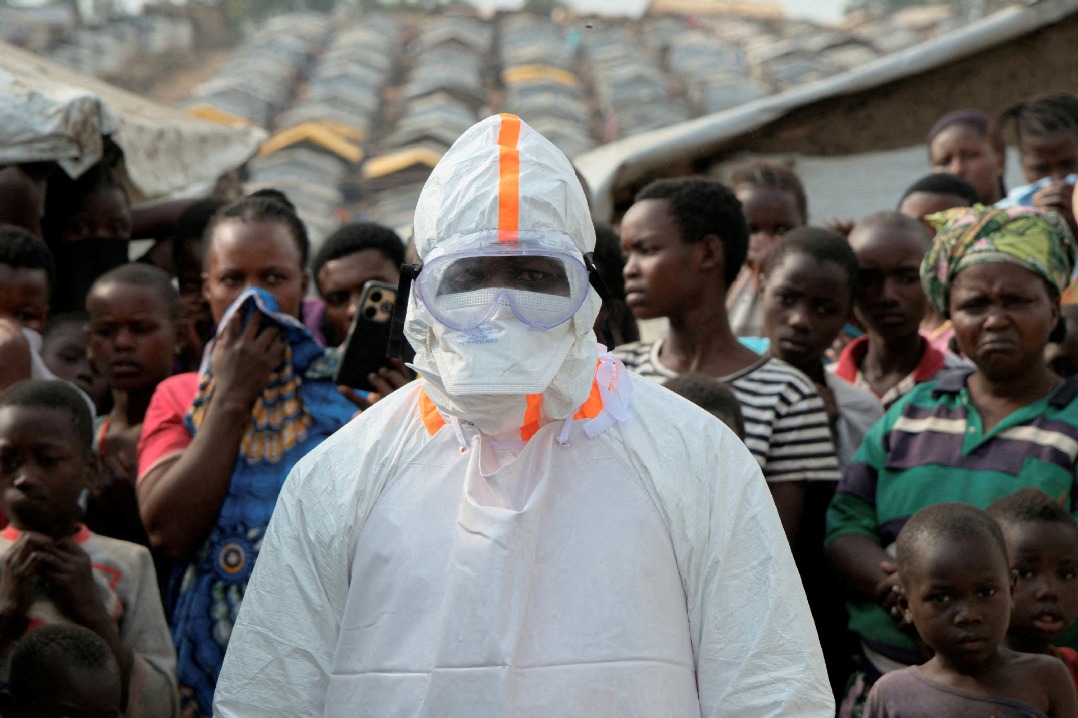
    The world is facing a growing public health emergency in the Democratic Republic of the Congo (DRC), where an Ebola outbreak caused by the rare Bundibugyo strain continues to expand unchecked, the World Health Organization (WHO) confirmed in a Tuesday media briefing. Despite ramped-up intervention efforts by global and local health authorities, cross-population movement remains the primary catalyst for sustained virus transmission, keeping the epidemic far from stabilization.

  • Arizona toddler found alive in hospital morgue after declared dead from drowning

    Arizona toddler found alive in hospital morgue after declared dead from drowning

    A shocking case of medical error has emerged from the Phoenix suburb of Gilbert, Arizona, where an 18-month-old toddler was incorrectly pronounced dead following a near-drowning incident, only to be discovered alive hours later in a medical examiner’s cold storage facility, newly unsealed police records confirm.

    The incident unfolded on February 8, as the toddler’s extended family had gathered at the home to watch the annual NFL Super Bowl. At roughly 5:30 p.m. local time, panicked family members discovered the young child floating face-down in the property’s unmonitored swimming pool and immediately placed an emergency call to law enforcement. First responders arrived on scene within minutes, initiated advanced resuscitation efforts, and rushed the unconscious toddler to Mercy Gilbert Medical Center for urgent care. Roughly an hour after the child arrived at the hospital, attending physician Dr. Aryan Toosi declared the 18-month-old dead at 6:20 p.m.

    Body camera footage captured by responding Gilbert police officers, later obtained by local NBC affiliate 12 News, records the declaration of death: after officers noted that they still observed faint signs of life, Dr. Toosi dismissed their concerns, telling officers “please do your thing and let me do my thing. I went to medical school for a reason.” He then formally marked the time of death as 18:20 and called for a moment of silence before the child’s body was transferred to the hospital’s morgue to await pickup by the county medical examiner’s office.

    Five hours after the death was declared, a transporter from the Maricopa County Medical Examiner’s Office arrived at the hospital to collect the remains. When the transporter opened the cold storage unit holding the toddler, he made the startling discovery that the child was still breathing. The toddler was immediately airlifted to a specialized pediatric care facility for emergency treatment, and in a stunning turn of events, made a full recovery and was later released to family members.

    Full medical details of the toddler’s condition and the misdiagnosis have not been released to the public, as medical records were not included in the unsealed police report, leaving many questions unanswered about the sequence of events that led to the incorrect death declaration. Scott Holden, attorney for Dr. Toosi, told the Associated Press that the public narrative released so far omits critical contextual and medical details, noting “there is much more to this case, both factually and medically, than has been reported thus far.” The BBC has reached out to Holden for additional comment on the case, but has not yet received a response.

    Alongside the internal hospital review, law enforcement has opened a separate investigation into the circumstances that allowed the toddler to access the pool unsupervised. Investigators reported detecting a strong odor of marijuana inside the home at the time of the incident, and Gilbert Police have formally recommended filing negligence charges against the toddler’s parents. The Maricopa County Attorney’s Office has not yet announced whether it will move forward with formal charges, and is still reviewing the case file.

    Mercy Gilbert Medical Center released a public statement following the revelation of the incident, confirming that the facility has launched a full organizational review of the toddler’s care. “We conducted a thorough review of all aspects of the care provided to learn what happened and to make meaningful changes to strengthen our care,” the statement read, adding that “this is a heartbreaking situation” and declining to share further details due to patient privacy regulations.

  • With Le Pen sentencing, France’s presidential election veers into the extraordinary

    With Le Pen sentencing, France’s presidential election veers into the extraordinary

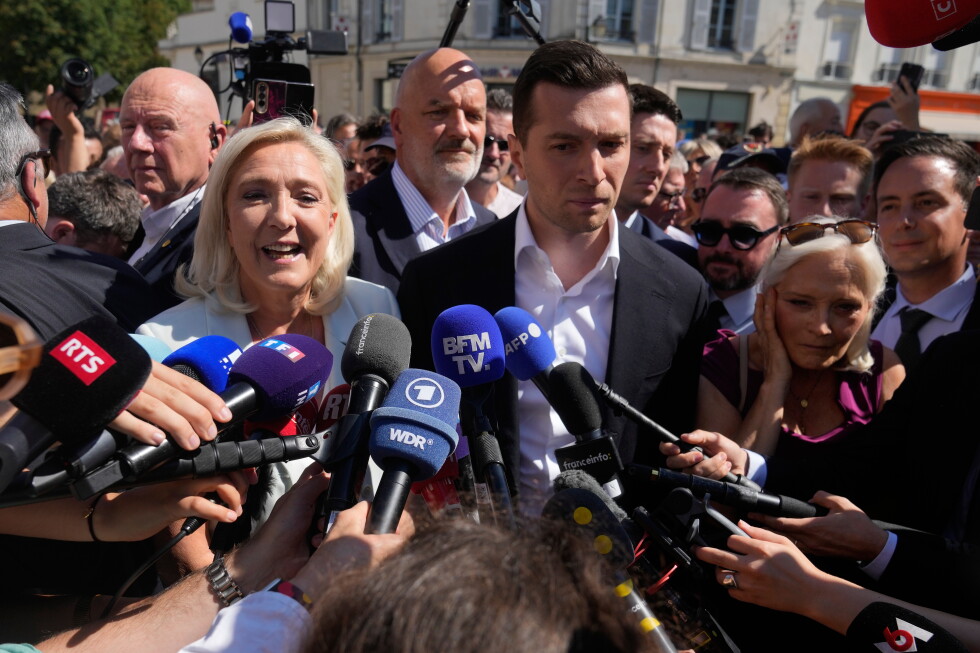
    PARIS – France’s 2025 presidential election, already one of the most consequential political contests in the European Union this cycle, has taken an unprecedented turn after far-right leader Marine Le Pen confirmed she will stand for the nation’s highest office for the fourth consecutive time – a bid that became possible only after a Paris appeals court revised a prior conviction that threatened to end her political ambitions.