博客

  • No contact from UK about murder suspect, say Zimbabwe police

    No contact from UK about murder suspect, say Zimbabwe police

    A cross-border manhunt is underway for a 45-year-old Zimbabwean-British man accused of murdering his wife and two young daughters in rural Bedfordshire, England, after Zimbabwean law enforcement confirmed they have received no official communication from UK authorities about the suspect.

    Ndodana Mkhanyisi Tshuma, who also goes by the name Mark, is the primary suspect in the deaths of 42-year-old Nothabo Zandile Tshuma, his wife, and their two daughters — 15-year-old Natalie and 5-year-old Nala. The bodies of all three were found at the family’s home in Great Denham, near Bedford, on Monday after local police forced entry into the property following reports that the family had not been seen in public for several days.

    Investigators confirmed that Tshuma departed the United Kingdom from London’s Heathrow Airport on Saturday, two days before the bodies were discovered. UK law enforcement currently believes the suspect has traveled to Zimbabwe, his country of origin, and has publicly called for him to surrender immediately.

    But in a statement to the BBC, Zimbabwe Republic Police spokesperson Paul Nyathi confirmed that as of Thursday, his department had not received any official notice or extradition request from UK police or Interpol, including a required Interpol red notice that would formalize the cross-border manhunt. Nyathi added that while Zimbabwean officers have followed social media and press coverage of the case, they cannot yet confirm whether Tshuma has actually entered the country. He also noted that border patrol units across Zimbabwe have been placed on high alert, and officers are prepared to take Tshuma into custody as soon as he is located.

    “Tshuma should give himself up to the police if he is in Zimbabwe,” Nyathi said in a public appeal. “Please surrender yourself to the police so that the due process of the law can take its course based on the allegations emanating from the UK.”

    In response to Zimbabwean police’s comments, Bedfordshire Police, the lead investigating agency in the case, described the investigation as a fast-moving inquiry with multiple active lines of inquiry. A spokesperson for the department said officers are currently working in close coordination with the UK’s National Crime Agency to share information with international law enforcement partners, laying the groundwork for cross-border cooperation.

    Detective Inspector Lee Martin, the lead detective on the case, reiterated the UK’s appeal for Tshuma to surrender on Wednesday. “We know that Mark Tshuma left the country on Saturday and is now believed to be in Zimbabwe,” Martin said. “We are urgently working to find and apprehend him, and would appeal to him directly to hand himself in. Mark, unthinkable harm has been caused to those around you and this has left your relatives and friends utterly devastated. Criminal investigation knows no borders.”

    As the investigation progresses, the victims’ extended family has released a public statement honoring their loss and thanking the public for its support. “During this time of unimaginable loss, we wish to express our heartfelt gratitude to everyone who has reached out with prayers, messages of comfort, and support,” the tribute read. “Your kindness and compassion have brought great strength to our family.”

    The family added that it will not be making any additional public comments while the official investigation is ongoing, and will not announce funeral or memorial arrangements until it receives formal guidance from investigating authorities. In the days after the bodies were discovered, the Great Denham neighborhood saw a heavy visible police presence as forensic teams worked to process the crime scene.

  • Travellers react as Florida airport renamed after Trump

    Travellers react as Florida airport renamed after Trump

    On July 9, a significant change took place in Florida’s aviation landscape as Palm Beach International Airport formally adopted a new name: President Donald J. Trump International Airport. The renaming decision, which has been tied to political alignments in the state, immediately drew a wide range of responses from travelers passing through the airport’s terminals on the day of the official change.

    Many travelers who support the former president expressed enthusiasm about the change, framing the renaming as a fitting tribute to Trump’s ties to the Palm Beach region, where his Mar-a-Lago resort has long been a prominent fixture. Supporters argued that the name change recognizes Trump’s economic impact on the local area, which has seen increased tourism and attention during and after his political career.

    On the other side of the debate, opponents of the decision voiced criticism, with many travelers saying they believe public infrastructure naming should remain non-partisan, and that the change prioritizes political gain over community consensus. Some passengers told reporters they would adjust their travel routes to avoid using the renamed airport as a form of protest, while others expressed frustration at the cost of rebranding the facility, which includes updating signage, digital systems, and official documents.

    Local officials who backed the renaming initiative have defended the move, noting that Trump’s connection to the area makes the name change a logical step that will draw additional attention and visitor traffic to the region. The debate over the renaming is expected to continue as political observers note it comes amid a broader national conversation about public memorials and naming conventions tied to polarizing political figures.

  • Pakistani leader vows to press militant crackdown after 42 killed in Balochistan attacks

    Pakistani leader vows to press militant crackdown after 42 killed in Balochistan attacks

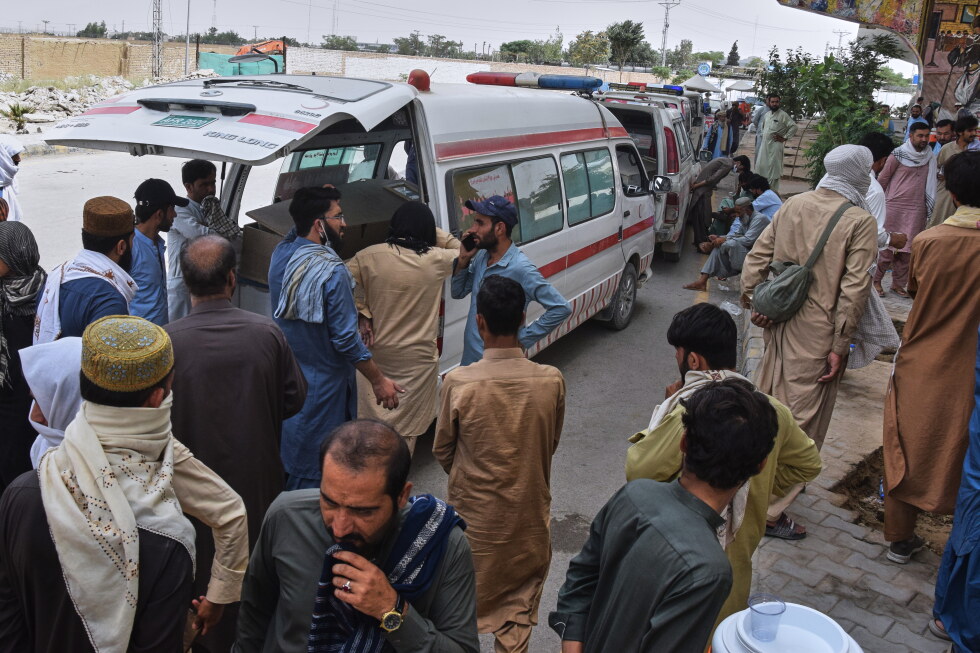
    A wave of coordinated insurgent attacks that killed 42 people, most of them Pakistani security personnel, in southwestern Pakistan’s restive Balochistan province this week has sparked a fierce military response and a firm pledge from Prime Minister Shehbaz Sharif to crush militant activity across the country. During a high-stakes visit to Quetta, Balochistan’s provincial capital, on Thursday, Sharif met with grieving families of the victims, and convened an emergency security meeting alongside Pakistan’s army chief Field Marshal Asim Munir and Balochistan Chief Minister Sarfraz Bugti.

    Since Monday, when the string of attacks began, the outlawed Baloch Liberation Army has claimed responsibility for the violence that has sent shockwaves across Pakistan. The deadliest incident unfolded in Balochistan’s Ziarat district, where insurgents stormed a police outpost. Nine officers were killed in the initial assault, and 18 more officers who were abducted during the attack were later executed by their captors. In response to the killings, dozens of relatives of slain police officers organized a public sit-in protest in Quetta, positioning the victims’ bodies in a public space to demand that authorities hold attackers accountable and deliver tangible justice.

    Following the attacks, Pakistani security forces launched large-scale counter-insurgency operations, which have killed at least 54 suspected insurgents, according to official statements from the military and local Balochistan officials. This surge in violence has amplified growing concerns that small, once-marginalized separatist groups are expanding their operational capacity and reach across the resource-rich province.

    In televised remarks from the security meeting, Sharif emphasized the government’s unwavering commitment to eradicating terrorism: “The war against terrorism will continue until the last terrorist in Pakistan is eliminated.” He also made pointed allegations against neighboring powers without naming them directly, claiming that Pakistan’s eastern neighbor India is supplying weapons, funding and other support to fuel the insurgency. He added that militants are using Afghan territory as a staging ground for attacks in both Balochistan and the northwestern province of Khyber Pakhtunkhwa, vowing that Pakistani forces would foil what he called the militants’ “nefarious designs.”

    Neither the Indian government in New Delhi nor the Taliban-led government in Kabul issued an immediate response to Sharif’s allegations. Both countries have repeatedly rejected similar accusations in the past.

    Balochistan, Pakistan’s largest province by geographic area but its least densely populated, has faced decades of separatist unrest and militant activity. In addition to separatist groups like the Baloch Liberation Army, the province also sees regular attacks from Tehrik-e-Taliban Pakistan (TTP), a Pakistani Taliban faction that is allied with but separate from the Afghan Taliban. Analysts have noted that the TTP has grown significantly in strength and operational scope since the Afghan Taliban retook control of Afghanistan in 2021.

  • Germany reaches deal with US to buy long-range Tomahawk missiles, Merz says

    Germany reaches deal with US to buy long-range Tomahawk missiles, Merz says

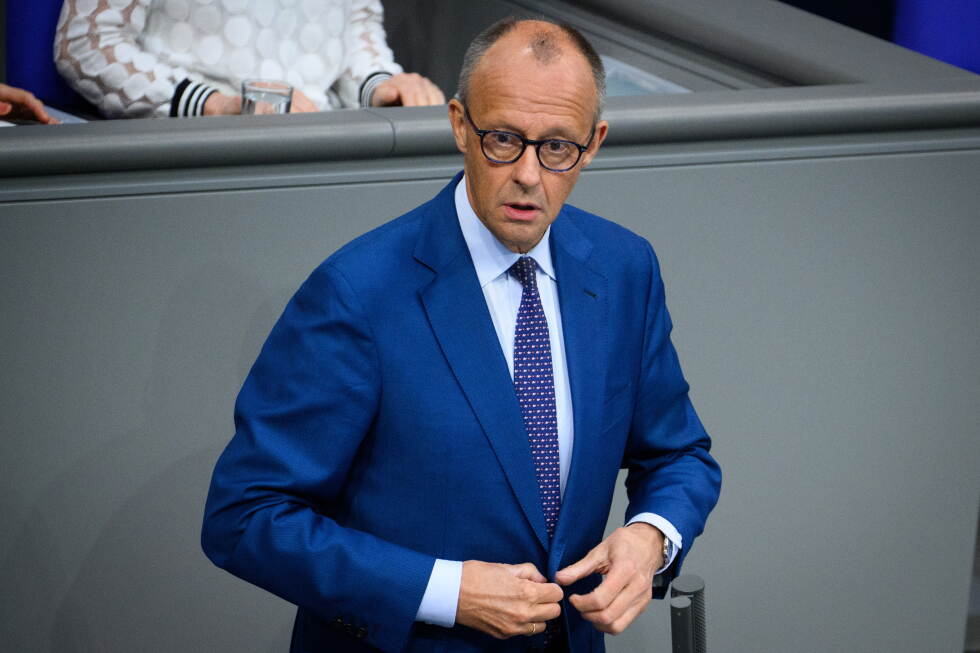
    In a landmark announcement to German parliament Thursday, Chancellor Friedrich Merz confirmed that Berlin has finalized a bilateral agreement with Washington to acquire and deploy U.S.-manufactured Tomahawk long-range cruise missiles on German territory. The deal, reached behind the scenes during this week’s NATO summit hosted in Ankara, Turkey, fills a critical gap in Germany and Europe’s collective defense capabilities, Merz said, while adding that the country will continue parallel work to develop indigenous European long-range weapons systems for deployment across the continent.

    The agreement, negotiated under the second Trump administration, represents a deepening of U.S. defense technology exports to key European allies. The shift in European security strategy comes nearly three years after Russia’s full-scale invasion of Ukraine upended decades of established defense posturing across the continent, pushing NATO members to accelerate military modernization and strengthen long-range deterrence capabilities.

    In a related announcement from the NATO summit Wednesday, U.S. President Donald Trump confirmed that Washington will grant Ukraine a manufacturing license to produce its own Patriot air defense systems. The move marks a major breakthrough for Kyiv, which has repeatedly pushed to access Western air defense technology to fend off relentless Russian missile and drone strikes on its civilian and military infrastructure.

    First introduced into U.S. military arsenals in the 1980s, the Tomahawk cruise missile remains a staple of American long-range strike capabilities. Though slower than many modern ballistic missile designs, Tomahawk’s low-altitude flight profile—roughly 30 meters (100 feet) above ground—makes it exceptionally difficult for enemy air defense systems to detect and intercept. It also boasts a maximum range of approximately 1,600 kilometers (1,000 miles) paired with precision guidance technology, making it ideal for striking high-value targets deep inside hostile or contested territory.

  • Eswatini receives 11 people deported from the US as part of migration crackdown

    Eswatini receives 11 people deported from the US as part of migration crackdown

    MBABANE, Eswatini – The southern African kingdom of Eswatini has welcomed a fourth cohort of deportees transferred from the United States under a bilateral third-country hosting agreement, with 11 new arrivals entering the country this week, the Eswatini government confirmed in an official statement released Thursday.

    Acting government spokesperson Thabile Mdluli stated that the majority of this latest group hail from other African nations, and will remain in Eswatini on a temporary basis while the government upholds their fundamental human rights. “The government reaffirms that, during their temporary stay in the Kingdom, the fundamental rights of the third-country nationals will be respected and protected in accordance with the laws of the Kingdom of Eswatini and the Kingdom’s international obligations,” Mdluli noted in the statement.

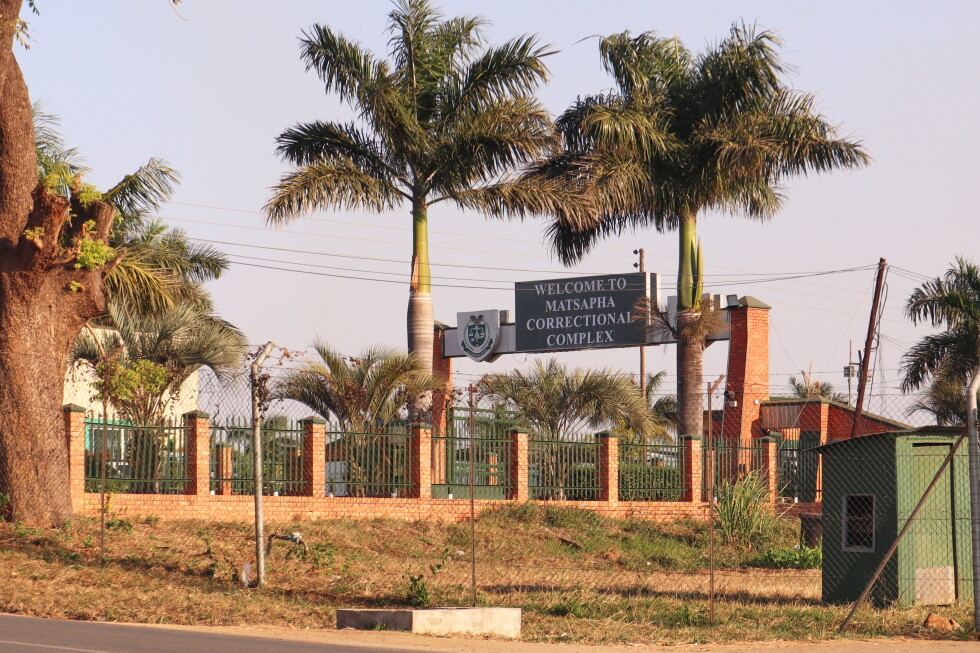
    Mdluli also added that Eswatini has put in place layered security protocols to protect both the nation’s territorial integrity and the safety of its permanent residents for the duration of the deportees’ stay. Multiple officials familiar with the arrangement have confirmed that the 11 new arrivals will be temporarily housed at Matsapha Maximum Security Prison.

    The Trump administration launched the third-country deportation program as a core part of its broader immigration enforcement crackdown, with rights advocates reporting that thousands of migrants who cannot be directly returned to their home countries have been transferred to nearly 24 nations around the globe, most across the African continent. Alongside Eswatini, countries including the Central African Republic, Equatorial Guinea, Sierra Leone, and the Democratic Republic of Congo have accepted groups of third-country deportees under these often-unpublicized bilateral deals.

    Eswatini, a landlocked southern African nation of roughly 1.2 million people that shares borders with South Africa and Mozambique, first began accepting these U.S.-deported third-country nationals in 2025 when the bilateral agreement entered into force. To date, this newest group marks the fourth cohort of deportees received by the kingdom, making it one of the most active African participants in the Trump administration’s program.

    To date, Eswatini has not publicly released the full terms of its agreement with the U.S. government, nor has it disclosed key details including the full nationalities of all deportees, their individual immigration legal statuses, or the exact length of time they are expected to remain in the kingdom. Only two previously transferred deportees have left Eswatini, returning to their home countries of Cambodia and Jamaica.

    The deal has sparked significant pushback from both international human rights organizations and domestic Eswatini civic groups, with critics calling out the lack of transparency around the agreement and the absence of formal parliamentary oversight. Domestic civic groups have already launched legal action against Eswatini authorities, challenging the legality of detaining foreign deportees in prison without formal criminal charges. Eswatini officials have confirmed that the deportees can be held for up to 12 months before they are repatriated to their home countries.

    Mzwandile Masuku, a prominent Eswatini human rights lawyer, argued that the ongoing transfers highlight deep gaps in institutional accountability within the kingdom. He warned that the untransparent practice could risk becoming normalized as a global immigration policy precedent if left unchallenged.

    In response to criticism, the Eswatini government has defended its participation in the agreement, framing the arrangement as an expression of the kingdom’s humanitarian commitments while emphasizing that all activities under the deal adhere to Eswatini’s national sovereignty and domestic laws.

    Associated Press reporter Michelle Gumede contributed reporting from Johannesburg, South Africa.

  • Morocco’s unfinished business with France

    Morocco’s unfinished business with France

    As the 2026 FIFA World Cup quarter-final showdown between Morocco and France kicks off in Boston, this fixture is far more than just another high-stakes knockout match. For the Atlas Lions and their millions of passionate supporters across the globe, it is a long-awaited rematch carrying decades of history, unfulfilled ambition, and an opportunity to prove their 2022 Cinderella run was no one-off miracle.

    The story of this encounter traces back four years to Qatar 2022, when Morocco made history as the first African and Arab nation to ever reach a World Cup semi-final. Their extraordinary tournament run was cut short by a 2-0 defeat to France, ending their dream of lifting the world title. Even in that moment of defeat, observers recognized something seismic had shifted: the global football community had rewritten its expectations of Moroccan football. Back then, reaching the semi-final felt like an overachievement beyond anyone’s wildest dreams. Today, anything short of that same milestone would fall short of the standard the team has set for itself.

    “This is a revenge match for the Moroccan national team, especially for the players who were part of that 2022 squad,” explained Moroccan sports journalist Hamza Chtioui. “They felt that loss deeply, and now they’re looking to settle the score – for themselves and for the entire nation.”

    This newfound confidence is no empty bravado, nor is it built on nostalgia for past glory. Since their breakthrough in Qatar, Moroccan football has continued to deliver impressive results that validate its growing status: the national under-20 side claimed the U-20 World Cup title, while the senior men’s team has climbed to 6th place in the official FIFA global rankings. These wins are the payoff for decades of deliberate, long-term investment in youth development led by the Royal Moroccan Football Federation (RMFF), a strategic project that has now come to fruition.

    “What happened in Qatar wasn’t a fluke,” said veteran Moroccan journalist Hameed Bel Hassan. “It was the result of years of strategic planning and programmes put in place by the RMFF. This has been a national project, and we now have a formidable national team that can compete with anyone.”

    Throughout the 2026 tournament, Morocco has lived up to that billing, proving they are no longer the unexpected underdogs. They have held their own against some of the world’s top football heavyweights, securing wins against Brazil, Scotland, the Netherlands and Canada to book their quarter-final spot against France. The surge of support for the team has been unmatched: thousands of fans are traveling from Morocco to the U.S. for the match, with Moroccans from across Europe and the globe converging on Boston to back the side. “I dare say Morocco will have the stronger support in the stadium,” Chtioui noted.

    Standing in their way is a French side widely regarded as the most complete squad in this year’s tournament. Led by global superstar Kylian Mbappe, Les Bleus have turned in consistently fluid, dominant performances to reach the last eight. Chtioui acknowledges France’s individual talent advantage, but argues that Morocco can neutralize that edge with cohesive team play: “Morocco’s midfield is about equal. If they can press France early, like they did against Brazil, they can create real problems. The 11 players just need to perform as one cohesive unit.”

    Beyond tactics and technical skill, Morocco draws unique strength from an unusual, heartfelt team culture centered on family. During the 2022 World Cup, viral images of defender Achraf Hakimi embracing his mother after matches, and winger Sofiane Boufal dancing with his mother on the pitch, became the defining emotional moments of the team’s historic run. That tradition has continued in 2026: after scoring the game-winning penalty against the Netherlands, Ismael Saibari ran straight into the stands to celebrate with his emotional mother.

    Far from being spontaneous, this focus on family is a deliberate strategy by the RMFF. Federation president Fouzi Lekjaa has framed having players’ mothers present at major tournaments as one of the team’s most effective psychological tools, noting it gives players a unique, powerful sense of motivation. “When the player sees his mother in the stands, it’s a huge boost and motivation,” Bel Hassan explained. “The players themselves have spoken about how supported they feel. A mother’s prayer, nothing really comes close.”

    This match carries layers of meaning that extend far beyond the 90 minutes of football, rooted in the long and complicated shared history of France and Morocco. Shaped by colonialism, migration, and one of the largest Moroccan diaspora communities in Europe, the fixture carries deep identity significance. Multiple current Moroccan internationals were eligible to play for France’s senior national side, having come up through French youth system, but ultimately chose to represent the country of their parents and grandparents. That decision adds an extra layer of emotional stakes to Thursday’s encounter.

    The most high-profile example of this dynamic is the head-to-head between Hakimi and Mbappe, who are close friends and club teammates at Paris Saint-Germain, but will be rivals on the pitch in Boston.

    The core question ahead of kickoff is not simply whether Morocco can beat France. It is whether the team that shocked the world in Qatar can prove that 2022’s historic run was not the peak of their ascent, but just the first step in their emergence as a permanent global football powerhouse. In Qatar, Morocco made history. In Boston, they have the chance to prove that history is only just beginning.

  • At Denmark’s World Santa Congress, festive spirit isn’t just for Christmas

    At Denmark’s World Santa Congress, festive spirit isn’t just for Christmas

    As much of Europe swelters through the height of summer heatwave season, a uniquely cheerful holiday tradition is unfolding hundreds of kilometers north of the European continent’s warmest regions, in the fourth-largest city of Denmark: Aalborg. For decades, this Nordic country has hosted the annual World Santa Claus Congress, a one-of-a-kind midsummer gathering that has drawn dozens of professional Santa Claus performers, Mrs. Clauses and elf actors from every corner of the globe to celebrate festive spirit far outside the traditional December holiday window.

    The iconic event traces its origins back to 1957, when it was first launched at an amusement park on the outskirts of Copenhagen. After decades at its original venue, the congress relocated to Aalborg, located on Denmark’s Jutland peninsula, just two years ago, and has quickly settled into its new home. This year, attendees clad in thick, traditional red Santa suits found the warm Danish July sun made their iconic costumes surprisingly sweltering — a small price to pay for the chance to connect with fellow festive performers. Next year, the beloved gathering will mark its 70th anniversary, a milestone that organizers and attendees are already planning to celebrate in style.

    What began as a small initiative to bring extra joy to children has evolved into a must-attend professional and social gathering for Santas who work in department stores, shopping malls, and private events across the world during the busy Christmas season. Held roughly five months before the annual Yuletide rush begins, the four-day event gives professional performers a rare opportunity to exchange industry stories, compare iconic flowing beards, refine their holiday craft, and compete in a series of lighthearted, playful competitions long before families start drafting their naughty-or-nice lists.

    This year’s agenda was packed with beloved holiday-themed activities, including gingerbread eating contests, speed gift wrapping challenges, balloon modeling workshops, and multiple boisterous parades through the streets of central Aalborg. Photographs from the event captured participants posing for group photos, waving at onlookers, and snapping selfies with fellow Santas from across the world, showcasing the warm, inclusive energy of the gathering.

    Peter Gislund, the event’s organizer and a part-time Aalborg-based Santa during the Christmas season, shared that public reaction to the mid-year holiday gathering is often split. “The grandmas say: ‘Oh, it’s too early to come here’,” he explained. “The kids say: ‘Hooray! Santa’s here already.’”

    While the event has drawn attendees from as far afield as Australia, Hong Kong, Canada and the United States over its decades-long history, most of the roughly three dozen Santas and Mrs. Clauses participating this year came from Scandinavian countries. Even so, several international guests made the long trip to attend, including Paradise Yamamoto, a Santa performer traveling all the way from Tokyo. After parading through downtown Aalborg waving a Japanese flag and dancing along to the Christmas classic *Feliz Navidad*, Yamamoto laughed and shared his impression of the event: “This is very fun, so many children … Ho, ho, ho!”

    For first-time attendee Robert Hercz, a 64-year-old Santa from Oslo, Norway, the gathering proved that despite different national backgrounds, all professional Santas share a common core. “We all share a gene” for generosity and spreading joy, Hercz explained. “You have it or you don’t. We have the true Santa spirit. And it’s all about giving, sharing, and putting a little bit of joy in people’s hearts.”

    Beyond the fun and games, the congress serves an important purpose for working Santas, Gislund noted. “It’s not all ho-ho-ing and belly rubs. When Santas are together, they always mingle and talk a little bit,” he said. Attendees exchange tips for everything from maintaining the perfect beard shine to interacting with shy children, making it a valuable professional development opportunity as well as a social gathering. “That’s the good part of meeting some Santas from all over the world.”

    For 33-year-old Danish Santa Simon Brøns, the annual gathering drives home a simple but powerful message: festive spirit is not limited to the month of December. “Christmas is not a season. It’s a feeling you have in your stomach,” he said with a smile. “So if you want, you can have Christmas the whole year.”

  • Uganda judges push back against lawyers’ bid to scrap ‘colonial titles’

    Uganda judges push back against lawyers’ bid to scrap ‘colonial titles’

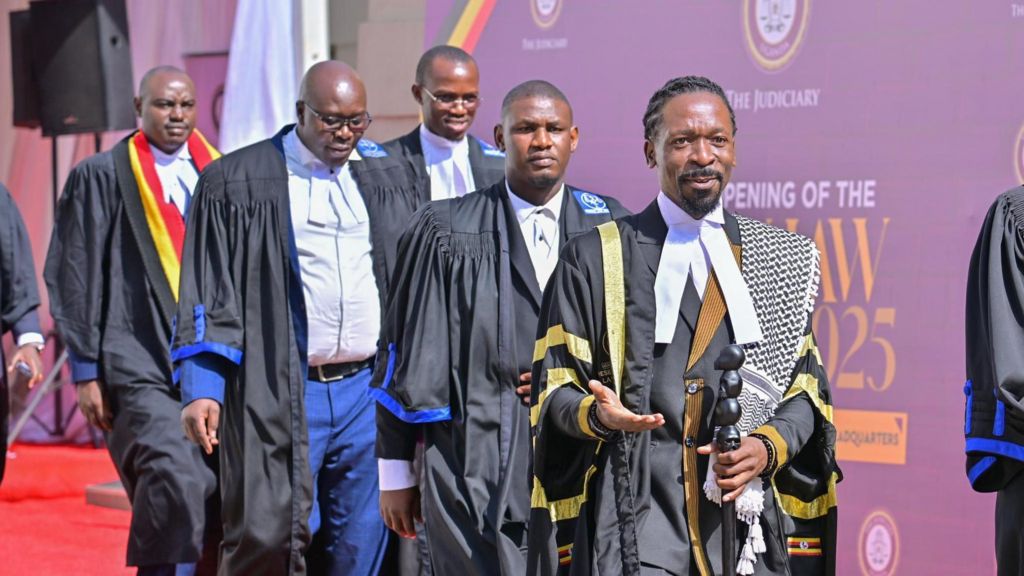
    A fierce debate over decolonizing Uganda’s legal system has erupted after the Uganda Law Society (ULS), the national body representing the country’s practicing advocates, ordered its members to abandon two longstanding colonial-era courtroom customs: addressing judicial officers as “My Lord”, “My Lady”, “Your Lordship” or “Your Worship”, and bowing to judges before entering or exiting the courtroom.

    In an official statement signed by ULS president Isaac Ssemakadde, the association framed the new directive as a core step toward dismantling archaic colonial structures that it argues have undermined the functionality and accessibility of Uganda’s justice system. The society described the traditional honorifics and practice of physical deference as “feudal and colonial” constructs that improperly position judicial officers above ordinary Ugandan citizens, who the ULS emphasizes are the actual employers of public officials. The statement added that these outdated customs force ordinary Ugandans into positions of unnecessary humiliation, while granting unmerited deference to judicial leaders. Going forward, all ULS members are prohibited from bowing to judges, and are instructed to use plain, egalitarian forms of address instead: alternatives include “Mr Justice”, “Madam Justice”, “Mr Judge”, “Madam Judge”, “Mr Magistrate”, or direct reference to a judicial officer by their surname in appropriate contexts. The ULS concluded that all advocates and litigants appearing before Ugandan courts should stand upright and speak as equal, free citizens.

    The directive has drawn immediate pushback from Uganda’s independent judiciary, which rejected the ULS’s authority to set courtroom rules. Judiciary spokesperson James Ereemye told the BBC that the ULS has no legal standing to dictate to judicial bodies what procedures or decorum to require, noting that the judiciary remains an independent branch of the Ugandan government separate from professional legal associations. Ereemye added that courts will continue to demand adherence to long-established courtroom decorum, and dismissed the ULS’s directive as an unstructured move by “a section of young people who have failed to know the principles of agenda setting in management and administration”. He argued that any proposed changes to court procedure should be raised through official, established consultation channels rather than via a public directive from a professional association.

    As a former British colony, Uganda inherited its entire legal framework and most core courtroom traditions from the United Kingdom. This current clash is part of a much broader, decades-long debate across the African continent over whether to discard colonial-era legal customs as part of broader judicial decolonization reforms. In 2011, Kenya’s then-Chief Justice Willy Mutunga drew international attention when he publicly criticized traditional judicial dress codes that require judges to wear British-style wigs and robes, and chose to take his oath of office in a standard formal suit instead. Similar conversations around reforming colonial court practices have taken place in Zimbabwe, Malawi, and Ghana, where critics argue that these outdated, imported traditions are no longer appropriate or relevant for independent modern African nations.

  • Two thirds of EU faced harmful ozone levels during heatwave: report

    Two thirds of EU faced harmful ozone levels during heatwave: report

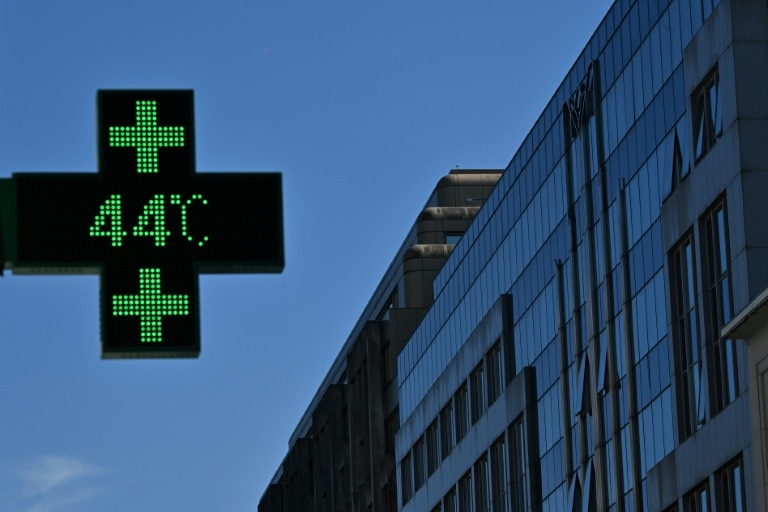
    Last month’s historic heatwave that baked Western Europe left an alarming hidden public health crisis in its wake: a new report from environmental non-governmental organization Global Witness has found that two-thirds of the European Union’s population were exposed to dangerous, above-guideline levels of ground-level ozone pollution between June 21 and 28.

    The analysis, which combines data from 162 cross-continental air quality monitoring stations, atmospheric modelling from the EU’s Copernicus Atmosphere Monitoring Service (CAMS) and regional census data, estimates that nearly 298 million EU residents — including 100 million children and elderly people, groups that are disproportionately vulnerable to air pollutant harm — faced ozone concentrations exceeding the EU’s recommended maximum daily eight-hour average of 120 micrograms per cubic meter. Even more starkly, around 87 percent of the EU’s 450 million total population were exposed to levels above the World Health Organization’s stricter safety guideline of 100 micrograms per cubic meter, with 72 million people hit by concentrations crossing the 150 micrograms per cubic meter threshold, classified as the most dangerous range. Two-thirds of all monitoring stations recorded ozone readings in the top 1 percentile of all June measurements dating back to 2013, with a peak reading of 233.7 micrograms per cubic meter recorded in Germany’s North Rhine-Westphalia on June 27.

    This widespread exposure event comes just hours after the EU’s Copernicus Climate Change Service confirmed June 2024 was the hottest June ever recorded in Western Europe, amplifying longstanding concerns about how climate change is worsening dangerous air quality events. Unlike the stratospheric ozone layer that shields Earth from harmful solar radiation — which is slowly recovering from decades of damage caused by chlorofluorocarbon refrigerants — ground-level ozone is a toxic primary component of smog that poses severe risks to human health. Exposure can trigger acute breathing issues, permanent lung tissue damage, asthma attacks, and a range of other chronic respiratory and cardiovascular complications. Data from the European Environment Agency shows that ozone pollution was linked to more than 63,000 premature deaths across Europe in 2023 alone, alongside billions of euros in damaged agricultural crops.

    Ground-level ozone forms when nitrogen oxides (most often released from vehicle traffic) and volatile organic compounds (largely tied to human-caused methane emissions) react under high temperatures and intense sunlight — conditions that were widespread across the continent during last month’s heatwave. “If these chemicals are not emitted in the first place, then ground-level ozone does not form,” explained CAMS director Laurence Rouil, whose agency provided modelling data for the Global Witness report. Rouil noted that the scale of this ozone event, occurring so early in the summer season, is particularly concerning when compared to the devastating 2003 European heatwave, calling it “really remarkable and worrying.” She added that coordinated international action is essential to address the root causes of rising ozone pollution.

    While the EU has made significant progress cutting nitrogen dioxide emissions over the past several decades, the report highlights a critical policy gap: methane, which contributes one-third of all ground-level ozone formation, currently has no binding reduction targets for agricultural sources in the bloc. Global Witness senior campaigner Flossie Boyd framed the widespread exposure as an “invisible threat” driven by fossil fuel dependence. “People are being forced to live through very dangerous conditions as a result of our dependence on fossil fuels,” Boyd told AFP, calling for immediate policy action to cut precursor emissions that drive both rising global temperatures and toxic ozone pollution. “We need to stop these initial emissions driving up dangerous temperatures and driving the ozone and other forms of pollutants that are making our cities and beyond dangerous places to live,” she added.

    Independent climate scientists not involved in the report have echoed its findings, noting that the pattern matches on-the-ground data across the continent. James Weber, a climate scientist at the University of Reading in the UK, told AFP that his own independent research found more than half of UK air monitoring stations exceeded the WHO’s ozone safety guideline during the heatwave’s peak. Weber warned that ozone pollution creates an extra layer of health risk during heat events, when human bodies are already strained by high temperatures and humidity. “Ozone is a problem when there are already pressures on people’s health from humidity and temperature,” he said, noting that ongoing climate change will only increase the frequency and severity of these overlapping extreme heat and ozone events. For the general public, he recommends avoiding strenuous outdoor activity during the hottest hours of days when high ozone levels are forecast.

  • Indian state on the boil after raped girl’s body fished out of pond

    Indian state on the boil after raped girl’s body fished out of pond

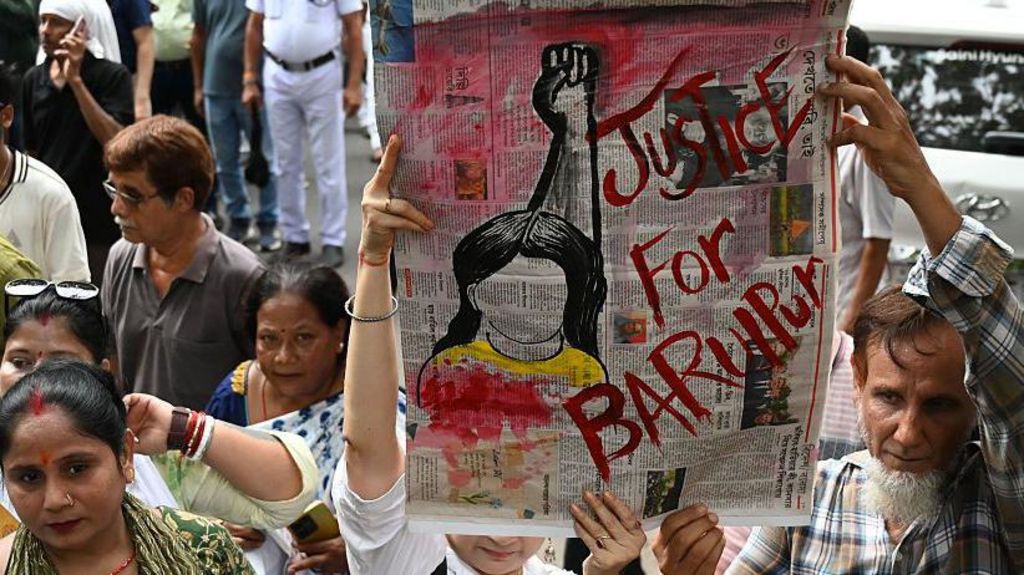
    Two months after the Bharatiya Janata Party (BJP) made history by winning its first majority in India’s West Bengal state, a horrific crime has thrown the region into chaos, reigniting long-simmering public anger over failures to protect women and children.

    The tragedy unfolded in Surjyapur village, located in the Baruipur area on Kolkata’s outskirts, when an 11-year-old girl left her home Saturday afternoon to purchase a birthday gift for a friend and never returned. Her family filed a missing person report with local police at 8:30 p.m. the same day, but law enforcement dismissed their urgent plea, saying they would launch an inquiry the following morning. Frustrated by police inaction, the girl’s relatives and local residents reviewed closed-circuit camera footage from nearby shops on their own, identifying the child walking alongside Prabhash Mondal, a local resident of the village.

    Early Sunday, a crowd of villagers gathered at Mondal’s residence, detained him, and turned him over to police custody. Hours later, investigators recovered the girl’s body from a nearby pond, with local media reports confirming Mondal led officers to the exact location of the remains. A post-mortem examination determined the child’s cause of death was drowning, leading her family to insist she was still alive when dumped in the water — and would have survived if police had responded immediately to their report. “Had the police acted earlier, she could have been saved,” the victim’s relatives stated publicly.

    In the hours after the body was recovered, public fury boiled over into widespread violent unrest across Baruipur. Protesters vandalized public roads, local shops, and a regional railway station, leaving three separate police cases registered and 40 people detained. In a tragic turn of violence, an innocent young man was beaten to death by the angry mob, a fact later confirmed by West Bengal Chief Minister Suvendu Adhikari. Multiple police officers were injured, and dozens of vehicles were damaged as officers worked to regain control of the area. To prevent further unrest, authorities have implemented a ban on public gatherings and deployed hundreds of additional police and paramilitary forces to the tense region.

    Less than 24 hours after Adhikari visited the victim’s family to promise swift justice, Mondal was killed in what police described as a justified encounter shooting. In an official statement released Wednesday morning, Baruipur police said Mondal was being taken to the pond to reconstruct the crime scene as part of the investigation when he attempted to grab an officer’s service weapon and opened fire on the law enforcement team. Officers returned fire, striking Mondal, who was pronounced dead after being rushed to a local hospital. Shockingly, Mondal’s own mother publicly disowned her son following his death, refusing to claim his body and saying he deserved his punishment. “My son has been punished for what he did. I will not accept his body, I will not even bring his body home,” she told news agency ANI.

    Three other men suspected of involvement in the crime remain in police custody, and charges have been filed under India’s Protection of Children from Sexual Offences (POCSO) Act, the country’s harshest legislation for child sexual abuse crimes. The case has also raised alarming questions about potential police negligence, and a local BJP politician has been dragged into controversy after accused of aiding the suspects. Sushant Mondal, whose home was attacked and ransacked by an angry mob, has denied all claims, asserting he actually assisted in catching the perpetrators. The incident has also threatened to escalate along religious lines: the victim was from the Muslim community, while the three men arrested are Hindu, stoking sectarian tensions in the already volatile region.

    The horrific crime has quickly snowballed into a major political firestorm for the new BJP government. Opposition parties have slammed the administration for failing to deliver on its core campaign promise of making West Bengal safe for women and children. Political analysts note that the BJP’s historic May election victory — which ousted three-term incumbent Mamata Banerjee and her Trinamool Congress party — was partly fueled by public anger over Banerjee’s poor handling of the rape and murder of a junior doctor at a state government hospital, a case that also centered on failures in women’s safety.

    Critics, including human rights activists and opposition leaders, have also questioned the legitimacy of Mondal’s encounter killing, arguing it violates fundamental rule of law principles. Ranjit Sur, a leader with the Association for the Protection of Democratic Rights, called the circumstances of the death suspicious, noting a familiar pattern in extrajudicial police killings across India: the accused almost always tries to snatch an officer’s weapon before being shot dead. The 2026 West Bengal killing echoes a 2019 incident in Hyderabad, where four men accused of raping and murdering a young woman were killed in a controversial police encounter that sparked national debate over extrajudicial justice.

    So far, West Bengal police have not held any public press conference to address the growing list of allegations against the force. In response to the mounting pressure, the state government has formed a special investigation team (SIT) to lead a full inquiry into the child’s death and the allegations of police negligence surrounding the case.