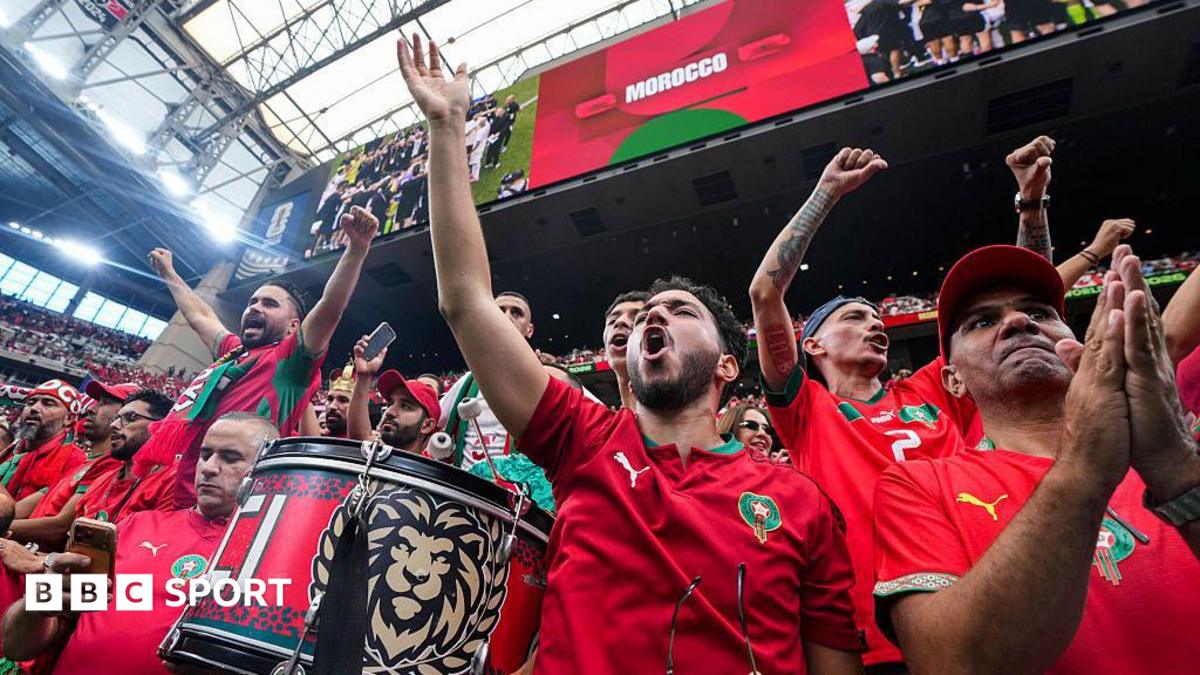
As the 2026 FIFA World Cup quarter-final showdown between Morocco and France kicks off in Boston, this fixture is far more than just another high-stakes knockout match. For the Atlas Lions and their millions of passionate supporters across the globe, it is a long-awaited rematch carrying decades of history, unfulfilled ambition, and an opportunity to prove their 2022 Cinderella run was no one-off miracle.
The story of this encounter traces back four years to Qatar 2022, when Morocco made history as the first African and Arab nation to ever reach a World Cup semi-final. Their extraordinary tournament run was cut short by a 2-0 defeat to France, ending their dream of lifting the world title. Even in that moment of defeat, observers recognized something seismic had shifted: the global football community had rewritten its expectations of Moroccan football. Back then, reaching the semi-final felt like an overachievement beyond anyone’s wildest dreams. Today, anything short of that same milestone would fall short of the standard the team has set for itself.
“This is a revenge match for the Moroccan national team, especially for the players who were part of that 2022 squad,” explained Moroccan sports journalist Hamza Chtioui. “They felt that loss deeply, and now they’re looking to settle the score – for themselves and for the entire nation.”
This newfound confidence is no empty bravado, nor is it built on nostalgia for past glory. Since their breakthrough in Qatar, Moroccan football has continued to deliver impressive results that validate its growing status: the national under-20 side claimed the U-20 World Cup title, while the senior men’s team has climbed to 6th place in the official FIFA global rankings. These wins are the payoff for decades of deliberate, long-term investment in youth development led by the Royal Moroccan Football Federation (RMFF), a strategic project that has now come to fruition.
“What happened in Qatar wasn’t a fluke,” said veteran Moroccan journalist Hameed Bel Hassan. “It was the result of years of strategic planning and programmes put in place by the RMFF. This has been a national project, and we now have a formidable national team that can compete with anyone.”
Throughout the 2026 tournament, Morocco has lived up to that billing, proving they are no longer the unexpected underdogs. They have held their own against some of the world’s top football heavyweights, securing wins against Brazil, Scotland, the Netherlands and Canada to book their quarter-final spot against France. The surge of support for the team has been unmatched: thousands of fans are traveling from Morocco to the U.S. for the match, with Moroccans from across Europe and the globe converging on Boston to back the side. “I dare say Morocco will have the stronger support in the stadium,” Chtioui noted.
Standing in their way is a French side widely regarded as the most complete squad in this year’s tournament. Led by global superstar Kylian Mbappe, Les Bleus have turned in consistently fluid, dominant performances to reach the last eight. Chtioui acknowledges France’s individual talent advantage, but argues that Morocco can neutralize that edge with cohesive team play: “Morocco’s midfield is about equal. If they can press France early, like they did against Brazil, they can create real problems. The 11 players just need to perform as one cohesive unit.”
Beyond tactics and technical skill, Morocco draws unique strength from an unusual, heartfelt team culture centered on family. During the 2022 World Cup, viral images of defender Achraf Hakimi embracing his mother after matches, and winger Sofiane Boufal dancing with his mother on the pitch, became the defining emotional moments of the team’s historic run. That tradition has continued in 2026: after scoring the game-winning penalty against the Netherlands, Ismael Saibari ran straight into the stands to celebrate with his emotional mother.
Far from being spontaneous, this focus on family is a deliberate strategy by the RMFF. Federation president Fouzi Lekjaa has framed having players’ mothers present at major tournaments as one of the team’s most effective psychological tools, noting it gives players a unique, powerful sense of motivation. “When the player sees his mother in the stands, it’s a huge boost and motivation,” Bel Hassan explained. “The players themselves have spoken about how supported they feel. A mother’s prayer, nothing really comes close.”
This match carries layers of meaning that extend far beyond the 90 minutes of football, rooted in the long and complicated shared history of France and Morocco. Shaped by colonialism, migration, and one of the largest Moroccan diaspora communities in Europe, the fixture carries deep identity significance. Multiple current Moroccan internationals were eligible to play for France’s senior national side, having come up through French youth system, but ultimately chose to represent the country of their parents and grandparents. That decision adds an extra layer of emotional stakes to Thursday’s encounter.
The most high-profile example of this dynamic is the head-to-head between Hakimi and Mbappe, who are close friends and club teammates at Paris Saint-Germain, but will be rivals on the pitch in Boston.
The core question ahead of kickoff is not simply whether Morocco can beat France. It is whether the team that shocked the world in Qatar can prove that 2022’s historic run was not the peak of their ascent, but just the first step in their emergence as a permanent global football powerhouse. In Qatar, Morocco made history. In Boston, they have the chance to prove that history is only just beginning.