博客

  • Cambodia inaugurates China-funded road project

    Cambodia inaugurates China-funded road project

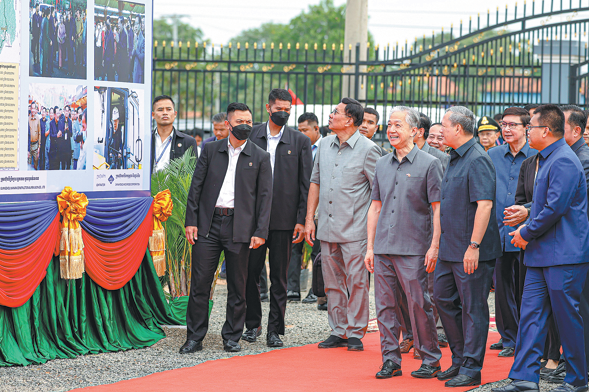
    On Tuesday, Cambodia celebrated the official opening of a 45-kilometer upgraded stretch of National Road 7, a key infrastructure project financed through Chinese support, in the country’s southeastern Kampong Cham Province. The inauguration ceremony drew high-level attendance from both nations, including Cambodian Prime Minister Hun Manet and Chinese Ambassador to Cambodia Wang Wenbin.

    Hun Manet opened the event by emphasizing the critical economic role of the new section, which runs from the Skun Market roundabout to the Kizuna Bridge roundabout in central Kampong Cham. The upgraded corridor creates a seamless link between Cambodia’s central lowland regions and its resource-rich northeastern provinces, serving as a core arterial route for cross-regional movement of goods and people. “This road will streamline public travel, unlock new growth for trade and tourism, and directly improve quality of life for local residents and daily commuters,” Hun Manet stated in comments reported by Xinhua News Agency.

    National Road 7 as a whole is one of Cambodia’s most important transport thoroughfares. The 196-kilometer route, which connects the capital Phnom Penh through Kandal and Kampong Cham provinces all the way to the Lao border, has its origins in early Chinese development assistance, with initial construction launching in 2004. Since opening to traffic in 2008, it has consistently ranked among the country’s busiest highways, carrying the bulk of cross-border and inter-regional traffic. The latest upgrade and expansion project took 27 months to complete, carried out by China Road and Bridge Corporation. Financing came primarily from a preferential loan provided by the Chinese government, with complementary funding contributed by the Cambodian government.

    The upgrade has expanded the 45-kilometer section from a narrow two-lane road to a modern four-lane highway, designed to accommodate the rapid growth in passenger and freight traffic the route has seen in recent years. Beyond easing congestion, officials project the improved corridor will speed up the movement of commercial and agricultural goods, strengthen Cambodia’s domestic logistics sector, and unlock new tourism potential for Kampong Cham, a province rich with ancient Khmer temples, scenic nature resorts, and centuries-old historical sites.

    Hun Manet noted that the project is projected to deliver an economic internal rate of return as high as 15.27 percent, framing its completion as a powerful demonstration of the deep collaborative partnership between Phnom Penh and Beijing. He extended official gratitude to China for its longstanding and widespread support for Cambodia’s socioeconomic development and poverty reduction efforts. Echoing this praise, Cambodian Minister of Public Works and Transport Peng Ponea emphasized that the road’s opening will invigorate cross-regional travel and trade, accelerating inclusive growth across Kampong Cham and its adjacent high-potential neighboring provinces. “China’s assistance has helped upgrade our logistics network and drive national economic growth, aligning perfectly with Cambodia’s own development goals and the demands of global economic integration,” Peng Ponea said, thanking China for its consistent financial and technical support for Cambodia’s ongoing transport infrastructure expansion and rehabilitation projects.

    In a Facebook post following the inauguration ceremony, Ambassador Wang Wenbin highlighted that the growing network of Chinese-supported roads and bridges across Cambodia is both a reflection of the Southeast Asian nation’s growing economic dynamism and a tangible symbol of the unbreakable ironclad friendship between the two countries. “These projects truly are ‘roads of opportunity’ and ‘bridges of cooperation’, and I am fully confident that many more will be built in the years ahead,” Wang wrote.

    Thong Mengdavid, deputy director of the China-ASEAN Studies Center at the Cambodia University of Technology and Science, explained that the new road section marks a major milestone for the Cambodian government’s Pentagonal Strategy-Phase I, the administration’s flagship socioeconomic development agenda. A key detail of the project that will benefit local commuters and businesses is that the upgraded section will remain toll-free. Mengdavid noted that the upgrade cuts travel time along the corridor in half, from an hour down to just 30 minutes, turning what was long a congested transport bottleneck into a high-efficiency movement corridor.

    For local producers, that time and cost savings will have immediate, tangible benefits. “For local farmers and traders, this means fresh agricultural products such as rubber, cashews, and cassava can reach domestic markets and regional processing plants faster and at significantly lower transportation costs,” Mengdavid explained. He added that the improved infrastructure is also expected to attract new domestic and foreign investment to the Kampong Cham region, which will in turn create new formal employment opportunities for local residents, strengthen regional supply chain resilience, and expand cross-border connectivity between Cambodia and its regional neighbors.

  • Bonnie Tyler, who topped the charts with epic ‘Total Eclipse of the Heart,’ has died at 75

    Bonnie Tyler, who topped the charts with epic ‘Total Eclipse of the Heart,’ has died at 75

    Bonnie Tyler, the Grammy-nominated Welsh pop star whose signature gravelly roar turned the 1983 power ballad *Total Eclipse of the Heart* into a generational cultural staple, has died at 75. Her death came unexpectedly at a hospital in Portugal, where she had been receiving treatment for an illness, her family confirmed in a public statement posted to Tyler’s official website Thursday.

    Tyler had been admitted to a Faro hospital — near the coastal Portuguese home she maintained — for emergency intestinal surgery in May. After a period in an induced coma, medical updates last month indicated her condition was improving, and a full recovery was widely expected. “Bonnie’s family and team are heartbroken to announce that Bonnie unexpectedly passed away last night in hospital in Portugal as a result of the illness that she was being treated for,” the statement read.

    Born Gaynor Hopkins in 1948, Tyler grew up the daughter of a coal miner in working-class public housing in Skewen, Wales, just outside Swansea. Raised alongside three sisters and two brothers, she fell in love with music from an early age: her first album was The Beatles’ *A Hard Day’s Night*, and at 13 she purchased her first single, The Swinging Blue Jeans’ *Hippy Hippy Shake*, as documented in her memoir *Straight From the Heart*. A devout viewer of the iconic UK music program *Top of the Pops*, Tyler would record episodes on a vintage reel-to-reel recorder, transcribe lyrics to her favorite tracks from artists including Janis Joplin, Nina Simone, and Tina Turner, and practice singing for hours into a hairbrush. Even in those early years, she noted her distinctively husky vocal tone, though she never imagined it would become her trademark. That signature sound was solidified in 1976, when she underwent surgery to remove vocal nodules, leaving her with the rough, powerful delivery that would make her famous.

    After performing under the stage name Sherine Davis as the frontwoman of a local soul band, Tyler was discovered by talent scout Roger Bell, who brought her to London for demo recordings. When RCA Records signed her, the label encouraged her to adopt the stage name Bonnie Tyler. Her 1977 debut album *The World Starts Tonight* spawned her first chart hit, *Lost in France*, and earned her a Brit Awards nomination for Breakthrough Artist. A year later, she scored a No. 3 UK hit with *It’s a Heartache*, but her career would reach unprecedented heights after she signed with Sony. After seeing Meat Loaf perform *Bat Out of Hell* on the BBC, Tyler personally requested to work with Jim Steinman, Meat Loaf’s iconic songwriter and producer.

    Steinman offered Tyler the centerpiece of what would become her fifth studio album *Faster Than the Speed of Night*: *Total Eclipse of the Heart*. The track borrowed the iconic line “Turn around, bright eyes” from Steinman’s 1969 student musical *The Dream Engine*, and the producer originally framed it as a cut for a planned stage adaptation of the vampire classic *Nosferatu*. Recalling the recording process in a 2023 interview with *The Guardian*, Tyler said: “Jim liked to put down a basic rhythm track, do nine takes of the song, choose the best one and then put the kitchen sink on there, like Phil Spector used to. He gave me a cassette to listen to in my hotel and we both preferred take two.” Backed by E Street Band members Roy Bittan on piano and Max Weinberg on drums, the track is a soaring, gut-wrenching meditation on lost love, with lyrics that explore the loneliness of a broken heart.

    Its accompanying music video became a defining staple of early MTV, filmed at a creepy, gothic former psychiatric asylum in Surrey, where guard dogs reportedly refused to enter the basement rooms that once held electric shock treatment sessions. The over-the-top visuals included slow-motion doves, flickering candles, dancing ninjas, greaser dancers, oversized shoulder pads, fencers, gymnasts, wind machines, and shirtless teen boys in swim goggles being doused with water. The track spent four consecutive weeks atop the U.S. Billboard Hot 100 and earned Tyler two Grammy nominations: one for the album in the Best Rock Vocal Performance category, and one for the single for Best Pop Vocal Performance. Though she lost both awards, the track’s cultural legacy only grew across decades. In a 2020 reevaluation, music outlet Stereogum hailed *Total Eclipse of the Heart* as an “extinction-level event rendered in musical form,” adding: “It’s pop music as heart-pounding, chest-thumping, blood-gargling, heavens-falling passion explosion. It’s sheer spectacle. It’s fireworks and lasers and lightning and thunder. It soars and swoops and barrel-rolls.”

    The track has never faded from public consciousness: it has been covered by dozens of artists, from Nicki French in 1995 to Westlife in 2006, and has appeared in dozens of films and television shows, including a memorable scene in the 2001 comedy *Bandits*, where Cate Blanchett sings the track before hitting Billy Bob Thornton’s character with a car, and a wedding scene in the 2003 comedy *Old School*. One Direction performed it on the UK’s *The X Factor* during their 2010 audition run. Streaming numbers have spiked repeatedly during real solar and lunar eclipses, pushing the track past 1 billion total streams as of 2024, with major surges during the 2017 and 2024 total solar eclipses.

    Though Tyler never matched the commercial peak of *Total Eclipse of the Heart*, she maintained a prolific decades-long career, releasing fan-favorite tracks including 1984’s *Holding Out for a Hero* (featured on the *Footloose* soundtrack) and *Here She Comes* from the *Metropolis* reissue. In 2013, she released the country-influenced album *Rocks and Honey* recorded in Nashville, which included the track *Believe in Me* selected to represent the United Kingdom at that year’s Eurovision Song Contest in Sweden. Recalling the experience in a 2023 interview, she said: “It was an absolutely wonderful atmosphere there. I was being interviewed every 15, 20 minutes, and when I walked out onstage behind the British flag, I thought the roof was going to come off! It was awesome, just awesome!” In 2017, she performed the iconic track alongside DNCE, Joe Jonas’ band, on a special “Total Eclipse Cruise” during the 2017 total solar eclipse, drawing global attention. Her 2019 album *Between the Earth and the Stars* featured duets with legends including Rod Stewart, Cliff Richard, and Status Quo’s Francis Rossi, and she closed the year with a performance at a Vatican Christmas concert for Pope Francis.

    In 2022, Tyler was honored as a Member of the Order of the British Empire (MBE) by Queen Elizabeth II for her decades of contributions to music. She is survived by her husband Robert Sullivan, a property developer and former Olympic judo competitor.

    Associated Press writer Brian Melley contributed reporting from London.

  • Search continues in rough seas off Pakistan for missing cargo plane crew

    Search continues in rough seas off Pakistan for missing cargo plane crew

    A day after wreckage fragments from a downed Pakistani cargo plane were pulled from the Arabian Sea, Pakistani naval search and rescue operations remained locked in a struggle against choppy, unforgiving waters on Thursday, as efforts to locate five missing crew members and the aircraft’s main fuselage stretched into a second full day of searching.

    The cargo plane, operated by private Pakistani aviation firm K2 Airways, was traveling to Karachi — Pakistan’s largest and busiest urban and commercial hub — from Sharjah, United Arab Emirates, when it suffered a reported navigation system malfunction before all radio and radar contact was lost late Tuesday, according to official statements from the Pakistan Airports Authority. The aircraft disappeared from radar screens approximately 300 kilometers southwest of Karachi, and as of Thursday, the core fuselage of the plane and all five crew members remained unaccounted for, two anonymous officials familiar with the search operation confirmed to the Associated Press, noting they were not cleared to speak publicly about the ongoing mission.

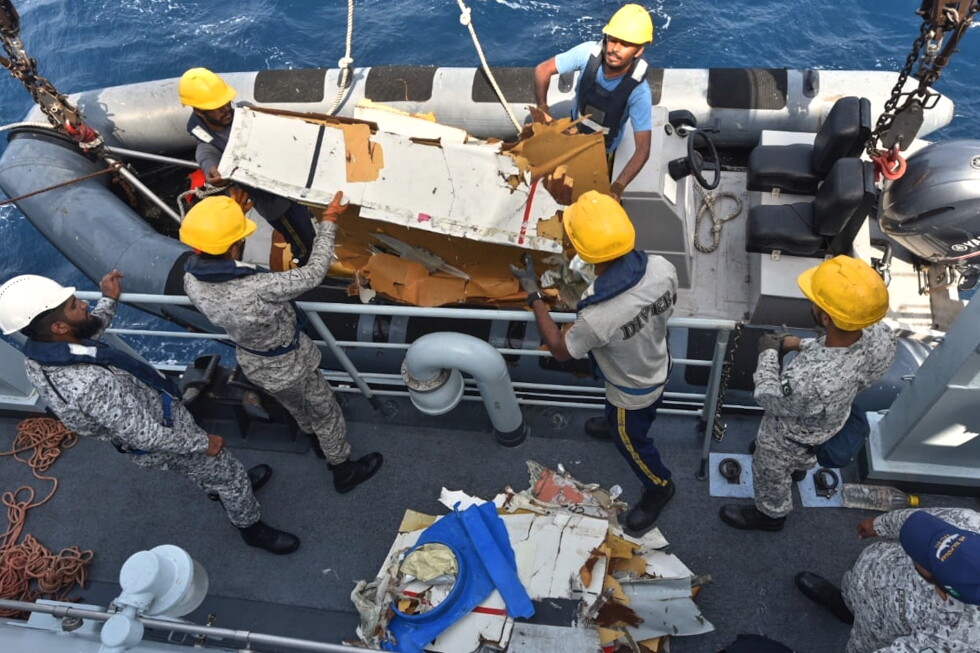
    Twelve hours after the plane vanished, Pakistan’s navy and the Pakistan Maritime Security Agency recovered scattered wreckage fragments roughly 100 kilometers off the coast of Ormara, a small coastal town in Balochistan province’s southwestern Makran Coast. The Pakistan Airports Authority published images on its social media platform X showing search crews lifting debris from the water, but officials warned that harsh conditions have hampered the mission: strong winds, turbulent seas and shifting ocean currents have carried floating wreckage far from the original crash site, spreading debris across a huge expanse of open water.

    In a separate, successful rescue operation also carried out Thursday off Pakistan’s Arabian Sea coast, the Pakistani navy rescued all 20 crew members of a sinking traditional cargo dhow east of Ormara. The wooden vessel issued an urgent distress call after it began taking on water; the navy immediately dispatched a patrol ship and aircraft to the area, and all rescued crew members are now receiving onshore medical care, according to an official military statement.

    Retired Rear Admiral Faisal Shah, a senior Pakistani naval expert, warned that locating the downed plane’s main airframe could be a months- or even years-long effort. The crash is believed to have occurred in waters reaching nearly 3,000 meters deep, a depth that requires specialized deep-sea search equipment not immediately available for the operation. Shah drew a parallel to the decades-long search for Malaysia Airlines Flight MH370, which disappeared over the Indian Ocean in 2014 and has never been definitively located, even after years of coordinated international search efforts. He added that floating debris recovered near Ormara does not definitively mark the crash site, as currents and wind can carry wreckage hundreds of kilometers from where the plane went down.

    K2 Airways has publicly identified the five missing crew members: captain Muhammad Rizwan Idris, first officer Faisal Jatoi, flight engineers Muhammad Hamid and Muhammad Arif Siddiqui, and aircraft loader Muhammad Taufiq Khan. Pakistani Prime Minister Shehbaz Sharif has already directed all relevant state agencies to deploy every available resource to the search mission, and extended official condolences to the families of the missing men.

    Preliminary radar data analyzed by the Pakistan Airports Authority shows the aircraft made an abrupt, unplanned change of course before entering a rapid descent shortly before contact was lost at 9:21 p.m. local time on Tuesday, 287 kilometers west of Karachi. The official cause of the crash remains under active investigation, with no preliminary conclusions released as of Thursday.

    This crash comes as Pakistan has a decades-long history of fatal civil aviation accidents. In May 2020, a passenger flight operated by Pakistan International Airlines carrying 99 people crashed into a densely populated residential neighborhood near Karachi’s Jinnah International Airport during a landing attempt. The crash killed 97 of the 99 people on board, and a subsequent official government investigation attributed the disaster to preventable human error by both the flight crew and ground air traffic controllers.

  • Ebola misinformation fuels violent attacks on health workers

    Ebola misinformation fuels violent attacks on health workers

    The ongoing Ebola outbreak in the Democratic Republic of the Congo, which first emerged in mid-May this year, has already triggered a devastating dual crisis: a rapidly spreading public health emergency compounded by dangerous falsehoods that have turned communities against the medical teams working to save lives. BBC Verify, the fact-checking division of the British public broadcaster, has conducted an investigation into multiple violent incidents targeting frontline health workers, all traced back to widespread misinformation circulating in affected regions. As of the latest official updates, the outbreak has infected more than 1,700 people across the country and claimed at least 580 lives, with case counts continuing to climb as responders struggle to contain both the virus and the harmful rumors undermining their work. Misinformation around Ebola is not a new phenomenon in central Africa, but its current impact has been particularly severe: false claims that health workers are spreading the virus themselves, or that Ebola treatment is a dangerous hoax, have convinced segments of the local population to attack medical convoys, storm treatment centers, and threaten staff. These violent acts not only endanger the lives of frontline workers but also severely disrupt outbreak containment efforts, allowing the virus to spread further into unmonitored communities. BBC Verify’s ongoing analysis underscores how quickly misinformation can travel through informal social networks in remote regions, turning a public health challenge into a security crisis that complicates international and local response efforts.

  • Ukrainian drones batter Russian oil facilities, set more oil tankers ablaze

    Ukrainian drones batter Russian oil facilities, set more oil tankers ablaze

    A fresh wave of coordinated drone attacks carried out by Ukrainian forces targeted key Russian energy infrastructure across multiple regions and commercial oil tankers in the Sea of Azov on Thursday, coming just 24 hours after U.S. President Donald Trump announced a landmark agreement to grant Kyiv a manufacturing license for Patriot air defense systems. This new series of strikes builds on a sustained campaign against Russian fuel networks that has already sparked a growing domestic fuel crisis, with long lines at filling stations, widespread gasoline shortages, and mandatory fuel rationing in at least 10 Russian regions.

    The first strike of the day was reported early Thursday at a large oil storage depot in Tver, a major city in western Russia roughly 100 miles northwest of Moscow. Acting regional governor Vitaly Korolyov confirmed that the attack ignited a significant blaze at the facility, though no immediate casualties were reported.

    Further south, in Russia’s Stavropol Krai, regional governor Vladimir Vladimirov confirmed that multiple large oil storage tanks were set alight by drone assault in the town of Vyazniki. As the fire spread beyond initial containment efforts, local authorities ordered the emergency evacuation of residents from several nearby apartment blocks to protect public safety.

    Offshore in the Sea of Azov, a strategically critical waterway connecting southern Russia to the occupied Crimean Peninsula, Ukrainian drones hit two Russian oil tankers, according to Rostov regional governor Yuri Slusar. Slusay reported that one of the two vessels remained engulfed in flames as of Thursday afternoon, and all crew members from both ships were evacuated before the fires reached critical sections. Thursday’s attack marks the third strike on oil tankers in the Sea of Azov in the past week, part of Ukraine’s intentional campaign to disrupt Russian fuel supply lines to occupied Crimea and frontline Russian military forces operating in southern Ukraine.

    In a statement on the defensive actions taken during the strikes, Russia’s Defense Ministry announced that its air defense systems had intercepted and downed 73 Ukrainian drones across the country between late Wednesday and early Thursday. Ukraine, in turn, reported that Russia launched a massive overnight retaliatory drone and missile strike across Ukrainian territory, deploying 94 long-range attack drones and two ballistic missiles. Ukraine’s Air Force said that 72 of the incoming drones were either intercepted by air defenses or jammed and disabled before impact, but 19 remaining drones and both ballistic missiles caused damage to infrastructure and civilian sites across 13 locations.

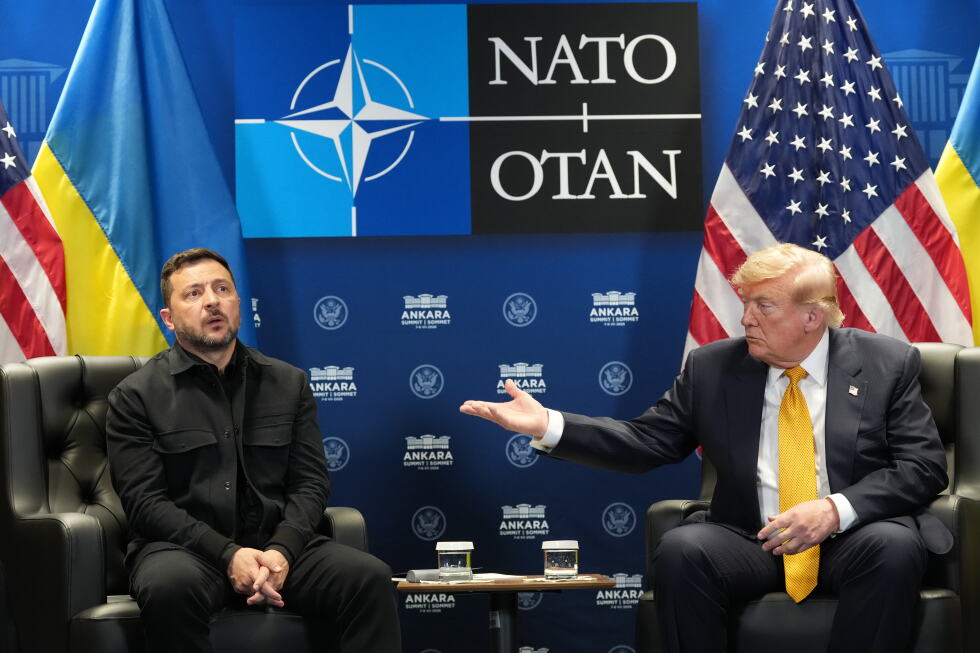
    The strikes unfolded against a dramatic shift in U.S.-Ukraine relations, a day after Trump and Ukrainian President Volodymyr Zelenskyy held a high-stakes meeting on the sidelines of the NATO summit in Istanbul, Turkey. During that meeting, Trump announced the U.S. would approve a license allowing Ukraine to manufacture its own Patriot air defense systems, a capability Kyiv has requested for years to counter relentless Russian missile and drone strikes on its territory. This agreement marks a major breakthrough for Ukraine, which has relied on a limited number of donated Patriot systems from Western allies to date.

    The collaborative tone of Wednesday’s meeting stood in stark contrast to a contentious meeting between the two leaders at the White House in February 2025, when Trump publicly berated Zelenskyy over the progress of the war and negotiations. During the latest encounter, however, Trump offered effusive praise for Zelenskyy, commending his willingness to engage in negotiations to end the more than four-year conflict. “He has done an amazing job and been very effective,” Trump told reporters following the meeting.

  • ‘This oxygen is spreading’ – inside Morocco’s mission to become a powerhouse

    ‘This oxygen is spreading’ – inside Morocco’s mission to become a powerhouse

    As Morocco prepares to face France once again for a spot in the 2026 FIFA World Cup semifinals on Thursday, football insiders who helped shape the nation’s modern program say the Atlas Lions’ current success is no fluke – it is the payoff of years of intentional, top-backed investment and strategic planning.

    Wales native Neil Ward, who stepped into the role of technical operations director at the Royal Moroccan Football Federation (RMFF) in 2020 after leading the Football Association of Wales Trust, was in Rabat when the country made global football history in 2022, becoming the first African nation to reach a men’s World Cup semifinal. He recalled that the entire city erupted in celebration that stretched into the early morning, with King Mohammed VI himself joining the festivities to mark the milestone. Even after a narrow elimination against France that tournament, the team’s momentum has not slowed, and as co-hosts of the 2030 World Cup alongside Spain and Portugal, the nation shows no sign of stepping back from its ambition to compete among the world’s elite.

    For British coaching educator Simon Jennings, who oversaw Morocco’s national youth development system from 2020 to 2024, the team’s current standing is the direct outcome of clear, unwavering national ambition rooted in the highest levels of government. King Mohammed VI has backed sustained, large-scale investment across every layer of Moroccan football, funding a cutting-edge national training center, elite youth academy, regional development hubs, major stadium renovations, and thousands of new amateur playing pitches across the country. These world-class facilities send a clear message to top talent playing in Europe’s top leagues that Morocco is serious about competing at the highest level, Ward explained.

    This significant public investment in football has drawn criticism from youth activists, who have called for greater funding to be redirected to pressing domestic priorities including education, healthcare, affordable housing, transport infrastructure and job creation. In response to these calls, the royal palace has committed to increasing 2026 budget allocations for health and education by 16% year-on-year, totaling the equivalent of £11.2 billion in new spending.

    Ward noted that the push to invest in football is rooted in two core goals: tapping into the deep, widespread passion for the sport that already exists across Moroccan society, and building the nation’s global soft power by proving it can compete with the world’s best football nations. That ambition represents a major shift in mentality: heading into the 2022 World Cup, Morocco had only advanced past the group stage once before, in 1986. But even before the first match kicked off in Qatar, then-manager Walid Regragui made clear the team was not just there to participate – they were there to make history.

    A key part of Morocco’s competitive edge comes from its proactive scouting of talented players of Moroccan descent around the world. With an estimated 5 million Moroccans living abroad, the federation has deployed full-time scouts across major European nations including France, the Netherlands, Spain, Germany, and Scandinavia to identify promising young players with Moroccan roots early in their careers, and welcome them fully into the national team setup. Jennings emphasized that these players are fully embraced as Moroccans, with no sense of being secondary members of the squad, and many choose to represent Morocco even when they are eligible for top European national teams.

    That strategy has already delivered dramatic results: 19 of the 26 players in Morocco’s 2026 World Cup squad were born outside the country. Six of those players, including highly touted 18-year-old Lille midfielder Ayyoub Bouaddi, were previously eligible to represent Thursday’s opponent France. Even rising Barcelona star Lamine Yamal, who represents Spain at the senior level and has a Moroccan father, was approached by the RMFF when he was just 12 or 13 years old – a testament to the federation’s commitment to leaving no stone unturned in talent identification, even when recruitment does not ultimately pan out.

    Now, the next phase of Morocco’s plan is growing more elite talent through its domestic youth system. Chris van Puyvelde, who served as RMFF technical director from 2022 to 2025, said the federation’s goal by the 2030 co-hosted World Cup is to reach an even split between players born in Morocco and players of Moroccan descent raised abroad. To hit that target, van Puyvelde noted, domestic organizational systems still need improvement, a challenge that comes amid growing pressure to deliver consistent top results.

    That pressure has already been felt by current senior manager Mohamed Ouahbi, the Belgium-born coach who took over the top job after Regragui resigned following a disappointing early exit from the 2025 African Nations Cup. After his Moroccan under-20 side failed to qualify for the 2023 African Nations Cup, Ouahbi retained the federation’s backing and, with added time and patience, led the under-20 squad to win the 2025 U-20 World Cup – earning him a promotion to the senior team role just months later, with a contract running through the 2030 World Cup. That long-term contract signals the federation’s commitment to building sustained success, not just chasing short-term results.

    As Morocco gets ready to face France for a spot in the 2026 World Cup semifinals, van Puyvelde summed up the transformation the country has undergone: Morocco is not just building new stadiums for the 2030 World Cup, it is building a complete, grassroots football structure from the bottom up. The breakthrough success of 2022 has already created momentum that is spreading across the entire country, and regardless of Thursday’s outcome, the Atlas Lions’ rise as a global football powerhouse is only just beginning.

  • Nobody can question integrity of World Cup referees – Collina

    Nobody can question integrity of World Cup referees – Collina

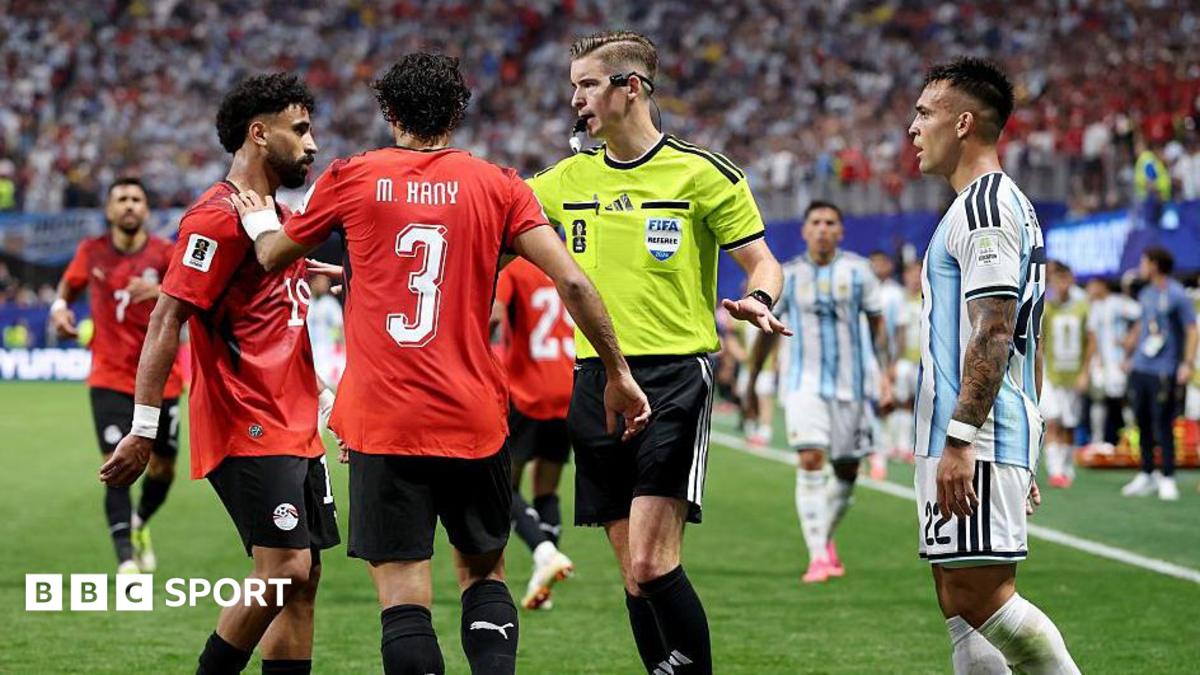
    A fresh wave of controversy has swept through the 2026 FIFA World Cup following a dramatic last-16 clash between Egypt and Argentina, which saw the reigning champions overturn a 2-0 second-half deficit to secure a 3-2 stoppage-time win. The Egyptian Football Association (EFA) has launched a formal complaint against the match officials, demanding that they be removed from the remainder of the tournament and that an investigation be opened into allegations of officiating double standards. Now, FIFA’s top refereeing chief is pushing back strongly against what he calls baseless accusations, defending the integrity of the sport’s match officials at the global tournament.

    The root of Egypt’s anger lies in two key second-half decisions that altered the course of the match. First, Video Assistant Referee (VAR) intervened to disallow a potential go-ahead goal from Egypt’s Mostafa Zico, after officials determined that midfielder Marwan Attia committed a foul by stepping on Argentina defender Lisandro Martinez’s foot in the opening phase of the attacking build-up. Just moments before Argentina scored their late winning goal, a claimed foul by Egypt star Mohamed Salah in the Argentinian penalty area was also dismissed by match officials.

    Speaking publicly about the high-profile dispute — a break from the usual policy of not commenting on specific in-tournament incidents — FIFA Chief Refereeing Officer Pierluigi Collina backed the outcomes of both VAR reviews. He outlined that the protocol for VAR checks requires officials to review every phase of attacking possession leading up to a goal, with no fixed limit on how far back an incident can be reviewed, or how much time can pass between a foul and the resulting goal. If an undetected foul is found that impacted the build-up, Collina explained, VAR is obligated to intervene. “We believe that a foul is a foul,” he said. “Regardless of whether the foul appears ‘obvious’, if the referee did not see it on the field of play, the VAR can intervene.”

    Collina added that the second controversial incident, involving Salah and Argentinian forward Julian Alvarez, was correctly ruled as legal, noting that the contact qualified as standard physical play common in football, not a foul. While he acknowledged that a small degree of subjectivity is unavoidable in 50-50 officiating calls, Collina stated the governing body is satisfied with how officiating protocols have been applied across the 2026 tournament.

    Egypt’s head coach Hossam Hassan doubled down on the EFA’s allegations after the match, claiming his side had suffered clear unfair treatment. He even suggested officials had deliberately favored Argentina to ensure the defending champions and star player Lionel Messi remained in the competition. Collina rejected these accusations firmly, stressing that no one has grounds to question the integrity of World Cup match officials. “Of course, constructive discussion about decisions will always be part of football, but unfounded allegations have no place in our sport,” he said. “When this happens, it may provoke reactions that lead to threats against [officials] and their families. This is not right.”

    Collina also pushed back on claims that FIFA leadership can influence refereeing decisions, noting that FIFA President Gianni Infantino has consistently granted the refereeing department full independence to carry out its work. “Nobody can claim that FIFA refereeing can be influenced by anyone, not even by the FIFA president,” he said. “He has always shown his full support for FIFA Team One while trusting us to work with complete independence. Match officials make honest decisions and, just like players and coaches, they always try to do their best.”

    The Egypt dispute is not the only officiating controversy FIFA is navigating at this tournament. The governing body has also faced widespread criticism from UEFA and other stakeholders over its decision to overturn an automatic red card ban for US striker Folarin Balogun from a qualifying match against Bosnia-Herzegovina. European football’s governing body UEFA called the decision “unprecedented, incomprehensible and unjustifiable”, and even former US President Donald Trump confirmed he had asked FIFA to review the initial ruling to lift the ban.

  • US forces strike Iran for 2nd straight day

    US forces strike Iran for 2nd straight day

    Tensions between the United States and Iran have surged to a new critical peak, with U.S. military forces launching a second consecutive day of offensive strikes against Iranian targets on Wednesday, July 9, 2026. According to an official statement released by U.S. Central Command, the operation is framed as an effort to weaken Iran’s capacity to disrupt navigation access through the strategically vital Strait of Hormuz.

    In a public post on the social platform X, U.S. Central Command said the strikes are intended to hold Iran accountable for what it describes as “recent unjustified aggression” against commercial vessels and civilian crews transiting the key international waterway, a chokepoint that carries roughly a fifth of global oil supplies. Ahead of the Wednesday strikes, military updates confirmed more than 20 U.S. Navy warships were already conducting patrols across maritime domains in the Middle East, signaling a heavy military buildup in the region ahead of the renewed action.

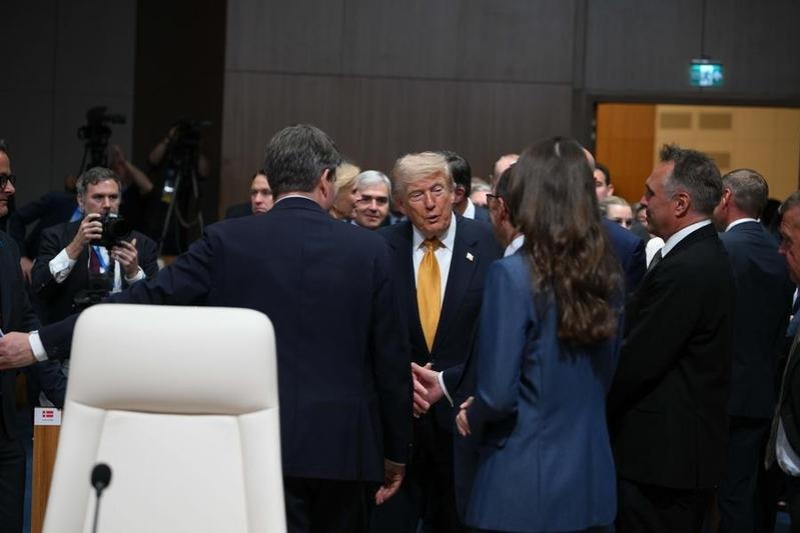
    The coordinated strikes came just hours after U.S. President Donald Trump issued a clear warning during his appearance at the 2026 NATO Summit hosted in Ankara, Türkiye, on July 8. Trump publicly foreshadowed the new attack, telling attendees “I’ll give a little warning: We’re going to hit them hard tonight.” He added that the U.S. does not anticipate a full-scale, widespread conflict with Iran, seeking to downplay fears of an all-out war.

    But Iranian officials have responded with a firm threat of retaliation. Iran’s state-owned Press TV, citing an anonymous informed source, reported that Iran would close the Strait of Hormuz and strike twice the number of targets hit by the U.S. if Washington launched any new offensive attacks. The mutual threats and consecutive military strikes mark a sharp new escalation of hostilities between the two nations, following a first round of reciprocal attacks that unfolded between Tuesday night and Wednesday morning.

  • Trump’s ‘retribution’ threat against Iran sends Australian sharemarket into decline

    Trump’s ‘retribution’ threat against Iran sends Australian sharemarket into decline

    Australia’s benchmark stock index has extended its downward trend for a fourth consecutive trading session, as escalating geopolitical tensions between the United States and Iran triggered risk aversion among global and domestic investors, dragging down key mining shares while select sectors managed to eke out gains on Thursday.

    The S&P/ASX 200 fell 22.60 points, or 0.26%, to close at 8762.50, while the broader All Ordinaries index dropped 18 points, or 0.20%, to settle at 8961.30. The Australian dollar held steady against the U.S. dollar, ending the trading day at 69.36 U.S. cents.

    Against the overall market downturn, eight out of Australia’s 11 major industry sectors closed in positive territory, with energy, consumer staples and technology leading the gains. Energy stocks rallied in lockstep with climbing global crude oil prices, which were lifted by supply disruption fears tied to tensions in the key Strait of Hormuz. Woodside Energy gained 1.49% to $29.30, Santos climbed 2.00% to $7.65, and Ampol rose 1.47% to $35.29. Major domestic supermarket chains also posted solid gains, with Woolworths adding 1.35% to $40.44 and Coles increasing 1.11% to $23.67.

    Offsets to these sector gains came from a sharp pullback in material and mining stocks, which were pressured by a dual hit of heightened Middle East conflict and softer-than-expected Chinese economic data. China is the world’s largest importer of iron ore, Australia’s top export, making the sector particularly sensitive to shifts in both Chinese demand and global risk sentiment. Shares in mining giant BHP fell 1.11% to $56.87, Rio Tinto slumped 3.25% to $158.52, and Fortescue Metals Group dropped 1.58% to $18.11, dragging the broader market lower.

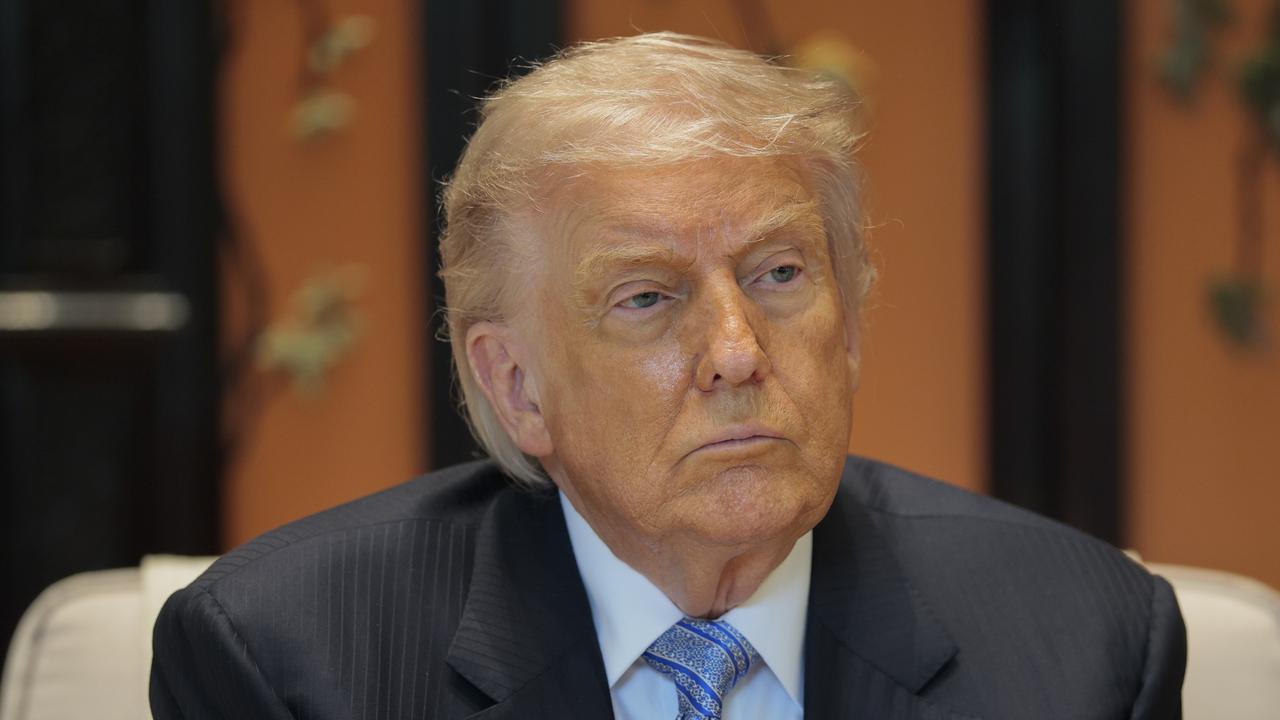
    The market volatility was triggered by fresh threats from former U.S. President Donald Trump, who pledged “retribution” against Iran following alleged attacks on commercial shipping vessels transiting the Strait of Hormuz, a chokepoint through which roughly a fifth of the world’s oil supplies pass. After a series of exchanged attacks earlier this week, Trump confirmed new U.S. strikes against Iran in a Truth Social post, writing: “This is in retribution for yesterday’s bombing of ships by Iran. If it happens again, it will get much worse!”

    Brent crude stabilized at $78 U.S. per barrel after a sharp rally on Wednesday, while West Texas Intermediate added 1% to trade around $74 U.S. per barrel, extending a three-day winning streak for oil prices. Shipping traffic through the Strait of Hormuz remains heavily disrupted, with only a small fraction of normal vessel traffic moving through the waterway, according to market analysts.

    Marc Jocum, senior product and investment strategist at Global X, described the current market environment as “geopolitical whiplash” for domestic Australian investors. “One day hopes of de-escalation emerge, the next they disappear. Investors are playing a game of geopolitical whiplash, where optimism at breakfast can turn into panic by dinner as each new headline rewrites the market narrative,” Jocum said. “Renewed U.S. military strikes on Iran for a second straight day, alongside Mr. Trump’s dismissal of a ceasefire as a ‘waste of time’, kept risk appetite firmly on the sidelines.”

    In individual company news, insurance broker Steadfast Group gained 0.78% to $5.19 amid ongoing discussions over a $7.7 billion takeover bid led by U.S.-based Amwins Group and investment firm Dragoneer Investments. New Zealand-headquartered building materials firm Fletcher Building jumped 7.55% to $2.99 after upgrading its full-year 2026 earnings guidance, now forecasting earnings before interest and tax of between $400 million and $403 million, including $52 million in revenue from surplus property sales. Commercial construction company FDC Consolidated soared 12% to $3.37 in its debut trading session on the ASX, which opened at 12:30 p.m. local time.

  • Nominations open in the contest to be UK leader, with Andy Burnham likely the only candidate

    Nominations open in the contest to be UK leader, with Andy Burnham likely the only candidate

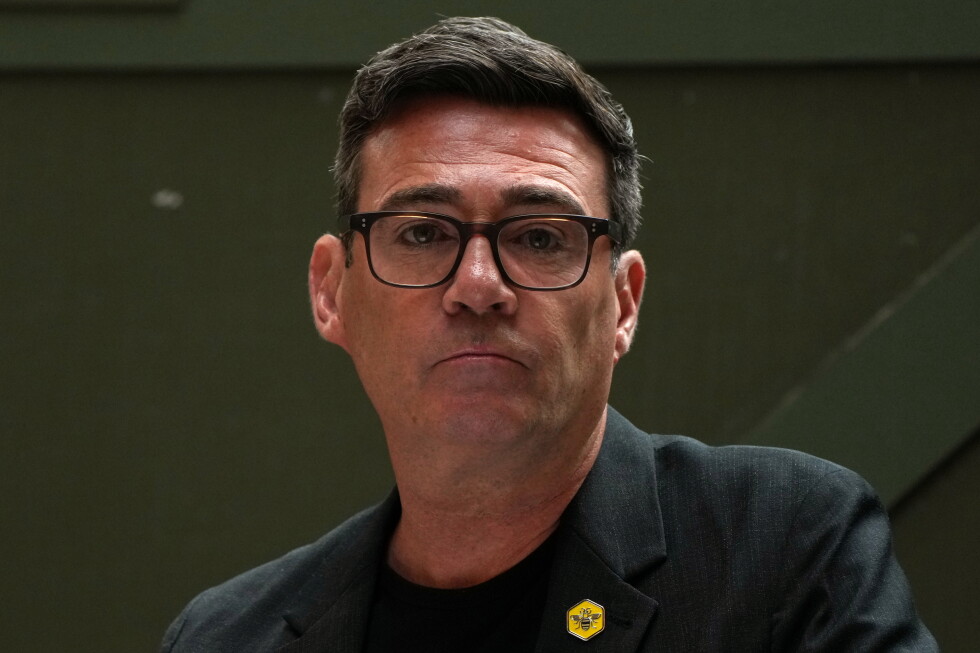
    LONDON – The UK’s Labour Party launched its leadership election process Thursday to select a successor to outgoing Prime Minister Keir Starmer, with veteran progressive politician Andy Burnham positioned as the only candidate and set to take the country’s highest office later this month.

    The opening of nominations kicks off a short, orderly contest that appears all but decided before voting even begins. Other prospective challengers have already withdrawn from consideration, leaving Burnham as the sole hopeful. On Wednesday evening, former Defense Secretary Al Carns, who had publicly weighed a run for the leadership, confirmed he would not mount a challenge against Burnham.

    In an official statement announcing his decision, Carns noted that while he had hoped a public leadership contest would spark a robust, needed policy debate for the party, an extended period of internal factional politics is not what the UK public requires at this critical moment. “We’ve got to get on with the job of governing,” Carns wrote, adding “Andy Burnham’s earned this position and he’s got my full backing.”

    Under Labour Party rules, any candidate must collect a minimum of 80 signatures from sitting Labour Members of Parliament to appear on the ballot. Burnham, the former 10-year mayor of Greater Manchester, is already on track to far surpass this threshold, according to party insiders.

    Nominations will close on July 16, with an official confirmation of the new leader expected the following day. Following the announcement, Burnham will travel to Buckingham Palace for an audience with King Charles III on July 20, where he will formally be invited to form a government and take office as prime minister.

    The leadership vacancy was created last month when Starmer announced he would step down immediately after his successor was chosen. Starmer, who led Labour to a landslide general election victory in 2024, saw his approval among both party members and the general public collapse over two years in office, undermined by repeated policy missteps and widely criticized judgment calls that eroded public trust in his leadership.

    Burnham returned to national Parliament just last month, winning a special by-election after nearly a decade leading the major northern English metro region of Greater Manchester. He has campaigned on a platform of sweeping national economic change, promising to reverse almost 17 years of sluggish UK growth that began after the 2008 global financial crisis. His signature policy approach, branded “Manchesterism,” draws on his experience in regional government, and calls for combining private and public sector investment to upgrade underfunded national assets including transport networks, affordable housing, and core infrastructure.

    Despite his momentum and united party backing, Burnham will inherit the same deep-seated challenges that plagued Starmer’s tenure. The UK continues to grapple with stagnant overall economic growth, strained and under-resourced public services, and ongoing cost-of-living pressures that have left millions of households facing financial hardship.

    On foreign policy, Burnham has already signaled he will maintain broad continuity with the existing government’s approach. In an op-ed published in The Times of London, he confirmed that the UK’s “commitment to NATO and the U.K.’s nuclear deterrent will remain absolute.” He added that the country will continue to serve as a steadfast ally to the United States and maintain unwavering support for Ukraine in its ongoing conflict against Russian invasion.