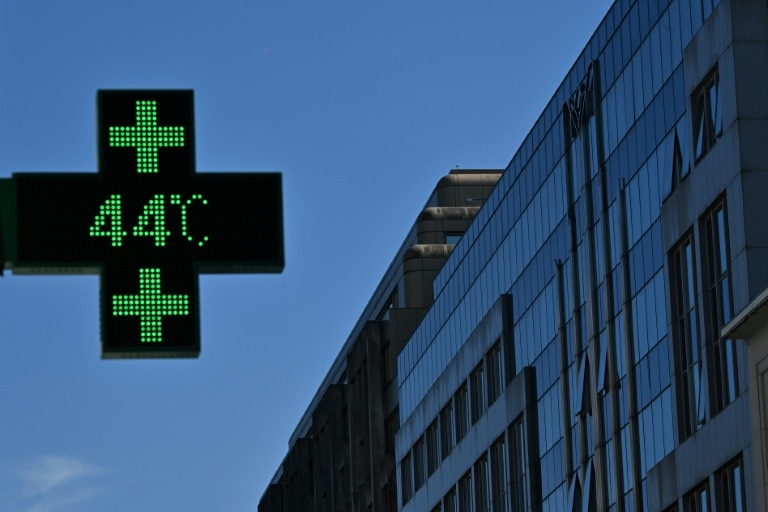
Last month’s historic heatwave that baked Western Europe left an alarming hidden public health crisis in its wake: a new report from environmental non-governmental organization Global Witness has found that two-thirds of the European Union’s population were exposed to dangerous, above-guideline levels of ground-level ozone pollution between June 21 and 28.
The analysis, which combines data from 162 cross-continental air quality monitoring stations, atmospheric modelling from the EU’s Copernicus Atmosphere Monitoring Service (CAMS) and regional census data, estimates that nearly 298 million EU residents — including 100 million children and elderly people, groups that are disproportionately vulnerable to air pollutant harm — faced ozone concentrations exceeding the EU’s recommended maximum daily eight-hour average of 120 micrograms per cubic meter. Even more starkly, around 87 percent of the EU’s 450 million total population were exposed to levels above the World Health Organization’s stricter safety guideline of 100 micrograms per cubic meter, with 72 million people hit by concentrations crossing the 150 micrograms per cubic meter threshold, classified as the most dangerous range. Two-thirds of all monitoring stations recorded ozone readings in the top 1 percentile of all June measurements dating back to 2013, with a peak reading of 233.7 micrograms per cubic meter recorded in Germany’s North Rhine-Westphalia on June 27.
This widespread exposure event comes just hours after the EU’s Copernicus Climate Change Service confirmed June 2024 was the hottest June ever recorded in Western Europe, amplifying longstanding concerns about how climate change is worsening dangerous air quality events. Unlike the stratospheric ozone layer that shields Earth from harmful solar radiation — which is slowly recovering from decades of damage caused by chlorofluorocarbon refrigerants — ground-level ozone is a toxic primary component of smog that poses severe risks to human health. Exposure can trigger acute breathing issues, permanent lung tissue damage, asthma attacks, and a range of other chronic respiratory and cardiovascular complications. Data from the European Environment Agency shows that ozone pollution was linked to more than 63,000 premature deaths across Europe in 2023 alone, alongside billions of euros in damaged agricultural crops.
Ground-level ozone forms when nitrogen oxides (most often released from vehicle traffic) and volatile organic compounds (largely tied to human-caused methane emissions) react under high temperatures and intense sunlight — conditions that were widespread across the continent during last month’s heatwave. “If these chemicals are not emitted in the first place, then ground-level ozone does not form,” explained CAMS director Laurence Rouil, whose agency provided modelling data for the Global Witness report. Rouil noted that the scale of this ozone event, occurring so early in the summer season, is particularly concerning when compared to the devastating 2003 European heatwave, calling it “really remarkable and worrying.” She added that coordinated international action is essential to address the root causes of rising ozone pollution.
While the EU has made significant progress cutting nitrogen dioxide emissions over the past several decades, the report highlights a critical policy gap: methane, which contributes one-third of all ground-level ozone formation, currently has no binding reduction targets for agricultural sources in the bloc. Global Witness senior campaigner Flossie Boyd framed the widespread exposure as an “invisible threat” driven by fossil fuel dependence. “People are being forced to live through very dangerous conditions as a result of our dependence on fossil fuels,” Boyd told AFP, calling for immediate policy action to cut precursor emissions that drive both rising global temperatures and toxic ozone pollution. “We need to stop these initial emissions driving up dangerous temperatures and driving the ozone and other forms of pollutants that are making our cities and beyond dangerous places to live,” she added.
Independent climate scientists not involved in the report have echoed its findings, noting that the pattern matches on-the-ground data across the continent. James Weber, a climate scientist at the University of Reading in the UK, told AFP that his own independent research found more than half of UK air monitoring stations exceeded the WHO’s ozone safety guideline during the heatwave’s peak. Weber warned that ozone pollution creates an extra layer of health risk during heat events, when human bodies are already strained by high temperatures and humidity. “Ozone is a problem when there are already pressures on people’s health from humidity and temperature,” he said, noting that ongoing climate change will only increase the frequency and severity of these overlapping extreme heat and ozone events. For the general public, he recommends avoiding strenuous outdoor activity during the hottest hours of days when high ozone levels are forecast.