博客

  • Fire at a shoe factory kills 28 in one of China’s deadliest blazes in recent years

    Fire at a shoe factory kills 28 in one of China’s deadliest blazes in recent years

    A devastating industrial fire has claimed 28 lives at a footwear manufacturing facility in Jinjiang, a southeastern Chinese city renowned as the nation’s shoe production hub, local emergency authorities confirmed this Thursday. The outbreak of the blaze at the Huiteng Shoe Company plant triggered an immediate emergency response, after President Xi Jinping called for a comprehensive search and rescue operation, alongside a rapid, transparent probe into the incident and strict legal accountability for anyone found responsible.

    According to official state broadcaster China Central Television (CCTV), a total of 239 people — 237 on-site workers and two external visitors — were inside the multi-story factory compound when the fire ignited. Emergency teams successfully evacuated or rescued 211 people from the burning structure, though 28 people could not be saved in time. Two of the fatalities occurred after injured victims were transferred to local hospitals for emergency treatment.

    As of the latest official update, the exact root cause of the fire has not yet been released to the public. State-run Xinhua News Agency confirmed that the factory’s owner and all senior facility managers have been taken into police custody, and all corporate accounts linked to the company have been frozen by regulatory authorities to support the ongoing investigation.

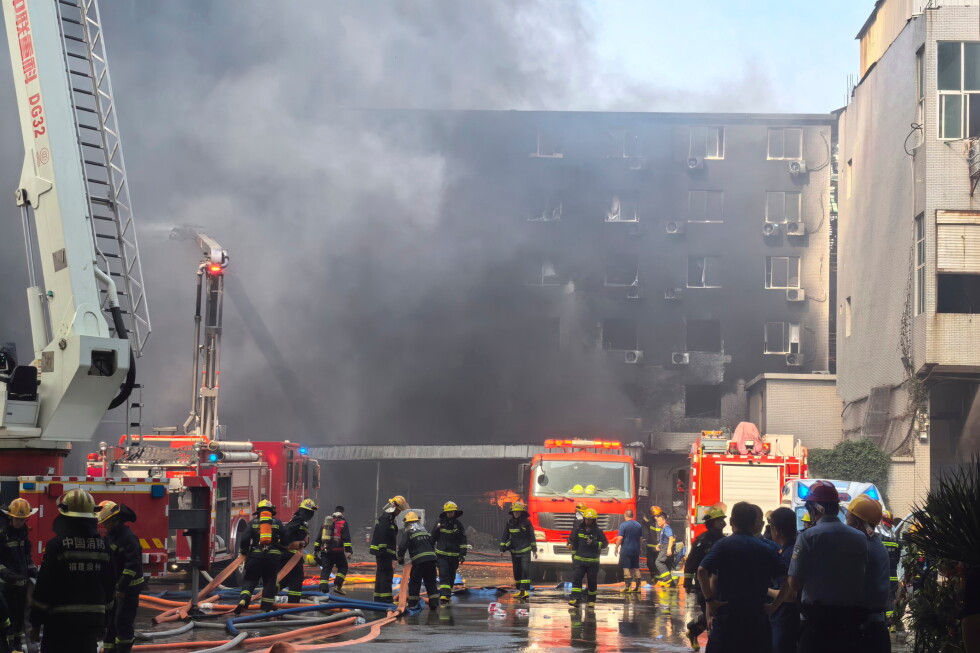
    Graphic footage released by CCTV captures the aftermath of the disaster: the entire exterior of the factory building is charred jet-black, with thin plumes of white smoke still rising from the structure hours after the blaze was contained. Earlier on-site footage shot by first responders shows intense flames raging across multiple floors of the facility, with thick toxic black smoke completely shrouding the building and obscuring visibility for early response teams.

    Jinjiang, the manufacturing center where the incident occurred, holds the official designation of China’s “shoe capital”, hosting hundreds of domestic and international footwear brands and accounting for a large share of China’s total shoe exports to global markets. Local authorities have not yet announced whether any safety violations were identified at the facility prior to the fire.

  • France returns 23 Syrian treasures after 15 years as Macron visits Damascus

    France returns 23 Syrian treasures after 15 years as Macron visits Damascus

    In a historic moment marking a new chapter of diplomatic and cultural engagement between France and post-Assad Syria, France has formally repatriated 23 ancient Syrian archaeological artifacts that were stranded abroad for nearly 15 years. The handover aligned with French President Emmanuel Macron’s groundbreaking trip to Damascus, the first official visit by a leader of a major Western nation since the ousting of Bashar Assad’s government at the end of 2024.

    The full collection of relics, transported to Damascus on Macron’s official presidential aircraft on Tuesday, was formally delivered to Syria’s National Museum. The assortment of returned heritage objects spans thousands of years of Syrian history, including bronze artifacts from the Roman era, cultural pieces from the Byzantine and early Islamic periods, and a vividly hued mosaic panel that originally decorated the historic Umayyad Mosque in central Damascus. The artifacts were originally loaned to the Arab World Institute in Paris in 2011 for a temporary exhibition focused on Syrian cultural heritage, not long before Syria’s full civil war broke out.

    According to Syria’s Foreign Ministry, the artifacts originated from leading museums across four major Syrian cities: Damascus, Aleppo, Latakia, and the war-ravaged ancient city of Palmyra. They remained in French custody after the two countries severed diplomatic relations during Assad’s decades-long rule. The ministry noted that France is the first nation to formalize such a cultural cooperation agreement with Syria as the new government launches a national campaign to recover all Syrian antiquities held in collections around the globe.

    At a special opening exhibition at the National Museum showcasing two of the most prominent returned pieces, Ayman al-Nabo, deputy director-general of Syria’s Directorate-General of Antiquities and Museums, hailed the repatriation as a key milestone for the country’s cultural recovery. Nivine Saadeddine, a lead curator at the National Museum, emphasized that the returned artifacts encapsulate the breadth and depth of Syria’s millennia-long civilization. “They date from the ninth millennium B.C. to the 14th and 15th centuries A.D. Every object represents a distinct chapter in Syria’s history,” Saadeddine explained.

    For Maamoun Abdulkarim, Syria’s former director-general of antiquities and museums who now serves as a professor of archaeology at the University of Sharjah in the United Arab Emirates, the long-awaited return closes a difficult chapter marked by years of war, diplomatic deadlock, and multiple failed efforts to bring the artifacts home. The 2011 loan was arranged as part of routine cross-cultural exchange between the two countries before the outbreak of full-scale conflict, Abdulkarim recalled. He first submitted a formal request for the artifacts’ repatriation in 2014, but received no official response from French authorities. Later, French officials clarified that they were unable to engage with representatives of Assad’s government, which had become widely diplomatically isolated and subject to sweeping international sanctions following the regime’s violent crackdown on anti-government protests and the subsequent civil war.

    Abdulkarim shared that the United Nations cultural agency UNESCO’s Beirut office attempted to mediate the dispute in later years, but those efforts also fell through. The prolonged standoff even carried severe personal risks for Abdulkarim and his colleagues under the Assad regime. “We were interrogated by Bashar Assad’s security forces,” he said. “We were beaten and accused of being too lenient in protecting Syria’s antiquities. Had it not been for the correspondence we had sent to the institute proving we had repeatedly requested the artifacts’ return, we could have been imprisoned.”

    Despite the years of hardship and delay, Abdulkarim welcomed the restart of formal cultural cooperation between the two nations. “I am very happy that, despite everything that happened, the war is over, Syria is reopening to the world and cultural exchange is returning,” he said.

    Abdulkarim noted that a small number of Syrian artifacts have been repatriated under existing formal loan agreements even during the war and period of severed diplomatic ties. Around 2017, for example, Italy returned two Syrian artifacts that had been damaged by the Islamic State (IS) group, after completing restoration work for a Rome exhibition focused on the global destruction of cultural heritage. A smaller collection of Syrian artifacts still remains in Japan under a long-standing archaeological cooperation agreement stemming from joint excavation work conducted in the 1980s.

    Still, the scale of Syria’s lost cultural heritage remains immense. Abdulkarim estimates that thousands of artifacts looted from archaeological sites across Syria during the 14-year conflict are currently held in private collections and museums across the globe. “Recovering them will require years of diplomatic work,” he said. He added that France’s decision to repatriate the 23 artifacts sends a hopeful signal to the international community and can encourage more widespread global cooperation to recover Syria’s stolen cultural legacy.

    Syria’s rich cultural heritage suffered catastrophic damage across the nearly 14 years of conflict. Multiple UNESCO World Heritage sites, including the ancient desert city of Palmyra, were heavily damaged by fighting and intentional destruction by extremist groups. Other iconic landmarks, such as the medieval Crusader fortress of Crac des Chevaliers, still bear visible scars from years of combat. IS militants deliberately destroyed ancient temples, tombs, and monumental sculptures in Palmyra, labeling these irreplaceable cultural artifacts as symbols of idolatry, while the illegal trafficking of looted Syrian antiquities became a major source of funding for armed groups operating in the country.

  • Ukraine strikes Russian ships near Crimea, escalating attacks on fuel supplies

    Ukraine strikes Russian ships near Crimea, escalating attacks on fuel supplies

    In a dramatic escalation of its campaign to cut off Russian supply lines to occupied Crimea, Ukraine’s unmanned military forces have launched a wave of coordinated naval drone strikes targeting Russian commercial and military shipping in the Sea of Azov and Black Sea, part of Kyiv’s self-declared “logistics lockdown” of the peninsula.

    Robert Brovdi, commander of Ukraine’s drone forces who operates under the callsign Magyar, has reported that between July 6 and July 9, at least 25 vessels were hit and set ablaze across the Sea of Azov, an inland body of water connected to the Black Sea via the strategic Kerch Strait. Ukraine’s overall count of damaged or destroyed vessels stands at 36, most of which are part of Russia’s unregulated “shadow fleet” of commercial oil tankers that operate outside international shipping norms to evade Western sanctions. The exact number of damaged vessels remains unconfirmed by independent observers, as some ships may have been struck multiple times.

    The Sea of Azov off Crimea’s northeastern coast has long been a hub for Russian oil shipping, anchored by an onshore fuel loading terminal at Kerch port on the Crimean peninsula. After Ukraine launched a strike on Kerch port last month, satellite analysis conducted by BBC Verify confirmed a sharp drop in the number of tankers anchored in the area in the days following the attack. Night-time drone footage of the latest wave of strikes began circulating on social media platforms early Tuesday, with Brovdi confirming daily strikes across the four-day window.

    Independent evidence has backed up Ukraine’s claims. Satellite imagery captured on July 9 shows a large column of smoke rising from a vessel roughly 2.5 miles off Crimea’s coast, and NASA fire tracking data confirms an active blaze has burned at that location since July 6, matching Ukraine’s claim of an initial strike on that date. The same satellite image shows roughly 20 other vessels abandoning their positions in the Sea of Azov and moving south toward the Black Sea to avoid attack. Even leaving the Sea of Azov does not guarantee safety, however: On July 9, Ukraine’s general staff released footage of a naval drone strike on the sanctioned Russian tanker Blue off the coast of Yalta, a Black Sea resort city on occupied Crimea. The on-board drone footage shows the unmanned vessel evading defensive fire before approaching the tanker’s hull, where the recording cuts off.

    Russia’s regional governor of Rostov, Yuri Slyusar, confirmed that two empty tankers were attacked in Taganrog Bay, the northeastern corner of the Sea of Azov, on July 8, adding that the vessels were still burning the following day. Brovdi confirmed that two tankers hit earlier in the week were carrying roughly 7,000 tons of fuel each from the Taganrog area to supply Russian forces and occupied Crimea. In addition to tankers, strikes have hit other commercial vessels: a passenger ferry named SKS One and a bulk carrier were attacked at Kerch port, with imagery of the damaged ferry posted to social media by Brovdi. Brovdi has also named specific vessels hit in the strikes, including the tankers Venera-3, Sanar-1, Sanar-17, Klimena, Thetis, Alexey Savrasov, and Penelopa.

    This wave of maritime strikes coincides with a separate campaign of attacks on Russian oil infrastructure deep inside Russian territory, which has exacerbated widespread fuel shortages across more than 90% of Russia’s regions, including major cities Moscow and St. Petersburg. Ukrainian President Volodymyr Zelensky has defended the strategy, arguing that targeting Russian energy infrastructure is a legitimate response to Russian strikes on Ukrainian territory, and that Russian civilians must “feel that it is their state that is waging war.” Zelensky also confirmed recent attacks on two oil depots in the Tver and Stavropol regions, hundreds of kilometers from the front lines, as well as a major oil terminal in Rostov region, widely reported to be the Yug Rusi terminal near Taganrog Bay. Russia has responded to the ongoing shortages by implementing diesel export bans, and long queues at filling stations have been reported across the country’s largest urban centers.

    The strikes mark a major escalation of Ukraine’s campaign to choke off all supply routes to occupied Crimea, which Russia annexed in 2014 in a move unrecognized by most of the international community. Ukraine has already disrupted Russian land supply routes to the peninsula, and the latest attacks target the remaining maritime supply lines that Moscow relies on to meet Crimea’s energy needs. In late June, Russian President Vladimir Putin publicly stated that Crimea requires 70,000 tons of fuel per month, and promised to secure steady supplies via both land and sea corridors. The total volume of fuel carried by the tankers hit in the Sea of Azov strikes exceeds this monthly requirement, representing a significant setback to Putin’s pledge.

    Russian pro-military commentators have openly acknowledged the severity of the setback, criticizing the Russian Black Sea Fleet for failing to provide protection for commercial shipping. The popular pro-war Telegram channel “Military Informant” described unescorted tankers as effectively an open “shooting gallery” for Ukrainian drone operators, noting that the Black Sea Fleet is no longer capable of defending commercial traffic in the region. Another prominent pro-military blogger, Mikhail Zvinchuk of the Telegram channel Rybar, confirmed that the Black Sea Fleet has retreated to its base at Novorossiysk and largely abandoned patrols of the Sea of Azov and northern Black Sea around Crimea. For Russian-occupied Crimea, where local authorities already face ongoing disruptions to power and transport networks, the loss of critical fuel supplies is expected to deepen existing crises, with fuel rationing already in place in much of the region.

    International reaction to the escalation has been mixed. During a meeting with Zelensky on the sidelines of the NATO summit in Ankara on July 8, U.S. President Donald Trump characterized Ukraine’s naval drone strategy as an escalation of the conflict, but added that “it’s also an escalation that can help lead to an end.” As of mid-July, the intensity of attacks shows no sign of slowing: Brovdi claimed that Ukrainian forces hit 12 separate tankers in a single night between July 8 and July 9, and Russian pro-war sources have not disputed either the details of the claim or the authenticity of the attack footage released by Ukraine.

  • Factory fire kills at least 28 in China’s ‘shoe capital’

    Factory fire kills at least 28 in China’s ‘shoe capital’

    A devastating fire at a footwear manufacturing facility in Jinjiang, a major southeastern Chinese industrial hub known as the country’s shoe capital, has left at least 28 people dead, according to official state media reports. The inferno broke out shortly before noon local time on Thursday at the Huiteng Footwear factory, located in Fujian Province, sending massive plumes of thick black smoke billowing into the sky above the multi-story building. Viral footage captured by witnesses and shared by state news agency Xinhua shows multiple people trapped on the factory’s roof, waiting for rescue as flames spread through the structure below.

    In the immediate aftermath of the disaster, Chinese President Xi Jinping acknowledged the blaze had resulted in ‘major casualties’ and issued a directive stating that all parties responsible for the incident must be held strictly accountable. Hundreds of emergency rescue personnel were quickly deployed to the scene, and first responders successfully evacuated more than 200 people from surrounding and adjacent structures to safety. As of the latest official updates, the total number of people injured in the fire remains unconfirmed.

    Preliminary investigations into the cause of the blaze point to an origin on the factory’s ground floor, where large quantities of flammable materials used in shoe production were stored. In a swift preliminary action, authorities have detained multiple senior staff associated with the factory’s ownership and ordered the freezing of the company’s bank accounts as they work to untangle the circumstances of the disaster.

    Jinjiang holds an outsize role in global footwear production: the city is estimated to manufacture roughly 20 percent of all athletic shoes sold worldwide, making it a key node in the global supply chain for sportswear. This latest industrial disaster comes nearly eight months after China launched a national campaign to improve fire safety across high-risk buildings. The nationwide safety push was initiated in November last year, after a catastrophic blaze tore through multiple residential high-rises in Hong Kong that killed 168 people, sparking widespread public outcry over fire safety standards.

  • Watch: Large protest in Houston after man fatally shot by ICE

    Watch: Large protest in Houston after man fatally shot by ICE

    Hundreds of demonstrators gathered in the streets of Houston this week to stage a large-scale public protest after U.S. Immigration and Customs Enforcement (ICE) agents fatally shot 52-year-old Lorenzo Salgado Araujo, a Mexican national residing in the community. The public outcry that has followed the incident has added momentum to growing calls from community activists, immigration advocacy groups, and local residents for a fully independent investigation into the circumstances surrounding Araujo’s death. Protesters carried homemade signs, chanted demands for transparency, and called for accountability from federal law enforcement, highlighting longstanding concerns over the use of deadly force by immigration agents in civilian communities. The shooting has reignited broader national debates over immigration enforcement practices and the need for independent oversight when law enforcement actions result in civilian deaths, with organizers emphasizing that they will continue to pressure local and federal officials until an impartial inquiry is completed.

  • Chinese table tennis stars bring 55-year legacy of friendship to US campus

    Chinese table tennis stars bring 55-year legacy of friendship to US campus

    Fifty-five years after a historic small-ball exchange reshaped the course of China-U.S. relations, the legacy of Ping-Pong Diplomacy returned to U.S. soil this week, bringing top Chinese table tennis stars and hundreds of local community members together on a Southern California high school campus to celebrate the enduring power of people-to-people connection.

    For 70-year-old Los Angeles local Bob Taylor, the event marked the first time he truly grasped the history and impact of the 1971 Ping-Pong Diplomacy exchange. Joined by his daughter and granddaughter at La Salle College Preparatory High School’s Monday exhibition, Taylor said he left with a renewed appreciation for sports’ unique ability to bridge divides across background, age and nationality.

    “It’s amazing to see young people from all different places coming together over this shared sport,” Taylor said. “Sports bring out the best in everyone — friendly competition and shared joy. That’s the spirit that will shape our future for the better.”

    The campus stop came on the heels of the recently completed World Table Tennis US Smash tournament, and is one of the flagship events marking the 55th anniversary of the original 1971 Ping-Pong Diplomacy exchange, the milestone that first unlocked formal engagement between Beijing and Washington after decades of estrangement.

    In his opening remarks to the crowd, Chinese Consul General in Los Angeles Guo Shaochun reflected on the historic weight of the “small ball moves the big ball” exchange, noting that the 1971 meeting did more than open a new era of bilateral ties — it reshaped the broader global geopolitical landscape.

    Guo emphasized that the visit aligns with the consensus reached by the two countries’ presidents during a recent Beijing summit, which prioritized expanding grassroots and people-to-people exchanges between China and the U.S. This campus tour, he said, represents a tangible, meaningful step to put that high-level consensus into practice.

    “I hope today’s gathering will help all of you deepen mutual understanding, build lasting friendships, and grow into the next generation of ambassadors for China-U.S. friendship,” Guo told the assembled students and guests. “Together, you can write a new chapter of Ping-Pong Diplomacy for the new era.”

    He Xiao, secretary-general of the Chinese Table Tennis Association, echoed that sentiment, noting that the visit is both a carry forward of the original Ping-Pong Diplomacy spirit and a concrete action to implement the heads of state’s consensus. Over the past 55 years, exchanges between Chinese and U.S. table tennis communities have never stopped, ranging from reciprocal visits and joint training camps to cross-national competitive partnerships and educational outreach across both countries, he added.

    The exhibition matches showcased some of China’s brightest table tennis talent. Top-ranked players faced off in competitive exhibition games: men’s doubles champions Wen Ruibo and Yuan Licen competed against runners-up Lin Shidong and Huang Youzheng, while women’s doubles champions Wang Manyu and Kuai Man took on teammates Wang Yidi and Chen Yi. The packed school gymnasium erupted in sustained applause after every closely contested rally, with young fans packing the stands to catch a glimpse of the world-class stars.

    The event also included a friendship exhibition that paired Chinese national team players with local La Salle students. Shaan Ngan, a La Salle student who competed in the cross-border pairing, said the experience gave her a new appreciation for the decades-long history of exchange between the two countries.

    “It’s so cool to see how something as fun and simple as ping-pong has been bringing our two countries together for 55 years,” Ngan said. “It’s such a natural, joyful way to build connection.”

    Lin Shidong, one of the visiting Chinese players, said he hoped the event would inspire more young people from both countries to connect and carry the Ping-Pong Diplomacy spirit forward. “I was really impressed by how many talented young players there are here at this school,” Lin said. “I hope they keep pursuing the sport.”

    For La Salle College Preparatory president Perry Martin, the event offered a lesson that extends far beyond the gymnasium court. Reflecting on the 55-year legacy, Martin noted that peace and friendship rarely start with grand diplomatic gestures alone — often, they begin with small, personal acts of mutual respect and human connection.

    “Our students aren’t just watching an exhibition of table tennis today,” Martin said. “They’re seeing firsthand how sports can become diplomacy, how mutual respect can grow into lasting friendship, and how a school campus can serve as a bridge between two great nations.”

    Robert Packard, La Salle’s corporate director and chief financial officer, added that people-to-people exchanges like this are a critical tool to break down harmful stereotypes and barriers between young people from different countries. “In a world with so much division and hate, bringing people together over a shared love of sport reminds us that we have far more in common than what divides us,” Packard said. “At the end of the day, we’re all just people looking to connect, and that’s what this event is all about.”

  • Norwegian football jerseys sold out ahead of Three Lions showdown

    Norwegian football jerseys sold out ahead of Three Lions showdown

    As the Norwegian men’s national football team prepares to face England in a critical 2026 World Cup quarterfinal this Saturday, an unprecedented wave of fan enthusiasm has swept across Europe, leaving official Norway national team jerseys completely sold out at all major retail outlets. The Norwegian Football Association (NFF) has openly admitted that it drastically miscalculated consumer demand for the 2026 kits, which have been stuck in a persistent state of out-of-stock at Nike and official partner retailers ever since their launch this past March.

    The sky-high demand is largely driven by the global superstar status of Manchester City striker Erling Haaland, whose standout performances for both club and country — including Norway’s stunning knockout-stage victory over Brazil to secure a quarterfinal spot — have turned the national team’s new jersey into one of the most sought-after sports merchandise items in the world right now. Every time retailers restock new batches of the kit, stores are flooded with fans within minutes, with countless supporters even resorting to camping outside storefronts overnight just to secure their spot at the front of the line.

    NFF Commercial Director Runar Pahr Andresen confirmed to Norwegian broadcaster TV2 that overall demand for the 2026 jersey has blown past every internal forecast, with 2026 order volumes hitting an all-time record for the association. This year, the NFF has ordered approximately 250,000 kits, a massive jump from the 50,000 units sold over the same period in 2025. Andresen added that the association has never generated as much revenue from jersey sales as it has this year, a surprising milestone that underscores just how explosive fan interest has become.

    One of the most visible examples of this frenzy unfolded in Oslo earlier this week, when local sporting goods chain Torshov Sport received a long-awaited new shipment of jerseys on Tuesday. By the time the store opened for business on Wednesday morning, a 600-meter-long queue had wrapped around multiple city blocks, with some diehard fans waiting more than 12 hours in line, bringing folding chairs to stay comfortable during their wait. Store manager Anders Lilleberg told Norwegian outlet VG that the energy around the restock was unlike anything he had seen in his decades in the industry. “I’ve been here for many years, but I’ve never encountered the kind of atmosphere that is there now. It’s absolutely wild,” Lilleberg said. The retailer is now taking pre-registrations for its next restock, but cannot guarantee that all registered fans will receive their jerseys in time for Saturday’s high-stakes match.

    The iconic red home jersey, featuring the traditional blue cross from the Norwegian flag, has been completely sold out at Nike and most official retailers for weeks. A Nike spokesperson told the BBC that the brand recognizes the disappointment among fans who have been unable to purchase the kit, and that teams are working overtime to ramp up inventory levels. Additional shipments of both the 2026 home match and stadium jerseys are expected to arrive in Norway in the coming days, with broader distribution to follow across European retailers, the spokesperson confirmed.

    With official stock depleted, many desperate fans have turned to third-party resale platforms, where markup prices have reached exorbitant levels. The official Nike 2026 Stadium Home jersey retails for £89.99 (around $100) when available, but is now being resold for as much as £355 ($476) on secondary market sites. The black away stadium jersey, which also carries a £89.99 retail price, is currently listed for as much as £231 ($310) before adding shipping fees and taxes.

    Norway’s unexpected deep run in the 2026 World Cup has only amplified this hype: the team defeated Iraq, Senegal, and Ivory Coast in the group stage before knocking out powerhouse Brazil in the knockout round to secure their quarterfinal spot. Saturday’s match against England will kick off at Miami’s Hard Rock Stadium at 22:00 BST (17:00 EST), with millions of fans around the world expected to tune in.

  • An Irish citizen sentenced to 14 years for killing a US tourist in Hungary

    An Irish citizen sentenced to 14 years for killing a US tourist in Hungary

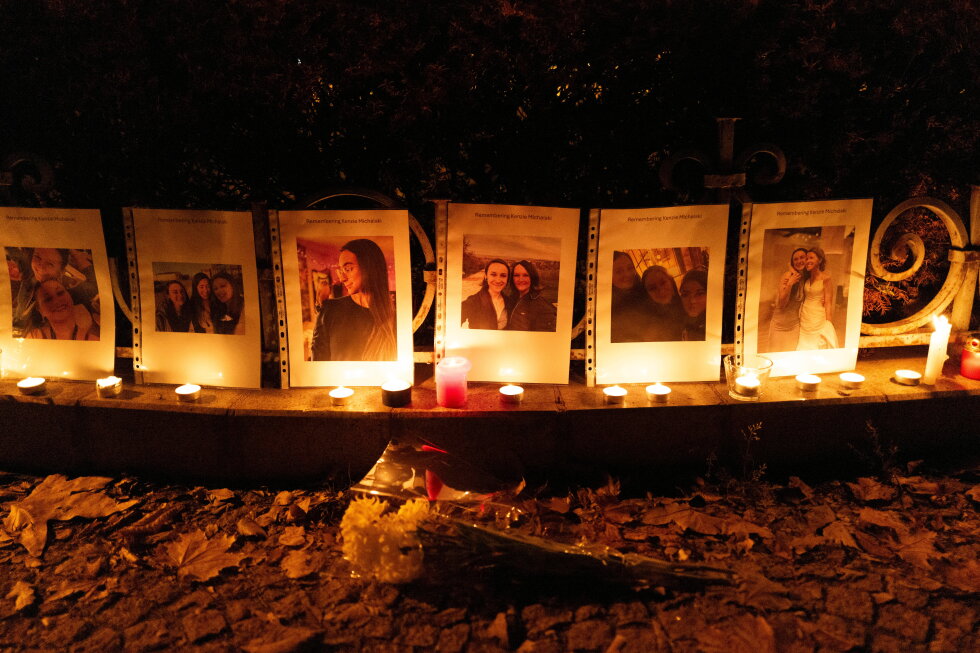
    BUDAPEST, Hungary – In a closely watched criminal case that drew international attention, the Budapest Metropolitan Court issued a landmark ruling Thursday, convicting a 37-year-old Irish national of murder and sentencing him to 14 years of non-paroleable prison time for the brutal strangulation death of a 31-year-old American tourist on vacation in Hungary’s capital.

    The victim, Mackenzie “Kenzie” Michalski, a native of Portland, Oregon, was first reported missing to Hungarian authorities on November 5, 2024, after she failed to check in following a night out at a popular central Budapest nightclub, where she was last seen by witnesses.

    Local law enforcement immediately launched a full-scale missing person probe, pulling and reviewing hours of closed-circuit security footage from venues across central Budapest. The footage confirmed Michalski had spent time socializing and dancing with an unidentified man at multiple clubs throughout the night of her disappearance. Investigators quickly identified the man, who is only publicly identified by his initials L.T.M. per Hungarian privacy guidelines, and took him into custody just two days after Michalski was reported missing, on November 7, 2024.

    During initial interrogation, the suspect ultimately confessed to intentionally killing Michalski, despite an early claim that her death was an unexpected accident. Court documents and police reports detail that the pair met at the Budapest nightclub, and after hours of socializing, they traveled together to the temporary rental apartment the suspect was occupying in the city. According to police accounts, the fatal assault occurred during an intimate encounter, where the suspect beat Michalski before strangling her to death.

    Instead of contacting authorities, the suspect launched an elaborate effort to cover up his crime, investigators say. He thoroughly cleaned his rental apartment to erase forensic evidence, hid Michalski’s corpse in his wardrobe, and later purchased a large suitcase to transport her body. He then rented a private car and drove roughly 150 kilometers southwest of Budapest to the Lake Balaton region, where he disposed of the body in a heavily wooded area just outside the small town of Szigliget. Law enforcement released public footage shortly after the arrest showing the suspect guiding investigative teams to the hidden location of the victim’s remains.

    Further evidence presented during the trial revealed that in the days between the killing and his arrest, the suspect conducted a series of damning internet searches related to his planned cover-up. Those searches included inquiries on how to properly dispose of a human body, standard police protocols for missing person investigations, whether pigs would consume human remains, the population of wild boars in the Lake Balaton area, and even a search question about the investigative competence of Budapest’s police force.

    In the court’s final verdict, judges rejected arguments for a reduced sentence, formally finding L.T.M. guilty of premeditated murder. Along with the 14-year prison term with no eligibility for parole, the court ruled that the 18 months the suspect has already spent in pre-trial detention will be credited toward his sentence. Upon completion of his prison term, the court ordered that L.T.M. be permanently deported from Hungary. He was also ordered to cover 2.5 million Hungarian forints, equal to approximately $7,995, in trial and court costs. The suspect’s defense team has confirmed they have officially filed an appeal of the guilty verdict and sentence, meaning the case will likely proceed to a higher appellate court for review.

  • Olympic sprint champs Alfred, Thomas bid for work-life balance

    Olympic sprint champs Alfred, Thomas bid for work-life balance

    Two of sprinting’s biggest rising stars, 2024 Paris Olympic champions Julien Alfred and Gabrielle Thomas, are gearing up for a highly anticipated 200-meter showdown at this week’s Monaco Diamond League, approaching the 2025 track season with a new, intentional priority: balancing elite athletic competition with meaningful personal time.

    The pair made global history at the 2024 Paris Games, where American sprinter Thomas claimed 200m gold, while Alfred delivered St. Lucia’s first ever Olympic medal of any type by taking top spot in the women’s 100m. Now, they are set to face off in one of the most competitive fields of the 2025 Diamond League circuit.

    For Thomas, Friday’s race marks her first Diamond League start in two years, following a season-ending achilles injury that sidelined her in 2024. Despite the extended break from top-tier Diamond League competition, she has already proven her elite form this year: last month in Texas, she clocked a blistering 21.70 seconds in the 200m, a time that briefly held the world lead and currently ranks as the second-fastest mark globally in 2025.

    She will face stiff competition in Monaco, including current world leader Adaejah Hodge, fellow American sprinter Anavia Battle, and Alfred, who has remained undefeated in all outdoor races so far this season. Both sprinters have framed the high-stakes race as an opportunity to push each other to new personal bests.

    “It’s a great field with amazing competitors so I’m looking forward to seeing what we can bring out of each other,” Thomas told reporters ahead of the race. Alfred echoed that excitement, saying, “Gabby’s a big competitor so I’m just looking forward to having a race.” The St. Lucia native also confirmed she will skip the upcoming Commonwealth Games in Glasgow this July to maintain her balanced schedule.

    Unlike previous years packed with championship or Olympic preparations, 2025 is a rare offseason for elite track and field, with no Olympic Games or standard world championships on the calendar. World Athletics will launch its new biennial invitational Ultimate World Championship in Budapest this September to cap the season, but the reduced pressure has opened up new space for athletes to prioritize personal commitments that often fall by the wayside during intense training cycles.

    For Alfred, that means regular trips home to St. Lucia to connect with loved ones. The 25-year-old said she has relished the chance to prioritize relationships alongside her training. “I’ve been going back to St Lucia every month. I’m happy to find a balance between life and sport, seeing a lot more of my family and friends,” she explained. “Sometimes I tend to be so focused on just competing and winning all the time. Winning is always fun, but winning can’t be the end and be all of your life. While we do love to compete, and we’re both very competitive, we are also full people outside of the sport.”

    Thomas is also taking advantage of the less demanding 2025 schedule to check off a major personal milestone: she is currently planning her wedding for this year. “I actually have my wedding plan for this year because it’s an off season, and I’m having so much fun planning my wedding,” the 29-year-old said. “I’m centering other aspects of my life, and just taking time to see my friends. I’ve made multiple trips to see my family. Normally, in every other year, you feel guilty for taking trips to visit your mom and dad, showing up for your friends.”

    She added that many casual sports fans do not grasp the extent of personal sacrifices elite athletes make to compete at the highest level. “This is a time that we get to enjoy life like that, and we foster these relationships, and we get to add it to our potential support while also still being on the circuit and still always running,” she said.

    Looking ahead to Friday’s sold-out race at Stade Louis II, Thomas said her status as Olympic champion has not changed her core approach to competition. “I try to focus on the same, despite the fact that the expectations get higher,” she said. “The goal is to win. The goal is to come out and put your best foot forward, no pun intended, and just do what it takes to win the race. You take it race by race, and hopefully, I compete well to the best of my abilities, and I finish the race healthy. And of course, just have a good time and push myself!”

  • No contact from UK about murder suspect, say Zimbabwe police

    No contact from UK about murder suspect, say Zimbabwe police

    A cross-border manhunt is underway for a 45-year-old Zimbabwean-British man accused of murdering his wife and two young daughters in rural Bedfordshire, England, after Zimbabwean law enforcement confirmed they have received no official communication from UK authorities about the suspect.

    Ndodana Mkhanyisi Tshuma, who also goes by the name Mark, is the primary suspect in the deaths of 42-year-old Nothabo Zandile Tshuma, his wife, and their two daughters — 15-year-old Natalie and 5-year-old Nala. The bodies of all three were found at the family’s home in Great Denham, near Bedford, on Monday after local police forced entry into the property following reports that the family had not been seen in public for several days.

    Investigators confirmed that Tshuma departed the United Kingdom from London’s Heathrow Airport on Saturday, two days before the bodies were discovered. UK law enforcement currently believes the suspect has traveled to Zimbabwe, his country of origin, and has publicly called for him to surrender immediately.

    But in a statement to the BBC, Zimbabwe Republic Police spokesperson Paul Nyathi confirmed that as of Thursday, his department had not received any official notice or extradition request from UK police or Interpol, including a required Interpol red notice that would formalize the cross-border manhunt. Nyathi added that while Zimbabwean officers have followed social media and press coverage of the case, they cannot yet confirm whether Tshuma has actually entered the country. He also noted that border patrol units across Zimbabwe have been placed on high alert, and officers are prepared to take Tshuma into custody as soon as he is located.

    “Tshuma should give himself up to the police if he is in Zimbabwe,” Nyathi said in a public appeal. “Please surrender yourself to the police so that the due process of the law can take its course based on the allegations emanating from the UK.”

    In response to Zimbabwean police’s comments, Bedfordshire Police, the lead investigating agency in the case, described the investigation as a fast-moving inquiry with multiple active lines of inquiry. A spokesperson for the department said officers are currently working in close coordination with the UK’s National Crime Agency to share information with international law enforcement partners, laying the groundwork for cross-border cooperation.

    Detective Inspector Lee Martin, the lead detective on the case, reiterated the UK’s appeal for Tshuma to surrender on Wednesday. “We know that Mark Tshuma left the country on Saturday and is now believed to be in Zimbabwe,” Martin said. “We are urgently working to find and apprehend him, and would appeal to him directly to hand himself in. Mark, unthinkable harm has been caused to those around you and this has left your relatives and friends utterly devastated. Criminal investigation knows no borders.”

    As the investigation progresses, the victims’ extended family has released a public statement honoring their loss and thanking the public for its support. “During this time of unimaginable loss, we wish to express our heartfelt gratitude to everyone who has reached out with prayers, messages of comfort, and support,” the tribute read. “Your kindness and compassion have brought great strength to our family.”

    The family added that it will not be making any additional public comments while the official investigation is ongoing, and will not announce funeral or memorial arrangements until it receives formal guidance from investigating authorities. In the days after the bodies were discovered, the Great Denham neighborhood saw a heavy visible police presence as forensic teams worked to process the crime scene.