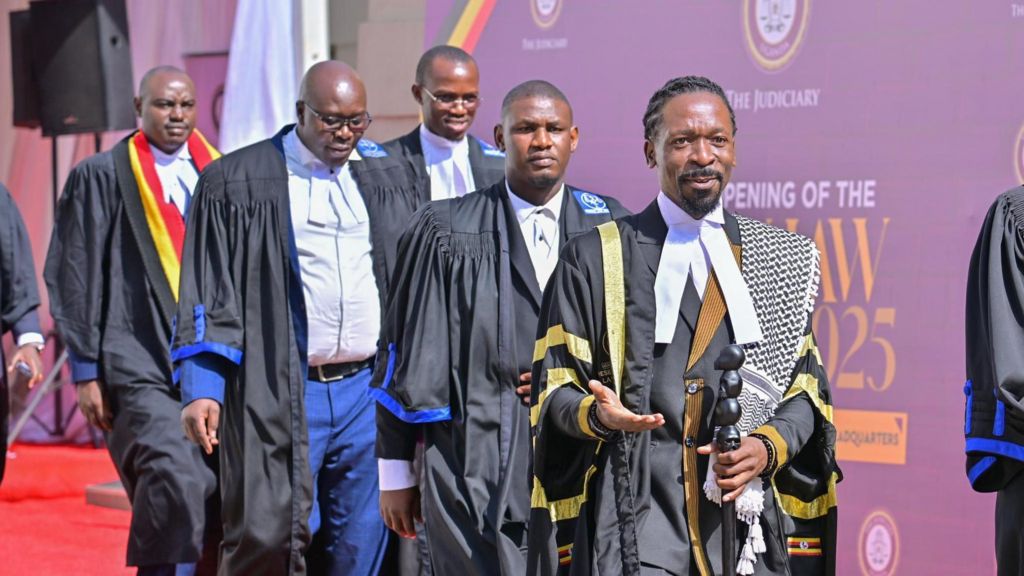
A fierce debate over decolonizing Uganda’s legal system has erupted after the Uganda Law Society (ULS), the national body representing the country’s practicing advocates, ordered its members to abandon two longstanding colonial-era courtroom customs: addressing judicial officers as “My Lord”, “My Lady”, “Your Lordship” or “Your Worship”, and bowing to judges before entering or exiting the courtroom.
In an official statement signed by ULS president Isaac Ssemakadde, the association framed the new directive as a core step toward dismantling archaic colonial structures that it argues have undermined the functionality and accessibility of Uganda’s justice system. The society described the traditional honorifics and practice of physical deference as “feudal and colonial” constructs that improperly position judicial officers above ordinary Ugandan citizens, who the ULS emphasizes are the actual employers of public officials. The statement added that these outdated customs force ordinary Ugandans into positions of unnecessary humiliation, while granting unmerited deference to judicial leaders. Going forward, all ULS members are prohibited from bowing to judges, and are instructed to use plain, egalitarian forms of address instead: alternatives include “Mr Justice”, “Madam Justice”, “Mr Judge”, “Madam Judge”, “Mr Magistrate”, or direct reference to a judicial officer by their surname in appropriate contexts. The ULS concluded that all advocates and litigants appearing before Ugandan courts should stand upright and speak as equal, free citizens.
The directive has drawn immediate pushback from Uganda’s independent judiciary, which rejected the ULS’s authority to set courtroom rules. Judiciary spokesperson James Ereemye told the BBC that the ULS has no legal standing to dictate to judicial bodies what procedures or decorum to require, noting that the judiciary remains an independent branch of the Ugandan government separate from professional legal associations. Ereemye added that courts will continue to demand adherence to long-established courtroom decorum, and dismissed the ULS’s directive as an unstructured move by “a section of young people who have failed to know the principles of agenda setting in management and administration”. He argued that any proposed changes to court procedure should be raised through official, established consultation channels rather than via a public directive from a professional association.
As a former British colony, Uganda inherited its entire legal framework and most core courtroom traditions from the United Kingdom. This current clash is part of a much broader, decades-long debate across the African continent over whether to discard colonial-era legal customs as part of broader judicial decolonization reforms. In 2011, Kenya’s then-Chief Justice Willy Mutunga drew international attention when he publicly criticized traditional judicial dress codes that require judges to wear British-style wigs and robes, and chose to take his oath of office in a standard formal suit instead. Similar conversations around reforming colonial court practices have taken place in Zimbabwe, Malawi, and Ghana, where critics argue that these outdated, imported traditions are no longer appropriate or relevant for independent modern African nations.