博客

  • ICE told to halt most vehicle stops after pair of fatal shootings

    ICE told to halt most vehicle stops after pair of fatal shootings

    U.S. Immigration and Customs Enforcement (ICE) has issued an urgent directive ordering its agents to pause nearly all routine vehicle stops across the country, a sweeping policy change triggered by two recent fatal shootings of immigrants by agency personnel in Texas and Maine that have reignited widespread anger over the agency’s use of force. Multiple U.S. media outlets, citing anonymous law enforcement sources, confirmed that the suspension only excludes stops targeting individuals linked to serious criminal activity.

    This policy shift comes as ICE has faced mounting scrutiny over the last year, with repeated accusations of excessive force and growing public and political backlash over multiple deaths that have occurred during the agency’s immigration enforcement operations. The BBC has formally reached out to the U.S. Department of Homeland Security (DHS), ICE’s parent agency, to request official comment on the new suspension order.

    The most recent deadly incident unfolded in Biddeford, Maine, roughly 15 miles south of Portland, where an ICE agent shot and killed a 26-year-old Colombian national during a routine enforcement operation. DHS officials have claimed the officer opened fire “fearing for public safety” after the man attempted to drive away from the scene when agents tried to stop his vehicle, but the department has offered no specific details about what threat the man was alleged to pose.

    Immigration advocates have pushed back on the official account, confirming that the man — who has not yet been formally identified publicly — held valid work authorization in the U.S. and had a Social Security number. In a joint statement condemning the killing, the Maine Immigrants’ Rights Coalition and Presente! Maine called the death “devastating, enraging, and unacceptable.”

    Less than one week before the Maine shooting, a second fatal incident left 52-year-old Lorenzo Salgado Araujo, a Mexican national who had lived in the U.S. for decades, dead after an ICE officer shot him during a morning stop in Houston, Texas. Araujo was shot while driving to his job at approximately 7 a.m. local time. DHS later clarified that agents initiated the stop after mistaking Araujo for a target in an ongoing operation, claiming the officer acted in self-defense during the encounter. However, witnesses who were passengers in Araujo’s van and the victim’s family have directly disputed DHS’s version of events, and the agency’s independent watchdog has launched a formal investigation into the killing.

    Protests have broken out across the country in response to both of the latest fatal shootings. The two deaths are not isolated incidents: earlier this year, nationwide protests erupted after two U.S. citizens, 37-year-old Renée Good and 37-year-old Alex Pretti, were shot and killed by ICE agents during January raids in Minneapolis, Minnesota. Since January 2025, at least seven people have been killed during ICE enforcement operations, according to reporting from Reuters.

    The growing backlash over these deaths has already triggered leadership changes at the top of DHS. After returning to the White House, U.S. President Donald Trump — who fulfilled a core campaign promise by launching a large-scale mass deportation campaign shortly after taking office — replaced former DHS Secretary Kristi Noem with U.S. Senator Markwayne Mullin of Oklahoma. Former Border Patrol Chief Gregory Bovino was also removed from his post not long after the leadership shakeup at the agency.

  • US wartime buildup races against China’s industrial clock

    US wartime buildup races against China’s industrial clock

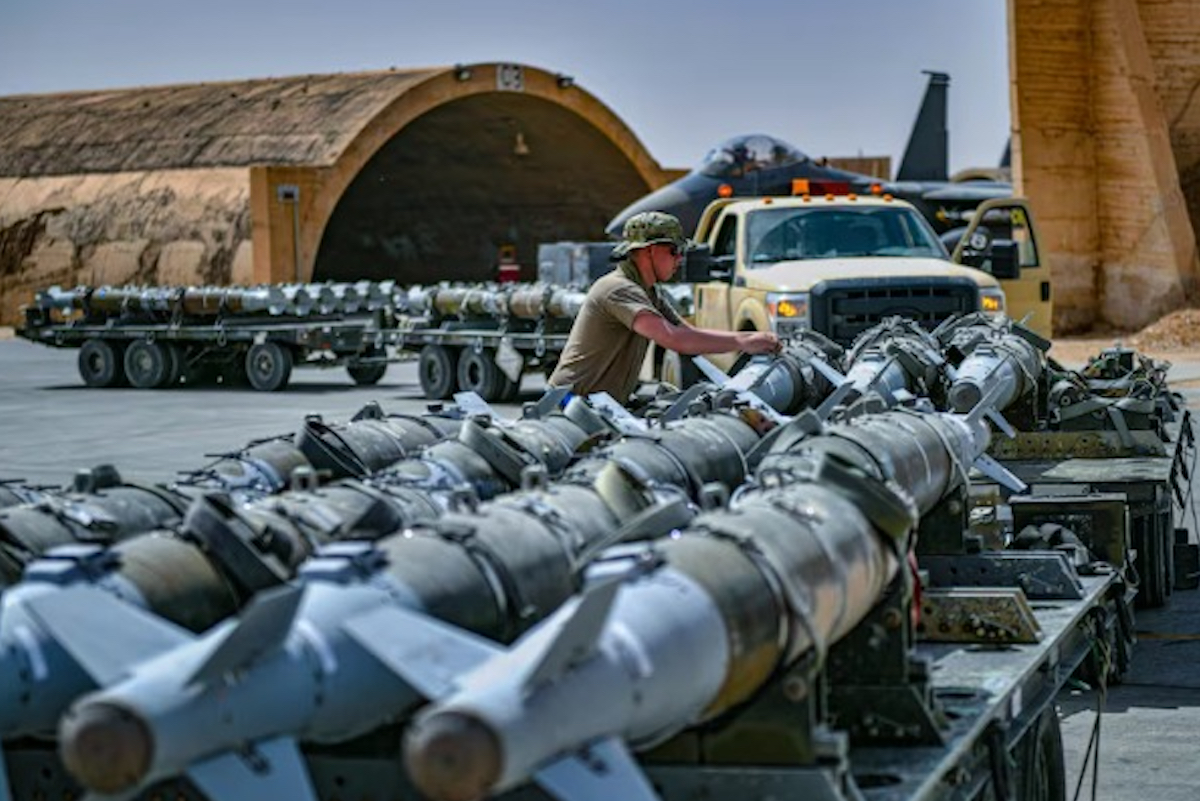
    As the United States accelerates its efforts to rebuild a wartime-capable defense industrial base, a growing body of independent defense research warns that the initiative faces a make-or-break test: can new weapons be produced, transported, and sustained fast enough to meet the demands of high-intensity, simultaneous conflicts across the Indo-Pacific?

    A July 2026 analysis draws on multiple recent reports from leading U.S. think tanks to unpack both the progress the Pentagon has made and the lingering structural vulnerabilities that could undermine its preparedness. This month, the Center for Strategic and International Studies (CSIS) released an assessment noting that while Washington has made notable strides in reorienting its defense industrial base for potential great power conflict, critical gaps in munition stockpiles and supply chain resilience still persist.

    To date, the U.S. Department of Defense (DoD) has deployed large pools of combined public and private investment to counter strategic competition, particularly from China. In fiscal year 2025 alone, the DoD expanded its defense vendor ecosystem by adding 5,000 new suppliers, pushing total contract obligations for non-traditional defense contractors past $120 billion. To replenish stockpiles drawn down by recent engagements, the department has secured landmark multi-year contracts to ramp up production of defensive interceptors, and shifted its procurement strategy to a “high-low mix” that targets low-cost munitions making up 70% of all requested units by fiscal year 2031. Additionally, Washington has allocated $7.6 billion across 2025 and 2026 to build a secure, China-independent rare earth supply chain spanning from mining to final magnet production.

    Despite these sweeping acquisition reforms and a proposed fiscal year 2027 defense budget equivalent to 4.6% of U.S. GDP, multiple reports caution that fully institutionalizing wartime readiness will take years. Lead times for production of critical weapon systems still stretch to more than three years, meaning many current investments will not translate to usable stockpiles for the near term. While the DoD currently frames industrial mobilization progress around total funding committed and planned capacity expansions, the ultimate decisive metric will be whether the U.S. can outproduce China, deploy military materiel across the vast Pacific, and replace combat losses faster than a conflict consumes them. It remains unproven whether projected U.S. production can meet the demands of high-intensity conflict across multiple simultaneous theaters, including the Korean Peninsula and Taiwan.

    Recent war gaming and scenario planning highlights just how stark the demand for munitions would be in a regional conflict. In a 2025 article for the Texas National Security Review, analysts Nicholas Anderson and Daryl Press calculated that even a limited pre-emptive strike on North Korean targets would require 24 long-range B-1 and B-52 bombers carrying 528 air-launched cruise missiles, plus 120 sea-launched Tomahawk missiles from naval vessels, alongside 48 M270A1 precision multiple launch rocket systems from U.S. ground forces based on the Korean Peninsula. That level of expenditure is negligible compared to the projected munition use in a U.S.-China conflict over Taiwan, according to a May 2026 CSIS report from Seth Jones. Jones estimates that in the first seven days of conflict alone, U.S. forces would fire between 3,000 and 5,000 baseline Joint Air-to-Surface Standoff Missiles (JASSMs), 3,500 to 4,000 extended-range JASSM-ERs, and 400 to 1,000 Tomahawk missiles — a rate of expenditure that would severely deplete or entirely exhaust key U.S. stockpiles almost immediately.

    If conflicts broke out simultaneously on the Korean Peninsula and over Taiwan, scarce U.S. missiles, bombers, and logistics capacity would be split between the two fronts, forcing the Pentagon to prioritize support for one theater at the direct expense of the other. These projections have amplified core questions about whether U.S. munitions production can offset China’s established industrial advantage and replace wartime losses fast enough to shift the regional military balance.

    A January 2026 TIDALWAVE report from The Heritage Foundation compared U.S. and Chinese munitions production ecosystems, finding that the U.S. Indo-Pacific munitions network suffers from significant structural fragility, while China’s system is a large, highly integrated enterprise purpose-built for high-intensity regional conflict. The report warns that the U.S. model, which relies on finite pre-positioned stockpiles, could face a catastrophic “Triple Bind” supply failure within 25 to 120 days of a conflict starting. This risk stems from a two-year lag in production scaling, critical bottlenecks in rocket motor manufacturing, and heavy U.S. reliance on imported TNT from Poland. In contrast, China’s state-owned defense conglomerates, such as NORINCO, operate automated, robotic smart factories that maintain resilient peacetime production with the capacity to surge output by 150% to 250% during wartime, allowing China to sustain prolonged combat operations.

    The report does note that both powers face critical chokepoint vulnerabilities: the U.S. remains heavily dependent on Chinese processing and production of rare earth minerals, while China’s highly centralized, rail-reliant distribution network is uniquely vulnerable to targeted cyberattacks and international restrictions on advanced semiconductor exports. Overall, the analysis finds China holds a clear advantage in sustained regional munitions production, though both sides are susceptible to targeted disruption of key industrial and logistical bottlenecks.

    Even if the U.S. successfully consolidates supply chains and expands domestic munitions production, those gains will not translate to usable combat power if forward bases, ports, transport networks, storage sites, and maintenance hubs cannot survive Chinese missile attacks and keep weapons flowing to frontline forces. A January 2025 report from the Hudson Institute by Thomas Shugart III and Timothy Walton warns that decades of underinvestment in Indo-Pacific combat logistics have left U.S. forward bases unhardened and extremely vulnerable to precision strikes. The authors note that Chinese precision strikes could disable interconnected fuel lines, above-ground storage tanks, and pre-positioned munition stocks that are essential for sustained air operations. These vulnerabilities also prevent the rapid dispersal of aircraft to alternate bases, as most lack pre-positioned munitions, redundant fuel supplies, and sufficient passive defensive infrastructure.

    A December 2024 report from the Stimson Center, led by Kelly Grieco, reached a nearly identical conclusion. Grieco and her co-authors warn that Chinese missile attacks on forward base runways could cut critical logistics and refueling links. Prolonged runway closures would ground aerial refueling tankers, severely limiting operations for short-range fighter jets that depend on in-flight refueling to reach combat zones. Damaged airfields would also block deliveries of spare parts and fresh munitions, while exposed fuel and weapon stocks could be entirely depleted within days without secure, reliable resupply routes.

    In short, U.S. munitions expansion will only deliver limited wartime value unless forward bases and logistics networks can survive attack and keep aircraft fueled, armed, and operational. Beyond these logistical challenges, many experts argue that current Pentagon contract announcements and investment targets overstate actual wartime capacity, as much of the reported progress has yet to result in delivered weapons, qualified suppliers, skilled manufacturing labor, or sustained industrial output.

    A May 2026 CSIS report from Mark Cancian and Chris Park argues that even with major funding increases and ambitious industrial framework agreements, the U.S. still faces a prolonged “window of vulnerability.” Billions of dollars in planned procurement have not yet materialized into battlefield-ready weapons. Cancian and Park note that while the DoD emphasizes its aggressive contract activity, critical interceptors and missiles face severe manufacturing backlogs, requiring three or more years from initial funding allocation to arrival in U.S. military stockpiles. They stress that funding alone cannot instantly resolve long-standing supply chain bottlenecks or expand actual factory output, and that most projected maximum surge capacities remain theoretical, rather than proven, sustained industrial output.

    Looking ahead, the next phase of the U.S. defense industrial buildup will be measured not by announcements of new capacity, but by proven results: can the U.S. sustain steady production, demonstrate through realistic contested-theater exercises that weapons can be replenished and delivered faster than China can disrupt their flow. Unless Washington aligns factory expansion with hardened logistics infrastructure, coordinated allied production, and realistic multi-theater war planning, new industrial capacity may arrive too late to strengthen deterrence before the next major regional crisis.

  • Family says US seismologist has been detained in China for nearly 2 years with no trial

    Family says US seismologist has been detained in China for nearly 2 years with no trial

    Nearly two years have passed since China-born American seismologist Youlin Chen was detained without trial in China, and his family has finally broken their silence to push for his release ahead of a much-anticipated meeting between Chinese President Xi Jinping and U.S. President Donald Trump in Washington this September. The revelation comes from Global Reach, a Washington-based non-profit that supports families of Americans wrongfully held overseas and has been advising Chen’s relatives through their ordeal.

    Chen, a Boston-based researcher who previously worked as a U.S. government contractor for both the State Department and the U.S. Air Force Research Laboratory, was taken into custody by Chinese state security agents in November 2024 during a personal trip to Beijing to visit his aging parents. Global Reach says Chinese authorities have charged the seismologist with espionage, a charge the group argues is unfounded. Much of Chen’s professional work focused on collaborative seismological data analysis with Chinese research counterparts, the organization confirmed.

    Global Reach officials believe Chen’s arbitrary detention is likely a deliberate attempt by Chinese security officials to obtain sensitive information about U.S. methods for detecting nuclear tests via seismic monitoring. While U.S. Embassy consular staff have been granted limited access to visit Chen multiple times since his detention, they have not been permitted to discuss the details of his case with him, and Chen has remained cut off from direct communication with his family.

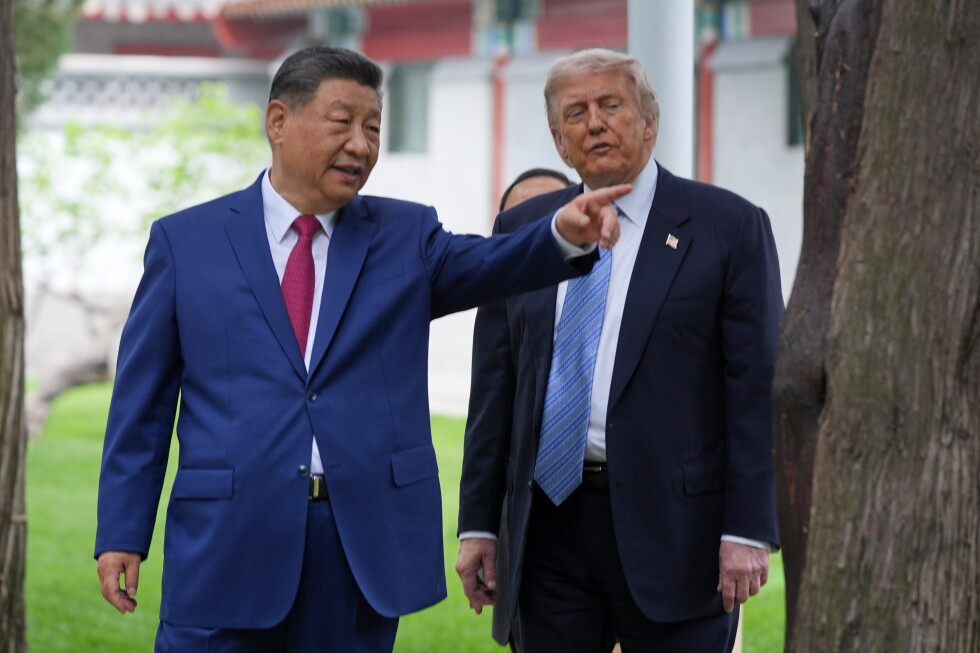
    Chen’s wife Yufang Rong released her first public statement this week, saying she has not spoken to her husband in more than 600 days and lives in constant worry about his physical health and overall well-being. Rong noted that President Trump personally raised Chen’s case during his meeting with President Xi in Beijing last May, and expressed confidence that the Trump administration will deliver on its commitment to bring her husband home. To date, the administration has secured the release of more than 100 wrongfully detained Americans held overseas, she added.

    The State Department has formally designated Chen as the only U.S. citizen wrongfully detained in China, a classification that elevates his case to high-priority status for U.S. diplomatic engagement and typically triggers intensive diplomatic efforts to secure his release. Secretary of State Marco Rubio officially made this designation in March, and a State Department spokesperson confirmed Tuesday that U.S. officials have repeatedly raised Chen’s case directly with Chinese authorities, formally calling for his immediate release. The Washington Post first reported on Chen’s detention earlier this year.

    White House spokesperson Anna Kelly reaffirmed the administration’s position Tuesday, stating that President Trump has repeatedly made clear that bringing every wrongfully detained American home is a top priority, and that the administration has already reunited more than 100 individuals with their families since Trump took office this term. In 2024, the Biden administration oversaw the successful release of three other wrongfully detained American citizens from China, setting a precedent for high-level diplomatic action on such cases.

    Eric Lebson, a Global Reach adviser working with Chen’s family, explained that the relatives chose to go public now because there has been no visible progress from Chinese officials, despite President Xi’s stated commitments to President Trump when the case was raised in May. If no resolution is reached before the September summit, Lebson warned that Chen’s case will be a prominent topic during the bilateral meeting between the two leaders.

    Senator Edward Markey, a Massachusetts Democrat who represents Chen’s home constituency, also vowed Tuesday to use every tool at his disposal to push for Chen’s immediate release. “It is my hope that increased attention on his unjust detention will force the Chinese government to do the right thing and release Dr. Chen and allow him to return to his family in Massachusetts,” Markey said.

  • ‘Gus’ the T. rex fetches record $50.1 mn at US auction

    ‘Gus’ the T. rex fetches record $50.1 mn at US auction

    A nearly 76-million-year-old Tyrannosaurus rex skeleton, famously nicknamed “Gus,” has made history as the most expensive dinosaur fossil ever sold at auction, fetching a staggering $50.1 million at Sotheby’s New York location this Tuesday. The landmark sale came after a tense 10-minute bidding war that saw seven prospective buyers compete for the extraordinary specimen, with the final purchase going to an anonymous bidder whose identity has not been released.

    Unearthed just three years ago on a working cattle ranch in South Dakota, Gus stands out as one of the most complete and largest T. rex skeletons ever documented by paleontologists. The fossil retains 183 original bones, bringing its overall completeness to roughly 63 percent, and stretches an imposing 38 feet (11.6 meters) from snout to tail. The giant predator roamed western North America between 72 and 66 million years ago, during the late Cretaceous period — an era marked by global warm temperatures, elevated sea levels, and extensive coastal floodplains that supported diverse prehistoric ecosystems.

    The record-breaking sale has reignited long-running debates surrounding the private ownership of scientifically significant fossils, a practice that draws sharp criticism from many paleontological researchers. Critics argue that when rare specimens pass into private collections, they are closed off to scientific study and public education, robbing the global research community of opportunities to advance understanding of prehistoric life.

    Cassandra Hatton, Sotheby’s global head of science and natural history, explained ahead of the auction that the commercial sale of such fossils is uniquely permitted under U.S. law. Unlike most other nations, the U.S. classifies dinosaur fossils found on private land as the personal property of the landowner. “If you own the land, you own the fossil and you have the right to sell it. So if you want a dinosaur, this is the only place that you can get it,” Hatton told Agence France-Presse prior to the bidding.

    Gus’ sale shatters the previous fossil auction record set earlier in 2024, when a Stegosaurus skeleton nicknamed “Apex” sold for $44.6 million to Ken Griffin, the billionaire founder of the Citadel hedge fund. The skyrocketing final price for Gus underscores a rapidly growing global market for rare dinosaur fossils, where demand from wealthy private collectors has driven sale prices to unprecedented heights over the past decade.

  • US Supreme Court justices defiant as threats hit home

    US Supreme Court justices defiant as threats hit home

    On a historic day on Capitol Hill this week, two sitting US Supreme Court justices delivered unprecedented testimony before congressional spending panels, laying bare the escalating wave of intimidation targeting the nation’s highest judicial body while issuing a defiant commitment to uphold judicial independence amid a toxic political climate.

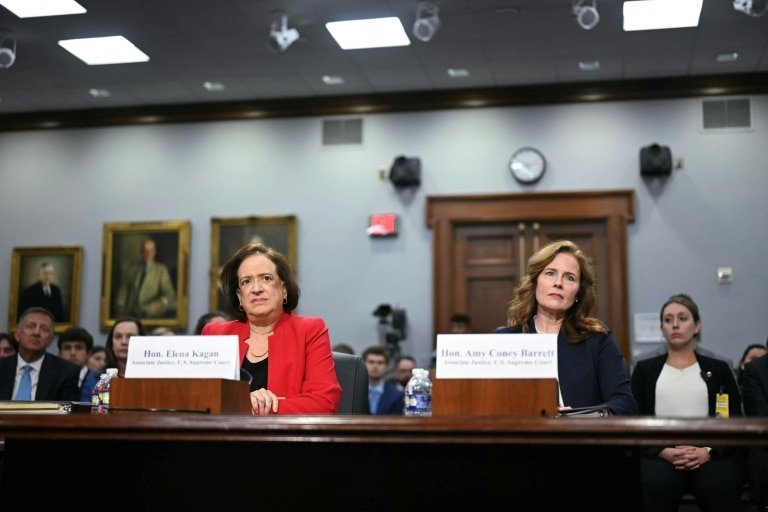
    Liberal justice Elena Kagan and conservative justice Amy Coney Barrett — the first sitting Supreme Court justices to appear before Congress since 2019 — opened up about the unthinkable dangers that have become part of daily life for top US judges, as the judiciary requests hundreds of millions in additional security funding to counter growing risks.

    Barrett, whose 2020 nomination to the court came from former President Donald Trump, shared a deeply personal anecdote that underscores the human cost of rising threats. In the weeks following the 2022 leak of the draft ruling that overturned the federal constitutional right to abortion, Barrett was provided with a bulletproof vest. When she set the protective gear down at home, her 12-year-old son found it, forcing her to explain the item and why she needed it. “I didn’t expect that performing the service was going to put me in the position of explaining to my children what a bulletproof vest was and why I had to wear one,” she told lawmakers.

    Kagan echoed that gravity, noting that threats have reached alarming proximity for many members of the court. “For some of us, those threats have come very close, and all of us live with the knowledge that they may again materialize,” she said. Still, she reaffirmed the court’s core promise: “all members of the court can do their jobs as they believe legally right, adjudicating cases without fear or favor.”

    This rare public appearance comes as the federal judiciary seeks a total of nearly $921 million in dedicated security funding to upgrade protections across federal courthouses and judicial facilities. The Supreme Court itself is requesting a $20.5 million annual increase to its budget, bringing its total security allocation request to $228.4 million. Of that increase, $14.6 million would go toward expanding the court’s specialized police force and upgrading building security, while $6.5 million would fund a new visitor screening facility on Supreme Court grounds. Kagan noted that current screening protocols leave gaps that put justices and staff at risk, saying “We are concerned about people coming into the building before they’ve been checked.”

    Security data paints a stark picture of the crisis: House Appropriations Committee top Democrat Rosa DeLauro told attendees that US Marshals recorded 564 threats against federal judges last year, a 31 percent jump from the prior year that DeLauro called “deeply alarming.”

    Barrett has direct experience with these threats: her private residence was targeted in a May swatting incident, where bad actors file a false emergency report to draw an armed police response to a target’s home. Last year, her sister’s South Carolina home was the subject of a bomb threat. The most high-profile recent plot targeting a justice unfolded in 2022, when an armed man from California traveled to Justice Brett Kavanaugh’s residential neighborhood with plans to assassinate him. The assailant was ultimately arrested and later sentenced to more than eight years in federal prison.

    The testimony comes on the heels of a divisive Supreme Court term that delivered a series of major rulings intersecting with former President Trump’s political agenda, including decisions blocking his attempt to end birthright citizenship and striking down his sweeping global tariffs. While Trump has praised the court’s conservative majority when it rules in his favor — most recently on a case granting him broad presidential immunity — he has repeatedly launched harsh public attacks on justices who rule against him. Chief Justice John Roberts warned earlier this year that escalating personal hostility toward sitting judges poses a grave danger to the judiciary, saying the trend “has got to stop.”

    Despite the intense pressures and personal risks, both justices stressed that the court will continue to carry out its constitutional duty without bending to political intimidation, reaffirming that rulings will be based on law rather than outside pressure.

  • China’s Africa lending model has a split personality

    China’s Africa lending model has a split personality

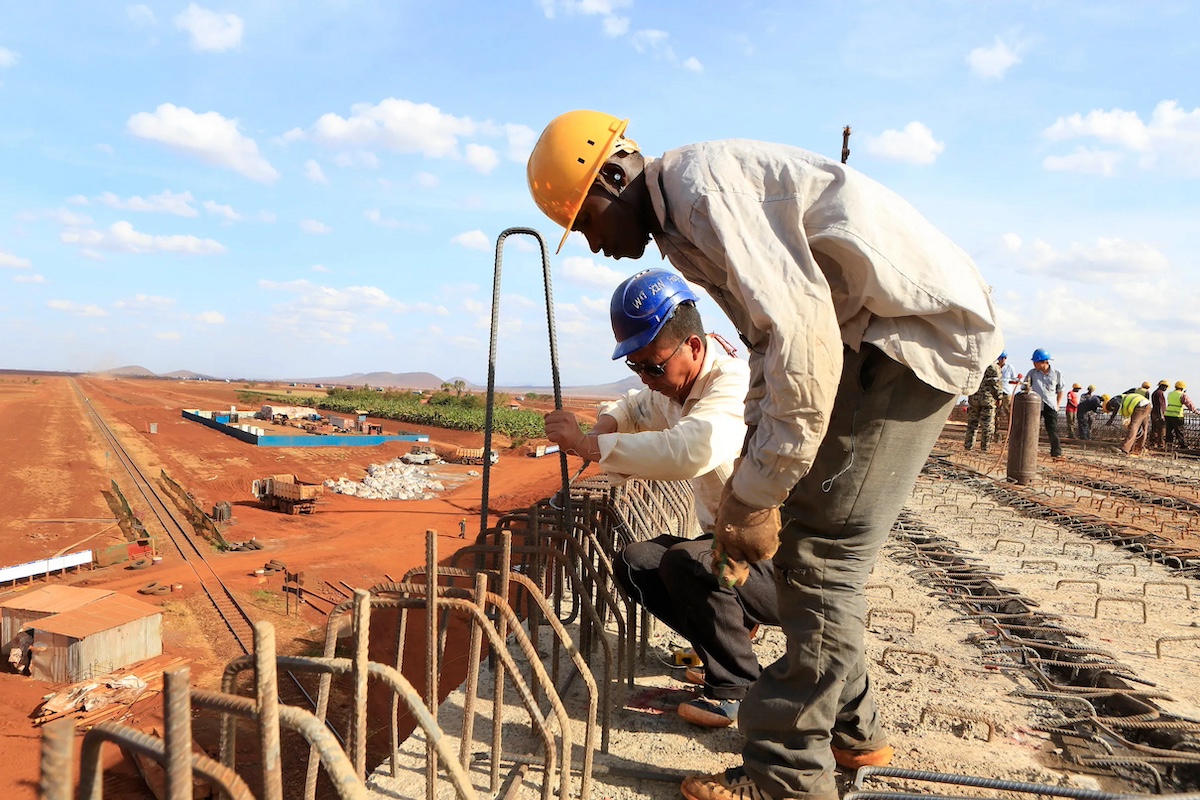
    For 20 years, China’s ascent to the position of the world’s largest bilateral creditor has reshaped the global landscape of development financing in irreversible ways. Yet popular and academic discourse around Chinese sovereign lending to Africa has long been stuck in a limiting ideological binary: on one side, the Western-dominated narrative of “debt-trap diplomacy” frames China as a predatory actor, while on the other, Beijing’s official rhetoric positions its lending as purely altruistic South-South cooperation. A new analytical framework from development finance scholar Jiahao Yuan cuts through this divide by examining the deep structural roots of China’s lending practice, revealing a decades-long “dual system” that pairs domestic Keynesian economic logic with external neoliberal risk mitigation, and explaining how this structure ultimately led to sovereign debt distress and a sweeping reorientation of China’s Africa lending strategy. To understand the origins of China’s overseas infrastructure lending model, one must first trace its roots to the structural dynamics of China’s domestic economy. For decades, China’s state-led economic model relied on massive credit expansion orchestrated by central and local governments, which channeled liquidity through state-owned policy and commercial banks to fund capital-intensive projects. This approach sustained decades of rapid GDP growth, but by the mid-2010s, the model hit diminishing returns, leaving key industrial sectors with severe overcapacity and pushing subnational governments to the brink of balance sheet collapse. With domestic demand for fixed asset investment maxed out, China required an external outlet for its surplus industrial capacity and accumulated U.S. dollar foreign exchange reserves — a dynamic that mirrors geographer David Harvey’s concept of the “spatial fix,” where overaccumulated domestic capital is displaced into long-term cross-border infrastructure projects. It is this structural pressure that saw the Belt and Road Initiative (BRI) emerge as the natural international extension of China’s domestic Keynesian model, with a carefully engineered institutional framework to facilitate the export of overcapacity. The mechanism works in three tightly coordinated steps: first, a Chinese policy bank issues a dollar-denominated sovereign loan or export buyer’s credit to an African government. Second, the loan contract includes strict procurement rules that require the infrastructure project to be built by pre-approved Chinese state-owned engineering, procurement, and construction contractors. Most critically, while the African government holds formal legal responsibility for repaying the sovereign debt, the loan capital never actually enters the African country’s financial system: during clearing, the dollar funds are transferred directly from the lending bank’s Beijing headquarters to the corporate accounts of the Chinese contractors executing the project. This structure allows China to convert its low-yield dollar reserves into active commercial orders for its domestic industrial base, effectively offloading surplus capacity onto global markets. While the macro impetus for China’s overseas credit expansion is rooted in state-backed Keynesianism, Chinese lenders operate by neoliberal commercial logic once they enter international markets. Unlike traditional Western multilateral lenders such as the World Bank and IMF, which embed explicit political conditions tied to the Washington Consensus — including fiscal austerity, privatization, and governance reforms — China frames its lending as “no political strings attached” in line with its doctrine of non-interference. However, this lack of political conditionality is often misread as a lack of commercial or legal conditions. In practice, Chinese banks act as highly rational market actors, prioritizing capital preservation and risk insulation through strict contractual mechanisms, rather than seeking to reform recipient state governance. The clearest example of this external neoliberal risk-mitigation structure is the so-called “Angola Mode” of commodity-backed infrastructure lending, designed for low-credit-rating states with limited access to global capital markets. This framework builds a closed financial loop to protect Chinese lenders: first, it requires the borrowing state to establish an offshore escrow account, usually held in a major international financial hub or directly at the lending Chinese bank, bypassing the borrower’s domestic central bank and fiscal system. Second, the borrower is required to direct all revenue from its strategic commodity exports into this escrow account, where the Chinese lender holds a senior security claim, automatically deducting principal and interest payments before any remaining funds are sent to the borrower’s domestic treasury. This structure delinks the lending and repayment process from the often fragile or corrupt domestic financial systems of borrowing states: as long as commodity exports continue, Chinese lenders secure repayment directly through offshore accounts. This approach, which secures capital through sophisticated contractual arrangements rather than institutional overhauls of borrowing states, embodies the core neoliberal emphasis on property rights, enforceable contracts, and free capital flow in its purest form. This dual-track model operated smoothly during the 2000–2018 global commodity supercycle, opening large new markets for China’s industrial exports and driving the largest infrastructure building boom in post-war African history. But the model contains an inherent structural mismatch: it combines state-controlled Keynesian capital from China with an anarchic international debt system governed by neoliberal rules, a tension that ultimately sparked widespread sovereign debt crises across Africa. Domestically, China’s central government can exercise near-total control over its financial system, managing debt distress among state-owned enterprises through administrative tools such as debt rollovers, targeted liquidity injections, and mandates for state banks to absorb non-performing loans, effectively socializing the costs of financial instability. Globally, however, there is no sovereign authority that can bail out a defaulting nation, leaving no backstop for systemic risk. When the global macroeconomic environment shifted dramatically in the early 2020s, driven by aggressive U.S. Federal Reserve interest rate hikes, the stage was set for crisis. Global capital rapidly flowed back to the U.S., triggering sharp depreciations of African currencies and extreme volatility in commodity prices. For African nations heavily dependent on dollar-denominated debt and narrow, single-commodity economies, this shift created severe fiscal pressure that pushed many toward sovereign default. Zambia became the first high-profile African defaulter, and its case exposed the core limitations of China’s dual-track model. Chinese banks held billions of dollars in Zambian debt, much of it secured by collateral and offshore escrow structures, but when Zambia’s national finances collapsed and foreign exchange reserves were exhausted, China faced what analysts call the “creditor’s dilemma.” On one hand, China cannot use military or extrajudicial force to seize assets in a defaulting state — such action would destroy its narrative of South-South solidarity and ignite widespread anti-Chinese sentiment across the Global South. On the other hand, Chinese banks initially resisted joining multilateral debt relief frameworks such as the Paris Club, preferring confidential bilateral negotiations to protect their collateral claims. This approach ran into opposition from the IMF and Western private bondholders, who demanded equal treatment and full transparency from Chinese lenders, while Beijing countered that private bondholders had earned high yields during good times and should share equally in losses during default. This standoff made clear that no carefully drafted contract can fully hedge against the systemic risk of a sovereign state collapse in the ungoverned neoliberal global financial system. In response to the fallout from widespread sovereign defaults, paired with domestic efforts to clear subnational debt, China’s African sovereign lending network has undergone a major strategic rebalancing since 2024, bringing the era of aggressive expansion to a close. During the peak of BRI expansion, annual disbursements of new Chinese loans regularly outpaced the total principal and interest payments African nations made on existing debt. Today, after tightening credit risk assessments, annual debt service payments on legacy loans exceed the inflow of new Chinese sovereign credit, meaning China has shifted from being a net provider of liquidity to a defensive creditor focused on recovering capital from its mature loan portfolio. When Beijing announced a 360 billion yuan ($50 billion) financial support package for Africa in September 2024, a closer look revealed that the new lending model differs fundamentally from the expansionary era. China’s new approach to Africa finance rests on three core pillars. First, to insulate bilateral lending from Western monetary policy shocks and Federal Reserve interest rate cycles, Beijing is rapidly expanding yuan-denominated sovereign loans and bilateral currency swap lines. Lending in yuan allows African borrowers to purchase Chinese industrial equipment directly in the Chinese currency, then repay debt with yuan earned from commodity exports to China, eliminating dollar exchange rate risk. Second, large-scale, capital-intensive transport and logistics projects have been replaced by targeted, smaller-scale high-value projects, with strict caps on individual project financing. Most new credit is directed to two strategic sectors: the green energy transition and the Digital Silk Road, including 5G networks and cloud data centers. These “small and beautiful” projects carry high long-term strategic value, as they lock in African dependence on Chinese digital technology for decades to come. Third, to counter criticism that its old model was extractive — focusing on exporting raw materials to China and importing finished Chinese goods — China is shifting its investment focus to local industrial value addition. Chinese credit is increasingly directed toward building processing facilities, smelters, and special economic zones within Africa, and Chinese firms are building downstream assembly units for electric vehicles and lithium battery components in regional hubs such as Nigeria and Egypt. This strategy integrates African industrial bases into Chinese-led green energy supply chains, while also helping China bypass Western trade barriers. In conclusion, 20 years of Chinese sovereign lending to Africa fits neither the Western narrative of predatory debt-trap diplomacy nor Beijing’s framing of purely altruistic South-South cooperation. Instead, it is the product of a large policy-driven state capitalist economy, which pursued a unique and inherently tense experiment: exporting domestic overcapacity through internal Keynesian logic while managing risk through external neoliberal market rules. Over the coming decade, this model is likely to evolve into a new third credit paradigm, centered on yuan-denominated lending, rigorous systemic risk control, green and digital growth, and deep integration with local African supply chains. To accurately understand the future of Chinese overseas financing, observers must abandon outdated Cold War ideological framing and examine the unique institutional duality that has shaped China’s lending practice from its origins. Jiahao Yuan is an economist specializing in international development finance and Chinese macroeconomic policy.

  • Another heatwave hits parts of US and Canada

    Another heatwave hits parts of US and Canada

    Millions of residents across the United States and Canada are grappling with a second consecutive extreme heatwave this month, bringing soaring temperatures, stifling humidity and hazardous air quality to vast swathes of North America.

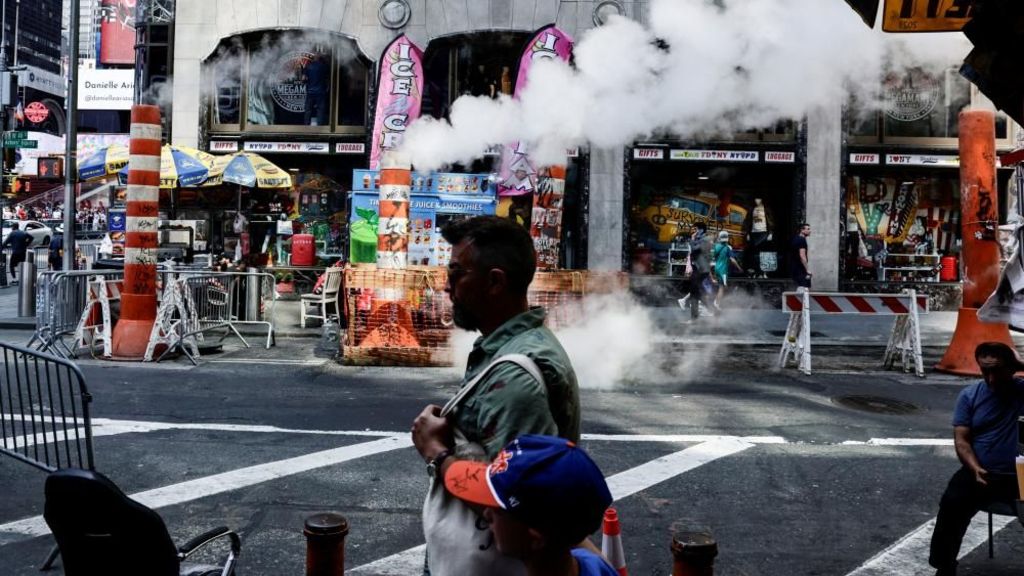
    The scorching conditions, which first settled over the region on Tuesday, are forecast to hold steady through Wednesday for major population centers in southern Canada, the U.S. Midwest and the U.S. Northeast. Millions of people across major cities including Boston, New York City, Philadelphia and Buffalo remain under official heat advisories through the end of the midweek period, while residents in western U.S. states have already endured multiple days of dangerous high temperatures.

    Meteorologists trace the extreme heat to a sprawling upper-atmosphere high-pressure system, often referred to as a heat dome, that has been shifting steadily eastward across the North American continent. This dense mass of hot, moisture-heavy air has already shattered all-time temperature records across parts of Montana and Utah, and its eastward shift has now put the northern Plains, Midwest and Northeast in the path of the most intense conditions.

    Forecasts call for Chicago to hit a high of 97 degrees Fahrenheit (36 degrees Celsius) on Wednesday, while New York City is expected to reach 100°F and Washington D.C. could see a high of 102°F. A handful of isolated locations are projected to climb even higher, with thick humidity pushing the “feels-like” temperature far above the actual air reading, amplifying health risks for sensitive groups.

    In Canada, central and eastern regions have also baked under the heat, but an approaching cold front is expected to bring down temperatures over the coming days. However, this shift in weather will bring a new hazard: severe thunderstorms that will also impact parts of the U.S. New England region. By the weekend, these thunderstorms will spread across most of eastern North America, pushing the most dangerous peak heat out of the region, though most locations are still expected to see temperatures well above the seasonal average for mid-July.

    This heatwave comes just two weeks after a historic, record-breaking heatwave coincided with the U.S. Fourth of July holiday, causing widespread disruption. Over 165 million Americans across the East Coast and Midwest endured dangerous high temperatures, the July 4 parade in Washington D.C. was canceled due to health risks, and official reports attribute at least 44 deaths across the country to that earlier heat event.

    Climate experts emphasize that the increasing frequency of back-to-back extreme heatwaves is a direct consequence of human-caused climate change. Since the start of the industrial era, the global average temperature has already risen approximately 1.1 degrees Celsius, and scientists warn that temperatures will continue to climb unless major global economies implement steep, sustained cuts to greenhouse gas emissions.

  • Pogačar powers to 3rd stage victory to demoralize rivals and extend Tour de France lead

    Pogačar powers to 3rd stage victory to demoralize rivals and extend Tour de France lead

    In a dominant display of climbing prowess that further cemented his status as the overwhelming favorite to claim this year’s yellow jersey, Slovenian cycling star Tadej Pogačar notched up his 24th career Tour de France stage victory on Tuesday, outperforming all of his top rivals to extend his overall general classification lead at the 2025 edition of the race.

    The race traveled through the mountainous terrain of the French Alps on Tuesday, with the 10th stage culminating in a grueling test of endurance centered on the Col de Pertus, the second-to-last major climb of the day. Pogačar, who had already shaken the confidence of his closest competitors with a sensational win on the iconic Col du Tourmalet just four days prior, launched a decisive attacking break more than 900 meters out from the Col de Pertus summit.

    Jonas Vingegaard, Pogačar’s nearest rival in the overall standings, was unable to match the Slovenian’s explosive acceleration. Pogačar quickly closed the gap to early breakaway leader Richard Carapaz, surging past the Ecuadorian rider just 200 meters shy of the summit and holding his pace all the way to the finish line. Carapaz crossed the summit 5 seconds behind Pogačar, while Vingegaard, Remco Evenepoel, Florian Lipowitz, Juan Ayuso and Paul Seixas all finished 18 seconds adrift of Pogačar at the top of the climb.

    When the riders crossed the stage finish line, Pogačar held a 32-second advantage over second-place Evenepoel. Tuesday’s win marked Pogačar’s third stage victory at this year’s Tour de France, his third Bastille Day stage win on France’s national holiday, and the 24th Tour de France stage win of his already legendary career. Local favorite Paul Seixas, the top hope for French cycling fans, rounded out the top three, finishing 34 seconds behind Pogačar.

    Vingegaard, the 2022 and 2023 Tour champion, crossed the line 44 seconds slower than Pogačar on the day. That result pushed Pogačar’s overall lead after 10 stages out to an unassailable 3 minutes and 36 seconds over his Danish rival. For the four-time Tour champion, this gap marks the largest overall lead he has ever held at this point in any edition of the race, underscoring his near-perfect form so far in 2025.

  • Several found dead in lift shaft after fire in central Brussels building

    Several found dead in lift shaft after fire in central Brussels building

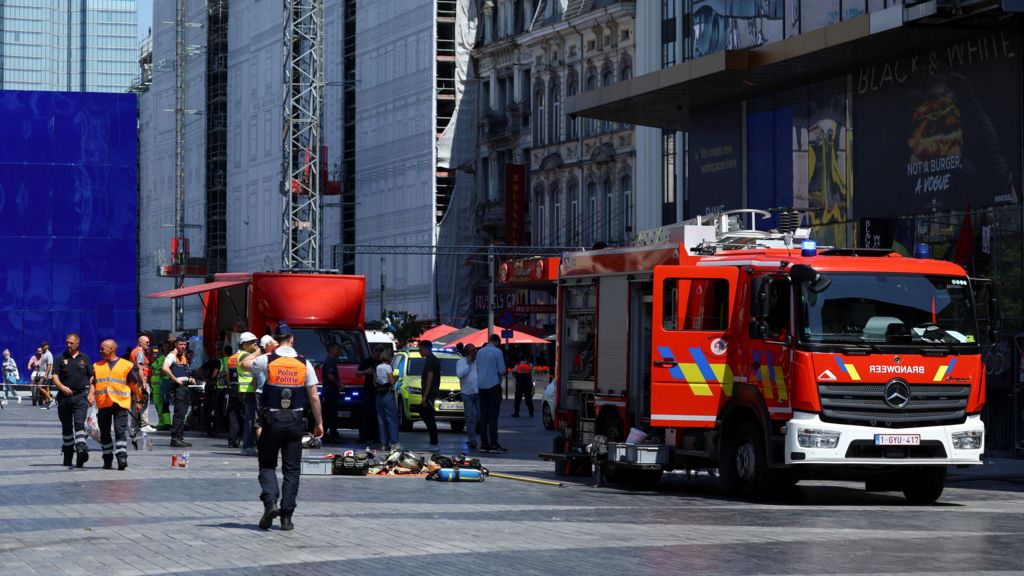
    A devastating fire broke out on Tuesday at an under-construction high-rise development in central Brussels, claiming multiple lives and triggering an urgent, challenging search mission for at least six missing people, local authorities confirmed this week.

    The blaze erupted at the Oxy Tower, a mixed-use development project located just 500 meters from Brussels’ iconic central Grand Place, which is set to open with residential apartments, a hotel, and multiple food and beverage venues once completed. While emergency responders managed to extinguish the fire relatively quickly, post-blaze assessments revealed the fire had spread through the site’s lift shafts, leaving two construction elevators trapped mid-shift by debris and structural damage.

    Brecht Speybrouck, spokesperson for the Brussels Labour Prosecutor’s Office, told reporters that first responders managed to pry open one of the stuck elevators, and discovered multiple fatalities inside. As of the latest updates, the exact number of victims remains unconfirmed, with investigators warning that the six reported missing people could be among those recovered, or additional victims may remain trapped in the second stuck elevator or other parts of the damaged construction site.

    “Due to heavy debris scattered throughout the lift shafts and the compromised structure of the building, working conditions for search and recovery teams are extremely difficult,” Speybrouck noted in an update, adding that full recovery operations are expected to extend over several additional hours. Investigators have not yet determined what caused the fire, and a full official investigation is now underway.

    As the operation continued, two injured workers with severe burns have already been transported to local hospitals for urgent care, while one firefighter received on-site medical treatment after suffering from heat exposure during the response. Brussels Mayor Philippe Close publicly praised the work of emergency responders, noting they had “done an exceptional job” operating under “particularly difficult circumstances.”

    By the afternoon, Belgium’s senior political and royal leadership arrived at the scene to oversee the response and meet with first responders, according to Belgian public broadcaster RTBF. Prime Minister Bart De Wever and King Philippe of the Belgians joined local officials on site to receive briefings on the fire and ongoing search efforts.

    Local residents and construction industry groups have already called for a full safety review of active construction sites across the Brussels region, as investigators work to piece together what led to the deadly blaze and identify all of the victims.

  • ‘Explosive diarrhoea’ outbreak remains a mystery as officials struggle to find sources

    ‘Explosive diarrhoea’ outbreak remains a mystery as officials struggle to find sources

    A summer outbreak of cyclosporiasis, a parasitic infection spread via contaminated food and water, has spread across 31 U.S. states and sickened more than 3,000 people, leaving public health experts scrambling to identify its source and slow transmission amid unique investigative challenges and strained public health resources.

    The illness, which is rarely fatal, is defined by its primary symptom: severe, watery diarrhea that strikes abruptly. As of current reports, Michigan has borne the brunt of the outbreak with more than 2,600 confirmed cases, followed by New York State with a smaller but still significant caseload. Despite weeks of investigation, health officials have not yet pinpointed the original contaminated source of the parasite, and have only issued general guidance to the public: thoroughly wash all produce, avoid certain high-risk fruits including raspberries, and cook vegetables thoroughly to destroy the pathogen.

    Public health investigators have described tracing the parasite as an extraordinarily difficult task, compounded by multiple biological and systemic barriers. “This isn’t like detecting a needle in a haystack. It’s like detecting a microscopic portion of a needle in a haystack,” explained Steven Manderach, executive director of the Association of Food and Drug Officials, who previously addressed cyclosporiasis outbreaks as a food safety official in Iowa.

    Biologically, the parasite’s long incubation period creates a major hurdle for investigators. Unlike most foodborne illnesses that cause symptoms within hours of consumption, cyclosporiasis takes one to two weeks to trigger illness in infected people, explained Jodie Guest, senior vice chair of epidemiology at Emory University’s Rollins School of Public Health. By the time most people seek care and report their illness, they often cannot recall every food they ate in the preceding two weeks, breaking a key link investigators rely on to trace contamination sources.

    Testing for the parasite in food supplies is also far more labor-intensive and complex than testing for other common pathogens. To isolate cyclospora, investigators must wash massive quantities of potentially contaminated produce to collect any parasite particles present, then concentrate the sample before testing can begin. “You’d have to have truckloads of lettuce to get to that point,” Manderach noted. The broad geographic spread of cases, spanning 31 states, also suggests multiple contamination points in the national food supply, a factor that further complicates coordinated investigations.

    Many public health experts point to recent federal budget and staffing cuts to U.S. Department of Health and Human Services (HHS) agencies as a critical additional barrier to solving the outbreak. As part of Elon Musk’s Department of Government Efficiency cost-cutting initiative, Health Secretary Robert F. Kennedy Jr has implemented widespread cuts that have reduced capacity for key foodborne illness surveillance programs. Most notably, the Foodborne Diseases Active Surveillance Network (FoodNet)—a federal program that previously tracked cyclospora, salmonella, listeria and other pathogens nationwide—scaled back monitoring last year to only track two pathogens, ending its systematic surveillance for cyclospora.

    In an internal memo to the state of Connecticut obtained by NBC News, the CDC acknowledged that “Funding has not kept pace” with the resources required to run the full FoodNet program. Guest, who previously worked on FoodNet operations, explained that the program previously collected patient data, tested food samples from state labs, and collated information at a national level to speed outbreak investigations. “When we see an outbreak or a cluster or something, we don’t have the data we normally expect to go back to use to help us, and this is one of those consequences,” she said. “You’re starting in the dark.”

    HHS officials have pushed back on criticism, telling the BBC that the CDC continues to collaborate with more than 3,000 local and state health departments to collect cyclospora data through alternative surveillance systems, and that overall health funding for foodborne illness work has “remained stable”. However, state health departments across the country report feeling the impact of reduced federal support. In Colorado, which has recorded 90 cases this year in line with typical annual totals, the state health department confirmed it has received less federal funding and operates with fewer staff assigned to case monitoring. “While our colleagues at the CDC are working hard to support state partners, we have had to adapt to federal changes,” said Hope Shuler, a spokesperson for Colorado’s public health department. The state has continued all core testing, monitoring and data reporting to the CDC despite the cuts, she added.

    Not all experts agree that the post-cut system is failing: Manderach noted that federal food safety agencies have largely maintained previous performance standards despite restructuring that began during the Trump administration, adding that “while yes, I do think there were challenges early on, most of those seem to have resolved.”

    Other public health leaders point to competing priorities that have stretched federal resources thin, including the ongoing deadly Ebola outbreak in the Democratic Republic of the Congo that has demanded significant attention and funding. This resource strain has shifted more responsibility for foodborne illness outbreak investigations to state governments, explained Nancy Glick of the National Consumers League. “States are doing that now, but they don’t have the resources that the CDC had,” she said.

    Currently, the core investigative work relies on time-consuming interviews with every person who tests positive for cyclospora, asking them to recount every food they consumed in the two weeks before they developed symptoms. Investigators hope to identify a common contaminated product or exposure point that can be pulled from the market to end the outbreak. But experts note that this work requires extensive staffing, a resource many small local health departments simply do not have available. “It is pretty straightforward, but it takes a lot of person power to do it,” said David Weber, a professor of medicine, pediatrics and epidemiology at University of North Carolina at Chapel Hill.

    For American consumers, the ongoing uncertainty has left them to rely on general prevention measures to avoid the uncomfortable illness. “At the moment, the list of things that you need to be concerned about is unfortunately quite long, making it feel really hard to control,” Guest said.