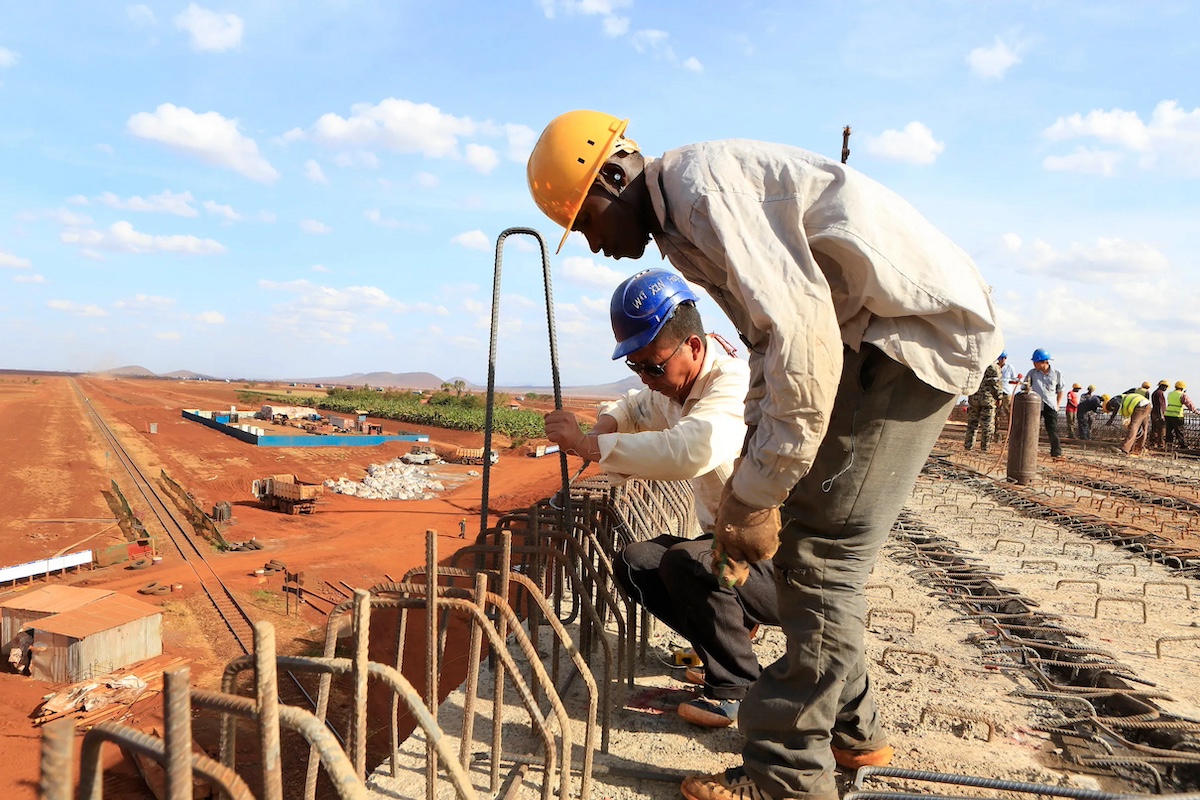
For 20 years, China’s ascent to the position of the world’s largest bilateral creditor has reshaped the global landscape of development financing in irreversible ways. Yet popular and academic discourse around Chinese sovereign lending to Africa has long been stuck in a limiting ideological binary: on one side, the Western-dominated narrative of “debt-trap diplomacy” frames China as a predatory actor, while on the other, Beijing’s official rhetoric positions its lending as purely altruistic South-South cooperation. A new analytical framework from development finance scholar Jiahao Yuan cuts through this divide by examining the deep structural roots of China’s lending practice, revealing a decades-long “dual system” that pairs domestic Keynesian economic logic with external neoliberal risk mitigation, and explaining how this structure ultimately led to sovereign debt distress and a sweeping reorientation of China’s Africa lending strategy. To understand the origins of China’s overseas infrastructure lending model, one must first trace its roots to the structural dynamics of China’s domestic economy. For decades, China’s state-led economic model relied on massive credit expansion orchestrated by central and local governments, which channeled liquidity through state-owned policy and commercial banks to fund capital-intensive projects. This approach sustained decades of rapid GDP growth, but by the mid-2010s, the model hit diminishing returns, leaving key industrial sectors with severe overcapacity and pushing subnational governments to the brink of balance sheet collapse. With domestic demand for fixed asset investment maxed out, China required an external outlet for its surplus industrial capacity and accumulated U.S. dollar foreign exchange reserves — a dynamic that mirrors geographer David Harvey’s concept of the “spatial fix,” where overaccumulated domestic capital is displaced into long-term cross-border infrastructure projects. It is this structural pressure that saw the Belt and Road Initiative (BRI) emerge as the natural international extension of China’s domestic Keynesian model, with a carefully engineered institutional framework to facilitate the export of overcapacity. The mechanism works in three tightly coordinated steps: first, a Chinese policy bank issues a dollar-denominated sovereign loan or export buyer’s credit to an African government. Second, the loan contract includes strict procurement rules that require the infrastructure project to be built by pre-approved Chinese state-owned engineering, procurement, and construction contractors. Most critically, while the African government holds formal legal responsibility for repaying the sovereign debt, the loan capital never actually enters the African country’s financial system: during clearing, the dollar funds are transferred directly from the lending bank’s Beijing headquarters to the corporate accounts of the Chinese contractors executing the project. This structure allows China to convert its low-yield dollar reserves into active commercial orders for its domestic industrial base, effectively offloading surplus capacity onto global markets. While the macro impetus for China’s overseas credit expansion is rooted in state-backed Keynesianism, Chinese lenders operate by neoliberal commercial logic once they enter international markets. Unlike traditional Western multilateral lenders such as the World Bank and IMF, which embed explicit political conditions tied to the Washington Consensus — including fiscal austerity, privatization, and governance reforms — China frames its lending as “no political strings attached” in line with its doctrine of non-interference. However, this lack of political conditionality is often misread as a lack of commercial or legal conditions. In practice, Chinese banks act as highly rational market actors, prioritizing capital preservation and risk insulation through strict contractual mechanisms, rather than seeking to reform recipient state governance. The clearest example of this external neoliberal risk-mitigation structure is the so-called “Angola Mode” of commodity-backed infrastructure lending, designed for low-credit-rating states with limited access to global capital markets. This framework builds a closed financial loop to protect Chinese lenders: first, it requires the borrowing state to establish an offshore escrow account, usually held in a major international financial hub or directly at the lending Chinese bank, bypassing the borrower’s domestic central bank and fiscal system. Second, the borrower is required to direct all revenue from its strategic commodity exports into this escrow account, where the Chinese lender holds a senior security claim, automatically deducting principal and interest payments before any remaining funds are sent to the borrower’s domestic treasury. This structure delinks the lending and repayment process from the often fragile or corrupt domestic financial systems of borrowing states: as long as commodity exports continue, Chinese lenders secure repayment directly through offshore accounts. This approach, which secures capital through sophisticated contractual arrangements rather than institutional overhauls of borrowing states, embodies the core neoliberal emphasis on property rights, enforceable contracts, and free capital flow in its purest form. This dual-track model operated smoothly during the 2000–2018 global commodity supercycle, opening large new markets for China’s industrial exports and driving the largest infrastructure building boom in post-war African history. But the model contains an inherent structural mismatch: it combines state-controlled Keynesian capital from China with an anarchic international debt system governed by neoliberal rules, a tension that ultimately sparked widespread sovereign debt crises across Africa. Domestically, China’s central government can exercise near-total control over its financial system, managing debt distress among state-owned enterprises through administrative tools such as debt rollovers, targeted liquidity injections, and mandates for state banks to absorb non-performing loans, effectively socializing the costs of financial instability. Globally, however, there is no sovereign authority that can bail out a defaulting nation, leaving no backstop for systemic risk. When the global macroeconomic environment shifted dramatically in the early 2020s, driven by aggressive U.S. Federal Reserve interest rate hikes, the stage was set for crisis. Global capital rapidly flowed back to the U.S., triggering sharp depreciations of African currencies and extreme volatility in commodity prices. For African nations heavily dependent on dollar-denominated debt and narrow, single-commodity economies, this shift created severe fiscal pressure that pushed many toward sovereign default. Zambia became the first high-profile African defaulter, and its case exposed the core limitations of China’s dual-track model. Chinese banks held billions of dollars in Zambian debt, much of it secured by collateral and offshore escrow structures, but when Zambia’s national finances collapsed and foreign exchange reserves were exhausted, China faced what analysts call the “creditor’s dilemma.” On one hand, China cannot use military or extrajudicial force to seize assets in a defaulting state — such action would destroy its narrative of South-South solidarity and ignite widespread anti-Chinese sentiment across the Global South. On the other hand, Chinese banks initially resisted joining multilateral debt relief frameworks such as the Paris Club, preferring confidential bilateral negotiations to protect their collateral claims. This approach ran into opposition from the IMF and Western private bondholders, who demanded equal treatment and full transparency from Chinese lenders, while Beijing countered that private bondholders had earned high yields during good times and should share equally in losses during default. This standoff made clear that no carefully drafted contract can fully hedge against the systemic risk of a sovereign state collapse in the ungoverned neoliberal global financial system. In response to the fallout from widespread sovereign defaults, paired with domestic efforts to clear subnational debt, China’s African sovereign lending network has undergone a major strategic rebalancing since 2024, bringing the era of aggressive expansion to a close. During the peak of BRI expansion, annual disbursements of new Chinese loans regularly outpaced the total principal and interest payments African nations made on existing debt. Today, after tightening credit risk assessments, annual debt service payments on legacy loans exceed the inflow of new Chinese sovereign credit, meaning China has shifted from being a net provider of liquidity to a defensive creditor focused on recovering capital from its mature loan portfolio. When Beijing announced a 360 billion yuan ($50 billion) financial support package for Africa in September 2024, a closer look revealed that the new lending model differs fundamentally from the expansionary era. China’s new approach to Africa finance rests on three core pillars. First, to insulate bilateral lending from Western monetary policy shocks and Federal Reserve interest rate cycles, Beijing is rapidly expanding yuan-denominated sovereign loans and bilateral currency swap lines. Lending in yuan allows African borrowers to purchase Chinese industrial equipment directly in the Chinese currency, then repay debt with yuan earned from commodity exports to China, eliminating dollar exchange rate risk. Second, large-scale, capital-intensive transport and logistics projects have been replaced by targeted, smaller-scale high-value projects, with strict caps on individual project financing. Most new credit is directed to two strategic sectors: the green energy transition and the Digital Silk Road, including 5G networks and cloud data centers. These “small and beautiful” projects carry high long-term strategic value, as they lock in African dependence on Chinese digital technology for decades to come. Third, to counter criticism that its old model was extractive — focusing on exporting raw materials to China and importing finished Chinese goods — China is shifting its investment focus to local industrial value addition. Chinese credit is increasingly directed toward building processing facilities, smelters, and special economic zones within Africa, and Chinese firms are building downstream assembly units for electric vehicles and lithium battery components in regional hubs such as Nigeria and Egypt. This strategy integrates African industrial bases into Chinese-led green energy supply chains, while also helping China bypass Western trade barriers. In conclusion, 20 years of Chinese sovereign lending to Africa fits neither the Western narrative of predatory debt-trap diplomacy nor Beijing’s framing of purely altruistic South-South cooperation. Instead, it is the product of a large policy-driven state capitalist economy, which pursued a unique and inherently tense experiment: exporting domestic overcapacity through internal Keynesian logic while managing risk through external neoliberal market rules. Over the coming decade, this model is likely to evolve into a new third credit paradigm, centered on yuan-denominated lending, rigorous systemic risk control, green and digital growth, and deep integration with local African supply chains. To accurately understand the future of Chinese overseas financing, observers must abandon outdated Cold War ideological framing and examine the unique institutional duality that has shaped China’s lending practice from its origins. Jiahao Yuan is an economist specializing in international development finance and Chinese macroeconomic policy.