博客

  • 1,000 evacuated from Fontainebleau fires near Paris; Spanish authorities identify some fire victims

    1,000 evacuated from Fontainebleau fires near Paris; Spanish authorities identify some fire victims

    As Europe grapples with unprecedented rapid warming that has pushed continental temperatures twice as high as the global average since 1980, two major wildfire emergencies unfolded across France and Spain this week, displacing thousands of residents and consuming vast swathes of forest and agricultural land.

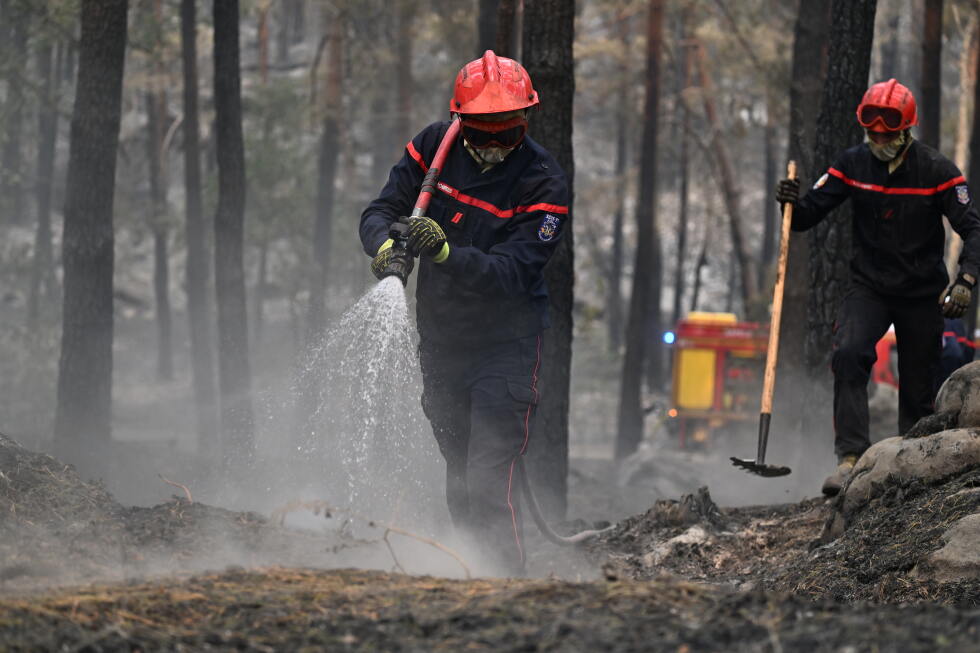
    Near the French capital of Paris, hundreds of firefighters have worked around the clock since Tuesday to contain two separate blazes burning through the iconic Fontainebleau forest, located in the commune of Noisy-sur-École just south of Paris. Local authorities confirmed that the fires have already scorched nearly 2,000 hectares (around 4,900 acres) of forest and triggered mandatory evacuation orders for more than 1,000 nearby residents. What makes this fire particularly unusual compared to larger blazes currently burning across southern France is its proximity to the heavily populated Paris metropolitan area, a rare threat that has forced emergency responders to adopt extraordinary tactics.

    Gregory Allione, the regional fire chief for the Île-de-France region, announced that water-dumping aircraft have been deployed to slow the spread of the flames, marking the first time such heavy aerial firefighting equipment has ever been used to combat a wildfire within the Paris region. On Tuesday, aircraft repeatedly made low passes over the Seine River to scoop up large volumes of water before returning to douse the burning treeline. Smoke from the fire shrouded the forest canopy and hung heavily over the region throughout the day as crews worked to bring the blaze under full control. As of Tuesday, no fatalities or fire-related injuries have been reported. French Interior Minister Laurent Nunez told BFM TV Tuesday that two people have been taken into custody in connection with the Fontainebleau blazes, with two additional suspects arrested for unrelated wildfires breaking out elsewhere across the country. Nunez did not release further details about the suspects or the circumstances of their arrests.

    France’s ongoing extreme heat event, the third major national heat wave recorded in 2024, has begun to cool, and the country’s national weather service announced it will lift all national heat wave red alert warnings starting Wednesday. However, the shift in weather has brought new risks, with thunderstorm warnings now active across multiple French regions.

    Nearly 1,000 kilometers south in southern Spain, authorities are still working to identify victims of another deadly wildfire that tore through a remote expatriate community four days ago. Judicial authorities confirmed Monday evening that they have positively identified 10 of the 13 people killed in the Los Gallardos fire using DNA and biological evidence. All confirmed fatalities are adults, the majority of whom are foreign nationals: five are British citizens (including one woman who died of her injuries in a hospital), three are Belgian citizens, one is a French woman, and one is a Spanish national. Ten additional people remain unaccounted for in the wake of the blaze.

    The Los Gallardos wildfire has burned across roughly 70 square kilometers (27 square miles) of mixed forest and agricultural land, an area larger than the entire borough of Manhattan in New York City. Like France, Spain is currently in the grip of a record-breaking extreme heat event, which combined with sustained high winds and months of below-average rainfall has created perfect tinder conditions that allow small, accidental ignitions to spread into large, uncontrollable blazes.

    The string of major wildfires across Western Europe this heat season aligns with long-term climate data from the European Union’s Copernicus Climate Change Service, which confirms Europe is warming faster than any other continent on Earth. The ongoing climate trend has turned annual extreme heat and large-scale wildfire events into the new normal for the region, forcing emergency management agencies across the continent to adapt to increasingly frequent and severe fire risks.

  • Fanfare and flyovers as France celebrates Bastille Day

    Fanfare and flyovers as France celebrates Bastille Day

    France’s annual Bastille Day celebration unfolded in Paris on Thursday with stirring military fanfare, dramatic aerial flyovers and a historic parade that placed a spotlight on global allied partnerships, including a leading contingent from Ukraine and the so-called ‘Coalition of the Willing’.

    The annual procession along the iconic Champs-Élysées, a centerpiece of France’s commemoration of the 1789 storming of the Bastille prison that launched the French Revolution, took on added geopolitical significance this year. Organizers made the deliberate choice to feature visiting troops from partner nations at the front of the parade, a decision that underscores France’s ongoing commitment to collective security and support for Kyiv amid its ongoing war with Russia.

    Crowds lined the wide avenue, waving French tricolor flags and cheering as marching contingents from Ukraine and the coalition partners stepped past the presidential reviewing stand, where French President Emmanuel Macron and visiting dignitaries gathered to observe the ceremony. Following the ground procession, military aircraft streaked across the Paris sky, painting trails of blue, white and red across the skyline in a traditional display of national pride that drew applause from thousands of spectators gathered in the city center.

    The inclusion of Ukrainian troops in the core of the parade comes as France has ramped up its military and diplomatic support for Ukraine in recent months, reinforcing its position as one of Kyiv’s key European backers. For attendees and observers alike, the 2024 Bastille Day parade served not only as a celebration of French national identity and democratic heritage, but also as a public demonstration of international solidarity with Ukraine and shared commitment to collective defense among allied nations.

  • American marine biologist and conservationist shot dead in the Philippines

    American marine biologist and conservationist shot dead in the Philippines

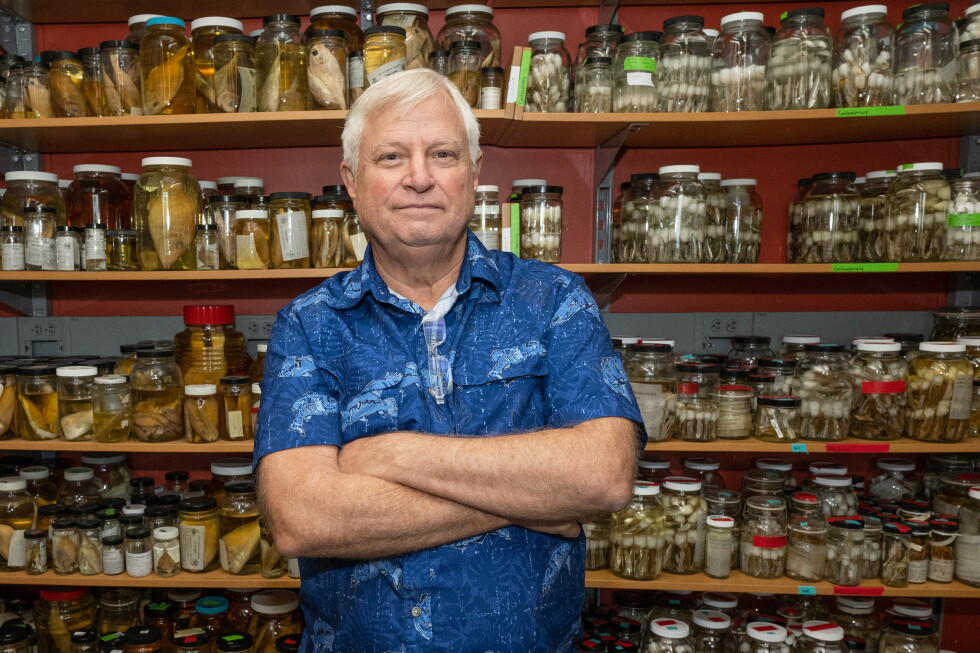
    Police authorities in the Philippines confirmed Tuesday that a globally recognized 73-year-old American marine biologist was murdered by three masked attackers who broke into his residential property in the country’s central island region.

    Kent Carpenter, who was weeks away from official retirement after decades of groundbreaking marine conservation research, was with his Filipina companion at his home in Sibulan, a coastal municipality in Negros Oriental, when the intruders gained forced entry on Sunday evening. According to witness testimony from the companion, one of the masked assailants fired a gunshot directly to Carpenter’s head, killing him immediately before the group fled the scene. The attackers stole a laptop computer, an undisclosed sum of cash, and a backpack during the incident, national police spokesperson Colonel Allen Rae Co confirmed to media outlets.

    Regional police spokesperson Lieutenant Colonel Joem Malong told the Associated Press that Carpenter’s companion suffered non-lethal injuries in the attack and is currently receiving medical care at a local facility. As of Tuesday, investigators have not established a confirmed motive for the killing and are still working to identify and apprehend all three suspects.

    Carpenter had deep, long-standing ties to the Philippines: he first came to the country as a Peace Corps volunteer in the 1970s, and most recently had served as a visiting lecturer at Dumaguete’s Silliman University, located near his home in Negros Oriental. Since 1996, he held a tenured professorship in biological sciences at Old Dominion University in Norfolk, Virginia, where his research focused on marine biodiversity and conservation in the Philippines and the broader Coral Triangle, a ecologically critical region spanning the Indian and Pacific Oceans. University officials confirmed he was on an extended research trip in the Philippines when he was killed, and had been scheduled to retire from his faculty position in September 2024.

    Old Dominion University President Brian Hemphill released a statement mourning Carpenter’s death, saying “He dedicated his career to expanding our understanding of the world’s bodies of water and protecting some of its most vulnerable ecosystems. His scholarship and passion impacted and inspired many individuals locally, nationally, and internationally.” Hemphill called the killing a “sad and devastating” loss for the global scientific community.

    Throughout his career, Carpenter’s work centered on assessing extinction risk for marine fish and plant species, and he was an early and outspoken voice warning of the catastrophic impacts of unmitigated climate change on coral reef ecosystems. In a 2010 interview with the AP, he warned that if global warming continued at its then-current pace, all coral reefs on Earth could face extinction within a century. “You could argue that a complete collapse of the marine ecosystem would be one of the consequences of losing corals,” he said at the time. “You’re going to have a tremendous cascade effect for all life in the oceans.”

    Multiple Philippine scientific and environmental institutions have publicly mourned Carpenter’s killing. Silliman University, which has collaborated with Carpenter on marine research initiatives since 1976, described him as an exceptional scientist whose work transformed global perspectives on Philippine marine biodiversity. “Dr. Carpenter made ground-breaking contributions that transformed global understanding of Philippine marine biodiversity,” the university said in a statement.

    Philippine law enforcement has pledged to prioritize the case to bring the perpetrators to justice. “We assure the victim’s family, the community and our foreign visitors that this case is being treated with utmost urgency and no effort will be spared until justice is served,” said Brigadier General Romano Cardiño, regional police director for the Central Visayas. The U.S. Embassy in Manila had not issued an official statement or responded to requests for comment as of Tuesday.

  • Man killed during ICE encounter in Maine

    Man killed during ICE encounter in Maine

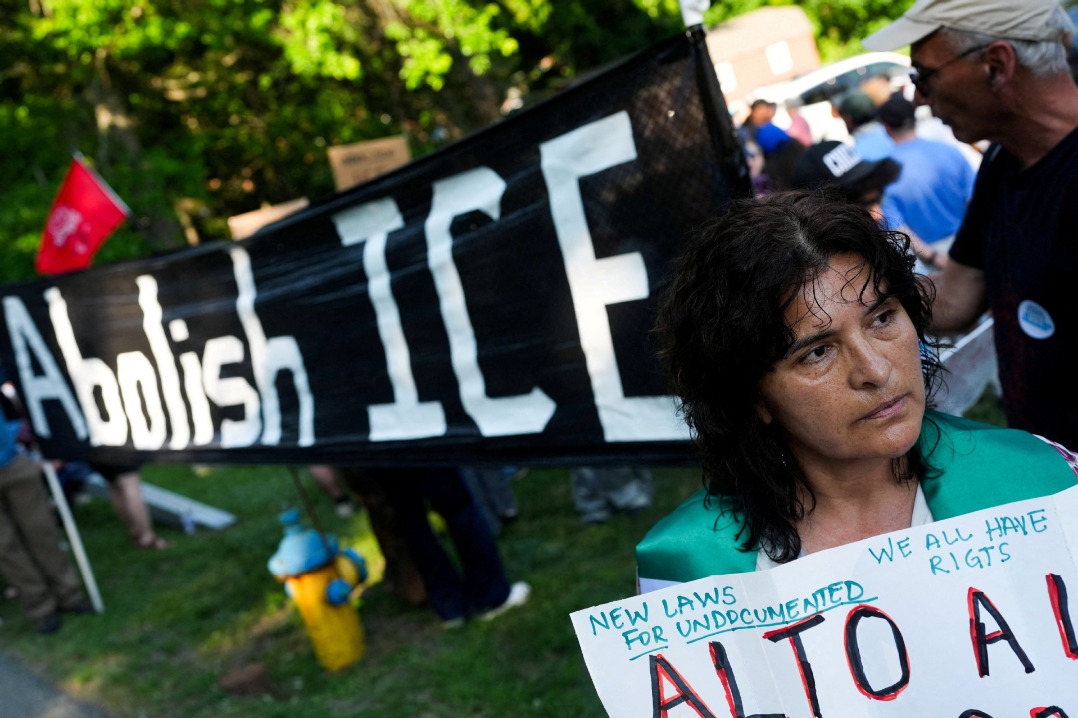
    A 26-year-old Colombian man legally residing in the U.S. was shot and killed by a U.S. Immigration and Customs Enforcement (ICE) deportation officer during an enforcement operation early Monday in Biddeford, a coastal Maine city, according to multiple state and federal officials. The incident has triggered immediate calls for a full, impartial probe, coming on the heels of a second controversial fatal ICE shooting that killed an unintended target in Texas just one week prior.

    Ryan Fecteau, Speaker of the Maine House of Representatives, first confirmed the shooting via a Facebook post Monday morning, noting that Maine State Police and the state’s Department of Public Safety had secured the scene, with the Federal Bureau of Investigation (FBI) tapped to lead the independent investigation. Fecteau later updated his post to confirm the victim’s identity details: a 26-year-old Colombian national who was in the U.S. legally and held a valid Social Security number. Federal authorities have not officially released the deceased’s name to the public as of Monday.

    Maine Attorney General Aaron Frey outlined the official preliminary account of the encounter in a Monday statement. According to Frey, the officer was carrying out enforcement actions tied to a final order of removal when the victim attempted to flee the scene by driving his vehicle directly toward the officer, prompting the fatal gunfire. Multiple local residents reported hearing at least four separate shots during the incident.

    User-posted videos circulating on social media offer on-the-ground context of the aftermath. One clip captured a man clinging to the driver’s side window of a white sedan as the vehicle spun in place, while another footage shows ICE agents removing the victim’s body from the driver’s seat and surrounding the remains on the ground.

    Maine’s top elected officials have all weighed in on the tragedy, calling for transparency to answer lingering questions. Governor Janet Mills confirmed she had received an official briefing on the incident, while U.S. Senator Susan Collins emphasized in a post on X that the shooting demanded a full and unbiased investigation. Biddeford Mayor Liam LaFountain said he was deeply shaken by the news, noting “situations like these are alarming and frightening.” “My thoughts are with the family and loved ones of the person who died as they face an unimaginable loss,” LaFountain said. “They deserve compassion, dignity and, in time, a full understanding of the circumstances that led to this tragedy.” He joined other leaders in calling for a complete, transparent investigation into the killing.

    U.S. Senator Angus King told reporters at a noon news conference at Portland International Jetport that Department of Homeland Security (DHS) officials had confirmed to him the victim was a man in his 20s who had been served a final removal order, and that agency officials claimed the victim had “weaponized the vehicle” against the officer.

    The Maine shooting comes as ICE has drastically scaled up immigration enforcement operations across the U.S. in recent weeks, with the agency increasingly targeting individuals not already held in law enforcement custody. It also follows a separate fatal shooting just seven days earlier in Houston, Texas, that has already stirred significant controversy.

    In that July 7 incident, ICE agents fatally shot 52-year-old Lorenzo Salgado Araujo, a Mexican father of three who had lived in Houston for 35 years and had no criminal record. Salgado Araujo was not the target of the ICE operation; he was driving to his construction job when agents in unmarked black vehicles pulled his van over. An official ICE statement claimed Salgado Araujo “refused to follow multiple verbal commands” and used his vehicle as a weapon to try to run over an agent, who then opened fire. But accounts from three passengers in the van, relayed by their attorney, contradict that narrative, saying Salgado Araujo never attempted to ram agents. Crucially, none of the responding ICE officers wore body cameras, leaving no definitive visual evidence to verify either account. Salgado Araujo’s son Ronaldo told local media his father was in the process of applying for legal permanent residency and was well-aware of how to interact with law enforcement during stops. U.S. Representative Al Green has formally called for a full investigation into the Houston killing.

  • Iowa hosts Shanghai youth for softball and cultural exchange

    Iowa hosts Shanghai youth for softball and cultural exchange

    The historic connection between Iowa and China, first forged through agricultural trade in yellow soybeans, has entered a new chapter this week, as a group of young Chinese athletes and delegates arrived in Oskaloosa, Iowa for the nine-day Musco Youth Sports Exchange, combining competitive softball play with immersive cultural exchange between Shanghai and local American youth.

    The visiting delegation includes players from Shanghai’s Beisibao U13 girls’ softball team, alongside senior representatives from the Shanghai Baseball and Softball Association, the Shanghai Friendship Association, and the Shanghai Sports Federation. Over the course of their visit, the young athletes will compete against local youth teams, live with host families, and experience daily life in a small Midwestern American community, building personal connections that extend far beyond the softball diamond.

    Launched just last year in 2025, the exchange program held its inaugural event in Shanghai, where more than 100 young athletes from China and the United States gathered to compete, share cultural experiences, and build cross-border friendships that have persisted into 2026. Organizers built on that successful first meeting to bring the program to Iowa this year, with the long-term goal of establishing a permanent, recurring platform to foster youth connection between the two countries.

    Jeff Rogers, CEO of program sponsor Musco Lighting, emphasized that sports create an organic, low-barrier pathway to bring young people from different backgrounds together. Unlike traditional formal exchange programs, this initiative blends head-to-head competition with co-ed mixed teams made up of both Chinese and American players, giving athletes immediate opportunities to collaborate and bond both on and off the field. Rogers noted that the organization plans to expand the program beyond softball in coming years, exploring opportunities to add other popular sports including American football, pickleball, and tennis to the exchange roster.

    “We like all sports, and we’ll continue to do youth exchange through sports,” Rogers told China Daily in an interview on site. “It’s not just softball. We’ll look at expanding into football, pickleball, tennis — wherever we can find the opportunity.”

    Speaking at the program’s opening ceremony, Chinese Consul General in Chicago Wang Baodong, who threw out the ceremonial first pitch to mark the start of the exchange, encouraged the visiting Shanghai athletes to compete with respect for their opponents, embrace the chance to learn from their American peers, and carry the spirit of bilateral friendship forward into the future. Wang emphasized that personal connections forged between young people form the strongest foundation for positive China-U.S. relations long-term.

    Oskaloosa Mayor David Krutzfeldt echoed that sentiment, noting that Iowa’s deep, decades-long ties with China are primed to grow through expanded grassroots cooperation and people-to-people exchanges like this program. Krutzfeldt called on the visiting athletes to fully immerse themselves in local Midwestern culture during their stay, and experience the hospitality of the Oskaloosa community firsthand.

    “You’re going to truly immerse yourselves in American culture and experience what life is like in the Midwest United States. I expect you will experience firsthand the genuine warmth of our community,” Krutzfeldt said. “Our relationship with China is one that needs to be enhanced, needs to be warmer. We have much to offer one another.”

    Recalling Iowa’s early efforts to build formal and informal ties with China dating back decades, Krutzfeldt added that he remains optimistic about the future of bilateral exchange, and hopes to see people-to-people connections deepen further in the years ahead.

    Two-time Olympic softball medalist Michele Smith, who attended the opening ceremony, shared her perspective on the unifying power of the sport, noting that softball has long served as a common ground for athletes from China and the United States, dating back to the two countries’ iconic matchup at the 1996 Atlanta Olympic Games. Smith emphasized that even with language and cultural differences, shared love of a sport creates immediate common ground for young athletes to connect.

    “It’s a great sport for girls around the world,” Smith said. “Sport helps people connect despite differences in language and culture, allowing athletes to build lasting friendships. Sport brings everybody together, and it reminds us we’re similar. We might grow up in different cultures and speak different languages, but we play the same sport. We meet each other, we stay in touch, and especially nowadays, the young athletes can continue to communicate even after the trip is over.”

    Sarah Lande, one of Iowa’s most prominent long-standing advocates for China-U.S. ties who is widely recognized as an “old friend” of China, emphasized that the future of the bilateral relationship depends entirely on the next generation carrying forward the spirit of friendship and connection. Lande expressed hope that exchange programs like this will expand to give more young people from both countries the chance to interact and build personal bonds.

    “I wish the whole world could get together this way,” Lande said. “Once we get young people playing together and understanding other countries, that’s what that going to keep the future world together. As it spreads, we can have these young people share it.”

  • Britain’s Hillsborough Law aims to stop official cover-ups after tragedies

    Britain’s Hillsborough Law aims to stop official cover-ups after tragedies

    Thirty-seven years after the deadliest sports disaster in United Kingdom history, a landmark piece of legislation designed to end cover-ups of official error and misconduct by law enforcement and public servants is poised to win final approval from the House of Commons this Tuesday.

    Widely known as the Hillsborough Law, the Public Office (Accountability) Bill establishes a formal legal requirement of candor that binds all public officials, mandating full transparency when addressing public tragedies, even when such disclosure would damage the institutional or personal reputation of those involved. The legislation takes its common name from the 1989 Hillsborough disaster, where a fatal crowd crush at Sheffield’s Hillsborough Stadium claimed the lives of 97 Liverpool football fans. Decades after the tragedy, an independent inquiry confirmed that senior police officers had deliberately covered up their own critical failures and falsely pinned blame for the deaths on innocent Liverpool supporters.

    The bill’s final passage was delayed for a period amid political disputes over whether the legislation’s candor requirement would extend to Britain’s intelligence services. Following sustained pressure from families of the Hillsborough victims, the central government conceded to include intelligence agencies under the law’s scope, while adding a caveat that sensitive information will be handled through a specialized secure disclosure process designed to avoid risks to national security. After passing the House of Commons, the bill will move to Parliament’s upper chamber, the House of Lords, for final approval before it officially becomes law.

    Outgoing Prime Minister Keir Starmer is scheduled to open the bill’s final debate in the Commons on Tuesday, marking one of his last official acts in national leadership. Starmer first pledged to enact the Hillsborough Law during his successful 2024 general election campaign. His incoming successor, Andy Burnham, who is set to take office as prime minister next Monday, has been a longstanding ally and advocate for the Hillsborough bereaved families.

    In an op-ed published in the *Liverpool Echo*, Burnham paid tribute to the decades-long fight waged by victims’ relatives. “We owe this moment to the Hillsborough families,” Burnham wrote. “For 37 years, they refused to accept a lie. They stood firm when powerful institutions closed ranks against them. They have shown extraordinary courage, and because they never gave up, they will leave a legacy that reaches far beyond Hillsborough. They are helping to reshape the relationship between the public and the state for generations to come.”

    To contextualize the disaster that sparked this legislative change: On April 15, 1989, Liverpool faced Nottingham Forest in an FA Cup semi-final match at the 54,000-capacity Hillsborough Stadium, which was nearly at full capacity that day. Mismanagement by police and event organizers led to more than 2,000 Liverpool fans being funneled into an already overcrowded standing-room section behind one of the goals. Trapped against rigid perimeter metal fencing, fans were crushed, trampled, and many died of suffocation. The 97th victim did not pass away until 2021, succumbing to long-term injuries sustained in the crush.

    Against a backdrop of widespread public anxiety over football hooliganism across 1980s England, police quickly constructed a false narrative blaming drunken, ticketless, unruly Liverpool fans for the disaster. This false account stood unchallenged for decades, as the bereaved families waged a relentless campaign for accountability and truth. An initial 1991 coroner’s inquest returned a ruling of accidental death, a finding that families rejected outright. It was not until 2012, when an extensive independent inquiry reviewed thousands of previously hidden official documents, that the cover-up and institutional failures were fully exposed, overturning the original inquest verdict.

    In 2016, a jury at a second fresh inquest delivered a landmark ruling that all 97 victims had been “unlawfully killed”, finding that critical failings by police, the national ambulance service, and Hillsborough Stadium operators Sheffield Wednesday Football Club caused the disaster. The jury explicitly ruled that fan behavior played no role in the deaths. In 2023, the UK government issued a formal public apology for the decades of mistreatment inflicted on the bereaved families and for the decades-long delay in delivering accountability. A 2023 investigation by the independent police watchdog concluded that 12 officers would have faced gross disciplinary misconduct proceedings over their role in the disaster and subsequent cover-up, were it not for the fact that all have either died or retired from service decades ago.

  • Irish government to apologise to victims of paedophile in parliament

    Irish government to apologise to victims of paedophile in parliament

    Decades of systemic institutional failure and widespread cover-ups of one of Ireland’s most horrific serial child abuse cases will be formally acknowledged on Tuesday, when the Irish taoiseach delivers a public apology to victims of paedophile coach Bill Kenneally in the Dáil, Ireland’s national parliament.

    Kenneally, a former Waterford-based basketball coach with deep ties to the ruling Fianna Fáil political party, was ultimately convicted in 2016 of sexually abusing 15 young boys between 1979 and 1990, receiving a 19-year prison sentence. Irish law enforcement estimates the actual number of his victims is at least 29, 14 more than the counts that led to his conviction. Kenneally died in prison just days after a long-awaited Commission of Investigation report into the state’s handling of the abuse was published earlier this year, having never expressed any remorse for his crimes.

    The damning commission inquiry uncovered staggering failures by senior Irish police (gardaí) that allowed Kenneally to continue abusing children for more than 25 years. Records show Kenneally openly admitted to sexually abusing teenage boys to senior gardaí during an interview in 1987, and even provided investigators with the names of seven of his victims. Despite this clear confession, no arrest or prosecution was ever initiated at the time, and Kenneally faced no further police contact until 2012, when victim Jason Clancy filed the first formal public complaint that forced authorities to launch a full criminal investigation.

    According to the commission’s chair, Kenneally systematically groomed his young victims through a calculated combination of false trust, manipulative affection, and intimidation. He plied underage boys with alcohol and bribes, before physically restraining, torturing, and sexually abusing them. Kenneally photographed many assaults using a Polaroid camera, leveraging the images as blackmail to force his victims into permanent silence. The inquiry also levelled sharp criticism at Brendan Kenneally, a former Fianna Fáil Teachta Dála (TD, Irish member of parliament) and Bill Kenneally’s cousin, for failing to alert child protection authorities after he learned of the abuse in 2001.

    Clancy, the first victim to come forward with a formal complaint and a leading activist who campaigned for decades to establish the independent Commission of Investigation, spoke publicly ahead of Tuesday’s apology on RTÉ’s *Morning Ireland*. He said the formal state apology will bring much-needed closure to survivors who endured a years-long fight for accountability. “This apology adds closure,” Clancy said, confirming that victims will accept the state’s formal statement of remorse.

    While Clancy welcomed the state apology, he noted that a direct, unforced apology from Fianna Fáil as a political party would be a meaningful additional step, arguing that a coerced apology holds no real weight. Clancy has long alleged that political connections to the Fianna Fáil party were leveraged to cover up Kenneally’s abuse for decades, allowing him to continue preying on vulnerable children.

    The taoiseach delivering Tuesday’s apology is a member of Fianna Fáil, the same party with which Kenneally and his cousin, the former TD, had longstanding ties.

  • It’s ‘Super Tuesday’ for EU enlargement as 4 candidates move forward with negotiations

    It’s ‘Super Tuesday’ for EU enlargement as 4 candidates move forward with negotiations

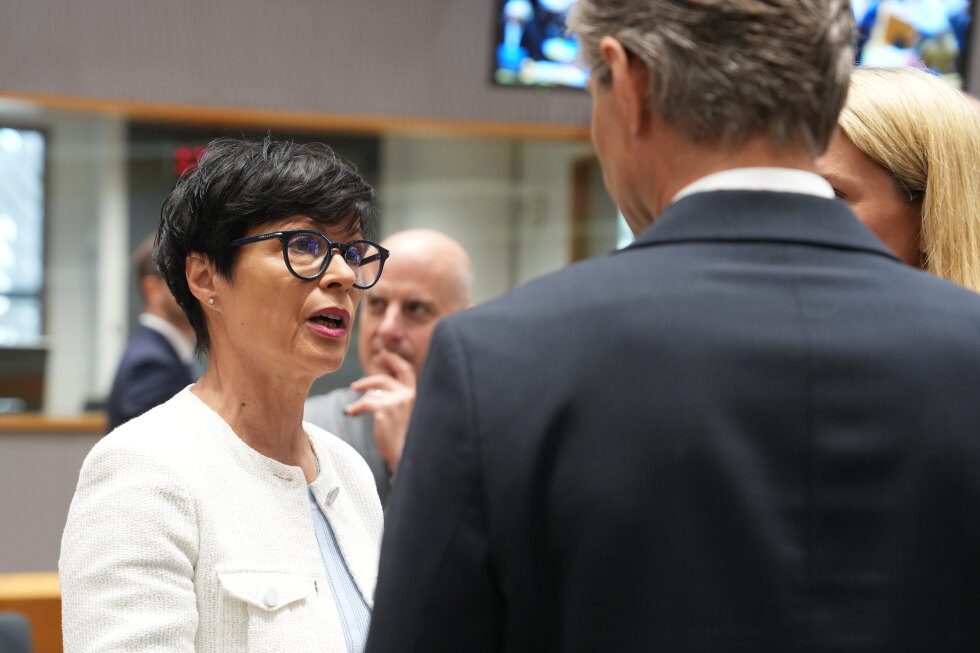
    BRUSSELS – In the most significant expansion of the European Union in over two decades, four candidate nations moved a major step closer to joining the 27-nation bloc Tuesday, when Brussels hosted a rare series of intergovernmental conferences to open and close key negotiating tracks. The milestone development comes amid sweeping shifts in European geopolitics triggered by Russia’s full-scale invasion of Ukraine, marking a sharp departure from expansion policy that was stalled for years.

    The four nations advancing their bids are Albania, Montenegro, Moldova, and war-torn Ukraine. While Tuesday’s events represent historic progress, officials acknowledge full membership for any of the candidates remains at least several years away. EU Enlargement Commissioner Marta Kos described the day as a “Super Tuesday for EU enlargement,” noting that the bloc has not pursued such a major expansion push since 2002, ahead of the 2004 wave that added 10 mostly Central European nations to the union. Croatia, the most recent country to join the world’s largest trading bloc, became a member in 2013.

    Tuesday’s breakthrough reflects dramatic policy shifts driven by changing global and regional realities. As recently as 2019, French President Emmanuel Macron openly vowed to block any new enlargement until the EU implemented sweeping internal institutional reforms. But the outbreak of the largest land war on the continent since World War II, and its far-reaching geopolitical consequences, upended that calculation. Alarmed by growing aggressive influence from Russia and China across Europe, the bloc has reframed enlargement as a critical strategic and security investment, pushing forward talks to encourage democratic and economic reform in candidate states.

    Ukraine’s progress in its accession bid is particularly remarkable: the country submitted its membership application just four days after Russia launched its full-scale invasion in February 2022. For Ukraine, joining the EU represents a key long-term security guarantee for a post-war stable future; the prospect of NATO membership, which Kyiv views as its ultimate security assurance, remains off the table amid wariness from Western leaders, including former U.S. President Donald Trump’s opposition.

    European leaders widely view Russia’s war on Ukraine as an existential threat to the European order, warning that a Russian victory in Kyiv would leave other European nations vulnerable to future aggression from Moscow. “The case for Ukraine’s EU membership is very strong,” Kos emphasized. “The future security architecture of our continent is unimaginable without Ukraine. Ukrainians have turned their country into a military powerhouse with capabilities few other nations can match, especially with its rapidly evolving drone technologies.”

    Moldova, like Ukraine, has faced persistent political and military pressure from Moscow, making EU integration a core national priority for its pro-Western government. For Balkan candidates including Albania and Montenegro, the prospect of EU membership has long served as a powerful catalyst for pro-democracy reform, economic growth, and regional stability after the violent breakup of Yugoslavia in the 1990s. History shows that joining the EU boosts cross-border trade and creates new jobs across member states, particularly in emerging economies in the Western Balkans.

    To gain full membership, candidate countries must complete accession negotiations across 35 distinct policy areas, or “chapters,” ranging from agriculture and taxation to energy and trade. This rigorous process routinely takes years to complete. Just last month, Ukraine and Moldova opened negotiations on their first cluster of five chapters, focused on the foundational values of the EU: rule of law, protection of fundamental rights, and the functioning of democratic institutions. On Tuesday, the two nations opened a second cluster of chapters covering foreign policy, security and defense, trade, development cooperation, and humanitarian aid.

    Albania, meanwhile, provisionally closed negotiating tracks on science and research, education and culture, and external relations. Montenegro, which has targeted 2028 for full accession, provisionally closed chapters on competition policy and customs regulations.

    A major political shift cleared the way for Tuesday’s breakthrough: the electoral ousting of Hungary’s long-serving nationalist Prime Minister Viktor Orbán in April, after 16 years in power. Orbán, a close ally of Donald Trump and widely viewed as Moscow’s closest partner within the EU, had repeatedly blocked progress on Ukraine and Moldova’s accession bids using the bloc’s requirement that all 27 member states must unanimously approve the opening and closing of every negotiating chapter. With Orbán out of office, the main barrier to advancement was removed.

    Currently, nine countries hold official EU candidate status: Albania, Bosnia and Herzegovina, Montenegro, North Macedonia, Serbia, Georgia, Moldova, Ukraine, and Turkey. Accession talks for Georgia and Turkey remain frozen over widespread concerns about backsliding on democratic standards. Kosovo has submitted an application but has not yet been granted official candidate status.

  • Tech experts, economists warn of rapid AI disruption

    Tech experts, economists warn of rapid AI disruption

    A coalition of more than 200 top technology pioneers and leading economists has sounded the alarm over the unprecedented speed at which artificial intelligence is set to reshape the global economy, releasing a public statement Monday that calls for immediate, proactive action from policymakers and industry leaders to prepare for the coming shift.

    Organized by the advocacy group We Must Act Now, the statement counts an extraordinary roster of high-profile signatories: more than a dozen Nobel Prize-winning economists, top executives from leading AI development firms including OpenAI and Anthropic, former Google CEO Eric Schmidt, and globally recognized AI researchers. Stanford economist Erik Brynjolfsson, one of the lead organizers of the initiative, explained that the statement was crafted to push the economics profession and global policymakers to stop underestimating AI’s potential to upend existing economic structures.

    “While there has been a noticeable shift in how our field views AI, there remains a dangerous gap between what we recognize as a coming transformation and the preparations we have in place,” Brynjolfsson said. “I worry deeply that we are not ready for the tsunami of change that is approaching faster than many expect.”

    The statement lays out three core pillars of the group’s warning. First, it projects that AI capabilities will grow exponentially more powerful over the coming decade, outpacing most public and institutional expectations. Second, this rapid advancement will trigger an economic transformation larger in scale than the Industrial Revolution — but unfold over a dramatically shorter timeline, bringing both massive opportunities for broad gains in living standards and severe risks including large-scale involuntary job displacement. Third, the statement argues that economists, policymakers, and technology leaders cannot afford to delay action: they must immediately invest in understanding the economic impacts of transformative AI, and build the regulatory guardrails, adaptive institutions, and aligned incentives needed to steer AI development toward a human-centric model that benefits all of society.

    Unlike past waves of technological innovation that unfolded over generations, AI’s disruption will compress massive change into just a handful of years, leaving little time for workers, businesses, and governments to adapt, experts warn. 2024 Nobel Prize-winning MIT economist Daron Acemoglu drew a parallel to the disruption robots caused in global manufacturing, noting that a similar shift driven by AI in a far shorter timeline would impose severe, unnecessary harm on household livelihoods if unmanaged.

    University of Virginia economics professor Anton Korinek emphasized that past general-purpose technologies — from steam power to electricity to personal computing — gave societies decades to adjust laws, build new institutions, and help workers transition. “AI may give us only a few years,” Korinek said. “We cannot improvise our strategy and build the systems we need in the middle of an ongoing transformation. Waiting for absolute certainty about AI’s impacts means we will be too late to avoid the worst harms.”

    Yoshua Bengio, a pioneering AI researcher at the University of Montreal and Turing Award winner who signed the statement, echoed that urgency, arguing that leaving AI’s trajectory entirely to unregulated market forces risks leaving the vast majority of citizens behind. “Based on the clear current trajectory of AI development, it is highly plausible that AI will drastically transform our economies,” Bengio wrote. “We must be intentional and make collective, democratic choices, rather than letting market forces play out and risking leaving most citizens behind.”

    Recent industry analysis backs up these warnings, projecting dramatic shifts in global labor markets by the end of the decade. Digital business firm Clickvision synthesized multiple independent studies to estimate that between 85 million and 92 million jobs worldwide could be displaced by AI automation by 2030, even as between 97 million and 170 million new roles are created by the technology. The analysis found that as much as 30% of all current jobs in the United States could become at least partially automated by 2030, and 60% of all roles will see major changes to their core day-to-day tasks as AI integration becomes standard. Even today, 11.7% of U.S. jobs are already fully automatable with existing technology, and Clickvision projects that 14% of the entire global workforce will be forced to switch career fields entirely by 2030 to remain employed.

    Market analytics outlet datarefs.com identifies the sectors at highest immediate risk as manufacturing, customer service, transportation, and retail. Roles that rely heavily on existing AI tools — including interpreters, translators, and entry-level research positions that rely on generative AI tools such as ChatGPT, DeepL, and Google Translate for core tasks — also face a high risk of displacement in the near term. Younger workers and workers in advanced, highly tech-integrated economies are expected to face the most intense disruption from the shift, the outlet reported.

    Notably, the experts signing the statement do not argue that AI will be a net negative for global society. Like past transformative technological shifts from the Industrial Revolution to the rise of personal computing, AI is expected to deliver long-term benefits that lift overall living standards. The core concern of the group is not AI itself, but the unprecedented speed of its adoption and transformation, which outpaces the adaptive capacity of existing labor institutions, social safety nets, and regulatory frameworks — a gap that could leave millions of workers vulnerable to unnecessary economic hardship without immediate intervention.

  • Asia’s first durian experience center opens in Kuala Lumpur

    Asia’s first durian experience center opens in Kuala Lumpur

    On July 4, 2026, durian enthusiasts and cultural tourists marked a milestone for Malaysia’s most iconic agricultural product with the official opening of the Kuala Lumpur Durian Experience Centre (KLDEX), Asia’s first one-stop immersive destination dedicated entirely to the so-called ‘King of Fruits’. The launch coincided with the 2026 Malaysia Durian Festival, bringing fresh attention to a crop that has become one of the Southeast Asian nation’s most valuable export commodities.

    Located along the bustling Jalan Ampang corridor in central Kuala Lumpur, the 1,900-square-metre facility was developed by local enterprise MyBolehBoleh, with official backing from Malaysia’s Ministry of Tourism, Arts and Culture. Backers of the project frame it as more than just a tourist attraction: it is designed to elevate the profile of Malaysia’s durian industry globally and cement the country’s reputation as a leading culinary and cultural tourism hub. Cofounded by Ang Kean Wee and Edison Ang Wei Phang, with curation led by cultural historian Enzo Sim, KLDEX caters to visitors of all ages, combining education, entertainment, and hands-on culinary experiences under a single roof.

    The centre integrates a range of unique offerings, from a fully curated durian museum and immersive 4D-style theater to specialty food and beverage outlets, interactive cultivation workshops, and in-depth cultural storytelling sessions. Guided durian tasting sessions, a core draw for visitors, require advance registration, while the museum operates daily from 10:30 a.m. to 10:30 p.m. on a paid ticketing model.

    What sets KLDEX apart from ordinary fruit-themed attractions is its deep dive into the layered history and cultural significance of durian in Malaysia. The museum’s collection includes rare medieval manuscripts from both Chinese and European seafarers who documented their encounters with the pungent, creamy fruit during early voyages to the Malay Archipelago, alongside a full-scale replica of a working durian plantation that lets visitors experience what cultivation looks like on the ground. Curators spent years cross-referencing oral histories from smallholder farmers and cross-checking archival documents to fill gaps in recorded durian heritage, much of which was passed down through generations rather than written down.

    Sim, the centre’s chief curator, noted that key well-documented historical encounters — including 15th-century Ming Dynasty Admiral Zheng He’s documented meeting with durian during his voyage to Melaka, as well as notes from European explorers operating in the region — anchor the museum’s historical narrative. To capture the specific stories of Malaysia’s most internationally celebrated varieties, including the premium Musang King and Black Thorn strains, Sim traveled directly to Penang and Kelantan to interview the original farmers and their descendants who worked with Malaysia’s Department of Agriculture to formalize registration for these iconic cultivars.

    A dedicated ‘durian orchard experience’ zone breaks down the entire supply chain that brings Malaysian durian to global consumers, highlighting the interconnected work of smallholder farmers, export operators, and tourism workers that have turned the fruit into a global phenomenon. The immersive theater hosts four original productions daily, telling a lighthearted story of two competing durian traders whose rivalry eventually blooms into friendship. The performance weaves together rap, local humor, and deep cuts about Malaysia’s dozens of prized durian varieties to celebrate the fruit’s deep roots in local culture.

    Additional installations including original paintings, custom sculptures, and recreated lifelike local market stalls highlight the deep emotional connection that generations of Malaysians have maintained with durian. Co-founder Ang explained that the project’s core mission is to preserve Malaysia’s durian cultural heritage and systematically document the untold histories behind popular varieties ranging from D24 to Musang King and Black Thorn. ‘While Malaysian durians are renowned worldwide, their histories are seldom fully told,’ he noted.

    As Kuala Lumpur continues to expand its cultural tourism offerings, the launch of KLDEX fills a long-empty niche, turning a beloved local staple into a curated cultural attraction for both domestic and international visitors. For a city increasingly prioritizing cultural preservation and culinary tourism, the arrival of the world’s first dedicated durian experience centre feels less like a novelty and more like a natural evolution of Malaysia’s celebration of its most famous fruit.