博客

  • Billionaire Warren Buffett stops donations to Bill Gates charity

    Billionaire Warren Buffett stops donations to Bill Gates charity

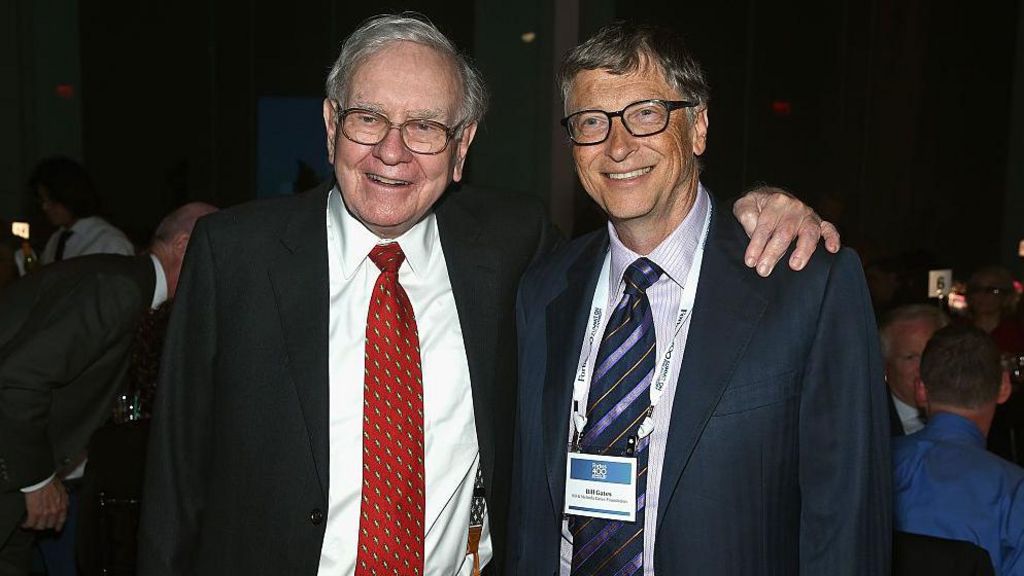
    For two decades, billionaire investor Warren Buffett stood as one of the most significant backers of the Bill & Melinda Gates Foundation, pouring more than $47 billion into the organization’s global charitable work. That long-standing partnership has now come to an abrupt end, just months after new details of Bill Gates’ professional and personal ties to convicted sex offender Jeffrey Epstein came to light.

    When Buffett first made his commitment to the foundation in 2006, he pledged irrevocably to donate annual shares of his holding company Berkshire Hathaway to the foundation for the entirety of his lifetime. This week, however, the 95-year-old investor released a revised list of recipient organizations for his annual multi-billion dollar stock gifts, and the Gates Foundation was noticeably absent from the roster. Instead, all of the upcoming donations will be divided between four family-led foundations tied to Buffett’s own relatives.

    Buffett announced a timeline to fully distribute his remaining Berkshire Hathaway shares by December 31, 2034, a full eight years from now. Acknowledging the inherent uncertainty of human lifespan, he noted that regardless of circumstances, all of his remaining stock would be transferred to the four family foundations by that deadline one way or another.

    The break in donations follows a cascade of new revelations about Gates’ relationship with Epstein, a financier who died in 2019 in a New York prison while awaiting trial on federal sex trafficking charges. Declassified documents released by the U.S. Department of Justice in early 2024 first pulled the connection back into the public spotlight, and Gates testified before the U.S. House Oversight Committee in June to answer questions about his years of interactions with Epstein.

    During his congressional testimony, Gates explained that he was first introduced to Epstein in 2011, with the meeting framed around a potential opportunity to raise billions of dollars for the Gates Foundation’s core global health initiatives. Gates acknowledged he was aware that Epstein had prior criminal convictions, including a 2008 guilty plea for soliciting prostitution from a minor, but said he failed to grasp the full scope of Epstein’s crimes. “I should never have met with Epstein in the first place,” Gates told the committee, adding that even if Epstein had delivered on his promised fundraising, the connection would never have been justified.

    Buffett has not explicitly referenced either Gates or Epstein in his official statements about the revised donation plan. But in comments to CNBC back in March, Buffett confirmed he had not spoken to Gates since the Epstein connection was publicly re-examined earlier this year. He added at the time that he wanted to avoid being placed in a position where he could be called as a witness in any ongoing proceedings related to the case.

    In a response to the end of Buffett’s donations, a spokesperson for the Gates Foundation expressed gratitude for his 20 years of support. The organization emphasized that it remains on solid financial footing, with Bill Gates’ own $200 billion commitment to the foundation’s endowment that will allow its work to continue through 2045.

    The end of Buffett’s donations marks another major shift for the foundation in recent years, following the 2021 divorce of Bill and Melinda Gates after 27 years of marriage. Last year, Melinda French Gates stepped down from her role as co-chair of the foundation she co-founded, and has since launched her own initiatives focused on gender equity, including a $1 billion commitment to advancing women’s rights across the United States. Buffett and the Gates couple first partnered in 2010 to launch the Giving Pledge, a global initiative that encourages the world’s ultra-wealthy to donate the majority of their fortunes to charitable causes during their lifetimes or through their estates.

  • War, racism and Trump: Has corruption overshadowed the 2026 World Cup?

    War, racism and Trump: Has corruption overshadowed the 2026 World Cup?

    Billed as the most ambitious World Cup in history – expanded to 48 teams, hosted across three North American nations, and projected to deliver a record-breaking $9 billion in revenue for FIFA – the 2026 tournament will likely be remembered not for on-pitch drama, but for pervasive political meddling, systemic bias, and overt corruption that have tainted the global game’s flagship event. At the center of the turmoil stand two figures: former US president Donald Trump, who leveraged the tournament to advance his political agenda, and FIFA president Gianni Infantino, who repeatedly bent the governing body’s rules to accommodate the whims of the Trump administration.

    Beyond widely criticized issues including exorbitant ticket prices, logistical chaos from cross-country travel between host cities, and dangerous heat at matches, critics have labeled the 2026 tournament an ‘imperial World Cup,’ shaped entirely by the priorities of a heavily politicized US presidency. The level of influence-peddling surrounding the event has even led some long-time football fans to look back wistfully at the tenure of Sepp Blatter, Infantino’s disgraced predecessor who was forced out of FIFA over a sweeping corruption scandal and is banned from football activities through 2027. Blatter himself weighed in on the controversy last week, posting on social media platform X that ‘football must never become a playground for political power’ – a remark that sparked ironic calls from fans for Blatter to return, with supporters joking that he would ‘make corruption classy again.’ Other observers have summed up the current mood by noting that ‘Infantino and FIFA are so corrupt that even Sepp Blatter, the former chief of corruption, is shocked.’

    The controversies began long before the opening kickoff. In December 2025, during the 2026 World Cup draw ceremony, Infantino presented Trump with FIFA’s first, and what many believe will be its only, ‘FIFA Peace Prize’ – an honor awarded just months before the US and Israel launched a planned military attack on Iran in February 2026. The award came as the culmination of a series of honors for Trump, who had previously renamed the John F. Kennedy Center for the Performing Arts to add his own name, a change later reversed by US courts. In his remarks presenting the prize, Infantino told Trump: ‘We want to see hope, we want to see unity, we want to see a future. This is what we want to see from a leader and you definitely deserve the first Fifa Peace Prize.’ In the months after the award, the Trump administration has taken a series of aggressive international actions: abducting Venezuela’s sitting head of state, threatening to invade Greenland, intensifying the decades-long US blockade on Cuba, and plunging the region into open war with Iran.

    The Trump administration’s restrictive and discriminatory policies have directly disrupted the tournament for teams, officials, and fans from targeted nations. The most high-profile incident involved Omar Artan, a Somali referee set to make history as the first official from Somalia to work a World Cup. US authorities denied Artan entry at Miami International Airport, detained and interrogated him for 11 hours, then deported him over unsubstantiated ‘vetting concerns.’ A White House official later claimed Artan had been ‘talking to some very bad people,’ but the US government never released any evidence to back the assertion. The deportation was no random mistake: it aligned with the Trump administration’s longstanding hostile approach to Somalia, which is included in Trump’s controversial travel ban, and to Somali communities within the US. Trump has repeatedly insulted Somali Americans, publicly telling members of the community to ‘go back to where they came from.’

    The travel ban has locked thousands of fans out of the tournament entirely. Supporters from Iran, Haiti, Ivory Coast, Senegal and dozens of other nations have been unable to secure entry to the US to watch their teams play. A separate controversial visa bond scheme, which briefly required fans from Algeria, Cape Verde, Ivory Coast, Senegal and Tunisia to pay deposits of up to $15,000 to enter the country, was only suspended after widespread public and international pressure.

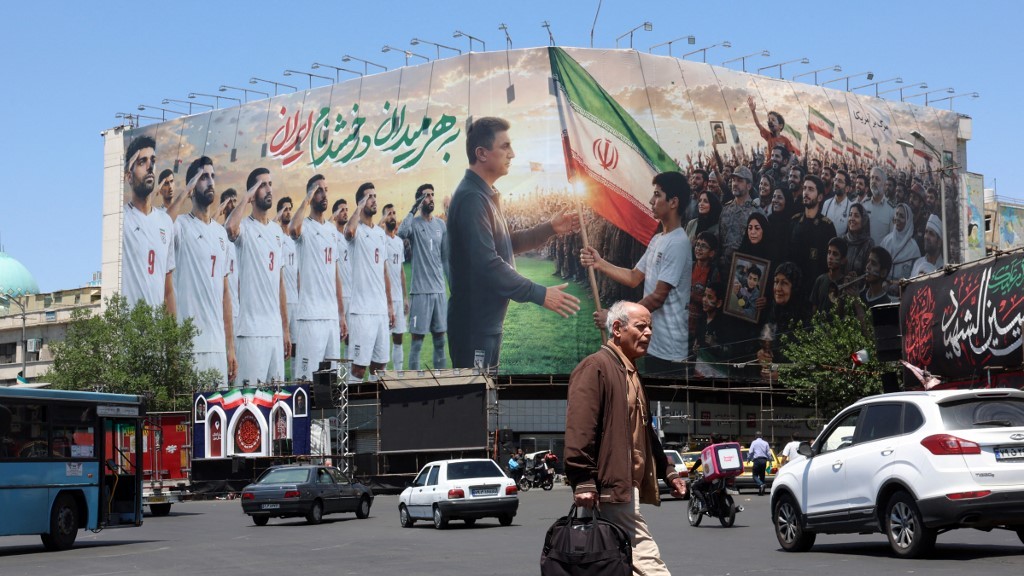
    Iran, the target of the ongoing US-Israeli war that began in early 2026, has faced the harshest barriers to competing in the tournament. Even before the war, Trump pushed FIFA to eject Iran from the World Cup entirely and replace the nation with Italy. After the war began, the US forced Iran to move its pre-tournament training base from Tucson, Arizona to Tijuana, Mexico, just miles from the US border. Just days before the tournament’s opening match, US officials revoked the entire ticket allocation for Iranian fans, leaving thousands who had already booked travel and accommodation stranded. Iranian players only received entry visas 10 days before their first match, while most of the team’s coaching staff, media personnel, and federation leaders – including federation president Mehdi Taj – were barred from entering the US entirely. For Iran’s first two group stage matches, the team was required to enter the US less than 24 hours before kickoff and leave immediately after the final whistle, eliminating critical training time and denying players the chance to rest and recover between matches. Iran’s head coach Amir Ghalenoei has described his side as the ‘most oppressed’ team in World Cup history, saying the US has done everything in its power to wear the team down and force it out of the competition.

    Political interference has extended even to disciplinary decisions for star players and host nation teams. Before the tournament began, FIFA’s disciplinary committee cut a three-match ban for violent conduct against Portuguese superstar Cristiano Ronaldo to a one-game suspension, allowing him to play from the tournament’s opening match – a decision that many viewed as a favor driven by marketing and political pressures. The most blatant example of political meddling, however, involved US striker Folarin Balogun, who received a red card in the US Round of 32 win over Bosnia and Herzegovina, which carried an automatic one-match suspension under FIFA’s official rules. Just days after the decision, Trump personally called Infantino to demand a ‘review’ of the call, claiming the foul had never occurred. FIFA subsequently and quietly lifted the suspension, clearing Balogun to play in the Round of 16 match against Belgium. Trump’s public confirmation that he pressured FIFA to reverse the decision was unprecedented in international football, drawing immediate backlash from fans and governing bodies across the globe. UEFA, the European governing body for football, issued a scathing public statement accusing FIFA of crossing ‘a red line’ by making an ‘incomprehensible and unjustifiable’ decision to cave to political pressure. Despite the favorable ruling, the US team was soundly defeated by Belgium in the match.

    While political interference has dominated headlines, controversial on-pitch officiating, most notably decisions from the Video Assistant Referee (VAR) system, has also sparked widespread anger. One of the most controversial matches of the knockout stage was Argentina’s chaotic 3-2 comeback win over Egypt in the Round of 16. Egypt held a 2-0 lead late in the match and appeared set to advance to the quarter-finals before conceding three late goals, but the result was immediately overshadowed by widespread anger over officiating calls: a legitimate Egyptian goal was ruled out after VAR review, late penalty appeals for Egypt were ignored, and Egyptian officials protested intensely before Argentina’s stoppage-time winning goal. Online, millions of football fans argued that biased officiating had denied Egypt a fair chance to advance, making the match one of the most debated knockout games in modern World Cup history.

    Systemic racism has also emerged as a persistent blight on the tournament, with incidents recorded at stadium entrances, inside venues, online, and at security checkpoints. In the lead-up to the Argentina-Egypt match, a viral video showed an Egyptian fan asking an American security guard if she was only conducting extra pat-down searches of Egyptian fans, to which the guard replied: ‘Yeah, because these are the orders coming in right now.’ Inside the stadium, tensions boiled over after Argentina’s comeback win, with videos showing Argentine fans attacking Egyptian supporters. Other footage showed Argentine fans waving Israeli flags toward Egypt’s coaching staff as they left the pitch – a deliberate provocation, as Egypt head coach Hossam Hassan has been an outspoken advocate for Palestinian people, who have faced a genocidal Israeli military campaign in Gaza since 2023. Hassan dedicated Egypt’s knockout win over Australia to Palestine, telling reporters: ‘I’m dedicating this victory to the Egyptian people and the Palestinian people.’

    Multiple high-profile racist incidents have marred the tournament beyond the Argentina-Egypt match. FIFA is currently investigating a confrontation between popular streamer IShowSpeed, who is Black, and an Argentine fan during a match between Argentina and Cape Verde. During a live stream, the fan reportedly told IShowSpeed to ‘go cry to the zoo’ in a racist slur. In another incident, French star Kylian Mbappé publicly condemned Paraguayan senator Celeste Amarilla after she posted racist remarks about Mbappé following Paraguay’s defeat to France, calling Mbappé a ‘colonised Cameroonian, desperately trying to pass himself off as French’ and a ‘brute’ who could not read or write. FIFA officials acknowledged the growing crisis in a public statement in early July, admitting that ‘racial abuse is growing and has become a persistent threat to the wellbeing of players.’ The governing body confirmed it had identified more than 89,000 abusive posts on social media related to the tournament, 11 percent of which contained explicit racial abuse.

    As the tournament progresses, the controversies continue to overshadow the on-pitch action, leaving fans and analysts questioning the future of football’s most iconic global event amid rising political interference and systemic bias.
  • India finally breaks through in the UK after beating England in ODI at Edgbaston

    India finally breaks through in the UK after beating England in ODI at Edgbaston

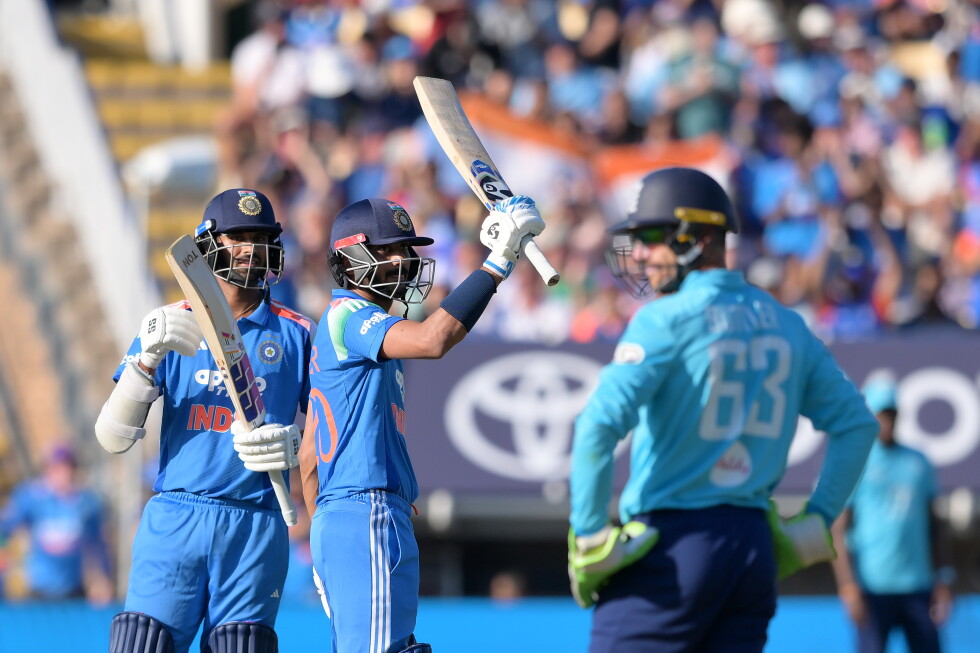
    BIRMINGHAM, England – After a string of demoralizing losses across the opening stages of their UK tour, India has turned their campaign around with a landmark victory, handing England their first one-day international defeat at the Edgbaston ground in 12 years on Tuesday. The result marked India’s first win on the tour, breaking a losing streak that had dragged down the world’s top-ranked T20 side.

  • Kylian Mbappé in for France in World Cup semifinals against Spain after ‘slight’ ankle injury

    Kylian Mbappé in for France in World Cup semifinals against Spain after ‘slight’ ankle injury

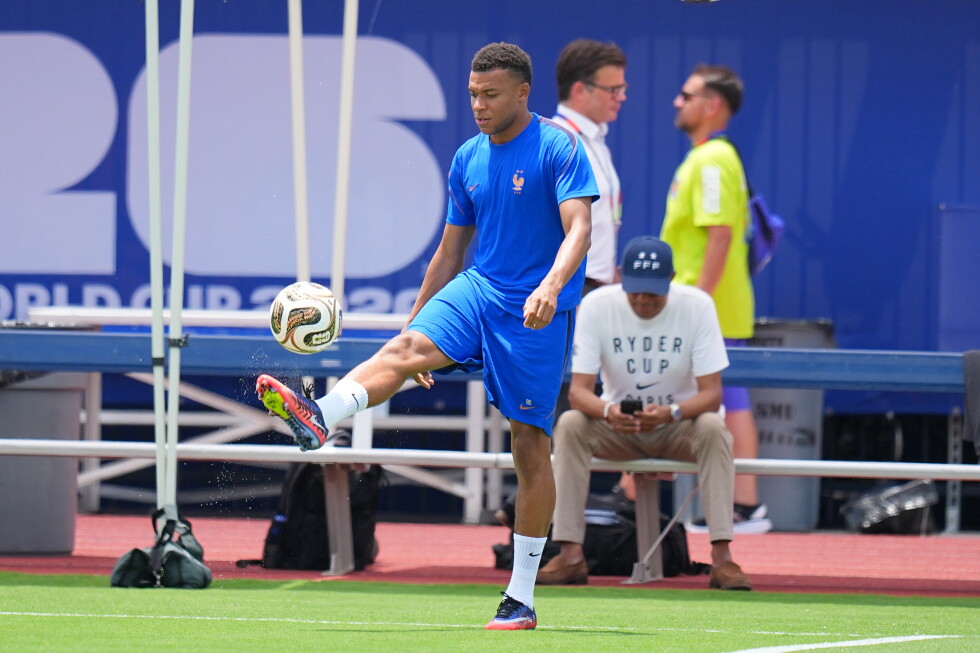
    ARLINGTON, Texas — As anticipation builds ahead of Tuesday’s highly anticipated World Cup semifinal showdown between France and Spain, one of the tournament’s biggest storylines has been resolved: star French striker Kylian Mbappé will feature in Les Bleus’ starting lineup, despite exiting the team’s quarterfinal clash with Morocco early due to a minor right ankle injury.

    Mbappé left the pitch in the 77th minute of France’s quarterfinal victory, but the forward’s fitness has been cleared by head coach Didier Deschamps, who confirmed that the French captain is in full health to lead his side into the semifinal. This start will mark Mbappé’s seventh consecutive opening lineup appearance at this tournament, one of just six French players to start every match for the defending champions.

    The 27-year-old comes into the semifinal locked in a tight race for the tournament’s Golden Boot, having notched eight goals so far — a tally that puts him level with Argentina’s Lionel Messi, the other leading contender for the award. Across his entire World Cup career, Messi holds the all-time record with 21 tournament goals, just one goal ahead of Mbappé’s career total of 20.

    Joining Mbappé in the French starting eleven will be fellow forward Ousmane Dembélé and goalkeeper Mike Maignan, who are also among the six players to have started every one of France’s seven matches leading into this semifinal.

    For Spain, the starting lineup brings both consistency and a notable absence. Teenage sensation Lamine Yamal will make his sixth consecutive start for La Roja, just one day after celebrating his 19th birthday. The Barcelona winger made an early mark on the tournament after coming off the bench in Spain’s opening draw against Cape Verde, a small island nation that pulled off one of the biggest upsets of this World Cup by holding Spain to a 0-0 draw.

    Versatile Arsenal forward Mikel Merino, meanwhile, is set to return to the substitute bench for the sixth time in Spain’s seven matches at the tournament. Merino has become Spain’s unlikely match-winner off the bench in knockout play: the utility player scored late game-winning goals just minutes after entering as a substitute in both the round of 16 1-0 win over Portugal and the 2-1 quarterfinal defeat of Belgium.

    The one key absence for Spain is forward Nico Williams, who has been sidelined by a persistent muscle injury that first emerged during the team’s final group stage match against Uruguay. Williams came off the bench in all three of Spain’s opening group games, then missed the first two knockout matches before making a brief return as a 79th-minute substitute against Belgium, but was not deemed fit enough to earn a spot in the starting lineup for the semifinal.

  • Meet ‘Gus’, the world’s most expensive Tyrannosaurus rex

    Meet ‘Gus’, the world’s most expensive Tyrannosaurus rex

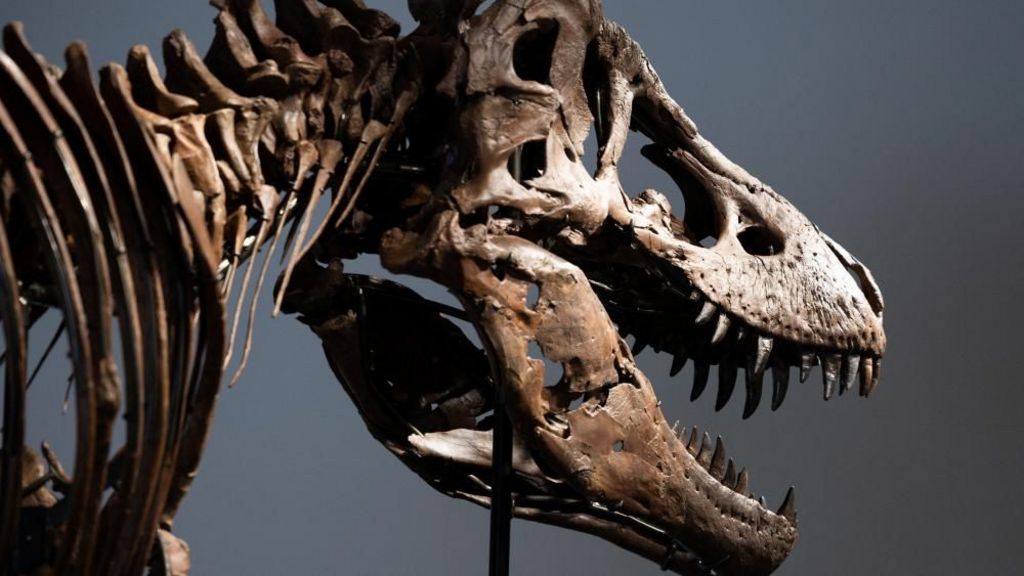
    A remarkable 67-million-year-old Tyrannosaurus rex fossil, nicknamed ‘Gus’, has made history by becoming the most expensive dinosaur fossil ever sold at auction, surpassing a record that stood for less than a full year. The fossil, which preserves rare bone structure from one of the most iconic predators to ever walk the Earth, fetched a final sale price that outstripped the previous high mark set by a well-preserved Stegosaurus specimen auctioned in 2024. Paleontology enthusiasts and private collectors alike have followed the sale closely, as high-profile dinosaur fossil auctions continue to spark conversation about accessibility to important prehistoric specimens. The unprecedented price tag for ‘Gus’ underscores the intense demand among private collectors for one-of-a-kind prehistoric artifacts, a trend that has reshaped the market for rare fossils over the past decade. While the sale confirms the significant cultural and commercial value of iconic dinosaur remains, it also reignites ongoing debate within the scientific community about whether such rare specimens should remain publicly accessible for research rather than entering private collections. Experts note that ‘Gus’ offers valuable insights into the biology and evolution of Tyrannosaurus rex, one of the most studied yet still poorly understood apex predators of the Cretaceous period. The new record set by this sale signals a continuing shift in the global fossil market, where rare, charismatic specimens draw increasingly high bids from wealthy collectors around the world.

  • Who is the referee for the World Cup semifinal between France and Spain?

    Who is the referee for the World Cup semifinal between France and Spain?

    The official officiating crew for the first 2024 FIFA World Cup semifinal has been confirmed, with 35-year-old Salvadoran referee Ivan Barton set to take charge of the high-stakes match between France and Spain on Tuesday. This assignment marks Barton’s fourth officiating appointment at this year’s tournament, bringing his experience at the global event to one of its biggest stages.

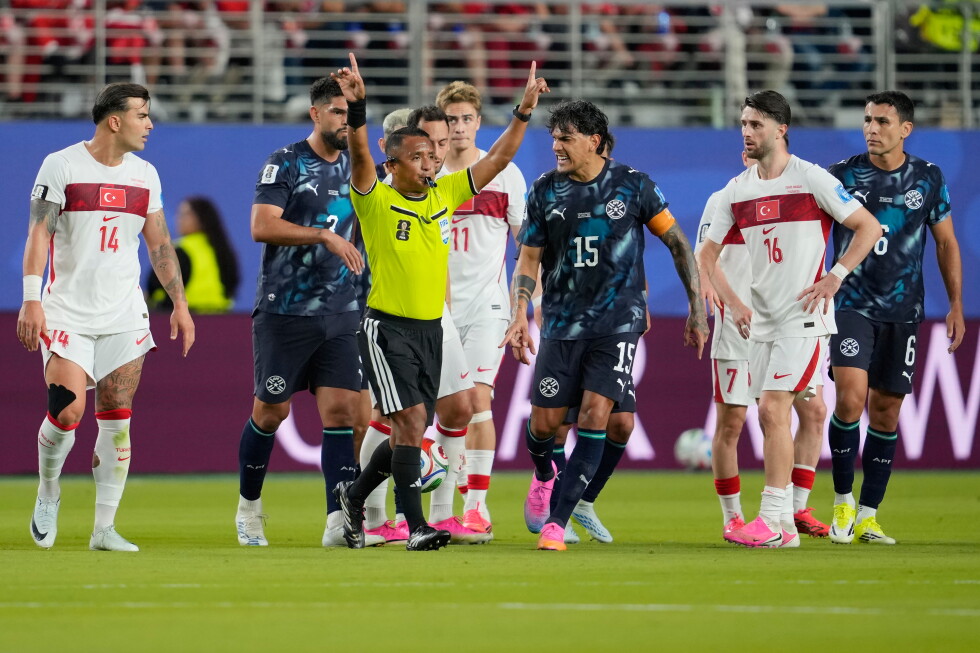
    Throughout the current World Cup, Barton has already overseen three prior matches, with the most widely discussed incident coming during a group-stage clash between Turkey and Paraguay. In that contest, Paraguay star Miguel Almiron was shown a red card and sent off after covering his mouth amid an on-field confrontation with other players. To date, that ejection remains the only red card Barton has issued across his three matches at the tournament. His other previous World Cup assignments this year include group-stage fixtures between Japan and Sweden, and Switzerland and Colombia, giving him familiarity with the pace and physicality of top international competition ahead of the semifinal.

    Alongside Barton, the full match official team has also been finalized. David Moran of El Salvador and Antonio Pupiro of Nicaragua will serve as Barton’s assistant referees, while Sweden’s Glenn Nyberg has been named the fourth official for the fixture. The video assistant referee (VAR) team will be led by Poland’s Tomasz Kwiatkowski, with support from Dennis Higler of the Netherlands and Guillermo Pacheco of Mexico.

    The France-Spain semifinal, the first of two final-four matches scheduled at this year’s World Cup, will be hosted at AT&T Stadium, the home ground of the National Football League’s Dallas Cowboys. The second semifinal will follow a day later on Wednesday, when England face off against Argentina in Atlanta at the venue originally announced for the fixture.

  • Trump pays writer E Jean Carroll $5m in damages over sexual abuse and defamation

    Trump pays writer E Jean Carroll $5m in damages over sexual abuse and defamation

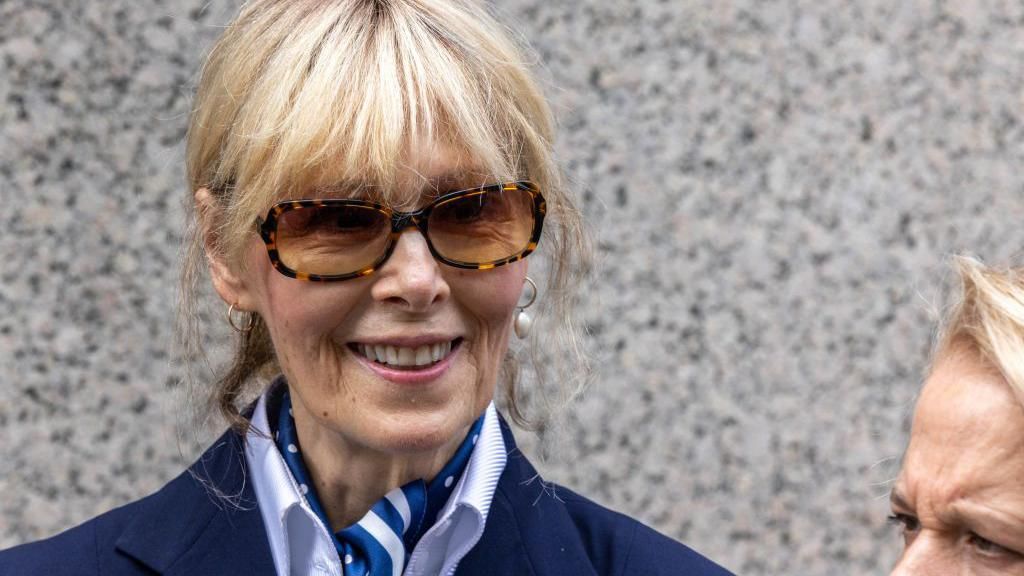
    Three years after a U.S. civil court found former President Donald Trump legally liable for the sexual abuse and defamation of writer E. Jean Carroll, Carroll’s legal team has confirmed that the full awarded damages plus accrued interest, totaling more than $5.62 million, have been successfully transferred to Carroll.

    In a brief public statement released Tuesday, Roberta Kaplan, lead counsel for Carroll, confirmed that the long-awaited payment aligned with the damages grant originally handed down by the jury. The resolution comes after a drawn-out series of appeals and efforts by Trump’s legal team to delay the disbursement, which concluded only after a court order forced the payout last week. A spokesperson for Trump’s legal camp declined to issue any on-the-record comment about the completed transfer.

    The case at the center of the payment dates back to the mid-1990s, when Carroll, now an 82-year-old former magazine columnist, alleged that Trump sexually assaulted her inside a fitting room at the luxury Bergdorf Goodman department store in Manhattan. Years later, Carroll filed her civil suit after Trump issued a categorical denial of her claims on his Truth Social platform in 2022, which she argued amounted to defamation.

    In 2023, a jury seated in New York reached a unanimous verdict upholding Carroll’s claims and ordered Trump to pay $5 million in compensatory and punitive damages. Immediately after the ruling, Trump deposited the awarded sum into a court-managed holding account, where it remained frozen through the multi-year appeals process.

    Trump and his legal team have repeatedly denounced the entire proceedings as a politically motivated “hoax” and “witch hunt”, claiming the case was improperly financed by Democratic political opponents. They have also argued that presiding Judge Lewis Kaplan improperly allowed evidence that biased the jury against their client, creating unfair prejudice. These legal challenges were rejected repeatedly by higher courts: a federal appeals court upheld the jury’s original verdict last year, finding that Kaplan had not committed legal errors that would justify overturning the ruling or ordering a new trial. Last month, the U.S. Supreme Court declined to take up Trump’s appeal, removing the final legal barrier to the release of funds to Carroll.

    Following the Supreme Court’s decision, Carroll celebrated the outcome in a post on her Substack blog, writing: “WE WON!” and adding, “THIS WIN IS FOR EVERY WOMAN IN THE WORLD!”

    This is not the only outstanding legal defeat for Trump related to his interactions with Carroll. In a separate 2024 defamation case brought by Carroll, a second jury found Trump liable and awarded Carroll nearly $84 million in additional damages. Trump has appealed that ruling as well, but a panel of federal judges has already rejected his challenge to that verdict.

  • Trump scraps threat of 20% fee on Hormuz cargo as US prepares to resume blockade of Iran ports

    Trump scraps threat of 20% fee on Hormuz cargo as US prepares to resume blockade of Iran ports

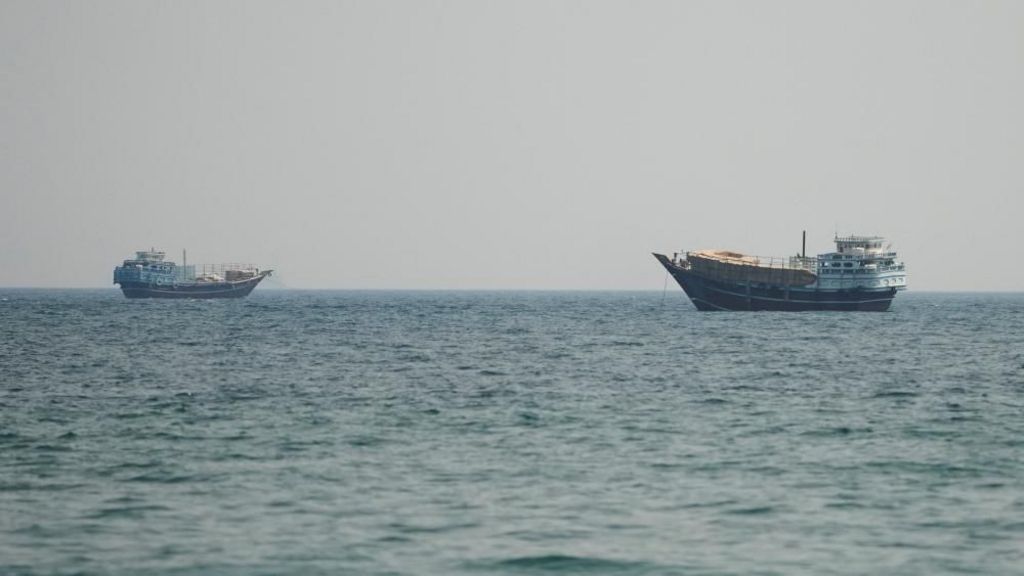
    Escalating military clashes between the United States and Iran have thrown global energy supplies into chaos, forcing a sudden reversal of one of the Trump administration’s most controversial recent policy proposals. Just hours before a renewed US naval blockade of Iranian ports was set to go into effect, President Donald Trump announced he was abandoning his plan to impose a 20% fee on all commercial cargo passing through the strategically critical Strait of Hormuz. Instead, he says, the cost of US security operations in the waterway will be covered by large-scale trade and investment agreements with Gulf Cooperation Council nations. The sudden shift came amid rapidly intensifying cross-border strikes that have virtually halted tanker traffic through the chokepoint, driving international oil prices sharply higher and sending shockwaves through global energy markets.

  • US strikes hit Iran for a third night killing three people

    US strikes hit Iran for a third night killing three people

    Escalating tensions between the United States and Iran entered a sharper new phase this week, as Washington launched its third straight overnight wave of airstrikes on Iranian targets that has left at least three people dead, followed by a sweeping announcement of new economic and security measures targeting the strategic Strait of Hormuz.

    Shortly after confirming its forces had completed the latest round of strikes on Tuesday, the US Department of Defense released combat footage documenting the attacks, bringing a new level of visibility to the expanding military campaign that resumed earlier this year. In a public statement issued Tuesday afternoon, former US President Donald Trump announced that Washington would reimpose a full blockade on Iranian commercial shipping moving through the Persian Gulf.
    Trump asserted that the Strait of Hormuz — one of the world’s most critical chokepoints for global oil trade, through which roughly 20% of the world’s daily oil consumption passes — would remain open to international shipping regardless of Iran’s objections. As part of the new security framework, he added, the US would impose transit fees on all commercial vessels passing through the waterway, including a 20% surcharge designed to cover all costs associated with providing security for transiting ships.

    This sharp escalation of military and economic pressure comes despite intermittent diplomatic talks aimed at de-escalating the conflict, which the US formally resumed in February. The renewed strikes mark a clear breakdown in these tentative negotiations. Last week, Trump formally notified Congress of the resumption of hostilities, granting the Pentagon a 60-day extension to conduct military operations in the region without explicit congressional approval.
    Beyond the Gulf shipping measures, Trump has also issued an explicit threat to destroy Pickaxe Mountain, a deeply buried underground facility near Iran’s Natanz nuclear complex. Western intelligence agencies have long alleged that the site is being developed to house an undeclared nuclear enrichment program, a claim Iran has repeatedly denied.

    On Tuesday, Iran’s state-owned media reported that five separate explosions were heard west of Bandar Abbas, Iran’s key port city located along the edge of the Strait of Hormuz. The state broadcaster did not release additional details on casualties or damage from the blasts.
    In a post on the social platform X, Ebrahim Azizi, head of the Iranian Parliament’s National Security Committee, confirmed that Tehran had introduced a new draft bill aimed at cementing the country’s control over waterway security. Azizi noted that the legislation — titled the Strategic Action for the Security and Sustainable Progress of the Strait of Hormuz and the Persian Gulf — was formally introduced to parliament overnight, coinciding with Iran’s reported downing of multiple US drones operating in Iranian airspace. He emphasized that Tehran remains unwavering in its commitment to defending its national red lines, particularly when it comes to sovereignty and management of the strategic waterway.

    The escalating cross-region tensions have also drawn in neighboring Gulf states. Bahrain’s defense forces announced earlier this week that they had intercepted multiple Iranian drone and missile attacks targeting the kingdom on Sunday, accusing Tehran of waging a deliberate campaign of aggression against Bahraini territory. In an official statement, the Bahrain Defence Force said the Iranian attacks targeted civilian areas and private infrastructure, arguing that “the deliberate use of missiles and drones to target civilians and private property constitutes a flagrant violation of international humanitarian law.” Bahraini authorities have urged local residents to remain vigilant and avoid any suspicious objects in the wake of the attacks.

  • German man, 68, charged over alleged serial rapes of drugged women

    German man, 68, charged over alleged serial rapes of drugged women

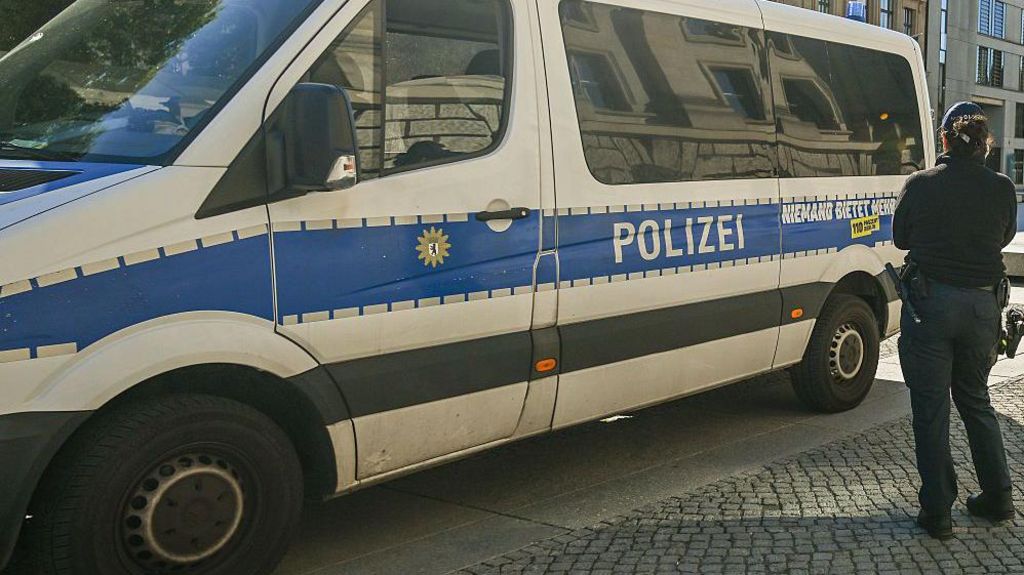
    A shocking case of serial sexual violence has unfolded in Germany, where Berlin prosecutors have formally charged a 68-year-old man with drugging and raping 14 women he connected with through online dating platforms — and recorded the attacks on his personal devices. Prosecutors confirmed the defendant faces 22 counts of aggravated rape connected to the 14 identified victims, though investigators suspect he carried out non-consensual sexual acts against a total of 58 women over more than a decade of criminal activity.

    The investigation into the man traces back to March 2025, when his profile appeared in chat logs linked to another sexual offender already under police surveillance following an anonymous tip. That co-person of interest has since died, but authorities moved quickly to search the 68-year-old’s Berlin residence last year. It was not until several months after the raid, however, that a forensic digital specialist uncovered graphic video footage of the assaults stored on devices seized from the home, which confirmed the suspected offenses.

    Since March 2026, the accused has been held in pre-trial detention, and he has thus far declined to make any public statement regarding the allegations against his person. The case file has now been passed to Berlin’s court system, which will schedule procedural hearings to determine whether a full public trial will proceed.

    According to official case details, the suspect’s alleged pattern of abuse followed a consistent template: he would first build contact with women via online dating platforms, then invite them to meet in person before lacing their drinks with a combination of sedative drugs and alcohol. Disturbingly, none of the 14 victims connected to the pending charges have any memory of being assaulted; they only learned of the attacks when investigators showed them the recovered video footage.

    To date, law enforcement has successfully identified 30 of the 58 women captured in the suspect’s video records, while 10 others remain unaccounted for, with efforts to confirm their identities ongoing.

    This high-profile case comes less than a week after another related sexual violence conviction made headlines in Berlin. A 32-year-old doctor of Chinese origin was sentenced to five years in prison on charges of aggravated rape, after the regional court found he was a member of an online chat group that shared tactics for raping unconscious, sedated women, and repeatedly distributed advice to other group members on carrying out these attacks. In that ruling, the presiding judge drew attention to a disturbing modern shift in sexual offending, noting that “sexual offences are no longer committed silently and in secret, but are publicly shared on the internet and applauded.”

    In the current case against the 68-year-old, prosecutors were forced to drop 36 counts of alleged rape connected to one victim that occurred between 2010 and 2014, due to Germany’s existing five-year statute of limitations for most rape offenses. The 22 counts that do proceed fall under the 20-year statute of limitations for aggravated rape involving the use of force.

    The limitations of current German law exposed by this case have given new momentum to long-debated legal reforms pushed by the country’s Justice Ministry. Just last month, Federal Justice Minister Stefanie Hubig announced her support for extending the general statute of limitations for rape from five years to 20 years. Hubig has also put forward draft legislation that would create a mandatory minimum five-year prison sentence for anyone convicted of using so-called “date-rape drugs” to commit rape or robbery.

    The proposed reform comes in response to a 2024 ruling from Germany’s highest court, which found that date-rape drugs added to a victim’s drink did not qualify as “dangerous items” under the current legal definition for sexual assault cases. That ruling effectively capped the mandatory minimum sentence for these offenses at three years. Under the government’s draft amendment, all dangerous substances and items used during the commission of a sexual offense or robbery will be reclassified alongside traditional weapons and dangerous implements, closing the legal loophole exposed by the high court’s decision.