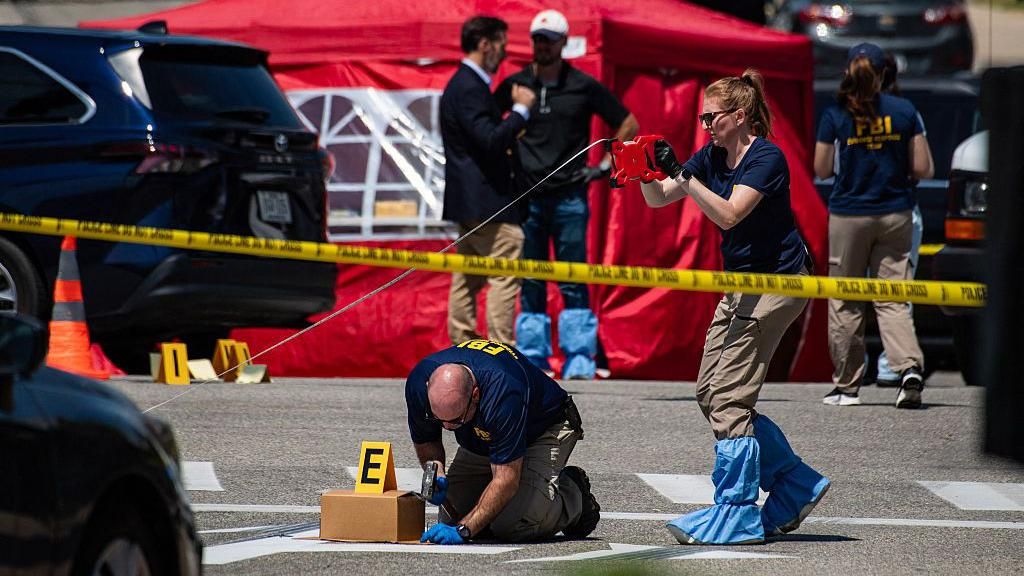
U.S. Immigration and Customs Enforcement (ICE) has issued an urgent directive ordering its agents to pause nearly all routine vehicle stops across the country, a sweeping policy change triggered by two recent fatal shootings of immigrants by agency personnel in Texas and Maine that have reignited widespread anger over the agency’s use of force. Multiple U.S. media outlets, citing anonymous law enforcement sources, confirmed that the suspension only excludes stops targeting individuals linked to serious criminal activity.
This policy shift comes as ICE has faced mounting scrutiny over the last year, with repeated accusations of excessive force and growing public and political backlash over multiple deaths that have occurred during the agency’s immigration enforcement operations. The BBC has formally reached out to the U.S. Department of Homeland Security (DHS), ICE’s parent agency, to request official comment on the new suspension order.
The most recent deadly incident unfolded in Biddeford, Maine, roughly 15 miles south of Portland, where an ICE agent shot and killed a 26-year-old Colombian national during a routine enforcement operation. DHS officials have claimed the officer opened fire “fearing for public safety” after the man attempted to drive away from the scene when agents tried to stop his vehicle, but the department has offered no specific details about what threat the man was alleged to pose.
Immigration advocates have pushed back on the official account, confirming that the man — who has not yet been formally identified publicly — held valid work authorization in the U.S. and had a Social Security number. In a joint statement condemning the killing, the Maine Immigrants’ Rights Coalition and Presente! Maine called the death “devastating, enraging, and unacceptable.”
Less than one week before the Maine shooting, a second fatal incident left 52-year-old Lorenzo Salgado Araujo, a Mexican national who had lived in the U.S. for decades, dead after an ICE officer shot him during a morning stop in Houston, Texas. Araujo was shot while driving to his job at approximately 7 a.m. local time. DHS later clarified that agents initiated the stop after mistaking Araujo for a target in an ongoing operation, claiming the officer acted in self-defense during the encounter. However, witnesses who were passengers in Araujo’s van and the victim’s family have directly disputed DHS’s version of events, and the agency’s independent watchdog has launched a formal investigation into the killing.
Protests have broken out across the country in response to both of the latest fatal shootings. The two deaths are not isolated incidents: earlier this year, nationwide protests erupted after two U.S. citizens, 37-year-old Renée Good and 37-year-old Alex Pretti, were shot and killed by ICE agents during January raids in Minneapolis, Minnesota. Since January 2025, at least seven people have been killed during ICE enforcement operations, according to reporting from Reuters.
The growing backlash over these deaths has already triggered leadership changes at the top of DHS. After returning to the White House, U.S. President Donald Trump — who fulfilled a core campaign promise by launching a large-scale mass deportation campaign shortly after taking office — replaced former DHS Secretary Kristi Noem with U.S. Senator Markwayne Mullin of Oklahoma. Former Border Patrol Chief Gregory Bovino was also removed from his post not long after the leadership shakeup at the agency.