博客

  • Relationship and cooperation with China highly valued, Soloman Islands FM says

    Relationship and cooperation with China highly valued, Soloman Islands FM says

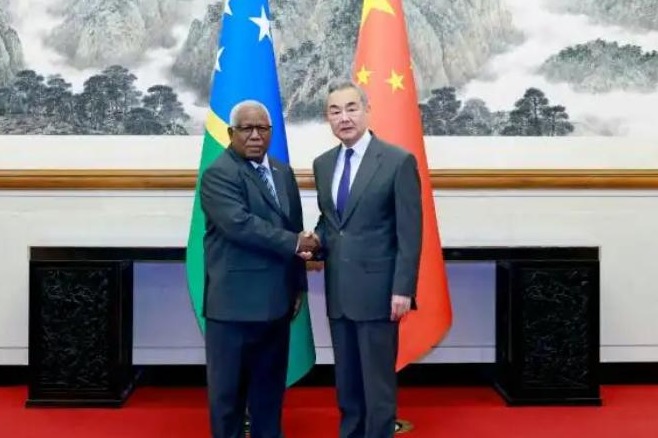
    In a high-level diplomatic meeting held in Beijing on Tuesday, top Chinese diplomat Wang Yi and Solomon Islands Foreign Minister and External Trade Minister Rick Houenipwela convened to discuss deepening bilateral cooperation, reaffirm shared political commitments, and push back against outside interference in the Pacific island nation’s sovereign foreign policy choices.

    During the talks, Wang Yi emphasized that China pursues no hidden geopolitical agendas in its engagement with Pacific island nations, nor does it seek to carve out any sphere of influence in the region. He stressed that Beijing’s partnership with Pacific island states is rooted in the principles of South-South cooperation, centered on driving inclusive mutual development rather than advancing unilateral interests.

    Noting that all Pacific island countries are fully sovereign independent states that do not belong to any major power’s “backyard”, Wang underscored that these nations hold the unconditional right to independently select their own development partners, and that China-Solomon Islands relations should remain free of interference from third-party actors.

    China’s collaboration with the Solomon Islands adheres to three core principles: it comes with no attached political conditions, is never forced upon the Pacific nation, and is backed by tangible action rather than empty pledges, Wang added. Looking ahead, he said China stands ready to align national development strategies with the Solomon Islands, advance high-quality cooperation under the Belt and Road Initiative, expand practical collaboration in priority sectors including green energy, and deepen people-to-people ties across education, public health, and youth exchanges.

    Bilateral diplomatic relations between China and the Solomon Islands were established in 2019, after the country cut its unofficial diplomatic ties with the Taiwan region of China. Wang expressed China’s appreciation for the new Solomon Islands government’s repeated reaffirmation of its unwavering commitment to the one-China principle, noting that this shared commitment solidifies the political foundation of bilateral ties and creates a stable enabling environment for expanding cooperation.

    For his part, Houenipwela echoed the importance of the bilateral relationship, expressing profound gratitude for China’s long-running support for the Solomon Islands’ social and economic development. He pointed out that China is currently the Solomon Islands’ largest trading partner, and the two countries have signed dozens of memorandums of understanding covering a wide range of cooperation areas. The Solomon Islands is eager to grow bilateral trade and investment ties and deepen on-the-ground practical cooperation with China, he added, noting that the country also intends to take an active role in advancing broader cooperation between China and the wider Pacific island region.

  • Church of England votes to hear Palestinian Christians on Israeli genocide in Gaza

    Church of England votes to hear Palestinian Christians on Israeli genocide in Gaza

    In a landmark decision that breaks with longstanding norms in Western religious discourse, the Church of England’s legislative body, the General Synod, has voted to advance a motion calling on English congregations and church institutions to listen directly to the experiences of Palestinian Christians, overriding fierce opposition from pro-Israel groups that sought to block consideration of the community’s claims about Israeli “settler colonialism” and an “apartheid system”.

    The approved motion, amended during Monday’s deliberations, centers on engagement with testimonies compiled by Kairos Palestine, a Palestinian Christian grassroots movement. The revised text swapped the original word “receive” for “hear”, explicitly clarifying that the church does not require its members or institutions to endorse every claim laid out in the group’s latest document, Kairos II. The motion frames the text as a sincere reflection of the lived trauma of Palestinian Christians under occupation, and calls on the global Anglican community to stand in solidarity with Palestinians engaged in nonviolent resistance to Israeli occupation. It also explicitly condemns antisemitism, anti-Muslim bigotry, and all other forms of religious and ethnic prejudice.

    Formally titled *A Moment of Truth: Faith in a Time of Genocide*, Kairos II was published in November by Palestinian Christian clergy and lay leaders, drafted in direct response to Israel’s military campaign in Gaza, escalating settler violence and forced displacement across the occupied West Bank. The document labels Israel a colonial project waging a genocidal war on Gaza, and calls for global grassroots action including boycott, divestment and sanctions (BDS) campaigns to pressure the Israeli government. It also rejects Christian Zionism as a theological framework rooted in racism, colonialism, and ethnic supremacy, stating that any just resolution requires dismantling the settler colonial structure and apartheid system enshrined in Israel’s Nation-State Law, which enshrines Jewish supremacy.

    The framing used in Kairos II aligns with findings from multiple prominent independent and international bodies: a United Nations commission of inquiry, global human rights group Amnesty International, and leading Israeli human rights organization B’Tselem have all concluded that Israel is committing genocide in Gaza and carrying out ethnic cleansing in the occupied West Bank.

    The Archbishop of Canterbury, Sarah Mullally, who publicly backed the motion following a fact-finding visit to the region in June, addressed the Synod to emphasize the urgency of listening to Palestinian voices. “The fear was palpable among everyone we met, Palestinian and Israeli. From Gaza to the north of Israel, from southern Lebanon to the West Bank, people across the region are traumatized by ongoing conflicts,” she said. Noting that the Kairos II document directly mirrors the pain and suffering of the Palestinian people, Mullally argued that the church has a moral obligation to hold difficult conversations and cross deep divides to engage with lived experience. “I am a pastor, not a politician. When I say the Palestinian people deserve their freedom, that is not a political statement, but a moral and spiritual one,” she added. “Put simply, Palestine, which the British government recognised last year, is disappearing.”

    For Palestinian Christian leaders, the vote marks a historic break from decades of Western religious institutions sidelining Palestinian Christian voices in conversations about the Middle East conflict. Munther Isaac, a prominent Palestinian Christian pastor based in the occupied West Bank, called the decision “a very positive sign and an important step forward” in an interview with Middle East Eye. “Kairos Palestine does speak of genocide, but it is hardly alone in doing so. We should not forget the many credible, extensive, and detailed reports that have reached the same conclusion or raised the gravest concerns about genocide in Gaza,” he said. “In this regard, the Church is simply being true to its calling: to engage seriously with what is happening in the world, with what its own members are wrestling with and speaking about, and with what its Palestinian Christian siblings are calling for.”

    The Synod’s vote drew immediate and fierce pushback from pro-Israel groups and leaders across the United Kingdom. Phil Rosenberg, president of the Board of Deputies of British Jews, called the motion “highly problematic”, claiming Kairos II contains “falsehoods and distortions”. Chief Rabbi Ephraim Mirvis described the decision as “shameful” and “a sad day for Jewish-Christian relations”. Isaac noted that the backlash was predictable, but criticized opponents for focusing on the language of the document rather than the atrocities that prompted its creation. “But it is shameful that they seem more concerned about the Church receiving and engaging with a document from Palestinian Christians than they are about the crimes and genocide itself. It is also very telling how easily they dismiss the entire question of genocide, despite the overwhelming body of credible reports and evidence,” he said.

    The pushback comes amid a documented rise in attacks on Christian communities and property across Israel and occupied Palestinian territories. The Rossing Centre for Education and Dialogue recorded 155 separate anti-Christian incidents in 2025 alone, including 61 physical assaults, 52 attacks on church infrastructure, 28 cases of harassment, and 14 incidents of vandalism. The centre warns that the recorded figures represent only the “tip of the iceberg”, with many incidents going unreported. Violence targeting Christian sites has also extended beyond Palestinian territories: Israeli forces in southern Lebanon have damaged church buildings, bulldozed part of a Catholic convent, and released footage of soldiers desecrating religious statues of Jesus and the Virgin Mary.

    Isaac called on global church leaders to follow the Church of England’s lead, and to amplify the growing number of Jewish voices that oppose the war in Gaza and criticize Israeli policies. “It is long overdue for church leaders around the world to listen more carefully to the growing number of Jewish voices who oppose the genocide and speak critically of Zionism and the State of Israel. These are important voices for genuine dialogue today,” he said. Addressing the common claim that criticism of Israel amounts to antisemitism, Isaac added: “Criticism of Israel must not be confused with antisemitism. Yet this remains a repeated tactic among some of those who opposed the vote, and I believe people are increasingly fed up with attempts to equate criticism of Israel with antisemitism. Such accusations should not be used to silence legitimate moral, theological and political criticism.”

  • Starmer becomes first UK PM to receive top French honour

    Starmer becomes first UK PM to receive top French honour

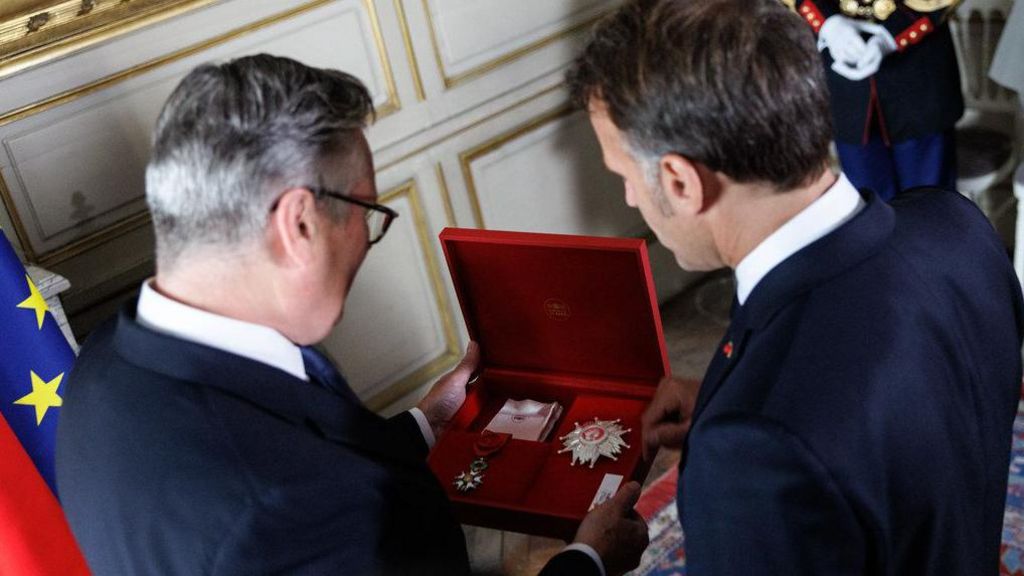
    In a landmark diplomatic moment held at the Élysée Palace, UK Prime Minister Sir Keir Starmer has entered the history books as the first sitting British prime minister to receive France’s highest civilian and military distinction, the Legion d’honneur. The prestigious award was presented at the conclusion of a gathering of the Coalition of the Willing, a coalition of pro-Ukraine nations co-founded by Starmer and French President Emmanuel Macron shortly after Russia launched its full-scale invasion of Ukraine in 2022.

    During the presentation ceremony, Macron offered glowing remarks that celebrated both Starmer’s personal character and his far-reaching contributions to continental and global security. He underscored his gratitude, as well as the gratitude of the French people, for Starmer’s years of service in office, noting that “all the human qualities that we learn to appreciate, all those remain very important to all of us. We found with you a very reliable and friendly partner.” Macron specifically highlighted Starmer’s unwavering commitments to the United Kingdom, European collective security, Ukraine’s sovereignty, and the strengthening of Franco-British bilateral ties.

    The honor drew tributes from leading global figures who have stood alongside the coalition in supporting Ukraine. Ukrainian President Volodymyr Zelensky was among those who honored Starmer, who is set to step down from the post of prime minister next week. German Chancellor Friedrich Merz also joined in offering public thanks to the outgoing UK leader for his work at the event.

    Established by Napoleon Bonaparte in 1802, the Legion d’honneur is awarded annually to roughly 2,000 French citizens and 200 foreign nationals in recognition of exceptional merit and service to the nation or broader global community. Past recipients span the spectrum of global leadership: British wartime Prime Minister Sir Winston Churchill received the order’s highest rank, Grand Croix, a distinction reserved for individuals with decades of outstanding contribution. Other prominent figures to hold the honor include former South African President Nelson Mandela, former U.S. President Dwight D. Eisenhower, and current Ukrainian President Volodymyr Zelensky himself.

    Despite its status as one of the world’s most recognizable state honors, the Legion d’honneur has long been mired in controversy, due to its past bestowal on a number of authoritarian and controversial leaders. Recipients have included Russian President Vladimir Putin, former Libyan leader Muammar Gaddafi, Italian wartime fascist dictator Benito Mussolini, and Spanish dictator Francisco Franco. To date, only one foreign leader has been stripped of the honor: former Panamanian President Manuel Noriega. Under Macron’s presidency, disgraced Hollywood producer Harvey Weinstein also had the decoration revoked following multiple public accusations of sexual harassment and rape.

  • Over 800 UK medical workers urge government to act to save Dr Abu Safiya

    Over 800 UK medical workers urge government to act to save Dr Abu Safiya

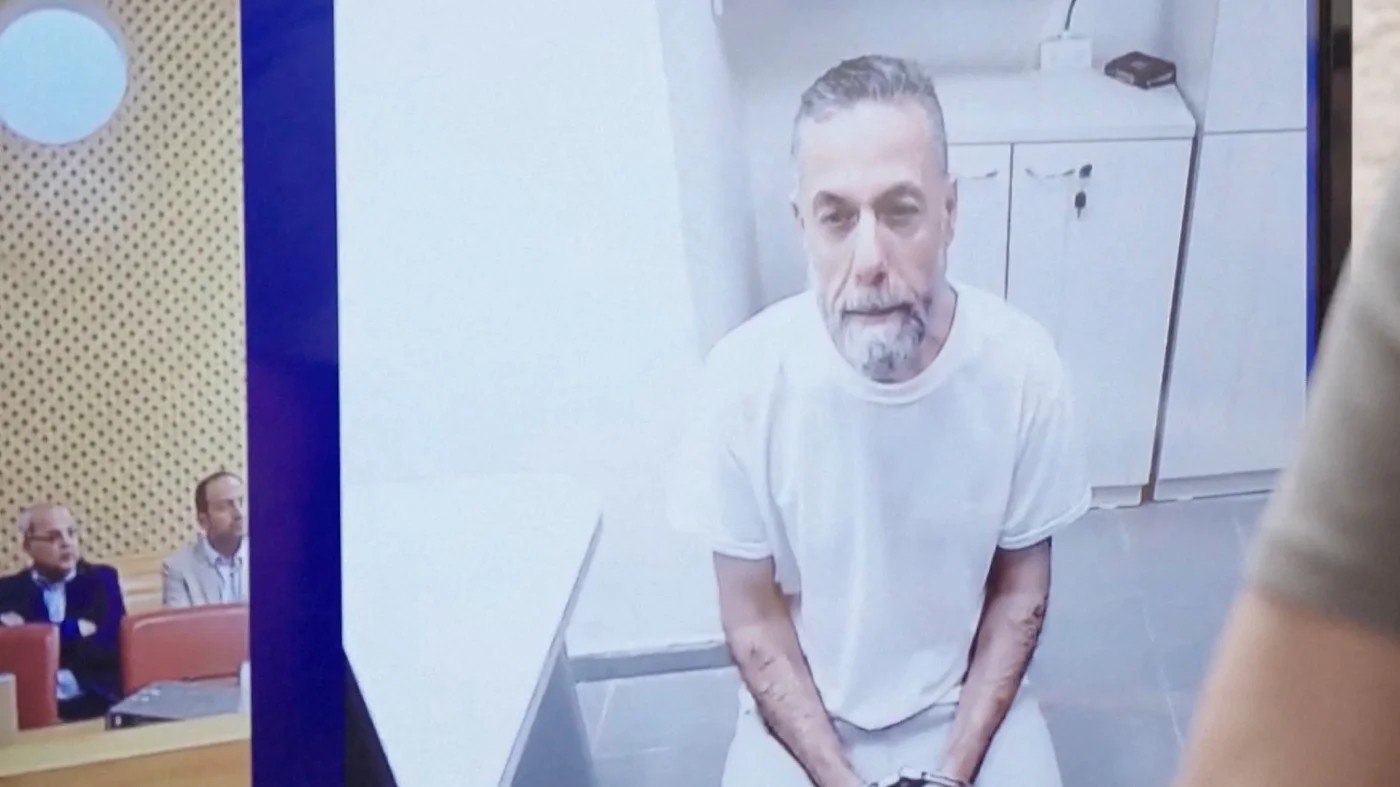
    A coalition of more than 800 doctors, nurses, and medical professionals across the United Kingdom has signed an open letter demanding urgent action from Foreign Secretary Yvette Cooper to free Dr. Hussam Abu Safiya, a prominent Palestinian paediatrician whose life is in imminent danger after more than 550 days of Israeli captivity.

    Dr. Abu Safiya served as the director of Gaza’s Kamal Adwan Hospital, and rose to global attention during Israel’s military campaign in Gaza for his unwavering commitment to treating civilian victims of the conflict. When Israeli forces designated northern Gaza a combat zone and ordered all medical personnel to evacuate Kamal Adwan, the last fully functioning hospital in the region, he repeatedly refused to abandon his patients. Before Israeli troops stormed the facility, he documented near-daily attacks on the hospital in dozens of public videos and issued urgent pleas to the international community to intervene to stop the bombardment. During the raid on Kamal Adwan, Israeli forces detained 44 hospital staff, and a drone strike killed Dr. Abu Safiya’s son, Ibrahim. He himself was seized by Israeli forces on 27 December 2024, and has been held without charge or trial ever since.

    The open letter, organized jointly by Amnesty International UK and NHS advocacy group Health Workers 4 Palestine, calls on Cooper to issue a clear, public demand for Dr. Abu Safiya’s immediate release and deploy every economic, political, and diplomatic tool at the UK government’s disposal to secure his freedom. It draws on first-hand testimony from a visit by a lawyer with Physicians for Human Rights Israel (PHRI) to Dr. Abu Safiya’s detention site on 2 July, which revealed severe bruising and torture marks covering the doctor’s head and body. The practitioner has been left severely weakened and is barely recognizable to visitors.

    PHRI’s additional reporting confirms that since his transfer to the Rakevet underground detention wing within Israel’s Ayalon Prison complex in Ramla, Dr. Abu Safiya has been subjected to daily beatings. He has been held in solitary confinement since last month, and has been repeatedly denied access to necessary medical care, despite living with multiple chronic health conditions. In a devastating message relayed through his lawyer, Dr. Abu Safiya warned, “This is the last time you’ll see me… they brought me here to kill me.”

    His son Elias has echoed this warning in an emotional public appeal, urging governments, global humanitarian bodies, and people across the world to intervene immediately to save his father’s life. “The world’s silence today could mean the loss of an innocent human life,” he said, noting his father is “living through critical moments between life and death.”

    Kerry Moscogiuri, chief executive of Amnesty International UK, called out the injustice of Dr. Abu Safiya’s detention, saying he has been tortured to the edge of death solely for refusing to leave his patients behind. “The UK government must act now, publicly and forcefully, to secure his immediate release – before it’s too late,” Moscogiuri said.

    Amira Nimerawi, CEO of Health Workers 4 Palestine, accused the British government of enabling what she called Dr. Abu Safiya’s slow death in Israeli custody by refusing to exercise political will to advocate for him and hundreds of other detained Palestinian health workers. “This is not an accident. It is the result of a system of detention designed to break him,” Nimerawi said.

    Signatories to the letter emphasize that Dr. Abu Safiya’s arbitrary detention and abuse is not an isolated incident. They note that since October 2023, more than 400 other Gaza-based healthcare workers have been arbitrarily detained by Israeli forces, and more than 1,700 have been killed – an average of two to three deaths per day before the October 2025 ceasefire. UN experts have labeled this systematic targeting of medical personnel “medicide.” A UN report confirms Israeli forces have damaged or destroyed every hospital in Gaza, driving the enclave’s entire healthcare system to the brink of total collapse as part of a consistent pattern of attacks. The letter argues that under international law, healthcare workers and medical facilities are protected, and this routine targeting has deliberately inflated civilian casualties. When considered alongside Israel’s broader military actions in Gaza, the signatories say these attacks constitute evidence of genocidal intent.

    Beyond the immediate call for Dr. Abu Safiya’s release, UK medical workers are urging the British government to pursue accountability for all arbitrary detentions and killings of Palestinian healthcare workers, including supporting ongoing investigations by the International Criminal Court and the International Court of Justice.

    Dr. Ghassan Abu Sittah, a professor of Conflict Medicine and a signatory to the letter, told Middle East Eye that the continued detention of Dr. Abu Safiya makes clear that the destruction of Gaza’s healthcare system was never a side effect of the war – it was a core component of the genocidal campaign, and remains so today. Dr. Omar Abdel Mannan, an NHS paediatrician with 15 years of clinical experience in the UK and another signatory, added that a doctor who refused to abandon sick children is now being tortured to death while held without trial. “The foreign secretary has the power to act – she must publicly demand Dr Abu Safiya’s immediate release and back it with sanctions on Israel. Every day she doesn’t, his life hangs in the balance,” he said.

    International calls for Dr. Abu Safiya’s release have grown exponentially since news of his deteriorating condition broke. Multiple protests have been held across the UK, including a large rally outside Downing Street where hundreds of human rights activists, medical workers, and political figures gathered to pressure the British government to intervene. A group of UN experts has also called for his immediate release, noting he was detained illegally under Israel’s Unlawful Combatants Law – a statute UN experts have long held violates international humanitarian and human rights law. On 16 June, Israel’s Supreme Court rejected Dr. Abu Safiya’s appeal against his detention, extending his detention without charge through at least October 2026. To date, the British Foreign and Commonwealth Office has not responded to requests for comment from Middle East Eye.
  • Brazil registered zero direct oil exports to Israel in 2025 in victory for boycott campaign

    Brazil registered zero direct oil exports to Israel in 2025 in victory for boycott campaign

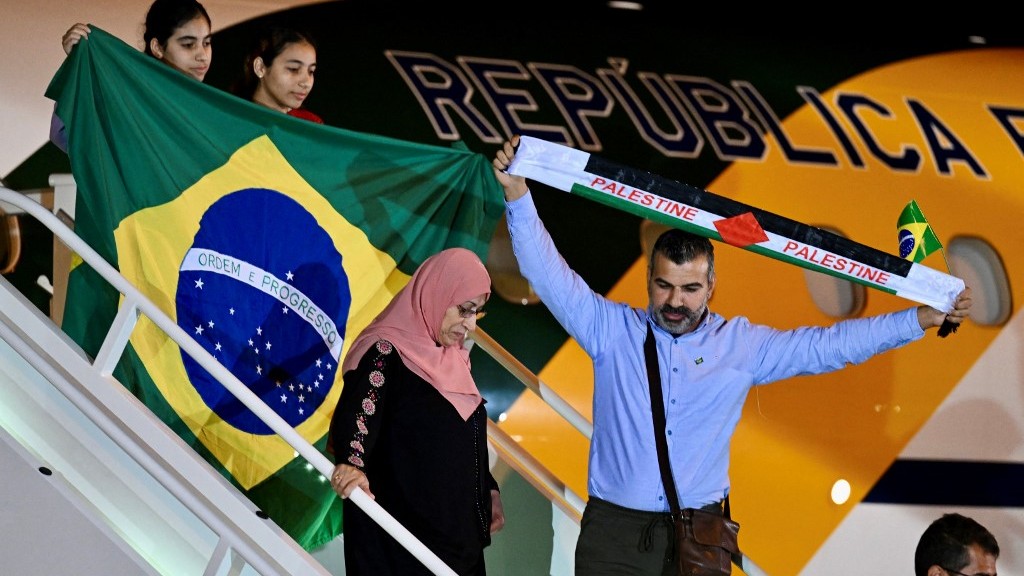
    Newly released official data confirms that Brazil shipped no crude oil directly to Israel in 2025, a milestone that pro-boycott activists are calling a tangible win for grassroots pressure aimed at holding the South American nation accountable to international obligations amid escalating tensions over Israel’s military actions in Gaza.

    Data published in the 2026 Statistical Yearbook from Brazil’s National Petroleum Agency (ANP), which was released publicly in late June, verifies that no direct crude oil shipments from Brazil to Israel were recorded last calendar year. The Boycott, Divestment and Sanctions (BDS) movement, a leading group advocating for economic pressure on Israel over its treatment of Palestinians, has attributed the shift to coordinated campaigning targeting both the Brazilian federal government and the country’s leading energy corporations.

    In a public social media statement, the movement welcomed the end of direct exports as a meaningful step toward reducing Brazil’s complicity in what the International Court of Justice has labeled a plausible risk of genocide in Gaza. The statement emphasized that sustained organizing from grassroots community groups and national trade unions has successfully pushed Brazilian leadership to align its trade practices with its public rhetorical commitments to international law.

    Despite celebrating the breakthrough, BDS activists were quick to note that the zero-direct-export mark only closes one pathway for Brazilian oil to reach Israel. ‘The direct route is closed, but the back door isn’t,’ the group acknowledged, indicating that indirect shipments via third-party re-exports still allow Brazilian crude to enter Israeli markets. The movement added that it would continue its pressure campaign, framing the 2025 result as one incremental step toward a full embargo.

    Recent trade data from clean energy advocacy organization Oil Change International contextualizes the shift: before 2025, Brazil had rapidly grown into one of Israel’s top crude suppliers. As recently as mid-2004, Brazil ranked as Israel’s fifth-largest crude provider, covering 9% of the country’s total crude import demand. Even amid a sharp diplomatic fallout in 2024, Brazil climbed to become Israel’s fourth-largest crude exporter that year, still holding a 9% share of Israeli imports, according to Oil Change International’s analysis.

    The diplomatic rift between Brasília and Tel Aviv widened dramatically in February 2024, when Israeli officials designated Brazilian President Luiz Inácio Lula da Silva persona non grata after Lula publicly accused Israel of committing genocide in Gaza and compared Israeli military operations to the Nazi Holocaust during World War II. Since that breakdown, bilateral relations have remained frozen: in July 2025, Brazil formally announced its diplomatic backing for South Africa’s genocide case against Israel at the International Court of Justice, and recalled its ambassador to Israel in a sign of protest.

    Brazil’s state-owned energy giant Petrobras, which dominates the country’s crude export sector, has long maintained that it does not directly sell crude to Israeli buyers. The company has repeatedly stated that it only sells crude to international refineries, and claims it has no oversight or control over the final destination of products refined from its crude.

    The push for a full national embargo gained formal trade union backing in May 2025, when two of Brazil’s largest oil worker federations submitted an open letter to the federal government. The letter cited Lula’s own sharp public criticism of Israel and urged the administration to implement a formal embargo on all Brazilian oil exports to Israel, regardless of shipping route. To date, the federations have not received any official response from the government.

    BDS has argued that even indirect shipments via third countries still place Brazil under international legal responsibility for enabling Israel’s military campaign. ‘Under international law, a state’s responsibility is determined by its knowledge and its material contribution to the supply, not by the route the shipment takes,’ the movement stated. The group has vowed to continue organizing until all Brazilian crude, whether shipped directly or indirectly, is barred from reaching Israeli markets.

  • Villa warned over sportswashing after Visit Rwanda deal

    Villa warned over sportswashing after Visit Rwanda deal

    English Premier League side Aston Villa has landed the largest sponsorship agreement in its century-long history, a multi-year £20 million-per-year deal with Rwandan tourism board Visit Rwanda that has quickly reignited global debate over alleged “sportswashing” of Rwanda’s alleged human rights abuses and military interference in the Democratic Republic of Congo (DRC).

    The deal will see Visit Rwanda replace betting brand Betano on the front of matchday kits for Aston Villa’s men’s senior team, women’s senior team, and youth academy squads. The partnership marks the first major major commercial agreement negotiated by Francesco Calvo, who took over as the club’s president of business operations last year following the departure of Chris Heck. In a formal statement announcing the partnership, Calvo framed the deal as a milestone in the club’s global growth strategy, saying it unlocks cross-sector opportunities across tourism, foreign investment, and grassroots sports development.

    “This is a very exciting partnership for Aston Villa and a symbol of the club’s continuing expansion and growth into international markets,” Calvo said. “There is a great range and depth of opportunities for collaboration, learning and innovation and we are looking forward to working with Visit Rwanda to deliver meaningful activations through tourism, investment and sporting development.”

    But the agreement has drawn immediate condemnation from human rights advocates and political leaders, who accuse Rwanda of using high-profile football partnerships to distract the global public from systemic human rights violations at home and its role in fueling ongoing deadly conflict in eastern DRC. Felix Jakens, head of campaigns for Amnesty International UK, said the pattern of Rwanda leveraging elite football sponsorships for positive public relations is nothing new, and that Aston Villa and the Premier League have a responsibility to address the allegations.

    “It’s not new that Rwanda is using sportswashing to deflect attention from its terrible human rights record,” Jakens said in a statement to BBC Sport. “Aston Villa should be well aware that Rwanda is seeking to leverage this partnership to create positive PR. The country is prolific in arbitrary detention, torture and the repression of free speech – these are abuses at home. We are seeing bloodshed right before our eyes in the Democratic Republic of Congo, and Rwanda is playing a significant role in fuelling that conflict – both through its support to the M23 rebels and the direct actions of its military in Eastern Congo. Rwanda’s sportswashing needs to be called out, and we’d like Aston Villa and the Premier League to play their part in this.”

    The criticisms come amid a long-running international dispute between DRC and Rwanda. Just last month, DRC formally filed a case against Rwanda at the International Court of Justice (ICJ), accusing the neighboring country of violating multiple international treaties by deploying military forces and arming rebel groups to carry out illegal operations on DRC territory. The allegations stretch back decades, rooted in regional instability that followed the 1994 Rwandan genocide. Rwanda has repeatedly denied all claims that it supports armed groups in eastern DRC, but independent United Nations experts and several Western governments have verified that Rwanda provides backing for the M23, one of the most active and violent insurgent groups in the region.

    Aston Villa’s deal marks the latest high-profile Rwandan tourism sponsorship in global football that has faced public scrutiny. Visit Rwanda already holds partnerships with clubs across Europe’s top leagues, including Paris Saint-Germain (PSG), Atletico Madrid, and previously Arsenal and Bayern Munich, and each of these deals has sparked protests and campaigns from fans and human rights groups.

    Last year, amid a worsening humanitarian crisis in eastern DRC tied to the M23 insurgency, DRC Foreign Minister Therese Kayikwamba Wagner openly called on Arsenal, Bayern, and PSG to end what she labeled “blood-stained” sponsorship deals, questioning the moral standing of accepting revenue from a nation she accuses of military aggression. “It is time Arsenal ended its blood-stained sponsorship deals with this oppressor nation. If not for your own consciences, then the clubs should do it for the victims of Rwandan aggression,” Wagner wrote in open letters to the clubs’ leadership.

    Fan campaigns have also pressured clubs to cut ties: PSG supporters launched a national petition demanding an end to the partnership in 2024, while Arsenal’s fan-led group Gunners for Peace ran a public campaign urging the club not to renew its Visit Rwanda sleeve sponsorship, even suggesting rival Tottenham Hotspur would be a more ethical alternative.

    In response to past criticisms, the Rwanda Development Board has repeatedly rejected the accusations as misinformation, saying the Visit Rwanda initiative is designed to showcase the country’s progress toward peace, stability, and inclusive economic growth, and that DRC has attempted to undermine the partnerships through unfair political pressure.

    In recent months, a handful of high-profile clubs have moved to end their commercial sponsorship deals with Visit Rwanda. Arsenal announced last November that its eight-year sleeve sponsorship agreement would conclude at the end of the 2025-26 season, a deal that was reportedly worth more than £10 million annually at its peak. Bayern Munich announced last August that it would transition away from commercial branding to focus solely on expanding its existing youth academy partnership in Kigali with Rwanda’s Ministry of Sports. However, other clubs have expanded their ties: just two months ago in April 2025, PSG extended its Visit Rwanda sponsorship until 2028, while La Liga side Atletico Madrid signed a new three-year deal to feature the Visit Rwanda logo on both its men’s and women’s senior team kits.

    Aston Villa’s need for a new front-of-shirt sponsor arose after all Premier League clubs agreed to remove all gambling industry sponsorship from the front of matchday kits by the end of the 2024-25 season, requiring the club to find a replacement for outgoing sponsor Betano. The BBC has reached out to Aston Villa for additional comment on the new sponsorship following the human rights criticisms, and the club has not yet issued a further response.

  • Argentina v England in the World Cup: much more than just a game

    Argentina v England in the World Cup: much more than just a game

    When Argentina takes on England in the 2026 World Cup semi-final in Atlanta, Georgia, the fixture carries far more meaning than 90 minutes of soccer for millions of Argentines. From the 1982 Falklands War to Diego Maradona’s legendary controversial 1986 World Cup moments, decades of shared history have turned this rivalry into something that extends far beyond the white lines of the pitch.

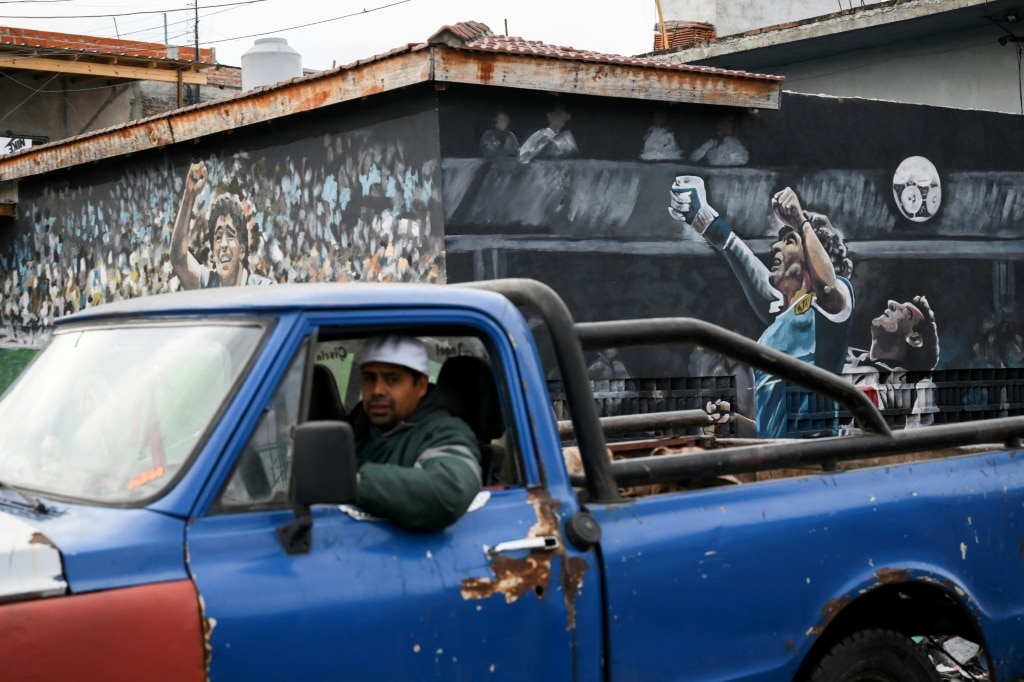
    The core of this layered history lies in the dispute over the South Atlantic archipelago Argentina calls the Malvinas, a territory claimed by Argentina but controlled by the United Kingdom since the 19th century. The 1982 war over the islands left 649 Argentines and 255 Britons dead, ending in a British victory that still stings for many in Argentina. Today, the claim to the Malvinas is enshrined in Argentina’s constitution, taught in every national school textbook, and woven into daily life through murals, tattoos, and place names honoring the disputed territory. In a deeply politically divided country, the national football team and the Malvinas claim remain two of the only unifying issues that bridge left-right divides.

    This historical weight is captured in Argentina’s 2026 World Cup anthem *La Cuarta Estrella*, which puts the Malvinas at the top of its rallying cries: “For Malvinas, for Diego, for Leo’s last, Argentina, I want to see you double world champions.” The anticipation has gripped the nation, with ordinary fans saying the excitement has crowded out all other thoughts. Thirty-three-year-old teacher Ezequiel Murmis told AFP, “I’m going crazy, I haven’t slept, I can’t think of anything else,” after attending a screening of *El Partido*, a new documentary revisiting Argentina’s iconic 1986 World Cup quarter-final win over England.

    That 1986 match remains one of the most famous in football history. Maradona’s opening goal, punched into the net with his hand and later dubbed the “Hand of God,” became a symbol of Argentine defiance just four years after the Falklands War defeat. Minutes later, Maradona scored what is still widely called the “Goal of the Century,” a stunning solo run that weaved through a bewildered England defense, cementing his legacy as a national hero before his death in 2020.

    Not all Argentines tie the current match to the decades-old conflict, however. Ernesto Alonso, a veteran of the 1982 Falklands War, argued that Maradona already gave Argentina the symbolic victory it craved in 1986. “Of course we’re all excited and want to win but we cannot shift the responsibility for the Malvinas issue onto the national team,” he explained.

    Andres Burgo, author of the original book that became *El Partido*, noted that 2026 is a far cry from 1986, when fresh war wounds made restoring national honor the overwhelming priority for the team. “That game was tainted by political pressure,” Burgo explained. “This year’s semi-final has less symbolic importance and more sporting significance.” Even so, the documentary has drawn packed audiences across Argentina, a clear sign the old tensions still run deep. Leaving a Buenos Aires screening, 33-year-old insurance agent Tomas Barbeito, wearing an Argentina national team jersey, admitted he felt “very anxious” ahead of the match: “It’s like we want to avenge something we shouldn’t have to avenge.”

    Despite the decades of rivalry, many Argentine fans acknowledge a deep respect for English football culture. After Argentina’s recent win over Switzerland, the entire team could be seen jumping in celebration to the traditional Argentine chant: “He who doesn’t jump is English!” That fiery, confrontational passion that defines Argentine fan culture has few parallels — and England is one of them. Both nations are famous for their all-consuming love of the game, and both have seen that passion spill over into crowd violence at times.

    Burgo pointed out that beyond the rivalry, Argentines recognize a kindred spirit in English football. “There are countries that don’t have a passion for football, like the United States; countries that have passion but not a distinct football culture. England has both, passion and culture, and I think Argentine fans recognize and respect that,” he said. Barbeito echoed that contradictory but warm sentiment: “But the truth is, I like the English and how they live and breathe football.”

    As kickoff approaches in Atlanta, the clash brings together sporting ambition and decades of shared history, for a match that means as much off the pitch as it does on it.

  • British surgeon launches legal challenge over NHS use of IHRA definition

    British surgeon launches legal challenge over NHS use of IHRA definition

    A senior British surgeon has launched a landmark judicial review against the National Health Service (NHS) and the UK government, challenging what he argues is the weaponization of a widely adopted antisemitism definition to censor legitimate pro-Palestine political expression.

    Ranjeet Brar, who worked at King’s College Hospital NHS Foundation Trust, faced immediate suspension just two days after delivering an anti-war speech on April 6, 2026, outside the U.S. Embassy in London. The speech commemorated civilian victims of a reported joint U.S.-Israeli strike on a school in the Iranian city of Minab, where Brar described Israel as a “genocidal settler colonial entity” and stated “it has no right to existence” and should be replaced by a sovereign state of Palestine.

    Clips of Brar’s remarks were quickly amplified across pro-Israel and right-wing social media channels, including outlets like GB News and broadcaster Julie Hartley-Brewer, triggering formal complaints against the surgeon. On April 8, King’s College Hospital issued Brar a suspension notice pending investigation, citing claims from complainants that his language could be classified as antisemitic under the International Holocaust Remembrance Alliance (IHRA) working definition of antisemitism. The hospital framed the suspension as a “neutral act” rather than formal disciplinary action, and referenced a submission from UK Lawyers for Israel alongside an anonymous patient complaint dated the same day. Two days later, Brar was arrested by police over his comments but ultimately released without any charges being filed. While the trust has not yet moved forward with formal disciplinary proceedings, it has warned that action could be taken if additional complaints are submitted.

    In statements to Middle East Eye, Brar pushed back against the actions taken against him, arguing that the hospital bears its own legal responsibility to oppose genocide. “All the pressure on me is illegal, and by imposing that pressure, the hospital is aligning itself with genocide and imposing anti-Palestinian, anti-Arab, anti-Muslim racism and political censorship,” Brar said. King’s College Hospital declined to comment on the case when contacted by reporters, citing its policy against discussing matters involving individual staff members.

    Brar’s legal team argues that the application of the IHRA definition to justify his suspension amounts to a disproportionate violation of his right to freedom of expression protected under Article 10 of the European Convention on Human Rights. The challenge further contends that the framework is applied in a discriminatory manner when compared to other hate speech guidelines used in the UK, such as official guidance on anti-Muslim hatred, which underwent extensive public consultation and includes explicit safeguards for free expression. Unlike that guidance, the IHRA framework offers no comparable protections for political criticism of the Israeli state, a disparity that Brar’s legal team argues constitutes unlawful discrimination under Article 14 of the European Convention on Human Rights.

    Lead counsel Amer Rahman emphasized that the case carries major constitutional implications for free speech in the UK. “Public authorities must act consistently, proportionately, and with proper regard to fundamental rights. This case seeks to ensure that freedom of expression is not only protected in principle, but applied equally in practice,” Rahman said. He added that the growing use of the IHRA definition in workplaces creates a dangerous chilling effect: “There are many doctors who are pro-Palestine, many nurses who are pro-Palestine, and the use of the IHRA definition risks creating a framework in which support for Palestinian rights is mischaracterised as racism, potentially chilling legitimate speech and participation in public debate.”

    Brar’s legal challenge is not an isolated case. Just two months after his claim was filed, a second judicial review targeting the IHRA definition was launched by Bea Foster, a Methodist preacher who was removed from her position as a charity trustee over a Facebook post labeling Israel an apartheid state.

    The IHRA definition, first drafted in 2004, was originally designed as a non-binding monitoring tool to help track antisemitism across countries. One of the 11 illustrative examples appended to the definition labels “claiming that the existence of a State of Israel is a racist endeavour” as antisemitic, a provision that longstanding critics argue erases the line between bigotry against Jewish people and legitimate political debate over Israeli policy. Even the original lead author of the definition, Kenneth Stern, has repeatedly warned against its misuse as a legal or disciplinary tool, arguing that overreach risks criminalizing protected political speech.

    Despite its non-binding status, critics point out that the definition has increasingly been enforced as if it carries full legal weight across UK public institutions. As early as 2018, prominent human rights barrister Geoffrey Robertson QC published a legal opinion finding the definition “likely in practice to chill free speech” by incentivizing bad-faith complaints against critics of Israeli policy. Robertson recommended that any institution adopting the definition add an explicit clarification that criticism of the Israeli government, without proven antisemitic intent, does not qualify as antisemitism on its own. A 2023 study from the European Legal Support Centre further backed these concerns, finding the definition has a disproportionate impact on marginalized groups including workers of color and Jewish activists who support Palestinian sovereignty, with many facing disciplinary action and even termination over legitimate speech.

    The NHS rolled out adoption of the IHRA definition across England in October 2025, following a formal request from then-Secretary of State for Health Wes Streeting. Brar is one of a growing cohort of British healthcare workers who have faced investigation or suspension over public criticism of Israel’s military campaign in Gaza, amid a broader crackdown on pro-Palestine speech in public institutions.

    In recent weeks, the UK Department of Health and Social Care backed a new review into antisemitism and racism in the NHS, led by the government’s independent antisemitism adviser Lord John Mann. The review centers the IHRA definition and proposes mandatory antisemitism training for all NHS staff, alongside new restrictions on political activity in clinical settings, including bans on displaying political symbols and participating in pro-Palestine protests while in uniform. Shortly after the review’s recommendations were published, the British Medical Association (BMA), the UK’s leading doctors’ union, voted in a historic move to reject the IHRA definition, echoing widespread concerns that it would suppress protected free speech in healthcare workplaces and criminalize lawful political expression. The BMA’s passed motion also called for a full independent assessment of the definition’s impact on professional speech, particularly related to the Israel-Palestine conflict, and reaffirmed the right of all healthcare workers to participate in public policy debate over human rights issues. The vote now allows BMA members to lobby government and NHS bodies to revise policies that enforce the definition in the workplace.

  • Caribbean leaders press for slavery reparations, end of islands’ territorial status

    Caribbean leaders press for slavery reparations, end of islands’ territorial status

    LONDON — As global momentum for reparations for the transatlantic slave trade grows, a high-level delegation from the Caribbean Community (Caricom) Reparations Commission has returned to the United Kingdom for a four-day official mission, holding talks with senior Church of England clergy this week ahead of scheduled meetings with British parliamentarians. This marks the commission’s second official visit to the UK since November, as regional leaders move past symbolic gestures to push for formal, binding negotiations over centuries of systemic harm inflicted by colonial slavery.

    Hilary Beckles, chair of the Caricom Reparations Commission and vice chancellor of the University of the West Indies, opened the trip’s press briefing by emphasizing the urgency of the Caribbean’s demands. The region remains the most heavily colonized part of the globe today, with at least 20 territories still holding formal ties to the United Kingdom, France, the Netherlands, and the United States, Beckles noted. Activists are not only seeking financial compensation for slavery, but also an end to ongoing colonial occupation and full sovereignty for all remaining non-self-governing territories across the Caribbean.

    The London meetings come on the heels of a controversial remark from a British lawmaker, who suggested former British colonies should repay the UK for historical infrastructure investments — a comment that drew sharp pushback from Caribbean leaders, who argue the proposal ignores the massive wealth extracted from the region through enslaved labor that fueled Britain’s industrial revolution.

    Commission members reported that their opening meeting with three senior Church of England clerics was productive, framing the institution as a potential ally in the reparations movement. David Comissiong, Barbados’ ambassador to Caricom, echoed the call for full decolonization as a foundational first step toward reparatory justice, stressing that national sovereignty and self-determination cannot be separated from demands for redress.

    Comissiong acknowledged King Charles III’s previous statements of personal sorrow over the suffering caused by slavery and his recognition of its ongoing, intergenerational impact. But he pointed to a critical gap between rhetoric and action: the UK was among the major powers that abstained from a United Nations resolution passed in March that labeled the transatlantic trafficking of enslaved people “the gravest crime against humanity” and called for global reparations. All 27 European Union member states also abstained, while the United States, Argentina, and Israel voted against the measure.

    While some European governments have offered preliminary gestures such as official apologies, public memorials, museums, and preservation of slavery-era infrastructure along West Africa’s coast, Comissiong said these steps do not go far enough. “These are some preliminary gestures that we appreciate,” he said. “But those gestures are not negotiations. … The damage that was done and that still exists today was so consequential, so deeply rooted, that it goes way beyond, way beyond gestures of memorialization.”

    Historians estimate that between the 16th and 19th centuries, European powers forcibly trafficked an estimated 12 million African people across the Atlantic. Survivors of the deadly middle passage were forced into chattel slavery on Caribbean plantations, enduring brutal conditions that created generational poverty and structural inequality that persists in the region today.

    The commission is currently developing a formal framework to launch official negotiations, with Beckles noting that the global community has waited far too long to address the foundational harm of colonial slavery. Leaders are now waiting to see if King Charles III will take formal action to advance discussions of sovereignty, decolonization, and reparatory justice for the crimes of the slavery era.

    When asked if the commission would outline formal eligibility rules for reparations recipients, leaders noted details are still being finalized for the Caribbean. However, Ron Daniels, head of the U.S.-based National African-American Reparations Commission, pointed to ongoing discussions in the United States that center on tangible reparations measures including land redistribution, targeted economic development, and investment in Black community healthcare and communications infrastructure — a model Daniels called a working blueprint for the global movement.

    Caricom’s formal demands for the UK and other former colonial powers include a full official apology for slavery, targeted investments to improve Caribbean education and public health systems, development support for Indigenous communities, support for repatriation and resettlement for descendants of enslaved people seeking to return to ancestral homelands, full cancellation of Caribbean sovereign debt, and direct monetary compensation for intergenerational harm.

    In the coming weeks, Jamaica is set to take a major step forward in the movement: early September will see the Jamaican government file a formal petition asking King Charles III to refer legal questions on slavery reparations to the Privy Council, Jamaica’s final court of appeal, setting up a landmark legal test for reparations claims against the British Crown.

  • US Supreme Court seeks major boost in security funding over threat increase

    US Supreme Court seeks major boost in security funding over threat increase

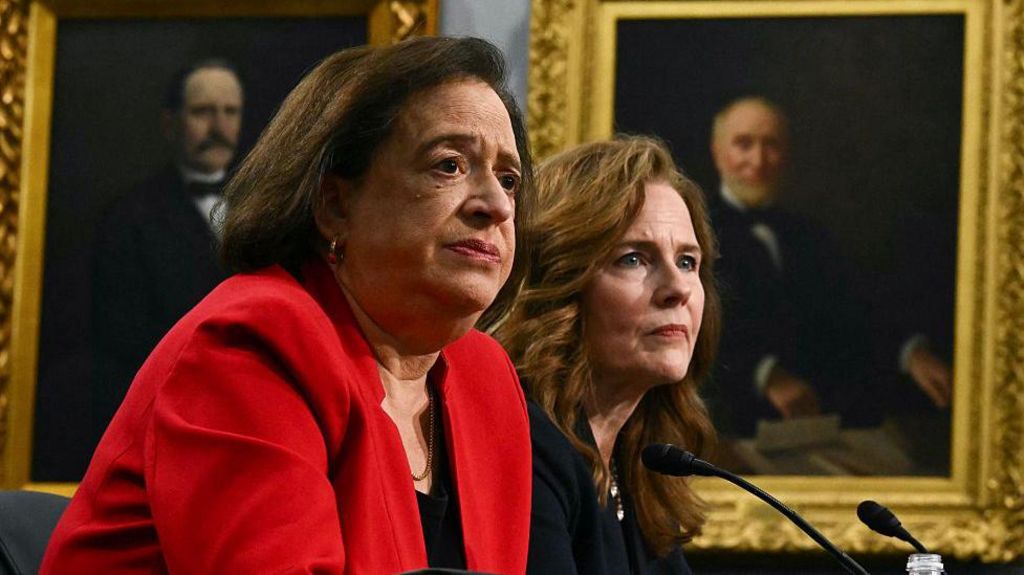
    In an extremely rare public appearance before lawmakers on Capitol Hill, two sitting U.S. Supreme Court Justices from opposite ideological sides joined forces Tuesday to urge Congress to approve a massive $228 million budget request that would dramatically increase security funding for the nation’s highest court. The proposed budget marks a 53% jump from the previous year’s allocation, with the overwhelming majority of the new funding earmarked for expanded safety protections for justices and their families amid a documented surge in violent threats.

    Conservative Justice Amy Coney Barrett, who joined the court in 2020, opened her testimony before the House Appropriations Committee by detailing the daily toll that constant safety risks have placed on her personal life, including two alarming incidents that brought threats directly to her door. Just six weeks before her testimony, Barrett was targeted in a dangerous swatting attack, a harmful prank where bad actors send false emergency reports to draw heavily armed police responses to a target’s home. Barrett described the chaos of dozens of law enforcement vehicles surrounding her residential property after a caller falsely reported an active shooting with multiple casualties at her home.

    Barrett also recalled a troubling moment shortly after she joined the 2022 majority vote to overturn the federal constitutional right to abortion established in Roe v. Wade: her own security detail provided her with a bulletproof vest to wear at all times outside the court. She told the committee that the hardest part of the constant threat has been explaining safety measures to her children, saying, “I didn’t expect that performing this service was going to put me in the position of explaining to my children what a bulletproof vest was and why I had to wear one.”

    Joining Barrett was veteran liberal Justice Elena Kagan, who echoed the call for increased funding, citing official court police projections that violent threats against Supreme Court justices will jump 38% this fiscal year alone. Kagan emphasized that growing political polarization across the United States has supercharged threats, while rapid advances in artificial intelligence have opened new dangerous vectors of attack, including exponentially more sophisticated and frequent cyberattacks targeting court infrastructure.

    “For some of us, those threats have come very close, and all of us live with the knowledge that they may again materialize,” Kagan told lawmakers, adding that AI-powered cyber threats have grown “by magnitudes” in recent years, outpacing the court’s existing security capacity.

    Data presented during the hearing backed up the justices’ concerns. Citing a recent report from the U.S. Marshals Service, committee ranking member Rosa DeLauro noted that as of July 1, more than 370 threats against federal judges have already been documented in the current fiscal year – a 31% increase compared to the same period last year, a trend DeLauro called “deeply alarming.”

    One of the most high-profile recent threats targeted Chief Justice John Roberts: in October, a woman was sentenced to eight years in federal prison after law enforcement found a vehicle stocked with multiple firearms and discovered she had explicitly planned to harm Roberts. The incident underscored the immediate nature of the risks justices face.

    Barrett told committee members that the court currently assigns between four and eight security personnel to each justice for around-the-clock protection, depending on the context and threat level. She explained that the additional funding would allow the court to expand security details to bring protection for Supreme Court justices in line with that provided to U.S. cabinet-level officials, who receive more robust permanent security support.

    “The threats are constant and they’re always there,” Barrett said.

    Tuesday’s hearing marked the first time sitting Supreme Court justices have testified before this congressional committee since 2019, a rare break from the court’s usual tradition of keeping public engagements with lawmakers limited. Multiple committee members used the hearing to note that more frequent public engagement between the court and Congress could help rebuild fading public trust in the nation’s highest judicial body. Recent polling from the Pew Research Center finds that just 50% of U.S. adults now hold a favorable view of the Supreme Court, down sharply from 70% just two years ago.

    The appearance comes just weeks after the Supreme Court wrapped up its 2025-2026 term, which saw the court issue landmark divisive rulings on high-profile issues ranging from trade tariffs and voting rights to birthright citizenship. As with most recent terms, the decisions drew both fierce praise and fierce criticism from across the political spectrum, with a wave of targeted harassment directed at justices in the aftermath of the most contentious rulings.