博客

  • Trump and Burnham: Can the two leaders work together?

    Trump and Burnham: Can the two leaders work together?

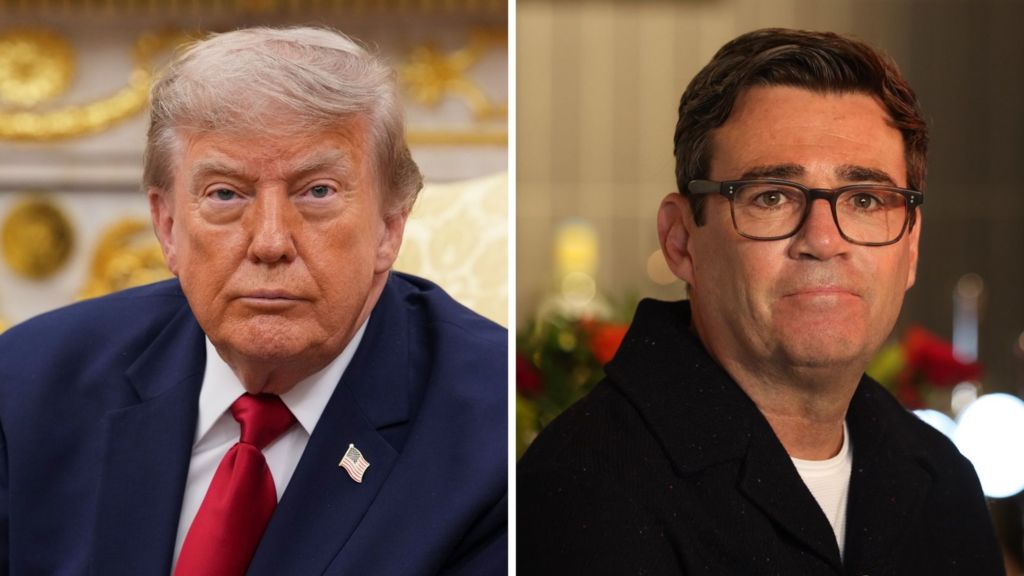
    When Keir Starmer took office as the United Kingdom’s new prime minister this week, he inherited a long list of domestic priorities – from reforming the National Health Service to tackling the housing crisis. But one of his most high-stakes and delicate immediate challenges lies not in Westminster, but across the Atlantic: building a functional working relationship with former U.S. President Donald Trump, who is set to return to the Oval Office in January 2025.

    The relationship between the British prime minister and the U.S. president has long been billed the “special relationship,” a cornerstone of both nations’ global security and economic cooperation. But for Starmer, a center-left Labour leader who has never held executive office at Downing Street while Trump was in the White House, this partnership is off to an uncertain start. In her analysis for the BBC, senior Scotland correspondent Sarah Smith unpacks the layers of complexity that will define this critical bilateral dynamic in the months ahead.

    Unlike Starmer’s predecessor, Rishi Sunak, who had established limited but cordial working ties with Trump during his first term and maintained connections through transatlantic conservative networks, Starmer spent years as the leader of the Labour opposition criticizing Trump’s policy agenda, from his trade tariffs to his approach to NATO and the war in Ukraine. Early diplomatic rumblings already hint at friction: Trump has made public comments calling into question the UK’s commitment to global security, while Starmer’s team has walked a fine line between respecting the U.S. democratic process and defending Labour’s progressive policy priorities.

    Smith notes that the stakes could not be higher. A breakdown in trust between the two leaders could impact everything from post-Brexit trade negotiations to coordinated Western support for Ukraine against Russian aggression. At the same time, both leaders have practical incentives to find common ground: Starmer needs U.S. economic and security cooperation to deliver on his domestic campaign promises, while Trump has a long history of seeking friendly ties with UK leaders to bolster his own image as a global statesman.

    The question that now hangs over transatlantic diplomacy is not whether the two leaders will interact – they will, out of geopolitical necessity – but whether they can set aside personal and ideological differences to advance shared interests. As the world watches the new UK government settle in and the U.S. transition of power unfolds, this budding relationship will be one of the most closely watched international political storylines of the coming year.
  • Tate brothers will fight extradition to the UK. But the law makes it difficult to win

    Tate brothers will fight extradition to the UK. But the law makes it difficult to win

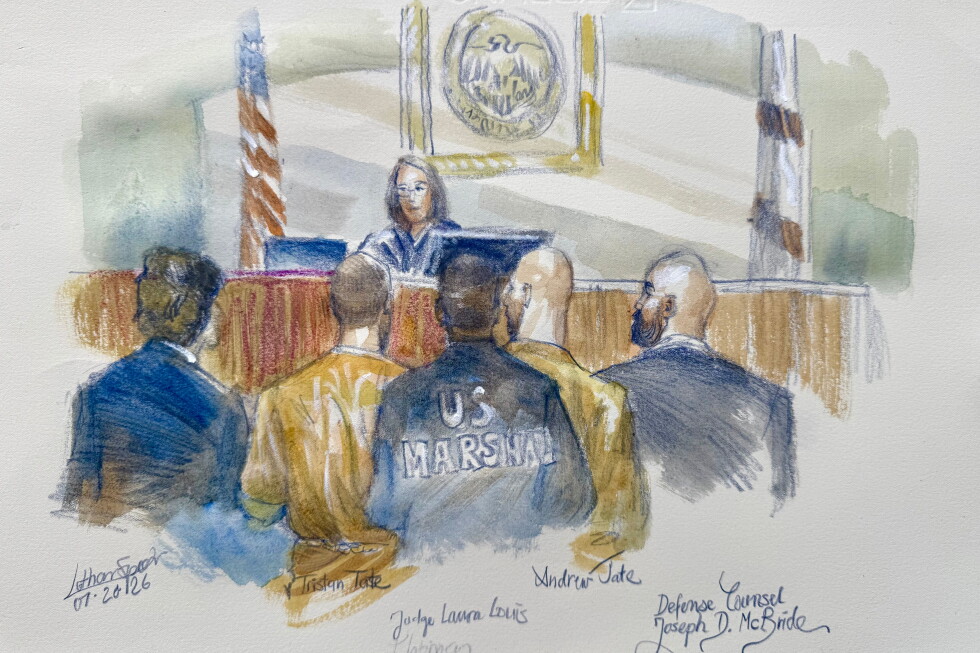
    For brothers Andrew and Tristan Tate, currently facing a request to send them from the United States to the United Kingdom to face criminal charges, their fate will unfold through a multi-stage legal process defined by a decades-old bilateral extradition treaty. Legal experts say that while the final call on any handover falls to the U.S. State Department, the overwhelming majority of valid extradition requests from U.S. treaty partners end in approval, even when the accused mount a vigorous legal defense. The U.S. and U.K. have operated under an extradition agreement that requires two core conditions to be met for a handover: first, that the alleged offenses in question would count as criminal acts under U.S. law, and second, that the requesting party provides sufficient evidence to establish a reasonable basis for prosecution. Official records from the U.K. Parliament show that since 2020 alone, U.S. authorities have approved the extradition of more than 20 individuals facing a range of criminal charges in the U.K. The Tate brothers are accused of committing rape, human trafficking, and organized assault between 2010 and 2017 in southeastern England, allegations their legal team has repeatedly and categorically denied. “They have never done anything wrong. They should not be extradited for crimes they did not commit,” stated Joseph McBride, the lead defense attorney for the pair. The first step of the legal process kicks off with a review by a U.S. federal judge, who will assess arrest warrants, investigative filings, and all supporting documentation submitted by U.S. prosecutors acting on behalf of the U.K. government. Unlike a full criminal trial, this extradition hearing does not determine guilt or innocence — it only assesses whether the request meets the legal requirements laid out in the bilateral treaty. “A partial victory for the defense might mean securing a reduction in the number of charges that the brothers are extradited on,” explained Jacques Semmelman, a New York-based extradition expert and attorney at the law firm Katten Muchin Rosenman. “But a full victory — blocking extradition entirely — is extraordinarily difficult to achieve.” Semmelman added that structural advantages heavily favor the government in these proceedings: extradition rules of evidence allow prosecutors to submit virtually any evidence they choose, leaving defense teams with very limited room to challenge the request. If an accused person chooses to fight the ruling through every available appeal, the entire process can stretch on for multiple years, legal observers note. If a federal judge upholds the extradition request and all subsequent appeals are rejected, the final decision passes to U.S. Secretary of State Marco Rubio (or his successor in the role), who holds broad discretionary authority over the final approval. “In the vast majority of cases, the secretary of state will sign the extradition warrant,” Semmelman said. While successful challenges to extradition are rare, they are not unheard of, and historical examples offer context for how the process can unfold. In 2015, a U.S. judge rejected an extradition request for an art dealer, ruling that there was insufficient evidence to prove the dealer knew a 18th-century painting — looted from a Polish museum by Nazis during World War II — was stolen when he inherited it. A more high-profile case came in 2020, during the first Trump administration, when the U.S. government declined to extradite Anne Sacoolas, an American woman who killed a young British man in a car crash while living in eastern England. Sacoolas, the wife of a U.S. intelligence officer, returned to the U.S. shortly after the incident, and ultimately pleaded guilty to the charge via video link from the U.S. in a U.K. court years later.

  • Thousands of websites taken down for illegal World Cup streams

    Thousands of websites taken down for illegal World Cup streams

    A coordinated multinational law enforcement operation targeting intellectual property violations tied to the FIFA World Cup has resulted in the blocking or seizure of nearly 3,000 websites illegally streaming tournament matches, the U.S. Department of Justice (DOJ) has confirmed. The joint action, carried out under the codenames Operation Offside and Operation Red Card, saw U.S. authorities take down more than 1,000 illicit domains within the country, while Colombian law enforcement blocked a comparable number of sites operating from its territory. Additional enforcement across five other South American nations and the Dominican Republic removed 830 more illegal platforms, marking one of the largest anti-piracy operations tied to a global sporting event in recent years.

    Overseen primarily by U.S. Immigration and Customs Enforcement (ICE), which houses the National Intellectual Property Rights Coordination Center (NIPRCC), the operation frames illegal sports streaming not just as a copyright violation, but a threat tied to transnational criminal activity. “Unauthorized broadcasting of World Cup matches violates intellectual property rights and fuels criminal organizations,” NIPRCC Director Ivan J. Arvelo noted. This latest round of seizures expands on an earlier action taken at the end of last month, which removed 400 infringing webpages from public access.

    A. Tysen Duva, assistant attorney general for the DOJ, emphasized that the sustained crackdown underscores the U.S. administration’s commitment to protecting intellectual property ahead of the 2026 FIFA World Cup, which will be co-hosted by the United States, Canada and Mexico. “The sustained effort to seize more than a thousand domains dedicated to illegally streaming the World Cup confirms the administration’s commitment to intellectual property rights and to the success of the 2026 FIFA World Cup,” Duva said.

    Industry analysts have long warned that sports piracy, particularly for globally popular events like men’s and women’s football, operates at an industrial scale. The widespread availability of illegal streams costs legitimate broadcasters and rights holders an estimated billions of dollars in lost revenue annually. As the cost of purchasing tournament broadcast rights has skyrocketed in recent decades, consumers have faced higher subscription prices for legal access, pushing some price-sensitive fans to seek out unlicensed streams to avoid the financial burden of multiple paid services.

    The Alliance for Creativity and Entertainment (ACE), a global industry coalition dedicated to combating digital piracy that partnered with law enforcement on the operation, confirmed that large-scale live sporting events are a prime target for criminal piracy networks. “The World Cup is the kind of global live event that piracy networks move quickly to exploit,” ACE chairman Charles Rivkin said Monday. FIFA, the governing body of international football that derives the majority of its revenue from selling broadcast rights to global media outlets, joined the effort alongside major media companies including beIN Media Group, NBC Universal, Warner Brothers, and sports entertainment firm Ultimate Fighting Championship. None of the partnering rights holders or organizations issued immediate public comment beyond their support for the enforcement action.

    In addition to blocking illegal streaming platforms, Colombian authorities made several arrests tied to the operation, including taking four members of the alleged cybercriminal group Los Ciberinfiltrados into custody. The group is accused of illegally obtaining access to World Cup matches and distributing that access to unauthorized users across the internet. Colombian law enforcement also expanded the operation beyond digital piracy, conducting nationwide search-and-seizure raids targeting the production and distribution of counterfeit World Cup-branded sports apparel. To date, 11 people in Colombia have been arrested and convicted on charges related to the fake merchandise ring.

    The cross-border collaboration between U.S. and South American law enforcement reflects a growing global push to curb digital piracy ahead of major sporting events, as rights holders and governments work to protect billions of dollars in broadcast and merchandise revenue. While the crackdown has removed thousands of illegal platforms, industry observers note that criminal networks often rapidly re-establish operations on new domains, requiring sustained enforcement to keep piracy levels in check.

  • Misleading posts about Trump at World Cup final viewed by millions

    Misleading posts about Trump at World Cup final viewed by millions

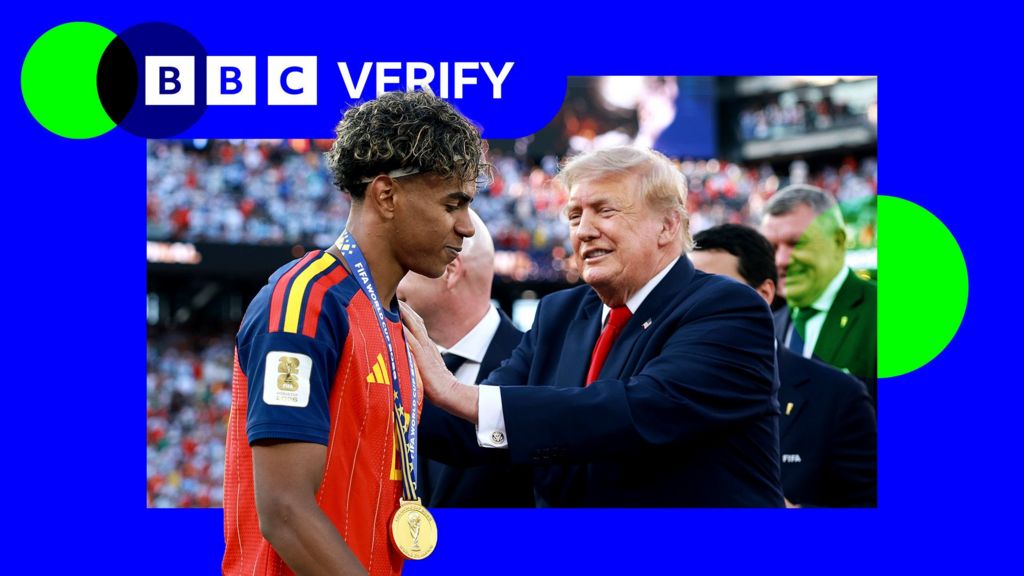
    In the lead-up to and aftermath of one of the world’s most-watched sporting events, the 2022 FIFA World Cup final, misleading social media content centered on former U.S. President Donald Trump and rising Spanish soccer star Lamine Yamal spread rapidly across major platforms, reaching millions of viewers in just days.

    The false content, which ranks among the most viral misleading posts connected to the tournament, framed a false narrative linking Trump to an incident or interaction with the 16-year-old prodigy at the final match held in Qatar. Fact-checking organizations quickly stepped in to debunk the claims, confirming that no such interaction ever took place and that the posts relied on heavily edited footage, out-of-context clips, and fabricated captions to generate engagement.

    The rapid spread of this misinformation highlights a growing ongoing challenge: how major social media platforms manage false content surrounding high-profile global events that draw billions of eyeballs. Soccer fans around the world shared the posts without verifying their authenticity, amplifying the false narrative to their own networks and helping the misleading content rack up views in the multi-millions before fact-checkers could flag most instances of the post.

    Experts on digital misinformation note that posts combining polarizing political figures like Trump with popular young sports stars are particularly prone to going viral, as they tap into existing partisan engagement and widespread interest in global soccer to drive shares and clicks. Many platforms have implemented misinformation policies designed to limit the reach of false content, but these policies often fail to catch viral misleading posts before they reach massive audiences, especially during fast-moving live events like the World Cup.

  • UK consulate in Palestine account suspended on X

    UK consulate in Palestine account suspended on X

    In an unexpected development that has drawn diplomatic attention, X, the social media platform formerly known as Twitter, has suspended the official account of the British Consulate in Jerusalem, the UK government’s diplomatic mission serving occupied Palestinian territories. As of Monday, 24 hours after the suspension was first reported, the @UKinJerusalem account remains inaccessible, displaying standard platform notifications that read “Account suspended” and note that X removes or restricts accounts found to violate its internal community rules.

    At the time of reporting, no official clarification has been released by either X or British authorities regarding the specific cause of the suspension, nor which platform policies are alleged to have been broken. The UK Foreign, Commonwealth and Development Office confirmed to independent outlet Middle East Eye that diplomatic teams have already reached out to X leadership to resolve the issue and restore access to the account as quickly as possible. Middle East Eye has also contacted X for additional comment on the incident, with no response received as of publication.

    Per the British Consulate’s official public description, the mission carries out core work advancing the UK’s political, commercial, security, and economic bilateral interests with Palestine. It also delivers critical consular support to British citizens residing in occupied East Jerusalem, the Israeli-occupied West Bank, and the Gaza Strip.

    Investigation into the timeline of the suspension reveals that the account’s last major public activity, shared just hours before it was taken offline, was a coordinated joint statement thread with multiple other international diplomatic missions criticizing Israel’s long-standing practice of administrative detention for Palestinian detainees.

    In the public post, the consulate outlined context for the criticism: “Over 9,000 Palestinians are detained in Israeli prisons, including thousands held without charge or trial. Human rights organisations describe prison conditions for Palestinians as severe and life-threatening, citing inadequate food, denial of medical care and systematic abuse. We are deeply concerned by reports regarding the deterioration of Dr Abu Safiyah’s health.”

    Hussam Abu Safiyah, the detainee named in the statement, is a Palestinian paediatrician and director of Gaza’s Kamal Adwan Hospital. Israeli forces abducted Abu Safiyah on December 27, 2024, and he has been held without formal charges or a public trial ever since his detention.

    The joint statement concluded by reaffirming international standards for detention: “Detainees have the right to be informed about the charges underlying any detention, must be granted access to legal assistance, and be subject to a fair trial. We call upon Israel to uphold its human rights obligation towards detainees under international law, including by granting the ICRC immediate access to all detention facilities.”

  • White House: Trump to fly old Air Force One for about a month as Qatari-gifted jet gets ‘upgrades’

    White House: Trump to fly old Air Force One for about a month as Qatari-gifted jet gets ‘upgrades’

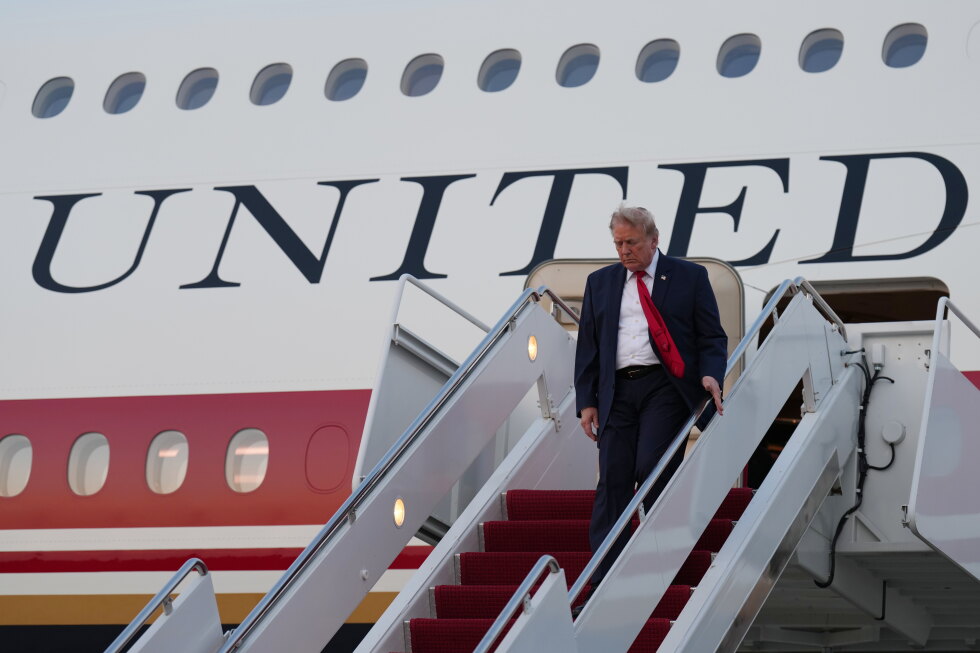
    WASHINGTON – In an official announcement from the White House, former President Donald Trump will transition back to the legacy Air Force One aircraft for a four-week period, while the newer jet donated by Qatar undergoes scheduled technical modifications and system improvements. The controversial Qatari-gifted plane, painted in a bold red, white and navy blue livery, has been mired in scrutiny since it first entered service, with questions raised on two key fronts: its origins as a gift from a foreign government, and critical gaps in its defensive capabilities compared to the older fleet.

    Controversy over the jet intensified earlier this month, when Trump departed the NATO summit in Istanbul aboard the older, iconic baby blue Air Force One instead of the new aircraft, making an unplanned stop at Royal Air Force Mildenhall in the United Kingdom before transferring to the Qatari-gifted jet. The unscheduled plane swap immediately sparked widespread speculation about undisclosed security flaws in the new aircraft.

    White House Press Secretary Karoline Leavitt issued a public statement on Monday seeking to quell these concerns, emphasizing that the newly donated plane remains completely safe for presidential travel. “The new Air Force One is perfectly safe for the President’s travels, but will receive additional upgrades and enhancements in the fall which will take approximately one month to complete,” Leavitt said, confirming that the older aircraft will handle all of Trump’s travel during the modification period.

    Leavitt’s statement expands on remarks Trump made to reporters Sunday evening as he returned to Washington, where he described the new jet as heading in for major upgrades to bring its capabilities to peak performance. Earlier this month, Trump defended the unplanned UK stop, claiming it was arranged solely to allow U.S. service members stationed at Mildenhall to view the new aircraft. He repeatedly denied that the plane swap was prompted by security vulnerabilities, even as he acknowledged he faces constant threats, noting that he remains the top target of Iran.

  • Merger deal between Paramount and Warner Bros paused by judge

    Merger deal between Paramount and Warner Bros paused by judge

    In a major antitrust development shaking the global media industry, a United States federal judge has issued a temporary restraining order halting the planned $110 billion merger between entertainment heavyweights Paramount Skydance and Warner Bros. Discovery, blocking the combination for 14 days. The ruling comes in response to a high-stakes lawsuit filed by a coalition of 12 US states, led by California and New York, which argues that the proposed merger would cripple market competition and force higher costs for consumers across the country. Prosecutors representing the state coalition warned that merging two of Hollywood’s most prominent studios would inflict widespread harm on multiple stakeholders, from independent movie theater operators and basic cable distribution networks to the general audiences that consume their content. Lawyers for the two media conglomerates have pushed back against the claims, countering that state regulators have misjudged the current media landscape, and that merging their operations would unlock greater efficiency for their streaming platforms, which have faced mounting pressure in a crowded, highly competitive market. US District Judge Araceli Martínez-Olguín issued the 14-day injunction on Monday, one week after hearing oral legal arguments from both sides in the case. The court order explicitly prohibits either company from completing the merger or beginning any process of integrating their business operations during the two-week period. In her written ruling, Judge Martínez-Olguín emphasized that the coalition of states had raised substantial, credible questions about how the proposed merger would disrupt the existing ecosystem for motion picture distribution. She noted that if the court allowed the merger to move forward before reaching a final verdict, undoing the combination later would be functionally near-impossible, comparing it to the difficulty of “unscrambling the egg” once an egg has been broken and mixed. The judge also rejected the media companies’ core arguments, stating that the public’s critical interest in enforcing antitrust regulations to preserve competitive markets outweighs any disruption caused by a temporary pause to the merger process. She added that both Paramount Skydance and Warner Bros. Discovery remain fully operational, independent companies that can compete effectively in the open market while the legal process plays out. If the merger were to ultimately receive final approval, it would bring to an end a century of fierce head-to-head rivalry between two of Hollywood’s most iconic and successful entertainment creators. The combined company would control an unparalleled catalog of legendary entertainment franchises, ranging from *Harry Potter*, Batman, *Mission: Impossible* and *Top Gun* to major cable news and entertainment networks including CNN, MTV, and Nickelodeon. Industry analysts estimate that a merged Paramount-Warner Bros. entity would be responsible for more than a quarter of all major theatrical film releases in the United States, giving it unprecedented leverage over distribution and pricing across the sector. Monday’s ruling marks a significant early setback for the two companies, which have been pushing for the merger as a strategy to better navigate the ongoing upheaval and intense competition that defines the modern streaming landscape. The next court hearing to evaluate the case has been scheduled for August, where both sides will present further arguments ahead of a final ruling on whether the merger can proceed.

  • Hamas names Khalil al-Hayya as new leader

    Hamas names Khalil al-Hayya as new leader

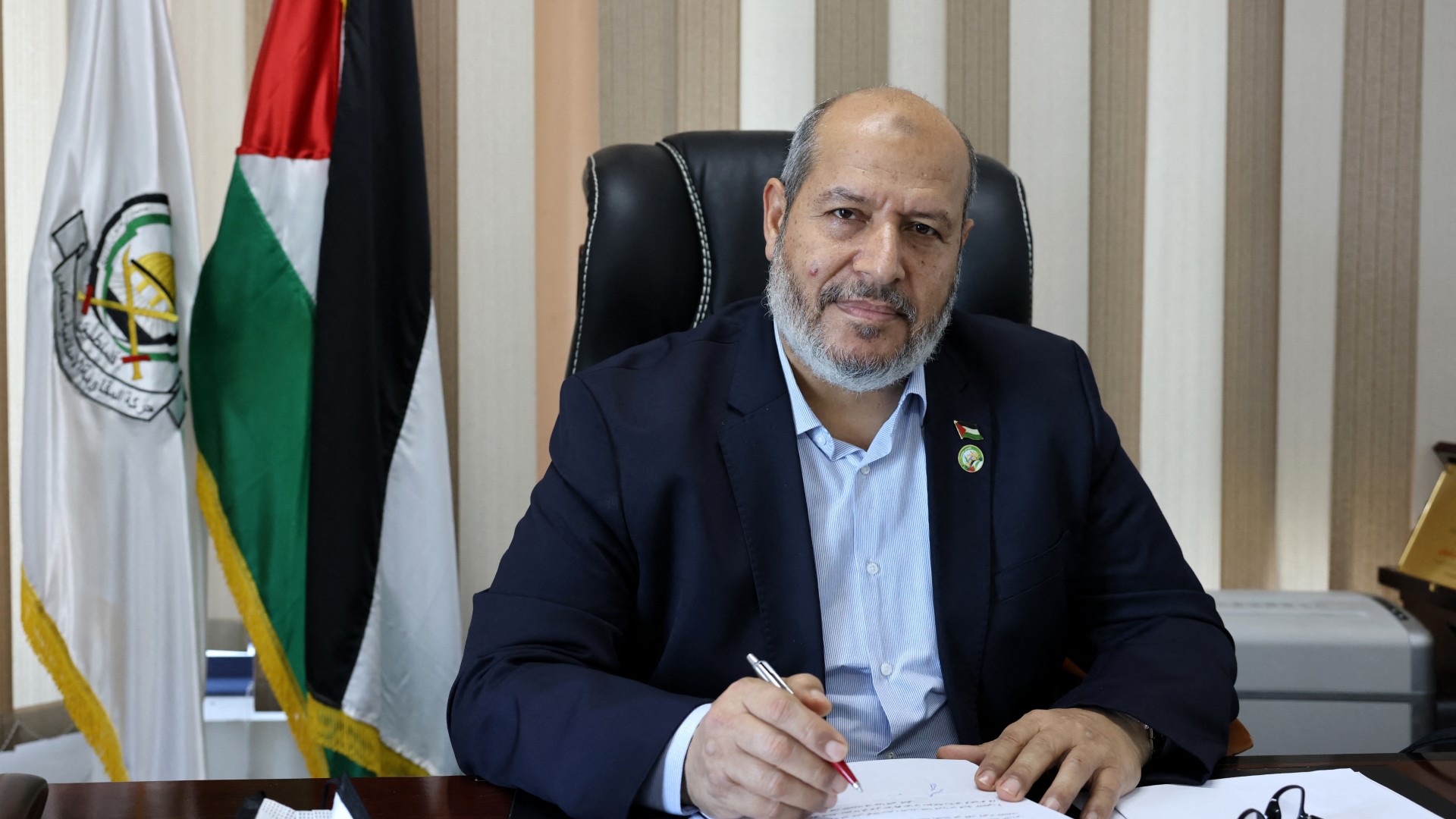
    In a formal announcement made Monday, the Palestinian militant and political group Hamas has named veteran senior leader Khalil al-Hayya as its new chief, filling a leadership vacancy created by the battlefield death of former leader Yahya Sinwar at the hands of Israeli forces in October 2024.

    Sinwar, who took over the role following the assassination of former Hamas head Ismail Haniyeh in Tehran just three months earlier in July 2024, was killed during direct combat engagements with the Israeli military in Rafah, the southernmost city in the Gaza Strip, on October 17, 2024. In the immediate aftermath of Sinwar’s killing, Hamas initially opted against naming a permanent successor, instead establishing an interim five-person leadership council headed by Muhammad Ismail Darwish, chair of the group’s top advisory Shura Council.

    Hayya, a long-time senior Hamas leader based outside of Palestinian territories, has emerged as one of the group’s central figures in diplomatic and ceasefire negotiations with Israeli mediators over the past three years. The 64-year-old leader, who was born in Gaza in 1960, is one of Hamas’ earliest founding political members. He first connected with Hamas founder Sheikh Ahmed Yassin in 1980, seven years before the group was formally established, and went on to hold leadership posts in Palestinian student and labor organizations before winning a seat on the Palestinian Legislative Council in the 2006 legislative elections.

    Hayya has survived multiple Israeli assassination attempts spanning more than 15 years. A 2007 targeting attempt gone wrong killed multiple members of his immediate family, including his wife and three of his children. Most recently, in September 2023, an Israeli strike targeting Hayya and other senior Hamas leaders in Doha, Qatar, claimed the life of his son Hammam al-Hayya and his office director Jihad Lubbad, while leaving Hayya and other senior figures including former Hamas leader Khaled Meshal unharmed, according to multiple sources close to Hamas who spoke to Middle East Eye in the wake of the attack.

    Throughout his decades-long tenure with Hamas, Hayya has built a track record as a key negotiator, leading ceasefire talks with Israel during the 2014 Israeli military campaign in Gaza and continuing in that role through the ongoing conflict that erupted in October 2023. In 2022, he also played a pivotal role in mending fractured ties between Hamas and the Syrian government, traveling to Damascus to formally reestablish relations that broke down in the wake of the Arab Spring uprisings and the subsequent Syrian civil war.

  • Andy Burnham promises ‘new economic and political model’ as UK prime minister

    Andy Burnham promises ‘new economic and political model’ as UK prime minister

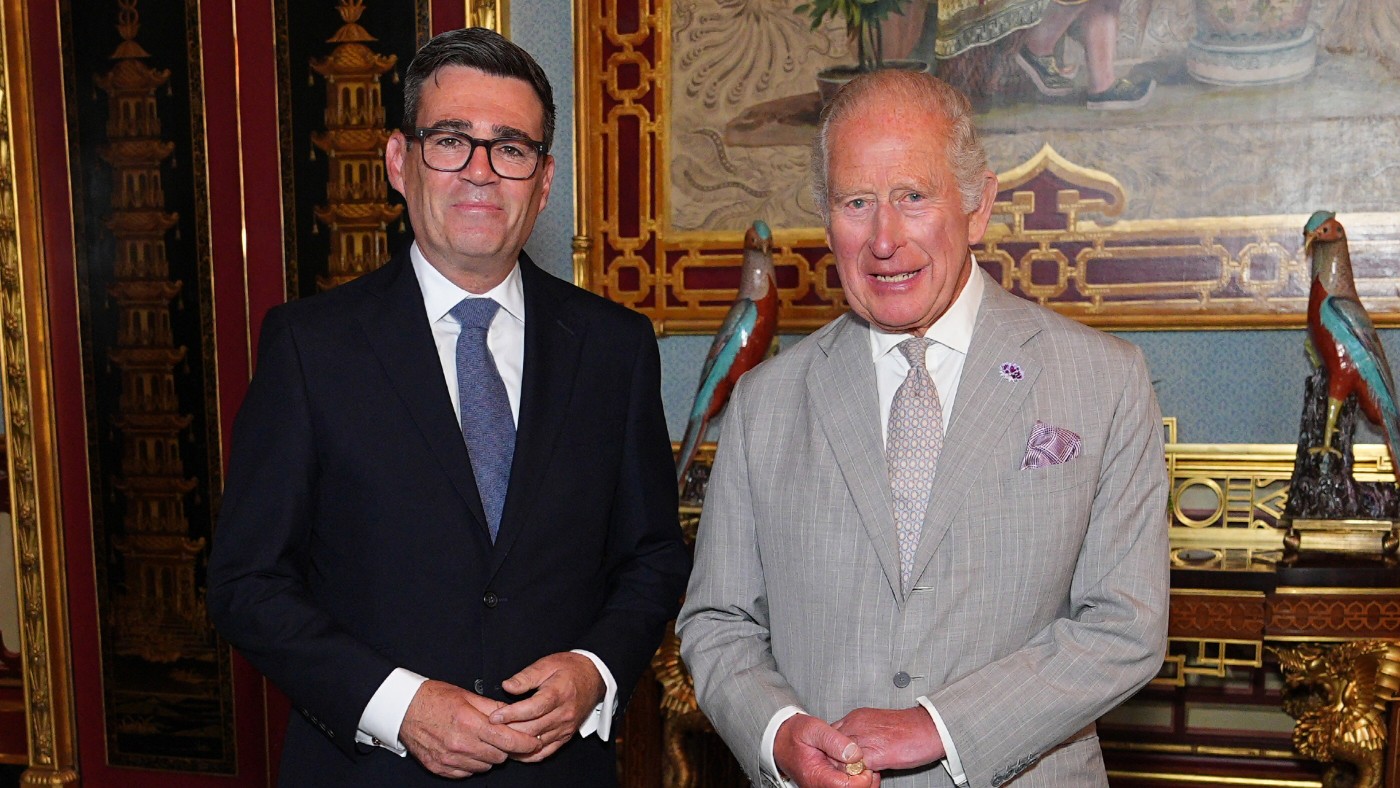
    In a historic transfer of power at Downing Street on Monday, Andy Burnham was sworn in as the United Kingdom’s new prime minister, succeeding Keir Starmer and immediately setting out an ambitious agenda to reshape British politics and economics after decades of neoliberal restructuring. The former mayor of Greater Manchester, who previously served as a cabinet minister during the New Labour governments of Tony Blair and Gordon Brown, used his first address to the nation to acknowledge the extraordinary political volatility Britain has experienced over the past eight years, noting he is the seventh prime minister to hold office since 2016.

    “It requires my generation of politicians to raise our game and rise to the new challenge,” Burnham told the crowd assembled outside 10 Downing Street.

    Aligning himself with progressive priorities first championed by former Labour leader Jeremy Corbyn, Burnham revealed that his first official order of business as prime minister will be to end the national crisis of rough sleeping across the UK. He outlined that a sweeping 10-year national strategy will be introduced later this year, mapping a unified path forward for all British citizens regardless of socioeconomic background or partisan affiliation. While the full long-term plan will be unveiled in the coming months, Burnham pledged immediate targeted action to ease the strain of the ongoing cost of living crisis, with specific relief measures — including details on how the policies will be funded — set to be announced Tuesday.

    On the foreign policy front, the new prime minister offered few new details, confirming only that the UK will uphold all existing defence commitments to its international allies while focusing domestic policy efforts on tackling the cost of living crisis.

    The core of Burnham’s inaugural address was a sharp rebuke of the neoliberal economic framework introduced by Margaret Thatcher’s Conservative government in 1979, which he said had left lasting damage to communities across the UK. He argued that Thatcher’s agenda triggered decades of centralized political power, mass privatization of public assets and deindustrialization that has never been reversed for left-behind regions.

    “Political power was centralised, economic power privatised, large parts of the country deindustrialised, and they still haven’t recovered,” Burnham said. “Many feel as though they’re still in decline, and they don’t have the ability to turn things around.”

    Thatcher’s administration privatized core national sectors including energy, water and social care, dismantling the post-World War II social democratic consensus that shaped British policy for nearly four decades. Notably, this neoliberal framework was largely retained by the New Labour governments Burnham served in between 1997 and 2010. The former prime minister’s vision of restructuring the economy was explicitly designed to reshape British society, with Thatcher famously stating in 1981 that “economics are the method; the object is to change the heart and soul.”

    A longstanding advocate of devolving power away from Westminster and London to regional and local governments across the UK, Burnham pledged to reverse decades of deindustrialization and rebuild a national economy that puts essential public services and utilities under greater public oversight to lower costs for households. He stopped short of committing to full nationalization of key industries, however. The new prime minister also promised to accelerate construction of affordable public council housing to address the UK’s ongoing housing crisis.

    Earlier in the day, outgoing prime minister Keir Starmer delivered his farewell address, framing his two years in office as a period of successful reform for the Labour Party and tangible progress for the country. Starmer took over the Labour leadership following the party’s 2019 general election defeat, and credited his internal reforms for delivering a landslide general election victory for Labour in 2024. In a notable break from his previous public comments, Starmer did not repeat his false claim that the Labour Party under Jeremy Corbyn had been institutionally antisemitic.

    Starmer claimed that during his tenure, public services have improved, child poverty has fallen, and net immigration to the UK has dropped substantially. Describing his time in office as the greatest privilege of his life, he reaffirmed his unflinching support for Ukraine amid Russia’s ongoing invasion. He framed Burnham’s ascent to the premiership as an orderly, peaceful handover of power, offering his full backing to the new prime minister.

    “I wish him every success,” Starmer said.

  • World Cup 2026: Israel loves Argentina but do Argentinians actually love them back?

    World Cup 2026: Israel loves Argentina but do Argentinians actually love them back?

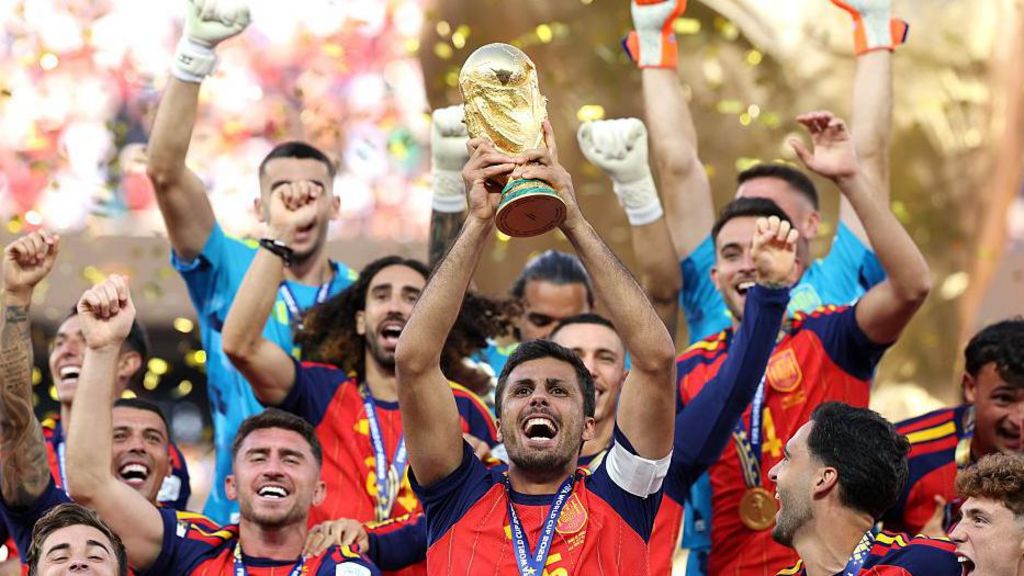
    The 2026 FIFA World Cup final between Argentina and Spain carried far more stakes than just a global football title, turning the world’s most-watched sporting event into an unexpected public stage for the ongoing Middle East conflict, driven by sharp shifts in the two nations’ foreign policy stances toward Israel and Palestine.

    Hours before kickoff at the final, Israeli Prime Minister Benjamin Netanyahu issued a public message of support to Argentine President Javier Milei, framing the new Argentine leader as a key ally. “Javier [Milei], you are a real friend, a great friend. We support you, we support Argentina, in so many ways,” Netanyahu said. While Spain ultimately claimed the trophy with a 1-0 victory over Argentina, the political symbolism of the match had already cemented itself in global public discourse, with social media users quickly aligning the two teams along the Israeli-Palestinian divide: Argentina was cast as Israel’s proxy side, while Spain was identified with Palestine.

    This alignment did not emerge out of thin air. Since taking office in December 2023, Milei has made unwavering support for Israel the cornerstone of Argentina’s foreign policy, a dramatic reversal of the country’s longstanding position. His predecessor, Cristina Fernandez de Kirchner, officially recognized Palestinian statehood back in 2010. Milei, by contrast, has stood firmly with Netanyahu throughout Israel’s military campaign in Gaza, has publicly announced his intention to convert to Judaism, and has pledged to relocate Argentina’s embassy from Tel Aviv to Jerusalem – a move that aligns Argentina closely with Israeli policy.

    On the other side of the divide, the Spanish government under Prime Minister Pedro Sanchez has taken the opposite approach. Sanchez has openly condemned what the original report terms Israel’s genocide in Gaza, has called for Israeli leaders responsible for civilian casualties to face international arrest, and officially recognized the State of Palestine as a sovereign nation in 2024. Even the teams’ star players became wrapped up in this political contrast: Argentina captain Lionel Messi has faced repeated scrutiny over his past ties to Israel, while young Spanish star Lamine Yamal made headlines last season when he displayed a Palestinian flag after FC Barcelona won the Spanish La Liga title.

    Netanyahu was far from the only Israeli politician to publicly back Argentina ahead of the final, with the entire right-wing Israeli cabinet leaning into the political narrative. Argentina’s newly appointed ambassador to Israel, Rabbi Shimon Axel Wahnish, met with far-right Finance Minister Bezalel Smotrich ahead of the match, gifting him an Argentina national team jersey and an official 2026 World Cup match ball. Smotrich – who the ICC prosecutor has also requested an arrest warrant for over alleged war crimes against Palestinians in the occupied West Bank – echoed Netanyahu’s support, saying “Every patriotic Israeli supports Argentina. Go Argentina!”

    Other senior Israeli officials quickly followed suit. National Security Minister Itamar Ben Gvir, another controversial far-right figure, stated “We will love those who love Israel. Let’s go, Argentina.” Transport Minister Miri Regev posted public congratulations to Milei and the Argentine people, writing “Fingers crossed for you in the final!” Even Foreign Minister Gideon Saar and Israel’s UN ambassador Danny Danon publicly celebrated Argentina’s previous victories on the road to the final.

    However, Israeli leaders’ enthusiastic support for Argentina is rooted in its alignment with Milei, not the Argentine people themselves – a distinction that both Netanyahu and Argentine public opinion have made clear. A February-to-May 2026 Pew Research Center survey of Argentine public opinion found that 55% of respondents held a very or somewhat unfavorable view of Israel, with just 21% holding a favorable opinion. The divide between Milei’s policy and public sentiment was captured in a viral video filmed after Argentina’s semi-final win over England, where one Argentine fan rejected the framing of the team as an Israeli proxy. “No Argentinian that is a real Argentinian supports Israel,” she said. “Don’t believe our fucking president that has been put with money there.”

    Netanyahu himself has openly acknowledged that Israel’s support stems from Milei’s leadership, not broader Argentine sentiment. Speaking on the Ben Ben Baruch podcast, he noted “They have a president who’s a superstar… Milei is a huge friend of Israel.” In a meeting with Argentina’s ambassador to Israel, he added: “I don’t hide the fact that I’m an Argentina fan. Most Israelis are Argentina fans, because President Milei has revolutionised Argentina’s relations with us. We have no greater or better friend.”

    The political contrast also evokes the legacy of legendary Argentine footballer Diego Maradona, who took a very different stance from Milei’s current alignment with Israel. Unlike Messi, Maradona – who died in 2020 – was an outspoken supporter of Palestinian statehood, and met with Palestinian Authority President Mahmoud Abbas during the 2018 World Cup in Russia. “In my heart, I am Palestinian,” Maradona said at the time.