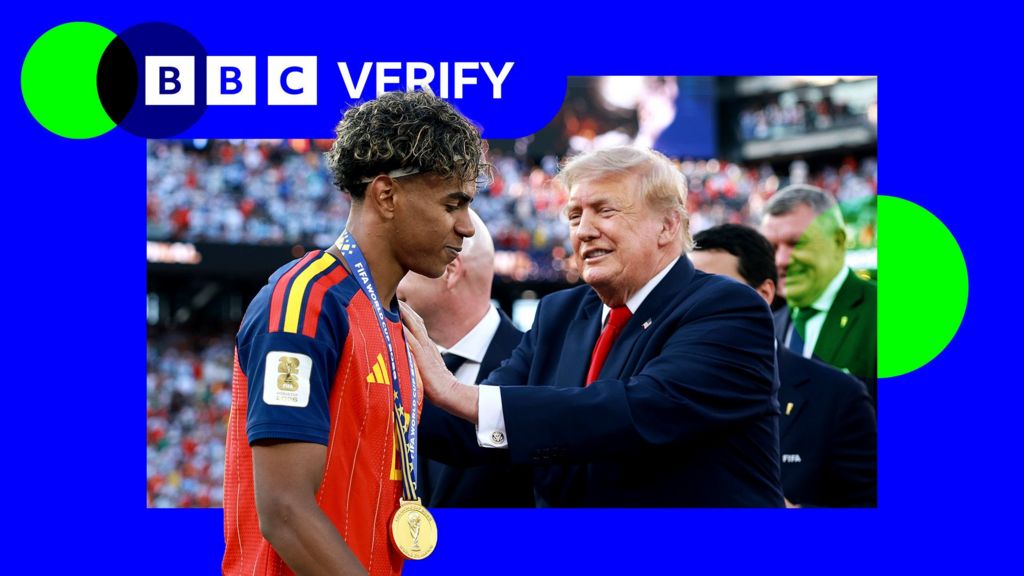
In the lead-up to and aftermath of one of the world’s most-watched sporting events, the 2022 FIFA World Cup final, misleading social media content centered on former U.S. President Donald Trump and rising Spanish soccer star Lamine Yamal spread rapidly across major platforms, reaching millions of viewers in just days.
The false content, which ranks among the most viral misleading posts connected to the tournament, framed a false narrative linking Trump to an incident or interaction with the 16-year-old prodigy at the final match held in Qatar. Fact-checking organizations quickly stepped in to debunk the claims, confirming that no such interaction ever took place and that the posts relied on heavily edited footage, out-of-context clips, and fabricated captions to generate engagement.
The rapid spread of this misinformation highlights a growing ongoing challenge: how major social media platforms manage false content surrounding high-profile global events that draw billions of eyeballs. Soccer fans around the world shared the posts without verifying their authenticity, amplifying the false narrative to their own networks and helping the misleading content rack up views in the multi-millions before fact-checkers could flag most instances of the post.
Experts on digital misinformation note that posts combining polarizing political figures like Trump with popular young sports stars are particularly prone to going viral, as they tap into existing partisan engagement and widespread interest in global soccer to drive shares and clicks. Many platforms have implemented misinformation policies designed to limit the reach of false content, but these policies often fail to catch viral misleading posts before they reach massive audiences, especially during fast-moving live events like the World Cup.