博客

  • South Africa’s Ramaphosa calls for African action on migration

    South Africa’s Ramaphosa calls for African action on migration

    Against a backdrop of escalating anti-foreign-national violence and growing domestic political pressure, South African President Cyril Ramaphosa has issued a urgent call for coordinated collective action among African nations to manage cross-border migration, warning that the continent cannot tackle the unfolding crisis through isolated national efforts alone.

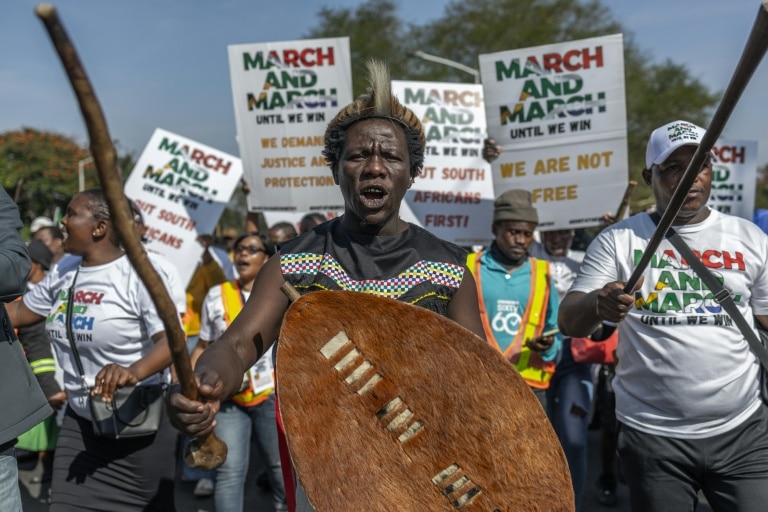
    Ramaphosa delivered his appeal during an official session of the Pan-African Parliament, the legislative arm of the African Union, on Monday. His address comes after weeks of widespread xenophobic protests across South Africa, where fringe activist groups have scapegoated undocumented African migrants for the country’s persistent crime rates, high unemployment, and overstretched public infrastructure and services.

    The current wave of unrest traces its origins to demonstrations that began in 2024, centered on disputes over undocumented migrants’ access to public healthcare. Tensions surged sharply this year when extremist xenophobic groups issued a deadline demanding all undocumented foreign nationals leave South Africa by June 30. To date, the violence has claimed at least four confirmed migrant lives, though several foreign governments have stated the actual death toll is significantly higher. According to an Agence France-Presse count compiled from data provided by repatriating governments, more than 160,000 foreign nationals have left South Africa over the past two months, marking one of the largest coordinated migrant exoduses the country has seen in recent history.

    “Unmanaged cross-border movement poses a tangible risk to regional security and social cohesion, and no single country can confront this challenge on its own,” Ramaphosa told lawmakers. “As African states, we must first recognize and address the root conditions that force people to leave their home countries in search of safety and opportunity. These include ongoing conflict, political instability, failed governance systems, widespread poverty, and deep social division.”

    Ramaphosa explicitly condemned the ongoing attacks, describing the violence as “sad and abhorrent.” “We in South Africa deeply regret and mourn every life lost to this hatred,” he said. “Our government has taken a firm, unwavering stand against xenophobia, Afrophobia, and hatred directed at people from other African nations.”

    This latest outbreak of anti-migrant violence has drawn sharp condemnation from across the continent. Ghana, which has been one of the most vocal critics of the attacks, has pushed the African Union to convene a formal debate on the crisis. Two Ghanaian citizens have also submitted a petition to the International Criminal Court calling for a formal investigation into repeated xenophobic attacks in South Africa, a move that South African officials have dismissed as “opportunistic.”

    As Africa’s most industrialized and wealthiest economy, South Africa has long been a magnet for economic migrants and asylum seekers from poorer and conflict-affected nations across the continent. But the country has grappled with recurring cycles of xenophobic violence for nearly 20 years. The deadliest outbreak on record occurred in 2008, when anti-immigrant riots left 62 people dead and displaced thousands more. Subsequent waves of violence followed in 2015 and 2016, and 2019 attacks left at least 12 people dead, most of whom were South African citizens caught up in the unrest.

    What sets the 2024 crisis apart from previous outbreaks is the unprecedented coordinated response: for the first time, multiple African governments have organized simultaneous voluntary repatriation programs to move thousands of their citizens out of South Africa amid ongoing threats.

  • Gunther von Hagens, the German anatomist behind the ‘Body Worlds’ exhibition, dies at 81

    Gunther von Hagens, the German anatomist behind the ‘Body Worlds’ exhibition, dies at 81

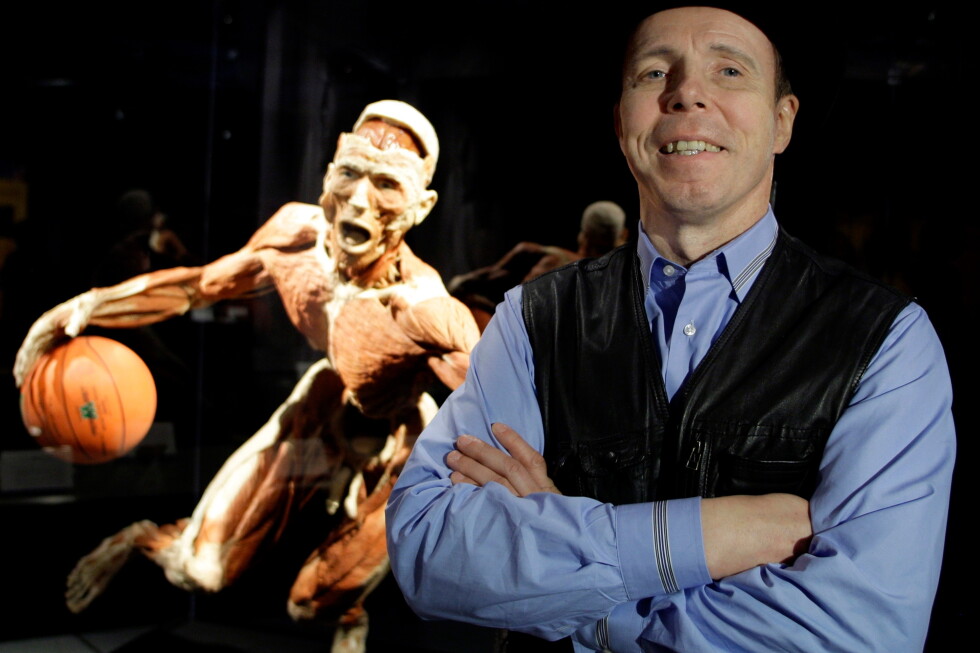
    Legendary German anatomist Gunther von Hagens, the polarizing innovator whose traveling ‘Body Worlds’ exhibits of plastinated human bodies sparked global fascination, fierce ethical debate and shifted public understanding of human anatomy, has passed away at the age of 81. His family and the Institute for Plastination, the research organization he founded, confirmed that von Hagens died on Friday, with no additional details about his death provided in the official statement released Monday. The anatomist had publicly disclosed a Parkinson’s disease diagnosis in 2010, having lived with the condition for more than a decade.

    At the core of von Hagens’ decades-long career was his revolutionary development of the plastination technique, a preservation method he began refining in the 1970s. The process replaces natural bodily fluids with curable liquid plastic that hardens over time, stopping tissue decomposition while preserving the full structure of organs and cells. This breakthrough allowed von Hagens to create lifelike, durable displays of human bodies that brought internal anatomy out of medical school laboratories and into public view.

    The first ‘Body Worlds’ exhibition launched in Japan in 1995, marking the start of a global cultural phenomenon. Two years later, the show opened in von Hagens’ native Germany, overcoming fierce opposition from religious leaders who tried to block the exhibit on the grounds that it disrespected the human dignity of the deceased. Defending his work, von Hagens emphasized that his goal was not to shock, but to educate the public: by seeing real human anatomy up close, everyday people could better understand how their own bodies function. “I touch here a taboo, which is our body, and nothing is so near as our body is to us,” he once said of his work, arguing that his exhibits forced necessary conversations about long-held cultural taboos surrounding death and the human form.

    All bodies displayed in ‘Body Worlds’ are donated by individuals who explicitly agreed to give their bodies for public education and plastination. Even so, von Hagens faced persistent criticism from religious leaders and medical ethicists who accused him of crossing into sensationalism. Controversial displays — including a plastinated corpse posed riding a horse, and a pregnant donor preserving her eight-month fetus — drew particular condemnation. When the exhibit opened in Berlin in 2001, the Reverend Ernst Pulsfort of Berlin’s Catholic Academy argued von Hagens “plays with the corpses like a child plays with dolls,” claiming the show catered only to public curiosity for shock rather than genuine education.

    Von Hagens doubled down on his unapologetic approach in 2002, when he conducted Britain’s first public autopsy in 170 years during a ‘Body Worlds’ run in London. Wearing his signature black fedora, the anatomist performed the procedure before a sold-out crowd of hundreds, ignoring official government warnings that the act violated public health rules. He called the event a “huge success,” while the head of ethics for the British Medical Association, Dr. Michael Wilkes, condemned it as “degrading and disrespectful.”

    After making its United States debut in Los Angeles in 2004, ‘Body Worlds’ went on to tour dozens of major cities across the country, drawing millions of visitors. In 2006, von Hagens opened the Plastinarium, his purpose-built facility for plastination work, in the eastern German town of Guben.

    Born Gunther Liebchen on January 10, 1945, in what is now western Poland, von Hagens’ early life was shaped by Cold War division. He began medical school in Jena, East Germany, but grew disillusioned with the communist regime and attempted to escape to West Germany. The attempt failed, and he was imprisoned before West Germany purchased his release in 1970, a common practice for political detainees during that era. He resumed his medical studies at the University of Luebeck, and later joined the pathology and anatomy institute at Heidelberg University in the 1970s, where he began his pioneering work on preservation. He adopted the surname von Hagens from his first wife Cornelia, a former classmate, and went on to have three children with her. His second wife, Angelina Whalley, currently leads the Institute for Plastination in Heidelberg and curates the ‘Body Worlds’ exhibitions.

    In accordance with his long-stated wishes, von Hagens’ own body will undergo plastination following his death, the Monday statement confirmed, adding that his family will honor and carry out this request.

  • More than 600 US military service members injured since Iran War began in February

    More than 600 US military service members injured since Iran War began in February

    Worsening tensions between the United States and Iran, which have lingered despite a landmark April ceasefire and June memorandum of understanding, have taken a new controversial turn over the Pentagon’s unexplained shuffling of military casualty statistics, drawing sharp bipartisan criticism over government transparency.

    According to the Pentagon’s latest July 25 update, at least 624 active-duty U.S. service members have sustained injuries since former President Donald Trump ordered the initial strikes against Iran in February. Of that total, 417 are officially categorized as casualties of Operation Epic Fury — the name given to Washington’s opening offensive — while the remaining 207 are grouped under a newly created, vague designation called “Overseas Operations.”

    In an unannounced revision to public casualty records last week, defense department officials moved the names of four deceased service members previously counted in Operation Epic Fury’s death toll over to the new Overseas Operations category. As recently as this Tuesday, the Pentagon’s public Defense Analysis Casualty System listed 18 deaths and 482 wounded personnel tied to the initial operation. By Thursday, that official death count had dropped to 14, with the four names relocated to the new category, which only tracks casualties from incidents occurring on or after July 7, 2026. Those four service members are currently the only fatalities listed under Overseas Operations.

    This silent, unexplained adjustment to both death and injury numbers has ignited pushback from lawmakers and retired military leaders, who accuse the administration of deliberately obscuring the true human cost of the ongoing conflict. Retired Lieutenant General Ben Hodges, who led U.S. European Command during Trump’s first term in office, argued that the data shift is part of a broader pattern of dishonesty from the administration about the state of the Iran war. “The administration seems to have a real hard time being honest about what is going on – not just about casualties, but about the whole war in general,” Hodges said.

    Republican Congressman Thomas Massie, a longstanding critic of Trump, took to social media platform X to denounce the split classification system, calling it nothing more than an “absurd ruse” to mislead the public. The BBC has reached out to the U.S. Department of Defense for additional clarification on the data changes, but has not yet received a detailed response beyond an official statement from Pentagon spokesman Sean Parnell.

    Parnell described the shifting numbers as “temporary data disruptions” in a post on X, adding that “these site anomalies are currently being resolved in coordination with the Military Services.” However, critics note the timeline of the new category’s creation raises red flags: The Associated Press confirmed that the “Overseas Operations” label appeared for the first time on the Pentagon’s website just this past Sunday, shortly after four U.S. soldiers were killed in mid-July attacks that shattered the months-long ceasefire.

    The context of those deaths further complicates the Pentagon’s explanation: Three service members were killed in an Iranian missile strike on a U.S. base in Jordan on July 17, and a fourth died in Iraq during the controlled detonation of an Iranian drone. The fatal incidents came after Trump declared the April-brokered ceasefire “over” following weeks of rising tit-for-tat attacks between the two nations, which have continued despite the June bilateral memorandum of understanding. From mid-July through late last week, U.S. forces launched 13 consecutive nights of strikes on Iranian military infrastructure, which drew reciprocal fire on American bases in neighboring countries. A temporary pause in hostilities has held since Friday, marking three straight nights of no attacks from either side as of Sunday.

    The discrepancy between Trump’s public comments and the newly adjusted official data also raises questions: In a July 21 post on his Truth Social platform, Trump stated that the “Iran Military Conflict” had claimed 18 American lives, matching the original Operation Epic Fury death count that has since been revised downward. It also remains unclear whether all 207 wounded personnel listed under Overseas Operations were injured in Iran-related attacks, leaving the full confirmed casualty count of the months-long conflict unconfirmed for the American public.

  • China’s Fields Medals triumph raises bigger math questions

    China’s Fields Medals triumph raises bigger math questions

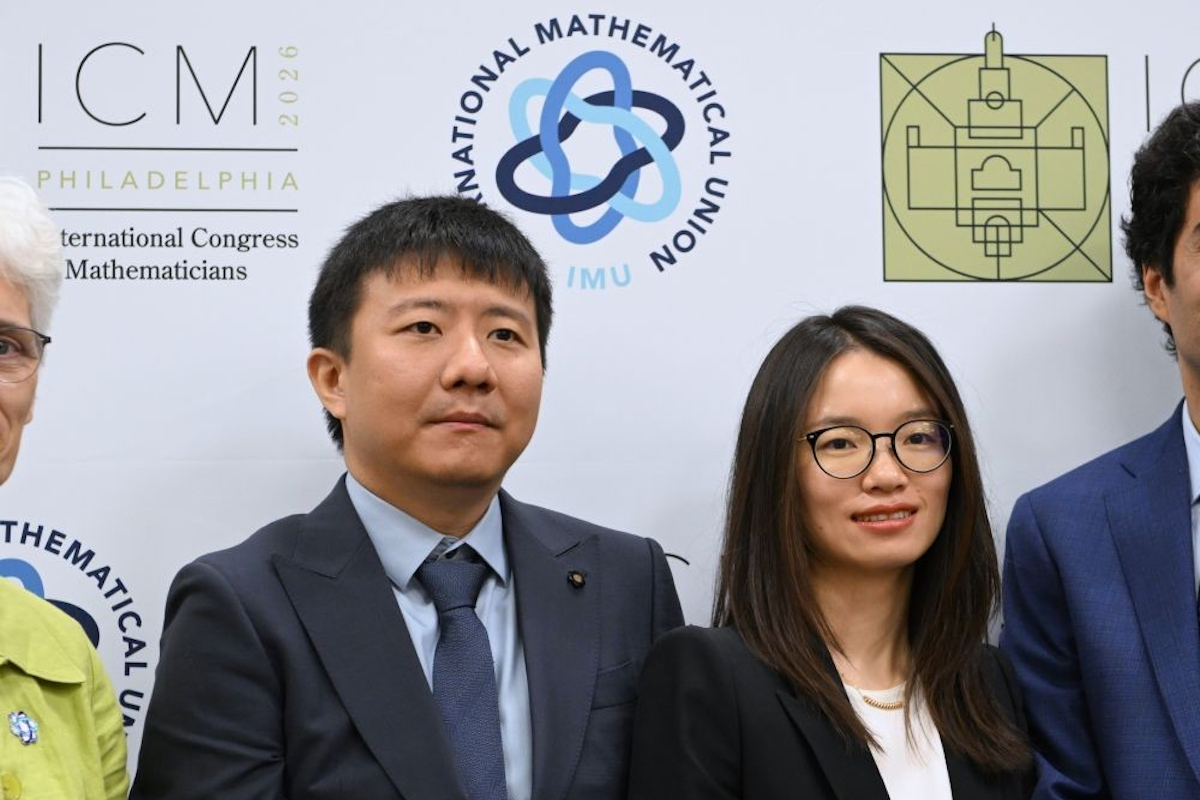
    On July 23, 2026, a historic milestone unfolded at the International Congress of Mathematicians hosted in Philadelphia: Hong Wang and Yu Deng became the first citizens of the People’s Republic of China to claim the Fields Medal, the 90-year-old highest honor in the field of mathematics. Beyond this groundbreaking first, Wang added a second layer of history to the moment, joining just two other women — Maryam Mirzakhani and Maryna Viazovska — to ever receive the award.

    While this achievement is universally celebrated, it opens a far more nuanced question that neither nationalist triumphalism nor dismissive skepticism can answer: what exactly does the Fields Medal measure? The answer is far from a real-time snapshot of any nation’s current scientific policy. Like light emitted from distant stars, awards in fundamental science reach audiences long after the work that earned them was set in motion. Any government that interprets this year’s win as an up-to-date grade for its latest research strategy is misreading the signal entirely.

    Many observers default to framing the Fields Medal as a national scoreboard, but the career trajectories of Wang and Deng defy this simplistic framing. Both mathematicians enrolled at Peking University as part of the 2007 incoming cohort, but their paths quickly extended beyond China’s borders. Wang pursued graduate study in France before completing her doctorate at the Massachusetts Institute of Technology, while Deng transferred to MIT in 2009 and earned his PhD at Princeton University. Today, Wang holds dual academic appointments at New York University and France’s Institut des Hautes Études Scientifiques, and Deng is a faculty member at the University of Chicago. Even French President Emmanuel Macron highlighted Wang’s cross-border career when he called to congratulate her, using her story to promote France as a global hub for scientific talent. In truth, three or four different nations could justifiably claim a stake in this pair of historic achievements.

    This transnational footprint is no accident — it is the core structure of elite modern scientific discovery. The foundational phase of talent development: the rigorous K-12 schooling, competitive problem-solving circuits, and intensive undergraduate training that cultivates researchers capable of tackling century-old unsolved problems, is largely rooted in national systems and takes roughly two decades to complete. But the phase where talent truly flourishes — access to world-class mentors, collaborative seminar cultures, and institutional tolerance for a decade of apparent unproductivity — is an increasingly transnational process, shaped by global research networks. In the case of Wang and Deng, China laid the exceptional foundational groundwork, while specialized research institutions across three countries created the conditions for their breakthroughs. Neither phase alone could have produced a Fields Medal-worthy result.

    Digging deeper into this story reveals a broader lesson that applies to research systems across the globe. For decades, China dominated the International Mathematical Olympiad, the premier high school competition, but failed to produce a Fields Medalist — and that gap held clear lessons. Olympiad success rewards quick problem-solving on questions that are already known to be solvable within a tight four-hour window. Cutting-edge mathematical research demands the exact opposite mindset: the patience to commit to a problem that could take a decade to solve, or may never yield an answer at all.

    Wang and her collaborator Joshua Zahl ultimately resolved a century-old open question first posed by Soichi Kakeya in 1917. Deng, working with co-researchers Zaher Hani and Xiao Ma, closed out a long-standing formulation of one of David Hilbert’s famous 1900 list of 23 unsolved mathematical problems. Few modern research metrics and evaluation systems are designed to reward work that unfolds on this multi-decade timeline.

    This is the widely transferable insight from the 2026 awards, and it challenges more research systems than it praises. Research funding bureaucracies across Asia, Europe, and North America have increasingly converged on short performance review cycles, overreliance on publication counts, and rigid near-term deliverable requirements. Very few of these systems successfully protect the long time horizons that ground-breaking fundamental work requires. In this light, the Fields Medals stand as a quiet but powerful argument for patient investment in science — the very kind of long-horizon funding that most public and private funders have steadily retreated from in recent years.

    Within hours of the medal announcement, two competing national anxieties emerged, both of which miss the core point of the achievement. On Chinese social media, users questioned why the nation’s top undergraduate students leave to pursue graduate study and careers abroad. In Washington D.C., the same win was framed as evidence of American scientific decline. Both readings treat leading mathematicians as national assets in a zero-sum global competition, a framing that ignores how modern mathematical discovery actually works.

    This zero-sum framing is fundamentally incorrect, and the breakthroughs themselves prove it. Wang’s landmark result was completed in collaboration with a researcher at the University of British Columbia, while Deng’s work relied on partnerships with scholars based at the University of Michigan. Once a mathematical theorem is published, it becomes a permanent global public good: it is non-rival, meaning one researcher’s use does not diminish another’s, and non-excludable, available to any graduate student in Lagos or Lahore the moment it is posted to the open access preprint server arXiv. The real downstream impact of work like the Kakeya conjecture resolution, which underpins advances in harmonic analysis, wave propagation, signal analysis, and medical imaging, accrues to any researcher who chooses to build on it, regardless of what passport they hold.

    If there is a meaningful policy lesson to draw from this year’s awards, it does not center on which nation can claim a win. Instead, it asks whether the cross-border pipeline that produced these two winners can survive growing geopolitical pressure. That pipeline depended on unimpeded academic mobility: Chinese undergraduates gaining seamless access to top American doctoral programs, French research institutions hiring the best global talent regardless of nationality, and collaborative teams forming freely across national borders. Today, as governments increasingly sort researchers by nationality and perceived security risk, that open pipeline is growing far harder to sustain. Gradually, the free circulation of talent is being replaced by rigid sorting along national lines.

    This shift carries a steep potential cost. The 2026 Fields Medals are the product of an open, interconnected global research system. It is reasonable to ask whether a more closed, fragmented system will be able to produce similarly groundbreaking results when the next International Congress of Mathematicians meets in 2030.

    The awards also arrive at a moment of growing debate over artificial intelligence’s role in mathematical discovery, reinforcing a key truth: greater computational power does not eliminate the need for human judgment to identify which problems are worth devoting years, even decades, of work to.

    Ultimately, the most honest reading of the 2026 Fields Medal ceremony in Philadelphia is not a story of one nation’s ascendance nor another’s decline. It is a reminder that mathematics remains one of the few truly borderless human enterprises, and its greatest breakthroughs still emerge only from systems brave enough to fund a hard question for a century and wait for an answer.
  • What to know about the historic wildfires in France and Spain

    What to know about the historic wildfires in France and Spain

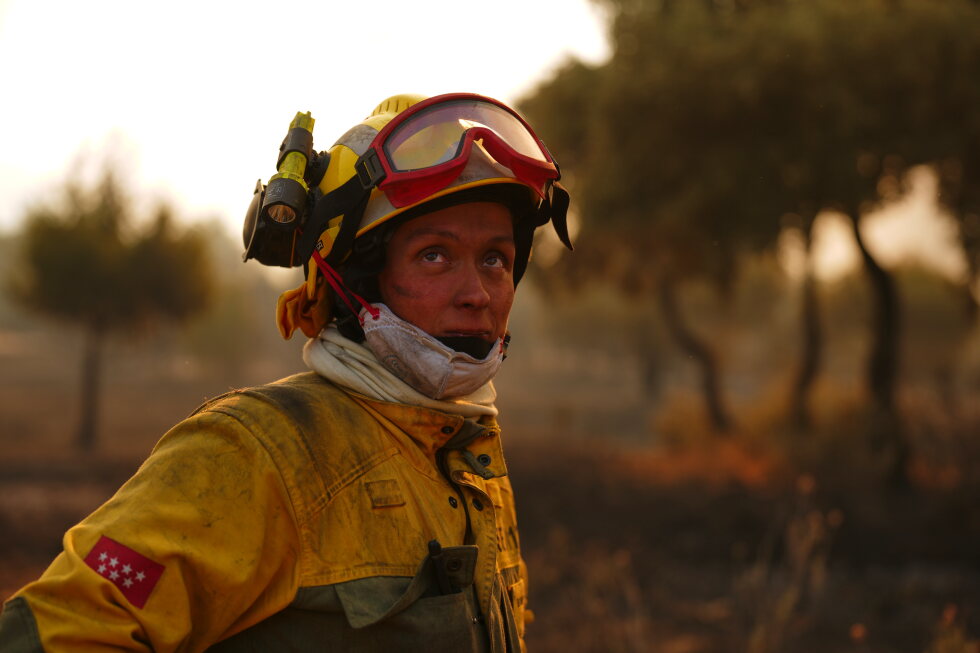
    PARIS — Unrelenting heat waves and months of deficient rainfall across Western Europe have sparked catastrophic, historic wildfires that have driven hundreds of thousands of people from their homes, marking one of the largest mass evacuation efforts on the continent since World War II. Forecasts of even higher temperatures later this week threaten to hinder containment efforts, as blazes have already scorched an area four times the size of Paris across southwestern France and continue to burn dangerously close to Spain’s capital, Madrid.

    Decades of climate data confirm that Europe is warming faster than most other regions on the planet, and 2025 has already seen multiple extreme heat events that have primed the landscape for uncontrollable wildfire. While Spanish firefighters have described the current blazes as too intense for direct frontal attacks, officials in France reported a small but hopeful development on Monday: the rapid spread of the massive Gironde region fire appears to be slowing for the first time.

    A core driver of this disaster is the rising heat and dryness amplified by human-caused climate change. Prolonged above-average temperatures starting with a record-breaking June heat wave created widespread drought conditions across the region. Extreme heat saps moisture from vegetation, turning even normally damp brush and trees into perfectly flammable fuel that allows flames to spread much faster and burn with far greater intensity than historic wildfires. This summer’s extreme heat was effectively impossible without the influence of climate change, according to a June analysis from the international research collective World Weather Attribution.

    French national meteorological service Météo-France confirmed that June 2025 was the hottest ever recorded in the country, with average temperatures 3.8 degrees Celsius (6.8 degrees Fahrenheit) higher than long-term norms, while total rainfall dropped to nearly half the average for the month. Spain, which already faces regular summer wildfire season, has seen conditions grow far more dangerous as climate change pushes summer temperatures higher and extends dry periods. Compounding this risk is the decades-long decline of traditional farming and forest industries that once cleared overgrown vegetation, leaving large swathes of unmanaged wilderness primed to ignite like a tinderbox.

    This year’s wildfire season has already shattered all previous European records. Data from the European Union’s European Forest Fire Information System shows more than 300,000 hectares (3,000 square kilometers, or 1,160 square miles) have burned across France and Spain alone to date. France’s Interior Ministry reports that 115,000 hectares (1,150 square kilometers, 444 square miles) have burned in the country since January – the highest annual total recorded in France’s modern history, surpassing all previous full-year wildfire damage.

    In Spain, the total burned area so far this year has reached 153,000 hectares (1,530 square kilometers, 591 square miles), six times the total area burned in the first half of 2024, according to Ecological Transition Minister Sara Aagesen. Just over a week ago, the country saw its second largest and third largest wildfires on record burn simultaneously. One blaze in rural Avila, located west of Madrid, alone consumed more than 50,000 hectares of land. Earlier this month, 13 people died in a wildfire in southeastern Almeria, marking Spain’s deadliest wildfire event in recent memory.

    To date, more than 300,000 people have been displaced from their homes across the two countries, an event the European Union described Monday as one of the largest evacuation operations in modern European history. In France alone, more than 250,000 people have been evacuated, 220,000 of them from the southwestern Gironde region. As France prepares to enter its peak August tourist season, Gironde officials have implemented strict emergency measures, closing popular holiday destinations and banning holiday camps for children and people with disabilities to avoid putting more lives at risk. In Spain, the government confirmed 76,000 people have been evacuated, while an additional 30,000 remain confined to their homes as fires advance near their communities.

    European countries have rallied to support the affected nations through cross-border emergency aid. European Commissioner for crisis management Hadja Lahbib announced Monday that the EU has coordinated the deployment of seven firefighting aircraft and four helicopters from Czechia, Croatia, Germany, Portugal, Slovakia, Sweden and Turkey to France, while an additional six planes from Greece, Italy and Turkey have been sent to Spain. “No country should ever have to face a disaster of this scale alone,” Lahbib said in a statement. “To the people of France and Spain: Europe will stand with you until the fires are out.” The EU’s Copernicus satellite program is also providing emergency responders with real-time, updated maps of fire risk to support containment efforts.

    Reporting contributions from Gabor Szalai in Budapest, Hungary, Joseph Wilson in Barcelona, Spain, and Sam McNeil in Brussels.

  • Pakistan monsoon death toll tops 100 in a month as more heavy rain forecast

    Pakistan monsoon death toll tops 100 in a month as more heavy rain forecast

    One month into Pakistan’s 2024 monsoon season, the human cost of persistent rain and sudden flash flooding has climbed past 100 fatalities, with national forecasters issuing fresh alerts that more severe downpours are set to sweep across the country later this week.

    As of Monday, Pakistan’s National Disaster Management Authority (NDMA) confirmed that 109 people have lost their lives to weather-related incidents since monsoon rains began on June 26. The majority of fatalities stem from collapsing homes and failing building roofs, a common hazard when saturated structures buckle under relentless rainfall. Nearly half of all reported deaths have been concentrated in northwestern Khyber Pakhtunkhwa province, a rugged border region that shares a frontier with Afghanistan.

    The latest fatality update was released just 24 hours after NDMA officials wrapped up a nationwide review of flood preparedness protocols. During the assessment meeting, leadership prioritized improving early warning outreach to vulnerable communities located along major river basins, with plans to enable either voluntary relocation or mandatory evacuation before floodwaters can submerge residential areas.

    Last week’s intense downpour event already tested the country’s response capacity, when heavy storms battered multiple regions including Lahore, Pakistan’s bustling cultural capital. Several residential neighborhoods in the city were left submerged under floodwaters, forcing daily commuters to navigate long, unplanned detours to reach their destinations. Viral social media footage captured local residents wading through waist-deep floodwaters to move around the city, sparking widespread public criticism from Lahore residents who have questioned the government’s level of preparation and emergency response to extreme weather events.

    In the months leading up to this year’s monsoon, national authorities have repeatedly warned that the country cannot dismiss the risk of a repeat of the catastrophic 2022 flood disaster. That unprecedented extreme weather event submerged roughly one-third of Pakistan’s total land area, claimed the lives of 1,737 people, and displaced millions of residents from their homes, leaving a lasting mark on the country’s infrastructure and economic stability.

  • Questions mount after deadly Berlin Pride attack. Here’s what to know

    Questions mount after deadly Berlin Pride attack. Here’s what to know

    BERLIN – A wave of collective mourning swept across Berlin this week, after a 21-year-old German citizen with confirmed Islamic State ties carried out a deadly extremist attack near the city’s annual Pride festival, leaving one person dead and 29 others injured. The incident has ignited urgent national scrutiny over how the convicted extremist was permitted to remain at large in the community ahead of the assault, just months before key regional elections across Germany. The attacker, Abdul Ballout – a German-born man of Lebanese descent – was shot and killed by law enforcement following a nearly 24-hour manhunt that ended Sunday. Investigators and federal authorities have confirmed the incident was an Islamist terror attack: Ballout deliberately drove a rental van into a crowd of pedestrians near the Pride festival grounds on Saturday night, before exiting the vehicle and attacking additional bystanders with a machete.

    Questions around Ballout’s release from custody have quickly become the central point of public and political controversy, with top German officials demanding a full review of how the attack could have been prevented. Prosecutors confirmed Ballout has a long documented history of extremism: in 2025, he traveled from Germany to Lebanon, with the explicit intention of crossing into Syria to join the Islamic State. He was arrested by Lebanese authorities before he could complete the journey, and convicted by a Lebanese military court on charges including incitement to religious and sectarian conflict, serving a three-month prison sentence before being deported back to Germany. He was taken into custody immediately upon his arrival at Berlin’s airport.

    In May 2025, a Berlin juvenile court – which hears cases for offenders between 18 and 21 years old under German law – convicted Ballout on multiple charges, including preparing a serious act of state-endangering violence and distributing Islamic State propaganda via his public Instagram account. He was sentenced to one year and 10 months of youth custody, a ruling Berlin public prosecutors appealed in search of a harsher penalty. Conflicting initial statements initially muddled details of the sentence: some officials claimed it had been suspended, but Berlin courts clarified that no final suspension had been granted. Instead, Ballout was released from pre-trial detention – which had already been extended for a longer period than standard – because he did not meet statutory thresholds to be deemed a flight risk or an imminent threat of reoffending under current German law.

    The court’s decision to release Ballout has drawn sharp criticism from senior government officials, who are now calling for a full investigation and potential reform to Germany’s juvenile sentencing rules, which critics argue are excessively lenient for extremist offenders. “It makes no sense that this man, with his confirmed conviction and history of supporting ISIS, was free on our streets,” Federal Interior Minister Alexander Dobrindt told public broadcaster ZDF in an interview Monday. “It stands to reason that placing this person in custody would have been the correct and responsible step.” Berlin Mayor Kai Wegner, while stopping short of questioning the constitutional independence of the German judiciary, described the outcome as “unfathomable.”

    Deradicalization officials who evaluated Ballout prior to the attack have confirmed they repeatedly flagged him as a high-risk threat who refused to cooperate with intervention programs. The Berlin-based Violence Prevention Network, a non-profit that works with at-risk extremists from both Islamist and far-right backgrounds, was ordered by the court to conduct three evaluations of Ballout for a court-mandated high-risk deradicalization program. The organization’s communications director, Cornelia Lotthammer, told reporters Ballout was scheduled to attend his third and final evaluation on the very day the attack occurred. Staff planned to recommend Ballout be rejected from the program, Lotthammer said: unlike most high-risk extremists, who openly espouse their ideology during assessments, Ballout deliberately attempted to mislead evaluators by pretending he had abandoned extremist beliefs, and refused to engage honestly with the intervention process. “Everyone knew he was a high-risk person,” Lotthammer said. “But if he will not cooperate, there is nothing our program can do. No one associated with our work would have ever said he was not a threat and should be released.” She added that evaluators had no prior indication Ballout was planning an imminent attack, and would have alerted law enforcement immediately if they had seen any warning signs.

    The tragedy comes at a politically charged moment for Germany, with three regional elections – including one in Berlin – scheduled for September 2025. Political analysts warn the attack will likely amplify already tense debate over migration and extremism, and could benefit the far-right Alternative for Germany (AfD), which has already centered its campaign on anti-migration rhetoric after finishing second in the 2025 federal election. The party is currently seeking to win its first state governorship in the eastern state of Saxony-Anhalt, and has already seized on the Berlin attack to attack the current federal and city government. “How is an Islamic State supporter able to walk free in Germany after being convicted of extremism?” AfD’s Berlin leader Kristin Brinker wrote on social media platform X. “Who in the city government bears responsibility for this failure?”

    German Chancellor Friedrich Merz has echoed the demand for full accountability, saying the federal government’s top priority must be closing gaps in public safety that allowed the attack to occur. “We must do everything in our power to protect the German public as effectively as possible from criminals and dangerous people who cannot be taken into custody for any reason,” Merz said Monday. Officials have confirmed a full inter-agency investigation is now underway to review every step of Ballout’s case, and to identify what regulatory or legislative changes are needed to prevent similar attacks in the future.

  • Rapper Yung Filly testifies at his rape trial in Australia

    Rapper Yung Filly testifies at his rape trial in Australia

    High-profile British rapper Yung Filly has taken the witness stand at his ongoing rape trial held in Australia, telling the court that interactions between himself and the woman who has brought the accusation against him were entirely positive following a nightclub performance.

    The performer, who has built a significant global fanbase through his music and online content, appeared before the court to give his account of the encounter in question. According to his testimony, the atmosphere between him and the alleged victim was relaxed and mutually enjoyable after he finished his set at the local nightclub venue. His statement marks the first public account of the incident from the artist himself since the legal proceedings began.

    The trial, which is being held at an Australian court, is ongoing as prosecutors and the defense present their respective evidence and witness accounts to the jury. Legal processes continue to move forward as the court works toward a final verdict in the case.

  • Anger, shock and grief – questions remain in the wake of the Berlin Pride attack

    Anger, shock and grief – questions remain in the wake of the Berlin Pride attack

    Germany is grappling with overlapping waves of grief, shock, and growing public anger following a deadly assault that targeted Saturday night’s Berlin Pride celebration, leaving one Polish woman dead and at least 29 other people injured. The 21-year-old main suspect, Abdul Ballout — a German citizen of Lebanese descent — was fatally shot by police during an operation Sunday afternoon, ending the immediate manhunt but opening intense scrutiny of how a man flagged for extremism and criminal activity remained free to carry out the attack.

    Details of Ballout’s long-documented extremist ties and criminal history have emerged in the days after the violence, raising urgent questions about systemic failures in German law enforcement and judicial processing. Prosecutors’ investigations outline a clear pattern of radicalization stretching back more than a year: in 2025, Ballout made the deliberate decision to travel to Syria via Turkey and Lebanon to join the Islamic State group’s armed insurgency, and met with individuals he believed to be IS operatives while in Lebanon. He was arrested by Lebanese authorities in July 2025, receiving a three-month prison sentence for inciting religious and sectarian conflict before being deported back to Germany.

    Upon his arrival at Berlin Brandenburg Airport in November 2025, German authorities took Ballout into pre-trial detention. In May of this year, a Berlin court handed down a juvenile sentence of one year and 10 months for the charge of “preparing a serious act of violence endangering the state.” In a decision that has now sparked national fury, the court suspended the sentence pending an appeal from prosecutors, who had argued for a far longer custodial term. Ballout was released immediately and placed only under the supervision of a probation officer, despite being formally flagged as a security risk.

    German Interior Minister Alexander Dobrindt publicly acknowledged that the suspended sentence decision was “certainly incomprehensible” given the severity of the threat Ballout posed, confirming that national authorities have launched a full investigation into the handling of his case. Berlin’s Governing Mayor Kai Wegner, a member of the centre-right Christian Democratic Union, echoed the public frustration, telling local media he was left dumbstruck by the judiciary’s handling of the case. While he declined to overtly critique the court’s ruling out of respect for judicial independence, Wegner noted that Ballout was tried under juvenile law and ultimately released on a suspended sentence, leaving him “really at a loss for words.”

    Opposition parties have seized on the attack to level sharp criticism at German security policy. The far-right Alternative for Germany’s home affairs spokesperson Martin Hess called the assault a “total failure of security policy,” demanding a full inquiry into why a known Islamist threat was permitted to move freely in public. Even as political leaders criticize the court’s decision, new details have emerged about how Ballout managed to convince authorities he had renounced extremism: Der Spiegel reports that Ballout told the Berlin court during spring proceedings that he had fully distanced himself from extremist ideology and violence. Thomas Mücke, an extremism researcher with the Violence Prevention Network who met with Ballout, told public broadcaster ARD that the suspect presented a calm, controlled, and friendly facade to social workers — a demeanor that Mücke now says masked his true intentions, noting that such controlled performances often make it difficult for intervention specialists to detect hidden radicalization.

    The attack has reignited a national debate over whether Germany needs to tighten its anti-terrorism legislation and reform its juvenile justice framework. Peter Neumann, a security studies expert at King’s College London, told German public broadcaster ZDF that Germany’s existing anti-terrorism criminal law is “too lenient” by European standards, with the country’s sentencing guidelines producing far shorter sentences than comparable European nations. Neumann also called for a full review of Germany’s juvenile justice system, which he argued prioritizes rehabilitation and education over public safety.

    Other political leaders have pushed back against claims that the law itself is flawed, arguing instead that the failure lies in inconsistent application of existing rules. Sebastian Fiedler, home affairs spokesperson for the centre-left Social Democrats, told Deutschlandfunk radio that the core question is not the text of criminal law, but why Ballout remained at large despite repeated red flags. “We need to look more closely at why [Ballout] was still at large,” Fiedler said. “Another key question is: ‘What actually happened after his release from prison? Who was he still in contact with?’ Although he was under surveillance, there was clearly a gap in the system.”

    German Chancellor Friedrich Merz has promised decisive action in response to the attack, saying that while it is too early to outline specific political consequences, the government will act with both prudence and determination. Merz argued that any individual classified as a security threat who cannot be held in full detention must have their movement restricted “as much as possible,” questioning why modern tracking technology allows for personal location monitoring globally, yet German security agencies cannot consistently track the whereabouts of known threats. The chancellor has already requested the interior ministry conduct a full review of German laws governing monitoring jurisdiction to close gaps that allowed Ballout to remain free.

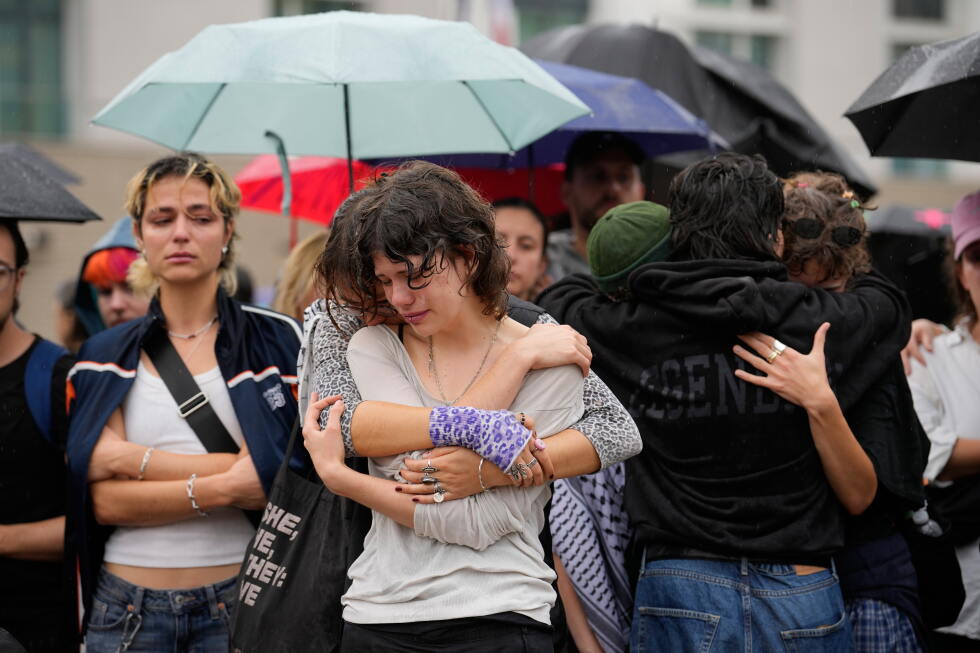
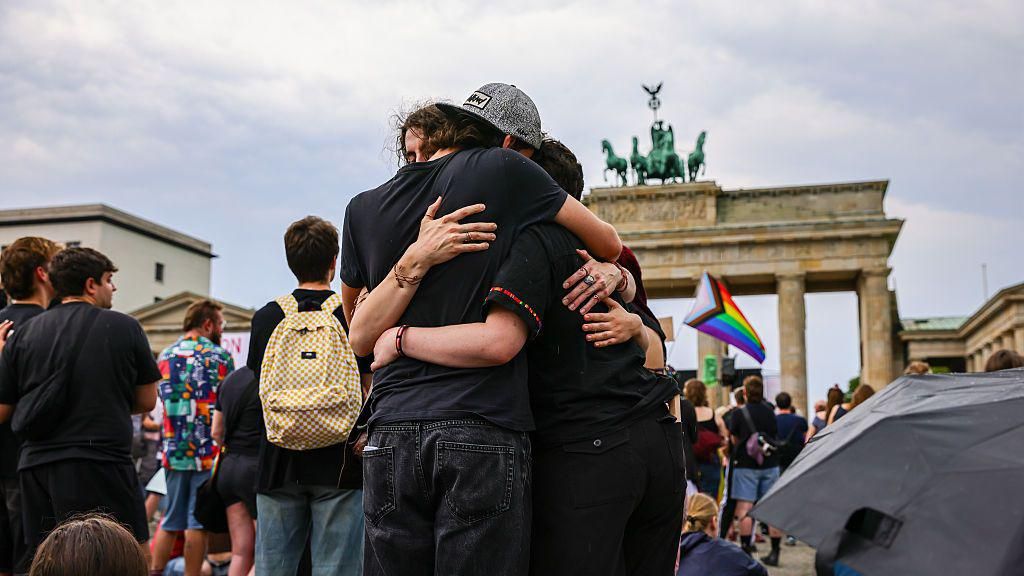
    On Sunday, hundreds of mourners gathered near Berlin’s iconic Brandenburg Gate to honor the victim of the attack, a quiet demonstration of grief that comes as the nation demands accountability for the systemic failures that allowed the violence to occur.

  • Why are thousands of mosquitoes being released in Washington DC?

    Why are thousands of mosquitoes being released in Washington DC?

    To many residents of Washington D.C., the idea of intentionally releasing thousands of mosquitoes into the capital’s urban landscape sounds like the start of a summer nightmare. However, this counterintuitive initiative is actually a carefully designed pest management strategy aimed at curbing problematic mosquito populations that carry disease and disrupt daily life.

    The program focuses exclusively on releasing male mosquitoes, a detail that sets this approach apart from traditional chemical-based pest control. Unlike female mosquitoes, which require blood meals to develop their eggs and are the only ones that bite humans and animals, male mosquitoes feed solely on nectar and plant juices, posing no direct threat to people.

    This method works by leveraging a naturally occurring bacteria called *Wolbachia*, which is carried by the released male mosquitoes. When these modified males mate with wild female mosquitoes that do not carry the same bacteria strain, the eggs produced from these unions do not hatch, preventing the next generation of biting females from emerging. Over time, this suppresses the overall mosquito population without the widespread use of insecticides that can harm beneficial pollinators like bees and butterflies, or leave chemical residues in the environment.

    Local environmental and public health officials have emphasized that this targeted approach aligns with growing efforts to shift toward more sustainable, eco-friendly pest management practices in urban areas. By reducing reliance on chemical treatments, the initiative not only addresses nuisance mosquito populations but also supports broader biodiversity goals in the nation’s capital. While the concept may seem surprising at first glance, it represents a growing trend of using natural biological solutions to tackle common urban pest challenges.