博客

  • ‘Dr Death’, Body Worlds creator Gunther von Hagens, dies at 81

    ‘Dr Death’, Body Worlds creator Gunther von Hagens, dies at 81

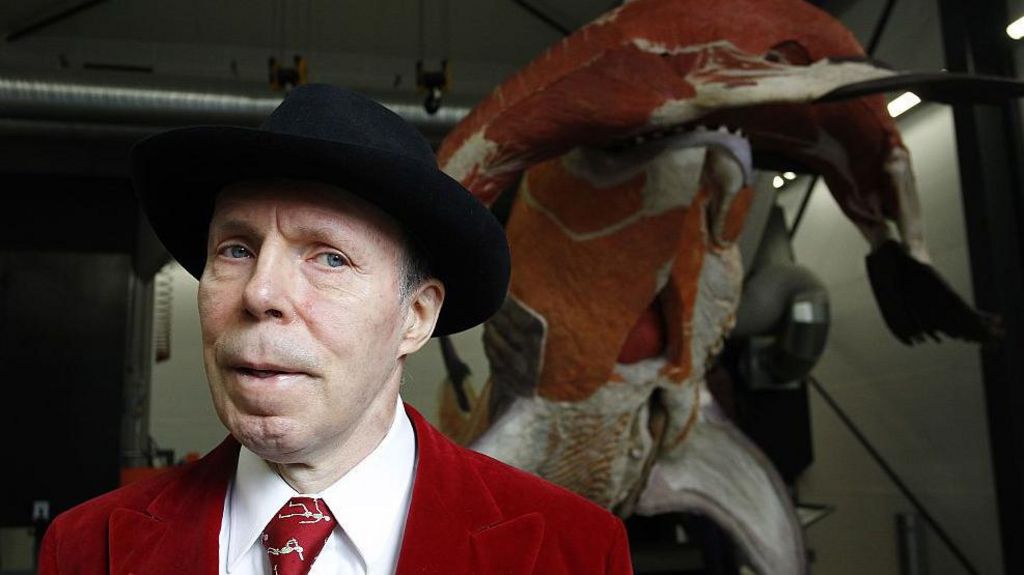
    Gunther von Hagens, the polarizing anatomist behind the globally famous *Body Worlds* exhibitions that put preserved dissected human and animal remains on public display, has passed away at 81, his family confirmed in an official statement this week.

    Born in Nazi-occupied Poland during the final months of World War II, von Hagens spent his childhood in communist East Germany before escaping to West Germany in 1970. It was in the years following his escape that he revolutionized anatomical preservation with the invention of plastination, a groundbreaking technique that replaces bodily fluids and fatty tissue in deceased specimens with durable rubber and polymer plastics. Initially, plastinated specimens were primarily used as educational tools for university medical programs and scientific research institutions, but von Hagens always harbored a goal of making anatomy accessible to people outside academic circles. That goal came to fruition in the late 1990s, when he launched the first touring *Body Worlds* exhibitions, opening the inner workings of the human body to millions of everyday people around the globe.

    Von Hagens, who was often nicknamed “Doctor Death” by the media and public due to his work with human remains, had lived with Parkinson’s disease for nearly 20 years before his death. According to his family, he was admitted to a clinic in Heidelberg, Germany, last Thursday after suffering a brain hemorrhage, and died the following day.

    True to his life’s work, von Hagens left a clear final wish: that his own body undergo the plastination process after his death, to be added to future exhibitions. His family confirmed in their statement that they will honor this request fully. To date, more than 58 million people across the world have attended *Body Worlds* exhibitions, a milestone that cemented von Hagens’ status as one of the most recognizable figures in public anatomy education.

    Throughout his decades-long career, von Hagens drew both lavish praise and fierce condemnation from communities around the world. Supporters, including many of his academic colleagues, remember him as a pioneering innovator who demystified human anatomy for the general public, turning a topic once reserved for medical students into something accessible and engaging for all. But his work also sparked persistent controversy: religious organizations and ethicists repeatedly objected to the public display of human remains, while critics have accused him of voyeurism and turning human death into a commercial profit stream. One of his most controversial acts came in 2002, when he conducted the first public, televised autopsy in London in 170 years. Though UK authorities had warned the event could violate local laws, no criminal charges were ever filed against him.

  • South Africa investigates death of Nigerian who collapsed during arrest

    South Africa investigates death of Nigerian who collapsed during arrest

    Diplomatic tensions between Nigeria and South Africa have escalated following the death of a second Nigerian national during a South African police operation this month, with Nigerian officials condemning what they call a pattern of abuse against foreign nationals. The latest incident unfolded last week in Cape Town, where 42-year-old Ibeh Chika Simon collapsed and died as officers moved to arrest him during a residential search, according to official statements.

    During the search of the Cape Town property, Western Cape police reported recovering an unlicensed firearm and substances suspected to be illicit drugs. Police spokesperson Colonel Andre Traut explained that as officers attempted to take Simon into custody, he suddenly became unwell and collapsed. Emergency medical services were dispatched to the scene immediately, but Simon was pronounced dead on site.

    Preliminary post-mortem examinations conducted on Simon’s body revealed he had multiple bruises and abrasions across his back and chest, according to the Independent Police Investigative Directorate (Ipid), South Africa’s independent oversight body for police conduct, which is now leading the official probe into the death.

    Nigeria’s top diplomat in Johannesburg, Consul General Ninikanwa Okey-Uche, released a scathing statement this week saying her nation was deeply appalled by reports of excessive police tactics that led to Simon’s death. She called for a fully transparent, independent investigation into the incident, highlighting what she described as an alarming pattern of unresolved extrajudicial killings and serious misconduct targeting foreign nationals in South Africa. Okey-Uche emphasized that all criminal suspects are guaranteed the right to due process under the law, and no law enforcement body is exempt from this requirement.

    The consul general also added that a second Nigerian national, Egwabor Patrick Chuks, was shot during the same police operation and remains hospitalized with life-threatening injuries. However, Western Cape police have stated they hold no official record of this shooting incident.

    Nigeria’s foreign ministry spokesperson Kimiebi Imomotimi Ebienfa described the episode as a deeply unfortunate situation in comments to the BBC on Monday, echoing the diplomatic community’s concern over the case.

    This death comes just weeks after South African authorities confirmed the death of another Nigerian man, Emeka Charles Iroegbu, in June during a similar arrest operation. That incident is also the subject of an active Ipid investigation. The two deaths have amplified existing tensions between the two African powers, which have already been strained by repeated allegations of targeted xenophobic violence against Nigerian residents in South Africa.

    South African officials have acknowledged the gravity of the incident and confirmed that official investigations are underway. During a regular public briefing on national migration policy held Sunday, the country’s Inter-Ministerial Committee on Migration confirmed it was monitoring the probe. Justice Minister Mmamoloko Kubayi, who chairs the committee, noted that during the Cape Town operation last Thursday, a group of foreign nationals had resisted law enforcement action, though she did not provide further details on the confrontation.

    As investigations proceed, both diplomatic communities are awaiting full forensic and investigative reports to clarify the circumstances of Simon’s death and address growing concerns over police conduct toward foreign nationals in South Africa.

  • China and Japan differ on whether their foreign ministers spoke last week at ASEAN

    China and Japan differ on whether their foreign ministers spoke last week at ASEAN

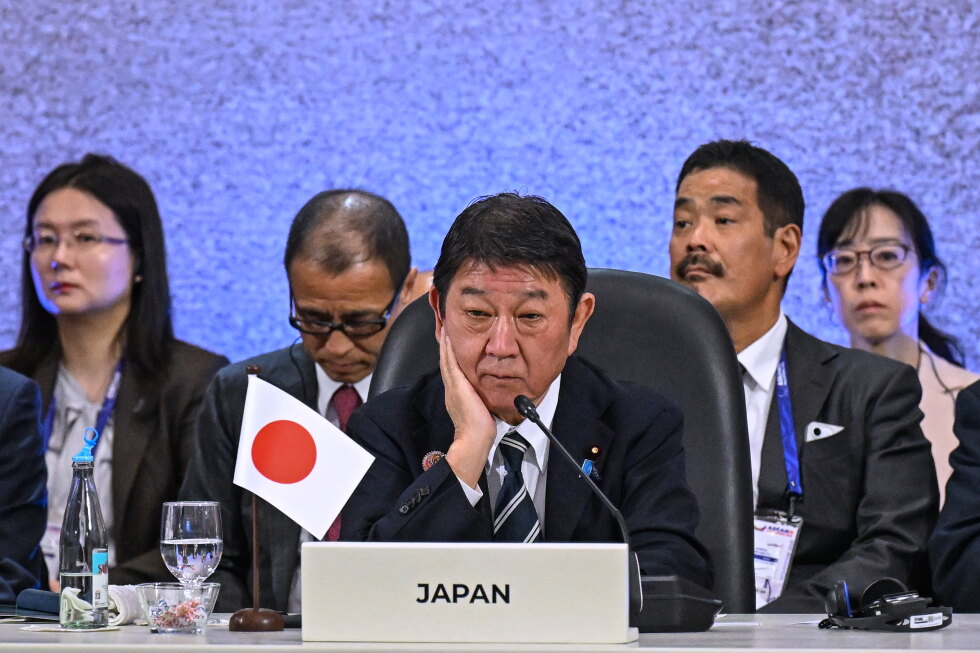
    Diplomatic friction between China and Japan has erupted into public view after conflicting official statements over whether a meeting between the two nations’ top diplomats took place at last week’s ASEAN Regional Forum held in Manila, the Philippines. The disagreement lays bare the sharp deterioration of bilateral relations that began in November, when Japanese Prime Minister Sanae Takaichi made a controversial comment on Taiwan that crossed a core red line for Beijing.

    Japanese Foreign Minister Toshimitsu Motegi initially told reporters that he had held an impromptu brief discussion on bilateral ties with his Chinese counterpart Wang Yi after the two encountered each other on the sidelines of the gathering. Japanese media later qualified the account, reporting that any interaction between the two officials would have amounted to no more than casual greetings and polite small talk. Despite this, Prime Minister Takaichi reaffirmed last Monday that dialogue is ongoing between the two countries at multiple levels, pointing to Motegi’s reported exchange with Wang as evidence.

    China’s foreign ministry flatly contradicted the Japanese account just one day later. At a regular daily press briefing, spokesperson Lin Jian issued a clear denial: “Let me make it clear once again that during his visit to Manila, Foreign Minister Wang Yi did not have a meeting with the Japanese side on his schedule, nor did any brief exchanges take place on the site.”

    The root of the current diplomatic freeze traces back to Takaichi’s first weeks in office, when she addressed parliament in November on Japan’s collective self-defense policy. The framework, which allows Japan’s military to deploy to support an allied nation—most commonly the United States—when certain conditions, including a threat to Japan’s own national survival, are met. When asked whether a Chinese military blockade or other armed action targeting Taiwan would qualify as a scenario that would trigger Japanese involvement under the policy, Takaichi said such an event could meet the criteria. “If it involves the use of warships and military actions, it could by all means become a survival-threatening situation,” she stated.

    The comment triggered immediate outrage from Beijing, which claims the self-governing island of Taiwan as its sovereign territory and rejects any foreign interference in cross-strait affairs. Any public comment or action that is seen as supporting Taiwan independence, including U.S. arms sales to the island, crosses what China labels a non-negotiable red line in its foreign relations. Takaichi has declined to withdraw her remark, though she later told the same parliamentary committee that she would avoid discussing specific collective self-defense scenarios moving forward.

    The ongoing diplomatic standoff follows a clear pattern in recent months: Japan has repeatedly signaled it is seeking opportunities to reopen high-level dialogue to repair frayed ties, while Beijing has refused to engage, maintaining a firm diplomatic cold shoulder toward Tokyo. These elevated tensions have already spilled over into the economic sphere, with a notable drop in the number of Chinese tourists choosing to visit Japan. Strategic mistrust has also deepened, with both nations growing increasingly uneasy over perceived military expansion by the other in the East Asia region.
    “As we have repeatedly noted, Japan is open to dialogue at all levels, and I believe it is extremely important that we continue our dialogue as both Japan and China hold a major responsibility for regional peace,” Motegi stated last week, reaffirming Tokyo’s ongoing push for diplomatic engagement.

  • China takes satellite race with SpaceX to sea

    China takes satellite race with SpaceX to sea

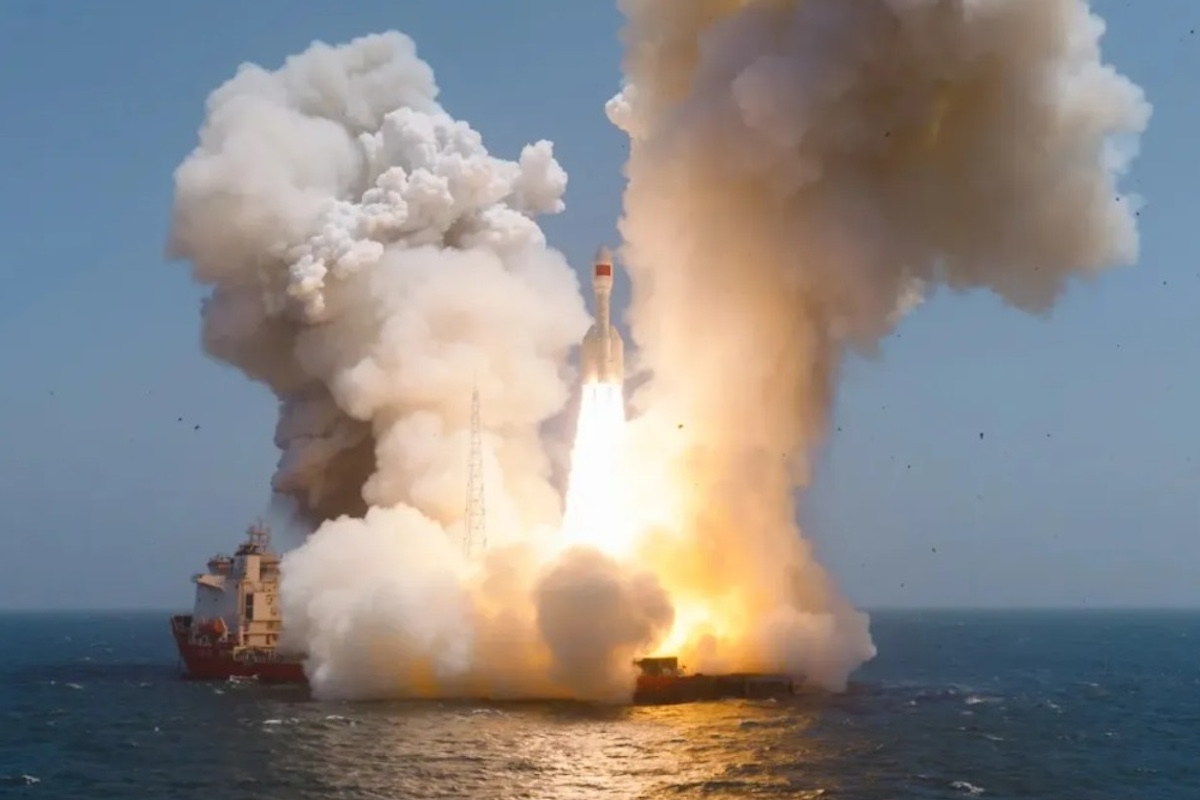
    In a landmark demonstration of advancing commercial and military space capabilities, Chinese commercial launch firm Orienspace has successfully completed the third flight of its Gravity-1 solid-propellant rocket, lifting nine satellites into pre-planned low Earth orbits from a mobile maritime launch platform off the coast of Shanghai in the East China Sea. Standing 30 meters tall with a total liftoff mass of 405 tons and generating 600 tons of liftoff thrust, Gravity-1 holds the title of the most powerful solid-fuel rocket currently operational worldwide, marking a major milestone for China’s expanding offshore space launch infrastructure.

    The January mission deployed a diverse array of payloads, including six Dongpo-series satellites combining optical imaging and synthetic aperture radar (SAR) technologies built for regional geographic mapping and emergency disaster response. It also carried two Earth observation satellites, Xiguang-2 01 and Tianyi-49, plus the Lilac-3 technology demonstration satellite. Of particular note is Xiguang-2 01, China’s first satellite to integrate on-board artificial intelligence capable of processing spatial imagery directly in orbit, a breakthrough that could enable near-real-time analysis and distribution of collected data to end users.

    Coordinated jointly between the Oriental Aerospace Port and the Taiyuan Satellite Launch Center, the long-distance open-ocean launch validated a key operational capability: solid-fuel rockets can be safely stored aboard maritime launch vessels for extended periods even in harsh open-sea conditions. This success establishes agile, high-volume offshore launch operations as a viable alternative to traditional fixed land-based spaceports, bringing a host of strategic and practical advantages.

    Mobile sea-based platforms resolve growing congestion at crowded land launch sites, while also allowing rockets to follow fuel-optimal launch trajectories that maximize the payload mass delivered to orbit per mission. Offshore launch infrastructure also opens new opportunities for first-stage booster recovery via specialized net-based capture systems, eliminating the need for heavy landing legs that add dead weight to rockets. This weight reduction improves fuel efficiency and enables reusable launch vehicles to carry larger payloads than their land-recovery counterparts.

    Analysts have increasingly focused on the dual military and commercial implications of China’s advances in mobile sea launch, solid-fuel rockets, and on-orbit AI processing. In a 2023 report for the Center for Security and Emerging Technology (CSET), researchers Corey Crowell and Sam Bresnick argue that China’s investment in small, mobile solid-fuel launch systems is designed to reduce dependence on vulnerable fixed land-based spaceports, while building a tactically responsive rapid launch capability.

    These improvements, they note, drastically boost China’s operational resilience in space by enabling the rapid replenishment of damaged or degraded satellite constellations — a capability that would be critical for maintaining command-and-control and precision targeting systems during high-intensity conflict. The researchers go so far as to conclude that China has now surpassed the United States in the ability to rapidly deploy or replace critical mission-supporting satellites during emergencies or wartime operations.

    The integration of on-orbit AI processing for imagery addresses a longstanding limitation of traditional space-based intelligence, surveillance, and reconnaissance (ISR) systems. Traditional satellites must transmit raw unprocessed imagery back to ground stations for analysis, creating delays that can make hours-old data obsolete when tracking time-sensitive moving targets such as warships, combat aircraft, and mobile missile launchers. By conducting preliminary detection and analysis directly in orbit, AI-equipped satellites can cut these delays dramatically, though analysts note findings still require cross-validation with other sensor platforms including unmanned aerial vehicles and over-the-horizon radar to generate reliable targeting data.

    Analysts point out that this faster targeting cycle could give China a strategic edge in countering the U.S. military’s Agile Combat Employment (ACE) strategy in the Indo-Pacific, which disperses U.S. aircraft across small, dispersed island airfields and regional bases to reduce vulnerability and improve survivability. With dispersed U.S. fighters capable of repositioning for new missions within three hours, AI-powered rapid surveillance can cut China’s targeting cycle to under 24 hours, potentially allowing forces to locate and threaten scattered aircraft before they can relocate again.

    Despite these technological advances, independent analysts emphasize that the United States retains a massive overall lead in orbital infrastructure. Writing for Think China in June 2026, Simon Gwozdz notes that the U.S. operates 78% of all active satellites in orbit globally, while China accounts for just 8%. The imbalance is even starker in low Earth orbit, where the U.S. operates 86% of satellites and China only 4%.

    Gwozdz attributes much of this gap to structural differences: the U.S. has leveraged a large, mature commercial launch sector to rapidly expand orbital deployment, while China’s launch industry still remains dominated by state-run space agencies. He also notes that even with recent technological breakthroughs by Chinese private firms, expanding overall launch capacity is far more challenging than increasing satellite production, due to geographic constraints, airspace management requirements, and limited availability of suitable launch sites.

    Even as the U.S. holds a clear numerical lead, analysts warn that its own launch ecosystem carries strategic vulnerabilities. In an April 2026 article for the Center for Strategic and International Studies (CSIS), Andy Yang observes that U.S. launch capacity is overwhelmingly concentrated in a single commercial provider: SpaceX. This heavy reliance on one company, Yang argues, creates a long-term strategic risk, as a critical national capability is tied to the capacity, business decisions, and institutional stability of a single entity.

    In contrast, China is pursuing a diversified approach: it is advancing multiple state-backed low Earth orbit constellation projects including Xingwang, Qianfan and Honghu, while also providing support for private domestic firms such as Orienspace and LandSpace to develop reusable launch vehicle technologies. Yang cautions that while China still lags behind the U.S. in total orbital scale, Chinese public and private actors could rapidly deploy large low Earth orbit constellations once they master mass production of reusable rockets.

    He warns that the combination of U.S. over-reliance on a single launch provider and China’s investment across the entire space ecosystem could allow China to expand its orbital footprint rapidly and pose a serious challenge to the current market dominance of SpaceX’s Starlink network.

    Beyond military competition, the long-term global space race is increasingly centered on control of the fast-emerging orbital economy. Writing for Think China this month, Akhmad Hanan argues that future leadership in space will not be decided by prestige-driven flagship exploration missions such as crewed Mars landings, but by the ability to operate large satellite constellations at the lowest sustainable cost and build a more comprehensive commercial space ecosystem than rival powers.

    Hanan notes that future space competition will be defined less by national pride or exploration milestones, and more by which countries and companies control the digital services, data infrastructure, and communications networks that underpin global economic activity, military operations, and everyday global connectivity. For China, the core challenge ahead is to convert its recent technological breakthroughs into an integrated launch system that can operate frequently, cheaply, and reliably — capable of both rapid wartime satellite replenishment and large-scale commercial constellation deployment and maintenance in peacetime.

    If China succeeds in this goal, the future of U.S. orbital advantage will depend not on the size of its current numerical lead, but on how quickly the U.S. can diversify its domestic launch provider base, reduce its dependence on a single company, and adapt its military and commercial space architecture to compete with a more distributed, responsive, and resilient Chinese space sector.

  • How ‘fire-generated thunderstorms’ make wildfires more deadly

    How ‘fire-generated thunderstorms’ make wildfires more deadly

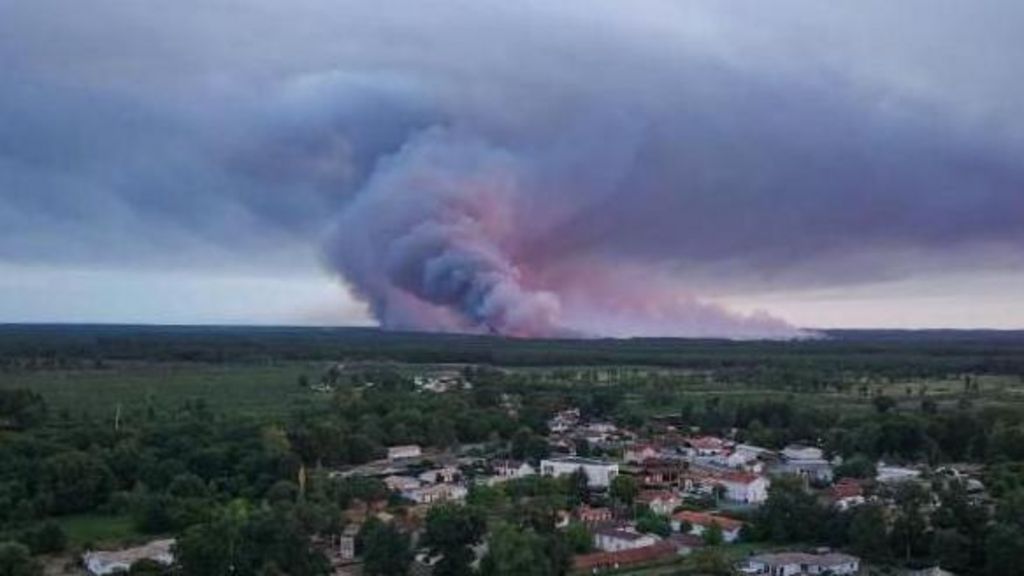
    As record-breaking heatwaves parched much of Western Europe this summer, France is confronting a new, unprecedented threat linked to its raging wildfires: the formation of pyrocumulonimbus clouds, rare fire-generated thunderstorms that have never before been documented in the country.

    Tens of thousands of residents have already been evacuated from the Gironde region surrounding Bordeaux, as authorities battle blazes supercharged by this extreme meteorological phenomenon. Scientists explain that pyrocumulonimbus clouds form when the intense heat from large wildfires forces hot air, filled with smoke, ash and water vapor, to surge rapidly into the upper atmosphere. As this rising air cools, water vapor condenses, and if the wildfire is powerful enough and atmospheric conditions are unstable, the formation grows into a towering cumulonimbus cloud — the same storm structure that produces ordinary thunderstorms.

    Unlike regular thunderstorms, these fire-generated storms make containing wildfires far more dangerous and unpredictable. Turbulent winds whipped up by the clouds hurl embers dozens of kilometers ahead of the main fire line, sparking new blazes in untouched areas. Lightning strikes from the clouds also ignite secondary fires, creating multiple fronts that stretch firefighting resources dangerously thin.

    This extreme event comes amid a summer of climate-fueled extreme heat across the continent. Unprecedented high temperatures and near-total lack of rainfall have left vast swathes of France, Spain and the United Kingdom tinder-dry, primed for destructive wildfires. As of Monday, local authorities in Gironde reported that the fire situation had stabilized overnight, but new threats loom on the horizon: a second heatwave, with forecasted highs reaching 40 degrees Celsius (104 degrees Fahrenheit), is expected to hit France later this week. A senior French response official has warned that the Gironde blazes will likely continue burning for “many weeks,” and could take months to fully extinguish.

    Pyrocumulonimbus clouds form most often under the exact dangerous conditions amplified by human-caused climate change: extreme heat, strong winds, and near-zero soil moisture. Climate scientists have long warned that rising global temperatures will make these rare extreme events far more common. While pyrocumulonimbus were once considered uncommon, major fire events around the world in recent years have already proven this prediction correct.

    The most prominent previous example occurred during Australia’s catastrophic 2019–2020 Black Summer bushfires, when dozens of pyrocumulonimbus clouds formed, creating self-sustaining “firestorms” that generated their own weather systems. That fire season remains one of the most destructive in Australia’s recorded history: it killed at least 33 people, including four firefighters, and burned more than 11 million hectares of land, an area roughly the size of Portugal. Fire officials in New South Wales recorded embers from the firestorms landing as far as 30 kilometers (18 miles) ahead of the main fire front — three times the typical spread distance for regular wildfires. NASA once nicknamed pyrocumulonimbus “the fire-breathing dragon of clouds,” noting that they act as chimneys that funnel massive amounts of smoke high into the stratosphere, while unleashing lightning, destructive winds and sporadic rain.

    Just a year later, extreme wildfires across the western U.S. state of California also generated multiple pyrocumulonimbus events in summer 2021, with smoky storm clouds towering more than 1.6 kilometers (a mile) above active blaze lines. That season, more than 7,300 wildfires burned 1 million hectares of land across California, killing at least three firefighters.

  • Pirlo out of Italy football top job after backlash over Russian betting firm links

    Pirlo out of Italy football top job after backlash over Russian betting firm links

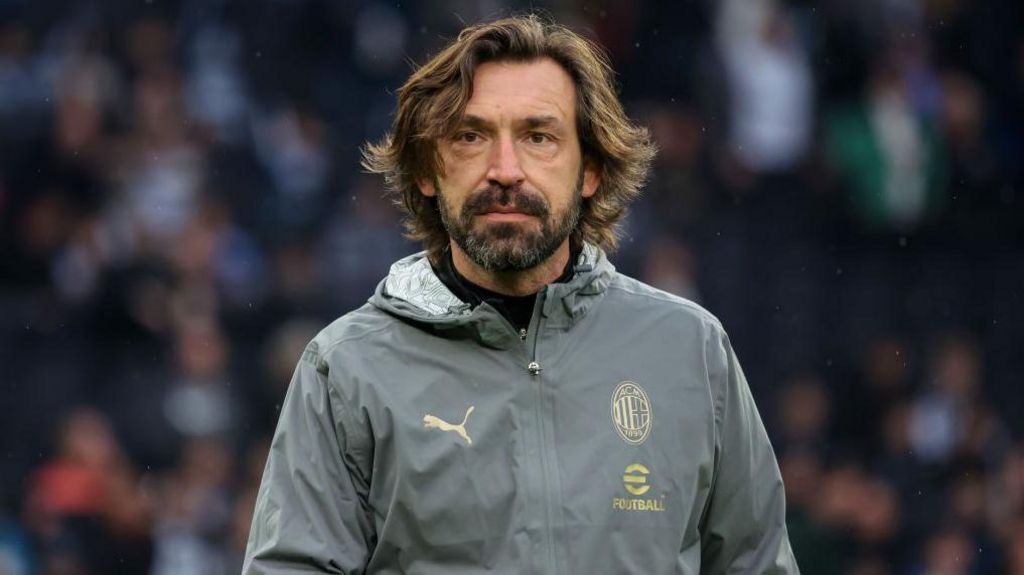
    One of Italian football’s most iconic former midfielders, Andrea Pirlo, has announced he is removing himself from consideration for the head coaching role of the Italian men’s national team, bringing an end to days of fierce public controversy over his professional partnership with a Russian-based betting company.

    Prior to Pirlo’s announcement, his selection as the next Azzurri manager had not been formally finalized by the Italian Football Federation (FIGC), but the appointment was widely viewed as an almost guaranteed outcome. The controversy ignited over the recent weekend, when multiple high-profile Italian politicians publicly condemned the federation’s expected choice, drawing attention to the 47-year-old coach’s role as a global ambassador for Fonbet, a Russian betting firm that Pirlo took on in October 2024.

    Critics have highlighted that Fonbet sponsors a range of sporting events for veterans of Russia’s military campaign in Ukraine, and has hosted public events in Russia where Pirlo appeared alongside prominent pro-Kremlin public figures. Carlo Calenda, leader of Italy’s centrist Azione party, laid out the core of the opposition in clear terms: “Anyone who is or has been promoting Russia after 2022 should not hold national office.”

    Pirlo, who currently serves as head coach of Dubai United in the United Arab Emirates and earned 116 caps for Italy as a player during a decorated club career with Juventus, AC Milan and Inter Milan, shared his announcement in an Instagram post published early Monday. He said he had watched the weeks-long discourse surrounding his potential appointment with deep frustration, and pushed back against accusations that his commercial partnership carried political undertones.

    “Over the last few days I watched, with great bitterness, the debate that swirled around my name,” Pirlo wrote. “Any professional collaboration I undertook in my capacity as coach for United FC in Dubai was exclusively of a commercial and sporting nature. To assign a political meaning to that collaboration means ascribing to me beliefs which I have never expressed and that do not belong to me.”

    The criticism extended beyond Italian national politics, with Pina Picierno, vice-president of the European Parliament, arguing that the expected appointment of Pirlo ran counter to the changes Italian football desperately needs. “Italian football desperately needed a cultural, ethical and managerial revolution, but the choice of Pirlo goes in the exact opposite direction,” Picierno said over the weekend.

    Unsurprisingly, the controversy drew a response from Russian diplomatic officials, with Aleksey Paramonov, Russia’s ambassador to Rome, expressing support for Pirlo and condemning the backlash. Paramonov called it “saddening” that Pirlo, who has made such an outsized contribution to global football and Italy’s international reputation, was now being ostracized in his home country over the partnership.

    Scrutiny of Pirlo’s ties to Fonbet first ramped up last spring, when he attended a company event held at Moscow’s Luzhniki Stadium alongside former Italy and Inter teammate Marco Materazzi for an autograph session. The event featured a performance by Shaman, a nationalist pro-Kremlin pop singer who has repeatedly publicly voiced support for Russia’s full-scale invasion of Ukraine. It also coincided with a large-scale Russian military strike on Ukraine, a detail that was quickly highlighted by Ukrainian athletes.

    Vladyslav Heraskevych, a Ukrainian skeleton racer who was disqualified from the 2022 Winter Olympics after wearing a helmet honoring Ukrainian athletes killed in the opening weeks of the war, issued sharp criticism of Pirlo at the time. Heraskevych also called out Pirlo for sharing the event with Russian international footballer Artem Dzyuba, who publicly stated he was “proud to be Russian” on social media following the invasion. “It’s sad to see childhood legends turn into moral bankrupts,” Heraskevych said.

    Now, the collapse of Pirlo’s expected appointment has created new instability for the FIGC, just weeks after a major organizational shakeup. Newly appointed technical director Paolo Maldini, who only took up his post on July 11, now faces growing speculation that he could resign over the failed process, according to multiple Italian media reports.

    Maldini and his senior adviser, former AC Milan teammate Leonardo, were brought in specifically to lead the search for a new head coach, who will be tasked with navigating a tough Nations League group that includes world champions France, Belgium and Turkey this autumn, before leading Italy’s qualifying campaign for Euro 2028.

    Italian football has been in a period of intense introspection since the national team failed to qualify for its third consecutive World Cup earlier this year. That failure, which came via a penalty shootout loss to Bosnia-Herzegovina in April, prompted the resignation of former head coach Gennaro Gattuso and a full restructuring of senior FIGC leadership.

    Before the federation settled on Pirlo as its preferred candidate, senior FIGC figures approached both Pep Guardiola of Manchester City and Real Madrid’s Carlo Ancelotti, but both managers declined the offer. According to Italian media reports, the FIGC is now turning back to the pool of available candidates, with former Italy head coaches Antonio Conte and Roberto Mancini emerging as the top contenders. Mancini led Italy to an unexpected Euro 2020 title before the team’s shocking failure to qualify for the 2022 Qatar World Cup, after which he stepped down to take the head coaching role with the Saudi Arabian national team.

  • Bali bans Dutch expats whose run club allegedly excluded Indonesians

    Bali bans Dutch expats whose run club allegedly excluded Indonesians

    A recent controversy involving an unauthorised running event on Indonesia’s resort island of Bali has led to permanent entry bans for two Dutch organisers, reigniting long-simmering tensions between foreign expatriates and local communities on the island popular with digital nomads.

    Indonesian immigration authorities confirmed the ban Friday, noting the two men — aged 35 and 37 — had already departed Bali for Singapore before the announcement was made public. The bans bar them from ever re-entering Indonesian territory. The event in question was organised by Entourage Bali, a community group catering primarily to foreign digital nomads that has come under fire after widespread online allegations of systemic discrimination against local Indonesian applicants.

    The controversy erupted after Entourage Bali opened registration for a 5-kilometre run scheduled for July 22. Multiple social media users shared testimonies claiming the organisation rejected Indonesian applicants while approving foreign registrations without issue. One Indonesian woman shared a viral post stating her application was held up indefinitely due to her local name and Indonesian phone number, while her husband, who uses a Western name and foreign phone number, was accepted within minutes.

    In response to the backlash, Entourage Bali released an official statement pushing back on the discrimination claims, arguing that any rejections of local applicants were the result of an accidental technical glitch. The group said its automated chat group approval system incorrectly blocked numbers registered in Indonesia, and that Indonesians actually made up nearly 25 percent of participants for its past events — the largest single national contingent in the community. It also emphasised that its membership is open to all people regardless of nationality, founded to help new arrivals to the island connect through shared activities, and that digital nomad status is not tied to citizenship.

    To address the ongoing controversy, the group announced it would pause all scheduled events indefinitely while it implements internal reforms. The organisation had previously held a popular “disco run” in May that drew a large crowd of mostly foreign participants.

    Indonesian officials have defended the ban, saying the organisers violated two key national rules: first, the event was planned and publicised without obtaining the required government permits, and second, the alleged discrimination ran counter to local laws and social norms. Indonesia’s immigration chief Hendarsam Marantoko framed the incident as part of a broader crackdown on foreign operators acting outside the law on Bali, saying the unregulated, exclusionary community amounted to an unacceptable “state within a state.”

    Bali Governor I Wayan Koster also publicly vowed Sunday that local authorities would take strict enforcement action to prevent similar exclusionary, unpermitted events from being organised in the future. The case comes as Bali has seen steady growth as a top global hub for digital nomads over the past decade, a boom that has also brought growing friction between foreign transplants and local residents over issues of access, entitlement, and exclusionary practices by some expatriate communities.

    Authorities have made clear they intend to step up oversight of foreign-led activities on the island to ensure all events comply with local regulations and respect equal treatment for Indonesian residents.

  • US deports Kenyan former NFL player Daniel Adongo

    US deports Kenyan former NFL player Daniel Adongo

    In a recent enforcement action that highlights how immigration laws apply equally to public figures and professional athletes, U.S. Immigration and Customs Enforcement (ICE) has confirmed that 37-year-old former NFL player Daniel Adongo was deported from the United States in June, more than nine years after he overstayed his work visa. A native of Kenya, Adongo spent three seasons as a linebacker with the Indianapolis Colts from 2013 to 2015, a tenure that made national headlines when he made the rare transition from professional rugby to American football despite never having played the sport at any level before.\n\nPer ICE records, Adongo’s visa expired in 2016, the year after his NFL career came to an end, and he remained in the country without legal authorization. After a years-long legal process, a deportation order was issued against him on March 23 of this year, and he was formally removed from U.S. territory on June 20. ICE officials have labeled Adongo a dangerous individual, and emphasized in an official statement that anyone who violates U.S. immigration law faces accountability regardless of their professional background or public profile.\n\n\”Those who violate immigration law are held equally accountable, including former professional athletes,\” Douglas Thompson, assistant field office director for ICE in Chicago, said in the agency’s statement. \”This dangerous individual was clearly a threat to the community, which is now safer since he’s been removed.\”\n\nAccording to ICE documentation, Adongo had been arrested multiple times over the past decade for offenses that include felony intimidation, battery, and disorderly conduct. Local reporting from the Indianapolis Star has shed additional light on Adongo’s struggles following his exit from the NFL: the publication confirmed that after he faced 2017 charges of intimidation and criminal mischief, a court ordered a psychiatric evaluation to assess his competency to stand trial. Evaluators ruled Adongo unfit for trial, and he was committed to a psychiatric facility for treatment. His trial was rescheduled multiple times, after he failed to pass subsequent competency assessments. In 2020, he was ultimately convicted of criminal mischief causing property damage, and sentenced to 364 days in federal prison.\n\nAdongo’s mother and legal representatives have previously stated that the former athlete suffered from mental health conditions and chronic physical injuries, many of which they link to his career as a professional contact sports player. As of press time, Adongo has not issued any public comment responding to the deportation or the allegations against him, and ICE has not confirmed where he was relocated following his removal from the U.S.\n\nThis deportation marks one of the first high-profile enforcement actions carried out under the provisions of the Laken Riley Act, a bill signed into law by U.S. President Donald Trump on January 29, 2025, shortly after he began his second presidential term. The legislation, named for a Georgia nursing student who was murdered by an undocumented Venezuelan migrant in 2024, mandates that undocumented immigrants arrested for theft or violent offenses must be held in federal custody pending their trial, rather than being released on bond. ICE confirmed that Adongo’s most recent charges fell under the scope of the new law.\n\nU.S. Department of Homeland Security data shows that more than 40 Kenyan citizens have been arrested by ICE for immigration violations in recent months. This case has drawn public attention because of Adongo’s former career as a professional athlete, a rare high-profile example of the consequences of immigration violations for public figures.”,

  • Biden, Carney and Oasis: How the world is celebrating Mayo’s All-Ireland win

    Biden, Carney and Oasis: How the world is celebrating Mayo’s All-Ireland win

    After 75 years of heartbreak, near-misses and a widely circulated myth of a generations-long curse, County Mayo’s Gaelic football team has claimed the GAA All-Ireland Senior Football title, defeating defending champions Kerry in a tense, dramatic final at Dublin’s sold-out Croke Park this past Sunday. The historic victory has sparked joyous celebrations not just across the small western Irish county of 137,000 residents, but across the globe, with a roster of high-profile figures with deep Mayo roots leading the tributes.

    The story of Mayo’s long title drought stretches back to the county’s last All-Ireland win in 1951. Legend holds that the team’s raucous post-victory parade on an open-back lorry interrupted a funeral in the village of Foxford, prompting the presiding priest to curse the side: Mayo would not win another title as long as any member of the 1951 championship panel remained alive. Over the subsequent seven decades, Mayo reached the All-Ireland final 11 times, only to fall agonizingly short at the last hurdle each time, cementing the curse in Irish sporting lore. The final surviving member of the 1951 team, Dr Mick Loftus, passed away in April 2023, opening the door for the curse to finally be broken.

    Sunday’s final lived up to decades of buildup. A slow start left Mayo trailing, but the side fought back through the second half, with a late match-winning score from forward Tommy Conroy securing the iconic Sam Maguire Cup in front of 82,300 cheering spectators. For the small county, which counts dozens of globally famous figures among its diaspora, the celebration extended far beyond Croke Park’s stands.

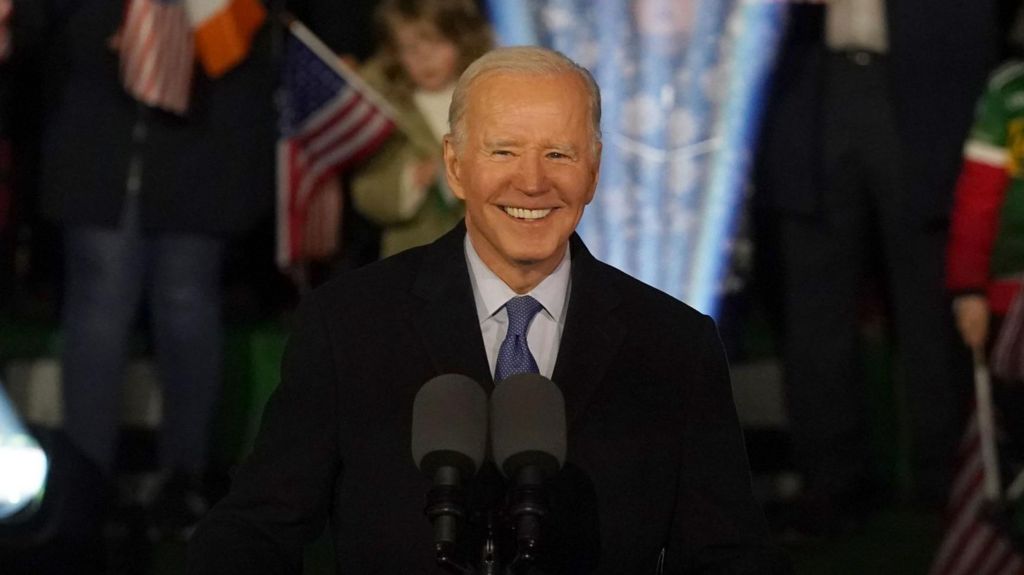
    Top of the list of celebrity well-wishers is former U.S. President Joe Biden, who has long spoken of his deep ancestral ties to Ballina, a town in Mayo. During a 2023 visit to his family’s ancestral home, Biden publicly joined the long-running Mayo fan chant: “Mayo for Sam”, a reference to the Sam Maguire trophy awarded to All-Ireland champions. Following Sunday’s win, Biden took to social media to share his elation, congratulating the team, noting that the people of Mayo had worked decades to earn the victory, and repeating his iconic line: “Mayo for Sam!”

    Biden was far from alone in his celebration. Oasis rock icons and famously feuding brothers Liam and Noel Gallagher, whose mother’s family is rooted in Mayo and who spent childhood summers visiting relatives in the county, both put aside their differences to share their joy on social media. “Finally!! Up Mayo!!” Noel posted, while Liam added that he was “very proud” of the side. Canadian Prime Minister Mark Carney also joined the tributes, writing that he is “proud to have roots in County Mayo”. Other prominent Irish sports figures, including rugby legend Brian O’Driscoll and golfer Shane Lowry, also praised Mayo’s gritty win, with O’Driscoll noting that nearly the entire country was rooting for the underdog side after its decades of final heartbreak.

    The victory carried extra personal meaning for two players on Mayo’s current roster: 18-year-old Kobe McDonald, who made his senior debut for the county only this past February, and his half-brother Jordan Flynn. McDonald’s father Ciarán McDonald previously represented Mayo in three separate All-Ireland finals, never getting to lift the trophy. “It’s surreal, we don’t know how to feel,” McDonald told reporters after the match. “To look around and see the people, they have given us so much over the years and to give them something proper to shout about is special. I don’t [know what celebration plans lie ahead], but I can’t wait to find out. We’ll soak it in and enjoy it.”

    Mayo’s 75-year wait for a title joins a growing list of historic long droughts broken in elite 2026 sports: earlier this year, Arsenal claimed the English Premier League title after a 22-year dry spell, and the New York Knicks won their first NBA championship in 53 years. For Mayo’s fans, however, the victory is far more meaningful than just another sporting upset — it’s the end of a generations-long dream, and the breaking of a curse that defined the county’s identity for decades. Celebrations are continuing across County Mayo and the Irish diaspora this week, with no sign of slowing down.

  • Law student charged over bomb faces bail delay

    Law student charged over bomb faces bail delay

    A 25-year-old law student from County Kildare, Ireland, has seen her planned release on bail delayed after the court was unable to complete required vetting of an independent surety put forward for her release. Isobella Perrie Sullivan, a resident of Abbeylands Park in Clane, faces charges of unlawful possession of explosives following the discovery of an explosive device in a vehicle she was driving last week.

    The seizure took place last Wednesday, when Irish police (known locally as gardaí) intercepted Sullivan’s car on a stretch of the N2 national road close to Carrickmacross, a town in County Monaghan. Sullivan appeared before Monaghan District Court on Monday via video link from her pre-trial detention, marking the second court appearance she has made since her arrest.

    During an earlier hearing held this past Friday, a judge had already approved the outline terms of bail, which included a set of strict conditions for Sullivan’s release. One of the core requirements was the placement of a €15,000 (£12,800) independent surety to secure her temporary release ahead of a full trial. As of Monday’s hearing, however, law enforcement officials confirmed that background inquiries into the surety are still ongoing, with no final vetting outcome submitted to the court.

    Judge Raymond Finnegan told the court he had received correspondence via email from Sullivan’s solicitor, who was not in attendance for the Monday proceeding. But no formal application requesting court approval of the vetted surety was filed, leaving the judge unable to sign off on Sullivan’s release. When the court explained the delay to Sullivan, she responded that she had expected to be granted release on bail that same day.

    Sullivan has now been further remanded in custody until her next scheduled court appearance on 7 August. At that hearing, she will appear either in person or again via video link if she remains in detention by that date.