博客

  • India activists demand release of detained ‘cockroach’ protesters

    India activists demand release of detained ‘cockroach’ protesters

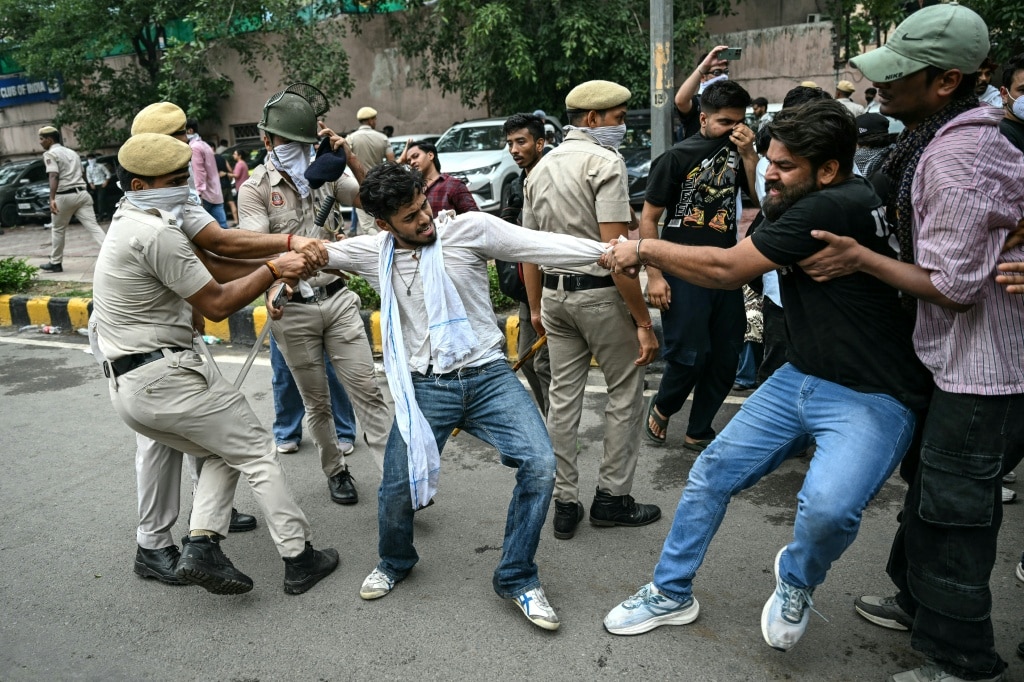
    Just days after a wave of nationwide youth-led protests forced India’s federal education minister to step down over widespread public anger over recurring competitive exam failures, the organizers of the movement have issued an ultimatum to authorities: free all detained demonstrators or face a resumption of mass unrest.

    The grassroots movement, known informally as the “Cockroach Movement” organized under the banner of the online Cockroach Janta Party (CJP), rose to national prominence in recent weeks after mobilizing tens of thousands of students across the country to protest persistent exam paper leaks and systemic irregularities in India’s competitive examination system. On Monday, CJP representatives confirmed that they have received widespread reports of student detentions, with the highest numbers concentrated in the northern and eastern states of Assam, West Bengal, and Bihar.

    CJP leaders accuse the national government of breaking a formal agreement reached in the early stages of negotiations, where authorities pledged that no punitive legal action would be taken against peaceful participants in the protests. “If the government does not honour the agreement and release everyone detained or arrested, we will be compelled to resume the protest,” CJP spokesperson Ashutosh Ranka told reporters on Monday.

    The ultimatum comes just 48 hours after Dharmendra Pradhan formally resigned from his post as education minister, a move driven by sustained public pressure over repeated high-profile mismanagements of national competitive exams that have left millions of young job-seeking Indians frustrated and disillusioned with the ruling government.

    As of Monday evening, the national government has not released an official public statement responding to the CJP’s demands. However, law enforcement officials in Bihar, one of the states at the center of the protests, announced late Monday that “no adverse legal action” will be initiated against any protest participants, and that all people arrested or detained in connection to the Bihar protest actions would be immediately released.

    CJP estimates that at least 100 protesters have been arrested across the country, with many slapped with stringent non-bailable criminal charges that could lead to lengthy prison sentences if convicted. In response, the movement has established a dedicated national legal fund to cover court and legal expenses for protesters who have been charged by police, CJP spokesperson Saurav Das confirmed.

    The decentralized youth movement was first launched in May of this year by Abhijeet Dipke, a 30-year-old public relations graduate, and has already amassed millions of followers across major social media platforms as it tapped into widespread discontent among India’s large youth population over limited job opportunities and systemic flaws in the country’s education and examination systems. Last week, tens of thousands of protesters, the vast majority of them students, held mass rallies in New Delhi and other major urban centers, explicitly calling for Pradhan’s resignation and sweeping structural reforms to India’s examination system.

    Tensions boiled over on July 20, when a large demonstration in New Delhi that attempted to march from the popular protest site Jantar Mantar to the Parliament building descended into violence. Police responded to the unauthorized march by firing tear gas canisters and charging crowds with batons to disperse protesters, triggering widespread clashes and a large wave of detentions that followed the confrontation.

    In Bihar’s Siwan district, a senior police official was suspended over the weekend after he used an assault rifle to disperse a crowd of student protesters, leaving three people injured who are currently receiving medical care, Bihar Police Superintendent Puran Kumar Jha confirmed to AFP on Monday.

    The actions by law enforcement have sparked widespread condemnation from political opposition leaders and judicial officials alike. A petition alleging widespread police brutality during the protests was filed with India’s Supreme Court, prompting Chief Justice of India Surya Kant to order an independent investigation into the claims. Local media outlets quoted Kant affirming that the “right to peaceful, lawful protest is absolutely guaranteed” under India’s constitution, adding that “if there is excess committed, it should be independently examined… discipline is integral to democratic process.”

    The controversy dominated proceedings in India’s Parliament on Monday, with repeated disruptions to legislative business as opposition lawmakers demanded the ruling government issue a formal response to last week’s police crackdown. Mallikarjun Kharge, national president of the main opposition Indian National Congress, described the crackdown on student protesters as “one of the gravest assaults on democracy in our history” in a post on the social media platform X. “Never before have students been beaten, dragged, and treated like criminals for raising their voices,” Kharge wrote.

    Despite the parliamentary disruptions, the ruling government managed to introduce new legislation in the lower house of Parliament on Monday that would impose harsher criminal penalties for anyone involved in stealing or leaking competitive examination question papers, a long-standing demand of the protesting students.

  • Two Scots charged in Australia over 107kg ketamine raids

    Two Scots charged in Australia over 107kg ketamine raids

    In a major drug enforcement operation carried out by New South Wales police in Sydney, two Scottish citizens have been taken into custody and formally charged following the seizure of more than 100 kilograms of ketamine, a controlled prohibited substance.

    The pair — 30-year-old Jack Farrelly and 23-year-old Demi McDaid — were apprehended on June 29 during a coordinated raid on a hotel located in North Sydney. Law enforcement officers located 105 kilograms of ketamine hidden in the boot of a rental car parked inside the hotel’s private car park, authorities confirmed. A subsequent search of the hotel room occupied by the two suspects turned up additional evidence linked to alleged drug trafficking activities: multiple mobile devices, handwritten documents that police claim are records of drug transactions, and approximately A$2,000 (equal to around £1,051) in untraceable cash.

    The hotel raid was not the first action taken in this ongoing investigation. Three days before Farrelly and McDaid’s arrest, NSW police executed a separate search warrant at a short-term rental property on Hampden Road in Artarmon, a North Shore Sydney suburb situated roughly 8 kilometers from the Sydney central business district. At that location, officers seized an additional 2 kilograms of suspected ketamine, along with drug processing paraphernalia including digital scales, disposable gloves, clear resealable bags that tested positive for white crystalline ketamine residue, and personal luggage belonging to unknown persons.

    Following their arrest, the two accused were transported to Chatswood Police Station for processing and questioning. During their first court appearance at Manly Local Court on June 30, both Farrelly and McDaid were denied bail by the presiding magistrate. They are scheduled to make their next court appearance at the Downing Centre Local Court on August 26.

    The charges brought against the pair are two separate counts related to illegal drug supply: one count of supplying a prohibited drug in a quantity above the indictable threshold but below the commercial quantity, and a second more severe count of supplying a prohibited drug in a quantity that meets or exceeds the large commercial quantity standard under Australian law. NSW Police have stated that prosecutors will argue the two Scottish nationals traveled to Australia with the explicit intention of coordinating the distribution and sale of large volumes of controlled illicit drugs.

    A spokesperson for the UK Foreign, Commonwealth & Development Office confirmed that consular support is being provided to the two British detainees, and that the department maintains ongoing contact with Australian local law enforcement and judicial authorities. NSW police have also noted that their broader investigation into the alleged drug trafficking network is still active, with additional developments expected as the case progresses toward trial.

  • Student who wrote about ‘anti-Jewish hatred’ linked to multiple Israel groups

    Student who wrote about ‘anti-Jewish hatred’ linked to multiple Israel groups

    A high-profile public claim of widespread anti-Jewish persecution made by a pro-Israel student at one of London’s most prestigious universities is facing significant scrutiny, after an independent investigation found evidence of altered quotes, misleading framing, and longstanding ties to extreme pro-Israel advocacy groups.

    Tali Smus, a self-described “British Zioness” and English literature student at King’s College London (KCL), published a widely circulated op-ed in *The Telegraph* in July 2026 under the headline “As a Jewish student at King’s College, I’m being persecuted for my beliefs.” In the piece, Smus alleged that she was targeted in a 100-to-1 group attack by fellow students in a September 2024 Instagram group chat, leaving her in tears and targeted for anti-Jewish abuse. She concluded her op-ed by stating, “I am a Jewish student at King’s College London, and I refuse to remain a statistic. The anti-Jewish hatred I faced will not remain a statistic.”

    Smus’s op-ed landed at a charged political moment: it came just days after an Al Jazeera investigation exposed KCL’s harsh crackdown on pro-Palestine student organizers, and coincided with an ongoing UK government review of antisemitism in British secondary and higher education. But an exclusive review of the full group chat log obtained by *Middle East Eye* (MEE) reveals multiple discrepancies between the quotes Smus published in *The Telegraph* and the actual messages sent by students.

    For example, Smus claimed a student wrote, “If she interrupts the… lecture again tomorrow… she should be thrown out,” framing the line as a targeted threat. The original message reads, “If she interrupts the writing London lecture again tomorrow I swear to god she should be thrown out” — a comment aligned with KCL’s official policy of removing disruptive students from teaching spaces, issued in the context of Smus repeatedly disrupting class. Smus also alleged a second student wrote, “As a group we should just band together and carry her out at that point,” but she has provided no evidence this message was ever sent, and did not respond to requests to verify the claim.

    In another instance, Smus altered the line “that bitch has gotten down” — a description referencing her unfurling of an Israeli flag at a pro-Palestine campus protest — to read “bitch get down,” framing it as a direct physical threat. The chat log also shows only roughly 20 students expressed disagreement with Smus’s views, not the “almost 100 against one” she claimed, and that at least one student spoke out in her defense, criticizing harassing language in the chat. Smus has remained active in the group chat, continuing to send messages long after the 2024 exchange.

    Beyond the altered quotes, MEE’s investigation uncovered Smus’s deep ties to a network of high-profile right-wing pro-Israel groups with a documented history of targeting and smearing Palestinian activists and their supporters. Smus appeared on the UK’s right-wing GB News as the Emerson Fellow for Stand With Us, a pro-Israel organization that *The Guardian* has confirmed works closely with Israel’s foreign ministry, including to oppose pro-Palestinian boycott movements. She has also held a fellowship and produced content for the Committee for Accuracy in Middle East Reporting and Analysis (CAMERA), which describes its campus fellows as “leaders… proactively spreading the truth about Israel” and connects them to mainstream media outlets. Smus additionally serves as president of KCL’s chapter of Students Supporting Israel, an organization partially funded by the Adelson family — the billionaire backers who successfully lobbied former U.S. President Donald Trump to move the U.S. embassy in Israel to Jerusalem.

    Smus’s public resume lists further ties to UK conservative circles: she previously worked as a research assistant at the Henry Jackson Society, a right-wing UK think tank whose senior associate Andrew Fox has amplified her antisemitism claims, and currently works as a policy research intern for Conservative shadow home secretary Chris Philp, whom she met at the UK’s 2024 March Against Antisemitism. In a 2025 blog for the *Times of Israel*, she publicly labeled popular LBC commentator James O’Brien an “antisemitic commentator.”

    The investigation also revealed new details about an event Smus criticized in her op-ed: a 7 October 2024 pro-Palestine walkout and vigil held on KCL’s campus to commemorate two KCL alumni, Dr Maisara Alrayyes and Dr Adnan al-Bursh, who were killed by Israeli forces in Gaza. Smus described the event as an offensive celebration of Hamas’s 2024 attack, omitting that she herself joined a counter-protest holding a large Israeli flag at the event.

    Multiple KCL community members have pushed back on Smus’s framing of the conflict as targeting her Jewish identity, arguing instead that pushback against Smus centers on her vocal support for Israeli military actions in Gaza, not her religion. One anonymous KCL academic told MEE: “She’s scared to attend classes but feels safe to attend demonstrations that should be hostile to her, in order to make Instagram content. Other students don’t like her. That’s about as far as it goes.”

    One student who participated in the 2024 group chat acknowledged that some language used was harsh, noting the charged context of the ongoing crisis in Gaza. “I regret some of the wording I used – I was in my first year of university and encountering someone who unapologetically supports Israel’s atrocious actions in Gaza hit a nerve with me and many others,” the student said.

    As of publication, neither Smus nor *The Telegraph* has responded to multiple requests for comment from MEE on the allegations of altered quotes and misleading framing.

  • Shots fired at US consulate in Toronto for a second time this year

    Shots fired at US consulate in Toronto for a second time this year

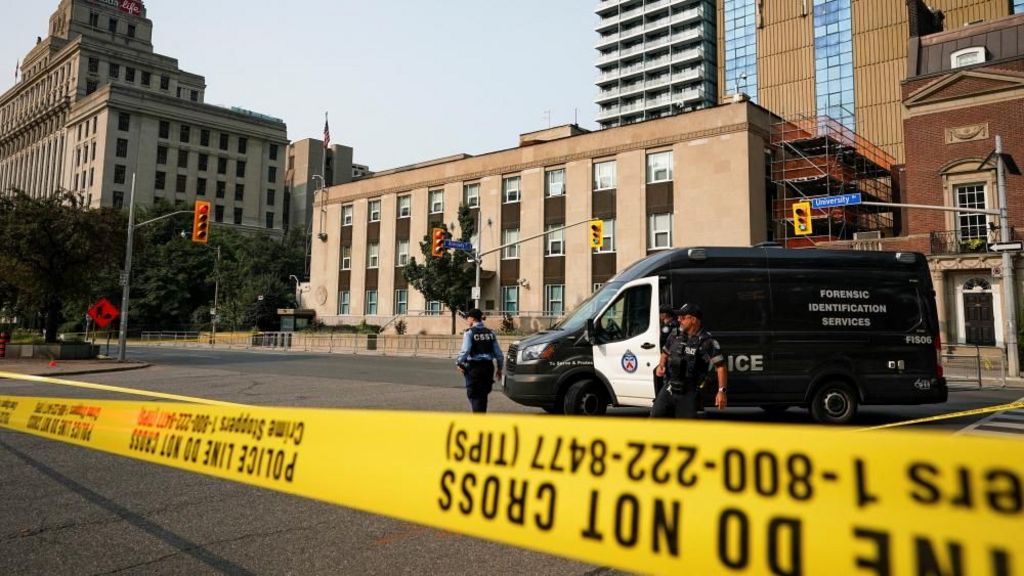
    On a pre-dawn Monday in Toronto, a brazen shooting targeted the United States consulate, marking the second such violent incident at the diplomatic site in 2024 and triggering a joint investigation involving local, national and international law enforcement agencies.

    Local time around 4:45 a.m., a uniformed officer posted on security detail outside the consulate building detected a single gunshot ring out. Looking toward the street, the officer spotted an unmarked white sedan with no license plates speeding away from the area, Toronto Police Deputy Chief Frank Barredo confirmed in a press briefing. Responding units quickly initiated a high-speed pursuit of the vehicle, but called off the chase shortly after to prevent potential harm to bystanders and civilian motorists.

    No people inside or outside the consulate were hurt in the attack, according to official updates. Barredo noted that at least two consulate staff were inside the heavily fortified building when the shot was fired, but most people on site never heard the gunshot due to the structure’s advanced security design. Investigators later recovered a single bullet shell casing from the street outside the consulate, and confirmed the building’s outer facade sustained minor damage from the projectile.

    This latest attack comes just months after a nearly identical incident at the same location in March, which Toronto police have already tied to a transnational contract-for-hire gun network. After the March shooting, which was classified as a national security event, police maintained a permanent security presence outside the consulate. Three suspects were arrested following that attack, and a June law enforcement raid targeting connected suspects left one veteran Toronto police officer, 43-year-old Const. Marc Pinizzotto, dead. Multiple suspects aged 18 and 19 are currently in custody, charged with carrying out a series of shootings that included the March consulate attack as part of the organized gun network.

    Royal Canadian Mounted Police Superintendent Jonathan Ko described Monday’s event as “another troubling incident,” a characterization echoed by Toronto Mayor Olivia Chow, who labeled the attack as brazen. Toronto police are leading the ongoing probe, with support from the RCMP and international law enforcement partners, and have put all officers across the city on alert to watch for the fleeing suspects and any leads related to the attack. “We will bring the people responsible to justice,” Barredo affirmed in his statement.

    In a public post on X, the U.S. consulate in Toronto extended its gratitude to Canadian police for their rapid response to the incident. As investigators piece together details of the attack, they have also addressed speculation surrounding a separate violent event over the same weekend: two Jewish-owned bakeries in Toronto were targeted, at least one by gunfire. Toronto police confirmed Monday there is currently no concrete evidence linking the bakery attacks to the consulate shooting, though investigators have not completely ruled out a potential connection between the two events.

    International context adds layers of complexity to the ongoing investigation. Back in May, U.S. federal officials arrested 32-year-old Iraqi national Mohammad Baqer Saad Dawood al-Saadi, who is accused of planning more than a dozen attacks across North America and Europe that targeted Jewish institutions and U.S. diplomatic and commercial interests, including the March 2024 attack on the Toronto consulate. To date, Toronto police have not confirmed whether al-Saadi or his network has any connection to Monday’s shooting, and have not released any information about a potential motive for the latest attack.

  • Lopes Cabral’s equalizer for Cape Verde vs Argentina wins public vote for best goal at World Cup

    Lopes Cabral’s equalizer for Cape Verde vs Argentina wins public vote for best goal at World Cup

    CORAL GABLES, Fla. (AP) – When the FIFA World Cup wrapped its latest edition, one underdog moment rose above all 308 goals scored across the month-long tournament, securing its place in World Cup history. Cape Verde’s Sidny Lopes Cabral was officially named the winner of the public-voted Goal of the Tournament on Monday, capping a breakout debut for the unranked African side that captured global soccer fans’ hearts.

    Lopes Cabral’s unforgettable strike came in the tense round of 32 clash against defending World Cup champion Argentina in Miami Gardens. With the match deadlocked at 2-2 in extra time, he curled a precision strike into the far top corner of the net, sending the underdog side and neutral fans into a frenzy. The thrilling contest ultimately ended 3-2 in Argentina’s favor, but Lopes Cabral’s goal became the most talked-about moment of the entire knockout stage.

    The goal beat out two other standout finalists to claim the honor: Eldor Shomurodov’s delicate lob for Uzbekistan against Congo, and Wilson Isidor’s blistering rising strike for Haiti against Morocco. FIFA first assembled a shortlist of 12 standout goals from across the tournament, and the public vote closed Monday, with Lopes Cabral pulling ahead by a clear margin.

    Beyond the quality of the strike, Lopes Cabral’s celebration cemented the moment in World Cup legend. Breaking away from rushing teammates who sought to congratulate him, the forward climbed into the stands to hug his girlfriend first, before searching for his mother in the crowd. In an interview after the vote, he shared the emotional backstory of the celebration.

    “Before the game, I’d told my mom and my girlfriend that if I scored, I’d run over to them,” Lopes Cabral said. “When I got there, I saw my mom crying. She hadn’t even realized I was right there. Everyone was busy tending to her because she had fainted when I scored.”

    This World Cup marked a historic debut for Cape Verde, a small African nation that defied all pre-tournament expectations across its four matches. The side opened its first ever World Cup campaign with a stunning 0-0 draw against eventual champion Spain, a result powered by a standout clean sheet from goalkeeper Vozinha. They went on to push two-time World Cup finalist Argentina to the brink in their knockout clash, proving that underdog sides can compete with the world’s best on soccer’s biggest stage.

  • ‘Every country wants to beat Nigeria’ – Super Falcons hunt 11th Wafcon title

    ‘Every country wants to beat Nigeria’ – Super Falcons hunt 11th Wafcon title

    As the 2026 Women’s Africa Cup of Nations (Wafcon) kicks off in Morocco, Nigeria’s Super Falcons, the undisputed powerhouse of African women’s football, have touched down in the host nation carrying the heavy weight of widespread expectation that has followed their decades of unprecedented success. Since the tournament’s inaugural edition in 1998, Nigeria has lifted the trophy 10 times out of 13 total stagings — a record of dominance matched by no other women’s national side on the continent, with only Equatorial Guinea (2008, 2012) and South Africa (2022) ever managing to break their stranglehold on the title. The 2025 edition, also held in Morocco, ended with a dramatic 3-2 win over the host nation that secured their 10th crown, codenamed “Mission X” by the squad. Now, the team is chasing an elusive repeat: their last successful title defense came in 2018, when they capped a three-tournament winning streak.

    Head coach Justin Madugu, who masterminded last year’s title run, acknowledged the steep challenge his side faces entering this year’s competition. “Now that we are champions, every other team will want to draw you down,” he told BBC Sport Africa on the eve of Nigeria’s opening Group C fixture against debutant nation Malawi. “It’s not going to be easy. We are quite aware of that and we are going to be fully ready.” Assistant coach Ann Chiejine, who won four Wafcon titles as a player for Nigeria, echoed that cautious approach. “Every country wants to beat Nigeria. That is why we must up our game by making sure we train harder.”

    Nigeria’s roster blends veteran leadership and proven elite talent with exciting young prospects, a deliberate mix crafted by Madugu to balance experience and hunger. Star names returning to the squad include captain Rasheedat Ajibade, who earned the tournament’s best player honors in 2025; Chiamaka Nnadozie, the reigning African Goalkeeper of the Year; and Asisat Oshoala, a six-time African Women’s Player of the Year who is chasing her fifth Wafcon title. Alongside these household names of African football, Madugu has called up a cohort of emerging young players, including Sweden-based striker Joy Omewa, who watched last year’s triumph from the sidelines and is making her first Wafcon appearance. Omewa said she expects the 2026 tournament to surpass even the excitement of last year’s campaign, crediting veteran stars like Oshoala for acting as invaluable mentors to the younger generation. “She’s a really remarkable person. She’s a person who you can talk to, share experiences with and she tells you things she has gone through. I think she’s a really good mentor,” Omewa said.

    One of the most notable new additions to the squad is 21-year-old backup goalkeeper Comfort Erhabor, who was born in the Netherlands and raised in England and made her international debut earlier this year against Cameroon. Erhabor, who plays in England’s third tier for Portsmouth, said the opportunity to represent Nigeria, her family’s homeland, is an unmatched honor. “It’s in my blood, so I felt like there is no greater honor than to represent my roots, make my parents proud as well,” she said, describing starter Nnadozie as a supportive “big sister” to the younger keeper. Madugu’s preparations for this tournament have also been far more robust than in previous years, with a full slate of friendly matches against Cameroon, Senegal and Tanzania allowing the coaching staff to test squad combinations and build cohesion ahead of Wafcon.

    Group C pits Nigeria against Malawi, Zambia and Egypt, and the Super Falcons are under no illusions about the threat their opponents pose. Malawi, ranked 153rd in the world compared to Nigeria’s 40th spot, is making its Wafcon debut this year, led by star attacking duo Tabitha and Temwa Chawinga — both proven goal scorers at the highest club level. Tabitha Chawinga fired Olympique Lyonnais to a fifth consecutive French league title last season, while younger sister Temwa has won the National Women’s Soccer League Golden Boot and MVP in both of her two full seasons with the Kansas City Current. Zambia, another strong contender, boasts an experienced strike partnership of Barbra Banda and Racheal Kundananji, both of whom ply their trade in the NWSL as well. Ajibade emphasized that the team will not underestimate any opponent, noting that Malawi’s qualification itself is proof of the rapid progress smaller African nations are making in the women’s game.

    The 2026 Wafcon brings several key changes that raise the stakes for all participants. The tournament has expanded from 12 to 16 teams, bringing more nations into the fold and increasing the depth of competition. It also serves as the qualification tournament for the 2027 FIFA Women’s World Cup in Brazil, with the four semi-finalists automatically earning a spot at the global tournament. Nigerian winger Francisca Ordega clarified the team’s priorities: “Our first target is to qualify for the World Cup. After that we can think of defending our title. We are not under any kind of pressure. We can hold our own against any team across Africa.” Nigeria has qualified for every iteration of the Women’s World Cup since the tournament launched in 1991, maintaining their status as Africa’s most consistent contender on the global stage.

    Chiejine noted that the narrowing of gaps between top and lower-ranked African teams is a positive sign for the growth of the women’s game across the continent. “If we are now being beaten by penalty shootout, or 1-0, 2-0, it means that the graph is rising,” she said. This growth is also reflected in the tournament’s prize pool, which has been doubled for 2026, with the champions set to take home $2 million — a tangible indicator of rising investment and interest in African women’s football. The Super Falcons do face minor setbacks heading into the tournament: key center-back Ashleigh Plumptre, a standout from last year’s title run, is sidelined with a foot injury, and multiple players reported thefts of cash and personal belongings shortly after arriving in Morocco, including 2025 final player of the match Esther Okoronkwo, who lost hundreds of dollars. Still, Nigeria enters the tournament as the clear team to beat, aiming to extend their historic reign as Africa’s queens of women’s football.

  • Conflict in Yemen transforms the lives of long-marginalised Muhamasheen minority

    Conflict in Yemen transforms the lives of long-marginalised Muhamasheen minority

    Generations of Yemeni society have operated under a deeply entrenched tradition where children inherit their fathers’ professions, a path most commonly followed by those denied access to formal education who enter the workforce as teenagers. For 28-year-old Ridhwan Raweh, this meant picking up the family trade of shoe polishing from his father, a routine he followed for more than 13 years. Each morning, he would sling a worn leather bag holding a dented hammer, scuffed polishing brushes, and half-empty jars of polish, then walk to Taiz’s central market to sit cross-legged on the sidewalk, display a handful of shoes for repair, and wait for customers.

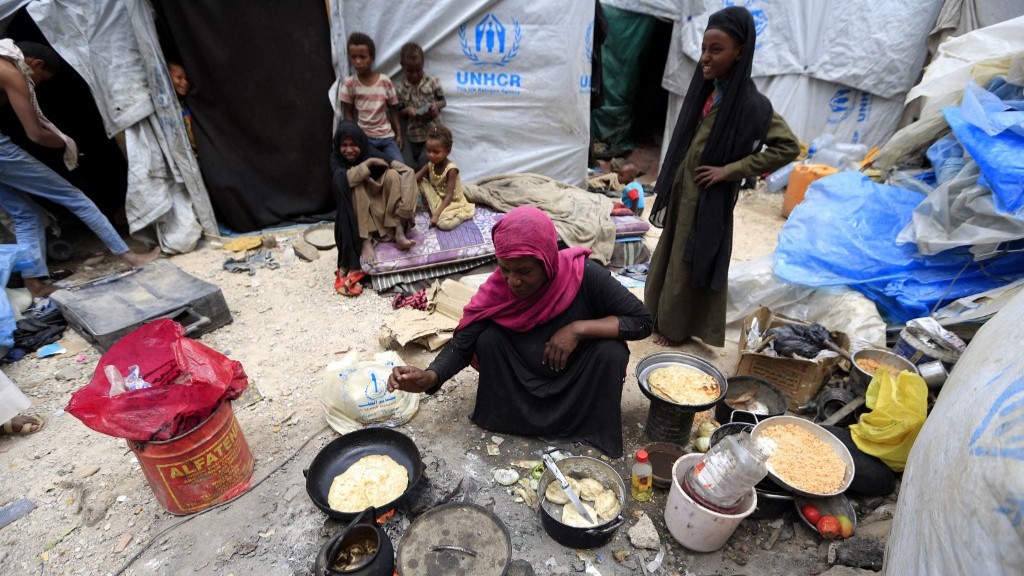
    Raweh is a member of the Muhamasheen, an ethnic and social minority group whose name translates directly to “the marginalized” – a label that reflects centuries of systemic, caste-like discrimination that has pushed the community into extreme poverty and social exclusion. For generations, rigid social barriers have confined most Muhamasheen to low-paying, informal work such as street sweeping, shoe repair, and waste collection, jobs that members of majority groups refuse to take.

    While Raweh’s shoe polishing work earned just enough to allow him to marry and support his three young children, it could not lift his family out of the desperate conditions that defined Muhamasheen life. For years, they lived in a flimsy makeshift shelter draped over a wooden frame, with no access to running water or electricity, a leaking roof that offered no protection from monsoon rains, and no permanent walls to guard their privacy and basic dignity.

    Unlike most members of his community who accepted their intergenerational poverty as fate, Raweh was determined to build a safer, more stable life for his children. “I grew up surrounded by hardship, and I never stopped dreaming of changing that story for my family,” he told reporters from Middle East Eye. “But progress was impossible. My work barely put one meal on the table each day – there were days we had nothing at all.”

    As Yemen’s years-long civil war dragged on, Raweh watched a growing number of young men from both his Muhamasheen community and majority Yemeni groups leave their civilian jobs to join armed factions deployed along front lines. Many of these men sought postings to units funded by foreign backers, where fighters received steady salaries paid in stable currencies such as Saudi riyals or U.S. dollars, a stark contrast to the devalued Yemeni rial that left most civilian workers struggling to afford basic goods.

    Raweh recalled that many of his regular customers, close relatives, even small shop owners in the market closed their businesses and traveled to front lines along the Saudi border to fight against Houthi forces. “They came back after months driving new cars and building solid, permanent homes, so I made the decision to join the same battle lines to make my dream come true,” he said.

    In early 2023, Raweh joined a group of 12 other young Yemeni men who traveled from their homes in Taiz to Marib Governorate, before moving north to the Saudi border front. None of the men had any prior military training or combat experience; their only motivation was the promise of a steady salary and the chance to escape generational poverty.

    After two years of service on the relatively quiet border front, Raweh returned home with far more than unfulfilled dreams: he had the savings and clear plans to build the stable life he had long sought. “I didn’t even go back to our old tent first – I checked straight into a hotel where my family was waiting for me,” he said. “The very next day, I rented a proper home far from our old slum neighborhood. I swore I would never go back to that tent life, and I would keep my children far away from that suffering.”

    Today, Raweh earns a monthly salary of 2,500 Saudi riyals (approximately $665), a wage that puts him far above most Yemeni civilians. With his accumulated savings, he purchased a plot of land, built a two-story permanent home for his family, and bought two minibuses. He drives one minibus himself for a local transport route, and leases the second to another driver for a steady daily income.

    Raweh emphasized that since the UN-brokered truce came into effect in April 2022, large-scale combat operations across most Yemeni front lines have largely halted. This period of relative calm has made enlistment even more attractive to desperate young men, who can collect a steady foreign-currency salary without facing the high risk of dying in intense combat. “There was no heavy fighting along the border when I was there, so it was a good opportunity for me to reach my goal and give my family a better life,” he said, speaking with clear pride in what he had achieved.

    Even as he celebrates his improved circumstances, Raweh has no intention of passing his new path down to his children, just as he refuses to let them inherit the shoe polishing trade he learned from his father. “I was forced to fight to put food on my family’s table, but I will never let my children do that. They will have civilian careers,” he said. Today, his three children attend a well-regarded private school in Taiz. Denied a formal education himself, Raweh has prioritized their schooling, hoping it will free them from the cycle of marginalization that has trapped generations of Muhamasheen. “I inherited shoe polishing from my father, but I refuse to pass either that job or fighting to my kids,” he said. “We hope for a better Yemen, where our children can build a peaceful future.”

    Raweh’s story of success is far from the norm, however. In recent months, thousands of desperate young Yemenis have attempted to enlist in the Saudi-backed factions along the border and the Republic Guards on Yemen’s west coast, where salaries are paid in stable foreign currency. But many have been turned away, as recruitment for these units has been paused in recent months.

    One of those rejected was 39-year-old Hani, another Muhamasheen man who had worked as a low-paid street cleaner for years. Left with no other options to earn a living wage, Hani was targeted by unlicensed brokers recruiting Yemeni fighters to deploy to the Russia-Ukraine war, who promised large salaries and signing bonuses.

    “Like so many other men here, Hani couldn’t provide for his family, and he felt he had no other choice but to go to war,” his wife Ahlam told Middle East Eye. “He didn’t want to go to Russia, but after he couldn’t enlist with the local factions, it felt like his only option left.” After more than two months of hesitation and grief over leaving his family, Hani departed for Russia two months ago, hoping to save enough money to return home, open a small business, and build a permanent home for his wife and children, just as his more successful neighbors had done.

    “We were heartbroken when he left, but we held onto hope that he would come back and give us the better life we all dreamed of,” Ahlam recalled. “Unfortunately, we weren’t as lucky as the other families. A month ago, we lost all contact with Hani and all the friends he traveled with.” For weeks, the family waited anxiously for any word from Hani, their sole provider who had promised them a future out of poverty. But their worst fears were confirmed just 10 days ago, when they received official notice of his death.

    Ahlam says she deeply regrets that she could not convince Hani to stay, and now she urges all families to block their loved ones from enlisting in any conflict, “even if you have to starve.” “I advise every woman to stop her husband, son, or brother from joining battles anywhere,” she said. “Nothing is worse than losing them forever.”

    There are no official government statistics on the total size of the Muhamasheen population, but local research and nonprofits estimate the group numbers around 3.5 million people, roughly 10 percent of Yemen’s total population. The vast majority live in makeshift slum settlements on the outskirts of major Yemeni cities, with little to no access to clean water, electricity, healthcare, or formal education. While this level of deprivation has long been unique to the Muhamasheen, the 2015 outbreak of full-scale civil war has pushed millions of other Yemenis into similar desperate conditions. According to the United Nations Office for the Coordination of Humanitarian Affairs (OCHA), an estimated 22.3 million Yemenis – more than half the country’s total population – still require urgent humanitarian assistance and protection.

    The growing flow of marginalized Yemenis into armed groups has already reshaped the country’s centuries-old social hierarchy, a shift visible in even small daily interactions. Abdullah, a 51-year-old government worker who asked to only use his first name, currently rents a home in Taiz from a Muhamasheen fighter – a situation that would have been unthinkable a generation ago, when Muhamasheen were almost never able to afford to own multi-story residential buildings.

    “Today, it’s fighters – both from the Akhdam (the local name for the Muhamasheen) and other groups – who have the money to build large multi-story homes. Meanwhile, people like me who get irregular, small salaries can barely afford to pay rent,” Abdullah said. Even with a bachelor’s degree in accounting and a stable job at Taiz’s public electricity authority, Abdullah’s modest salary is not enough to support his family of seven. His eldest son was forced to drop out of high school to work as a daily construction laborer to help cover the family’s basic costs.

    “I don’t look down on any social group,” Abdullah said. “I am just pointing out that uneducated fighters now get more respect from society and more recognition from leaders than educated professionals, all because they carry guns.”

    Yemeni sociologist Fahd Al-Thobhani explains that war always reshapes social hierarchies, a process that disproportionately rewards fighters and war profiteers while the vast majority of civilian society suffers. “We see Muhamasheen men who can’t even write their own names owning modern, comfortable homes, while university professors are forced to work as street vendors just to feed their families,” Al-Thobhani said. “This is the natural outcome when formal state governance breaks down, and power shifts to armed groups that value fighters over scholars.”

    Al-Thobhani warned that the greatest long-term damage will fall on Yemen’s next generation, who grow up watching educated professionals struggle to get by while armed fighters enjoy wealth and high social status. He added that while Yemen’s centuries-old rigid caste system is breaking down, this shift is not happening for progressive or equitable reasons.

    “The Muhamasheen have been stuck at the bottom of Yemeni society for as long as the caste system has existed,” he said. “Today, though, we see traditional upper-class Yemenis taking orders from a Muhamasheen commander simply because he has money and armed power. Money – not traditional family lineage, not education – now controls people who are desperate for work and stability.”

  • France and Spain race to contain fires before new heatwave

    France and Spain race to contain fires before new heatwave

    As the peak of the European summer travel season arrives, France and Spain are locked in an urgent battle against raging wildfires that have already caused catastrophic damage, displacing hundreds of thousands of people and leaving vast swathes of landscape in ashes. With a new searing heatwave looming on the horizon, emergency crews are racing to get blazes under control before rising temperatures and dry winds rekindle and expand existing infernos.

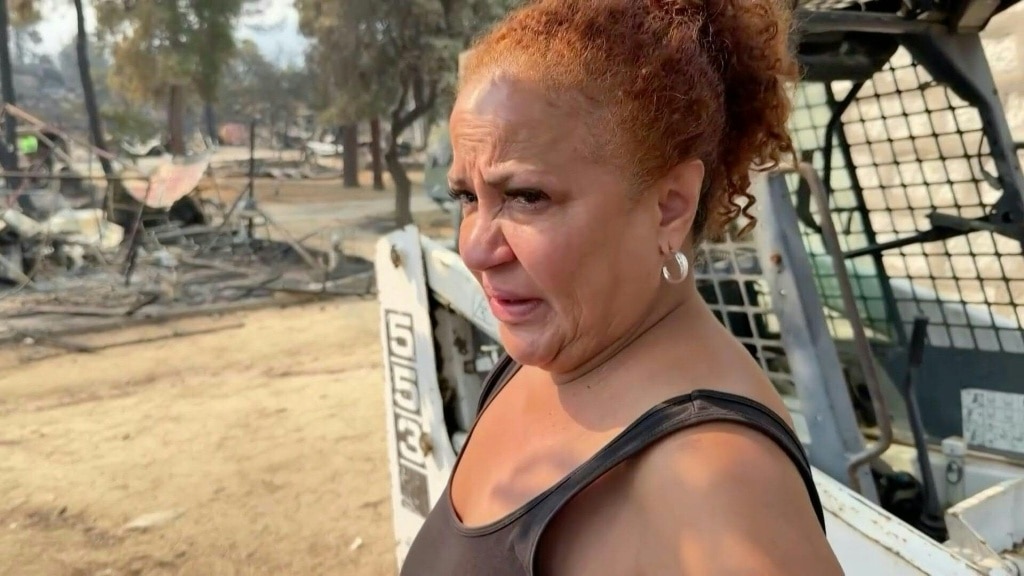
    For days, uncontrollable flames have carved destruction through southwest France and the region west of Madrid, Spain’s capital. By Monday, the scale of displacement had reached staggering levels: around 60,000 people in Spain and 220,000 in France have been forced to flee their homes and campsites, many with only minutes to evacuate. Some survivors were forced to leave beloved pets and critical medication behind as they ran for safety. At a temporary evacuation shelter set up in a sports hall just outside Madrid, disoriented displaced residents rested on camp beds, waited anxiously for updates on their properties, and comforted animals that had escaped the flames with them. Maria Angeles Canete, a campsite owner near the hard-hit town of Navaluenga, described the total destruction of her two properties through tears, saying simply, “We lost everything.”

    On-the-ground reporting from AFP reveals the full scope of the devastation across the worst-hit regions. Blackened pine tree trunks smolder across charred forest landscapes, while destroyed homes and vehicles are left as nothing more than burnt-out husks, with the acrid smell of smoke hanging thick in the air. Karim Benali, a 39-year-old volunteer firefighter working near Navaluenga, said roughly 48 local homes had been completely consumed by the fire. Since last Wednesday alone, wildfires near Bordeaux in southwest France have ravaged 42,000 hectares of forest – an area larger than the entire U.S. city of Detroit. In Spain, the current wildfires have already destroyed 77,000 hectares of land, an area nearly matching the size of New York City. Across both countries, the cumulative damage for 2024 is even greater: 150,000 hectares burned in Spain and 115,000 hectares in France. This wave of fires comes just weeks after a wildfire in southwestern Spain killed 13 people, and another blaze tore through the UNESCO-listed Fontainebleau forest south of Paris.

    For many residents who returned to their properties after initial evacuation, the discovery of total loss has been devastating. David Sanchez, a 48-year-old painter and decorator in Cebreros, returned to find his small olive and pistachio grove completely turned to ash. Standing in choking, eye-stinging smoke, he acknowledged the bleak future ahead: “Now it’s time to clean up and plant again and that’s it. It’s crap, to be honest. And the fire has flared up again down there.”

    Despite the overwhelming damage, communities have rallied to support emergency efforts. Near Bordeaux, local residents including farmers, loggers and hunters have joined the response, bringing tractors fitted with land-clearing blades, private trucks carrying water tanks, and other equipment to support professional fire crews. Christopher Bonnefond, a 25-year-old farmer and wood transporter in the Gironde region village of Marcheprime, explained his motivation to help: “I’m a hunter and I want nature to stay like it is.”

    Spanish Interior Minister Fernando Grande-Marlaska warned that the immediate hours ahead would be “absolutely decisive” to bring the blazes west of Madrid under control before the new heatwave hits. Responding to the crisis, the European Union has mobilized additional water-bombing aircraft to France, supplementing the planes already deployed to Spain. However, EU commissioner Hadja Lahbib told AFP that the bloc’s firefighting fleet is already stretched perilously thin, with new extreme heat and fire risk expected to spread across central Europe in the coming days. “Extreme conditions are looming for Hungary, Slovakia and the Czech Republic, in addition to France, the Iberian Peninsula… where the situation is expected to worsen, including in Portugal starting today,” Lahbib said.

    Spanish Prime Minister Pedro Sanchez has framed the ongoing wildfire crisis as “the most painful expression of a climate emergency” – a catastrophe driven by prolonged drought that has turned vegetation into tinder-dry fuel, paired with a repeated cycle of record-breaking heatwaves. In France, the large blaze near Bordeaux has already spawned rare pyrocumulonimbus clouds, massive fire-generated storm systems that create their own wind patterns, carry lightning, and can even spawn tornadoes that spark new fires across wider areas.

    Meteorological agencies across both countries have confirmed that a new wave of extreme heat is already on track to hit this week. Spain’s state weather service AEMET confirmed the heatwave will run from Wednesday through the end of the week, with forecast temperatures hitting 42°C in northeastern regions and 39°C in central Spain. “The wildfire danger level will continue to increase, reaching extreme levels and making firefighting efforts more difficult due to high temperatures, locally gusty southerly winds and widespread low humidity,” AEMET said in an official statement. France’s national weather service MeteoFrance has also forecast temperatures rising as high as 40°C starting Tuesday, paired with persistently dry winds. Philippe de Gonneville, mayor of the Atlantic coastal village Lege-Cap-Ferret, summed up the widespread concern: “All the conditions are in place for the fire to start up again.”

  • Ukraine dismisses Iranian threats as Caspian Sea strike directly links wars

    Ukraine dismisses Iranian threats as Caspian Sea strike directly links wars

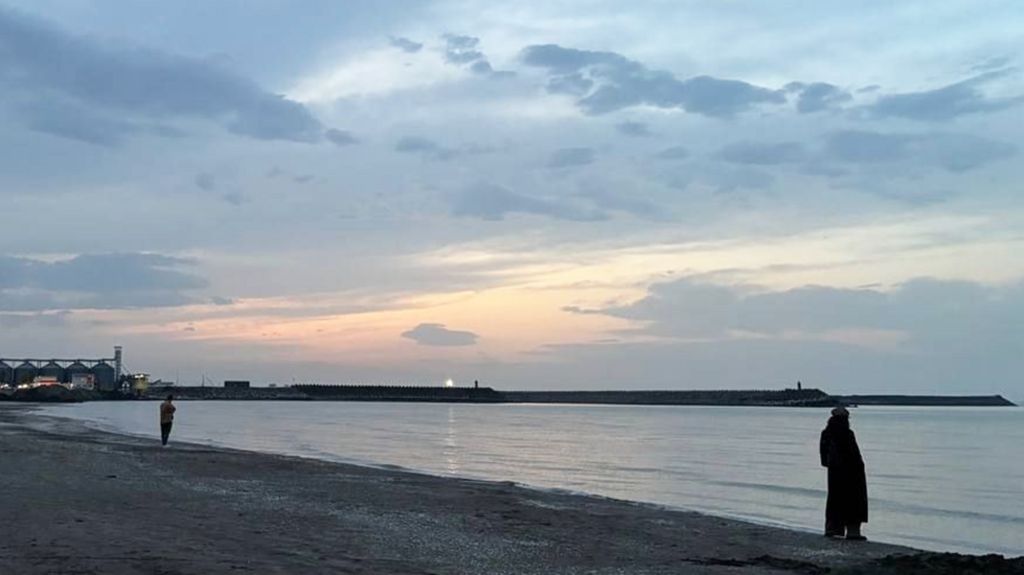
    A historic escalation in the Ukraine conflict has sent shockwaves through global diplomatic circles, after Ukrainian forces carried out the first direct strike on an Iranian cargo vessel operating in the strategically critical Caspian Sea – a key supply corridor linking Russia and Iran. The incident has drawn immediate angry retaliatory threats from Tehran, which Kyiv has outright dismissed as baseless.

    Ukrainian Foreign Minister Andrii Sybiha took to the social platform X to reject Iran’s rhetoric, arguing that Tehran’s authoritarian regime has long served as a willing accomplice to Russia’s full-scale invasion of Ukraine, which launched in 2022. “The regime in Tehran is a direct accomplice to Russian aggression against Ukraine, fuelling Moscow’s criminal war with weapons that have killed Ukrainians since 2022,” Sybiha wrote.

    Ukrainian President Volodymyr Zelensky first confirmed the operation Saturday, announcing that long-range strikes across the Caspian Sea had delivered “very good results” for Kyiv, with targets including vessels used to move military cargo tied to Iranian-Russian cooperation. The Security Service of Ukraine (SBU) later expanded on the operation’s details, confirming that drone attacks also hit a northern Caspian Sea oil platform, a Russian missile boat, and multiple cargo vessels already subject to international sanctions.

    Iran’s ambassador to Russia Kazem Jalali told Iran’s state-run news outlet that the targeted vessel, the Anna, had been anchored roughly five kilometers off the mouth of the Volga River when the strike hit. But Ukraine’s ambassador to Israel Yevgen Korniychuk clarified that the ship was not carrying civilian goods – it was transporting drone and missile components from Iran to Russia, to support Moscow’s war effort. Speaking to Israeli outlet N12, Korniychuk asserted that Ukraine and Israel face the same hostile “axis of evil” on separate regional fronts.

    The military partnership between Moscow and Tehran stretches back years, and deepened rapidly after Russia’s 2022 invasion. Iran began supplying Moscow with its domestically produced Shahed drones that year, which Russia has since upgraded and deployed extensively in airstrikes against Ukrainian cities and infrastructure. In a weekend interview with Sky News, Zelensky revealed that new intelligence indicates Tehran is preparing to ship ballistic missiles to Russia – multiple open sources already suggest short-range Iranian missiles have been delivered to Moscow since 2024.

    In response to Iran’s ongoing military support for Russia, Kyiv has in recent months dispatched its own military experts to several Gulf Cooperation Council states, to help local forces defend against Iranian drone attacks launched in retaliation for strikes by the U.S. and Israel. Prior to Saturday’s operation, Kyiv had repeatedly condemned Iran for its complicity in drone strikes that have killed hundreds of Ukrainian civilians, but this attack marks the first time Ukraine has directly targeted an Iranian asset on the high seas.

    Tehran’s reaction to the strike was swift and fierce. Iranian officials confirmed the assault left one sailor dead and multiple others injured, and flatly denied any involvement in the Russia-Ukraine conflict. Iranian Foreign Minister Abbas Araghchi called the attack a blatant violation of the United Nations Charter, claiming it was carried out at Israel’s direction in an attempt to draw Europe into a wider conflict. “The incident CANNOT GO UNANSWERED,” Araghchi wrote on X.

    Sybiha responded directly to Araghchi’s statement on Monday, sharing the Iranian foreign minister’s post and overlaying the words “Iranian lies” across the message. He also accused Iran of attempting to distract the global community from Russia’s repeated attacks on cargo ships carrying grain out of Ukrainian Black Sea ports, actions that have put global food security at severe risk.

    The Caspian Sea strike is part of a broader, sustained Ukrainian campaign to disrupt Russian logistics and cut off key Kremlin revenue streams. For months, Kyiv has targeted Russia’s shadow fleet of oil tankers to reduce Moscow’s energy export income, while carrying out parallel drone strikes on Russian oil depots and commercial infrastructure. Zelensky refers to this strategy as Ukraine’s “long-range sanctions campaign,” which analysts say is already inflicting growing damage on the Russian economy.

    Despite the campaign’s early successes, some security experts have raised questions about the strategic wisdom of opening direct conflict with Iran. Former Ukrainian intelligence official Ivan Stupak told the BBC that while disrupting Russian supply routes is a core Ukrainian goal, opening a second active front against Tehran carries major downsides for Kyiv. “The main idea… is to disrupt trading routes and cause as much damage as possible. But it’s not a good idea for Ukraine to have another battlefront with Iran. It’s not good for us,” Stupak said.

    Other analysts frame the strike differently, arguing it is less an opening of a new front and more an extension of Kyiv’s existing efforts to dismantle networks that sustain Russia’s war. Olha Polishchuk, a researcher with the Armed Conflict Location and Event Data Project (Acled), noted that targeting the Caspian supply corridor allows Ukraine to squeeze Russian military logistics far beyond the boundaries of the traditional front lines in eastern and southern Ukraine. “Targeting that route allows Kyiv to put further pressure on Russia’s supply networks beyond the traditional battlefield,” she explained.

  • ‘Erasing historical facts’: India orders massive crackdown on books in Kashmir’s libraries

    ‘Erasing historical facts’: India orders massive crackdown on books in Kashmir’s libraries

    A sweeping ideological purge of public libraries and educational institutions across Indian-administered Kashmir has been ordered by the New Delhi-appointed regional administration, triggering fierce condemnation from scholars, local residents and academic freedom advocates who warn the campaign systematically erases dissenting perspectives and destroys independent inquiry in the restive Himalayan territory.\n\nThe official order, issued earlier this month, mandates a full, region-wide audit of every resource held by institutional libraries and learning centers, covering books, academic journals, reference material, periodicals, digital archives and supplementary reading resources. The directive explicitly bars institutions from acquiring, retaining, circulating or making accessible any material deemed \”objectionable, inflammatory or inappropriate\”, including content that promotes secessionism, extremism, anti-national ideology or any narrative that prejudices what the order terms the \”sovereignty, unity and integrity of the Union of India\”.\n\nThis latest campaign was triggered by objections from legislators of India’s ruling Bharatiya Janata Party (BJP) over two government-distributed textbooks. The texts — *Personalities and Legends of Jammu and Kashmir* by Hilal Ahmad and Santosh Meena, and *Great Personalities of Jammu and Kashmir* by Dr. Sushant Giri — were rolled out to more than 250 regional schools under the federal government-funded Samagra Shiksha education initiative. BJP opposition leader in the region Sunil Sharma claimed the books used terminology including \”Indian-occupied Kashmir\” and called their presence in school libraries \”a direct challenge to India’s sovereignty and territorial integrity\”, labeling their inclusion an act of \”academic jihad\” designed to indoctrinate young students.\n\nIn response to the BJP outcry, regional administrative head Manoj Sinha suspended eight School Education Department officials, launched a formal investigation into both the volumes and their authors, and blacklisted the two publishing houses that produced the books, ordering all previously published material from both firms withdrawn from circulation immediately. Controversy centers on a small number of entries in the 240-page *Personalities and Legends of Jammu and Kashmir*, which profiles prominent Kashmiri figures, including pro-independence leaders alongside well-known international and Indian writers. The text refers to Maqbool Bhat, founder of the Jammu and Kashmir Liberation Front armed group, as a \”shaheed\” (martyr); Bhat was hanged by India in 1984 after a Supreme Court death sentence, and his remains were secretly buried inside New Delhi’s Tihar Jail. The book also quotes late Kashmiri resistance leader Syed Ali Shah Geelani describing Kashmir as a \”disputed region awaiting political resolution under the UN\”. No detailed information about the content of the second book has been made public.\n\nThis audit is far from an isolated measure: in August 2024, the administration already banned and seized 25 major academic and political texts on Kashmir, labeling them forfeited to the state under Indian criminal law. The blacklist includes landmark scholarly works on the region’s dispute such as AG Noorani’s *The Kashmir Dispute*, Victoria Schofield’s *Kashmir in Conflict: India, Pakistan and the Unending War*, Arundhati Roy’s essay collection *Azadi: Freedom. Fascism. Fiction.*, Sumantra Bose’s *Contested Lands* and *Kashmir at the Crossroads*, Hafsa Kanjwal’s *Colonising Kashmir: State-Building Under Indian Occupation*, Anuradha Bhasin’s *A Dismantled State*, and Christopher Snedden’s *Independent Kashmir*. Additional raids on independent bookstores last year saw authorities armed with lists of banned titles clear shops of customers and seize blacklisted volumes, while a 2025 raid confiscated Islamic literature from shops and private homes across the Kashmir Valley.\n\nScholars warn the current full library audit represents the latest escalation in a years-long campaign to enforce state-sanctioned ideological narratives in the region, which accelerated dramatically after the 2019 unilateral abrogation of Article 370, the constitutional provision that granted Indian-administered Kashmir semi-autonomous status, including protections for local land ownership, limited independent political decision-making and reserved local employment. Following the revocation, New Delhi split the region into two centrally administered union territories, introduced laws allowing non-Kashmiri citizens to purchase land and settle in the region, and expanded a broad crackdown on dissident political voices, independent journalism, human rights organizers and critical thought. Enforcement agencies have implemented widespread high-tech surveillance, expanded police powers and imposed harsh restrictions on public expression.\n\nDr. Ather Zia, a professor of anthropology and gender studies at the University of Northern Colorado Greeley whose own book *Resisting Disappearances* was among the flagged works, framed the purge as part of a long-standing pattern of systemic censorship. \”The removal of so-called ‘objectionable material’ is not a new thing but part of a continuity in the long history of censorship and suppressing critical thinking and scholarship in Kashmir,\” Zia explained in an interview. \”It is meant to reinforce the systemic erasure of grounded knowledges and histories of people. Any normal and intellectually healthy society operates on dissent, disagreements and critique, and examining difficult histories and multiple perspectives openly. Once again, this extreme purge, which is recurring and roots out any form of dissenting or critical voice from academic and mainstream discourse, points to democratic engagement in Kashmir being a true illusion. It tells us about a system that demands extreme compliance of thought and deed to survive, and has normalised repression.\”\n\nProminent pro-freedom Kashmiri leader Mirwaiz Umar Farooq emphasized on social platform X that banning books cannot erase shared historical memory: \”Banning books will not erase historical facts and the repertoire of lived memories of people of Kashmir.\”\n\nOutside scholars of Kashmir have also condemned the campaign as a direct attack on core democratic principles and academic freedom. Dean Accardi, a historian at Connecticut College specializing in Kashmir studies, noted that state censorship of academic material almost always stems from ruling elite fears of public opposition to state policy. \”Rather than addressing the sources of the people’s discontent, censorship aims to decrease public knowledge of facts on such matters as well as open public debate, replacing these core constituents of any true, open democracy with propaganda and punishment in the name of ‘security’,\” Accardi said. \”The history of Kashmir and its people involves great conflict and often troubling, uncomfortable truths. The state should not attempt to suppress those truths through censorship but instead address them openly and make things better for Kashmiris.\”\n\nGoldie Osuri, a sociologist and critical Kashmir studies scholar at the University of Warwick, said the audit follows last year’s 25-book ban as part of a sustained assault on independent academic inquiry that conflicts with the Indian state’s official narrative. \”We are witnessing an ongoing war against any academic material that might differ from the Indian state’s narratives where it concerns Kashmir,\” Osuri said. \”The Indian state, it seems, cannot brook any narrative that attests to Kashmiri contestation of Indian rule. In essence, this is a war against academic freedom. If academic work can only serve ‘national’ interest, then it cannot be called academic work. And schools and universities cannot be understood any more as genuine places of learning. Where it concerns academic material, it seems that educational institutions are being forced to serve as checkpoints for the Indian state rather than places where students can be exposed to differing narratives and understand the contexts for these differing narratives.\”\n\nThe climate of fear generated by the audit has already spread to private life across Kashmir, with many local residents quietly destroying or discarding their personal collections of books on Kashmiri politics, history and religion to avoid potential official repercussions. Nafees, a government employee and avid reader who recently cleared his shelves of decades of collected works on Kashmir, including books inherited from his late father, said fear has become pervasive in daily life. \”Some of these were part of my late father’s collection,\” Nafees said. \”I didn’t want to give them away, but as a government worker, I couldn’t risk keeping them. Fear has taken over. You never know what excuse the authorities might find to trouble you.\”\n\nA local Kashmiri research scholar, who requested anonymity to avoid official retaliation, summed up the steady expansion of state control over expression: \”The government has been keeping an increasingly close and continuous watch on what gets written, printed and read in Kashmir.\”\n\nThe Kashmir region has been a site of unresolved geopolitical contestation since the 1947 partition of British India, when both newly independent India and Pakistan claimed the entire Himalayan territory. The two nuclear-armed nations have fought multiple wars over the region, and decades of armed uprising and state repression have left Indian-administered Kashmir one of the most heavily militarized regions in the world, with daily repression shaping the lives of millions of local residents.