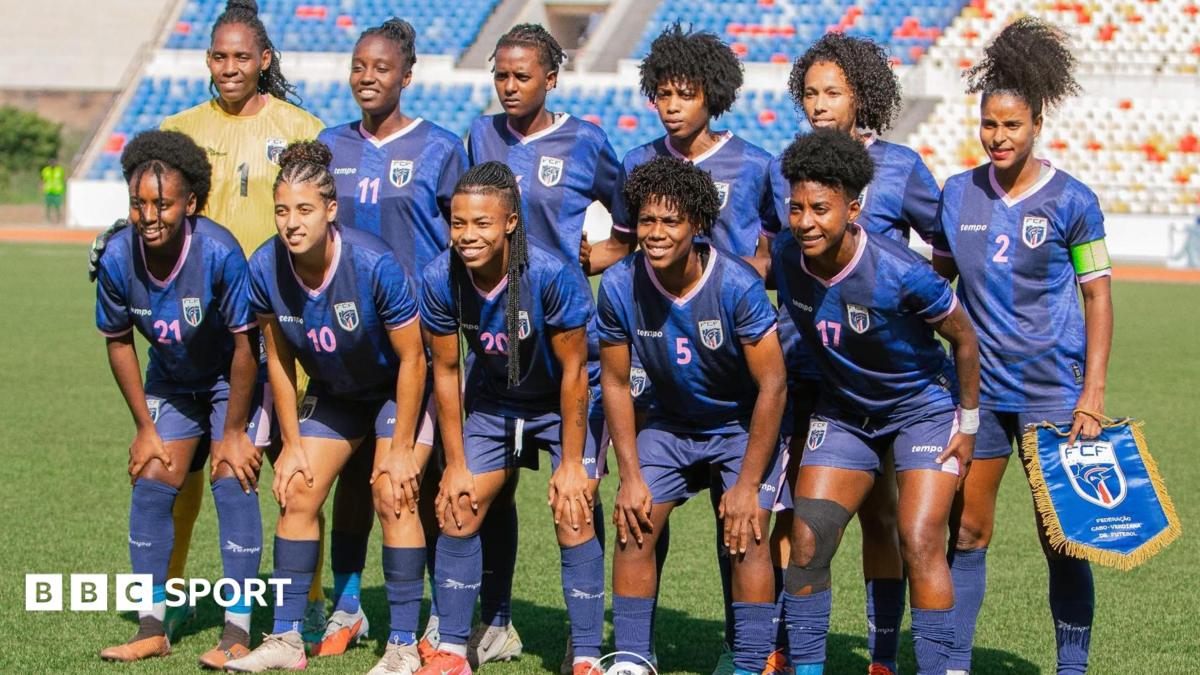
As Cape Verde prepares to make its historic debut at the 2026 Women’s Africa Cup of Nations (Wafcon) in Morocco, star forward Sandra Martins is warning opponents and football fans alike: do not write off the underdog Blue Sharks before a ball is kicked. The Atlantic archipelago nation’s women’s team is one of the youngest international sides in global women’s football, only contesting their first official senior match in 2018 and skipping both the 2020 (ultimately canceled by COVID-19) and 2022 Wafcon tournaments entirely. But the side defied expectations in qualification, putting six goals past Guinea across two legs to advance before pulling off a stunning upset against Mali to seal their spot at Morocco 2026.
Drawn into Group D, Cape Verde will kick off its Wafcon campaign against Ghana on Tuesday at 17:00 GMT, followed by back-to-back matches against familiar qualifying foe Mali and Cameroon to close out the group stage. For Martins, who currently plies her trade with England’s fourth-tier side London Bees, the squad is far more prepared than most observers give them credit for as first-time participants. “I think we would do well, probably better than what people would think as new participants,” Martins told BBC Sport Africa ahead of the opening match. “We are aiming to win two games [and] possibly go into the quarter-finals. I think if everyone applies themselves and we really work together, we could stand a chance of going to the next stage.”
This year’s Wafcon doubles as African qualification for the 2027 FIFA Women’s World Cup in Brazil, adding extra stakes to every fixture. The four tournament semi-finalists will secure automatic spots in the global showpiece, while the four losing quarter-finalists will compete for two additional berths in intercontinental play-offs. The tournament was originally scheduled to kick off in March, but the Confederation of African Football (CAF) drew widespread criticism when it postponed the event just 12 days before the opening match, citing a need to “ensure the success” of the continental competition. For Cape Verde, currently ranked 120th in the world and among the four lowest-ranked teams at the tournament, the delay proved far more beneficial than anyone could have predicted, Martins said. “I think [it] was actually a blessing in disguise. We were talking about it as a group and we needed more time to prepare. We recently played twice against Ivory Coast in friendlies and these two games were really useful for us. We worked on a few different things, had a few new team-mates and they blended super well into the team. Spending the extra time together has really allowed us to understand each other more on the pitch.”
The road to Wafcon has been a decades-long journey for Martins herself. Born in Portugal to Cape Verdean parents, she picked up football at age six and moved to the United Kingdom at 15, building a club career that includes stops at Leeds United, AFC Wimbledon, Dorking Wanderers, a spell in the U.S. with Charlottesville Blues, and her current role at London Bees, where she has notched four goals in 17 appearances this season. Though she grew up speaking Portuguese and Cape Verdean Creole, representing her parents’ homeland on the international stage was always a distant dream. “The dream was there but how to get there was the part that was not so clear,” she explained. “You just take it season by season. Eventually I started doing well and picking up on my own performance patterns and said ‘What do I need to work on?’.”
Her breakthrough came after a friendly tournament appearance, when she caught the eye of the Cape Verdean Football Federation’s technical director, who was actively scouting talented diaspora players to strengthen the nascent national program. Martins felt an immediate connection with the squad from her first day in camp. “Meeting the girls for the first time, it was surprisingly very easy. I broke the ice and was like ‘Girls, yes I speak Creole but I live abroad. I have a different twang’. They laughed at my accent but that was fine. They were really welcoming and we just laughed straight away.”
Martins won her first senior international cap in the first leg of the Wafcon qualifier against Mali last October, a 1-0 home defeat in Praia. She missed the dramatic second leg in Bamako after falling ill, where the Blue Sharks fought back to win 4-2 despite a second-half floodlight failure that halted play. “When the final whistle went it was amazing. Everyone was euphoric, screaming how happy we were. A true sisterhood has formed. When we got back to Praia loads of locals travelled to the airport to celebrate what we had achieved.”
2026 is already a landmark year for Cape Verdean football, following the men’s senior team’s dream debut at the 2026 FIFA World Cup earlier this year. The men’s side became the tournament’s darling underdog story, stunning the football world by reaching the round of 16 and pushing defending champions Argentina all the way to extra time before a narrow 3-2 defeat. Now, Martins hopes the women’s team’s Wafcon debut will build on that momentum to grow the women’s game across the Cape Verde islands. “The popularity (of women’s football) has definitely grown. I think we picked up a lot of momentum from the men’s [qualification]. In general, any time there’s a sport event going on, the country does well in getting behind any team. On social media, everyone’s being supportive. I hope some of them can come to watch us in Morocco, but if not I’m pretty sure that energy will come all the way across to Morocco.”