博客

  • Shenzhen maps plan for mangrove management

    Shenzhen maps plan for mangrove management

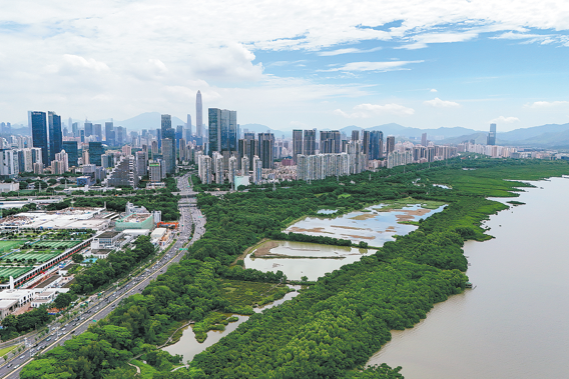
    Nestled along the shores of Shenzhen Bay, between one of China’s most densely urbanized regions and a critical migratory bird corridor, the Futian Mangrove Wetland stands as a groundbreaking model of how thriving megacities can coexist with fragile coastal ecosystems. Facing Hong Kong’s Mai Po Nature Reserve across the narrow bay, this urban wetland has evolved into both a national showcase of ecological restoration and a global hub for cross-border cooperation on mangrove protection.

    As part of the Guangdong Neilingding-Futian National Nature Reserve, first established in 1984 and granted national-level status four years later, the 367.64-hectare site holds the distinction of being China’s only national-level mangrove reserve located within a major city’s core urban zone. It was officially designated a Wetland of International Importance under the Ramsar Convention in 2022.

    Today, the reserve hosts 20 distinct mangrove species across 9 plant families and provides critical habitat for 273 recorded bird species. The 2026 global synchronized census of waterbirds counted 341 endangered black-faced spoonbills in the greater Shenzhen Bay area (including adjacent Hong Kong waters), accounting for approximately 4.4% of the species’ entire global population.

    This conservation success story was not a given. Decades ago, the site faced a major threat when the planned Binhai Avenue was originally routed straight through the reserve’s core protected zone. In a landmark decision that prioritized ecological protection over rapid infrastructure development, city authorities shifted the highway alignment 200 meters north to avoid damaging the wetland. That choice kicked off a decades-long series of targeted protections: a 500-meter noise barrier to reduce disturbance to roosting birds, strict height limits for new development surrounding the reserve, a full fishing ban across Shenzhen Bay implemented in 2014, and China’s first bird-friendly urban planning standard released by the city in 2025.

    This local progress aligns with national efforts to reverse decades of mangrove loss across China’s coastlines. The country has enacted a national Wetland Protection Law, launched sustained national campaigns for wetland conservation, large-scale mangrove restoration, and control of the invasive smooth cordgrass (Spartina alterniflora) that outcompetes native mangrove species. During the 14th Five-Year Plan period (2021-2025), China exceeded its restoration target ahead of schedule, planting 9,200 hectares of new mangroves and bringing the country’s total national mangrove area to approximately 30,300 hectares.

    Shenzhen has expanded this domestic progress to a global stage through the International Mangrove Center (IMC), an initiative first proposed by China at the 14th Meeting of the Conference of the Contracting Parties to the Ramsar Convention on Wetlands in November 2022. As of June 2026, Myanmar became the 21st signatory to the IMC establishment agreement, according to the center’s interim secretariat.

    Since 2024, the IMC has organized six international training workshops, bringing together 137 delegates from 30 countries around the world. Each two-week workshop combines classroom lectures, peer discussion panels, and hands-on field visits to the Futian reserve, with participants drawn from government environment agencies, intergovernmental organizations, research institutions, and protected area management teams. Workshop topics cover a full spectrum of mangrove protection priorities: national policy frameworks, ecological restoration techniques, blue carbon accounting, community co-management of coastal resources, and transboundary conservation cooperation. In June 2026, a regional workshop for Asia-Pacific economies hosted 24 delegates from 10 economies, alongside partners from the East Asian-Australasian Flyway Partnership and the Ramsar Regional Center — East Asia.

    Based on input from participating member states and workshop attendees, the IMC is currently developing two key global resources: a comprehensive Global Mangrove Status and Key Issues Report, and open-access mangrove conservation datasets for all signatory countries. The center is also conducting research on blue carbon policy frameworks, market-based conservation mechanisms, and best practices for governance, local community engagement, and sustainable conservation financing.

    The Futian reserve provides a real-world case study for these global exchanges to draw on. To date, Shenzhen has invested more than 300 million yuan ($44.2 million) into estuary and coastal mangrove restoration, traditional fishpond rehabilitation, and improved habitat management across the Shenzhen Bay region. These investments have covered 220 hectares of coastal land, including more than 30 hectares of new mangrove planting.

    Since 2016, the reserve has transformed nearly 40 hectares of abandoned tidal shrimp ponds into high-quality waterbird habitat. Restoration work included clearing invasive reeds and overgrown vegetation, reconnecting historic tidal waterways, creating new intertidal mudflats, and constructing circular deep-water zones that serve as safe roosting spots during high tide. The results speak for themselves: the number of black-faced spoonbills roosting overnight in the restored Futian fishponds now exceeds 150, hitting a record high in recent years. Across the entire Shenzhen Bay area, counted numbers of the endangered species have surged from just 82 individuals in 1994 to 328 in 2025.

    Modern digital technology has further refined the reserve’s management practices. Since 2020, the reserve has installed 27 high-definition video monitoring systems and 50 infrared trail cameras. Integrated with AI-powered bird species identification, automatic image sorting, and intelligent sluice gate management, the system allows reserve managers to adjust water levels in real time and continuously track bird population and activity patterns without disturbing wildlife.

    Shenzhen has also pioneered new market-based mechanisms to fund conservation and connect mangrove protection to broader ecological value. In September 2023, China held its first ever auction of mangrove conservation carbon credits in the city, with credits selling for 485 yuan per metric ton; all proceeds from the auction are earmarked for future mangrove restoration projects. Public engagement has also been a core priority: by the end of 2025, nature education programs based at the Futian reserve had attracted more than 1 million students from over 300 schools across the country.

    As coastal communities around the world face intensifying storm damage, accelerating habitat loss, and growing pressure on fisheries, mangroves are increasingly recognized as natural, cost-effective infrastructure that mitigates climate impacts while supporting biodiversity. China’s experience, from the innovative urban mangrove management model at Futian to the global knowledge sharing and capacity building work of the IMC, demonstrates that effective mangrove conservation succeeds when it integrates legal protection, scientific research, digital monitoring, public education, market-based blue carbon mechanisms, local livelihood support, and cross-border international cooperation as interconnected components of a single holistic system.

  • Zidane confirmed as France head coach

    Zidane confirmed as France head coach

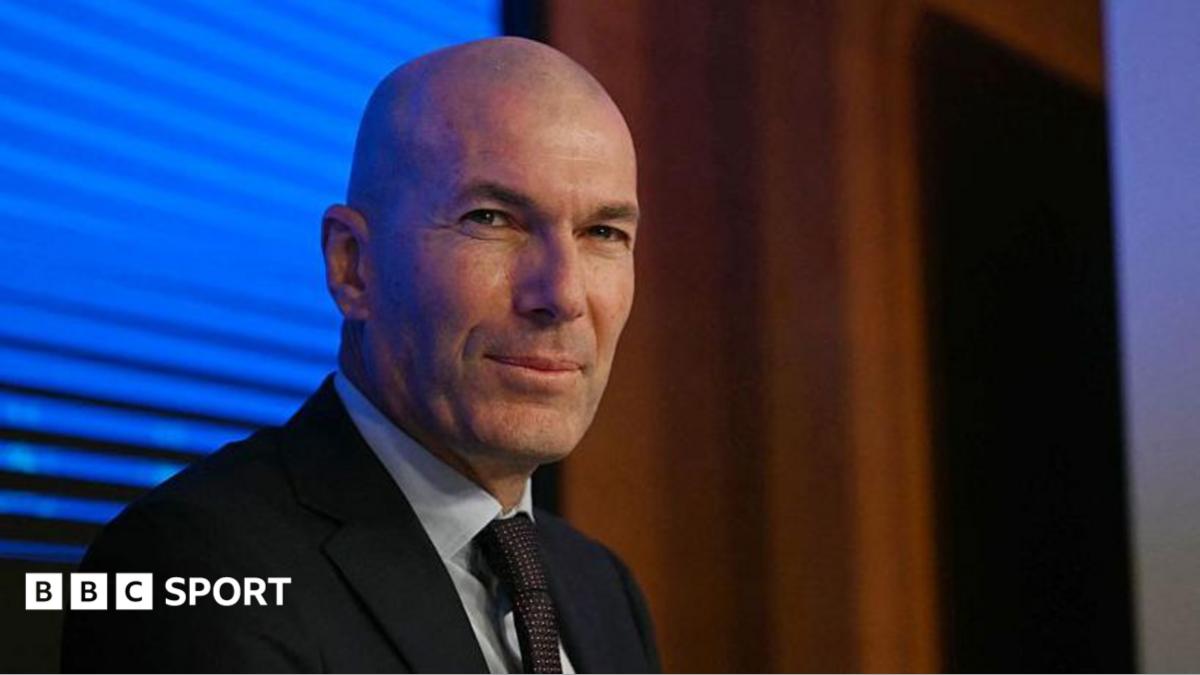
    One of the most decorated figures in global football, Zinedine Zidane, has officially been named the new head coach of the French men’s national team, filling the vacancy left by long-serving manager Didier Deschamps following the 2026 FIFA World Cup.

    Deschamps, France’s longest-tenured senior team manager, stepped down from his role after 14 years at the helm, ending his tenure following France’s semi-final elimination against eventual tournament winners Spain at the 2026 World Cup, where Les Bleus ultimately finished fourth. Over his 14-year reign, Deschamps steered France to three major international finals, including a historic second World Cup title in 2018, cementing his legacy as one of the most successful managers in French football history.

    For Zidane, a legendary figure for French football both as a player and a coach, the appointment marks the end of a five-year break from management and the culmination of nearly two decades of speculation linking him to the top job with Les Bleus. The 54-year-old, who is widely regarded as France’s greatest ever player, has not held a senior coaching role since leaving Real Madrid for the second time in 2021, following a trophyless domestic campaign. He will now sign a contract that runs through the 2030 FIFA World Cup qualifying cycle, with his first competitive test coming on 25 September, when France travels to Turkey for a UEFA Nations League fixture. Zidane will also lead the team through European Championship 2028 qualifying.

    Speaking after his official appointment, Zidane expressed overwhelming pride in taking on the role of leading his home nation. “I’ve often said it: there’s nothing greater than the French national team. So it’s a joy and obviously a great source of pride to become the manager of this French national team,” he said. “It’s also a responsibility. I want to thank [French Football Federation] president Philippe Diallo, the executive committee, and the French Football Federation for their confidence. I also acknowledge the 14 years of incredible service from Didier and his entire staff. I have high ambitions for the French national team, there is no doubt about that.”

    Diallo echoed Zidane’s sentiment, framing the appointment as a historic milestone for French football. “The appointment of Zinedine Zidane as head coach of the French national team is a source of immense pride for the French Football Federation,” he said. “It marks the meeting of a legend in the history of Les Bleus, who has become one of the most decorated and respected coaches of his generation, and a team with rare potential, driven by the highest ambitions.”

    Zidane’s path to the top job with France has been decades in the making, starting with a legendary playing career that reshaped the global game. Born in Marseille, he launched his professional career in 1989 with Cannes, before moving to Bordeaux and eventually Italian giants Juventus in 1996. As an attacking midfielder, he guided Juventus to back-to-back Serie A titles and consecutive Champions League finals, earning a then-world-record £66 million transfer to Real Madrid in 2001, where he became a centerpiece of the club’s iconic Galacticos era alongside superstars including Ronaldo, Luis Figo and David Beckham. He delivered one of the most iconic goals in Champions League history in the 2002 final, a stunning volleyed winner against Bayer Leverkusen that secured Madrid’s ninth European crown.

    As a player for France, Zidane’s legacy is unmatched. He scored two iconic headed goals in the 1998 World Cup final on home soil in Paris, leading France to a 3-0 victory over Brazil for the nation’s first ever World Cup title, and earned the Ballon d’Or later that year. He added a UEFA Euro title to his international honors in 2000, before retiring from international play in 2004. He came out of international retirement to help France qualify for the 2006 World Cup, and steered Les Bleus to another final against Italy, where he scored the opening goal with a deft Panenka penalty before his tournament ended in infamy with a red card for a headbutt on Marco Materazzi; Italy went on to win the title on penalties.

    Zidane transitioned to management nearly a decade after retiring as a player, taking charge of Real Madrid’s reserve side Real Madrid Castilla in 2014. He was promoted to first team manager in January 2016, and immediately delivered Champions League glory, defeating city rivals Atletico Madrid in a penalty shootout in the final. That victory was the first of three consecutive Champions League titles for Zidane and Madrid, making them the first club to win back-to-back Champions League titles in the modern era, and the first to claim three straight European crowns since Bayern Munich in 1976. He also won La Liga in the 2016-17 season before stepping down in 2018, citing a need for change at the Santiago Bernabéu.

    He returned to Real Madrid in March 2019 to turn around a poor run of form, and claimed another La Liga title in the 2019-20 season, while overseeing a major transfer spending spree that included the signings of stars like Eden Hazard and Rodrygo. He departed for the second time at the end of the 2020-21 campaign, which ended without a major trophy, and has not managed at any level since. Speculation linking Zidane to the France national team manager job dates back to 2010, when France suffered a humiliating group stage exit at the World Cup; 16 years later, he has finally stepped into the role he has long been linked to.

  • Ariana Grande sues hackers who leaked music and videos

    Ariana Grande sues hackers who leaked music and videos

    Global pop superstar Ariana Grande has launched a high-profile legal action against two unknown hackers, accusing them of orchestrating a years-long scheme to steal and leak her unreleased creative work, including dozens of unheard songs and private studio footage. The lawsuit, filed in Los Angeles and first reported by major U.S. entertainment outlets, details how the defendants have systematically targeted the digital accounts of Grande’s collaborators—including producers, photographers and production team members—to access confidential content that they later sold for large sums on the dark web. Court documents outline a clear pattern of escalating illegal activity spanning more than a decade, stretching all the way back to the early years of Grande’s music career. Since her public debut in 2011, the filing claims, hundreds of separate leaks of her unreleased material have taken place, with 45 unfinished songs stolen and released online in 2023 alone. The most recent alleged breaches took place in 2024 and 2025: in 2024, the hackers created a fake email account impersonating a professional photographer who works with Grande, tricking a digital technician into turning over private, unreleased photos of the artist. The following year, they gained unauthorized access to a collaborating producer’s mobile device, pulling out unreleased song masters, demo recordings and behind-the-scenes video from Grande’s recording sessions. Grande has long been vocal about her frustration with the ongoing leaks, and has previously called out bad actors for stealing her work. During a 2024 interview on the Zach Sang Show, she spoke publicly about the unauthorized leak of an unreleased track called *Fantasize*, which she wrote with legendary pop producer Max Martin. The track went viral on social media after it was leaked, and Grande joked at the time, “Before I left for Wicked – [there were] a few studio sessions that I did which are all over TikTok, thank you so much, I’ll see you in jail. Literally. Those were all written for a TV show, for something that was not for me, so Fantasize comes out, crazy, was stolen… These pirates, crooks, illegal!” In her legal filing, Grande emphasizes that the leaks have violated the intimate, trusting bond between her and her fanbase, an outcome she describes as particularly harmful. She is pursuing the case on multiple counts, including invasion of privacy, violation of California state computer fraud and hacking laws, and civil conversion of stolen property. Her legal team argues that the repeated malicious intrusions into her private creative work have caused substantial, irreparable harm to both her privacy and her professional career. The lawsuit comes at a pivotal moment for Grande, who is balancing a major world tour with the upcoming release of new music and a high-profile acting project. After a multi-year hiatus from recording to film the two-part film adaptation of the hit Broadway musical *Wicked*, Grande returned to music this year. Her eighth studio album, *Petal*, is scheduled to drop this Friday, just days after the court filing was made public. Currently, she is in the middle of her *Eternal Sunshine* world tour, which is scheduled to bring shows to the United Kingdom starting in August. Grande has previously hinted that this run of concerts will be her last for an extended period. Appearing on Amy Poehler’s *Good Hang* podcast, she shared, “I’m going to give it my all and it’s going to be beautiful. I think that’s why I’m doing it because I’m like: ‘One last hurrah’ – for now.” The primary goal of the current legal action, Grande’s legal team confirms, is to uncover the true identities of the two hackers behind the leaks, putting an end to the ongoing pattern of digital theft that has disrupted her career for more than a decade.

  • Emotional Zinedine Zidane realizes his ‘dream’ as he takes charge of the France team

    Emotional Zinedine Zidane realizes his ‘dream’ as he takes charge of the France team

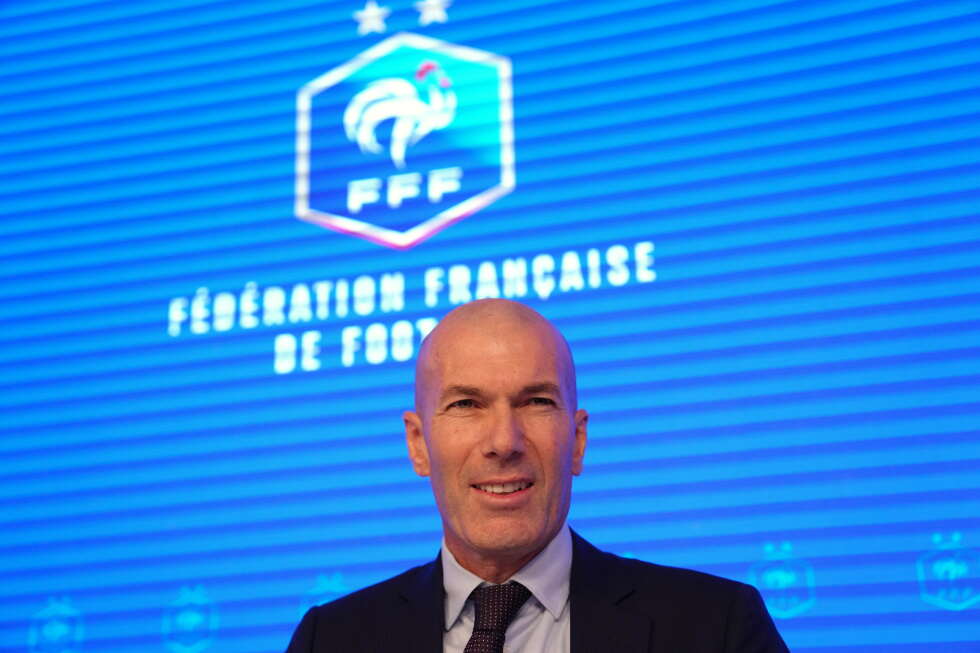
    PARIS (AP) — When French Football Federation (FFF) president Philippe Diallo officially named Zinedine Zidane the new head coach of the French men’s national soccer team at the federation’s Paris headquarters on Tuesday, the 54-year-old legend could barely contain his emotion. With his fist clenched and his typically calm voice shaking slightly, Zidane opened his first public address by admitting his long-held dream of leading Les Bleus had finally come true.

    “I’m excited,” Zidane said. “The France team makes you dream. We have extraordinary players, an extraordinary group of staff and talent.”

    The appointment ends Didier Deschamps’ 12-year tenure at the helm of the national side, coming after Deschamps confirmed he would step down following France’s 2024 European Championship semifinal exit against Spain. For Zidane, the role is the culmination of a half-decade of patience: after departing his post as Real Madrid head coach in 2021, he rejected every club offer that came his way, holding out exclusively for the chance to lead his home nation.

    “I’ve waited five years for this chance, so that’s why I’m a bit emotional,” Zidane noted, calling the announcement the happiest day of his coaching career to date. “I’ve always watched this side as a fan and also as a future coach, I won’t hide it. That’s why I didn’t take a club side. I told myself that the only thing I wanted to do after Madrid was taking the France team.”

    Diallo confirmed that Zidane has signed a four-year contract with the FFF, framing the hiring as a landmark moment for French soccer. “This is an exceptional moment, exceptional because of the person sat next to me,” Diallo said. “Zidane is one of the legends of French soccer, there is no other way to put it.”

    Zidane was quick to pay tribute to his predecessor, who led France to a 2018 World Cup title and a 2022 World Cup final finish. Deschamps faced growing criticism in his final years in charge, with some pundits arguing he underperformed with the talented squad at his disposal, and the outgoing coach himself referenced an “unbreathable atmosphere” in his final months in the role. Still, Zidane praised Deschamps’ legacy.

    “Today I have the opportunity to be in charge of this team and I will give everything so that this team can win,” Zidane said. “I would also like to congratulate DD for these remarkable years at the helm.”

    FFF leadership first opened talks with Zidane in February 2025, shortly after Deschamps confirmed he would step down after the 2026 World Cup. When it comes to on-pitch identity, Zidane made clear his approach will differ from Deschamps’ pragmatic style. A creative attacking playmaker during his own playing career, Zidane framed his coaching philosophy around attacking, entertaining soccer.

    “What motivates me is the game, I was a No. 10, I like goals,” he said. “I was a leader on the field and now I want to be a leader by experience.”

    Zidane’s first match in charge will be a Nations League away fixture against Turkey on September 25, followed by a second away match against Belgium three days later. French supporters will get their first chance to see Zidane at the Stade de France on October 2, when France hosts Italy — a fixture that carries particular personal weight for the new coach. It was exactly 20 years prior that Zidane’s international career ended in infamy at the 2006 World Cup final in Berlin, when he was sent off for headbutting Italian defender Marco Materazzi in the tournament’s deciding match.

    “Italy is special, because I played there, because I know people, because I speak Italian. All of those things,” Zidane said of the October fixture, adding that he has already memorized the details of his first four matches in charge. Following Tuesday’s announcement, Zidane stepped outside FFF headquarters to greet a large crowd of cheering fans, who welcomed their new coach with loud chants and applause.

    Zidane and Deschamps have long been tied to French soccer glory: the pair were key parts of the 1998 World Cup and 2000 Euro winning squads, with Deschamps serving as the hardworking captain and Zidane as the team’s mercurial creative superstar. No one embodied the 1998 triumph more than Zidane: he scored two iconic headers in the 3-0 final win over Brazil at the Stade de France, and his face was projected onto the Arc de Triomphe during the nation’s victory celebrations that night. He would go on to win the Ballon d’Or that same year.

    Born in Marseille to Algerian parents, Zidane built a legendary club career across top European sides, starting with stints at Cannes and Bordeaux before moving to Italian giant Juventus and eventually Real Madrid. He made his international debut in 1994, announcing his arrival on the national stage by scoring two stunning goals as a second-half substitute against the Czech Republic in Bordeaux. He won multiple domestic league titles at both Juventus and Real Madrid, and scored one of the most iconic goals in Champions League history — a stunning volley in the 2002 final against Bayer Leverkusen — to secure the trophy for Los Blancos.

    Zidane retired from international soccer after the 2006 World Cup, capping a 12-year international career with 108 caps and 31 goals, including that opening penalty in the 2006 final against Italy. As a coach, he built an equally impressive legacy at Real Madrid, leading the Spanish giants to three consecutive Champions League titles between 2016 and 2018 before departing and returning for a second stint that ended in 2021.

    For Zidane, leading France is the final chapter of his historic relationship with the national side, a role he has spent half a decade working toward. “I have so many emotions, I am ready for the challenge,” he said. “That’s what motivates me.”

  • A magnitude 7.1 earthquake shakes part of southern Japan and a tsunami advisory is issued

    A magnitude 7.1 earthquake shakes part of southern Japan and a tsunami advisory is issued

    A powerful preliminary magnitude 7.1 earthquake jolted the Kumamoto region on Japan’s Kyushu Island, the country’s southernmost main island, during late Tuesday afternoon, according to an official announcement from the Japan Meteorological Agency. Following the seismic event, authorities promptly issued a tsunami advisory for a coastal area adjacent to the quake’s epicenter.

    The warning specifically covers Ariake Bay, which sits along Kumamoto’s western shoreline. The affected region sits roughly 900 kilometers, or 560 miles, to the southwest of Japan’s capital city of Tokyo. In the immediate aftermath of the tremor, Japanese nuclear regulators launched urgent inspections of local nuclear energy facilities to assess any potential damage.

    Japan’s Nuclear Regulation Authority confirmed after preliminary checks that no irregularities or safety issues have been detected at three nuclear power plants located in the vicinity of the earthquake. The 2016 Kumamoto earthquake holds a grim place in Japan’s recent disaster history: that massive seismic event claimed the lives of more than 50 people, injured an additional 1,800 residents, and left tens of thousands of residential structures damaged or completely destroyed, leaving many communities displaced for months and years afterward.

  • UN says nearly 500 Afghan civilians have been killed in Pakistan-Afghanistan fighting since October

    UN says nearly 500 Afghan civilians have been killed in Pakistan-Afghanistan fighting since October

    Months of persistent cross-border hostilities between Pakistan and Afghanistan have left nearly 500 Afghan civilians dead and more than 1,200 injured between October last year and the end of June this year, the United Nations Assistance Mission in Afghanistan (UNAMA) confirmed in a major new human rights report released Tuesday.

    The devastating casualty count, compiled through UNAMA’s on-the-ground documentation, lays bare the human cost of a conflict that has persisted despite repeated international calls for de-escalation. One of the most striking examples of civilian harm documented in the report occurred in Afghanistan’s eastern Paktia Province on June 28, when two successive airstrikes hit a residential building. After the first strike killed several people, local residents rushed to the site to pull trapped survivors from the rubble. A second strike hit the area as the rescue effort was underway, killing 22 civilians – five of them children – and wounding 185 more, with most casualties coming from the second, unprovoked attack. “International humanitarian law provides special protections for medical personnel and humanitarian workers, including first responders. Attacks against them while performing their duties are strictly prohibited,” said Fiona Frazer, UNAMA’s human rights director.

    The deadliest single incident of the cross-border fighting came in March, when a Pakistani airstrike targeted a drug treatment center in the Afghan capital Kabul, killing hundreds of civilians. Last week, global human rights group Amnesty International called for the bombing to be investigated as a potential war crime, a call Pakistan has since rejected. Islamabad has consistently denied targeting civilian infrastructure, asserting in its official response to UNAMA’s report that all of its military operations are directed exclusively at militant hideouts and infrastructure linked to groups that carry out attacks inside Pakistan. Pakistan’s foreign ministry also reiterated its longstanding claim that the Taliban-led Afghan government continues to allow militant groups to operate freely from Afghan territory, an accusation Kabul has repeatedly denied.

    Cross-border tensions between the two neighbors flared dramatically in February, after Afghan forces launched a cross-border retaliatory raid against Pakistan, which had carried out earlier airstrikes inside Afghanistan. Following the exchange, Islamabad publicly declared it was in an “open war” with Afghanistan. Pakistan’s core grievance centers on the presence of the Tehrik-e-Taliban Pakistan (TTP), also known as the Pakistani Taliban, a militant group that has carried out thousands of deadly attacks across Pakistan over the past decade. The TTP maintains close ideological and operational ties to the Afghan Taliban, which seized control of Afghanistan in 2021 amid the chaotic withdrawal of U.S.-led coalition forces. UNAMA’s mandate only allows it to monitor casualties and human rights abuses inside Afghanistan, so the report does not include any tally of civilian casualties from the fighting on Pakistani territory.

    Beyond the cross-border conflict, the UN report also shines a light on the deepening human rights crisis inside Afghanistan, particularly for women and girls under Taliban rule. The Taliban government has imposed sweeping, draconian restrictions on women’s public life: a ban on secondary and higher education for girls, prohibitions on women working in most sectors, a mandatory full hijab rule that requires women to cover their entire bodies, including their faces, and a requirement that all women be accompanied by a male chaperone when in public. These rules are enforced by the Ministry for the Propagation of Virtue and the Prevention of Vice, and enforcement is often arbitrary, with varying interpretations of what counts as compliance leading to sudden detentions and punishment.

    In June, a crackdown on alleged dress code violations in the western Afghan city of Herat led to the arrest of at least 30 women. When rare public protests broke out against the detentions, security forces opened fire on the crowd, killing at least one protester and wounding multiple others. UN investigators also found that vice and virtue officials have been visiting health clinics and retail shops across the country, ordering staff to turn away any woman who arrives without a male chaperone. The report also notes that new marriage regulations in Afghanistan implicitly sanction child marriage, by arranging for marriage contracts to be legally recognized for underage minors.

  • Chip stocks slide in US and Asia as AI jitters rattle investors

    Chip stocks slide in US and Asia as AI jitters rattle investors

    A deepening sell-off in artificial intelligence-linked equities has triggered sharp share drops for leading semiconductor manufacturers across U.S. and Asian markets this week, sending benchmark indexes into steep declines and activating market safety mechanisms.

    On Tuesday morning, South Korea’s primary Kospi Index saw trading temporarily suspended after plummeting 8% early in the session. The 20-minute circuit breaker halt failed to stem the downward momentum, with the index closing down a dramatic 10.8% for the day. The collapse was led by the country’s giant technology and chip sectors: Samsung Electronics and SK Hynix, two of the world’s largest memory chip producers, both recorded declines of more than 13% by market close. This is not the first time the tech-heavy Kospi has triggered a circuit breaker this year; the mechanism is explicitly designed to slow panic-driven selling during periods of extreme market volatility. Year-to-date, the index had surged more than 100% from January to mid-June, but has now surrendered roughly a third of that peak value. South Korean stock markets have seen unusually high volatility in recent months, driven by a flood of new retail investors entering the market.

    The global AI stock downturn was sparked by Monday’s trading on Wall Street, where leading AI chip designer Nvidia dropped 5%, erasing its title as the world’s most valuable publicly traded company and handing the top position back to Apple. The decline came following a Wall Street Journal report that Nvidia is in advanced discussions to contribute up to $250 billion to a massive data center infrastructure project developed in partnership with OpenAI, the creator of ChatGPT. The BBC has reached out to both Nvidia and OpenAI to request comment on the reported deal.

    SK Hynix, which held a record-breaking initial public offering on the Nasdaq just three weeks ago, saw its U.S.-listed shares drop 7.5% on Monday, falling well below its $149 per share offer price. Across the East China Sea, Japan’s tech-heavy Nikkei 225 index followed the regional downward trend, closing nearly 4% lower on Tuesday. Apple, which has seen its shares climb roughly 25% so far this year, benefited from Nvidia’s decline to retake the top valuation spot.

    Jun Bei Liu, founder of investment advisory firm Ten Cap, told the BBC that two key factors are driving the pullback: growing investor anxiety over the massive volumes of capital flowing into AI development, and rising competition from Chinese chip manufacturers. Against this uncertain backdrop, Liu noted that institutional investors are currently “taking some profit off the table” after the months-long AI stock rally, but many plan to reinvest in AI-related equities following the upcoming U.S. holiday season.

    In a striking contrast to the broader global sell-off, China’s largest domestic memory chip manufacturer ChangXin Memory Technologies (CXMT) saw its shares skyrocket nearly 470% during its trading debut on the Shanghai Stock Exchange on Monday. The firm produces dynamic random-access memory (DRAM) chips, a critical component for AI data centers, smartphones, personal computers, tablets and a wide range of other consumer electronics. CXMT announced it plans to allocate the majority of proceeds from its IPO to expanding production capacity and accelerating research and development into next-generation memory chip technologies.

  • AI race loss fears behind Trump’s planned September hosting of Xi

    AI race loss fears behind Trump’s planned September hosting of Xi

    As the September 24 meeting between U.S. President Donald Trump and Chinese President Xi Jinping in Washington approaches, discussions around mitigating risks posed by cutting-edge frontier artificial intelligence models and resolving long-running intellectual property disputes have emerged as the core items on the bilateral agenda.

    This planned first official U.S.-China AI dialogue under the Trump administration, first disclosed by Reuters on July 21, will be led on the American side by Treasury Secretary Scott Bessent. Trump later confirmed the report on July 23, noting that the two leaders first broached the topic of AI collaboration and competition during his May visit to Beijing, where the pair met on May 14, 2026.

    Chinese state observers and media outlets point out that the Trump administration’s push for the summit stems from growing anxiety over China’s rapid progress in the global AI race. This concern intensified after China secured new AI development partnerships with 28 countries, mostly from the Global South, at the 2026 World Artificial Intelligence Conference held in Shanghai this past July. Within Chinese policy and tech circles, there is a widespread consensus that further U.S. export restrictions and regulatory curbs on China’s AI sector will only accelerate domestic efforts to achieve technological self-sufficiency and build an independent, sustainable AI ecosystem.

    The upcoming talks will center on regulating high-capacity AI models that carry far-reaching implications for global security and economics: these systems could rebalance global military power, enable devastating cyberattacks on critical national infrastructure, and cause widespread disruption to global labor markets. Trump has repeatedly framed AI as one of the most transformative technologies in human history, warning that the nation that leads the global AI race will hold unmatched strategic and economic advantage. “Whoever wins that race is probably going to win,” he stated in his confirmation of the September talks.

    Washington’s push for dialogue comes against a backdrop of dramatic breakthroughs by Chinese AI developers over the past 12 months. Leading domestic firms including DeepSeek, Zhipu AI and Moonshot AI have launched a wave of low-cost, high-performance frontier models that match or even outperform U.S. industry leaders OpenAI’s ChatGPT and Anthropic’s Claude on key industry benchmarks.

    A key strategy that has allowed Chinese firms to deliver strong results at a fraction of the cost of Western competitors is knowledge distillation, a process where new models learn pattern recognition and reasoning by studying outputs from existing Western AI systems, rather than building foundational capabilities from scratch. This approach eliminates the need for massive purchases of expensive cutting-edge AI chips. Chinese developers have also paired distillation with two efficiency-focused architectural innovations: mixture of experts (MoE), which routes individual queries only to the most relevant subset of the model’s parameters rather than activating the entire system, and sparse attention, which lets models focus only on the most contextually relevant sections of input text. Both techniques drastically cut computing requirements without sacrificing output accuracy.

    In a July 26 commentary, the Global Times, a publication under China’s People’s Daily, noted that China’s open-source AI ecosystem has expanded dramatically in power and influence over the past two years, enough to trigger alarm among leading U.S. AI research labs. “Two years ago, names like Zhipu AI and Moonshot AI barely registered in the American tech press. Now their models are going toe-to-toe with those from Anthropic and OpenAI,” the commentary read. “The United States’ panic makes sense.”

    The publication added that Washington has adjusted its strategy in the AI contest with China: rather than seeking to rapidly displace China from the global AI market, the U.S. is now focused on extending its current lead for as long as possible. “The failure to eliminate China doesn’t mean the contest is over. On the contrary, as knocking China out becomes less feasible, the AI race between the US and China simply shifts to more specific and hard-fought fronts,” the commentary said. “As long as China stays true to a development path suited to its own realities, it will earn the standing it deserves in shaping AI’s norms, rules and standards of access.”

    That reference to “China’s realities” speaks to the long-running impact of U.S. export controls that have constrained China’s access to advanced chip manufacturing technology and high-end AI hardware, a topic rarely addressed directly by Chinese state media until recently. The U.S. first blocked Dutch chip equipment giant ASML from selling extreme ultraviolet (EUV) lithography machines to China in 2019, extended restrictions to cover cutting-edge deep ultraviolet (DUV) lithography systems in October 2023, and banned exports of high-end Nvidia AI graphics processing units (GPUs) to China starting in October 2022.

    In response to these restrictions, Chinese firms initially adapted by sourcing second-hand mid-tier DUV machines for domestic AI chip production, routing imports of Nvidia chips through smuggling networks and shell companies, and training large models at overseas data centers in Southeast Asia. As controls tightened further, however, firms pivoted to the cost-effective distillation strategy that has now enabled their competitive breakthroughs.

    For its part, the Trump administration has raised formal concerns over intellectual property practices in China’s AI sector. Speaking on July 21, Treasury Secretary Bessent said the administration has gathered evidence indicating that leading Chinese AI models draw heavily on foundational development work from U.S. systems, emphasizing that Washington does not tolerate what it frames as intellectual property theft.

    Chinese analysts and policymakers have framed their country’s AI strategy as fundamentally different from the U.S. approach. Zhu Min, former deputy governor of the People’s Bank of China, outlined China’s priorities during a June World Economic Forum panel, noting that Beijing’s top goal is to integrate AI across China’s massive industrial economy, with a particular focus on manufacturing applications.

    “China’s greatest advantage was never about building the largest model. It lies in having more use cases, more factories, more diverse industries and cost-conscious business owners,” Zhu explained. “The real winners will not be the AI model makers but those doing deployment, integration and process restructuring. The vendors installing factory systems, connecting data pipelines, retraining workers and collecting annual fees will pocket more than anyone.”

    Zhu emphasized that manufacturing offers the clearest return on AI investment in China: every small improvement in production yield directly boosts profits, every avoided unplanned outage cuts avoidable losses, and every shortened delivery cycle increases business turnover. By contrast, he noted, U.S. investment capital overwhelmingly focuses on backing a small number of top-tier foundational model developers, betting that a handful of firms will capture the bulk of the global AI market. Chinese investment, meanwhile, flows disproportionately to application layers and industrial integration, targeting returns from the vast network of domestic factories, niche use cases and commercial orders.

    Not all observers expect major breakthroughs from the September talks. Shandong-based political commentator Chen Xia argues that the U.S. is unlikely to make meaningful concessions on core issues China cares about, including easing export controls and expanding access to advanced technology. “The most likely outcome is a handful of toothless risk management clauses. On the issues China truly cares about, including access to technology and the easing of export controls, the US will not compromise on any of them,” Chen said. “The US only wants to walk away with maximum political gain at minimum cost.”

    Chen also frames Trump’s outreach for AI talks as a tactical political move ahead of U.S. midterm elections in early November, where Trump’s Republican Party is fighting to defend its narrow majorities in both the U.S. Senate and House of Representatives. After the election, Chen argues, Washington’s underlying strategy of containing China’s AI development will become more explicit. He added that the U.S. is using the dialogue process to push for global AI governance rules that advance its own strategic interests and lock other nations into a disadvantaged position, while China seeks to secure a more equitable voice in shaping global AI rules.

  • Reserve Bank governor’s words lift ASX 200 after early market losses

    Reserve Bank governor’s words lift ASX 200 after early market losses

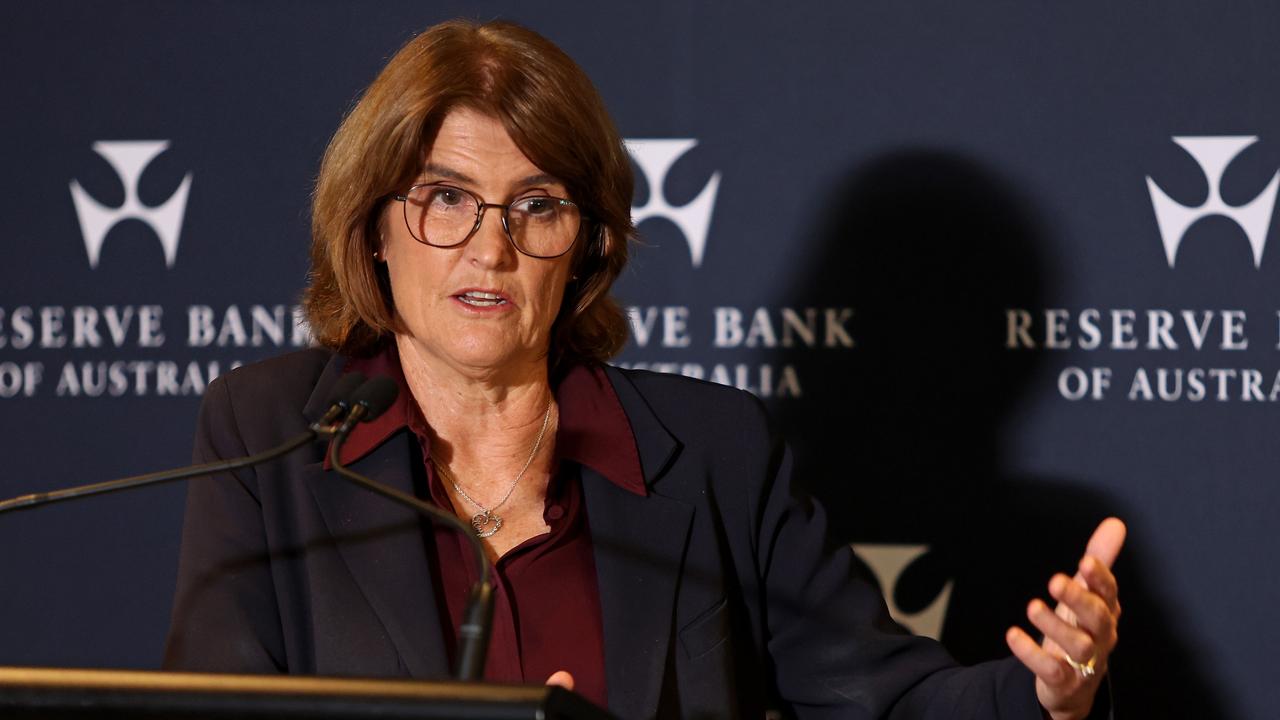
    Australia’s benchmark share index staged a remarkable afternoon comeback on Tuesday, erasing early losses to close firmly in positive territory, driven by a carefully watched speech from Reserve Bank of Australia (RBA) Governor Michele Bullock and a fresh drop in global oil prices. By the closing bell, the ASX 200 had climbed 53.80 points, or 0.60%, to settle at 8947.80, while the broader All Ordinaries index gained 48.20 points, or 0.53%, to reach 9112.00. Alongside the market uptick, the Australian dollar weakened slightly to 69.70 U.S. cents.

    Nine out of the 11 tracked industry sectors closed the session in positive territory, with consumer discretionary stocks leading the charge. Retail heavyweight Wesfarmers saw its shares rise 2.08% to $89.22, electronics retailer JB Hi-Fi gained 2.20% to hit $78.15, and travel agency Flight Centre jumped 5.07% to $12.64. The healthcare sector also posted robust gains: biotech firm CSL rose 2.69% to $119.52, medical device maker ResMed climbed 3.39% to $28.95, and pathology provider Sonic Healthcare gained 2.85% to $22.01.

    The only major headwind to the market’s rally came from the mining sector, where large-cap resources stocks pulled back on the day. BHP Group fell 1.21% to $59.37, Rio Tinto dropped 2.48% to $159.53, and Fortescue Metals edged 0.53% lower to $18.70, offsetting a portion of the gains across other sectors.

    The primary catalyst for the market’s turnaround was Bullock’s speech, in which she outlined that domestic demand growth is slowing faster than the central bank previously projected, alongside a weakening labour market and a greater-than-expected slowdown in the housing sector. Tony Sycamore, senior market analyst at IG, noted that the remarks calmed investor fears of aggressive near-term interest rate hikes, even as the RBA retained its official hawkish bias. The RBA board has repeatedly stated it stands ready to raise the cash rate further if required to hit its inflation mandate.

    “While the RBA’s hawkish bias remains — ‘The Board is prepared to act as required to achieve its mandate, including by increasing the cash rate further if needed’ — the governor noted that demand growth is moderating broadly as expected and that the housing market has softened by more than the Bank had anticipated in May,” Sycamore explained. Combined with the latest drop in oil prices, markets are now only pricing in a 5 basis point rate hike at the RBA’s August policy meeting, with a full 25 basis point increase not fully priced in until March 2027. That said, Sycamore emphasized that Wednesday’s release of June quarter inflation data will be a critical data point for future rate expectations.

    A second supporting factor for the market uptick was a further 0.9% fall in Brent Crude prices, which dropped to $US87.56 per barrel. The decline followed comments from former U.S. President Donald Trump, who revealed that peace talks between Washington and Tehran have resumed, easing geopolitical risks that have put upward pressure on energy prices in recent weeks.

    In individual company news, online travel firm Web Travel was the day’s top performer, with shares surging 17.08% to $3.29 after the company announced a $90 million share buyback program and upgraded its first half EBITDA forecast to a range of $80 million to $86 million. Electronics retailer Harvey Norman also gained 2.33% to $4.83, even after a court ordered the company to pay $35 million in penalties over a deceptive advertising campaign. On the downside, defence technology firm Droneshield dropped 13.22% to $1.80 after the company reported first half revenue of $125.8 million but confirmed that profit margins had shrunk from 65% a year earlier to 60% amid ongoing industry headwinds.

  • Survivors rise to 48 with more missing after Vietnamese ship sinks in South China Sea

    Survivors rise to 48 with more missing after Vietnamese ship sinks in South China Sea

    A coordinated multinational search and rescue operation is underway in the highly contested Spratly Islands after a Vietnamese cargo vessel sank in rough weather over the weekend, with 48 crew members pulled from the water to date and 14 still unaccounted for, authorities confirmed Tuesday.

    The vessel, identified as the *Khoi Nguyen 18*, went down late Saturday near Fiery Cross Reef, a feature of the Spratly archipelago that China has reclaimed into a man-made island and military outpost. Vietnam refers to the broader waterbody where the incident occurred as the East Sea.

    Vietnamese officials announced Monday that three additional survivors had been rescued, bringing the total number of saved crew to 48 of the 62 people originally on board. No further operational details were released alongside that update. By Tuesday afternoon, search teams from Vietnam, China, and the Philippines remained actively scouring the area for the 14 missing crew members, rescue spokespeople confirmed.

    All 48 recovered survivors have already been transferred to Vietnamese jurisdiction, according to the Vietnamese Foreign Ministry. The agency added that survivors are receiving emergency medical attention before being transported back to the Vietnamese mainland. Vietnam launched rescue mobilization immediately after the sinking incident, the ministry noted, and has maintained close coordination with all international partners participating in the search.

    Philippine authorities confirmed their involvement Tuesday, saying they deployed a coastal patrol vessel and a search aircraft in response to an official assistance request from Hanoi. The Philippine Coast Guard emphasized that the operation is being conducted in full compliance with international maritime conventions and existing bilateral cooperation frameworks between Manila and Hanoi. Chinese rescue assets, including surface vessels and helicopters, also joined the search effort in the nearby area.

    Beyond the rescue operation, the incident spotlights the long-running territorial tensions surrounding the South China Sea, one of the world’s most geostrategically critical waterways. China claims sovereignty over nearly the entire South China Sea, a route that carries roughly $5 trillion in global maritime trade annually and is thought to hold massive untapped reserves of offshore oil and natural gas. Multiple other governments including Vietnam, the Philippines, Malaysia, Brunei, and Taiwan hold overlapping, competing claims to different parts of the waterway and its island features.

    This report was originally gathered by the Associated Press, whose climate and geopolitical coverage receives philanthropic funding from independent private foundations. The AP retains full editorial control over all its reporting, and a full list of supporters and editorial standards for philanthropic partnerships is available on the AP’s official website.