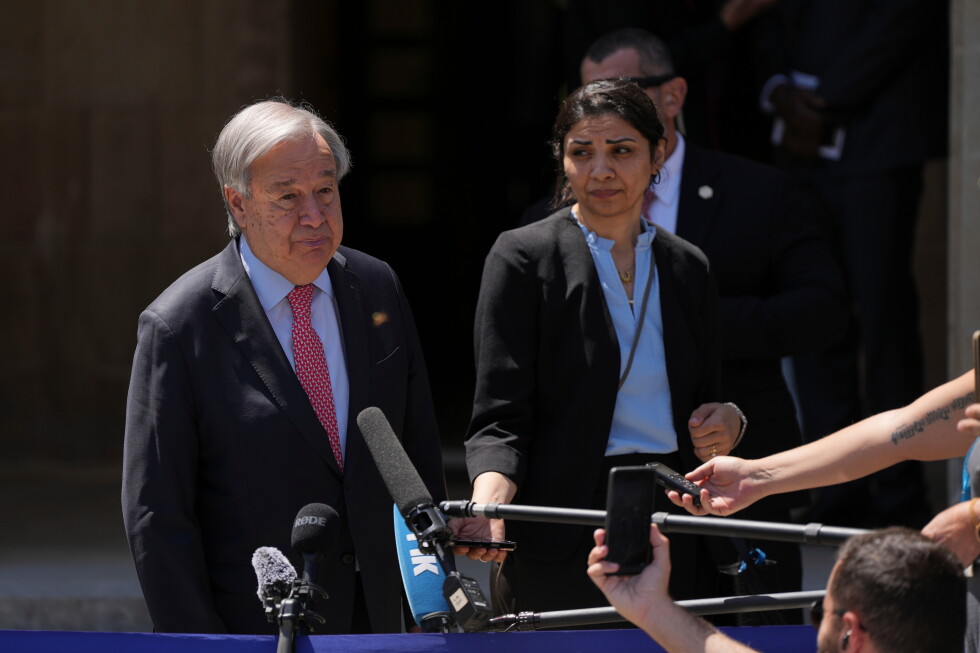
In a landmark diplomatic trip that marks the first visit by a sitting United Nations Secretary-General to Cyprus in 16 years, António Guterres arrived on the divided island nation this Tuesday to reignite efforts to resolve a 50-year ethnic split that has shaped regional geopolitics since the mid-1970s. Though long-held political rifts have kept expectations of an immediate breakthrough to a lasting peace accord low, Guterres emphasized his unwavering personal and institutional commitment to facilitating a deal between the island’s two competing communities.
Following an initial closed-door meeting with Greek Cypriot President Nikos Christodoulides, Guterres told reporters he would spare no effort to support both Greek Cypriot and Turkish Cypriot leadership at this critical juncture for the peace process. The UN chief later held separate talks with Turkish Cypriot leader Tufan Erhurman, with scheduled joint negotiating sessions planned for the remainder of Tuesday and all of Wednesday.
This new diplomatic push comes after nearly a decade of stalled formal peace talks. The last high-stakes negotiation effort, which Guterres himself mediated back in 2017, fell apart amid bitter mutual recriminations over which side bore responsibility for the resulting impasse. Now, just months before Guterres’ second UN term comes to an end, the Secretary-General is working to convene a broader high-level meeting that will include top diplomatic representatives from Cyprus’ three international guarantor powers: Greece, Turkey, and the United Kingdom. The goal of this gathering is to formally announce the resumption of full peace talks, building momentum that Guterres’ successor can carry forward to a final resolution.
A successful reunification deal for Cyprus carries far-reaching strategic and economic benefits beyond the island itself. Analysts and diplomats widely agree that a peaceful settlement would unlock massive untapped natural gas reserves in the Eastern Mediterranean, opening a new critical energy supply route for Europe and global markets at a time of widespread energy security uncertainty. A deal would also ease long-simmering regional tensions that stem from competing overlapping claims to energy resources, territorial waters, and regional influence among global and local powers.
Cyprus’ division dates back to 1974, when a Greek Athens-backed coup aimed at unifying the entire island with Greece prompted a Turkish military invasion. The intervention split the island along ethnic lines, with Turkish Cypriot communities consolidating control over the northern third of Cyprus. Turkish Cypriots declared formal independence in 1983, a move that has only received diplomatic recognition from Turkey, which currently stations more than 35,000 troops in the northern territory. The internationally recognized Greek Cypriot government of the south brought the entire island into the European Union in 2004, though only the southern region enjoys the full benefits of EU membership.
Guterres underscored the far-reaching implications of a peace deal in his remarks after meeting Christodoulides, noting that a resolution would not only transform the lives of Cypriots on both sides of the divide but also bring much-needed stability to a region facing unprecedented geopolitical turmoil.
Cyprus government spokesman Constantinos Letymbiotis framed Guterres’ in-person visit, a rare display of personal commitment from a top UN official, as a positive signal that incremental progress is within reach. Still, significant political hurdles remain that threaten to derail the revived peace process. A UN-endorsed framework for a reunified federal Cyprus, made up of two ethnically based self-governing zones, has existed for decades, but the passage of time has hardened negotiating positions on both sides and widened the political gap between the two communities.
Turkish Cypriot leaders argue that Greek Cypriots, who make up the island’s overall majority, have consistently refused to agree to equal power-sharing arrangements even under the proposed federal model. Earlier this month, Turkish Vice President Cevdet Yilmaz reaffirmed Ankara’s longstanding call for a two-state solution that would grant full international recognition to the breakaway Turkish Cypriot state. Yilmaz also issued a thinly veiled warning to the Greek Cypriot government against using its EU membership and deepening strategic ties with Israel to gain greater diplomatic leverage over Ankara in upcoming talks.
For their part, Greek Cypriot leaders have repeatedly ruled out accepting any two-state agreement, saying such a deal would formalize the island’s permanent partition and entrench the Turkish military presence that Greek Cypriots view as an existential threat to their sovereignty.