博客

  • Nolan’s ‘Odyssey’ boosts sales of mythology tales in UK

    Nolan’s ‘Odyssey’ boosts sales of mythology tales in UK

    When Christopher Nolan’s highly anticipated big-screen adaptation of Homer’s *The Odyssey* hit theaters in mid-July, industry experts expected it to dominate global box offices—what no one predicted was the unprecedented ripple effect it would create across the UK’s publishing industry, reviving widespread public interest in ancient Greek and Roman mythology.

    The latest data from market research firm NielsenIQ tells a striking story: in the four weeks leading up to July 25, print sales of Homer’s original epic jumped 1,400% compared to the same period in 2025. It is not just the classic text that has flown off shelves, either. Emily Wilson’s widely praised 2017 translation of the millennia-old poem has seen an equally explosive surge, with Britain’s largest bookstore chain Waterstones reporting that sales of Wilson’s edition have risen more than 1,000% year-over-year, and growth continues to climb week over week alongside sales of every other available translation of the text.

    The boom has extended far beyond *The Odyssey* itself. NielsenIQ records show significant sales uplifts for a whole range of related mythology works, from Homer’s *The Iliad* to modern reimaginings such as Madeline Miller’s *Circe* and Margaret Atwood’s *The Penelopiad*. On Amazon UK’s bestseller list for history, Stephen Fry’s adaptation of *The Odyssey* currently holds the top spot, with Fry’s two other classics-focused books *Mythos* and *Troy* taking second and fifth place respectively. Even audiobook platforms are sharing in the success: Spotify reports that searches for *The Odyssey* translations have skyrocketed 310% in recent weeks.

    For academics working in the field of Classics, this unexpected cultural wave brings cautious optimism. Many hope the blockbuster’s mainstream popularity will translate to higher student enrolment in ancient studies programs at the university level. Richard Kendall, a Classics lecturer at the University of Exeter and this year’s first expert-in-residence at the UK’s The Classical Association, called the sales spike “fantastic,” noting that ancient myths have retained their pull on audiences for millennia. “These are ripping good yarns,” Kendall told AFP. “It’s wonderful that this has created so much popularity. People are reading more, but this is just this iteration… People will always return to these stories.”

    At University College London, where Nolan himself studied Homer as an undergraduate English student, department leaders are already preparing for a long-term boost. “The buzz around the film has been tremendous, and we’re hoping to see a bounce in student numbers in the next few years,” said Phiroze Vasunia, head of UCL’s Greek and Latin Department. He added that the surge in interest sparked by the film aligns with a broader, steady rise in public enthusiasm for Classics and ancient studies that has been building in recent years.

    Since its release, Nolan’s film has been a commercial juggernaut. The director’s first feature since his 2023 Oscar-winning *Oppenheimer*, it has topped the North American box office for two consecutive weeks and has already grossed more than $640 million globally, earning widespread praise from audiences for its sweeping take on Odysseus’ 10-year journey home from the Trojan War. Starring Matt Damon as the legendary hero, Anne Hathaway as his loyal wife Penelope, and Tom Holland as their son Telemachus, the adaptation brings one of Western literature’s oldest stories to life for a new generation of moviegoers.

    Yet for all its commercial success, the film has not escaped sharp criticism from leading voices in the classics world. Emily Wilson, whose award-winning translation Nolan has publicly praised, published a blistering takedown of Nolan’s screenplay this week that made headlines across the globe. In an essay for the *London Review of Books*, Wilson argued the adaptation “lacks psychological, emotional, political and ethical depth,” writing “I would be ashamed to have written any part of this” and adding that it strips out many of the core elements that make Homer’s original poem a masterpiece.

    Prominent British classicist and historian Mary Bead echoed Wilson’s critique, though she also welcomed the renewed public interest in Homer that the film has generated. Writing in *The Times*, Beard argued that the poem’s original “erotic puzzles, the teasing ironies, the intriguing questions about truth and falsehood” had been replaced in Nolan’s adaptation with “a rather ponderous Hollywood message about civilisational decline.”

    Regardless of the critical divide, one outcome is clear: *The Odyssey* has turned ancient mythology into one of the UK’s hottest literary trends of 2025, introducing thousands of new readers to stories that have shaped Western culture for nearly 3,000 years.
  • Uefa to hold emergency meeting over Fifa World Cup plans

    Uefa to hold emergency meeting over Fifa World Cup plans

    Global football is facing a growing political and commercial crisis after global governing body Fifa tabled a controversial plan to sell a 20% stake in its flagship competitions to private investors, prompting European football’s governing body UEFA to convene an emergency virtual meeting of all 55 of its member associations this Thursday.

    The plan, led by Thrive Capital, an investment vehicle founded by Joshua Kushner — brother-in-law to former US President Donald Trump’s daughter Ivanka — has sparked widespread outrage across the global football community ever since details of the proposal, and Fifa’s aggressive push for member approval, came to light. Documents obtained by the BBC reveal Fifa sent official letters to all 211 of its member associations, setting a 19 September deadline to accept the deal in exchange for an initial payout of $40 million, half of which would be paid immediately if they agree to back the proposal. The offer will be withdrawn entirely for associations that do not comply by the deadline.

    In an official statement responding to the ultimatum, UEFA said: “We have learned of Fifa’s deadline to associations to support their proposals or have the one-off payout offer withdrawn. This says everything you need to know about this plan.” This marks UEFA’s second public rebuke of the plans, with the body previously saying Fifa had “crossed a line” with the proposal. Widespread opposition has already emerged from multiple continental confederations, including the Asian, South American, and North and Central American football bodies, echoing UEFA’s deep unease over the plan.

    Many member associations have expressed fury over the lack of transparency surrounding the proposal, with several senior leaders — including Football Association (FA) chairwoman Debbie Hewitt, one of Fifa’s own vice-presidents — confirming they received no advance warning of the plans, and only learned of the details through media reports. Former FA and Manchester City chairman David Bernstein has gone as far as calling for England to withdraw from the 2026 World Cup entirely if the proposals are pushed through.

    Three of the eight 2026 World Cup semi-finalists are drawn from UEFA’s 55 members, and the governing body is acutely aware that a coordinated exit from the tournament by its members would completely undermine the financial viability of Fifa’s new plan. This “nuclear option” is widely viewed as the most extreme possible outcome, however, as at least one UEFA member has already signaled it is open to backing the proposals. Czech Football Association president David Trunda noted: “We can see the pragmatic benefits for Czech football.”

    After days of widespread condemnation of both the substance of the plan and its closed-door development, Fifa released an eight-page defensive document on Wednesday evening laying out its justifications for the proposal. The body argues that too little of football’s rapidly growing commercial value has been distributed to under-resourced parts of the global game, and that the private investment deal would unlock much-needed funding for grassroots development. In a pre-recorded video defending the plans, Fifa president Gianni Infantino framed the proposal as “an offer, not an obligation”, arguing it would “turbocharge the development of the game globally” by delivering funding for “better pitches, stronger national teams, more pathways for young players, and greater support for women’s football”.

    Fifa further pushed back against critics by pointing to past development successes, such as the first-time qualification of Cape Verde, Curacao, Jordan and Uzbekistan for the World Cup — a milestone partially enabled by the body’s earlier decision to expand the tournament to 48 teams. It also cited major sporting properties including Formula 1, La Liga, Ligue 1 and the Bundesliga as examples of organizations that already use dedicated private sector-aligned commercial operations, and stressed that private investors would “absolutely not” gain any decision-making influence over the World Cup or its operations.

    Despite Fifa’s defensive arguments, criticism continued to flood in from across the industry on Wednesday. European Leagues, the body that represents top domestic competitions across the continent, described the plan as “a reckless and divisive development for world football”, adding: “The World Cup should not be for sale. It is not the Fifa president’s private equity asset.”

    Global players’ union Fifpro called on Fifa to immediately abandon the proposal, saying it had “noted with deep concern the proposal to transform the World Cup and other Fifa competitions into investable assets for private capital”. The union added that the plan “would fundamentally and irreversibly reshape the incentives underpinning the competitions” and noted that “it was particularly troubling that a project of this magnitude has been developed largely behind closed doors”.

    La Liga president Javier Tebas went even further, accusing Infantino of buying votes ahead of Fifa’s next presidential congress scheduled for March next year. “It doesn’t seem like a reform. It seems like an electoral campaign financed with the future of football,” Tebas said. “Development cannot be used to buy votes or silences. The competitions and commercial rights of Fifa are not the personal patrimony of Infantino. Whoever mixes politics, discipline, money and power without transparency cannot lead anything. Infantino is not the solution to Fifa’s governance. He is the problem.”

    Hans-Joachim Watzke, vice-president of the German Football Association and Borussia Dortmund president, told German outlet Kicker that Fifa’s plans amount to an “absolute attack on football”. “A line has been crossed here,” he said. “If European football stands united against these plans, that carries a great deal of weight.”

    The emergency meeting on Thursday will bring all UEFA member associations together to coordinate a unified response to Fifa’s proposal, with the entire global football industry waiting to see what action the most powerful continental confederation will take against the plan.

  • Surge in building approvals fails to close Australia’s growing housing shortage

    Surge in building approvals fails to close Australia’s growing housing shortage

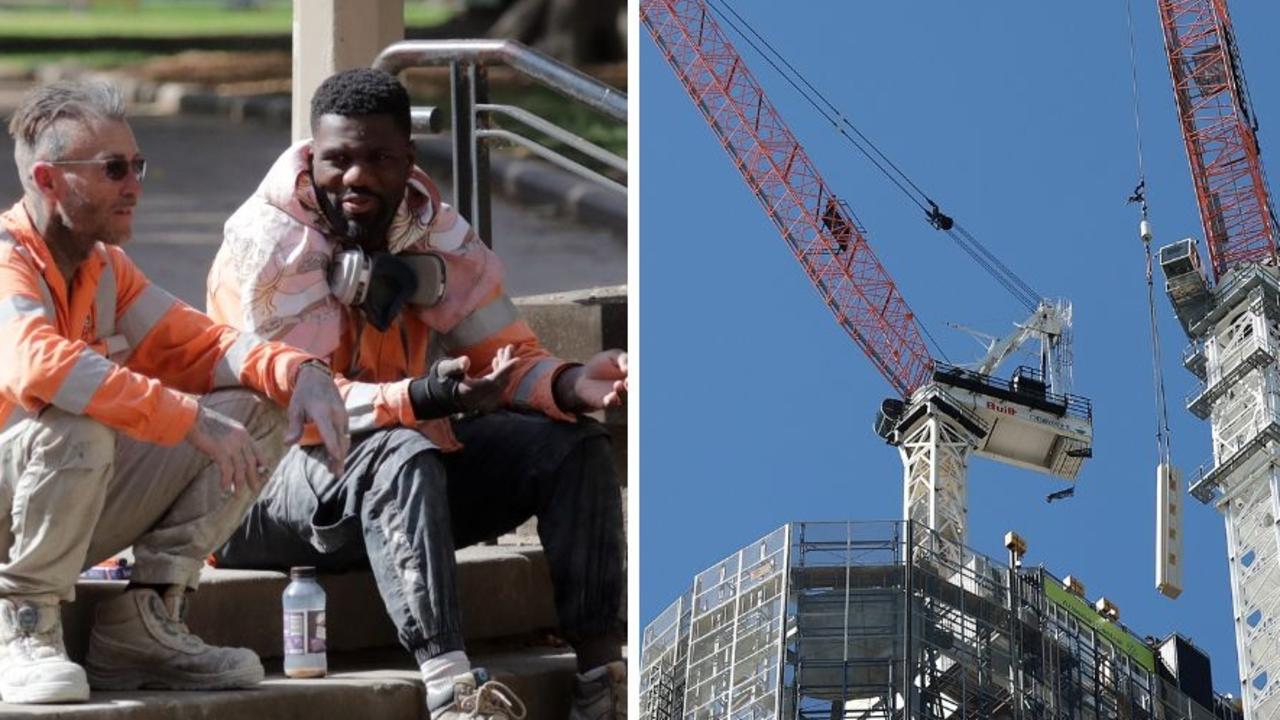
    Australia’s latest housing construction data shows a welcome uptick in building approvals that has finally pulled the country ahead of annual population growth, but industry economists and housing analysts warn the nation remains far off the ambitious national target designed to fix decades of worsening affordability and chronic underbuilding.

    New data released by the Australian Bureau of Statistics reveals that June saw a sharp jump in total building approvals, driven largely by a surprise surge in multi-unit apartment developments. The data shows that approvals for private sector non-house dwellings – a category that includes apartments and townhouses – jumped 17.8% in June, bouncing back strongly from an 11% decline recorded in the previous month. At the same time, approvals for standalone private houses edged up 0.4%, marking the sixth consecutive month that approvals for single-family homes have stayed above the 10,000 mark. When combined, total national building approvals reached their highest level since August 2021.

    AMP senior economist My Bui explained that the full-year totals for the 2025-26 financial year now put the country in a better position than it has been in years, with almost 205,000 new dwellings approved over the 12-month period. That marks a notable increase from the 189,000 approvals recorded in 2024-25, and exceeds the roughly 190,000 new dwellings that industry analysts estimate are needed each year to keep pace with current population growth. “Despite some softness in the first quarter of this year, the recent strength in approvals has gotten us to a point where new supply is matching demographic demand for the first time in several years,” Bui noted.

    Yet this progress is not enough to get Australia on track to meet the federal government’s landmark National Housing Accord target. Launched by the current Labor government as a core policy response to skyrocketing housing costs and rental shortages, the NHA brings together federal, state and local governments to deliver 1.2 million new homes over five years ending in June 2029, which works out to a required annual average of 240,000 new dwellings. While approvals have risen steadily since mid-2024, per capita approval rates remain far below historical averages. In the 2025-26 financial year, only nine new dwellings were approved for every 1,000 Australian residents. That is substantially lower than the 12 approvals per 1,000 people recorded in early 2015, and represents only a marginal improvement from the eight per 1,000 recorded in June of last year.

    Most critically, the recent uptick is not large enough to offset the major underbuilding that occurred between 2022 and 2024, when new supply failed to keep up with rapid post-pandemic population growth. Bui added that because completed home construction lags approvals by months or even years – due to project delays, high cancellation rates and extended construction timelines – the accumulated national housing shortage is unlikely to shrink meaningfully any time soon. “Even with this improvement in approvals, we are not making much progress in closing the gap that has built up over the past three years,” she said.

    Looking ahead, economists warn that multiple headwinds will continue to pressure the housing construction sector over coming months. Commonwealth Bank associate economist Lucinda Jerogin noted that elevated interest rates remain a major constraint on new construction activity, while ongoing supply chain disruptions linked to the Middle East conflict and broad capacity constraints across the building industry are pushing construction costs higher. “Although cost pass-through to consumers and developers has been limited so far, the recent escalation of hostilities in the region increases the risk of renewed cost pressure that could derail new projects,” Jerogin explained.

    Housing Industry Association chief economist Tim Reardon added that shifts in market conditions typically take months to show up in official approval data, meaning the full impact of rising interest rates, global geopolitical instability and recent tax changes will not be visible in the numbers until late this year. “While leading indicators of industry confidence have deteriorated since the federal budget, and investors are already starting to pull back from the new home building market, these trends will not show up in approval figures for several months,” Reardon said.

    With Australian housing affordability currently at its worst level in more than 30 years, Reardon emphasized that policymakers need to take additional action to boost long-term housing supply. “It is more important than ever that policymakers support housing investment and development by reducing the costs of home building, not increasing them,” he said.

  • My son’s not just a champion swimmer – he made me change my life

    My son’s not just a champion swimmer – he made me change my life

    Fourteen years after his name became a global sporting headline for upsetting swimming icon Michael Phelps to claim Olympic gold, South African swimmer Chad le Clos has etched his name deeper into the history books, becoming the most decorated athlete in the entire history of the Commonwealth Games.

    The 34-year-old swimmer reached the unprecedented milestone of 21 Commonwealth Games medals at the 2026 Glasgow Games this week, breaking the previous record held by Australian swimming great Emma McKeon. His historic bronze in the men’s 4x100m medley relay on Wednesday capped a run of three medals at the Games: it followed an earlier bronze in the 4x100m freestyle relay that earned him his 19th career Commonwealth medal, and a silver in the mixed 4x100m medley relay. As he celebrated the 19th medal, an emotional Chad called the moment a landmark for both himself and his family, expressing deep gratitude for the journey that brought him to that point.

    For anyone who knows Chad’s story, that journey has always been intertwined with his father, Bert le Clos, who became a household name in his own right after his unbridled, viral post-gold interview with the BBC’s Clare Balding immediately after Chad’s stunning 2012 London Olympic win. That electrifying reaction, where Bert exclaimed the moment felt like “dying and going to heaven”, turned him into an overnight celebrity, a status Chad has often joked means his father is more famous than he is.

    In a new wide-ranging interview with BBC Scotland from Glasgow, 69-year-old Bert opened up about the decades of behind-the-scenes growth, struggle and joy that led to this latest historic milestone, revealing how Chad not only built a legendary athletic career, but completely transformed Bert’s own life.

    The elder le Clos, born in Mauritius one of 10 children and raised in Durban, South Africa from age six, recalled how a 12-year-old Chad changed his path forever when he asked his father to give up smoking as his Christmas gift, instead of requesting a toy or present. Bert has not touched a cigarette since that day. He also overhauled other harmful habits: at the time he weighed 140kg and drank daily, but he cut out alcohol and dropped 41kg, a change he says saved his life. “I would probably be dead now if I had continued the way I was. That’s a good lesson for other parents,” Bert said.

    Bert, a serial entrepreneur who has built careers in butcheries and horse racing bookmaking, also shared the gentle parenting philosophy that he credits for allowing Chad to thrive still in the pool at 34, long after many of his peers have retired. When Chad first joined a local swimming club at age eight, Bert intentionally delayed pushing him into a gruelling six-day, 4:45 a.m. training routine, pushing back against the common trend of forcing young children into elite-level training too early. “A lot of parents and coaches they push the kids too hard too soon. Why would you want your 11 or 12-year-old doing as much mileage as an Olympic champion? That’s why Chad is still swimming at 34,” he explained. Bert added that he never forced Chad into swimming, letting the sport choose his son, who also played provincial-level football and rugby growing up. No matter how Chad performed in any race, Bert always celebrated him with a “man of the match ice cream”, focusing on encouragement over pressure.

    That patience paid off even after an early setback: when 13-year-old Chad finished second-last and third-last in his first international competition finals in Sheffield, Bert worried his son would never make it as an elite swimmer – but his coach insisted Chad had real potential, and just three years later, Chad was named junior swimmer of the year at the junior Commonwealth Games, racing the same competitors.

    Chad made his senior Commonwealth Games debut in Delhi 2010 at age 18, immediately claiming five medals, and two years later he delivered the upset that shook the global swimming world: at the 2012 London Olympics, he beat Phelps – who had not lost the 200m butterfly since 2001 and was already a 14-time Olympic gold medallist – by just 0.05 seconds to take gold. The moment left a stunned Chad staring at the scoreboard in disbelief, and a euphoric Bert celebrating wildly in the stands.

    The path to this week’s historic milestone has not been without hardship: in the lead-up to the 2016 Rio Olympics, both Bert and his wife Geraldine, Chad’s mother, received cancer diagnoses. Despite the immense stress, Chad still won two silver medals in Rio, becoming the most decorated South African Olympian in history. Later, ahead of the Covid-delayed Tokyo Olympics, Chad struggled with a severe spiral in his mental health, a challenge Bert said the family faced together with love and resilience. Today, after competing at the 2024 Paris Olympics, 34-year-old Chad has his sights set on qualifying for a fifth Olympic Games in Los Angeles in 2028.

    Off the pool deck, Chad has built a legacy beyond competition: he launched his own foundation focused on water safety education and life-saving swimming skills for vulnerable communities. For the le Clos family, the Commonwealth Games have always held a special place, dating back to Chad’s 2010 debut. Bert recalled the 2014 Glasgow Games as one of the family’s brightest highlights, when Chad won seven medals to equal Ian Thorpe’s record for the most medals in a single Games. When the 2026 Games lost their original Australian host to cost overruns, Glasgow stepped in to host for a second time, and Bert said even with a scaled-back format, the quality of competition remains world-class.

    Reflecting on his son’s 18 years of elite competition, 21 Commonwealth medals and a list of records that stretches from the Olympics to the world stage, Bert called the entire journey simply unbelievable. “How lucky am I? Do you think as a father I could imagine that this little rabbit could get all these accolades? Absolutely not. It has been beautiful. What a journey,” he said.

  • Oil prices slip and Asian shares are mostly lower as investors sell chipmaker stocks

    Oil prices slip and Asian shares are mostly lower as investors sell chipmaker stocks

    Global financial markets faced mixed yet broadly downward momentum this week, driven by a toxic mix of escalating geopolitical tensions in the Middle East, growing investor skepticism over overinflated artificial intelligence (AI) sector investments, and fresh uncertainty around U.S. monetary policy.

    The most dramatic movement has unfolded in South Korea, where the benchmark Kospi index has plunged into a steep correction after months of double-digit gains fueled by the global AI boom. By Thursday morning trading, the index dropped 1.3% to 5,587.82, extending steep losses from the prior two sessions that saw it fall 10.8% on Tuesday and nearly 6% on Wednesday. From its all-time high above 9,000 hit in June, the Kospi has corrected more than 35%, though it still holds a roughly 30% gain for the year to date. The sharp pullback has been widely interpreted by market analysts as a reflection of broadening doubts over the massive capacity expansion investments being poured into AI by the world’s largest technology firms.

    Individual South Korean tech stocks delivered mixed results despite strong earnings reports. Samsung Electronics climbed 2.4% after posting a record quarterly operating profit that matched consensus analyst estimates. However, top memory chipmaker SK Hynix dropped 4% on Thursday, after plummeting more than 9% a day earlier. Even though SK Hynix reported a sixfold jump in quarterly operating profit to a new record, the results fell short of market expectations, triggering a wave of profit-taking from disappointed investors.

    Elsewhere across Asian markets, performance was uneven. Japan’s Nikkei 225 bucked the downward trend to gain 0.6% to 61,778.02, even as SoftBank Group — a major investor in OpenAI — fell 2.7%. Chip sector stocks led gains in Tokyo: chip equipment manufacturer Tokyo Electron rose 4.4%, while memory chip producer Kioxia Holdings added 7.5%. Taiwan’s Taiex index, another market that has surged on the back of the AI boom, also advanced 0.8%, with leading contract chipmaker Taiwan Semiconductor Manufacturing Company (TSMC) climbing 1.8% in intraday trading.

    Major East Asian indexes mostly closed lower. Hong Kong’s Hang Seng Index slipped less than 0.1% to 25,779.70, while mainland China’s Shanghai Composite Index dropped 1.2% to 3,784.55. Australia’s S&P/ASX 200 fell 0.9% to 8,959.90, and India’s Sensex posted a marginal gain of less than 0.1%.

    Oil prices retreated on Thursday despite renewed hostilities between the U.S. and Iran that have threatened global energy supply chains. The pullback came after the U.S. launched a “heavy wave” of airstrikes on Iranian targets this week, in response to an earlier Iranian attack on a U.S. military base in Jordan that killed three American service members. Maritime traffic through the Strait of Hormuz — a critical chokepoint that carries roughly a fifth of global daily oil consumption — remains constrained, which has put ongoing upward pressure on supply. Brent crude, the global benchmark for oil prices, fell 1% to $87.18 per barrel on Thursday, after spiking sharply in the prior session. U.S. benchmark West Texas Intermediate crude declined 0.9% to $83.74 per barrel. For context, both benchmarks traded around $72 per barrel in late February before the latest escalation of regional conflict.

    On Wednesday, U.S. equities extended the global pullback, with all three major indexes closing in negative territory. The broad S&P 500 dropped 1.5% to 7,316.15, the Dow Jones Industrial Average fell 2.2% to 51,594.14, and the technology-heavy Nasdaq Composite declined 1.7% to 24,442.94. Top AI and chip stocks led the losses: Nvidia shed 3.6%, Advanced Micro Devices (AMD) fell 5.5%, and Broadcom dropped 2.8%. U.S. futures ticked higher in early Thursday trading following Wednesday’s sell-off.

    The sell-off on Wall Street came shortly after the Federal Reserve announced it would hold interest rates steady at its latest monetary policy meeting, though the decision carried unexpected hawkish undertones. Several voting members of the Federal Open Market Committee pushed for a rate hike at the meeting, a shift that surprised investors who had widely anticipated rate cuts would begin in the first half of 2025. Fed Chair Kevin Warsh reaffirmed the central bank’s commitment to bringing annual inflation back down to its 2% target, after years of above-target price increases. He also confirmed the Fed would continue its current approach of providing less forward guidance to markets about upcoming rate moves, a policy that has increased uncertainty for investors. “Did the Fed take an explicit change in its policy rate today? No, but I think that’s the beginning of the story,” Warsh told reporters during a post-meeting news conference.

    In the U.S. bond market, the yield on 10-year Treasury notes rose to 4.70% on Wednesday, up from 4.61% the prior session, reflecting shifting rate expectations. In currency markets early Thursday, the U.S. dollar edged higher against the Japanese yen, rising to 163.49 yen from 163.41 yen. The euro slipped slightly to $1.1454, down from $1.1467 against the greenback.

  • Record-low Danube River affects tourism and industry as drought and heat grip Central Europe

    Record-low Danube River affects tourism and industry as drought and heat grip Central Europe

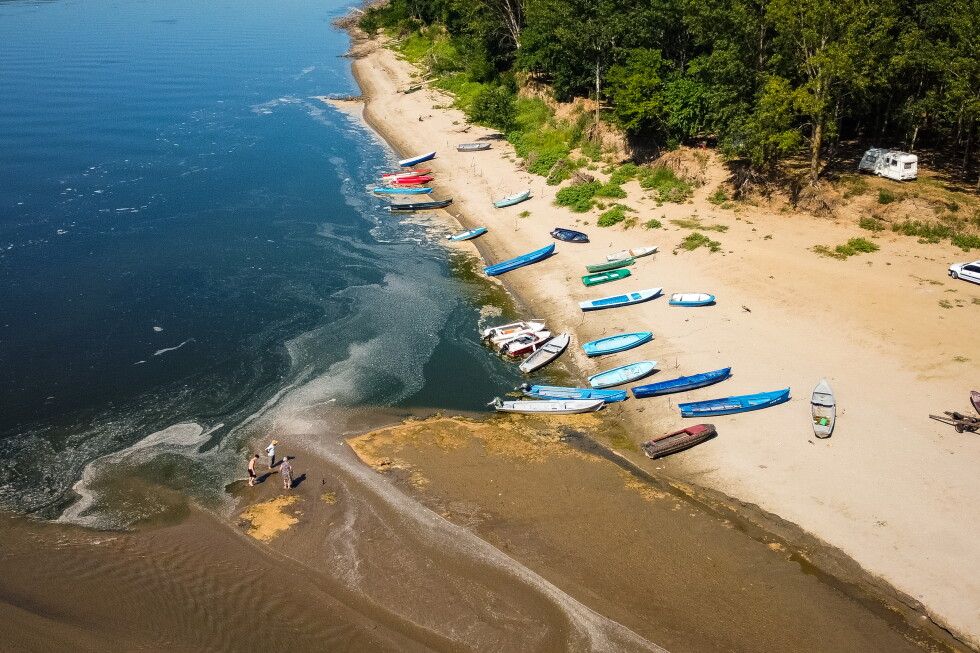
    As catastrophic wildfires scorch southern France and Spain and a second blistering heat wave builds across Western Europe, a years-long persistent drought is pushing one of Europe’s most critical waterways to unprecedented lows, laying bare the tangible, immediate impacts of human-caused climate change for communities and industries across the continent. The Danube River, which cuts a 1,770-mile path through 10 European nations from the Black Forest of southwestern Germany to the Black Sea, has dropped to never-recorded depths along most of its route, revealing long-submerged rock formations, sand bars, and century-old shipwrecks that have remained hidden for generations.

    In Budapest, the capital of Hungary, the country’s national water authority recorded a water level of just 23 centimeters (9 inches) on Wednesday morning, a full 10 centimeters below the previous all-time low set in 2018. With no meaningful rainfall forecast for the coming days and temperatures projected to surge past 38 degrees Celsius (100 degrees Fahrenheit) across the entire Danube basin, officials warn the river will continue to recede further.

    Much of Central Europe has faced persistent, extreme drought for the majority of 2022, and back-to-back record heat waves have accelerated evaporation, draining rivers and streams at an alarming rate. Data from the Hungarian Meteorological Service shows 90-day total precipitation across nearly the entire country is 80 to 130 millimeters (3.1 to 5.1 inches) below the long-term average for the period.

    On Tuesday, after the Danube hit its new record low, Budapest-based photographer Gábor Kertész traveled to the base of the city’s iconic Margaret Bridge — a spot that is almost always submerged, now exposed as a dry sand shoal — to capture the unprecedented scene. “The bare rocks, the dry sand bars around the bridge pillars… it’s all shocking to see how things were before and how they are now,” Kertész told reporters. “Where will this lead, what will happen? We don’t know that yet, but this must be the result of climate change.”

    The record low water has already upended key economic activities across every nation along the river’s path. Popular international river cruises, a mainstay of Central European tourism that brings millions of visitors to Budapest annually, have been forced to dock kilometers upriver from their customary terminals, forcing passengers to arrange alternate transportation to reach city sightseeing routes. Commercial cargo shipping has nearly ceased entirely across large stretches of the river, according to Hungary’s Ministry of Transport and Investment.

    In northwestern Bulgaria, where the Danube forms the natural border with Romania, authorities evacuated 186 passengers from the cruise ship Viking Ullur on Tuesday after the vessel ran aground on an unexpected shallow shoal near the port city of Vidin. The ship had been scheduled to restock food and water supplies in Vidin, but could not reach the port after running aground, leaving passengers without adequate provisions, according to Bulgaria’s state-run news agency BTA. While all passengers were safely evacuated, the ship’s 52-person crew may remain on board for an extended period while authorities assess navigation conditions and plan refloating operations, Bulgarian police confirmed.

    Further downstream in northern Serbia, hundreds of small recreational vessels and dozens of large cargo ships remain stranded on dried-out riverbanks near the city of Novi Sad. Radovan Segrt, a houseboat owner who operates popular river excursion tours for tourists, told the Associated Press that the Danube’s shoreline has retreated “some 15 to 20 meters (50 to 65 feet) from its original position.” “The summer season is over now, as far as boat riding is concerned,” Segrt said.

    Beyond transportation and tourism, the dropping water levels have also forced cuts to critical nuclear energy production across the region. The Danube’s cool water is routinely used to cool reactor cores at multiple nuclear plants along its banks, and reduced flow has made safe operation impossible for some facilities. In Romania, where Danube flow dropped to just 1,630 cubic meters per second — roughly one-third of the typical average for July — authorities shut down one reactor unit at the Cernavoda nuclear power plant on Tuesday for safety reasons, and announced a second unit would be taken offline imminently.

    In Hungary, the Paks nuclear plant — which generates nearly 40% of the country’s total electricity supply — began powering down one reactor on Wednesday after two consecutive rounds of output reductions at two other reactors over the prior 48 hours, all due to limited access to cooling water.

    The exposed riverbed has brought unexpected oddities alongside the widespread disruption, including both hidden dangers and rare opportunities for amateur historians and treasure hunters. Last week, Budapest officials closed the Margaret Bridge for 48 hours after an unexploded World War II aerial bomb was exposed by receding waters at the bridge’s base, forcing a controlled detonation by bomb disposal units.

    Amateur treasure hunter Zsolt Horváth told reporters he was taking advantage of the extreme low water to recover historical artifacts from the exposed riverbank on Tuesday, using a powerful magnet to pull metal objects from the mud. He said he had already uncovered rare items including an early 20th-century radio amplifier and bullet casings from both World Wars. “Having so little water in the Danube is a blessing for this kind of activity, otherwise, it’s a curse,” Horváth explained.

    The report featured contributions from Associated Press correspondents across four European nations, including Stephen McGrath in Leamington Spa, England, Veselin Toshkov in Sofia, Bulgaria, Béla Szandelszky in Budapest, Hungary, and Radul Radovanovic in Novi Sad, Serbia.

  • Neil the Seal forgiven $31,000 bill for ‘exceptional cuteness’ by council

    Neil the Seal forgiven $31,000 bill for ‘exceptional cuteness’ by council

    A 1,000-kilogram wild southern elephant seal named Neil has become an unlikely viral celebrity after a 34-day stay on the coast of south Tasmania left local authorities with a damage and management bill totaling more than AU$31,500 — but the animal will not be required to pay a single cent, all thanks to his overwhelming charm. Neil first came ashore in the Clarence region of Tasmania on June 24, and his unexpected visit quickly captured public attention, with hundreds of social media posts documenting the giant seal’s daily antics, turning him into a local sensation overnight.

    Local government body the City of Clarence recently published a full breakdown of the costs generated by Neil’s extended stay. The total invoice came to AU$31,540.53, with the vast majority of the expense tied to staffing. Over the 34-day period, council workers logged 131.5 standard work hours and an additional 144 overtime hours to manage crowds of tourists and local residents gathered to see the seal, as well as reroute vehicle traffic around his resting spots. That labour cost alone added up to AU$26,520.08. On top of staffing, equipment rental cost AU$3,600, plant hire came to AU$114.75, and material costs for repairing damaged public infrastructure hit AU$1,297.70. The damage Neil caused came from scratching his massive body against public property, which wore down one large sign, 10 roadside bollards and a section of perimeter fence enough to require full replacement.

    In a surprising decision that has delighted the public, the Clarence City Council announced it would waive the entire bill, crediting Neil for his unplanned service as a tourism ambassador, the widespread joy he brought to local communities, and what they called his “exceptional cuteness”. While the public is eagerly anticipating Neil’s next appearance on a Tasmanian shore, no one can predict where or when the five-year-old seal will choose to come ashore next. Despite the lighthearted reaction to the seal’s visit, Clarence Mayor Brendan Blomeley has issued a serious reminder to the public about the risks of interacting with wild elephant seals. Blomeley noted that while the final damage bill was relatively small, the constant close attention and overexposure Neil received from crowds could have resulted in a far more dangerous outcome for both the animal and members of the public. Southern elephant seals are large wild predators, and close contact can pose serious safety risks. “Wherever he decides to come ashore next, I hope he is given the space and time he needs,” Blomeley said, urging future visitors to the area to maintain a safe distance from the seal if he appears again.

  • Japan earthquake death toll rises to 28 as evacuees battle sweltering heat

    Japan earthquake death toll rises to 28 as evacuees battle sweltering heat

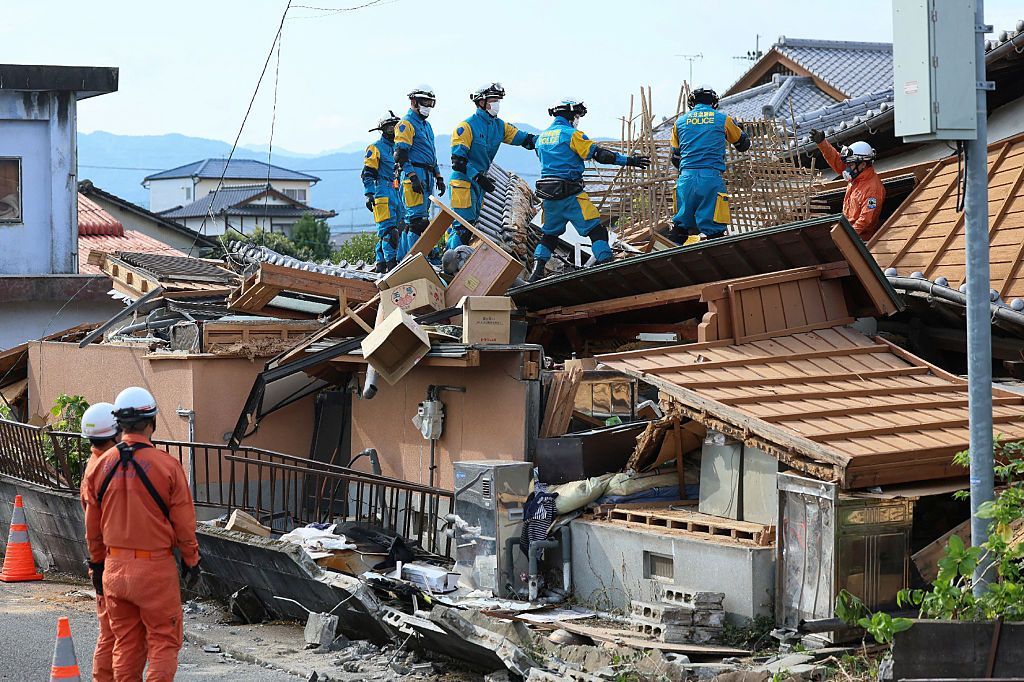
    Just two days after a magnitude 6.8 shallow earthquake rocked Japan’s southwestern Kumamoto prefecture on Kyushu Island, local authorities confirmed Thursday that the death toll from the disaster has climbed to 28. The 10-kilometer-deep tremor left a trail of widespread destruction across the region, leveling residential structures, severing critical power infrastructure, and displacing thousands of local residents.

    Among the hardest-hit sites is the Aeon shopping mall in Kashima, where a partial second-floor collapse killed multiple people. Roughly an hour after the initial quake, a sudden explosion ripped through the already damaged building complex, compounding casualties and damage. Aeon’s top leadership has stated that a gas leak is the most probable cause of the secondary blast, though official investigations into the incident are still ongoing. In a small bright spot amid the devastation, all 25 cats housed at a cat cafe inside the mall—left stranded when the structure failed—were pulled out alive by rescuers this week. In a tragic coincidence, the mall had only just reopened last month after a complete renovation, following severe damage it sustained in the deadly 2016 Kumamoto earthquake sequence that claimed 278 lives across the region.

    Another major site of tragedy is a Nippon Paper manufacturing facility in Yatsushiro city, where a partial collapse killed at least five workers. The company confirmed Wednesday that 11 employees were trapped when the building caved in, and seven of those trapped people have been successfully pulled from the rubble as of Thursday.

    As of Wednesday, official data puts the number of displaced residents staying in government-run evacuation centers at roughly 9,000, while more than 30,000 households across the prefecture remain without access to electricity. Compounding the challenges facing survivors and first responders, the region is currently in the grip of an extreme heatwave, with forecasts predicting temperatures could climb as high as 39 degrees Celsius in the coming days. Heatstroke has already emerged as a major secondary risk, with public officials repeatedly urging both survivors and rescue workers to take frequent breaks and stay hydrated. To address the cooling crisis at evacuation sites, Japanese Defense Minister Shinjiro Koizumi announced Wednesday that 300 portable air conditioning units would be shipped to the prefecture immediately, half of which will go directly to emergency shelters.

    More than 100 aftershocks have rattled the region since the main tremor, leaving many survivors too nervous to return to damaged or structurally compromised buildings. Many locals have even opted to sleep in their vehicles parked in open areas rather than risk being inside during a new tremor.

    Thousands of emergency personnel have been deployed across Kumamoto to lead search-and-rescue operations, digging through collapsed rubble in a race to find any remaining survivors trapped after the quake. For 75-year-old Yatsushiro restaurant owner Hiroko Ogata, the power of the tremor was unlike anything she had experienced in her decades living in the region. “I hid under my restaurant table when the quake hit, and I was swaying violently back and forth along with it,” she told reporters. “I’ve lived here 75 years, and I’ve never felt an earthquake this big. I really thought I was going to die.”

  • The Mediterranean’s warming waters are drawing hundreds of invasive species

    The Mediterranean’s warming waters are drawing hundreds of invasive species

    The crystal-clear waters and vibrant marine ecosystems that sustained ancient civilizations and generations of coastal communities across the Mediterranean have been permanently altered by human-caused climate change, leading marine scientists have confirmed. Driven primarily by greenhouse gas emissions from the burning of coal, oil, and natural gas, rapidly rising sea temperatures are reshaping the iconic sea, triggering a surge in destructive invasive species that are wiping out native marine populations and threatening the livelihoods of millions of people who depend on traditional fishing.

  • Small changes in Hanoi’s streets can mean big disruptions for those who depend on them

    Small changes in Hanoi’s streets can mean big disruptions for those who depend on them

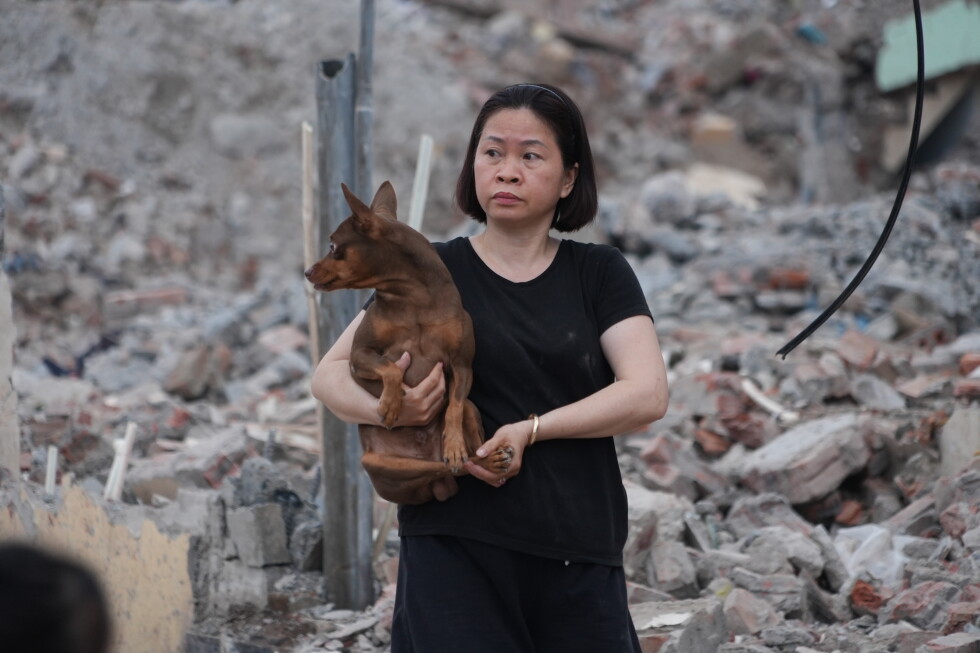
    The constant roar of urban renewal echoes across Hanoi today: the sharp crack of hydraulic breakers splitting asphalt, the low groan of excavators shifting rubble, and the crunch of aging brick and concrete being torn from the ground. As Vietnam pursues an aggressive target of double-digit economic expansion, its capital city is racing to remake itself into a ultramodern global hub aligned with a 100-year urban vision.

    In just the first six months of 2026, Hanoi has allocated $2.4 billion to clear land for nearly 1,500 separate infrastructure and development projects, a transformation that is rapidly reshaping one of the world’s oldest continuously inhabited capital cities. City officials frame the large-scale redevelopment as a critical adaptation to the growing threats of climate change: the plans integrate new flood control systems and air pollution reduction measures, addressing long-standing vulnerabilities for Vietnam, which ranks among the countries most at risk from climate-driven extreme weather, including increasingly frequent and intense typhoons, devastating seasonal floods, and record-breaking heatwaves. Hanoi itself has long struggled with severe seasonal smog, regularly ranking among the world’s most polluted capital cities.

    But the promise of modern progress comes at a steep cost for thousands of residents, who have lost homes, family businesses, and generations-old community ties. Fine demolition dust drifts through working-class neighborhoods, coating rooftops, tree canopies, and the few remaining standing structures. For Nguyen Thi Nhan, a former street fruit vendor who lost her 300-square-meter street-front home to make way for a new arterial road, the upheaval has upended her family’s stability. She has yet to receive promised compensation for her lost property, and now pays rent to house her extended family, including her elderly parents. “We just have to wait. I don’t know where they will relocate us,” she said.

    Large billboards dot cleared construction zones, painting a glossy vision of Hanoi’s future: gleaming steel-and-glass skyscrapers in new business and industrial districts, wide tree-lined boulevards, expansive public parks, and scenic waterfront promenades. To make room for this new skyline, the city plans to demolish hundreds of heritage colonial villas, traditional narrow shophouses, and densely packed low-rise residential blocks. The blueprint calls for dozens of new roads, bridges, and mass transit links connecting the city center to Noi Bai International Airport and fast-growing neighboring provinces.

    The centerpiece of the transformation is a $28 billion redevelopment project stretching along both banks of the silty Red River that cuts through the heart of Hanoi. Spanning 11,400 hectares — an area larger than central Paris — the project will deliver new residential districts, commercial hubs, public green space, and most critically, expanded drainage and flood control infrastructure to address the city’s chronic riverine flooding. Another major landmark included in the plan is a $35.2 billion Olympic-level sports complex backed by Vingroup, Vietnam’s largest private conglomerate, anchored by a 135,000-seat drum-shaped soccer stadium, one of the largest in the world.

    City officials also note that a complete transport overhaul is designed to rebalance Hanoi’s growth pattern, easing overcrowding and pressure on the crowded historic core by developing new distributed transport hubs across the metropolitan area.

    While experts acknowledge that modern infrastructure is critical to Vietnam’s push to attract foreign direct investment and expand economic opportunity for both residents and domestic businesses, they warn that the breakneck construction boom carries significant systemic risks. “There are huge economic opportunities arising from those projects, but at the same time, there are risks that need to be considered,” said Nguyen Khac Giang, a visiting fellow at the ISEAS–Yusof Ishak Institute in Singapore. Giang cautioned that massive public and private investment in large-scale construction risks diverting much-needed capital from the high-tech manufacturing and digital industries that Vietnam has prioritized for long-term growth. The boom has also driven a sharp spike in residential and commercial property prices, leaving many ordinary buyers priced out of the market, while leaving domestic banks heavily exposed to a potential market correction. A 2025 S&P Global report found that Vietnamese real estate developers carry far higher debt levels than their peers in regional economies such as Indonesia and the Philippines, and the real estate sector, while accounting for just 3.5% of national GDP, makes up roughly a quarter of all outstanding bank lending in Vietnam.

    Beyond economic risks, the rapid transformation has sparked growing anxiety over what Hanoi will lose as it remakes its urban fabric. For small business owners and long-time residents, even minor adjustments to street life have created major disruptions. Since November, city authorities have waged a citywide crackdown to clear sidewalks of illegal parking, unlicensed street vendors, and commercial encroachment, with police vans patrolling the iconic Old Quarter in the evenings, using loudspeakers to order vendors to remove outdoor seating that spills onto public walkways. For Thuy, a local beef noodle soup vendor who only shared her first name over concerns of official pushback, the crackdown has cut her income dramatically: she used to be able to serve four additional customers per hour using four outdoor stools and a small table, but now is forced to turn customers away, leaving her barely breaking even. “My profits are already small to begin with,” she said.

    In a rare act of public dissent, hundreds of residents from the Bac Cau community along the Red River have hung public banners imploring city officials to scrap plans that would displace thousands of families to make way for new riverfront development. Villagers say the planned arterial roads will erase their generations-old community entirely. “We want to continue to live here, we’ve been here for generations,” said Van, a local resident who also only shared her first name over fears of official repercussions for speaking out.

    While Hanoi has formal rules in place outlining compensation and resettlement support for residents displaced by land acquisition, including payments for damaged structures, relocation allowances, and support for families moving ancestral graves, dozens of displaced residents report they have yet to receive owed compensation, and remain uncertain about their long-term housing and livelihoods.

    Giang argues that the core challenge is not modernization itself, but the breakneck pace of redevelopment and the consistent lack of meaningful consultation with affected residents and urban planning experts. He points to precedent across the region: in the 1960s, Beijing demolished nearly all of its centuries-old imperial city walls to make way for its first subway line and a major inner-city ring road, a loss that urban planners have lamented ever since. Large-scale redevelopment drives in other major Asian cities have repeatedly sparked public disputes, as displaced residents are often relocated to far-flung suburban areas lacking basic services and employment opportunities, tearing apart tightly woven communities that have existed for centuries. “Once we depart from the city’s history, it’s very hard to revert or to turn back,” Giang said.

    Linh Nguyen, lead analyst at global risk consultancy Control Risks, notes that Hanoi’s current transformation marks a fundamental shift from the urban growth of the past two decades, which focused on expanding outward by building new greenfield development on the city’s periphery. Today’s reconstruction targets the existing built-up urban core, requiring the redevelopment of established neighborhoods and the relocation of long-time residents — a far more complex process that raises thorny questions of property rights, fair compensation, and inter-agency coordination. The outcome will also test whether Vietnam’s increasingly centralized state can deliver on decades-old planned infrastructure projects that have never been implemented. “The last 20 years were about building a bigger Hanoi. The next 20 years will be rebuilding the Hanoi that already exists. That’s a fundamentally different challenge,” she said.