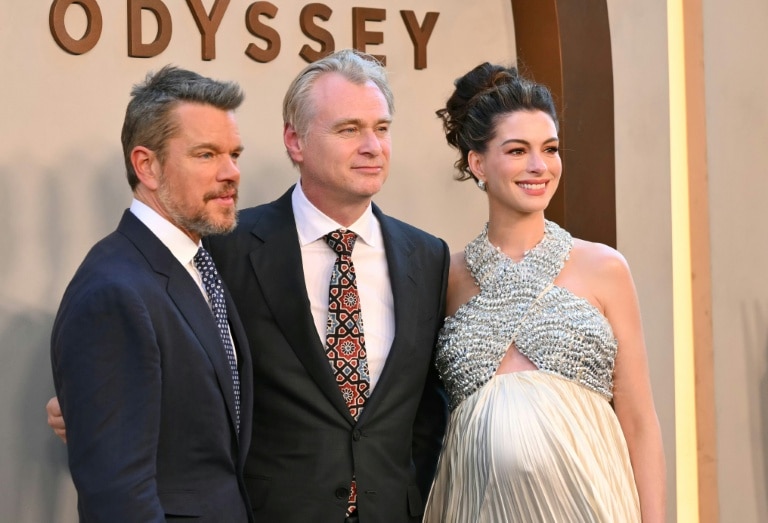
When Christopher Nolan’s highly anticipated big-screen adaptation of Homer’s *The Odyssey* hit theaters in mid-July, industry experts expected it to dominate global box offices—what no one predicted was the unprecedented ripple effect it would create across the UK’s publishing industry, reviving widespread public interest in ancient Greek and Roman mythology.
The latest data from market research firm NielsenIQ tells a striking story: in the four weeks leading up to July 25, print sales of Homer’s original epic jumped 1,400% compared to the same period in 2025. It is not just the classic text that has flown off shelves, either. Emily Wilson’s widely praised 2017 translation of the millennia-old poem has seen an equally explosive surge, with Britain’s largest bookstore chain Waterstones reporting that sales of Wilson’s edition have risen more than 1,000% year-over-year, and growth continues to climb week over week alongside sales of every other available translation of the text.
The boom has extended far beyond *The Odyssey* itself. NielsenIQ records show significant sales uplifts for a whole range of related mythology works, from Homer’s *The Iliad* to modern reimaginings such as Madeline Miller’s *Circe* and Margaret Atwood’s *The Penelopiad*. On Amazon UK’s bestseller list for history, Stephen Fry’s adaptation of *The Odyssey* currently holds the top spot, with Fry’s two other classics-focused books *Mythos* and *Troy* taking second and fifth place respectively. Even audiobook platforms are sharing in the success: Spotify reports that searches for *The Odyssey* translations have skyrocketed 310% in recent weeks.
For academics working in the field of Classics, this unexpected cultural wave brings cautious optimism. Many hope the blockbuster’s mainstream popularity will translate to higher student enrolment in ancient studies programs at the university level. Richard Kendall, a Classics lecturer at the University of Exeter and this year’s first expert-in-residence at the UK’s The Classical Association, called the sales spike “fantastic,” noting that ancient myths have retained their pull on audiences for millennia. “These are ripping good yarns,” Kendall told AFP. “It’s wonderful that this has created so much popularity. People are reading more, but this is just this iteration… People will always return to these stories.”
At University College London, where Nolan himself studied Homer as an undergraduate English student, department leaders are already preparing for a long-term boost. “The buzz around the film has been tremendous, and we’re hoping to see a bounce in student numbers in the next few years,” said Phiroze Vasunia, head of UCL’s Greek and Latin Department. He added that the surge in interest sparked by the film aligns with a broader, steady rise in public enthusiasm for Classics and ancient studies that has been building in recent years.
Since its release, Nolan’s film has been a commercial juggernaut. The director’s first feature since his 2023 Oscar-winning *Oppenheimer*, it has topped the North American box office for two consecutive weeks and has already grossed more than $640 million globally, earning widespread praise from audiences for its sweeping take on Odysseus’ 10-year journey home from the Trojan War. Starring Matt Damon as the legendary hero, Anne Hathaway as his loyal wife Penelope, and Tom Holland as their son Telemachus, the adaptation brings one of Western literature’s oldest stories to life for a new generation of moviegoers.
Yet for all its commercial success, the film has not escaped sharp criticism from leading voices in the classics world. Emily Wilson, whose award-winning translation Nolan has publicly praised, published a blistering takedown of Nolan’s screenplay this week that made headlines across the globe. In an essay for the *London Review of Books*, Wilson argued the adaptation “lacks psychological, emotional, political and ethical depth,” writing “I would be ashamed to have written any part of this” and adding that it strips out many of the core elements that make Homer’s original poem a masterpiece.
Prominent British classicist and historian Mary Bead echoed Wilson’s critique, though she also welcomed the renewed public interest in Homer that the film has generated. Writing in *The Times*, Beard argued that the poem’s original “erotic puzzles, the teasing ironies, the intriguing questions about truth and falsehood” had been replaced in Nolan’s adaptation with “a rather ponderous Hollywood message about civilisational decline.”
Regardless of the critical divide, one outcome is clear: *The Odyssey* has turned ancient mythology into one of the UK’s hottest literary trends of 2025, introducing thousands of new readers to stories that have shaped Western culture for nearly 3,000 years.