博客

  • Voters in Manchester choose a mayor to replace Andy Burnham, who left city hall for Downing Street

    Voters in Manchester choose a mayor to replace Andy Burnham, who left city hall for Downing Street

    LONDON, Aug. 15 (Rewritten) — On Thursday, around 2 million eligible voters across Greater Manchester are casting ballots to select a new regional mayor, a contest triggered when Andy Burnham stepped down from the role he held for nearly a decade to take the office of Britain’s prime minister. Beyond choosing a new local leader, this by-election is being widely framed as the first major electoral test of public approval for Burnham’s newly formed Labour government, coming as the party works to reverse a recent slump in national popularity. Polling locations across the region opened their doors at 7 a.m. and will remain open until 10 p.m., with official vote counting set to get underway early Friday morning.

    Burnham’s rapid rise from Greater Manchester mayor to 10 Downing Street is the result of a dramatic shakeup within the Labour Party that unfolded over just two months. Last month, he won a special by-election for a parliamentary seat, a move he designed to launch a leadership challenge against then-prime minister Keir Starmer, who had led the party and the country for two years. Burnham’s challenge gained such overwhelming momentum among Labour lawmakers and grassroots members that Starmer announced his resignation almost immediately. Ultimately, Burnham ran unopposed in the party’s leadership contest and officially took office as prime minister on July 20.

    Staying true to a key campaign pledge he made during his leadership bid, which centered on rebalancing economic and political power away from London and toward regional communities across the UK, Burnham has already set up a satellite prime minister’s office in his former political base. Named “No. 10 North”, the outpost is intended to advance his promise of devolving more decision-making authority to local leaders and spreading inclusive economic growth beyond the Southeast of England.

    The Greater Manchester region is home to roughly 3 million people, encompassing the major city of Manchester and its surrounding suburban and rural towns. During his nine-year tenure as mayor, Burnham won three consecutive mayoral elections in 2017, 2021 and 2024, building deep name recognition and broad public support across the area that makes the post a key one for Labour to retain.

    Looking to keep the mayoralty in Labour hands is Bev Craig, the current leader of Manchester City Council, who has received a full public endorsement from Burnham. In remarks ahead of the vote, Burnham called his time serving as Greater Manchester’s mayor an “immense privilege”, and urged local voters to support Craig to continue building on the progress the region has made under his leadership.

    Craig is not running unopposed: she faces competition from six other challengers, most notably Sian Astley, the candidate from right-wing anti-immigration party Reform UK. Reform UK made major gains across much of Greater Manchester in May’s national local elections, capitalizing on growing voter discontent with Labour’s performance in government. The party has emerged as a key electoral threat to Labour in many working-class northern constituencies in recent months.

    Labour has also hemorrhaged support to the Green Party across the region in recent months. In a February special parliamentary election for the Gorton and Denton constituency, the Greens pulled off a major upset that pushed Labour into third place, amplifying long-simmering internal criticism of Starmer’s leadership within the party. Those growing concerns reached a breaking point after Labour suffered heavy losses in the May 2024 local elections, creating the political opening that allowed Burnham to launch his successful leadership challenge.

    Rob Ford, a professor of politics at the University of Manchester, noted that the contest carries outsize national significance for Labour and Burnham’s new government. “Labour want a show of strength in a city region where the party has long been politically dominant,” Ford explained in a blog post for the London-based think tank U.K. in a Changing Europe. “A big win in his former stomping ground will provide a significant boost for Andy Burnham as he starts his premiership,” he added.


  • Drones and blackouts inflict a tense summer on Russia-annexed Crimea

    Drones and blackouts inflict a tense summer on Russia-annexed Crimea

    The hum of generators has replaced the usual quiet hum of summer commerce across Crimea, the Black Sea peninsula annexed by Russia in 2014, where escalating Ukrainian drone strikes and persistent power outages have upended what has long been a popular warm-weather retreat. What was once a season of sun-seeking tourists and coastal relaxation has become a period of daily uncertainty, as Kyiv ramps up a targeted campaign against Russian-controlled energy, fuel and logistical infrastructure in the strategically critical territory.

    Walking the streets of Sevastopol, Crimea’s largest coastal city, a sudden loud explosion does not spark panic the way it once did. For Georgy, a local tourism worker who declined to share his full name with AFP, the blasts have become mundane background noise. “We’re already used to it, really … nothing scares us anymore,” he said, sipping coffee at an outdoor cafe. “Even if there are some sounds, it’s most likely just a drill.”

    Along the Sevastopol waterfront, daily life carries on with a faint undercurrent of unease: elderly women wade through gentle Black Sea waves, children splash in shallow coves, fitness enthusiasts work out along the promenade, and teenagers practice skateboarding tricks steps from a concrete bomb shelter. On this particular day, Sevastopol’s governor posted no air raid alert to his Telegram channel, but such warnings have grown far more common since Ukraine began its stepped-up offensive against Crimean targets in June.

    The violence has already claimed civilian lives. Crimea’s Russian-appointed governor Sergei Aksyonov confirmed two civilians were killed in overnight strikes between Tuesday and Wednesday this week, joining dozens of other injured and dead residents caught in the crossfire of the campaign. For the peninsula’s 2.4 million residents, rolling blackouts and crippling fuel shortages are no longer unusual emergencies — they are part of daily routine. State-owned energy distributor Crimenergo publishes scheduled power outage announcements on its website every day, and Russian-installed authorities have already declared a local state of emergency, suspending civilian petrol sales to reserve fuel for essential operations.

    For small business owners like Oksana, who runs a grocery store in the resort city of Yalta, the only way to keep perishable goods from spoiling is to invest in a personal generator. Speaking over the constant low hum of her backup power unit, she described the 2024 summer season as an unmitigated disaster. “I have no choice… otherwise the sorbets will melt. This year is just a catastrophe,” she said. Larger seaside resorts and hotels that can afford the cost of continuous generator power are the only businesses able to operate close to normal, while smaller operations struggle to stay afloat.

    Crimea has held unique symbolic and political weight for the Kremlin since Russian forces seized and annexed the peninsula from Ukraine in 2014, a move that triggered sweeping Western sanctions and has never been recognized by the vast majority of the international community. Russian President Vladimir Putin has framed the annexation as a historic correction, promising Crimean residents a higher standard of living under Moscow’s rule than they ever had under Ukrainian governance. Today, the signs of conflict are impossible to miss across the peninsula: Russian air defense batteries line major highways, the blackened facades of damaged electric substations stand as visible evidence of drone strikes, and most gas stations are either closed entirely or restrict sales exclusively to military and emergency vehicles.

    Even when fuel is made available to civilian drivers, local operators intentionally hide price tags to avoid public anger. One local taxi driver explained that a liter of 95-octane unleaded gasoline now costs roughly 250 rubles, equal to around $3 — three to four times the pre-campaign price. Resupplying the peninsula from mainland Russia has become an increasingly dangerous proposition, too. Ukraine regularly targets cargo trucks and fuel tankers traveling along the northern overland route connecting Crimea to Russia’s Rostov-on-Don region through occupied southern Ukraine, a route that has earned the grim nickname the “road of death.”

    The other primary supply link is the Kerch Strait Bridge, a 19-kilometer, $5 billion combined road-and-rail crossing that has become the defining physical symbol of Moscow’s annexation of Crimea. Ukraine has repeatedly targeted the infrastructure, most notably in a 2022 truck bombing attack, and fuel tankers are now permanently banned from crossing the span to reduce the risk of catastrophic damage. Kyiv has been clear about its strategic goals for the Crimean campaign: Ukrainian President Volodymyr Zelensky stated last month that the strikes are meant to “create the conditions under which Russia will be forced to choose peace,” and frame the campaign as justified retaliation for Russian attacks on Ukrainian cities and civilian infrastructure.

    Maria Snegovaya, a researcher with the Washington-based Center for Strategic and International Studies, explained that Crimea holds unique ideological importance for the Kremlin that makes it a prime target for Ukraine. “Crimea is the crown jewel of Russia’s territorial conquests since 2014 with an entire mythology built around it,” she told AFP. “While the occupation of the Donbas has been justified primarily by the narrative of ‘protecting Russian speakers,’ Crimea is framed as historically sacred Russian land.” Ukraine rejects that framing entirely, backed by the international community’s near-universal refusal to recognize Russian sovereignty over the peninsula.

    Russian-installed local authorities declined repeated requests for comment from AFP, and no public information has been released about contingency plans if the Kerch Bridge is disabled again by Ukrainian strikes. While official figures are not available, anecdotal reports confirm a steady stream of residents have left the peninsula since the full-scale Russian invasion of Ukraine began in 2022. For two young Crimean women returning home for summer break from university studies in Moscow — where air raid sirens are unheard of — leaving the peninsula permanently is an increasingly attractive plan. “I want first to go to Asia,” said 18-year-old Ekaterina, who studies fashion. “But it’s difficult to get residency there … maybe somewhere like the Netherlands, or other European countries, there are more options there.”

  • ‘Starting to believe again’: Bulldogs in disarray until Storm win saved their season

    ‘Starting to believe again’: Bulldogs in disarray until Storm win saved their season

    Just 10 weeks ago, Canterbury Bulldogs supporters were bracing for another disappointing NRL season, their finals hopes all but written off. Today, the once-struggling blue-and-whites find themselves on the brink of a top-eight spot, riding a five-win-from-six-match hot streak that has breathed new life into their campaign and left fans daring to dream of a deep finals run.

    Heading into their must-win clash at Melbourne’s AAMI Park, the Bulldogs sit just two competition points adrift of sixth-placed South Sydney Rabbitohs, though they trail the Sydney side significantly on for-and-against differential. The venue carries bitter recent memories for Canterbury: they dropped two matches at AAMI Park late last season, including an early finals exit at the hands of the Storm. But that history has only added stakes to a match that will make or break their 2024 finals aspirations.

    It was a 30-20 upset victory over the Storm back in Round 12 that sparked the Bulldogs’ extraordinary resurgence. Before that win, head coach Cameron Ciraldo’s side sat at a grim 3-7 win-loss record, mired in a crippling five-match losing skid. Since that turning point, the team’s biggest strength has been its elite defensive structure, holding opposition sides to just one single try across their last two outings. It was star player Matt Burton’s dynamic running game that lit the fuse for that upset Round 12 win, and Ciraldo says the squad has evolved drastically in the 10 weeks since that encounter.

    “It’s been 10 weeks since we last played the Storm, and I think we’ve learnt plenty in that time,” Ciraldo told reporters ahead of Friday’s clash. “Our game has evolved a lot, and we’ll have to take all of those lessons into tomorrow. I’ve really liked our team performance over the past 10 weeks. We haven’t always got the result, but we’ve been building in a lot of areas, getting our process right, and starting to believe again in what we’re capable of. We know coming down to Melbourne is never easy, it’s always a tough battle and it’s an intense game, so we’re going to have to be at our best.”

    The most visible tactical shift that has turned Canterbury’s season around is Ciraldo’s decision to move captain Stephen Crichton into the five-eighth role, pairing him with young halfback Lachlan Galvin. The new halves combination faced widespread skepticism from critics when it was first announced, but the pair have consistently defied expectations, locking into their attacking roles and helping the entire side play with renewed freedom and confidence.

    Ciraldo heaped praise on both players for their adaptability and work ethic, singling out captain Crichton for his team-first leadership. “I’m really proud of those two guys with how they’ve handled themselves over that period,” Ciraldo said. “There has been a lot of talk about their positions and what they’re capable of, but I really like the way they’ve come together and formed a combination and also what they’ve been able to do with their individual games as well. It’s credit to both of them and how hard they work.”

    Speaking of 21-year-old Galvin, the coach noted the young playmaker has improved exponentially week over week, punching well above his experience level when given opportunities. “He is 21 years old now and he’s improving so much each week,” Ciraldo said. “Like any 21-year-old, they’re still learning their trade and chasing that improvement. When he sees opportunities, he plays well above his years and that’s what we appreciate about his game.”

    As the Bulldogs prepare to take on the NRL powerhouse that has long dominated their recent encounters at AAMI Park, a win would not only lock in a likely top-eight berth but also cement one of the most impressive season turnarounds in recent NRL history. If they can replicate their Round 12 upset performance, the Bulldogs are poised to become one of the most dangerous underdog sides in this year’s finals series.

  • French student pleads guilty and is fined for a straw-licking stunt in Singapore

    French student pleads guilty and is fined for a straw-licking stunt in Singapore

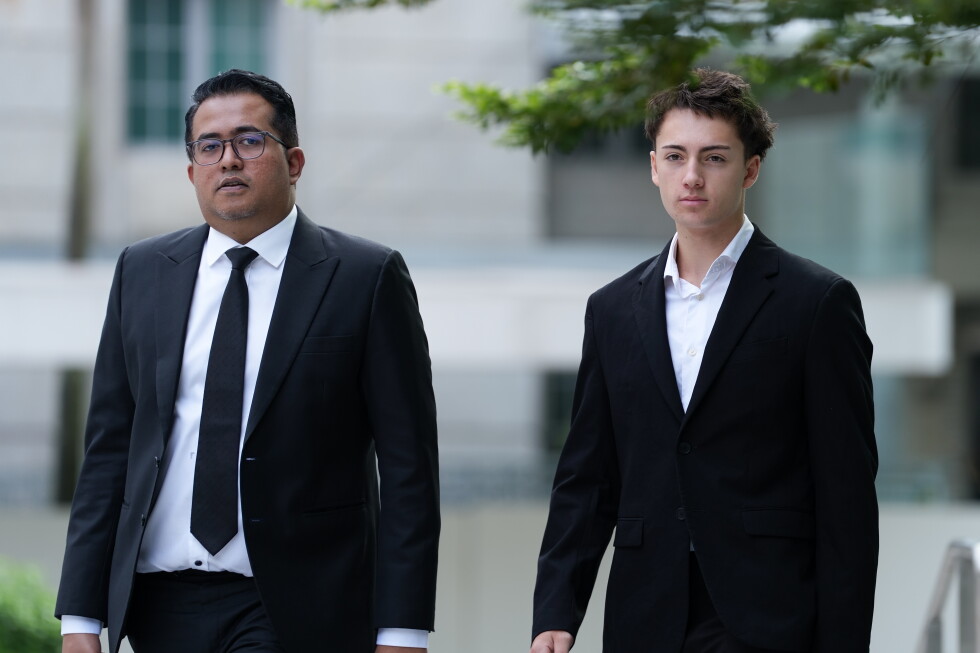
    SINGAPORE – A 19-year-old French business student studying in Singapore has been sentenced to a S$600 ($465 USD) fine after pleading guilty to a public nuisance charge this Thursday, stemming from a reckless social media stunt that saw him lick a juice vending machine straw before placing it back into the dispenser.

    Didier Gaspard Owen Maximilien admitted he recorded the unsanitary act in March at a local Singaporean shopping mall, filming the stunt specifically for his online social media followers. The video quickly spread across digital platforms after it was posted, prompting authorities to file formal charges against the teen in April. A second separate charge of mischief was also considered by the court during the sentencing hearing.

    Singapore’s legal system allows for a maximum penalty of up to three months of imprisonment for a public nuisance conviction. In this case, prosecutors requested the top allowable fine of S$2,000 ($1,551 USD), arguing that the pre-planned act posed unnecessary public health risks and could erode public trust in the hygiene of publicly accessible vending machines. Multiple mitigating factors led the court to issue a lower fine, and no community-based sentence was ordered. Prosecutors noted that Maximilien personally retrieved the contaminated straw after the stunt, no member of the public ended up using the straw, and no documented harm to any person occurred. They also referenced Maximilien’s age and his decision to enter an early guilty plea as additional mitigating circumstances.

    Maximilien is currently enrolled at a Singaporean business school, and as part of his academic program, he will be based in France from September through December this year. Prosecutors confirmed that Singaporean immigration officials will conduct a separate review of his student pass eligibility following the conviction, with a final decision pending a full assessment of all relevant circumstances.

    His defense attorney, Kalidass Murugayan, told the court that his client has been residing in Singapore without direct family support, and has expressed profound regret over his harmful decision. Murugayan clarified that after filming the stunt, Maximilien kept the licked straw for his own personal use, meaning it was never meant to be accessed by another customer. “He is truly sorry for having caused all this trouble,” Murugayan stated, adding that Maximilien’s parents have required him to pay the full fine using his own money. Following the hearing, the teen left the courthouse without making any public comments to reporters.

    IJooz, the company that operates the juice vending machine where the incident occurred, launched a formal police complaint after learning of the stunt. The company immediately sanitized the entire dispenser unit and replaced all 500 straws stored in the machine as a public health precaution. In response to the incident, IJooz has also announced plans to roll out safety upgrades across its vending machine fleet, including shifting to individually wrapped straws and installing new dispensing compartments that only unlock after a customer completes their purchase.

    This incident underscores Singapore’s strict approach to regulating public behavior and maintaining public cleanliness. The densely populated city-state is well known for imposing harsh penalties for acts that threaten public hygiene and order, including littering and vandalism.

  • Two children among seven dead in Russian strikes on Ukraine, officials say

    Two children among seven dead in Russian strikes on Ukraine, officials say

    A wave of coordinated Russian missile and drone assaults across Ukraine early Thursday has left seven people dead, among them two young children, and left a trail of damaged civilian and non-residential infrastructure across the country, local Ukrainian officials have confirmed. The attack unfolded just hours after Ukrainian President Volodymyr Zelensky publicly warned that Russia had spent weeks preparing a massive offensive against Ukrainian civilian targets, urging all citizens to take air raid warnings seriously and seek shelter immediately when alerts are issued.

    The deadliest strike of the night hit a private residential home in a small village near Kryvyi Rih, a major central Ukrainian city. A local regional official confirmed that six people, including two girls aged 5 and 12, were killed in the impact. Another eight people, two of them children, were wounded in the attack, with officials adding that casualty numbers could still climb as emergency teams work to clear rubble from the destroyed property.

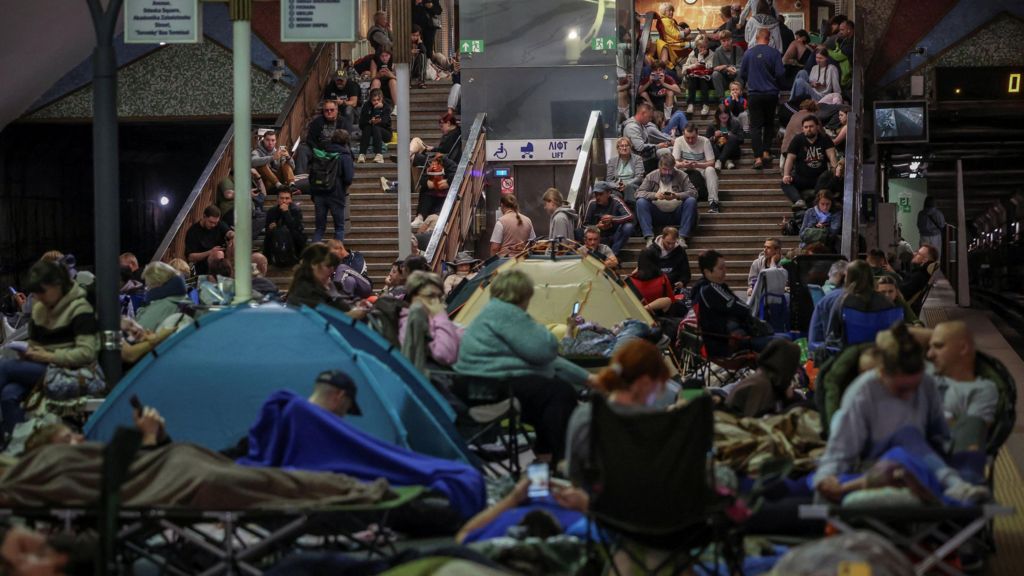
    In Ukraine’s capital Kyiv, residents spent the overnight hours sheltering deep inside the city’s metro system, setting up temporary camps with tents and folding chairs to wait out the barrage of attacks. Kyiv Mayor Vitali Klitschko confirmed via his Telegram channel that one person was killed in the capital, and three separate non-residential buildings caught fire after being hit. No further details on the buildings’ purposes have been released as of Thursday morning.

    Explosions were also reported in Lviv, a major city in western Ukraine far from the front lines of the ongoing conflict. Lviv Mayor Andriy Sadovyi confirmed that multiple residential buildings suffered significant damage in the strikes, though no casualty figures for the city have been released publicly. BBC Ukraine reports that strikes were also carried out against targets in several other Ukrainian cities, with Russian missiles reaching as far as the western edge of the country, far from the primary conflict zone in eastern and southern Ukraine.

    In response to the cross-border strikes, Poland announced it had mobilized its military aircraft as a defensive precautionary measure. The Polish armed forces confirmed the deployment in a post on the social platform X, noting that the move was intended to protect Polish airspace amid the large-scale offensive on neighboring Ukraine.

    The assault comes just days after Zelensky traveled to Washington DC to hold a meeting with U.S. President Donald Trump, where he formally requested that the U.S. grant Ukraine a license to domestically produce Patriot air defense interceptor missiles. Zelensky has repeatedly stressed in recent statements that expanding Ukraine’s ballistic missile defense capacity is the single most critical step to protect Ukrainian civilians from Russian strikes. The Patriot system is one of the only air defense platforms in Ukraine’s arsenal capable of intercepting the ballistic missiles that Russia has increasingly relied on to bombard Ukrainian population centers in recent months.

    In a statement on X Wednesday ahead of the attack, Zelensky emphasized that the ability of Western allies to provide sufficient air defense resources would directly determine how many Ukrainian civilian lives are lost. “The protection of people’s lives depends directly on their willingness, or lack of willingness, to provide air defence missiles,” he wrote.

    The attack also came alongside a reported counter-strike on Russian territory. Oleg Melnichenko, the regional governor of Penza, a city hundreds of kilometers inside western Russia, confirmed via Telegram that a drone attack hit a warehouse operated by major Russian online retailer Wildberries. One person was injured in the strike, Melnichenko said. Wildberries, often referred to as “Russia’s Amazon,” has seen its facilities repeatedly targeted in recent Ukrainian cross-border attacks.

  • Ahmet Davutoglu, former PM turned Erdogan critic, ends political career

    Ahmet Davutoglu, former PM turned Erdogan critic, ends political career

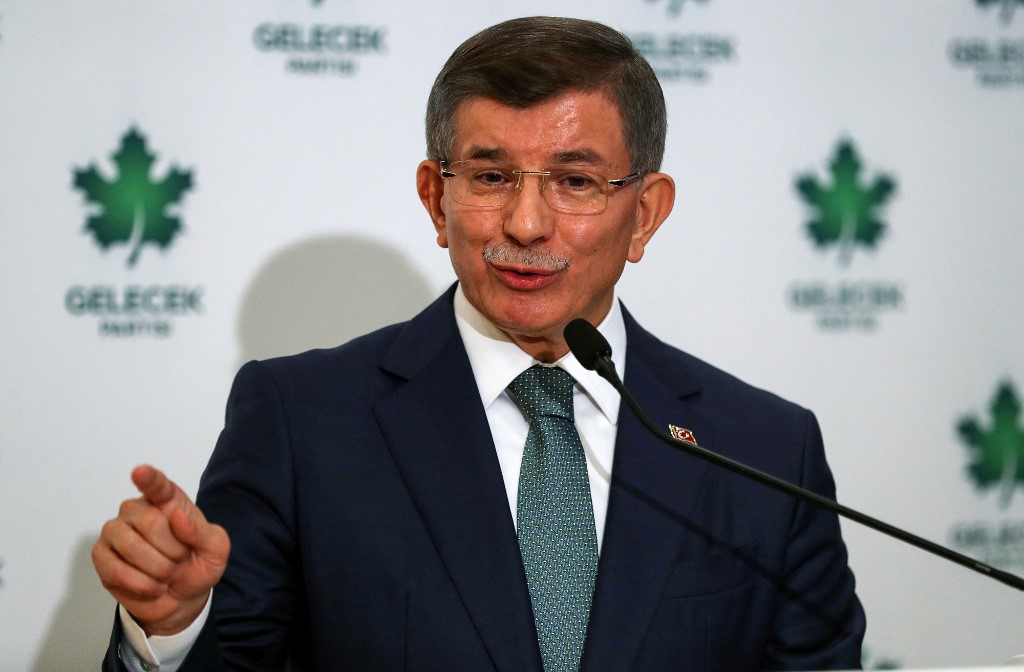
    On Wednesday, a pivotal shift shook Turkish politics as former Prime Minister Ahmet Davutoglu, once one of President Recep Tayyip Erdogan’s closest allies, announced the full dissolution of his opposition Future Party and his permanent withdrawal from organized party politics. In a formal written statement shared on the social platform X, Davutoglu framed his exit as a response to what he described as Turkey’s toxic and unethical domestic political environment.

    Davutoglu stressed that his choice is not an act of surrender, nor a complete abandonment of political engagement. Instead, he positioned it as a moral protest and a urgent call for broader political reflection across the country, urging all actors to reevaluate the current state of Turkish politics.

    Davutoglu launched the Future Party back in 2019, with a clear strategic goal: to siphon disillusioned conservative voters away from Erdogan’s long-governing Justice and Development Party (AKP), and build a new, democratic conservative alternative that could challenge the AKP’s decades-long hold on power. But the venture never gained the popular traction Davutoglu had predicted. The party failed to convince voters it could serve as a credible replacement for the AKP, securing just 0.11% of the national vote in the 2024 local elections, a result that underscored its marginal status in Turkish politics.

    A key strategic decision that weakened Davutoglu’s standing among his core conservative base was his 2023 choice to join the Table of Six opposition coalition and back Kemal Kilicdaroglu, then-leader of the Republican People’s Party (CHP), in that year’s presidential election. For many Turkish conservatives, long-held skepticism of the CHP’s staunch secularist ideology dates back to the founding of the Turkish republic, and the alliance eroded much of the limited support Davutoglu had retained.

    While the coalition arrangement allowed the Future Party to win 10 seats in the 2023 general parliamentary election, the party’s parliamentary caucus shrank to just four members in recent years, as multiple deputies defected to both the AKP and other opposition groups. Beyond political challenges, the party also faced crippling financial strain: an anonymous source familiar with Davutoglu’s thinking confirmed to Middle East Eye that covering organizational costs and sustaining the party’s national infrastructure had become increasingly unfeasible.

    Discussions of a potential merger between the Future Party and the AKP had been circulating in Ankara political circles as early as last year, but talks collapsed after Erdogan rejected the inclusion of both Davutoglu and his close ally, former AKP official Selcuk Ozdag, blocking any path to a political reunion.

    Before his split with Erdogan, Davutoglu built a decades-long career in Turkish politics and academia: a respected academic and once a doctrinaire foreign minister, he pioneered Turkey’s transformative “zero problems with neighbours” foreign policy, which pushed Ankara to deepen political and economic engagement across the Middle East and North Africa. This marked a clear break from Turkey’s historically cautious approach to relations with Arab states, reshaping Turkish foreign policy for nearly a decade.

    Davutoglu ascended to the prime ministership in 2014, after Erdogan won election to the presidency, and for a time remained one of Erdogan’s most trusted lieutenants. But tensions between the two former allies began to mount steadily from 2015, particularly after Davutoglu led the AKP to an election victory in that year’s November snap vote. Internal divisions ultimately centered on constitutional order: Davutoglu privately argued that political authority should rest with the office of the prime minister, aligning with Turkey’s then-parliamentary constitutional framework, while Erdogan pushed to expand the powers of the presidency.

    This power struggle culminated in Davutoglu’s forced removal from the prime ministership in 2016, and he was further sidelined from mainstream AKP politics after the 2018 presidential election that expanded Erdogan’s executive powers. The 2020 state-ordered closure of Istanbul Sehir University, an institution Davutoglu himself founded, only deepened the public rift between the two former allies.

    Davutoglu’s exit from party politics closes a chapter of intra-conservative opposition to Erdogan’s government, leaving remaining opposition groups to adjust to a shifting political landscape ahead of future national elections.

  • NAB reveals huge plunge in mortgages as central bank rejects property rescue

    NAB reveals huge plunge in mortgages as central bank rejects property rescue

    Australia’s housing and mortgage lending sector is facing fresh headwinds, with one of the nation’s largest financial institutions revealing a sharp downturn in new home loan activity even as the country’s central bank confirms it will not introduce emergency policy adjustments to stabilize a cooling property market.

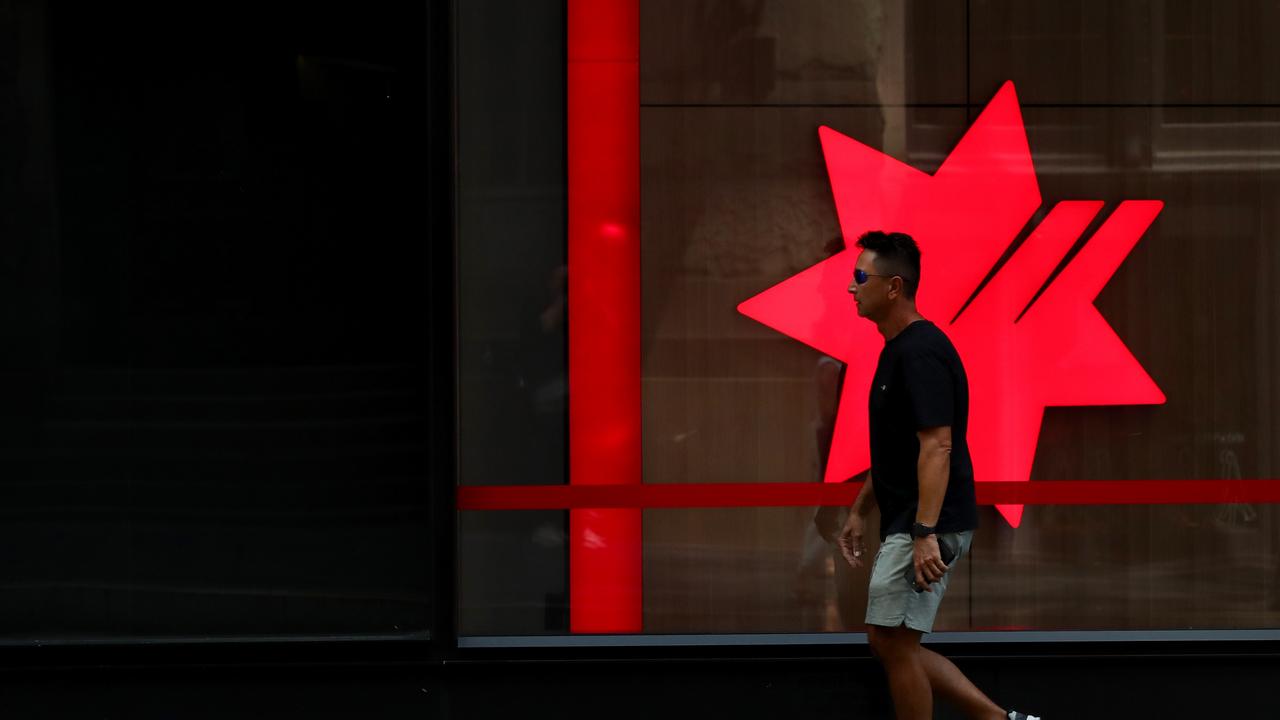
    In an early pre-report disclosure to investors, National Australia Bank (NAB) confirmed that total home loan applications dropped by 15% over the past three months. The steep decline is attributed to a confluence of economic pressures: three consecutive interest rate hikes that lifted the cash rate by 75 basis points to start 2026, recent changes to property taxation, and elevated global fuel prices that have combined to erode investor confidence in the housing market. The bank’s full quarterly financial results are scheduled for official release on August 17, with the early update focusing on preliminary trends across its business and private banking divisions.

    Speaking at the Barrenjoey Annual Australia Economics Forum, Reserve Bank of Australia (RBA) Assistant Governor and Chief Economist Sarah Hunter made clear that the central bank has no plans to automatically adjust monetary policy to offset falling property values. While Hunter acknowledged that the housing market holds major economic and social importance, she emphasized that the RBA’s policy decisions are tied strictly to its statutory dual mandate: maintaining inflation between 2% and 3%, and supporting full employment.

    “We don’t mechanically respond to falling house prices, but the housing market is really important. It is clearly very emotive as well. Everyone needs to live somewhere …. but no, we don’t just mechanically respond to what happens in the housing market. We think about its impact on the economy and think about it from a monetary policy lens,” Hunter explained.

    The 75 basis point rate hikes implemented in early 2026 reversed the three consecutive rate cuts that the RBA rolled out in 2025, a shift designed to curb persistent inflation that has remained above the central bank’s target band. New inflation data released Wednesday put headline annual inflation at 3.8% through June, while the trimmed mean inflation measure — a key metric that strips out the most volatile price movements to track underlying inflation — came in at 3.6% for the 12-month period.

    Hunter added that the RBA is closely monitoring the spillover effects of cooling housing prices on broader economic activity, employment, and inflation. While the central bank has flagged ongoing concern about household financial stability amid rising mortgage costs, Hunter stressed that there are currently no signs of systemic stress in the lending market. She acknowledged that for a small subset of borrowers, higher interest rates have made monthly mortgage repayments significantly harder to manage, but said struggling individual borrowers will not drive targeted policy action.

    Hunter’s remarks align with recent comments from RBA Governor Michele Bullock, who recently acknowledged that property prices have fallen faster than the central bank projected in its May forecasts. Bullock noted that the faster-than-expected cooling stems from a mix of shifting monetary policy outlooks, recent policy changes impacting housing, and a broad softening in consumer and investor sentiment toward the market.

    Even with the recent declines, Bullock pointed out that national property prices remain largely aligned with levels seen before the RBA began its current cycle of rate hikes in February 2026, and the downturn has so far been concentrated in Australia’s two largest cities, Sydney and Melbourne. First-home buyers, she added, are less exposed to the current price correction, as the largest drops have occurred in previously high-value markets, while historically affordable regions have seen more modest changes.

    On the question of financial risk, Bullock confirmed that negative equity — a scenario where a borrower owes more on their mortgage than their home is worth — remains extremely rare, affecting less than 1% of all Australian mortgage holders. The vast majority of households have also retained the substantial savings buffers they built up in recent years, meaning severe repayment distress is limited to a very small share of borrowers. While Bullock said the hardship facing this small group should not be minimized, she confirmed that overall financial stability risks remain contained.

  • New Victorian Premier Ben Carroll hints at changes to state’s WFH laws in potential upset to new reforms

    New Victorian Premier Ben Carroll hints at changes to state’s WFH laws in potential upset to new reforms

    Just 72 hours after being sworn in as Victoria’s newest Premier, Ben Carroll has already opened the door to potential adjustments to a landmark work-from-home law that has divided workers’ advocates and business groups across the Australian state. The controversial legislation, which was originally brought forward by former Premier Jacinta Allan just weeks before her unexpected resignation from the top job, is now up for review as the new leadership weighs competing demands from labor and industry.

    Carroll confirmed this week that the core provision of the bill — a legal guarantee allowing eligible workers to work from home for up to two days per week when the arrangement is reasonable — will remain in the draft text. However, he has signaled a willingness to consider sensible amendments during the upcoming parliamentary debate, responding to weeks of fierce pushback from Victorian business associations.

    “Work from home does work for families, and now it will go through that parliamentary process, and we will consider anything that is sensible,” Carroll told reporters on Thursday. “Sensible changes will always come up in any debate, and like any other debate, they will be considered.” “That’s the plan,” he added, confirming the two-day right remains on the table.

    Under the original framework outlined by Allan, the right to two days of remote work per week would apply to full-time employees, with pro rata entitlements extended to part-time and regular casual workers. Exclusions are already built in for workers on probation, apprentices, trainees, interns, and participants in entry-level graduate programs. When Allan first introduced the bill in June, she framed it as a pro-worker reform that would save the average employee more than AUD 5,000 annually in commuting costs, cut urban road congestion, and cut down on daily travel time for thousands of workers across the state.

    “We know that working from home works, it works for families, it works for parents,” Allan said at the time, framing the policy as a key priority for the state Labor government ahead of the upcoming election.

    But the proposal quickly drew sharp criticism from peak business groups across Victoria, who argue the new rules would impose unmanageable burdens on small and medium-sized businesses already struggling with economic headwinds. The Victorian Congress of Employer Associations has repeatedly called for a full overhaul of the legislation, warning the original timeline to bring the law into effect by September — which would require rapid processing through the state parliament after the bill passed the lower house earlier this week — is far too compressed.

    “The proposed commencement timetable is also dangerously compressed,” a congress spokesperson said earlier this month. “This would leave employers scrambling to rewrite policies, establish new processes, assess safety obligations, understand cost liabilities, train managers and respond to employee notices under an entirely new legal regime.”

    The group has also warned that the new regulations would add unnecessary complexity, extra operational costs, and economic uncertainty at a time when the state is already seeing a decline in the number of small employing businesses. Business leaders have called for a clearer hard limit on remote work entitlements and a six-month delay to the implementation timeline to give businesses enough time to adjust.

    The sudden review of the work-from-home law follows a rapid leadership shakeup in Victoria’s state Labor government that saw Allan step down from the premiership earlier this week. The leadership contest began after Carroll, who had previously served as Allan’s deputy and had publicly pledged not to challenge her leadership, confirmed he would run for the top job. Allan announced her resignation on Tuesday, arguing that a prolonged internal leadership contest so close to the upcoming state election would waste critical time and government resources.

    “I was prepared to put my record and my plan to a ballot of members as our rules allow,” Allan said in her resignation statement. “I believe I would have won but doing so this close to an election takes up valuable resources including the most important one: time.”

    Now, just days after taking office, Carroll’s decision to open the bill to amendment has signaled a potential shift in the government’s approach to the contentious policy, as the new premier works to balance the expectations of working Victorians and the business community ahead of the upcoming election.

  • Meet the astronomer digging into the Milky Way’s ‘fossils’

    Meet the astronomer digging into the Milky Way’s ‘fossils’

    For decades, Argentine-born astronomer Amina Helmi has dedicated her career to unearthing the hidden origins of the Milky Way, treating ancient stars as cosmic time capsules that hold the keys to our galaxy’s chaotic birth. Now, her groundbreaking work rewriting long-held theories of galactic formation has earned her one of the highest honors in the field: the prestigious Kavli Prize, often referred to as the Nobel Prize of astrophysics.

    At 55, Helmi is a professor at the University of Groningen in the northern Netherlands, where her passion for the Milky Way is impossible to miss in her compact office. Family snapshots and towering stacks of dense, jargon-heavy academic dissertations share space with a bowl overflowing with Milky Way chocolate bars – a playful, sweet nod to the star system that has consumed her professional life.

    Helmi is a pioneer in galactic archaeology, a specialized subfield that treats stars as “cosmic fossils” to reconstruct the Milky Way’s ancient history and project its long-term trajectory. Unlike the popular image of astronomers hunched over telescopes scanning the night sky, Helmi’s work centers on parsing enormous astronomical datasets, some of which contain more than two billion lines of stellar data.

    “Stars carry chemical fingerprints that act just like DNA,” Helmi explained in an exclusive interview with AFP. “These chemical compositions preserve irreplaceable information about where a star formed and what environment it originated in, letting us trace billions of years of galactic history.”

    A transformative turning point for Helmi’s research came from the European Space Agency’s Gaia mission, an ambitious project to map the Milky Way in three dimensions, to which Helmi herself contributed. “Gaia measured the motion of nearly 1.5 billion stars across a far larger volume of space than any previous mission,” she noted. “It wasn’t just the sheer number of stars we were able to track – it was the unprecedented accuracy of those motion measurements that changed everything for our field.”

    Armed with Gaia’s unprecedented dataset, Helmi and her collaborators pieced together a cataclysmic event that reshaped the Milky Way forever some 10 billion years ago – hundreds of millions of years before our own Sun formed. At that time, a small dwarf galaxy named Gaia-Enceladus collided and merged with the young proto-Milky Way. The leftover stars from the crashed dwarf now form the diffuse halo that wraps around our galaxy, and the collision triggered a wave of new star formation that created the Milky Way’s signature “puffed up” galactic disk.

    This discovery upended the long-standing scientific consensus that the Milky Way formed through slow, steady, continuous growth. Instead, Helmi’s work confirmed that our galaxy assembled itself incrementally through a series of violent collisions and mergers with smaller cosmic bodies, a process called hierarchical accretion.

    Helmi shares the 2024 Kavli Prize in Astrophysics with two fellow researchers: Vasily Belokurov of the University of Cambridge and Rodrigo Ibata of the University of Strasbourg. The three scientists will split the $1 million prize fund, receive a gold medal, and be honored at a formal ceremony hosted by the Norwegian Academy of Science and Letters in Oslo this coming September. The award committee recognized the trio for “uncovering the fossil evidence of past mergers proving that the Milky Way galaxy was built through hierarchical accretion.”

    Helmi told AFP she was completely stunned when she received the news of the award. “I was totally speechless. To me, this is the biggest honor there is in our field – it’s just absolutely unbelievable,” she said. “This is also wonderful recognition for galactic archaeology as a whole. It’s a relatively young field, but it’s exploded in growth over the last decade, and this award puts that work on the map.”

    Looking ahead, Helmi plans to continue diving into new data releases from the Gaia mission, while developing more robust statistical models to process the field’s increasingly massive datasets. When asked what the Milky Way’s violent youth means for its future, she offered a reassuring take: “Nothing major has happened to our galaxy since that early collision. You could say it had a wild, turbulent youth, and now it’s enjoying a quiet, restful adulthood.”

  • US immigration agents are patrolling airports to arrest visa overstayers

    US immigration agents are patrolling airports to arrest visa overstayers

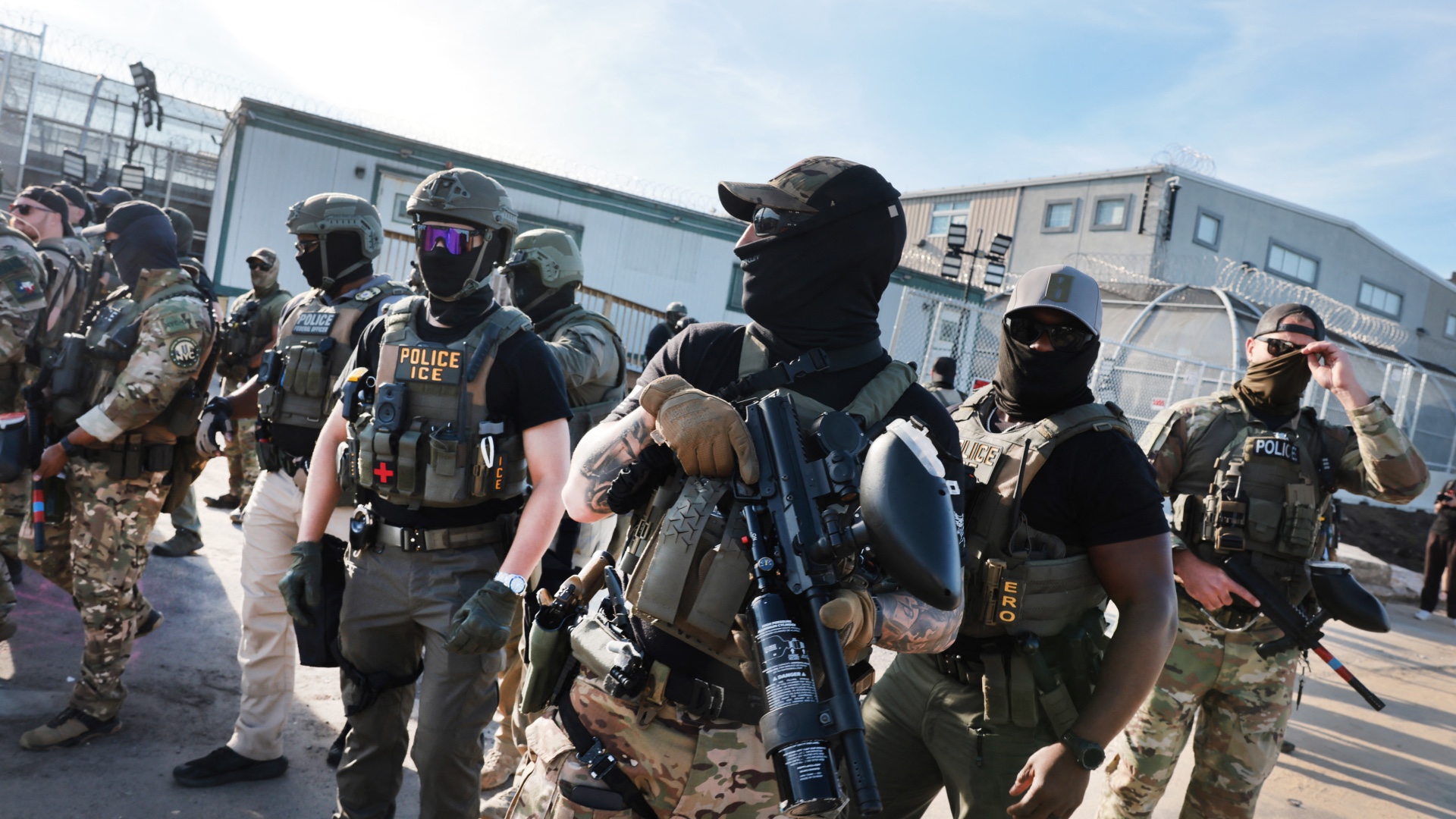
    U.S. Immigration and Customs Enforcement (ICE) has launched a new enforcement operation that places agents on patrol at domestic airports across the country, targeting and arresting individuals who have overstayed their valid entry visas, ABC News confirmed in a report published Tuesday.

    For non-citizens who entered the United States through legal channels, overstaying a visa is traditionally classified as a civil violation rather than a criminal offense. Many of these individuals are caught in bureaucratic limbo: their applications for permanent resident green cards remain pending long after their initial visas expire, leaving them in unauthorized status through no fault of their own.

    According to ABC News’ reporting, at least 27 visa overstayers have been taken into custody across nine states since the airport patrol program launched. To identify targets, ICE accesses passenger travel data collected by the Transportation Security Administration (TSA), which screens every passenger booked on both domestic and international flights departing from U.S. airports.

    In an official statement, the Department of Homeland Security (DHS), the federal agency that oversees ICE, claimed that visa overstayers should only use U.S. airports to facilitate “self-deportation” rather than general domestic travel.

    The expanded airport operation is part of the broader agenda of the second Trump administration, led by new DHS Secretary Markwayne Mullin. The administration has made meeting former President Trump’s campaign pledge of one million annual deportations of people it labels as “illegal immigrants” — including both unauthorized border crossers and visa overstayers — a top policy priority.

    While many people in immigration limbo entered the U.S. to seek asylum, the administration has effectively closed off nearly all access to this legal protection pathway in recent months. Data from ICE confirms that enforcement activity has surged sharply: last month marked the highest number of new bookings into ICE immigration detention facilities since Trump took office in January 2025. More than 43,000 people were taken into custody to await deportation in June, averaging 1,500 arrests per day across the country.

    Though DHS officially denies the existence of a mandatory arrest quota, off-the-record conversations between agents overheard by third parties reveal that ICE staff are promised financial bonuses for exceeding arrest targets. This new airport patrol operation follows the administration’s earlier controversial large-scale enforcement campaign, Operation Metro Surge, in Minneapolis, which ended earlier this year after widespread condemnation over violent tactics. ICE’s approach to street arrests has remained largely unchanged, however: earlier this month, ICE agents fatally shot two unarmed people in Texas and Maine, neither of whom had any prior criminal record.

    Widespread accounts from detainees and viral social media footage have documented that plainclothes ICE agents often cover their faces and identifiers during arrests, leading targets to believe they are victims of kidnapping when agents tackle them mid-activity, whether they are working, shopping, or walking down a public street. Footage of hundreds of these incidents sparked national outrage across the U.S. last year, and that public backlash appears to have shifted public opinion on immigration policy.

    New data from a Gallup poll conducted earlier this month shows a dramatic reversal of long-standing public attitudes. In 2024, the year Trump was re-elected, 55 percent of U.S. adults said they supported reducing overall immigration levels. Today, that number has dropped to just 30 percent. This shift ends a four-year trend of growing support for stricter immigration limits. Currently, nearly 80 percent of Americans — a record high in polling history — say they believe immigration is a net positive for the country.

    A core component of the Trump administration’s new immigration policy is the elimination of Temporary Protected Status (TPS), a program that allows hundreds of thousands of people from crisis-stricken countries to live and work legally in the U.S. while conditions in their home countries are too dangerous for safe return. TPS is approved in 18-month increments with no statutory cap on total extensions, and allows recipients to obtain formal work authorization during their designation.

    To date, the administration has revoked TPS designations for eight countries: Myanmar, Venezuela, Honduras, Nepal, Nicaragua, Afghanistan, and Cameroon. The existing TPS designations for Haiti and Syria are scheduled to expire this week, meaning more than 350,000 Haitian TPS holders — most of whom have lived in the U.S. since 2010 — and roughly 6,000 Syrian TPS holders, who received designation in 2011, will now become eligible for arrest and detention by ICE.

    “Enforcement will be carried out,” DHS warned in a post on the social media platform X, urging affected people to either coordinate voluntary departure through the CBP Home digital portal or wait for official deportation. The agency has offered up to $2,500 in travel reimbursements for people who arrange their own departure through the app, though there is no public record of any individual actually receiving the promised funds to date.