博客

  • Timothy Lafaele was a star for Japan at the 2019 Rugby World Cup. Now he’s not sure he belongs

    Timothy Lafaele was a star for Japan at the 2019 Rugby World Cup. Now he’s not sure he belongs

    Japan, a nation that has embraced foreign-born athletes to grow its rugby profile over the past decades, is now facing a bitter controversy over sweeping new eligibility rules that have upended the careers of dozens of naturalized players. Among those at the center of the dispute is Timothy Lafaele, a Samoan-born rugby star who moved to Japan at 18, built his entire professional life in the country, earned Japanese citizenship, and earned 28 caps for Japan’s men’s national rugby team. Lafaele was a key part of Japan’s legendary 2019 Rugby World Cup upset over Ireland, a victory that remains one of the most iconic moments in Japanese sports history, when the host nation’s unexpected run shocked global rugby audiences.

    But when Japan’s top-tier domestic competition, Japan Rugby League One, kicks off its new season in December 2024, Lafaele and dozens of other foreign-born, Japanese-citizen players will be reclassified as foreign athletes under new eligibility regulations proposed by Japan’s rugby governing body. The new rules mandate that to count as a domestic player eligible for unrestricted game time, athletes must have completed at least six years of primary and lower secondary education in Japan over a nine-year period. For players who moved to Japan as young adults, even those who have lived, worked, and raised families in the country for decades, this requirement automatically bars them from domestic classification.

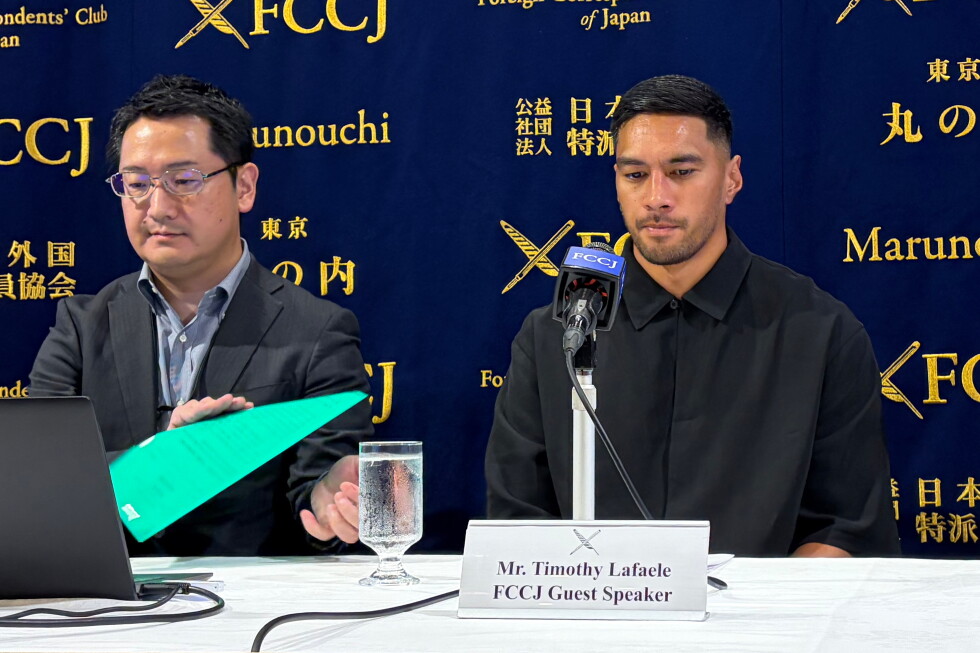
    As a result, domestic squads will now be required to prioritize Japan-born players for roster spots, severely limiting available opportunities for athletes like Lafaele, casting deep uncertainty over their continued careers in the Japanese league they helped build. Currently, 24 affected players have filed a pending lawsuit against the rugby governing body in multiple Japanese courts, represented by Tokyo-based lawyer Seiji Makino. At a press conference held Thursday at the Foreign Correspondents Club of Japan in Tokyo, both Makino and Lafaele publicly outlined their case, calling on officials to reverse the rule change before the season opener, either through court action or negotiated settlement.

    “This is a very simple story,” Makino told reporters. “It is about players who built their lives and careers in Japan under one set of rules and are now having the ground moved from under their feet.”

    For Lafaele, the rule change was entirely unexpected. “It came out of the blue,” he said. The star player declined to comment on any potential connection to Japan’s shifting national political debate around immigration, nor would he discuss details of how the change has impacted his current playing contract. But he did not hold back on describing the emotional impact of the new classification.

    “It quite saddens us. To come to Japan, having given so much to the rugby here and the community and being treated this way. It just saddens us,” Lafaele said. “Insulted is a strong word as well, but to me, when this first rule came I did feel insulted.”

    Of the 24 plaintiffs in the case, only five have agreed to be publicly named, as most fear professional retaliation for speaking out against the governing body. When asked whether he believed racial bias was a core factor driving the new regulations, Makino said he did not view the dispute as rooted in racism.

    The controversy comes against a backdrop of shifting national immigration policy in Japan, where Prime Minister Sanae Takaichi has pushed for stricter controls on foreign immigration amid growing public anxiety about the country’s demographic shift. As Japan’s population rapidly shrinks, policymakers have been under pressure to expand foreign labor to fill critical workforce gaps, but many ordinary Japanese citizens, grappling with stagnant wages and soaring living costs, have voiced growing opposition to increased immigration.

    The past few months have been an extremely stressful period for the affected players, Lafaele explained. “Some players are forced into retirement. Some players are just waiting at home at the moment for this decision to change so they can have the opportunity to provide for their families and get playing contracts. It’s been a tough time for most of the players.”

    Japanese rugby officials have defended the new rules, arguing that the pool of homegrown Japan-born players is shrinking, and limiting foreign-born players’ roster access will help grow the domestic talent pipeline. Lafaele says he understands the goal of nurturing homegrown talent, but he is skeptical that restricting eligibility for naturalized players will deliver that outcome.

    “I don’t think kids will look at this competition and say ‘there are too many foreigners, I’ll stop playing,’” Lafaele noted. “I see both sides of it. I see where the Japanese boys are coming from. They see it as more opportunities for them to play.”

    Global sports governing bodies have a long history of adjusting eligibility rules, often to gain a competitive advantage or meet commercial needs, but rule changes that reclassify already established players almost always face significant pushback from affected athletes.
  • Veteran Ugandan opposition politician collapses in court and in ICU, his wife says

    Veteran Ugandan opposition politician collapses in court and in ICU, his wife says

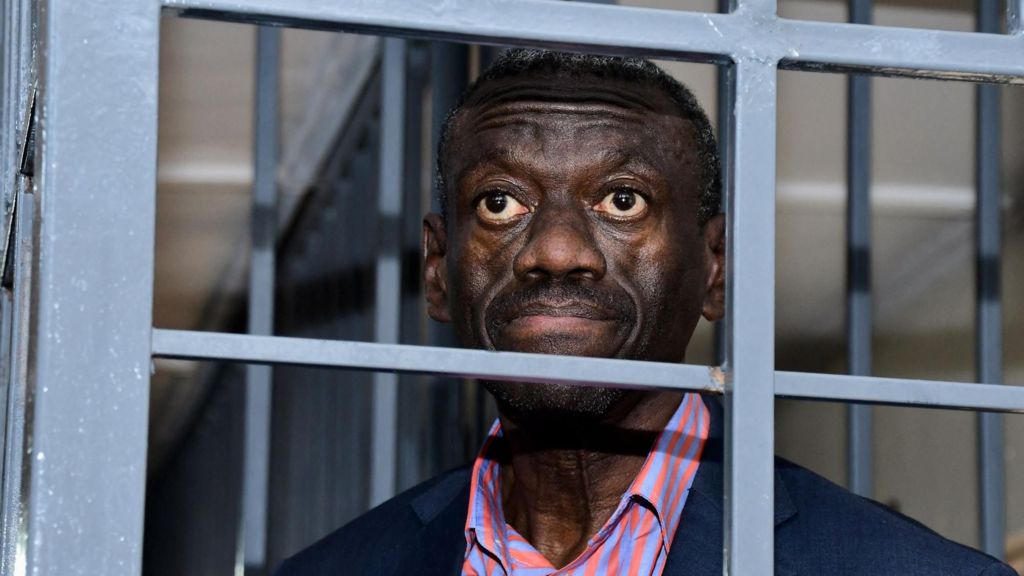
    A major political crisis has unfolded in Uganda this week after 70-year-old opposition icon Kizza Besigye collapsed unconscious during a high-profile treason hearing in Kampala, requiring emergency admission to an intensive care unit at the country’s largest public hospital. The long-time political rival of incumbent President Yoweri Museveni has been held in state detention since his dramatic abduction from Kenyan territory in late 2024, facing capital treason charges that he and his co-accused have repeatedly denied.

    Witnesses at Wednesday’s hearing at the Kampala High Court confirmed that Besigye was actively protesting the court’s decision to appoint state-aligned legal representatives to act on his behalf when his health suddenly failed. Eyewitnesses report the visibly frail politician repeatedly shouted demands to halt the proceedings over the disputed legal representation, crying out that he was feeling physically unwell before losing consciousness. Prison security personnel immediately intervened and rushed him by ambulance to Mulago National Referral Hospital, the leading public health facility in the country.

    In a public post on the social platform X, Besigye’s wife Winnie Byanyima – the executive director of UNAIDS, the United Nations agency leading global action against HIV and AIDS – provided a grim update on his condition. She confirmed that her husband remained unconscious, unable to communicate, and did not respond to external pain stimuli immediately after being admitted. Adding to the controversy surrounding the incident, Byanyima noted that Besigye’s sister Olive Kobusingye, a trained medical doctor who was present in the courtroom, was initially blocked by security from providing urgent medical care to her brother after he collapsed.

    Since being admitted, Besigye has refused to accept care from government-employed medical personnel, with Byanyima explaining that the opposition leader will not allow any state official to provide medical treatment. She has publicly demanded that Besigye be transferred to a private clinic to receive care from his own personal physician, a request that has not yet been granted by authorities. As of the latest updates, Kobusingye – who also serves as Besigye’s personal doctor – has been granted access to the ICU, which remains heavily guarded by armed Ugandan security forces.

    The legal team representing Besigye has faced a series of official crackdowns in recent weeks that have compounded the political tension around the case. His lead attorney Erias Lukwago was arrested by the Ugandan army last month and charged with failing to report alleged acts of treason. A second prominent lead lawyer, Kenyan opposition figure Martha Karua, was formally barred from entering Uganda last month when she traveled to the country to represent Besigye in the proceedings.

    Prosecutors from the Ugandan state allege that Besigye and his aide Obeid Lutale – who has been held alongside the opposition leader since his abduction – conspired to overthrow the long-standing Museveni government, a charge that both men reject. Treason is classified as a capital offense under Ugandan law, meaning a guilty verdict could result in a death sentence for the veteran politician, who previously served as Museveni’s personal physician before breaking with the president in 1999 to launch his opposition political career. Besigye went on to challenge Museveni in four separate presidential elections over the course of his political career, and had stepped back from frontline political activity in recent years, choosing not to run in the 2021 national election.

    Besigye’s son, Adam Ampa, has issued a public open appeal to President Museveni and his son Gen Muhoozi Kainerugaba, the chief of the Ugandan army, to grant his father compassionate release on humanitarian grounds. “Regardless of politics, no son should have to witness his father reach such a state while standing before the very law he served and dedicated his life to,” Ampa wrote in the open letter shared widely across Ugandan social media on Wednesday.

    Other opposition figures have also spoken out to condemn the treatment of Besigye. Bobi Wine, a prominent Ugandan opposition politician who fled the country in the wake of January’s presidential election over threats to his safety, called forcing a visibly unwell Besigye to appear in court a “shocking violation of his most basic rights.” The unfolding situation has drawn renewed international attention to political freedoms and human rights in the East African nation, as observers wait for updates on Besigye’s health and the progress of his trial.

  • AFL 2026: Hawthorn coach Sam Mitchell speaks on his contract extension talks

    AFL 2026: Hawthorn coach Sam Mitchell speaks on his contract extension talks

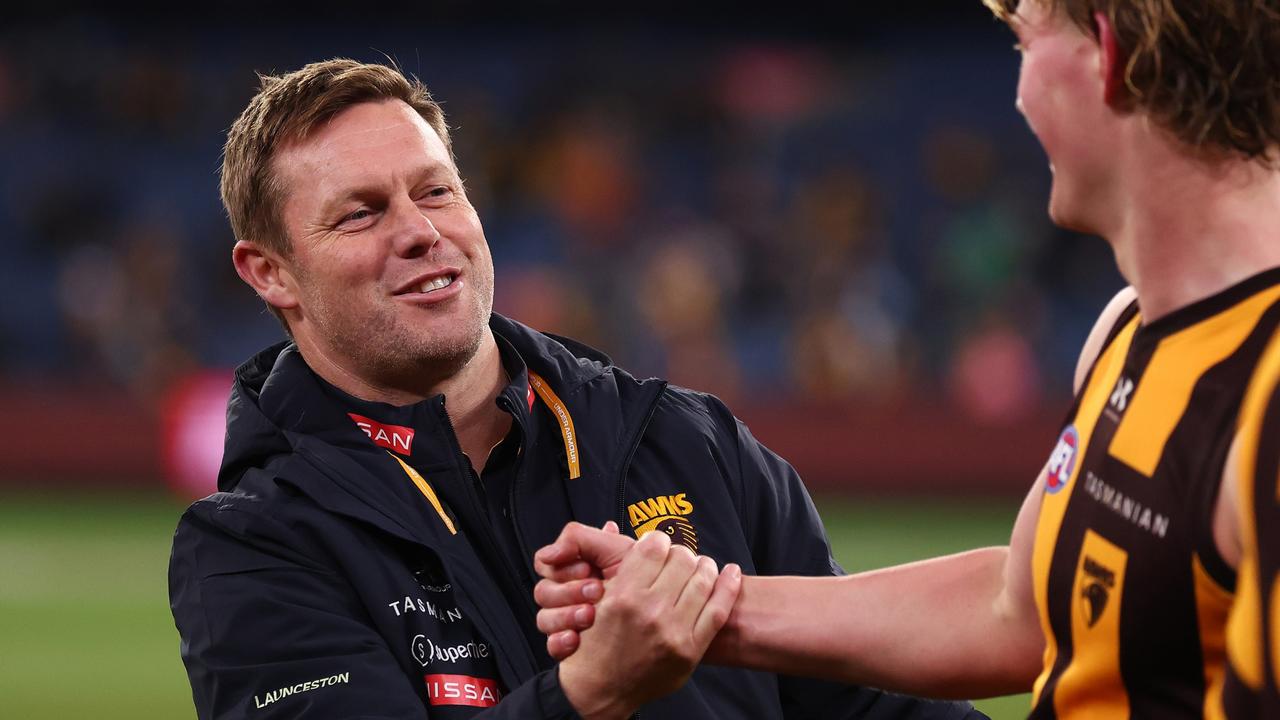
    As the Hawthorn Football Club gears up for a high-stakes push to secure a top-two ladder finish, head coach Sam Mitchell has revealed that ongoing negotiations for a contract extension have proceeded without friction, describing the process as “pretty seamless”.

    Industry reports indicate Mitchell is closing in on a three-year contract renewal that would extend his tenure at the helm of the Hawks through to the end of the 2030 AFL season. Speaking to media on Thursday ahead of Saturday’s clash against North Melbourne, held at Hawthorn’s widely regarded spiritual home base of Tasmania, Mitchell deflected focus from his own contract talks to highlight the meaningful, people-focused side of his coaching role, particularly in the lead-up to young prospect Aidan Schubert’s senior debut this weekend.

    “I love Hawthorn and I am sure there will be something coming out soon enough,” Mitchell told reporters. When pressed on rumors of a three-year extension, he joked “Three? Thirteen. I will let that play out, someone will report on that when it’s been all finalised but it’s been pretty seamless, to be honest.”

    Moving away from contract discussions, Mitchell opened up about the personal rewards that draw him to coaching, emphasizing the joy of supporting young talent as they grow into the sport. “I think seeing the joy in young people and when they improve and it’s not just the players,” he said. “When you’re working with staff and you see someone like Aidan Schubert … when you see his parents, his family and how much they’ve put into him. How many hours by how many people to give him that opportunity and when you see that smile, you have that feeling that you’ve helped that along. I think they’re the parts of coaching that make us do it.”

    Recruited from South Australia, Schubert will make his first senior appearance for Hawthorn this weekend, stepping into the role of second ruck and key forward. The young talent was just 17 when he first joined the club, with his birthday falling in late December. His promotion comes at a critical time for the Hawks, who have lost backup ruck Noah Mraz to the side’s lineup after a kidney laceration injury.

    Mitchell spoke glowingly of the debutant, noting his close family ties and the excitement his promotion has generated among the existing playing group. “But Aidan’s a great young man. He’s very family-orientated. He’s got on the phone (to family) straight away … and the boys are really excited to play with him,” Mitchell added.

    Saturday’s match against North Melbourne in Tasmania stands as a key fixture for Hawthorn as the club pursues a top-two finish on the season ladder, a result that would solidify their position as leading contenders for the premiership.

  • Turkish police detain actor-turned-mayor Erdal Besikcioglu in latest raids targeting opposition

    Turkish police detain actor-turned-mayor Erdal Besikcioglu in latest raids targeting opposition

    ISTANBUL – In the newest round of law enforcement operations targeting Turkey’s main opposition bloc, law enforcement officials have taken into custody Erdal Besikcioglu, a former popular television actor who now serves as mayor of the Ankara district Etimesgut, the country’s Justice Ministry confirmed Thursday. The detention is part of a broader sweep that unfolded across nine Turkish provinces early Thursday, coordinated by the Ankara West Chief Public Prosecutor’s Office. Altogether, 52 suspects, including 42 sitting municipal officials and 13 private sector representatives, were targeted in pre-dawn raids that searched 71 locations spanning homes and public offices. Investigators seized physical documents and digital evidence during the operations, and three deputy mayors were among those taken into custody alongside Besikcioglu.

    Besikcioglu, who was elected to the Etimesgut mayoral post earlier this year as a candidate for the main opposition Republican People’s Party (CHP), faces a series of allegations tied to municipal governance: investigators are probing claims of financial irregularities and document forgery linked to public tender processes, alongside questionable practices in parking lot leasing agreements and construction zoning approvals. All suspects in the operation face formal charges including establishing and operating a criminal network, illicit criminal group membership, embezzlement, bribery, extortion, and bid-rigging for public contracts.

    Prior to his entry into Turkish politics, Besikcioglu was a household name across the country, best known for his lead role as gruff detective Behzat Ç in the long-running hit police drama *Behzat Ç*, which aired from 2010 to 2019. His 2024 election win came as the opposition made significant gains across Turkey’s key urban centers, solidifying control of both the capital Ankara and the country’s largest city Istanbul.

    This latest detention is part of a years-long pattern of arrests targeting opposition-held local governments. Over the past two years, hundreds of elected mayors and municipal officials have been taken into custody as part of criminal investigations, almost all centered on allegations of public corruption. The highest-profile case to date remains that of Istanbul mayor Ekrem Imamoglu, widely viewed as the most formidable potential challenger to long-serving President Recep Tayyip Erdogan. Imamoglu has been held in prison since March 2024, and the multiple criminal cases against him carry the possibility of cumulative multi-decade prison sentences.

    the operation comes amid major upheaval for Turkey’s opposition, just weeks after a court ordered the removal of the CHP’s national leadership. Last Friday, the ousted CHP leader Ozgur Ozel launched a new breakaway political faction, the New Party, which has already drawn 90 defecting CHP members of parliament. This shift makes the New Party the largest opposition bloc in Turkey’s national legislature.

    Erdogan’s administration has repeatedly pushed back against claims that the investigations and arrests are politically motivated, insisting that Turkey’s judicial system operates as an impartial body free from political interference.

  • Cooler weather and potential rain move into the French region torched by wildfires

    Cooler weather and potential rain move into the French region torched by wildfires

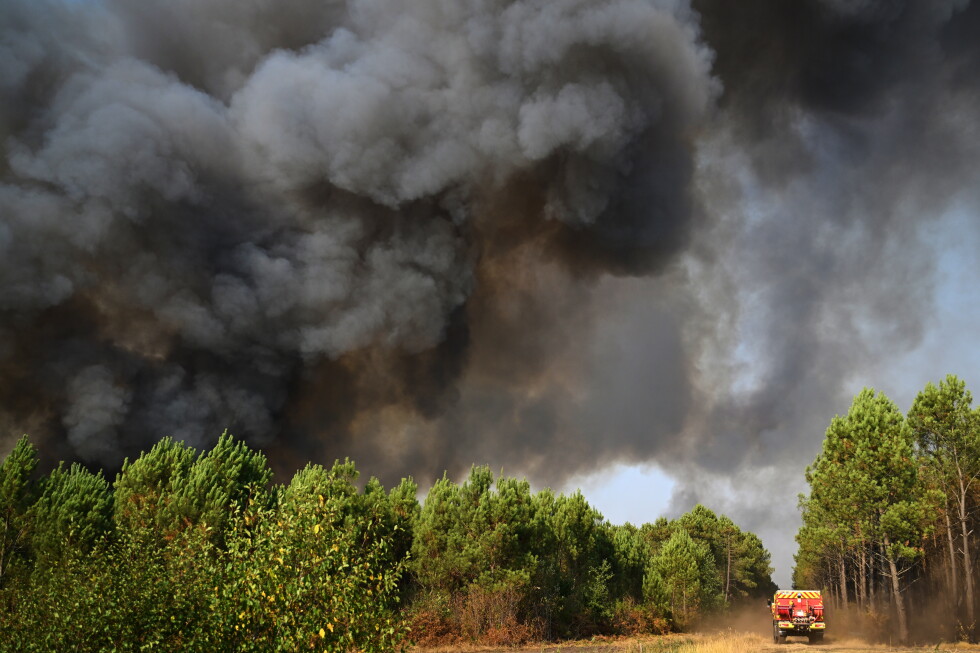
    LEGE-CAP FERRET, France — A weeks-long wildfire crisis that has scorched more than 42,000 hectares of land in southwestern France’s Gironde region — an area four times larger than the entire city of Paris — may finally see some relief as shifting meteorological conditions bring cooler air, elevated humidity and predicted rain to the fire-ravaged Atlantic coast.

  • Raid on a Pakistani police post leaves 11 officers and 15 attackers dead

    Raid on a Pakistani police post leaves 11 officers and 15 attackers dead

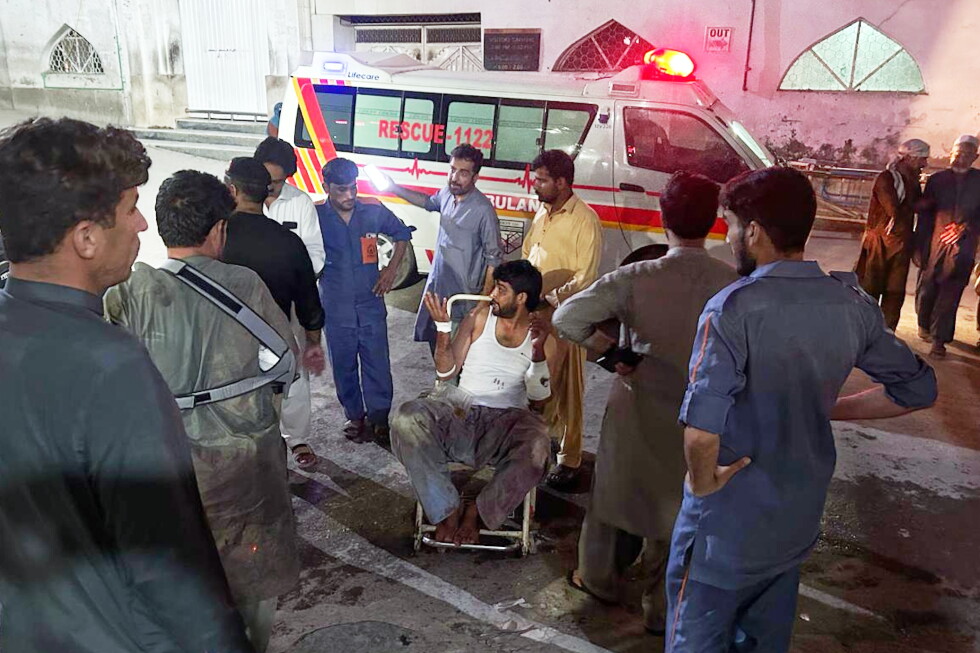
    In the early hours of Thursday, Pakistani law enforcement and government officials confirmed that the death toll from a devastating overnight militant attack on a frontier police outpost in northwestern Pakistan has climbed to 11.

    The assault targeted the Khazina police post located in Hangu district of Khyber Pakhtunkhwa province, a region that shares a porous border with Afghanistan. According to local police official Irfan Khan, Pakistani security forces responded rapidly to the incursion, triggering an intense hour-long gun battle that left all 15 participating militants dead.

    A formal statement from provincial police confirmed that the casualties on the security side include a high-ranking officer, Diyar Khan, who was killed while leading a reinforcement contingent to the besieged outpost. More than 24 other officers sustained injuries in the coordinated assault. Initial investigative briefings note that the attackers used heavy weaponry to breach the post’s defenses, and the reinforcement convoy sent to retake the position was ambushed before arriving at the scene. The ambush damaged an armored personnel carrier before security forces were able to regain the upper hand in the fighting.

    As of Thursday morning, no militant organization has issued a formal claim of responsibility for the attack. Counterterrorism analysts say suspicion will almost certainly fall on Tehrik-e-Taliban Pakistan (TTP), commonly referred to as the Pakistani Taliban, which has ramped up its campaign of attacks against Pakistani security personnel across this border region over the past several months.

    The attack is part of a broader nationwide upswing in militant violence that Pakistan has grappled with in recent years. Pakistani authorities have repeatedly pinned most of this escalating unrest on the TTP, an organization that is operationally separate from but maintains close ideological and tactical ties to the Afghan Taliban, the group that seized control of Afghanistan following the U.S. military withdrawal in 2021.

    For years, the Pakistani government has publicly accused the Afghan Taliban administration of allowing TTP militants to establish safe havens on Afghan territory, from which they plan cross-border attacks. The Taliban government in Kabul has consistently rejected these allegations, stating it does not allow any armed groups to launch cross-border assaults from its soil.

  • AFL 2026: Dean Solomon will sit down with Essendon next week to discuss his future

    AFL 2026: Dean Solomon will sit down with Essendon next week to discuss his future

    The race for Essendon Football Club’s vacant full-time senior coaching position has added a formal competitor, with interim head coach Dean Solomon confirming he will officially put his case forward for the permanent role in upcoming discussions with club leadership. Solomon steps into the contested process alongside other high-profile candidates including James Hird, Mark McVeigh, Jaymie Graham and Murray Davis, all vying for the top job at the AFL club. Solomon’s move to pursue the role comes after months of deliberate consideration, a delay he says was intentional to keep his focus where it matters most: guiding the team through a turbulent period following Brad Scott’s sudden sacking in May.

    In comments made to media on Thursday, the 46-year-old premiership-winning former Essendon player outlined that the timeline for formal discussions has arrived, after club president Tim Roberts told him four to five weeks prior to prioritize in-game coaching first. “It is a discussion I am going to have with the club in the next week and we’ve sort of had that contact now,” Solomon explained. “We will sit down and have a conversation over the next week or so, with all due respect, I will probably want to have that discussion with them first then work from there. I think I said many weeks ago that Tim (Roberts), sort of mentioned to me, four or five weeks ago, ‘take your time, concentrate on coaching (and) doing what you have to do for this group and this footy club’ … at some point in time he’ll give us a tap on the shoulder and have that discussion. So that time has sort of come and we’ll sit and have a good chat about all things and I’ll put forward my thoughts on the current situation and the future.”

    The former premiership Bomber also opened up about the multiple factors that extended his consideration process, most notably his family’s current residence outside of Victoria. “There’s multiple layers about where I’m currently at and the position I am in, my family, where they’re based,” he said. “That’s why it’s been a good thing to take the time to have a good think and respect the current position I am in, as well, as interim coach. My first priority always has been – and always will be – the players and making sure they get the best opportunity they can to be the best they can be.”

    Solomon’s tenure as caretaker has been marked by a slow start before a landmark breakthrough win: after nine straight winless matches across his two stints as interim coach (including three games at the helm back in 2017), Essendon snapped its long drought with a victory over Greater Western Sydney at Marvel Stadium a fortnight ago, which lifted the club off the bottom of the AFL ladder. Despite the challenging win-loss record for most of his time in charge, Solomon says he has deeply valued the opportunity to lead the side through transition. “I’ve thoroughly enjoyed the opportunity, massive challenge, obviously on the back of losing your coach, it’s always a challenge taking on the interim role and what flows on from that,” he said. “But I’ve thoroughly enjoyed the challenge with this, binding a coaching group, a football department and a playing group. Really working hard between Monday and Friday to ensure we get good momentum finishing the year off and making decisions around the medium-to-long term for the club.”

    He added that while the team’s results have not met expectations, the side has shown clear improvement in patches, and the coaching group has worked to implement meaningful shifts in the team’s playing style. “In all honesty, I’m just happy to play the role I’ve had to play for the past 12-13 weeks for this football club and I hope it helps it in the medium-to-long term,” Solomon said. The club will hold formal interviews with all candidates in the coming days, with a final decision on the permanent senior coach expected in the near future.

  • Russian strikes across Ukraine, from east to west, kill at least 8 and wound dozens

    Russian strikes across Ukraine, from east to west, kill at least 8 and wound dozens

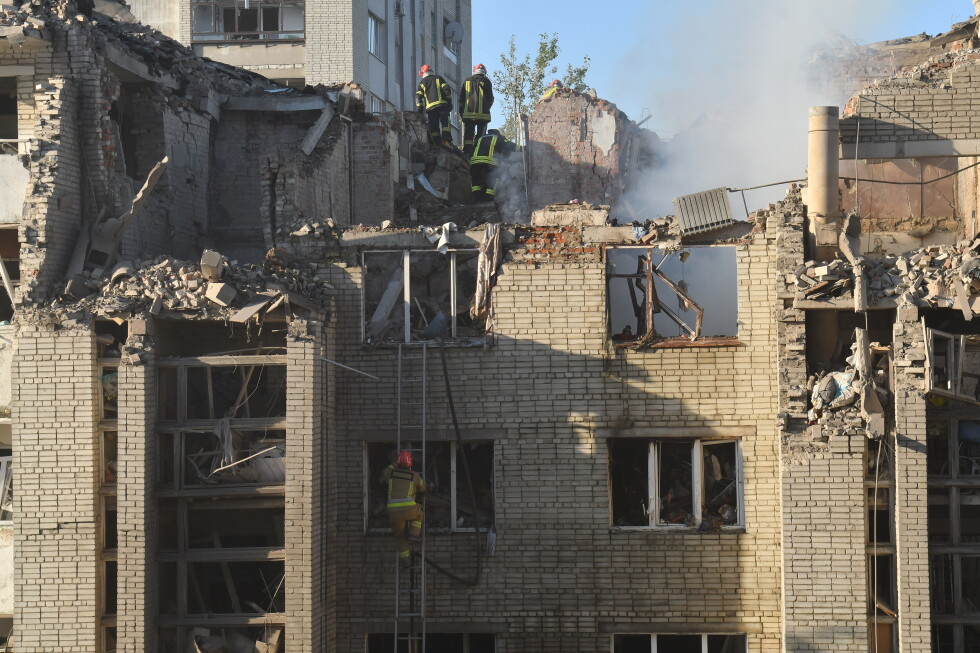
    A wave of coordinated Russian missile and drone strikes targeting multiple regions across Ukraine overnight Wednesday into Thursday has left at least eight civilians dead and dozens more injured, marking the latest escalation in Moscow’s nearly weekly large-scale bombardment campaign that gained intensity over the summer months.

    Ukrainian President Volodymyr Zelenskyy confirmed the breadth of the assault, noting targets stretched from the capital Kyiv and its surrounding suburbs to eastern cities including Dnipro and Kharkiv, and across western Ukraine including Lviv. In total, Russia launched more than 70 missiles—many of which were short-range ballistic missiles, which are difficult to intercept—and over 280 attack drones in the single overnight operation. Ukrainian air defense forces successfully intercepted more than 260 of the drones, a feat Zelenskyy called extraordinary given the persistent shortage of advanced air defense systems and missiles supplied by international partners.

    “Our warriors are accomplishing truly incredible things, demonstrating a very high level of professionalism,” Zelenskyy stated. “This Russian terror once again proves that protection against the Russian missile threat is the most important task when it comes to saving the lives of our people.”

    The deadliest single attack unfolded in the eastern Dnipropetrovsk region, where regional military administration head Oleksandr Hanzha confirmed six civilians were killed and 10 more injured. Among the fatalities were three children: a 6-year-old girl, an 11-year-old boy, and a 17-year-old boy, all killed in an attack on a residential neighborhood in Kryvyi Rih. Zelenskyy later confirmed the children’s parents were also killed in the same strike, while two additional children were pulled alive from the rubble of their destroyed home.

    “It was an ordinary home, blown into smithereens by a ballistic missile,” Zelenskyy said. He added that delays and shortages in deliveries of anti-ballistic missile defense systems from international allies directly enabled the level of destruction and loss of life seen in the attack, reiterating that accelerating defense support is critical to protecting Ukrainian civilians.

    Adjacent to Dnipropetrovsk, in the central Poltava region, a drone strike targeting private sector warehouses killed one civilian, regional governor Vitalii Diakivnych reported. A separate attack on a delivery hub sparked a large fire that was quickly contained by emergency response teams, with no additional casualties reported at that site.

    In western Ukraine’s Lviv region, which has increasingly become a target of Russian strikes in recent months, rescue operations continued through Thursday morning after an early morning strike around 4:45 a.m. Local military administration head Maksym Kozytskyi reported the number of injured rose to 30, while Lviv Mayor Andrii Sadovyi confirmed two multi-story residential buildings were heavily damaged. More than 20 additional homes, a local school, and two kindergartens also suffered damage, and multiple children were among the wounded, with one child hospitalized for serious injuries.

    In the capital Kyiv, a 31-year-old civilian was killed and two more injured when Russian ballistic missiles struck residential areas, Ukrainian national police confirmed. The attack damaged multiple apartment buildings, a local market, vehicle storage garages, and private cars. Just outside the capital, in the Kyiv region’s Brovary district, acting regional governor Ruslan Oliinyk reported five additional injuries, including a child and two women.

    In Moscow, Russia’s Defense Ministry issued its standard statement framing the strikes as a targeted attack on Ukrainian military infrastructure, claiming the operation hit air bases, arms production facilities, military telecommunications nodes, and logistics hubs across the regions attacked. The ministry also claimed Russian forces hit a military cargo ship in Ukraine’s Pivdennyi port and two additional vessels near Odesa, and that Russian air defenses downed 258 Ukrainian drones launched overnight in cross-border strikes.

    Cross-border attacks on Russian territory were confirmed by local officials, who reported fires at two warehouses operated by Wildberries, Russia’s largest domestic online retailer. Penza Governor Oleg Melnichenko said a Wildberries depot in his region caught fire, leaving one person injured and forcing the evacuation of more than 200 employees. A second Wildberries warehouse in Sarapul, located in the Udmurtia republic roughly 600 miles east of Moscow, was also struck by a Ukrainian drone and caught fire, with all employees evacuated safely. The strikes mark the latest in a string of attacks on Wildberries facilities across Russia that have caused hundreds of millions of dollars in damage.

  • Australian watchdog files legal action against Telegram, saying it failed to remove violent content

    Australian watchdog files legal action against Telegram, saying it failed to remove violent content

    Australia’s national online safety regulator has launched landmark civil legal proceedings against global messaging platform Telegram, accusing the service of failing to eliminate violent extremist and pro-terrorism content that includes graphic footage of two of the deadliest white supremacist mass shootings of recent years and Islamic State beheading videos.

    In a public announcement Thursday, eSafety Commissioner Julie Inman Grant laid out the charges against the UAE-headquartered platform, which claims more than 1 billion monthly active users across the globe. If Australia’s Federal Court rules against Telegram, the company faces a maximum fine of 54.6 million Australian dollars, equivalent to roughly 38 million U.S. dollars, for its alleged persistent failure to identify and remove material that promotes terrorist violence.

    This court proceeding marks a high-stakes test of Australia’s 2021 Online Safety Act, which mandates that large digital platforms implement rigorous systems to exclude illegal and terrorism-linked content from their services. The case specifically centers on the availability of content tied to the 2019 Christchurch mosque attack, which left 51 Muslim worshippers dead at the hands of an Australian white supremacist who livestreamed his violence, and the 2022 Buffalo supermarket shooting that killed 10 Black people, carried out by a white supremacist who cited the Christchurch attacker as inspiration. It also covers the presence of Islamic State propaganda videos depicting executions.

    Regulators have long struggled with the persistence of these extremist digital artifacts years after the original attacks, as the graphic footage and accompanying manifestos continue to be shared by radicalized users to recruit new sympathizers and inspire copycat violence. Inman Grant emphasized that the content in question remained accessible on Telegram long after the platform was formally notified of its existence, noting that the platform’s unique structure — which supports public channels with unlimited audience reach and large group chats — creates an outsized responsibility to proactively remove harmful material. Channels linked to these attacks have been repeatedly used to host copies of the attack footage and praise the perpetrators.

    Telegram has issued a firm denial of all allegations, stating in a written statement shared via the platform that it “reject these allegations and will contest them in court.” The company argues that its ongoing anti-terrorism work is a matter of public record, pointing to published data showing it has blocked more than 150,000 terrorist-linked communities on its platform so far in 2024. The company also framed its approach to content moderation as a defense of fundamental digital rights, noting that it has supported pro-democracy movements across the world, from Russia and Iran to Myanmar and Hong Kong, by protecting user privacy and preserving freedom of speech and assembly.

    Inman Grant countered that the regulator first pressed Telegram to remove the problematic content and align with Australian rules in March 2024, but received no response for months. She added that the platform’s stance only shifted after French authorities arrested Telegram founder and CEO Pavel Durov in August 2024. Durov, a Russian billionaire, was held for four days of questioning over allegations that Telegram was used to facilitate a range of illegal activity, including drug trafficking and the spread of child sexual abuse material, before being released on 5 million euro bail. According to Inman Grant, Telegram became temporarily more cooperative with Australian and global regulators following Durov’s arrest, but still maintains what she called a “permissive hosting environment for terrorist content.”

    The legal action comes amid mounting global pressure on Durov and Telegram: just days before the Australian claim was filed, Russia’s Federal Security Service added Durov to its international wanted list, accusing him of aiding terrorist activity, marking the latest in a string of legal challenges for the executive that have also included previous cases in Russia and France.

  • New dinosaur discovered in Zimbabwe

    New dinosaur discovered in Zimbabwe

    Paleontologists have uncovered a previously unknown dinosaur species on the shores of Zimbabwe’s Lake Kariba, offering groundbreaking new insight into the early diversification of dinosaurs across southern Africa some 210 million years ago. Dubbed *Musango matusadonaensis*, this new find marks only the fifth distinct dinosaur species ever formally named and documented from Zimbabwe, shining a long-overdue spotlight on a region vastly understudied compared to fossil-rich sites in Europe and North America.

    The specimen dates back to the Late Triassic period, a critical evolutionary era when dinosaurs were first expanding their range across the globe, millions of years before they rose to become Earth’s dominant terrestrial vertebrates in the Jurassic and Cretaceous periods. At the time of *Musango*’s existence, modern-day Zimbabwe sat within the massive supercontinent Gondwana, a landmass that also incorporated what is now South America, India, Australia and Antarctica.

    This international research effort, a collaborative project between teams from the United Kingdom, South Africa and Zimbabwe, has yielded a fossil assemblage including key bones from the dinosaur’s spine, forelimbs and feet. Analysis of these remains confirms the individual was nearly fully grown at the time of its death, at approximately eight years of age, measuring 4.5 meters in length — roughly the size of a medium passenger vehicle.

    *Musango matusadonaensis* is classified as a sauropodomorph, an early ancestral relative of the massive long-necked sauropods that would later evolve, such as *Diplodocus*. Unlike its four-legged descendants, this early species walked on two legs. Researchers also concluded it was an omnivore, feeding on a mixed diet of plants and meat that likely included crocodile-like phytosaurs, lungfish and smaller contemporary dinosaur species.

    Lead study author Professor Paul Barrett of London’s Natural History Museum, whose findings are published in the *Journal of Systematic Palaeontology*, noted that long-standing scientific consensus assumed dinosaur communities across southern Africa were largely homogeneous. “However, these discoveries are showing that this part of the ancient supercontinent Gondwana was actually made of a series of smaller ecosystems — each with a different cast of characters,” Barrett explained. This new find adds crucial data to the sparse fossil record of Late Triassic African dinosaurs, helping paleontologists piece together a more accurate picture of how early dinosaur communities diversified and spread across the globe.