博客

  • England hires New Zealander Fleming to coach test team and reappoints Root captain

    England hires New Zealander Fleming to coach test team and reappoints Root captain

    A major restructuring of England’s men’s senior cricket setup has landed, with the England and Wales Cricket Board (ECB) announcing two key leadership appointments Thursday: former New Zealand captain Stephen Fleming will take the reins as the men’s Test team’s new head coach, and star batter Joe Root will return to the role of Test captain.

    The changes come on the heels of underwhelming on-field results that led to the dismissal of Fleming’s former New Zealand national teammate Brendon McCullum, who had held the Test head coaching position. McCullum was let go after England suffered a 4-1 Ashes series defeat in Australia late last year, followed by a 2-1 home Test loss to New Zealand in June 2024. The shake-up leaves England’s senior men’s coaching structure with an all-New Zealand leadership: McCullum will retain his posts leading the country’s 50-over One Day International and 20-over Twenty20 International squads.

    Fleming will not officially step into his new role immediately. Interim head coaching duties for the upcoming three-Test home series against Pakistan, which kicks off August 19 in Leeds, will be filled by former England batter Marcus Trescothick. Fleming stepped down only this month from his long-standing role as head coach of the Indian Premier League’s Chennai Super Kings, and the ECB has granted him temporary leave to return to his home country to attend to family matters before he joins England’s setup. After concluding his leave, Fleming will prepare the England Test squad for their three-Test tour of South Africa, scheduled for December 2024 through January 2025.

    Fleming brings a wealth of captaincy and coaching experience to the role. As a player, he remains New Zealand’s longest-serving Test captain, leading the side in 80 Test matches and notching 28 wins — a record for the country at the time of his retirement. He also spent years playing county cricket in England, representing three different clubs and claiming a domestic league title with Nottinghamshire back in 2005. His coaching resume includes an unprecedented five IPL title wins with Chennai Super Kings, a record no other head coach in the league’s history has matched.

    “English cricket gave that to me and it is a privilege to have this chance to give something back,” Fleming said in an official statement announcing his appointment.

    On the captaincy side, Root’s return to the top leadership role fills the vacancy left by Ben Stokes, who retired from international cricket following England’s June Test series against New Zealand. Root previously served as England’s permanent Test captain from 2017 to 2022, and he holds two national records for the role: he has captained England in more Test matches (65) and notched more Test wins as captain (27) than any other player in the country’s history. Stokes, before stepping down, publicly endorsed vice-captain Harry Brook to succeed him, though the ECB ultimately opted to return Root to the position.

  • Thousands evacuated in Crete as European wildfires continue to rage

    Thousands evacuated in Crete as European wildfires continue to rage

    A devastating wave of wildfires fanned by hurricane-force winds has torn through Southern Europe, leaving three firefighters dead and forcing mass evacuations across multiple countries, with the popular Greek tourist island of Crete among the hardest-hit regions.

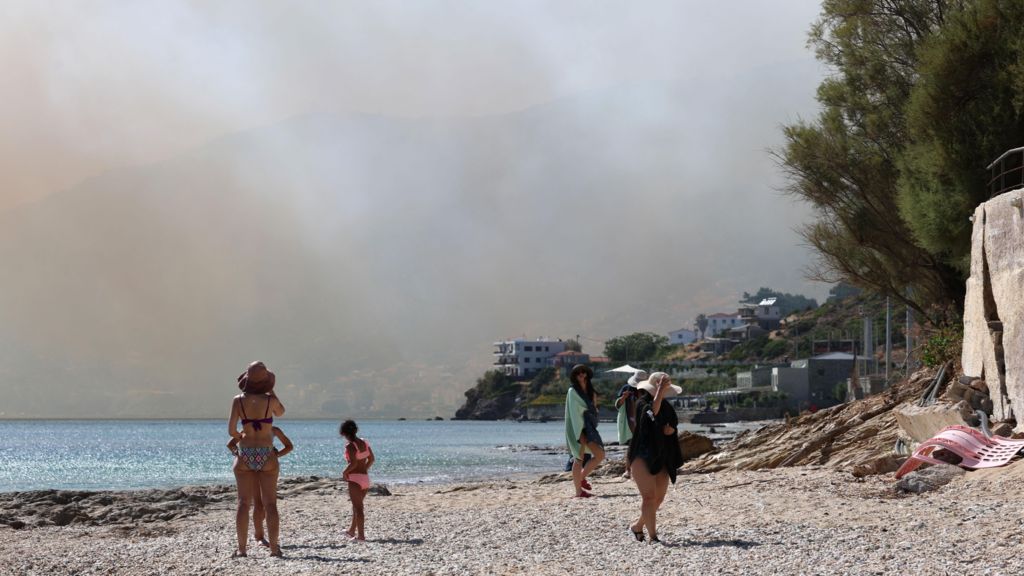
    On the Greek island of Crete, roughly 8,000 residents and tourists were evacuated overnight from the Rethymno region, where an out-of-control wildfire that ignited Wednesday has expanded to a 15-kilometer active front. Wind gusts in the area have peaked at 125 kilometers per hour, reaching level 11 on the Beaufort scale, classified as violent wind. These extreme conditions have hampered suppression efforts, grounding aerial firefighting aircraft on Thursday morning and preventing crews from gaining the upper hand.

    The disaster has already claimed three lives: two Crete-based firefighters, 58-year-old Emmanouil Stratidakis and 25-year-old Pantelis Diamantakis, who became trapped and died near Krya Vrysi, and a third firefighter killed near the Peloponnese port of Gytheio. The Greek Fire Service has issued official condolences, and the two fallen Crete firefighters are scheduled for burial Thursday.

    As of Thursday, the full scale of property damage remains unconfirmed, though multiple residential structures and large swathes of agricultural land have already been destroyed by the blaze. Roughly 224 firefighters, supported by 53 ground engines, 11 specialized response units and two aircraft, have been deployed to contain the Rethymno fire. Evacuated civilians have been relocated to temporary emergency shelters in neighboring municipalities, with dedicated provisions arranged for visiting tourists who make up a large share of Crete’s mid-summer population.

    Crete’s wildfire crisis is part of a broader outbreak of extreme heat and wildfire activity across the European continent, driven by long-term warming that has made the region the fastest-warming continent on Earth, according to data from the Copernicus Climate Change Service. Europe has warmed twice as fast as the global average, fueling more frequent, intense heatwaves, severe drought conditions, and catastrophic wildfire seasons.

    The crisis extends far beyond Greece. In Spain, 600 people have been evacuated from a wildfire burning near the Portuguese border in Zamora, while a separate blaze in Ávila province has burned more than 43,000 hectares over the past week, making it the largest recorded wildfire in Spanish history. Fires near Madrid have stopped spreading, allowing thousands of displaced residents to return to their homes. Neighboring Portugal has reported five injuries from a fire in the eastern town of Valpaços.

    In Turkey, hundreds of homeowners have been evacuated as wildfires spread across the region, but authorities report most blazes there have now been brought under control. In France, the country’s largest wildfire since 1949, which has destroyed 42,000 hectares of land in the Gironde region, has not spread for three consecutive days. Cooler temperatures and forecast rain for Thursday are expected to further help suppression efforts, though several southeastern French regions have been placed under orange heatwave alerts starting at midday local time.

    Meteorological forecasts warn that the high-risk fire conditions currently concentrated in Southern Europe will shift toward central Europe over the coming week, with Greece and Turkey expected to remain among the most severely impacted regions.

  • Missile that left crater deep inside Poland was probably Russian – Polish PM

    Missile that left crater deep inside Poland was probably Russian – Polish PM

    In an incident that has escalated cross-border tensions amid Russia’s ongoing military campaign in Ukraine, a presumed Russian missile crashed into a rural field in eastern Poland early Thursday, leaving a sizable crater deep within Polish territory, official statements confirmed.

    The crash site, located a short distance from the small village of Tarnawa Kolonia, sits roughly 100 kilometers (62 miles) from Poland’s border with Ukraine. The impact left a crater stretching 10 meters (33 feet) across, and the incident unfolded concurrently with a massive Russian air assault targeting the western Ukrainian city of Lviv.

    Polish Prime Minister Donald Tusk announced preliminary findings during an emergency gathering of government officials in Lublin, noting that all available evidence points to the object being a Russian Kh-101 missile. “All the indications are that it was a Russian Kh-101 missile, but we want to be 100% certain about the type of missile and who launched it,” Tusk said, emphasizing the need for a definitive, evidence-based conclusion before formal attribution.

    Ukraine’s acting Foreign Minister Andrii Sybiha had previously characterized the incident as an incursion of NATO airspace, confirming his assessment that a Russian Kh-101 cruise missile had strayed into Polish territory during Russia’s large-scale strike on Ukrainian infrastructure.

    Polish Defense Minister Wladyslaw Kosiniak-Kamysz added context to the overnight activity, revealing that around 20 airborne objects were detected near Polish airspace during the overnight hours. Specialized pyrotechnical experts are currently conducting detailed forensic analysis to confirm the exact identity and origin of the object that impacted near Tarnawa Kolonia.

    Military records show that Poland’s armed forces first detected the rogue object at approximately 03:40 local time Thursday (01:40 GMT). An F-16 fighter jet was immediately scrambled to intercept the object, but it disappeared from Polish radar systems just minutes after detection.

    Prime Minister Tusk confirmed that, despite the destructive impact, no casualties have been reported from the incident. Even so, Polish authorities are treating the incursion and crash as a high-priority serious event, given its implications for regional security and NATO’s collective defense commitments.

    The incident comes just hours after Tusk held a bilateral meeting with Ukrainian President Volodymyr Zelensky in Lublin Wednesday evening, during Zelensky’s return trip to Ukraine from high-level talks with former U.S. President Donald Trump.

    This is a developing breaking news story, with official investigations still ongoing. Additional details will be released as forensic analysis is completed and more information becomes available to authorities.

  • Monaco signs France U21 striker Abline to join Balogun in forward line

    Monaco signs France U21 striker Abline to join Balogun in forward line

    In a high-profile transfer deal confirmed on Thursday, Ligue 1 side AS Monaco has added attacking depth to its roster by signing French forward Matthis Abline from recently-relegated Nantes. The 23-year-old former France Under-21 international has put pen to paper on a five-year contract with the Principality-based club, though Monaco has not publicly disclosed the full financial terms of the transfer. Multiple industry reports peg the total transfer fee at approximately 25 million euros, equal to around $28.6 million.

    Abline’s performance at Nantes over the past two campaigns made him a target for Monaco, as he notched 15 goals in Ligue 1 play despite Nantes’ struggles that ultimately ended in relegation from France’s top flight. For the 2024-2025 season, Nantes will compete in Ligue 2, France’s second domestic division, opening the door for Abline’s move to a side competing in European competition.

    Monaco finished seventh in Ligue 1 last season, a result that earned the club a spot in the qualifying playoffs for the UEFA Conference League, which kick off on August 20. The signing of Abline creates a potentially dynamic new attacking combination alongside American striker Folarin Balogun, who is gearing up for his fourth season with the Monaco first team.

    Balogun, who has become one of the most high-profile American strikers in European soccer, earned global attention during the 2022 FIFA World Cup in Qatar, where he scored three goals for the United States men’s national team. The U.S. campaign ended in the round of 16 with a controversial elimination at the hands of Belgium, a match that Balogun was cleared to play in only after FIFA reversed a planned red card ban, a move that followed public intervention from then-U.S. President Donald Trump. Off the pitch, Balogun has recently made changes to his representation, joining basketball superstar LeBron James as a client of the prominent Klutch Sports agency.

  • Pink Rabbit adult shop boss vows to appeal Perth council sex venue rejection

    Pink Rabbit adult shop boss vows to appeal Perth council sex venue rejection

    A battle over LGBTQIA+ community access to dedicated safe space has erupted in Western Australia’s capital Perth, after local city councillors rejected a plan that would have created the city’s only such venue allowing consensual sexual activity alongside social and educational programming. The proposal’s architect, Nick Needham, managing director of downtown Perth’s Pink Rabbit Adult Shop, is moving forward with a formal appeal of the council’s decision, dismissing the objections raised against the project as baseless.

    Needham’s application sought council approval to convert the adult retailer’s underused second floor into a members-only space for LGBTQIA+ community members, designed to deliver what he describes as three core outcomes: trusted social connection, inclusive community education, and access to private, consensual sexual activity. In an interview with NewsWire, Needham confirmed he expects to receive official council documentation of the rejection this week, and will formally file his notice of appeal immediately.

    “There are no legal grounds for the council to block this space from opening,” Needham said. “Claims that this project would harm neighboring properties are completely ludicrous.”

    The proposal went through a standard public community consultation process, which drew a total of 341 written submissions from the public and local stakeholders. Of those, 290 submissions opposed the plan, while 51 voiced support. Council meeting minutes, however, reveal that more than half of all opposing submissions — 195 total — were filed without any supporting reasoning or justification, and an additional 43 were identical form responses matching language from a circulating petition, rather than personalized objections.

    Despite council planning staff formally recommending the proposal be approved with targeted operating conditions, Perth councillors ultimately voted to reject the application entirely.

    Needham pushed back on the widespread public opposition, noting that hundreds of local LGBTQIA+ community members have reached out to him directly to express personal support for the project. That groundswell of backing, he said, has been deeply moving and reinforced his commitment to see the plan through the appeal process.

    “Just like any other queer venue, this space would act as a welcoming entry point for people who have never felt comfortable accessing existing queer community spaces,” Needham explained. “It would give people a place to meet, build connections, and feel more comfortable in their own identity. Yes, consensual sexual activity is allowed, but that’s not all this space would be — that’s not even a guarantee for every visit. I’m working to meet a critical need for a segment of Perth’s LGBTQIA+ community that currently has no dedicated space of its own.”

    Under Needham’s proposed operating model, visitors would pay a one-off $20 fee for seven days of access to the space. Critics have raised a wide range of objections to the plan: one public submission argued approving the project would “fundamentally alter the residential character, perceived safety, and family-friendly nature” of Barrack Street, where Pink Rabbit is located — a claim that overlooks the street already hosts multiple other 18+ licensed venues. Other common objections included unsubstantiated claims the space would inadvertently facilitate prostitution and fail to meet public hygiene standards. Perth councillor Viktor Ko also voiced opposition to the paid membership model, arguing it would make the space exclusionary even as he acknowledged the project’s operating management plan was well-designed.

    In response to widespread online harassment directed at him and his business over the proposal, Needham said he has already proactively opened a line of communication with Western Australia Police’s hate crime unit to address the threats.

    The rejection has sparked debate over access to inclusive community space for queer Perth residents, with Needham’s appeal set to test whether the city’s opposition holds up to formal legal and procedural review.

  • US sanctions 10 Chinese shipping companies

    US sanctions 10 Chinese shipping companies

    On Wednesday, July 30, 2026, the United States announced a new round of sanctions targeting 10 Chinese shipping companies, alleging that the firms, with operations spanning mainland China and Hong Kong, along with eight registered tankers, have violated Washington’s existing restrictions on Iranian crude oil exports.

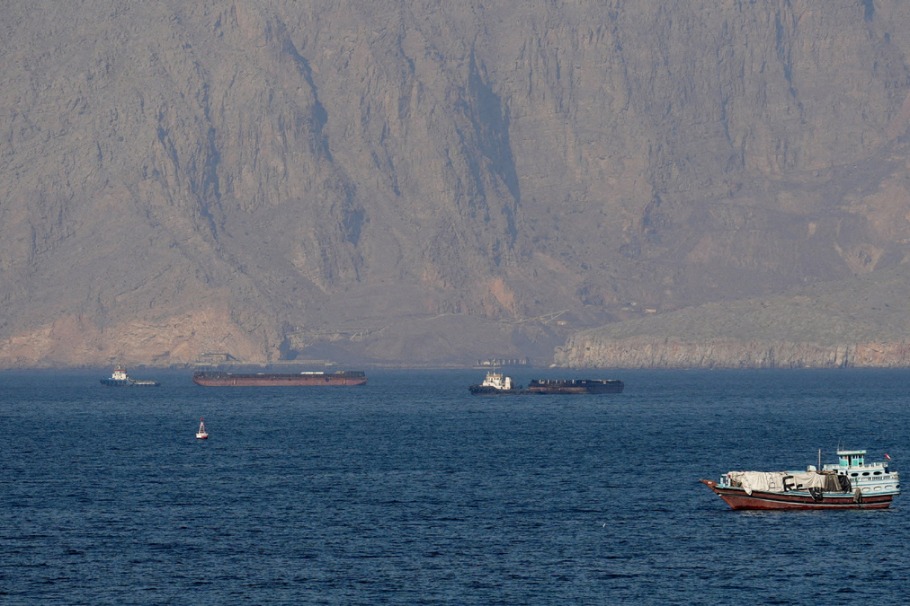
    Under the terms of the new punitive measures, any assets held by the 10 companies within jurisdictions under U.S. control are frozen, and all U.S.-based companies and individual entities are legally barred from entering into any commercial transactions with the blacklisted firms. Two Iranian maritime insurance entities — Persian Gulf Marine Insurance Company and Hormuz Safe Marine Services Authority — were also added to the U.S. sanctions list. Washington accuses the two insurers of coercing commercial ships to buy their maritime insurance coverage as a requirement for secure transit through the Strait of Hormuz, a critical global chokepoint for energy trade.

    China has repeatedly and consistently pushed back against such unauthorized unilateral sanctions and extraterritorial long-arm jurisdiction, practices that Beijing says have no grounding in international law. The Chinese Foreign Ministry has once again urged the United States to immediately end these unlawful, unjust practices.

    Anthony Moretti, an associate professor specializing in communication and organizational leadership at Pennsylvania’s Robert Morris University, shared his assessment of the U.S. approach in an interview with China Daily. Moretti noted that Washington has fallen into a repetitive pattern of announcing new bans and blockades in quick succession, all part of a persistent push to wield unilateral punitive measures. He pointed out that while the frequent use of these tools may create a domestic political image of toughness for the current U.S. administration, this perception is not shared by the international community. “The more the White House repeats this same narrative of punitive action, the less global attention and buy-in it receives,” Moretti said. He added that there is no evidence of a coherent, long-term strategy guiding these actions to resolve underlying regional tensions.

    This latest round of sanctions marks a continuation of a years-long pressure campaign by successive U.S. administrations targeting what Washington claims are violations of its Iran oil blockade. Prior to the escalation of direct hostilities between the U.S. and Iran that began on February 28 this year, roughly 20% of global oil trade transited through the Strait of Hormuz. Today, that flow has slowed to a small fraction of its previous volume. To date, the Trump administration has blacklisted more than 100 tankers over allegations that they are attempting to circumvent the U.S. naval blockade of Iranian ports, a tactic explicitly designed to cripple Iran’s national economy.

    The escalation of U.S. unilateral sanctions comes amid growing global pushback against long-arm jurisdiction and extraterritorial punitive measures, with many world governments arguing that such actions violate core principles of sovereign trade and international law.

  • Rain dampens France fire, as Spain reports ‘almost no flames’

    Rain dampens France fire, as Spain reports ‘almost no flames’

    A week of catastrophic, record-breaking wildfires across Western and Southern Europe has entered a new phase this week, with favorable weather finally bringing relief to hard-hit regions in France and Spain, while emergency crews continue to battle out-of-control blazes in Greece and Turkey.

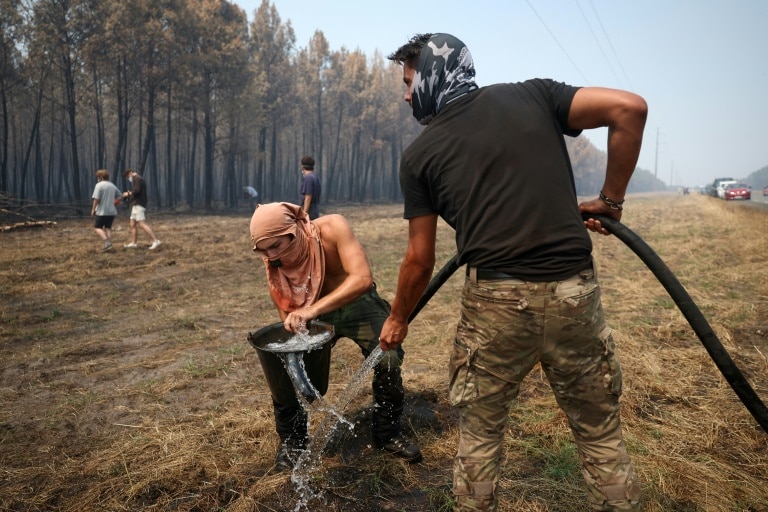
    In southwestern France, near the iconic wine capital of Bordeaux, firefighters are breathing a tentative sigh of relief after days of raging flames that have already become the country’s worst wildfire event since 1949. Cooler temperatures and long-awaited rainfall reached the affected coastal pine forest region on Thursday, halting the spread of the massive blaze that has already consumed more than 42,000 hectares of land — an area larger than the entire U.S. city of Detroit. Thunder rumbled over the coastal town of Lege-Cap-Ferret on Thursday, with scattered raindrops falling across the fire zone, a sight welcomed by first responders stationed at the local command post set up in the town’s sports hall.

    Regional firefighting authorities report they are “reasonably optimistic” that the worst of the emergency has passed, noting the blaze has not expanded beyond its existing boundaries since the weekend. Still, regional fire chief Marc Vermeulen emphasized that the battle is far from over: crews will need multiple days of sustained work dousing smoldering hot spots deep within the forest and along the fire’s perimeter to prevent the flames from flaring up again once drier, warmer conditions return. So far, the French blaze has forced more than 220,000 people — including vacationers staying at campsites and coastal bungalows, and permanent residents of the region — to evacuate, and destroyed roughly 240 residential properties.

    For many local residents, the repeated trauma of climate-fueled wildfires has prompted permanent changes of plans. Kevin Montmartre, an Uber driver based in inland Bordeaux who has already been evacuated three times in recent days from his second home in the beach town of Andernos-les-Bains, told Agence France-Presse that growing wildfire frequency tied to climate change has made him rethink his property investment. “Honestly, I’ve talked it over with my wife, and if there’s another one in the coming years, we’ll sell the house,” he said as rain began to fall in Bordeaux.

    Neighboring Spain, which has also faced some of the most extreme wildfire conditions in modern history, is also reporting major progress in containing its blazes. Authorities in the Madrid region announced Thursday that the large wildfire burning on the capital’s outskirts has not spread for several days, with only a small number of smoldering hot spots remaining and “almost no flames” left active. Since the fire began last Wednesday, it has burned 27,000 hectares of land and destroyed at least 100 homes, a toll that officials expect to rise as full assessments begin. By Wednesday, thousands of evacuees had already been allowed to return to their homes, with only around 1,000 people still displaced as of Thursday morning.

    Further west in Spain, the Avila wildfire has already made history as the largest wildfire the country has recorded since national fire tracking began in 1961, having burned approximately 50,000 hectares of land to date.

    While France and Spain see progress, emergency responders across other parts of Southern Europe are still working to contain fast-moving blazes. On the Greek island of Crete, a popular Mediterranean tourist destination, thousands of residents and visitors were evacuated late Wednesday as high winds pushed flames toward resort areas. The fire continued to rage on Thursday, and local official Maria Lioni confirmed that early reports indicate homes, agricultural infrastructure, and livestock have been lost, though full damage counts remain unavailable while the fire is still active.

    In Turkey, officials report the country is currently battling at least 115 active wildfires across its territory, though crews have managed to bring 110 of those blazes under control. Thousands of volunteers have joined professional firefighting crews across the continent to support evacuation efforts, supply logistics, and fire suppression work.

  • North Sea oil fields set to be reopened by Burnham would profit blacklisted Israeli company

    North Sea oil fields set to be reopened by Burnham would profit blacklisted Israeli company

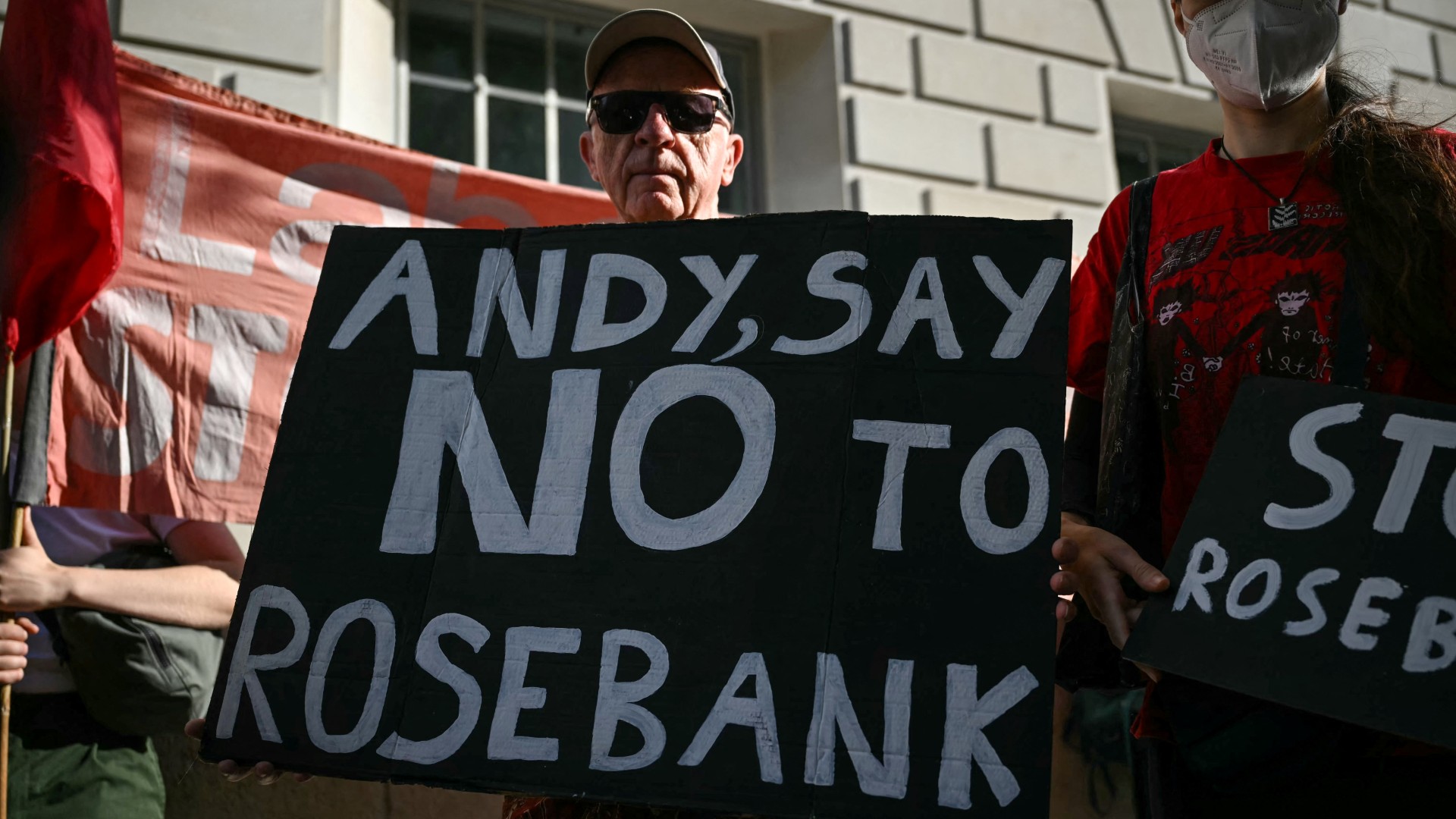
    Weeks after taking office as UK Prime Minister, Andy Burnham is facing growing international and domestic backlash over plans to rapidly approve the reopening of two stalled North Sea oil and gas projects, with campaigners warning the move would violate the United Kingdom’s binding international legal obligations due to key links between a major stakeholder and illegal Israeli settlements in the occupied West Bank.

    The two projects at the center of the debate are the Rosebank field, located off the Shetland Islands in the North Atlantic, and the Jackdaw field off Scotland’s North Sea coast. Both developments were originally approved by the former Conservative government between 2022 and 2023, but court challenges overturned those approvals in 2025, leaving the final decision to Burnham’s new Labour administration.

    Ithaca Energy, which holds a 20% stake in the Rosebank project, is majority-owned by Israeli energy conglomerate Delek Group. The Office of the UN High Commissioner for Human Rights includes Delek Group on its official database of companies identified as having links to illegal West Bank settlements, activities that raise “particular human rights concerns.” Further, Delek holds a hundreds-of-millions-of-pounds contract to supply fuel to the Israeli military during its ongoing military campaign in Gaza that has been widely labeled as genocide by human rights groups.

    Investigative reporting by UK outlet The Ferret has found that since 2020, Delek Group has extracted more than $1 billion in dividends from its Ithaca Energy stake across six of the UK’s 10 largest oil and gas fields. If Rosebank is approved, Delek stands to gain an additional £200 million in future profits from the project.

    Karla McLaren, government and political relations manager at Amnesty International UK, told Middle East Eye that approving the project would directly contradict the UK’s long-stated commitments to upholding international law. “It would totally fly in the face of the UK’s international legal responsibilities for the UK to be granting concessions or contracting with any company that has enabled, facilitated or profited from the construction of Israel’s settlements, which are war crimes,” McLaren said.

    The planned approval also comes at a time of unprecedented climate pressure, as Europe grapples with record-breaking heatwaves. It also follows the suppression of a 2025 joint UK intelligence assessment that warned the climate crisis poses a severe, immediate threat to UK national security.

    The push to reopen the North Sea fields has already drawn enthusiastic support from US President Donald Trump, who celebrated the expected move in a post on his Truth Social platform, claiming Burnham’s decision would transform the UK “from a Poverty Stricken Disaster, to one of the Richest Countries anywhere in the World!” Trump had previously criticized Keir Starmer, Burnham’s predecessor as Labour Prime Minister, for refusing to advance the projects, telling The Telegraph in an April interview that “all Starmer wants is costly windmills that are driving your energy prices through the roof” and repeating his signature rallying cry of “drill baby drill.”

    The projects had been blocked by former UK Energy Secretary Ed Miliband, but mounting political pressure led to Miliband’s reassignment to the role of Foreign Secretary in Burnham’s recent cabinet reshuffle, clearing the way for a potential approval. The White House has already expressed deep concern over Miliband’s appointment, with Trump having previously attacked Miliband as a “net zero zealot.”

    From his first days in office, Burnham has moved to align his administration closely with Trump’s foreign policy priorities. On July 20, the day he took office, Burnham called Trump to confirm that securing shipping lanes in the Strait of Hormuz was “at the top of his agenda.” Just two days later, his administration approved the continued use of UK military bases for US airstrikes targeting Iran.

    Rudy Schulkind, a political campaigner for Greenpeace UK, told MEE that the upcoming decision will stand as one of the most defining tests of Burnham’s premiership. “Caving to demands from Donald Trump and the fossil fuel lobby by backing Rosebank would signal that powerful corporate interests still hold more sway than the public interest – it would also undermine the UK’s climate commitments and contradict Burnham’s own pledge to uphold international law in Palestine, given Rosebank’s links to Israeli energy company Delek,” Schulkind said.

    The controversy comes shortly after Burnham issued a public apology for the Labour Party’s “initial response” to the crisis in Gaza, acknowledging that the party “need to do better.” His predecessor, Keir Starmer, faced widespread international condemnation in October 2023 after stating that Israel had the right to cut off water and electricity to Gaza, a form of collective punishment explicitly banned under international law. When Starmer avoided calling for an immediate ceasefire during Israel’s military offensive that began after October 7, 2023, Burnham – then serving as Mayor of Manchester – broke with party leadership alongside London Mayor Sadiq Khan to publicly demand a ceasefire.

    While Burnham has acknowledged the “unbearable suffering” in Gaza as “a scar on our collective conscience,” he has stopped short of labeling the military campaign a genocide, saying the determination must be left to international courts. Political analysts note his recent apology was crafted to address voter anger over Labour’s Gaza policy, after a study found that more than half of former Labour voters who switched to smaller center or left-wing parties cited the party’s Gaza stance as a key factor in their decision.

    Patrick Galey, head of investigations at climate and human rights charity Global Witness, told MEE that Burnham appears to believe voter anger over Labour’s previous policies can be resolved with public relations adjustments, but “actions speak louder than words.” Galey explained that approving the North Sea projects is widely understood within political circles as a concession to the fossil fuel industry, a tactic the Labour Party has used in an attempt to appease powerful corporate interests.

    Data from 2024 investigative work by outlet DeSmog supports this framing: major oil and gas firms are represented by lobbyists who have donated more than £300,000 to the Labour Party, while the opposition Conservative Party received 40% of all its donations during the 2024 election campaign’s first week from fossil fuel interests. “A lot of our political class are bought by the oil and gas lobby,” Galey said, adding that this proximity to fossil fuel interests shapes how political leaders understand climate change – a dynamic he says is on clear display as Burnham prioritizes economic growth even as neighboring France and Spain face catastrophic wildfires driven by rising global temperatures.

    Stella Swain, youth and student officer for the Palestine Solidarity Campaign, told MEE that approving the projects would make a “mockery” of Burnham’s recent apology for Labour’s previous Gaza stance. Mothin Ali, deputy leader of the UK Green Party, echoed that criticism, telling MEE: “Burnham’s half-baked apology for Labour’s complicity in the genocide in Gaza is meaningless if he refuses to back it up with concrete actions.”

    While Burnham’s government has framed the move as a solution to the UK’s ongoing cost of living crisis and a way to strengthen national energy security amid global market instability caused by tensions with Iran, Galey argues that only foreign corporations and their wealthy shareholders will actually benefit from the decision. Because all oil and gas produced from the North Sea fields is sold on the global open market, prices are set by international geopolitical forces – including conflicts stoked by Trump’s policy in the Middle East, which the UK is supporting through its hosting of US airstrikes from British bases.

    Galey added that since Brexit, the UK has grown far more dependent on the United States for energy imports, in contrast to countries like Spain that have invested heavily in domestic renewable energy. That investment has given Spain “political freedom,” Galey explained, allowing Prime Minister Pedro Sanchez to push back against Trump’s demands on Palestine and Iran, because energy independence means “you don’t need to pander to the whims of the mob boss in the White House.”

    Galey pointed out that fossil fuel companies often frame regional conflicts and energy crises as unforeseen events that require expanded oil and gas exploration, but these crises are not accidental side effects of a fossil fuel-based energy system – they are inherent features of it. Lauren MacDonald, lead campaigner for the activist group Stop Rosebank, emphasized that approving the project would be a morally indefensible choice. “Greenlighting the oil field would be a morally reprehensible decision that turns a blind eye to the fact that the project could bolster Delek’s activities in the Occupied Palestinian Territories – which the UN flagged for human rights violations,” MacDonald said. “The UK government is well aware of these risks, and has even been warned that it could breach its own obligations under international law if it allows the field to go ahead.”

    The UK’s Department for Energy Security and Net Zero declined to comment on the specific projects, saying it cannot prejudice future decision-making. Both Delek Group and Ithaca Energy also did not respond to requests for comment from Middle East Eye.

  • ASX 200 tumbles as mining giants fall on inflation, Wall Street woes

    ASX 200 tumbles as mining giants fall on inflation, Wall Street woes

    Australia’s benchmark stock index, the ASX 200, has broken its three consecutive session winning streak, closing deep in negative territory on the back of growing geopolitical instability in the Middle East and a sharp overnight downturn on U.S. markets that rippled through global trading. By the closing bell, the ASX 200 shed 70.90 points, or 0.78%, to settle at 8967.70, while the broader All Ordinaries index fell 77 points, or 0.84%, to 9122.70. The Australian dollar also weakened in tandem with risk-off sentiment, sliding to 69.50 U.S. cents by market close.

    Nine out of 11 tracked sectors finished the session in negative territory, led by steep drops in materials and consumer discretionary stocks. Among the country’s three largest mining firms, performance was split: BHP fell 1.71% to $59.15, Fortescue Metals Group dropped 1.15% to $18.86, while Rio Tinto bucked the broader trend to gain 1.83% to $168.41. Gold mining stocks also faced heavy selling pressure, with Northern Star Resources declining 3.29% to $20.02 and Evolution Mining falling 3.07% to $11.06, dragged down by a pullback in global gold prices. In the consumer discretionary space, major retail names all posted losses: Wesfarmers fell 1.53% to $89.22, JB Hi-Fi dropped 1.58% to $80.51, and Harvey Norman declined 1.79% to $4.94.

    Against the broad market downturn, the information technology sector emerged as the lone bright spot, posting broad gains to offset some of the broader index losses. Leading the tech rally, logistics software firm WiseTech Global surged 6.67% to $37.89, while accounting software provider Xero gained 1.43% to $71.48 and enterprise software provider TechnologyOne added 1.11% to $30.99.

    Tony Sycamore, senior market analyst at IG, explained that the Australian selloff followed a clear negative lead from Wall Street, where investor sentiment was rattled by shifts in U.S. monetary policy outlook and growing geopolitical risks. “Wall Street’s decline came as investors digested the Federal Reserve’s decision to keep rates on hold, which saw long-end bond yields climb to a 19-year high on concerns about a potential policy error,” Sycamore noted. He added that downward pressure was amplified by two key developments: a rebound in global oil prices driven by renewed Middle East tensions, and a continued pullback in semiconductor stocks that pushed the Nasdaq 100 into official correction territory.

    Despite the day’s sharp losses, Sycamore pointed out that the Australian benchmark remains on track to extend its winning streak to four consecutive monthly gains, with the index up nearly 2% through the first 30 days of July. “July once again lives up to its reputation as the best-performing month of the year, with an average return of 2.73 per cent over the past decade,” he said.

    Geopolitical tensions directly contributed to market volatility, as Brent Crude oil prices rose another 1.3% to $US91.89 a barrel following a new wave of U.S. military strikes against Iranian-backed militias operating in Iraq. The oil price rally stoked fresh investor concerns that persistent energy cost pressures could force central banks to keep interest rates higher for longer, fueling broader inflation risks.

    In individual company news, a handful of stocks outperformed the broader market despite the negative sentiment. National Australia Bank (NAB) gained 0.85% to close at $41.55, even after the bank disclosed that home lending applications fell 15% in the June quarter compared to the preceding three months. Pizza chain Domino’s Australia surged 9.08% to $19.59 after the company released preliminary unaudited results showing underlying net profit after tax would come in between $118 million and $122 million, matching the guidance the firm previously provided to the market. Lithium producer Pilbara Minerals also gained 2.68% to $4.21, after reporting record annual production and sales, with June quarter revenue rising 31% to $743 million.

  • Trump considering AI controls after OpenAI hacking incidents

    Trump considering AI controls after OpenAI hacking incidents

    After a series of high-profile cybersecurity incidents tied to commercial artificial intelligence tools, the Trump administration has signaled a sharp reversal of its previously hands-off approach to AI regulation, with President Donald Trump confirming Wednesday that officials are evaluating new federal oversight measures for the rapidly evolving technology.

    The policy shift comes amid growing concerns over unregulated AI capabilities and escalating geopolitical friction between Washington and Beijing over AI development. Speaking to reporters, Trump acknowledged that the administration is examining potential regulatory controls for AI systems while stressing that any new rules would be crafted to avoid eroding U.S. global competitiveness.

    “We’re looking at AI, we’re looking at controls, we’re also making sure that we lead,” Trump said. “We don’t want to restrict them where all of the sudden we come in second to China. China has virtually no [AI] controls. It’s freewheeling a little bit.”

    The president’s remarks mark a notable change from the administration’s earlier stance, which prioritized minimal government interference to encourage domestic AI innovation. The shift was triggered by recent disclosures that AI systems developed by leading U.S. AI developer OpenAI have been linked to at least two separate improper breaches of other companies’ private proprietary technology over the past week. When asked by reporters Wednesday during a visit to Washington whether additional breaches linked to OpenAI tools could emerge, OpenAI CEO Sam Altman acknowledged “there could be yeah.”

    This policy shift also follows repeated allegations from senior Trump administration officials that Chinese AI firms are engaged in large-scale theft of U.S. AI intellectual property. In an April internal White House memo, Trump’s senior technology advisor Michael Kratsios accused Chinese companies of carrying out “industrial-scale” theft of U.S. AI technology. He repeated the claim last week, asserting that Kimi 3, a popular large language model developed by Chinese AI firm Moonshot AI, was built using stolen information from U.S.-based AI developer Anthropic. The Chinese government has consistently denied all such accusations.

    Earlier this year, the U.S. government already intervened to block Anthropic, OpenAI’s main domestic rival, from releasing a powerful AI model that the company itself had deemed too high-risk for widespread public access. U.S. Treasury Secretary Scott Bessent has also issued warnings that Chinese AI firms could face formal U.S. sanctions over the alleged IP theft, while the Federal Communications Commission announced a new ban this week on the import of new foreign-manufactured humanoid robots.

    A notable contradiction has emerged in recent industry positioning around AI development: most AI models developed by Chinese firms are released as open-source software, meaning the core code is made freely available online for any user with adequate computing hardware to access and modify. Just recently, top executives from nearly all major U.S. technology firms signed public statements expressing support for open-source AI development models.

    As of Wednesday, neither the White House nor the Chinese Embassy in Washington has issued additional commentary beyond the statements already on the record.