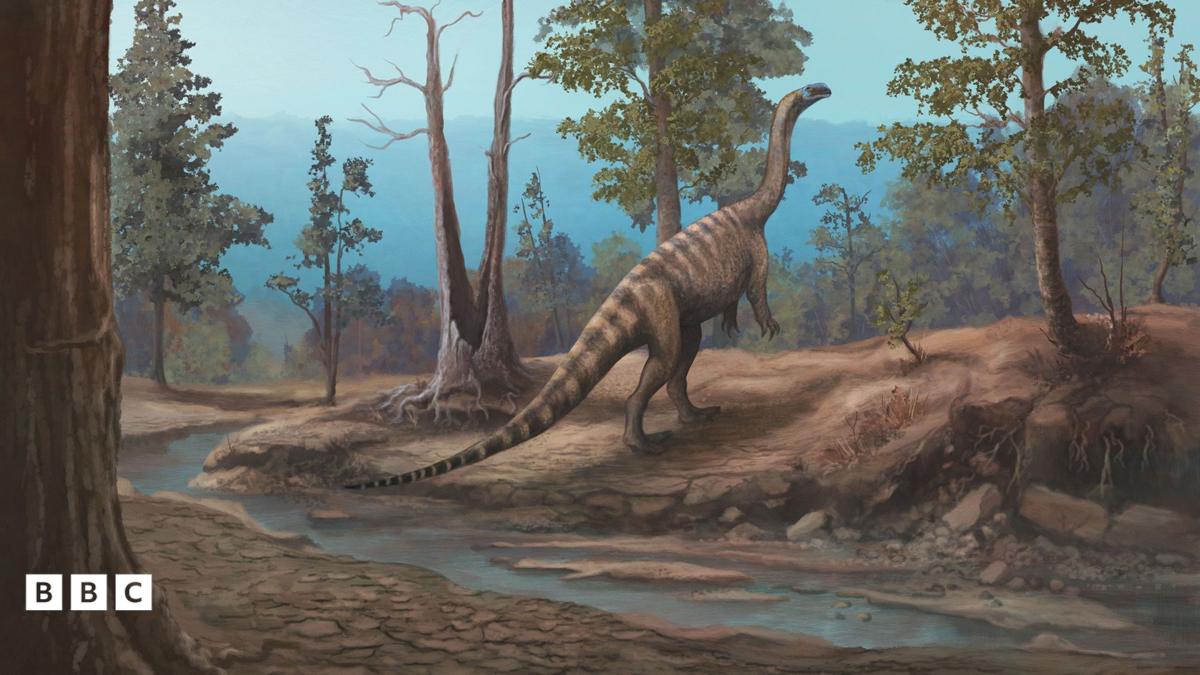
Paleontologists have uncovered a previously unknown dinosaur species on the shores of Zimbabwe’s Lake Kariba, offering groundbreaking new insight into the early diversification of dinosaurs across southern Africa some 210 million years ago. Dubbed *Musango matusadonaensis*, this new find marks only the fifth distinct dinosaur species ever formally named and documented from Zimbabwe, shining a long-overdue spotlight on a region vastly understudied compared to fossil-rich sites in Europe and North America.
The specimen dates back to the Late Triassic period, a critical evolutionary era when dinosaurs were first expanding their range across the globe, millions of years before they rose to become Earth’s dominant terrestrial vertebrates in the Jurassic and Cretaceous periods. At the time of *Musango*’s existence, modern-day Zimbabwe sat within the massive supercontinent Gondwana, a landmass that also incorporated what is now South America, India, Australia and Antarctica.
This international research effort, a collaborative project between teams from the United Kingdom, South Africa and Zimbabwe, has yielded a fossil assemblage including key bones from the dinosaur’s spine, forelimbs and feet. Analysis of these remains confirms the individual was nearly fully grown at the time of its death, at approximately eight years of age, measuring 4.5 meters in length — roughly the size of a medium passenger vehicle.
*Musango matusadonaensis* is classified as a sauropodomorph, an early ancestral relative of the massive long-necked sauropods that would later evolve, such as *Diplodocus*. Unlike its four-legged descendants, this early species walked on two legs. Researchers also concluded it was an omnivore, feeding on a mixed diet of plants and meat that likely included crocodile-like phytosaurs, lungfish and smaller contemporary dinosaur species.
Lead study author Professor Paul Barrett of London’s Natural History Museum, whose findings are published in the *Journal of Systematic Palaeontology*, noted that long-standing scientific consensus assumed dinosaur communities across southern Africa were largely homogeneous. “However, these discoveries are showing that this part of the ancient supercontinent Gondwana was actually made of a series of smaller ecosystems — each with a different cast of characters,” Barrett explained. This new find adds crucial data to the sparse fossil record of Late Triassic African dinosaurs, helping paleontologists piece together a more accurate picture of how early dinosaur communities diversified and spread across the globe.