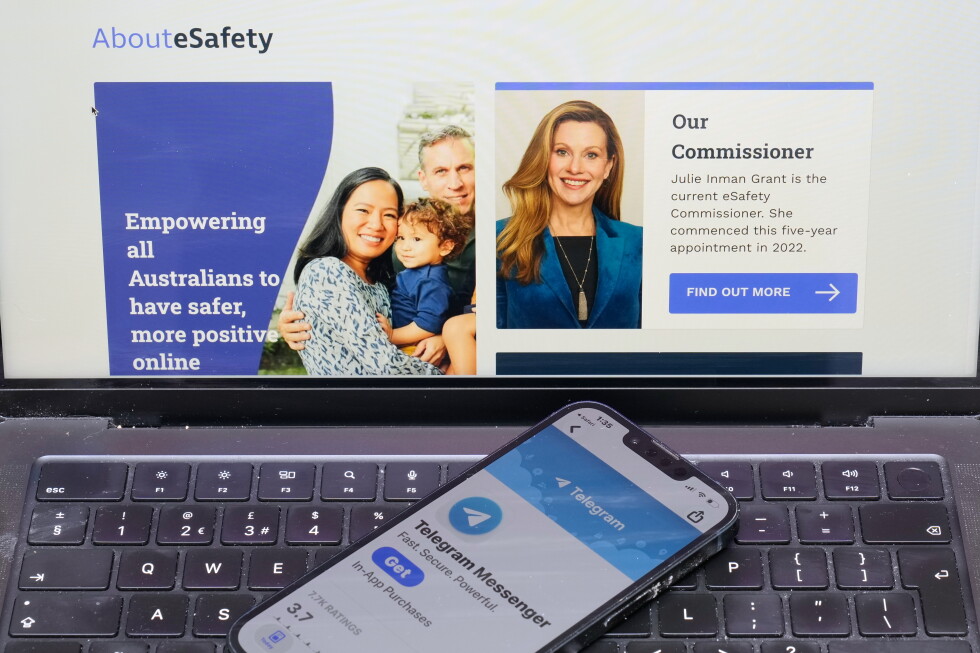
Australia’s national online safety regulator has launched landmark civil legal proceedings against global messaging platform Telegram, accusing the service of failing to eliminate violent extremist and pro-terrorism content that includes graphic footage of two of the deadliest white supremacist mass shootings of recent years and Islamic State beheading videos.
In a public announcement Thursday, eSafety Commissioner Julie Inman Grant laid out the charges against the UAE-headquartered platform, which claims more than 1 billion monthly active users across the globe. If Australia’s Federal Court rules against Telegram, the company faces a maximum fine of 54.6 million Australian dollars, equivalent to roughly 38 million U.S. dollars, for its alleged persistent failure to identify and remove material that promotes terrorist violence.
This court proceeding marks a high-stakes test of Australia’s 2021 Online Safety Act, which mandates that large digital platforms implement rigorous systems to exclude illegal and terrorism-linked content from their services. The case specifically centers on the availability of content tied to the 2019 Christchurch mosque attack, which left 51 Muslim worshippers dead at the hands of an Australian white supremacist who livestreamed his violence, and the 2022 Buffalo supermarket shooting that killed 10 Black people, carried out by a white supremacist who cited the Christchurch attacker as inspiration. It also covers the presence of Islamic State propaganda videos depicting executions.
Regulators have long struggled with the persistence of these extremist digital artifacts years after the original attacks, as the graphic footage and accompanying manifestos continue to be shared by radicalized users to recruit new sympathizers and inspire copycat violence. Inman Grant emphasized that the content in question remained accessible on Telegram long after the platform was formally notified of its existence, noting that the platform’s unique structure — which supports public channels with unlimited audience reach and large group chats — creates an outsized responsibility to proactively remove harmful material. Channels linked to these attacks have been repeatedly used to host copies of the attack footage and praise the perpetrators.
Telegram has issued a firm denial of all allegations, stating in a written statement shared via the platform that it “reject these allegations and will contest them in court.” The company argues that its ongoing anti-terrorism work is a matter of public record, pointing to published data showing it has blocked more than 150,000 terrorist-linked communities on its platform so far in 2024. The company also framed its approach to content moderation as a defense of fundamental digital rights, noting that it has supported pro-democracy movements across the world, from Russia and Iran to Myanmar and Hong Kong, by protecting user privacy and preserving freedom of speech and assembly.
Inman Grant countered that the regulator first pressed Telegram to remove the problematic content and align with Australian rules in March 2024, but received no response for months. She added that the platform’s stance only shifted after French authorities arrested Telegram founder and CEO Pavel Durov in August 2024. Durov, a Russian billionaire, was held for four days of questioning over allegations that Telegram was used to facilitate a range of illegal activity, including drug trafficking and the spread of child sexual abuse material, before being released on 5 million euro bail. According to Inman Grant, Telegram became temporarily more cooperative with Australian and global regulators following Durov’s arrest, but still maintains what she called a “permissive hosting environment for terrorist content.”
The legal action comes amid mounting global pressure on Durov and Telegram: just days before the Australian claim was filed, Russia’s Federal Security Service added Durov to its international wanted list, accusing him of aiding terrorist activity, marking the latest in a string of legal challenges for the executive that have also included previous cases in Russia and France.