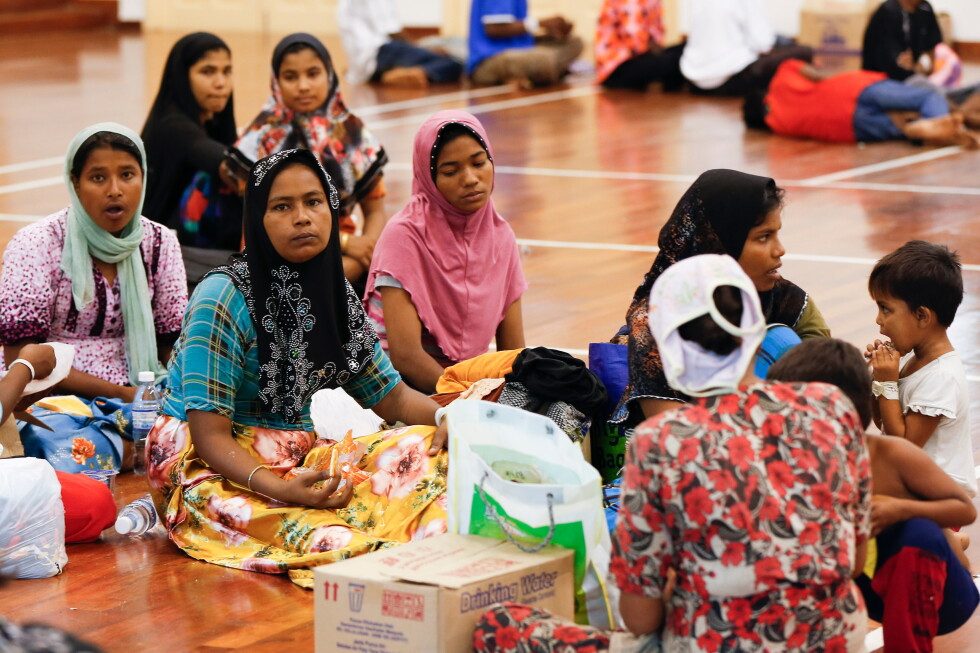
KUALA LUMPUR, Malaysia – Malaysia has kicked off a joint repatriation program with Myanmar, starting documentation and security screening for thousands of Myanmar nationals detained across the country, Malaysia’s Home Minister Saifuddin Nasution announced Thursday. Under the terms of the bilateral agreement, Myanmar has pledged to accept up to 5,000 of its citizens currently residing in Malaysia, in addition to an unconfirmed number of Myanmar nationals based at the Cox’s Bazar refugee camp in southeastern Bangladesh. To date, Malaysian authorities have identified roughly 4,000 eligible individuals held across the country’s 19 detention facilities. These detainees will be relocated to a centralized location to complete mandatory security checks and official identity paperwork, Saifuddin told reporters. “We will certainly hit the 5,000-person target once this verification process is finalized,” he noted, adding that Malaysia’s foreign ministry will lead all subsequent coordination with Myanmar on moving the process forward. A day prior, on Wednesday, Malaysian Prime Minister Anwar Ibrahim publicly confirmed that the repatriation cohort would consist of Rohingya refugees. “People ask why we don’t just send them back immediately. Send them to where? Myanmar refused to take them back before,” Anwar stated in comments reported by the *New Straits Times*. “Now, thanks to our improved bilateral relations with Myanmar, they have agreed to accept 5,000 from Malaysia.” Unlike the prime minister, Saifuddin did not explicitly name the Rohingya as the group being repatriated, only confirming that the program applies to Myanmar nationals holding official refugee status. Repeated attempts to reach Malaysian foreign ministry officials for additional clarification Thursday went unanswered. In Cox’s Bazar, Mohammed Mizanur Rahman, a commissioner for refugee, relief and repatriation for Bangladesh, told the Associated Press he had no knowledge of any upcoming repatriation of Rohingya from the camp, which hosts hundreds of thousands of displaced Rohingya who fled violence and persecution in Myanmar. Myanmar officials based in the national capital of Naypyitaw have pushed back against claims that the program includes Rohingya, clarifying that the effort is limited exclusively to verified Myanmar citizens held in Malaysian detention. Han Win Aung, director-general of the ASEAN department at Myanmar’s Ministry of Foreign Affairs, told AP the country does not recognize the Rohingya as an official ethnic group, a longstanding policy that has been widely criticized by the international community. Myanmar officially refers to the Rohingya as “Bengalis,” framing the group as illegal migrants from Bangladesh, despite many Rohingya families having lived in Myanmar for generations. “This is not a program to bring back Bengalis. There are Myanmar nationals being held in Malaysian detention centers for a range of different reasons,” Han Win Aung explained. “Both sides are still in the coordination phase, and only individuals whose identity as legitimate Myanmar citizens has been fully verified will be repatriated.” Han Win Aung added that the current initiative builds on small-scale repatriation operations carried out in 2021 and 2022, when Myanmar accepted more than 1,100 of its citizens who were stranded in Malaysia. Final details, including the full timeline for transfers and the confirmed final number of repatriates, are still under active discussion between the two governments, he noted. Currently, Malaysia hosts approximately 215,600 refugees and asylum seekers registered with the United Nations High Commissioner for Refugees. Around 126,000 of that total are Rohingya, making Malaysia home to one of the largest Rohingya refugee communities in Southeast Asia. Critically, Malaysia is not a signatory to the UN Refugee Convention, and the country classifies all refugees as undocumented migrants, leaving the population vulnerable to detention and deportation. This article includes reporting contributions from journalists Julhas Alam in Bangladesh and Grant Peck in Bangkok.
博客
-

Chelsea signs France center back Maxence Lacroix from Crystal Palace
LONDON – In one of the most high-profile moves of the current Premier League transfer window, Chelsea has finalized the acquisition of French international center back Maxence Lacroix from Crystal Palace, the club confirmed Thursday. The deal is reportedly valued at 52 million British pounds, equivalent to approximately $70 million.
Lacroix, who recently returned to club action after representing France at the World Cup, has signed an eight-year contract that will keep him at Stamford Bridge until 2032. This transfer marks Chelsea’s third major incoming signing of the window, following the earlier arrivals of attacking player Morgan Rogers and young defender Marco Palestra under new manager Xabi Alonso. According to transfer market reports, Alonso is also continuing to pursue senior targets including forward Danny Welbeck and midfielder Jordan Henderson to strengthen his squad ahead of the new season.
In comments released after the deal was announced, Lacroix expressed his excitement over the move, highlighting alignment with the new manager’s vision for the club. “When I spoke with the manager, I saw that we have the same direction and desire for this club,” he said. “We want to win. When you see the quality of the players here, everything we have around the club, it’s something that we can achieve. The ambition is to lift trophies, and I can’t wait to contribute.”
The 26-year-old defender has rapidly established himself as one of the Premier League’s top center backs during his short tenure at Crystal Palace. During his time at Selhurst Park, he helped the club claim three major honors: the UEFA Conference League, the FA Cup, and the FA Community Shield. Lacroix’s professional career began at French lower-league side Sochaux, before he moved to German Bundesliga club Wolfsburg, and eventually made his switch to Crystal Palace in 2024.
-
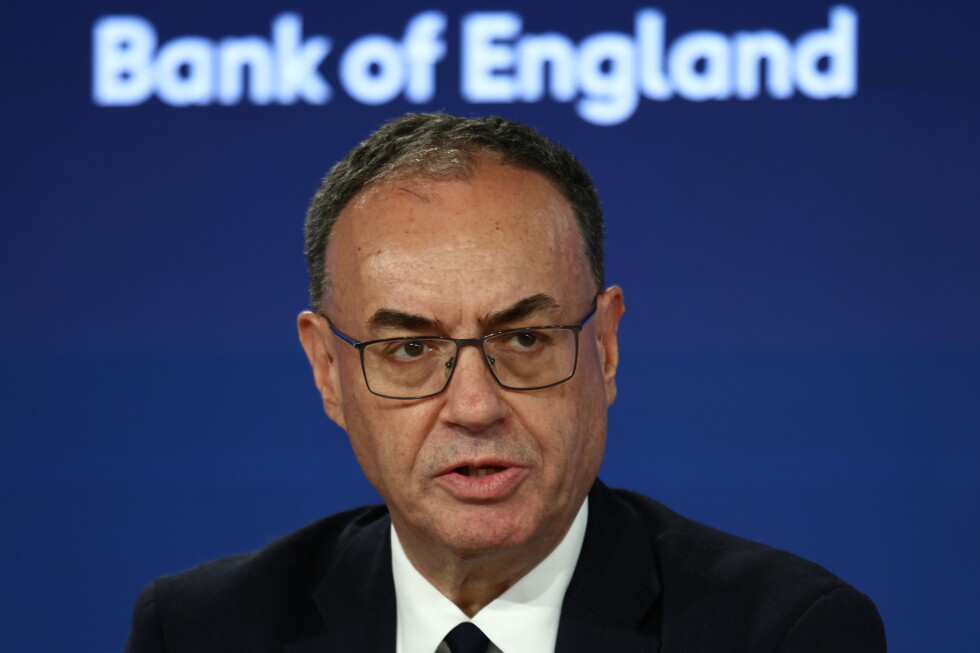
Bank of England keeps key rate at 3.75% for the fifth time this year
LONDON – The Bank of England has opted to keep its benchmark interest rate unchanged at 3.75% for the fifth consecutive occasion in 2026, following a sharper-than-forecast decline in domestic inflation that gave monetary policymakers room to evaluate the economic fallout of renewed hostilities between the U.S. and Iran. The bank’s nine-member Monetary Policy Committee delivered a split 6-3 vote in favor of the rate hold, a outcome that aligned with the projections of a majority of leading economists. The central bank has held rates steady at 3.75% since December 2025, after implementing four consecutive rate cuts through that year.
This divided vote underscores the growing rift among central banking authorities globally, as institutions grapple with two competing pressures: inflation that has remained stubbornly above long-term targets, and rising fears that the escalation of conflict in Iran will trigger a new wave of global price hikes. The decision comes one day after the U.S. Federal Reserve similarly kept its key policy rate unchanged within a range of 3.5% to 3.75%, with Fed Chairman Kevin Warsh stating the central bank “will not hesitate to act” to keep inflation anchored.
In its official summary of Thursday’s deliberations, the Bank of England committee emphasized that the full impact of the new energy market shock on the U.K. economy remains difficult to forecast. “The interest rate changes required to meet the 2% inflation target will depend on the scale and duration of the shock, and how it propagates through the wider economy,” the statement added.
Three dissenting committee members argued that the potential inflationary impulse from the recent sharp jump in global energy prices is too large to overlook, even though earlier energy price spikes from the initial conflict have not yet fed through to broader domestic price growth or elevated wage demands in the U.K. All three policymakers backed a 25 basis point rate increase that would push the benchmark to 4%.
Committee member Huw Pill, one of the three voting for a hike, outlined his concerns: “I remain concerned about more insidious second-round effects driven by catch-up dynamics in wage and price setting. While these may be slower to emerge, they could prove more lasting and create greater intrinsic inflation persistence.”
Adjusting central bank benchmark interest rates – which act as the base for consumer and commercial loan rates as well as credit card interest – is the primary tool central banks use to manage inflation. Higher borrowing costs tend to dampen consumer and business spending, which pulls overall price levels down, while lower rates stimulate borrowing, spending and upward pressure on prices.
New official data from the U.K. Office for National Statistics shows consumer price inflation slowed to 2.6% in the 12 months ending June, down from 2.8% in May. While the decline was larger than economists had projected, it marks the 21st consecutive month that inflation has stayed above the Bank of England’s 2% target.
Renewed military clashes between the U.S. and Iran this month have sent global oil prices soaring, driven by widespread market concerns over disruptions to shipping through the Strait of Hormuz – a chokepoint that, in peacetime, carries roughly one-fifth of all globally traded crude oil and natural gas. After a ceasefire between the two nations broke down, Brent crude, the global benchmark for oil prices, spiked from less than $71 per barrel three weeks ago to more than $100 per barrel on July 23. By Thursday, Brent was trading at approximately $92 per barrel, still well above pre-conflict levels.
Beyond geopolitical and energy risks, economists across the U.K. are also closely monitoring the fiscal policy agenda of new Prime Minister Andy Burnham. Analysts are assessing whether Burnham’s policy proposals to shield households from energy price increases and stimulate sluggish economic growth will add additional upward pressure to domestic inflation.
-

Watch: Giant iceberg turns over near Greenland’s coast
A stunning and alarming moment of climate change in action has been caught on camera, as a colossal iceberg flipped completely over in coastal waters near Greenland. The raw, eye-opening footage was recorded by a casual observer in the area, who happened to be in position to document the rare, dramatic event when the massive frozen structure shifted and collapsed. As the iceberg rolled, the sudden movement displaced enormous volumes of seawater, sending a large, churning wave surging across the nearby fjord. The video quickly spread across social media platforms after being shared, drawing widespread attention to the ongoing, rapid changes occurring to Greenland’s ice sheet amid rising global temperatures. Glaciologists note that iceberg calving and overturning are not entirely unusual events, but the increasing frequency of large iceberg break-offs in the region serves as a visible, tangible indicator of accelerating ice melt driven by anthropogenic climate change. Unlike steady glacier melt that occurs gradually and is often harder for the public to observe, a full flip of a giant iceberg creates an immediate, dramatic visual of how dramatically Arctic ice systems are shifting in response to a warming planet.
-

Suspected Kinahan gang leader faces extradition
After months of legal challenges, suspected Irish transnational crime cartel leader Daniel Kinahan has lost his battle against extradition, and is now set to be returned to Ireland to face criminal charges within weeks, senior law enforcement sources have confirmed to BBC News NI.
Kinahan was first taken into custody in Dubai this past April under an international arrest warrant issued by Irish judicial authorities, but immediately launched formal appeals to block his transfer. Those appeals have now been fully exhausted, clearing the final legal hurdle for his extradition. Irish national police, known as An Garda Síochána, anticipate that United Arab Emirates officials will imminently sign the formal extradition paperwork to officially initiate the transfer process.
Once the extradition is approved, moving Kinahan back to Irish territory will require a large-scale coordinated security operation involving both Gardaí and the Irish Defence Forces, given the high-profile nature of the case and Kinahan’s alleged criminal connections.
The case against Kinahan stretches back years, and has drawn international attention. In April 2022, the United States government imposed formal economic sanctions on Kinahan and his close family members after U.S. authorities formally named them as the core leadership of the Kinahan Organised Crime Cartel, a transnational network focused primarily on international drug trafficking.
Kinahan also built high-profile connections to the global sports industry through MTK Global, his former boxing management firm that at its peak represented more than 100 professional fighters, including heavyweight champion Tyson Fury and former two-division world titleholder Carl Frampton. The company has since ceased operations.
The long-running criminal feud between Kinahan’s network and rival Hutch crime gang has been one of the bloodiest in modern Irish criminal history, claiming 18 lives to date. The feud made global headlines in 2016, when gunmen aligned with the Hutch gang opened fire at a boxing weigh-in event at Dublin’s Regency Hotel in an attempted assassination of Kinahan. Kinahan escaped unharmed, but associate David Byrne was killed, and two other people were wounded in the attack. Byrne’s 2016 funeral is the event where the above image of Kinahan was originally captured.
Kinahan is not the first senior figure from his organization to be extradited from the UAE to Ireland. Earlier this year, Sean McGovern, described by prosecutors as a “senior lieutenant” in the cartel, was extradited under the same bilateral agreement between the two nations. Just last month, McGovern was convicted of directing a criminal organization and sentenced to 24 years in prison.
In an official statement provided to BBC News NI, An Garda Síochána confirmed it was aware of Kinahan’s ongoing detention in the UAE, and noted that all procedural questions related to his arrest remain under the purview of Emirati authorities at this stage. The force reaffirmed its longstanding commitment to pursuing high-level organized crime suspects regardless of where they flee. “An Garda Síochána has been steadfast in our determination that we would pursue those allegedly involved in serious organised criminal activity, wherever they go,” the statement said. “An Garda Síochána has developed many major international partnerships in our efforts to target transnational organised crime groups.”
-
French authorities say 4 people have died trying to cross the Channel
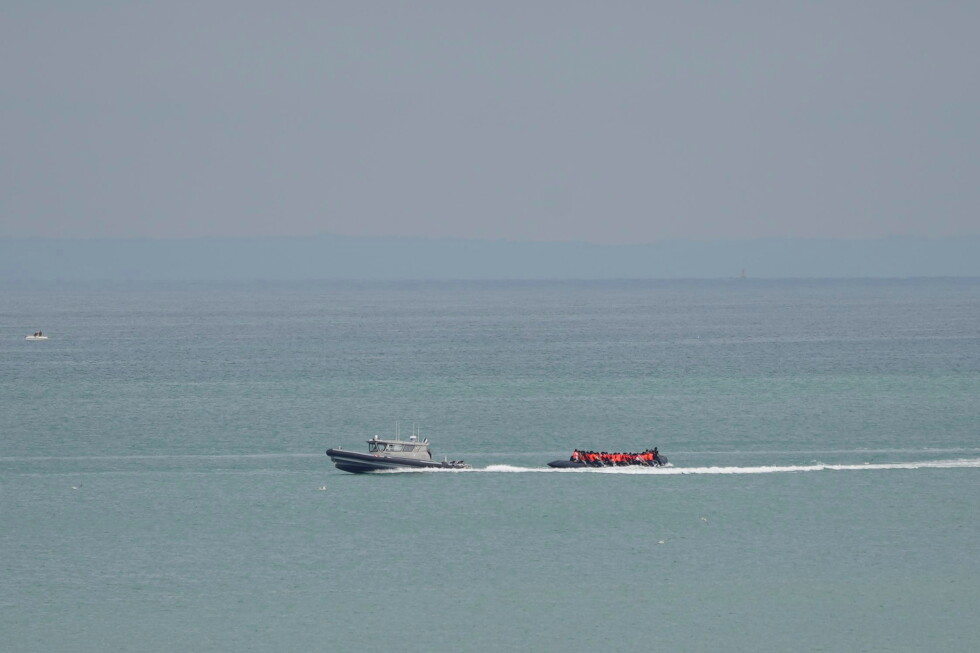
PARIS – French authorities confirmed Thursday that four people have lost their lives in two distinct dangerous small-vessel journeys attempting to cross the English Channel, a route that has become one of the deadliest migration corridors in Western Europe in recent years.
The first fatal incident unfolded early Thursday morning, after authorities received an emergency alert regarding a distressed boat approximately 6 a.m. local time. The maritime prefecture responsible for overseeing the English Channel and North Sea quickly deployed search and rescue teams to the area near the coastal city of Dunkirk. First responders successfully pulled all three people from the disabled vessel and brought them to shore, but medics could only confirm that the three had already died after reaching land.
A second, unrelated tragedy occurred the previous evening off the coast of Hardelot, a small coastal town in France’s northwestern Pas-de-Calais region. According to local prefecture officials, the small migrant boat capsized in rough channel conditions late Wednesday. “The provisional death toll stands at one man, estimated to be between 30 and 40 years old,” the prefecture stated in an official release. Six additional people on board, including a one-year-old toddler, suffered only minor injuries and have already received medical attention from emergency response teams.
French judicial authorities have launched formal investigations into both incidents to establish the exact cause of death and identify any individuals responsible for organizing the dangerous unauthorized crossings. The English Channel has seen a surge in irregular migration attempts over the past decade, with thousands of people risking their lives each year in often overcrowded, unseaworthy vessels organized by people-smuggling networks. This latest string of deaths brings renewed attention to the ongoing political and humanitarian challenges surrounding migration across the narrow body of water separating France and the United Kingdom.
Associated Press has full ongoing coverage of global migration developments available on its dedicated news hub.
-
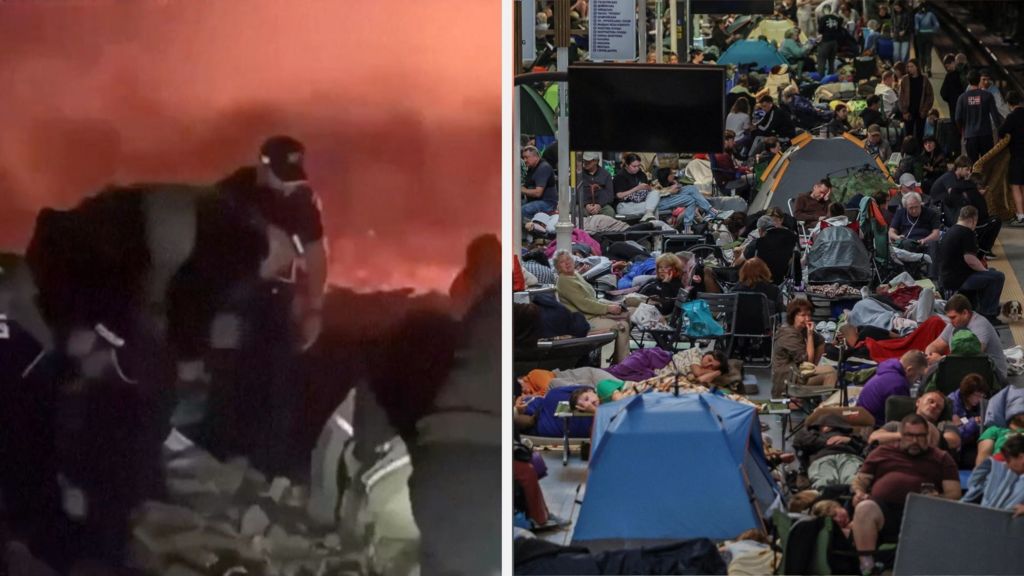
Watch: Strikes near Zelensky’s hometown as hundred of drones launched
A devastating wave of Russian missile and drone strikes across Ukraine has claimed eight civilian lives, including three children, local Ukrainian authorities confirmed this week. The assault, which involved hundreds of unmanned aerial vehicles launched against targets across the country, also brought new violence close to President Volodymyr Zelensky’s central Ukrainian hometown of Kryvyi Rih, where regional officials reported strike activity in surrounding areas.
Local emergency services responded quickly to the aftermath of the attacks, working to extinguish fires, clear rubble from damaged residential and infrastructure sites, and rescue any civilians trapped in affected buildings. The three child victims — two boys and one girl — were among those killed in the coordinated assault, a detail that has underscored the ongoing human cost of Russia’s full-scale invasion, now in its third year.
The large-scale drone offensive is the latest in a months-long pattern of Russian strikes targeting Ukrainian population centers and critical infrastructure, particularly as Ukraine works to shore up its air defense capabilities with support from Western allies. Ukrainian officials have repeatedly warned that Russia regularly stockpiles missile and drone components to carry out mass attacks ahead of expected Ukrainian counteroffensive operations and during key seasonal periods, such as the winter energy season.
As of the latest updates, additional details on the full scope of infrastructure damage and the number of injured civilians are still being compiled by regional authorities. The strike near Zelensky’s hometown comes amid ongoing diplomatic efforts to secure additional military aid for Ukraine from Western partners, with negotiations over long-term support packages still ongoing in the United States and European Union.
-
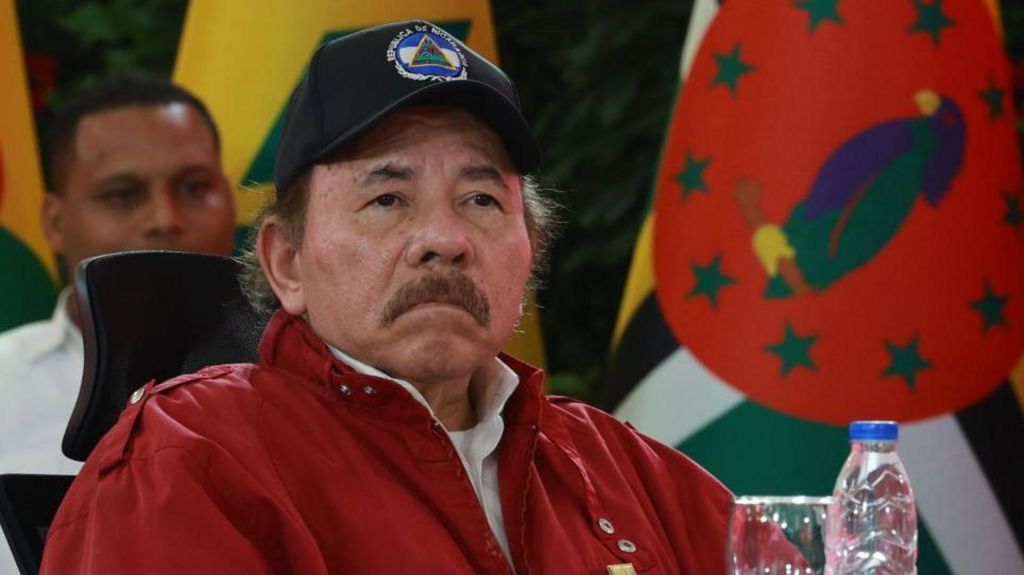
Nicaraguan leader proposes extending presidential term by another year
At 80 years old, Daniel Ortega has held uninterrupted control of Nicaragua’s presidency since 2007, and he is now pushing for a further expansion of his hold on power through a new constitutional reform package that includes a one-year extension of the current presidential term. The proposal, which will go before the government-dominated National Assembly for a vote in September, is the latest in a series of changes to the country’s political rules that have steadily consolidated Ortega’s authoritarian rule over nearly two decades in office.
Beyond the term extension, the planned constitutional overhaul includes provisions that would ban any opposition figures labeled by the Ortega administration as “traitors” or “coup plotters” from running for public office, effectively barring most critical voices from electoral participation. This crackdown on political opposition has been a defining feature of Ortega’s long tenure: opponents have been systematically jailed, forced into exile, and stripped of their Nicaraguan citizenship to eliminate any viable challenge to his rule.
This is not the first time Ortega has reshaped Nicaragua’s electoral rules to extend his power. In 2014, the National Assembly—then already aligned with Ortega’s government—eliminated all presidential term limits entirely. A decade later in 2024, the body extended the length of a presidential term from five years to six years. The same legislative session also approved Ortega’s controversial plan to name his wife, Rosario Murillo, to the newly created position of co-president. The arrangement was structured to clear a path for Murillo, who already held significant political influence long before her formal appointment as co-president, to take over the presidency if Ortega, whose health has been reported as frail, is declared permanently unable to fulfill his duties.
The most recent presidential election in Nicaragua, held in November 2021, was widely criticized as a heavily skewed contest after a widespread government crackdown on the opposition. All major potential candidates who stood a realistic chance of drawing significant voter support were either detained, disqualified from running, or driven out of the country. Dozens of additional opposition activists and organizers were arrested, leaving only a small group of little-known, largely non-competitive candidates on the ballot, guaranteeing Ortega an easy victory.
Since that 2021 election, United Nations High Commissioner for Human Rights Volker Türk has warned that state repression in Nicaragua has intensified, with the rule of law continuously eroded and the persecution of political dissidents growing more aggressive. Public opposition has been effectively silenced among Nicaraguans still living in the country, after security forces killed more than 300 people to crush widespread anti-government protests in 2018—a violent crackdown that has deterred most open criticism of the regime in the years since.
Even dissidents who have fled the country to live in exile are not spared from retaliation: the Ortega administration has revoked the citizenship of hundreds of exiled opponents, and seized and sold off the properties and homes they left behind in Nicaragua, eliminating their ties to the country and weakening their ability to organize opposition from abroad.
-
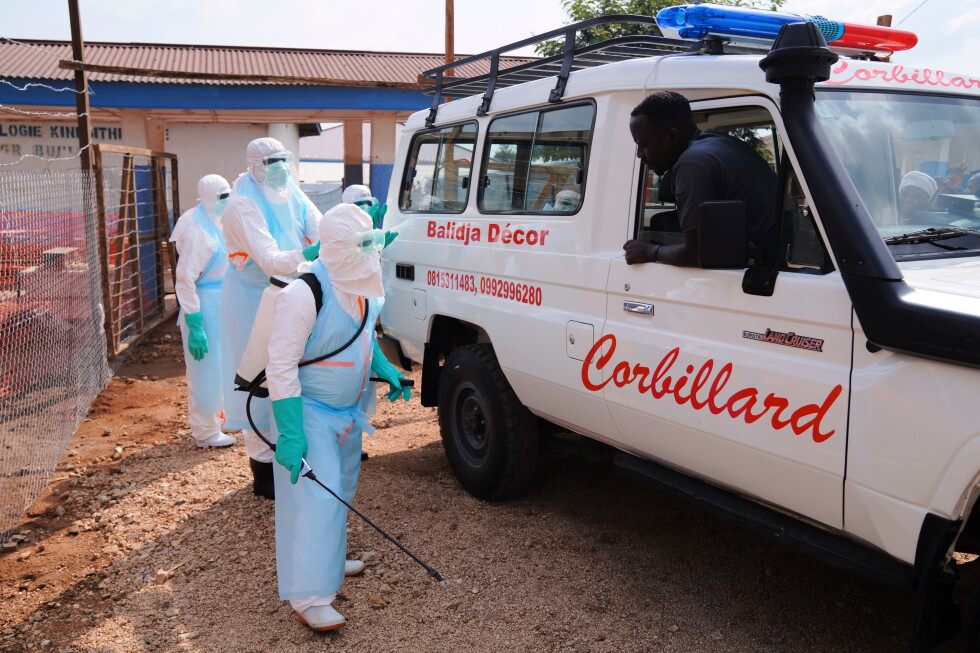
Death toll tops 1,500 in fastest-growing Ebola outbreak in history, Congo says
BUNIA, Democratic Republic of Congo — The world’s most rapidly expanding Ebola outbreak on record has crossed a devastating milestone, with new official data released Thursday confirming more than 1,500 fatalities in eastern Congo. The sharp death toll increase — a 50 percent jump logged over roughly one week — underscores that the spread of the virus continues to outpace international and local response measures.
Updated statistics from the Congolese government show that as of Tuesday, the ongoing outbreak has recorded a total of 3,442 confirmed and probable cases, with the death count climbing to 1,521. First declared on May 15, this outbreak differs sharply from most prior Ebola events in a key, dangerous way: it is caused by the Bundibugyo strain, for which no specific, fully approved vaccines or antiviral treatments currently exist.
The speed and mortality of this outbreak have already outstripped every previous Ebola event in recorded history, including the devastating 2014-2016 West African epidemic that long held the title of the world’s worst Ebola outbreak. That crisis, which ultimately killed more than 11,000 people across at least 28,000 recorded cases, took roughly eight months to reach 1,000 deaths. This outbreak has reached 1,500 deaths in a far shorter timeframe.
Ebola is an uncommon but highly contagious viral illness, transmitted through direct contact with infected bodily fluids including blood, vomit, and semen. The disease it causes progresses rapidly, with severe symptoms that lead to death in a large majority of cases without prompt, specialized care.
-
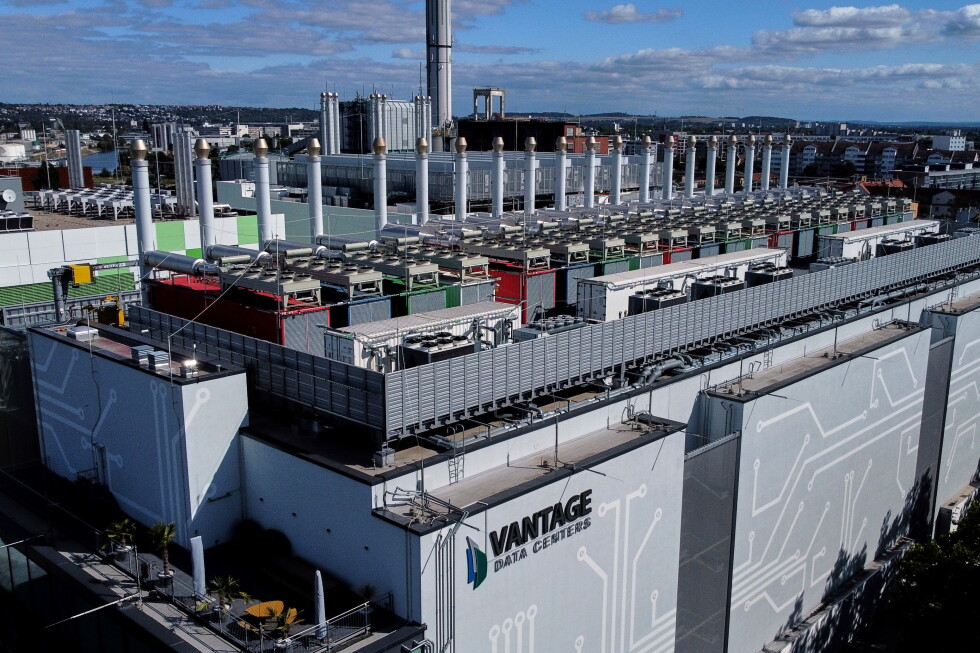
EU lays out $11.4 billion for 7 AI gigafactories as it aims to catch up with US and China
BRUSSELS – In a bold push to cement its technological autonomy and narrow the competitive gap with the United States and China, the European Union’s executive branch announced Thursday a €10 billion ($11.4 billion) public funding package to support private companies in constructing seven large-scale artificial intelligence manufacturing facilities, known as AI gigafactories.
The European Commission expects the public investment to catalyze an additional €20 billion ($22.8 billion) in private sector funding, creating a total €30 billion injection into Europe’s lagging AI infrastructure. Commission Executive Vice President Henna Virkkunen, who oversees the bloc’s push for tech sovereignty, framed the initiative as a non-negotiable strategic priority. “Access to massive, scalable computing power within AI gigafactories is a strategic necessity for Europe as AI development accelerates globally,” Virkkunen noted.
The urgency behind Brussels’ tech sovereignty agenda stems from growing geopolitical concerns over reliance on non-European technology providers. EU leaders argue that foreign control over critical AI infrastructure could be “weaponized” against European interests, compounded by trade tensions with the U.S. over regulatory policy and Chinese restrictions on exports of critical minerals required for AI chip production.
Under the new plan, companies are now eligible to bid for contracts to build the gigafactories, each of which will be required to host at least 100,000 cutting-edge AI chips. Once operational, the facilities will deliver roughly four times the computing capacity of the most powerful existing data centers operating across the EU today. Currently, the bloc maintains a network of 19 smaller AI data centers stretching from Finland to Spain; the seven new gigafactories will more than double the EU’s total AI computing power.
Independent assessments and EU data underscore the severity of the bloc’s current AI gap. A 2025 analysis from the U.S. Federal Reserve found Europe trails far behind both the U.S. and China in key infrastructure sectors required for advanced AI development. China boasts massive excess power generation capacity to support energy-intensive data centers, while the U.S. attracts the overwhelming majority of global private AI investment. A June Commission report presented to the European Parliament added that Europe produces almost none of the millions of specialized components needed for AI data centers, and energy costs for facility operations in the bloc can run two to three times higher than in the U.S. or China.
Without targeted investment to expand domestic capacity, the report warns, European businesses and government bodies will remain dependent on U.S. AI providers – a dynamic that undermines homegrown European AI firms trying to compete at the cutting edge of the industry. Currently, all five of the EU’s top cloud service providers are American. “Dependence on hyperscale cloud and AI computing service providers, particularly for highly critical use cases, will continue to expose data to third-country access and carry risks to service continuity, endangering operational autonomy,” the report stated.
To date, the largest existing AI data center in the EU is operated by French AI firm Mistral at its Paris campus. Mistral, developer of the Le Chat chatbot, has yet to match the pace of innovation and scale set by leading U.S. players like OpenAI, creator of ChatGPT, and top Chinese competitors such as DeepSeek. While high-profile European leaders including French President Emmanuel Macron have publicly warned about the bloc’s lack of competitive homegrown AI companies, widespread public anxiety persists across the continent over both the economic disruption and privacy risks posed by rapidly advancing AI technology.
The Commission emphasized that all AI products developed using the expanded gigafactory network will be required to adhere to the EU’s strict regulatory standards for data protection, safety, security and ethics, aligning with existing bloc rules including the Digital Services Act and Digital Markets Act.
The initiative comes amid growing global scrutiny of the environmental footprint of large-scale AI infrastructure. In June, 40 mayors from major cities across the world – from Phoenix, U.S. to Melbourne, Australia – signed a global pact to mitigate the negative impacts of AI data center construction on local natural resources, energy prices and municipal climate targets.