博客

  • England edge South Africa thriller to reach semis

    England edge South Africa thriller to reach semis

    At the 2026 Commonwealth Games, England’s national netball team, the Roses, produced a thrilling second-half turnaround to secure a hard-fought 58-54 victory over South Africa’s Proteas, booking their place in the tournament semi-finals and extending an uninterrupted qualifying streak that stretches back nearly 30 years.

    Entering the final Pool A match, both nations sat level on six points, with England holding a narrow advantage over South Africa in goal difference for the second qualifying spot. That meant a loss would have ended England’s tournament, leaving the side with everything to play for from the first whistle.

    South Africa got off to a blistering start, with star shooter Elmere van der Berg in imperious early form. She slotted home 16 of her side’s 17 first-quarter goals, opening up a comfortable six-goal lead that put England on the back foot and facing an immediate uphill battle to stay in the competition.

    The turning point came in the second quarter, when England coach made the call to bring Halimat Adio off the bench into the defensive line. The substitute’s aggressive, high-intensity defensive display immediately disrupted South Africa’s attacking rhythm, creating multiple opportunities for England to launch fast counter-attacks. By halftime, the Roses had clawed their way back to just a one-goal deficit, trailing 29-28.

    England built on that momentum in the third quarter, gradually seizing control of the match and at one point stretching their lead to seven goals. South Africa refused to fold, however, hitting back with three quick goals to cut the deficit heading into the final 15 minutes, with England holding a narrow 43-39 advantage.

    The final quarter turned into a tense, end-to-end battle, with both sides matching each other goal for goal – both notching 15 goals in the closing stanza. England held firm under pressure, though, protecting their lead to seal the four-goal win. The result preserves England’s unmatched record of qualifying for every Commonwealth Games netball semi-final since the sport was introduced to the program in 1998, while South Africa will continue its 28-year wait for a return to the semi-final stage.

    England’s victory was built on a dominant shooting performance, with Olivia Tchine netting an incredible 41 goals from 43 attempts, while Lois Pearson added 17 goals to the final score. Adio, who plays her club netball alongside England defender Funmi Fadoju at London Pulse, formed a formidable defensive partnership that shut down South Africa’s attack after her introduction, and earned widespread praise from her captain after the match.

    “I feel like she was unreal for us from that second quarter,” England skipper Fran Williams told TNT Sports. “So proud of her, bringing that energy to get us back in the game when we needed it.”

    Williams acknowledged that the side has operated under sustained pressure all week to perform and challenge for a medal, but praised her side’s ability to grind out the result against a determined South African side. “So for us to be able to finish out a game like that, riding the wave of goal for goal and to come out on top, just so proud of the team,” she added. “We don’t shy away from pressure. We are the first people to put the pressure on ourselves because we know what we are capable of in our own environment. We’ve got so many young heads out there that are showing experience way beyond their years. I just want to try and be that rock for them and let the others shine around me.”

    The semi-final line-up is as expected, with the world’s four top-ranked netball nations all progressing to the final four. Reigning and four-time champions Australia, ranked world number one, enter the semi-finals as the clear team to beat. They will face fifth-ranked Jamaica, the 2022 silver medalists who have claimed bronze three times in the competition’s history and have never won a Commonwealth gold.

    In the other semi-final, England (ranked third globally) will face second-ranked New Zealand, a two-time Commonwealth champion that last claimed gold with back-to-back titles in 2006 and 2010. New Zealand beat England in the 2022 bronze medal match, setting up a tantalizing rematch for a place in the 2026 gold medal final.

    The semi-finals are scheduled for Saturday, 1 August, with England facing New Zealand kicking off at 09:00 BST, followed by Australia against Jamaica at 13:00 BST. The bronze medal match will take place on Sunday, 2 August at 09:00 BST, with the gold medal final following at 13:00 BST the same day.


  • Mediator Pakistan says US-Iran talks ongoing as foes trade attacks

    Mediator Pakistan says US-Iran talks ongoing as foes trade attacks

    As the Middle East slides toward broader military escalation, mediator Pakistan reaffirmed Thursday that direct negotiations between longtime adversaries the United States and Iran remain active, even as Washington launched a massive retaliatory strike campaign against Iranian targets following recent attacks on Jordan. The fast-paced 48-hour period of unrest has drawn in other key regional players, from Saudi Arabia launching its own strikes on militant groups in Iraq to Egypt facing its first direct attack of the expanding conflict, pushing regional leaders to sound alarms over spiraling violence.

    The latest round of open hostilities came after a brief lull in fighting that was designed to create space for diplomatic progress. Pakistani Foreign Ministry Spokesperson Tahir Andrabi told reporters Thursday that discussions continue, with particular focus on de-escalation and securing stability around the Strait of Hormuz, one of the world’s most critical energy chokepoints. Pakistan previously helped broker a preliminary agreement between the two rivals that laid the foundation for talks aimed at a long-term settlement, and Andrabi said the country is working aggressively to return all delegations to technical talks outlined in the framework.

    Previous negotiations that followed an April ceasefire collapsed earlier this month, after which Iran reclosed the Strait of Hormuz, through which roughly a fifth of global oil supplies pass daily. On Thursday, Iran’s Revolutionary Guards announced that two oil tankers attempting to transit the strait with U.S. military support had turned back after one vessel caught fire.

    Amid the rising tension, Saudi Arabia announced the formation of a 14-nation regional maritime defense coalition to secure shipping lanes around the strategic Bab al-Mandab Strait. The move came one week after Yemen’s Iran-aligned Houthi movement announced a maritime embargo on Saudi Arabia and claimed responsibility for attacks on Saudi oil tankers in the Red Sea. The Bab al-Mandeb has grown in strategic importance for Saudi energy exports after the U.S.-Iran standoff shut down traffic through the Strait of Hormuz, cutting off the kingdom’s primary export route for crude.

    The U.S. military confirmed earlier Thursday that it had completed a heavy wave of strikes against Iran, targeting dozens of Revolutionary Guard sites including key command and control centers. U.S. President Donald Trump had pledged a forceful response after Iran launched an attack on Jordan, marking its second direct regional strike in as many days.

    The Revolutionary Guard’s branch in Iran’s northwestern Zanjan Province confirmed that three of its members were killed in the U.S. strikes there. Iran’s official state news agency IRNA also reported strikes across multiple locations in southwestern Khuzestan Province, as well as on Qeshm Island in the Persian Gulf, including areas near the major cities of Abadan, Shadegan, Arvandkenar and Ahvaz.

    For the second consecutive day, Jordan’s military announced it had intercepted a new round of Iranian missile attacks Thursday morning, shooting down five incoming missiles with no reported casualties. The Revolutionary Guard later confirmed the missile launch, saying it was a response to U.S. airstrikes launched from American bases stationed in Jordan that killed Iranian civilians on Qeshm Island.

    In Kuwait, the defense ministry condemned what it called a “heinous” Iranian strike that hit a building owned by a Chinese company in northern Kuwait, killing one foreign worker and causing extensive structural damage.

    The broader regional conflict, which began in February with joint U.S.-Israeli strikes on Iranian targets, has now impacted nearly every country across the Middle East and spilled beyond the region’s borders. While energy infrastructure across the Gulf has faced repeated drone and missile attacks since the conflict began, Egypt remained untouched until Wednesday, when an attack on Egypt’s Mediterranean gas import hub sparked a large fire that damaged two commercial vessels.

    Egyptian government officials confirmed Thursday that a drone was responsible for the blaze, noting that no group had yet claimed responsibility. Houthi rebel media issued a statement denying the movement had any involvement in the attack. Iranian Foreign Minister Abbas Araghchi wrote on social media platform X that Egypt is a “valued friend and partner” to Iran, suggesting the attack was a false-flag operation carried out by Israel to destabilize the country.

    Egypt’s presidency said an official investigation is ongoing to “uncover the full circumstances of the incident and implement all necessary measures to protect Egypt’s national interests and security.” During a phone call with Spanish Prime Minister Pedro Sanchez, Egyptian President Abdel Fattah al-Sisi emphasized that the international community must act collectively to end the rapidly escalating violence, according to his presidential spokesman.

    Maritime trade analytics firm Kpler identified the two damaged vessels as the Energos Winter floating storage and regasification unit and the GasLog Salem tanker, adding that both ships were moved to offshore anchorage following the attack to avoid further risk. UK-based private security monitor Ambrey reported that the floating storage vessel, which is owned and operated by a U.S. firm, was hit by at least one drone. Port authority officials noted that the terminal remains fully operational despite the incident.

  • India wants to join the strawberry superpowers

    India wants to join the strawberry superpowers

    Nestled in the mountainous terrain of western India, Mahabaleshwar stands as the beating heart of India’s strawberry cultivation. More than 85% of the country’s total strawberry output grows across its slopes, where an elevation exceeding 1,000 meters creates the ideal cool growing window from November to March, and light, well-drained soil offers the perfect foundation for the delicate fruit. But for the thousands of smallholder farmers who call this region home, strawberry farming is far from a straightforward livelihood.

    The industry is inherently labor-intensive, and its profitability hangs on the whims of unpredictable weather. “If sudden heavy rains arrive when your field is full of fruit, the entire crop is destroyed, and we face catastrophic losses,” explains Sheetal Danavle, who alongside her husband devotes half of their 3-acre family farm to strawberries. Unlike many staple crops, strawberry plants must be replaced entirely every growing season, and they are not propagated from seed. This means farmers must purchase new young starter plants from licensed suppliers each year, a major upfront expenditure that costs Danavle roughly $2,500 annually. While a strong, dry season can deliver returns double the initial investment, erratic climate patterns turn the entire enterprise into what Danavle describes as “a huge gamble.”

    Despite these challenges, strawberries have emerged as one of western India’s most profitable horticultural crops, supporting tens of thousands of livelihoods across the region. Yet a critical gap remains in the domestic supply chain: India’s entire industry relies exclusively on patented strawberry varieties bred in the United States, Italy, Spain, and other foreign nations, with no commercially competitive indigenous cultivar available to local farmers. It takes 10 to 15 years for international breeders to develop high-yield, high-quality varieties suited for commercial production, and these cultivars are strictly protected by intellectual property patents.

    Nelson Sequeira, founder and director of Tara Farms Fresh, one of India’s licensed strawberry propagators, explains that the domestic supply chain starts with imported certified mother plants from foreign breeders. After clearing mandatory government quarantine, the imported mother plants are grown in specialized nurseries, where they produce runners that develop into daughter plants sold directly to farmers. “One imported mother plant is like an engine,” Sequeira notes. On average, a single mother plant produces 20 daughter plants, with experienced operations able to coax 30 to 40 plants per mother. His nursery uses advanced precision agriculture techniques to grow new stock: plants are suspended in half-cut industrial pipe troughs filled with coconut husk-derived coco-peat substrate, rather than planted in open ground, with a carefully calibrated drip irrigation and fogging system to maintain ideal growing conditions.

    For now, dependency on foreign mother plants remains the industry standard, but a collaborative research project led by two leading Indian institutions could soon upend this status quo. Mahatma Phule Krishi Vidyapeeth (MPKV), an agricultural university based in Maharashtra, has partnered with the Bhabha Atomic Research Centre (BARC) to develop India’s first homegrown strawberry variety. Researchers are using controlled low-dose gamma irradiation on plant tissues to induce stable genetic mutations, a technique designed to cut down the decades-long breeding timeline.

    Dr. Darshan Shashank Kadam, assistant professor of horticulture at MPKV, explains the project’s core goal: to create an indigenous cultivar that matches the large fruit size and firm texture of popular imported varieties, while being naturally resilient to India’s increasingly frequent heatwaves. Kadam acknowledges that full development of a commercially viable variety could still take 10 to 15 years, but the university is already supporting local farmers in the near term by creating region-specific growing guidelines, including standardized planting schedules, customized fertilizer recommendations, and tailored growth regulator protocols adapted to Mahabaleshwar’s unique climate.

    Larger commercial operations with greater access to capital are already adopting innovative growing technologies to mitigate the risks of open-field farming. Ketan Yashwant Sodha, founder and CEO of Berry Fresh Agrotech, started out growing strawberries in traditional open fields, but grew frustrated after repeated crop losses to unseasonal rain during the peak growing season. “For the past decade, rain has consistently arrived during our peak harvest months of November, December, and early January. One heavy storm at peak growth can wipe out an entire season’s work,” he says.

    In 2022, Sodha pivoted to experiment with hydroponic covered cultivation, a soil-free system that allows full control over water, nutrient, light, and temperature conditions. The transition was far from smooth. “I failed over and over, and suffered massive early losses,” he recalls. “Soil is forgiving of small mistakes, but hydroponics is not. A single error today leads to complete crop failure tomorrow, and recovery takes twice as long as it does in soil.”

    After years of trial and error, Sodha’s operation is now seeing tangible rewards. His team has tested 19 different strawberry varieties, including rare Japanese cultivars, and is the first Indian farm testing a specialized cultivar from the Netherlands this growing season. By strictly limiting each plant to 750 milliliters of water per day, they produce berries with richer, more concentrated sugar content and deeper aroma than the waterlogged, bland fruit often produced by open-field farming. Regular nutrient testing of plant leaves and petioles allows the team to adjust nutrient mixes precisely to each plant’s needs, and a semi-open polyhouse structure enables year-round strawberry production, turning a seasonal crop into a year-round revenue stream. Now, after finalizing trial protocols and standard operating procedures, Sodha is seeking investor funding to scale his operation to a 5-acre facility capable of supporting 200,000 plants.

    Even smallholder farmers are embracing new technologies to improve outcomes, often in creative ways. Krishan Bhilare, a third-generation strawberry farmer from Mahabaleshwar, remembers the arrival of the first American varieties in 1992, when he was stunned by the large size of the imported fruit. Today, Bhilare is part of a regional Farmer Producer Organisation (FPO) that has installed AI-powered weather monitoring towers at key points across member farmland. The system analyzes real-time weather data to predict incoming rain events, alerting farmers to delay pesticide and fertilizer spraying so costly inputs are not washed away by storms. The FPO is also testing vertical growing towers that stack five layers of strawberry plants in coco-peat substrate, boosting production density from 25,000 plants per acre to 125,000 plants per acre — a fivefold increase in output on the same plot of land.

    Still, these high-tech upgrades remain out of reach for many small operations, or carry too much risk for low-margin farms. Danavle and her husband tested hydroponic farming back in 2017, and saw promising early results: their hydroponic strawberries were fully organic, cut labor costs by reducing the need for constant bending and pruning, and lowered spending on fertilizers and pesticides. But a powerful cyclone hit Mahabaleshwar that same year, destroying the entire hydroponic setup. “We didn’t have the capital or the courage to rebuild it,” Danavle says. Instead, she returned to traditional open-field farming — with a modern twist. Leveraging social media, Danavle now posts videos about strawberry cultivation, promotes farm visits for tourists, and allows visitors to pick and purchase berries directly from her farm, cutting out middlemen and boosting her profit margins. “Now I’m both a farmer and a social media entrepreneur,” she says.

    As India’s strawberry industry continues to grow, the balance between traditional smallholder farming and cutting-edge innovation remains in flux, with ongoing research poised to reshape the sector’s dependency on foreign varieties in the coming decades.

  • Millions opposed military rule in Myanmar. Is their dream of a revolution over?

    Millions opposed military rule in Myanmar. Is their dream of a revolution over?

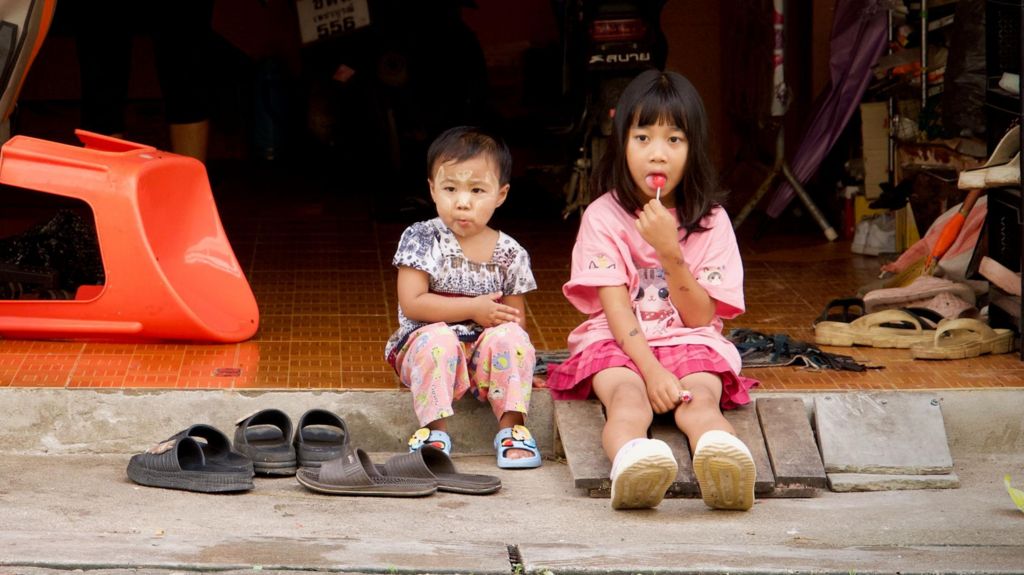
    Five years after Myanmar’s 2021 military coup plunged the country into brutal civil war, the Thai border town of Mae Sot has emerged as a fragile, overcrowded sanctuary for tens of thousands of people who fled their homeland to oppose junta rule. For many of these exiles, what was once hope of a swift democratic revolution has curdled into exhaustion, disillusionment, and a future shrouded in uncertainty.

    One 22-year-old former urban guerrilla, who asked to remain anonymous to protect his family still living under junta surveillance in Yangon, embodies this shifting tide of sentiment. At 17, he joined nationwide mass protests against the coup that ousted democratically elected leader Aung San Suu Kyi. When security forces crushed the nonviolent demonstrations, he fled to ethnic insurgent-controlled territory for military training, before returning to Yangon to carry out bombings as part of an underground resistance cell. “I thought then that non-violent protests were not the right way to get back our freedom,” he recalled.

    His armed resistance ended abruptly when he was captured and sentenced to seven years in Insein Prison, a facility infamously known for routine abuse and torture of political inmates. Released last year, he fled across the Moei River – the narrow waterway that marks the Myanmar-Thailand border – to Mae Sot, where he now lives in one of dozens of hidden safe houses run by local charities. It was during his imprisonment that his views on the struggle changed forever. He witnessed deep infighting among insurgent groups, saw countless unnecessary civilian and combatant casualties, and as the eldest child in his family, felt a growing obligation to prioritize his family’s safety over armed struggle. Today, he has rejected violence entirely. “I want to help our people as much as I can. But I choose another way. A non-violent way,” he said. Now, he spends his days teaching children in the safe house and supporting friends who remain imprisoned in Myanmar, clinging to a faint hope that freedom will eventually come.

    The 22-year-old is far from alone. Since the 2021 coup, Mae Sot – a major trade gateway between Myanmar and Thailand that has long hosted a shifting Burmese population – has seen its community of exiled Myanmar residents swell exponentially. Nearly all cross the border unofficially, leaving them undocumented and without legal status in Thailand. They live in constant fear of arrest by Thai police and deportation back to Myanmar, where reprisals from the junta await them and their families. Many dare not leave their cramped safe house rooms for weeks at a time; one defected former army officer told the BBC she only ventures outside twice a month.

    These safe houses, tucked down quiet back streets and offering only six months of maximum stay per resident, are warrens of tiny, basic rooms with shared communal facilities. Behind every door lies a harrowing story of survival. Among them is Yin Yin Aung, a 20-year-old mother who traveled 1,000 miles from her resistance-stronghold village in Sagaing Region to reach Mae Sot with her husband and toddler son. Two years ago, junta troops occupied her village, Htomar, after sweeping through the region to crush dissent. The family fled into the surrounding forest, where they survived for six months on river water and scarce rations, falling ill and seeing several members of their group die before they could begin their journey to the border. When troops finally withdrew, they left the village looted and laced with landmines, making return impossible.

    Yin Yin Aung gave birth to her son in the forest, but he was born with an abdominal hernia that requires urgent surgery. In Mae Sot, the couple has no legal status, so they cannot access Thailand’s public healthcare system. A private hospital has demanded a 38,000 baht ($1,140) deposit for the procedure – a sum nearly out of reach for the destitute family. Like many others, they have already hit their six-month limit at one safe house and are now staying in a second, with another move looming when their time runs out. “So long as Min Aung Hlaing is in charge, I cannot go back home,” Yin Yin Aung said. “He is the one who caused all of this.”

    The growing despair among Mae Sot’s exiles comes as Myanmar’s junta leader, General Min Aung Hlaing, has consolidated his grip on power over the past 12 months, backed by significant diplomatic and military support from China and Russia. Last month, Min Aung Hlaing received a formal red-carpet welcome from Chinese President Xi Jinping, marking a key milestone in his effort to rebrand himself from a coup-leading pariah to a legitimate head of state accepted by neighboring countries. Earlier this year, the junta held a tightly controlled, opposition-boycotted election that allowed Min Aung Hlaing to formally take the office of civilian president, while over the past year junta forces have recaptured large swathes of territory that resistance groups seized in the early years of the war.

    Chinese pressure has also cut off critical weapons and technology supplies to many resistance groups, leaving them fragmented, outgunned, and on the defensive. The United Nations Office of the High Commissioner for Human Rights recently reported that at least 702 civilians – most of them women and children – were killed by junta air strikes between the announcement of the election last August and its conclusion in January, with violence against civilians continuing unabated even as Min Aung Hlaing solidifies his international standing.

    Not all exiles in Mae Sot have abandoned hope of a revolutionary victory. In another safe house, a former Yangon bartender who serves with the Cobra Column – one of the opposition’s most effective fighting units, affiliated with the long-running Karen National Union insurgency – traveled to Mae Sot only to welcome his newborn child, and says he is eager to return to the front lines. “The military is fighting a war against the entire country, against the very citizens they are supposed to protect,” he said. “There is no way they can win.” Morale remains high among well-established ethnic armed groups like the Karen National Union, but newer people’s defense forces have struggled to maintain momentum amid supply shortages and junta advances.

    For many older exiles like Louis, a 40-something Yangon entrepreneur who joined the Karen insurgency after the coup and was later imprisoned, the dragging war has forced a reevaluation of priorities. After his release, he chose to settle in Mae Sot to provide for his children, who need education and stability that a life on the run cannot offer. “For the first two or three years, we had high morale and were very motivated,” he said. “But since the war is dragging on for so long, a lot of people have other responsibilities that do not stop. We have changed under that pressure.”

    One local Mae Sot activist, who runs a program to rescue child soldiers as young as 13 from insurgent groups and help them adjust to civilian life, says the war has torn apart communities that once lived in peace, with neighbors turning on each other for supporting opposing sides. She argues that the resistance must shift its strategy to meet the growing humanitarian crisis. “We have to prepare for a long fight for this revolution, not only with weapons, but also thinking about education and healthcare,” she said. “There are so many displaced people now. What are we going to do for them?”

    Today, hundreds of thousands of Myanmar refugees across Thailand’s border regions remain trapped in devastating limbo. Diplomatic outreach from regional governments has failed to secure any meaningful concessions from the junta, while undocumented exiles like Yin Yin Aung face repeated moves, scarce support, and no clear path home – or to a better future elsewhere. In the cramped, dimly lit safe houses of Mae Sot, each resident carries the weight of trauma, and a future that grows more uncertain by the day.

  • ‘I won’t stop fighting,’ says ‘cockroach’ protester after alleged detention

    ‘I won’t stop fighting,’ says ‘cockroach’ protester after alleged detention

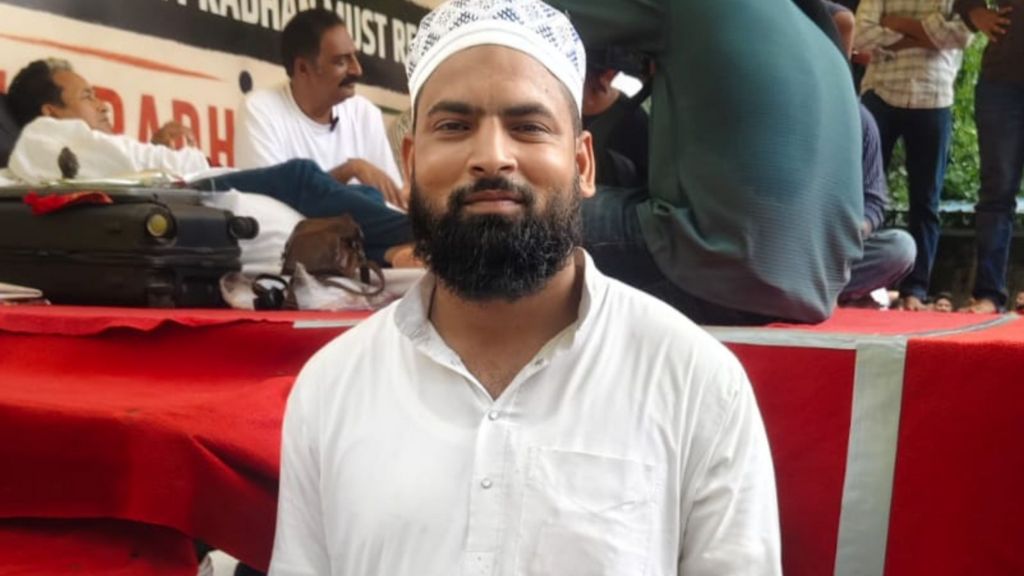
    Raised by illiterate farmworking parents in northern India who revered knowledge above all else, 24-year-old law student Mohammad Junaid grew up ingrained with one core belief: education is the only irreversible gift that can rewrite a person’s destiny. What he never anticipated, however, was that this same belief would lead him to the center of one of India’s largest recent student-led protests, and ultimately to the steps of the Supreme Court to challenge alleged police mistreatment.

    When the Cockroach Janta Party (CJP) issued a call in June for students to gather at Delhi’s iconic Jantar Mantar to demand accountability for widespread irregularities in a critical national medical entrance examination, Junaid packed only a small bag, planning to attend for just 24 hours. He ended up staying six weeks, evolving from a casual participant to one of the protest movement’s most visible and indispensable volunteers. Drawing on organizational experience he gained during the 2020 Indian farmers’ protests, Junaid stepped in to bring structure to the grassroots campaign when the first wave of demonstrators decided to camp indefinitely at the protest site with almost no basic supplies.

    From sourcing drinking water and arranging meals to securing blankets and shelter for exhausted participants, Junaid became the go-to coordinator for all incoming donations and logistics. As local communities stepped up to support the movement—farmers bringing fresh vegetables, local gurdwaras supplying daily cooked meals, and ordinary citizens dropping off medicine, water and fruit—volunteers and organizers alike automatically directed all resources to him. The work was grueling, with Junaid averaging only a few hours of sleep a night, but it was the stories of affected families that cemented his commitment. He met parents who had taken crippling loans to pay for exam coaching, and one couple who distributed food to protesters on what would have been their daughter’s birthday; she had died by suicide after the exam paper was leaked, a tragedy that left Junaid certain the fight was bigger than any individual. The experience transformed his life trajectory: where he once never imagined himself as an activist, he now says he will spend his life fighting for equitable, transparent education.

    Tensions escalated on 20 July, when thousands of protesters defied a police ban to march toward India’s parliament. Security forces responded with tear gas, baton charges, and mass detentions. Junaid spent hours tending to injured demonstrators, locating missing students, and helping frightened participants return to the protest camp. The violence of that day, he says, broke something inside him, and confirmed he could not step away from the movement. Five days later, after India’s education minister stepped down, CJP leaders declared victory and called off the protest, with most volunteers preparing to return home. Junaid’s path took a different turn.

    Alleging that he was unlawfully detained by police just hours before the protest officially wrapped up, Junaid has filed a petition with India’s Supreme Court. In his claim, Junaid says he was taken into custody after leaving a hospital where he had sought treatment for a stray dog bite. He was held overnight for extensive questioning about his protest role, and alleges he was blindfolded while being transported to the police station. The petition further claims authorities targeted his family: his father was picked up for questioning from the family’s small Ghaziabad farm on 23 July, and police searched the family home the following day, damaging furniture and demanding identification and bank details for all extended family members. Ghaziabad Police have only confirmed that they questioned Junaid’s father, and have denied any misconduct. Delhi Police has not responded to requests for comment on Junaid’s allegations.

    Junaid’s case has drawn sharp condemnation from opposition politicians and civil liberties organizations, with CJP leaders accusing authorities of a targeted crackdown on protest volunteers. His petition is one of multiple claims of unlawful detention amid broader allegations of a widespread police crackdown on demonstrators across Delhi and other Indian states. The Supreme Court has already ordered authorities to refrain from taking coercive action against protesters with no prior criminal record while the main case is heard, and CJP has threatened to resume mass protests if all pending cases against demonstrators are not withdrawn. Junaid’s petition has not yet been scheduled for a hearing.

    In the aftermath of his detention, a video of Junaid breaking down during an interview went viral on Indian social media, alongside clips of supporters celebrating the protest’s initial victory. Junaid says the experience has left him questioning whether his Muslim identity played a role in his targeting—something he has no concrete evidence to prove, but that has lingered in his mind. Throughout the protest, he says, religious identity was never a topic of conversation: participants saw each other only as students and activists fighting for a shared cause. The question of religious profiling comes amid longstanding criticism from rights groups and opposition parties that Prime Minister Narendra Modi’s government has overseen growing marginalization of India’s Muslim community, the country’s largest religious minority. Modi’s administration has repeatedly rejected these accusations.

    When Junaid returned home after his release, his parents—who spent decades working their small plot of land to give their son an education—urged him to step away from the movement, afraid that his activism would bring more trouble. But for Junaid, the confrontation with authorities has only strengthened his resolve. He describes the experience as a small sacrifice for the larger fight for fair education and accountability, and says if protesters return to the streets, he will be right there with them.

  • Human-caused climate change made Spanish, French fires much more likely, scientists calculate

    Human-caused climate change made Spanish, French fires much more likely, scientists calculate

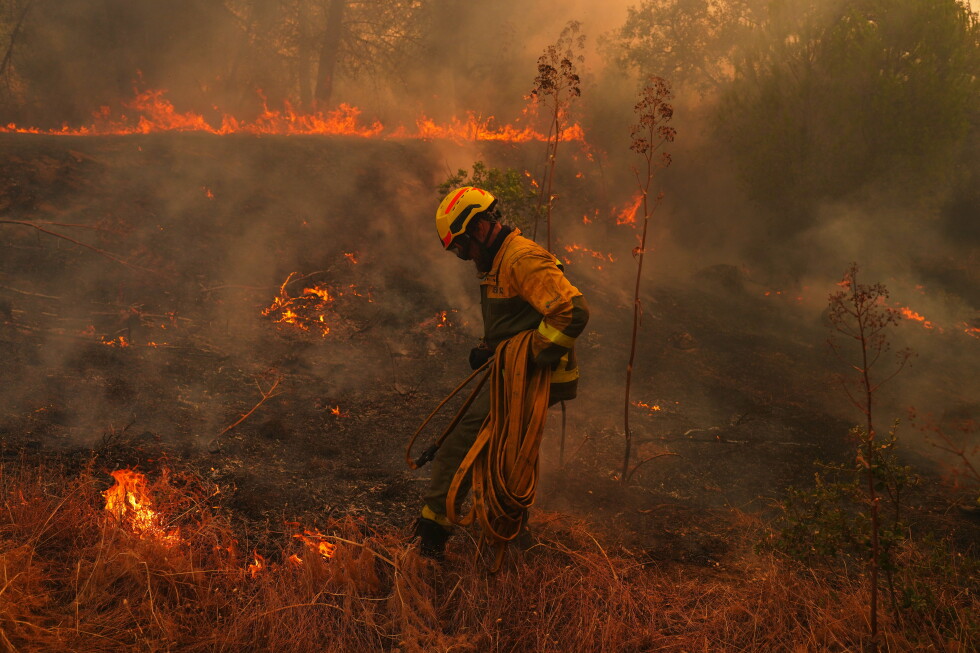
    As out-of-control wildfires continue to scorch vast swathes of Spain and France this week, two independent scientific studies released Thursday deliver a clear, data-backed conclusion: human-caused climate change has directly amplified the extreme fire-conducive weather driving these catastrophic blazes, and has drastically raised wildfire risk across Southern Europe over the past eight years.

    The first analysis, from international scientific collaborative World Weather Attribution (WWA), found that anthropogenic climate change made the record-breaking extreme inferno conditions in Spain 20 times more likely to occur, while doubling the odds of dangerous fire weather for the ongoing blazes in France. Looking at a longer 26-year warming trend, the report notes extreme fire risk probability has tripled in Spain and risen by 40% in France. WWA conducted its rapid assessment while fires were still actively spreading across the Iberian Peninsula and southwestern France, meaning the work has not yet completed formal peer review — the traditional gold standard for scientific publication. But WWA lead researcher Friederike Otto, a climate scientist at Imperial College London, emphasized the team uses widely accepted methodological approaches, and many of the group’s rapid analyses are later peer-reviewed and published in major academic journals.

    Otto pointed to Spain’s unique combination of risk factors that turned dry heat into unprecedented fire danger: the country is currently experiencing its hottest summer on record, following an unusually wet January that spurred dense vegetation growth. A severe, prolonged drought then hit, drying out that excess plant life to create massive amounts of ready-to-burn wildfire fuel. Additional risk stems from widespread land abandonment in parts of Spain, which leaves overgrown, unmanaged vegetation to dry out and increase fire severity. In France, the Bordeaux region — one of the areas hardest hit by the current blazes — has large, dense pine forests that burn intensely once ignited, Otto added.

    To quantify climate change’s impact, Otto’s team compared current fire weather severity — measured across four key factors: air temperature, drought levels, humidity, and wind speed — to historical regional data, and modeled what conditions would look like if the planet had not warmed by 1.4 degrees Celsius (2.5 degrees Fahrenheit) since the pre-industrial era.

    A separate, pre-planned study published Thursday in the journal *Scientific Reports* adds broader long-term context to the current crisis. Lead author Raúl Cordero, a climate scientist at the University of Groningen in the Netherlands, found the average annual number of extreme fire-prone weather days across Southern Europe has more than doubled since the mid-20th century, jumping from roughly 10 days per year in earlier decades to around 25 days annually today. Not only are extreme fire days more frequent, Cordero’s analysis found they are also 50% more intense than the average recorded between 1981 and 2010.

    Cordero’s research also highlights a troubling trend: from the 1980s through 2018, better fire suppression and land management practices led to steady reductions in the number of wildfires and total acreage burned across Southern Europe. But those hard-won gains have been completely wiped out by the rapid acceleration of climate-driven fire risk. “It doesn’t matter how many resources or how much money you have, you just cannot stop the propagation of a fire when the weather is so extreme,” Cordero explained. “The climate forcing is so extreme nowadays that it’s just amazing.”

    Independent fire and climate scientists not involved in either study say the findings confirm long-held understanding of climate change’s wildfire impact. “This study makes sense and provides numbers to confirm what fire scientists already knew,” said Jacob Bendix, a fire researcher at Syracuse University. “We have always known that fires ignite more easily and spread more explosively under conditions of extreme heat and drought. And we’ve known for decades that extreme heat and drought are becoming more common due to anthropogenic climate change. So the general outline of these events, if not all the details, was tragically predictable.”

    John Abatzaglou, a fire scientist at the University of California Merced, added that the research underscores that climate change is not a distant threat. “These findings make clear that climate change is not just a future problem, it’s already here,” he said.

    Otto stressed that the solution to worsening wildfire risk requires urgent action to cut fossil fuel use. “We need to stop burning fossil fuels,” she said. “Because as long as we keep burning fossil fuels, temperatures will increase globally. And that will mean that these fire weather conditions will get worse and worse and worse. And there are hard limits to what we can adapt to.”

  • Muslim Council of Britain asks government to explain non-engagement policy

    Muslim Council of Britain asks government to explain non-engagement policy

    A major political dispute has erupted between the UK’s largest umbrella body for Muslim communities and the Andy Burnham-led government, after a senior cabinet minister repeated longstanding but unproven allegations to justify the administration’s refusal to work with the group.

    The Muslim Council of Britain (MCB), which counts more than 500 affiliated Muslim organizations across the country, has publicly condemned Security Minister Dan Jarvis for parroting an old, unevidenced claim that the group has violated British fundamental values without offering concrete specifics. The controversy was sparked earlier this month, when Conservative MP David Simmonds submitted a parliamentary question asking the government to explain its refusal to engage with four Muslim organizations, including the MCB. In a written response published Tuesday, Jarvis reaffirmed the government’s position, stating that the administration has chosen to cut ties with groups that have adopted stances contradicting core UK values and have not formally withdrawn those positions.

    Within days, the MCB hit back with an open letter to Jarvis, obtained by Middle East Eye (MEE), pointing out that the same vague allegation was first made by former Prime Minister Rishi Sunak in February 2024. The organization is demanding that Jarvis outline exactly which values the MCB has supposedly contradicted, arguing that a government cannot maintain a policy of non-engagement based on abstract, unspecified claims. The letter also notes a glaring contradiction in the current government’s stance: multiple senior figures in the current administration, including Prime Minister Andy Burnham himself, Defence Secretary, and Equalities Minister, have held formal and informal engagement with the MCB over the course of their political careers.

    Burnham, who held engagement with the MCB when he served in the shadow cabinet in 2015, has a long public record of open dialogue with Muslim communities across the UK, a track record the MCB says it hopes he will maintain now that he holds office in Downing Street. “Prime Minister Burnham has a strong record of engaging honestly with communities across this country, and we hope that record continues now that he is in Downing Street,” the organization stated.

    The MCB’s challenge comes on the heels of a revealing MEE investigation published earlier this week, which found that no official written records of a formal non-engagement policy with the MCB actually exist. Multiple government departments, including the communities ministry, Home Office, and Cabinet Office, all refused to release any documentation related to the policy in response to Freedom of Information Act requests. When MEE followed up for clarification on the scope and justification of the non-engagement rule, a spokesperson for the Office for Equality and Opportunity only confirmed the policy remains in place but offered no further details.

    Mustafa al-Dabbagh, assistant secretary general of the MCB, told MEE that the so-called non-engagement policy is nothing more than an outdated smear that was resolved more than a decade ago. The roots of the boycott stretch back to 2009, when Gordon Brown’s Labour government briefly cut ties with the MCB after its deputy secretary general Daud Abdullah signed the Istanbul Declaration. The government claimed the document called for attacks on Royal Navy vessels enforcing an arms blockade off Gaza, a claim Abdullah repeatedly denied. The MCB quickly clarified that Abdullah had signed the declaration in a strictly personal capacity, after which Abdullah resigned and the 2010 Labour government restored formal engagement. Subsequent coalition and Conservative governments maintained ministerial contact until 2015, and civil servants continued meetings with the MCB until 2020.

    It was in 2020 that the MCB published a high-profile dossier documenting hundreds of alleged cases of Islamophobia within the Conservative Party, including among sitting MPs, councillors, and Downing Street advisers. Shortly after that release, civil service engagement was halted, and the Conservative government implemented a full boycott. When Starmer’s Labour Party took power in 2024, the new administration retained the boycott, a decision the MCB says is unjustified given the issue that sparked the original boycott was resolved in 2010.

    al-Dabbagh accused Jarvis of misleading Parliament by repeating the discredited smear. “This so-called policy of non-engagement is a relic of the past, built on a smear that has since been proven false, and the Labour government of the day accepted as much in 2010, restoring engagement,” he said. “Our door remains open to all who work for the good of Britain.”

    In its formal letter to Jarvis, the MCB accuses the security minister of misrepresenting both the historical record and the MCB’s current positions. The group is demanding full transparency, asking: “What specific evidential basis and assessments underscore a decision that justifies treating a matter resolved by your predecessors in government as still valid 16 years later?” It added that British Muslims deserve clear accountability, noting that the MCB is the democratically selected representative body for more than 500 community groups across the UK.

    MEE has confirmed that Jarvis intends to respond to the MCB’s letter, but the government has indicated it currently has no plans to reverse its policy of non-engagement with the organization.

  • Hundreds of migrants flood into Spain’s Ceuta exclave from Morocco

    Hundreds of migrants flood into Spain’s Ceuta exclave from Morocco

    A major new influx of irregular migrants into Spain’s North African exclave Ceuta from neighboring Morocco has sparked a diplomatic row between European nations, prompted a military security deployment, and escalated domestic political tensions in Madrid this week.

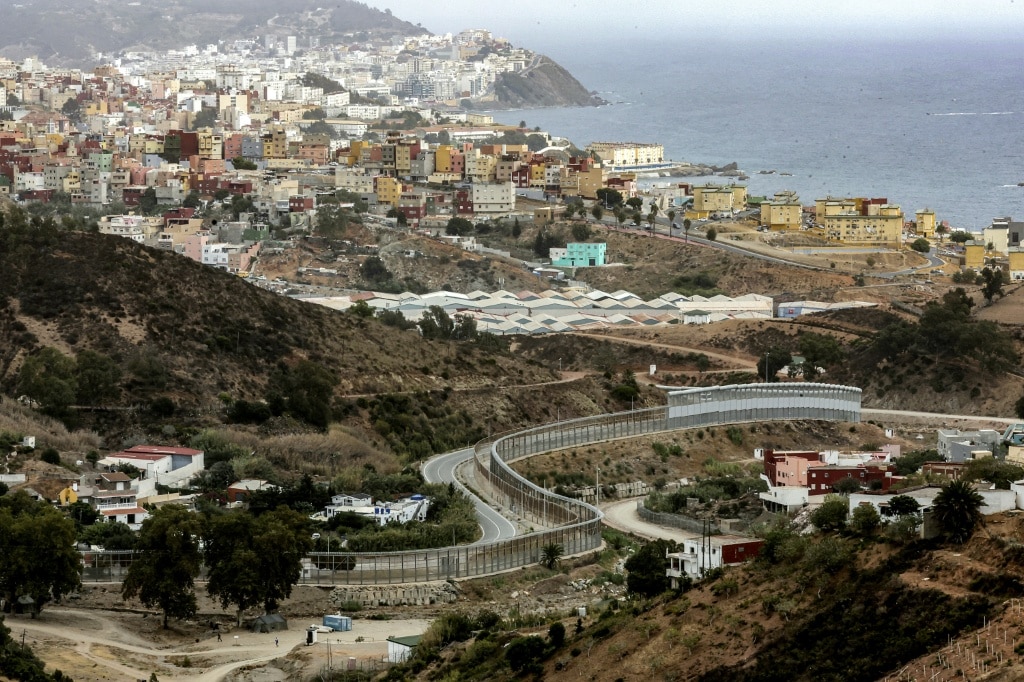
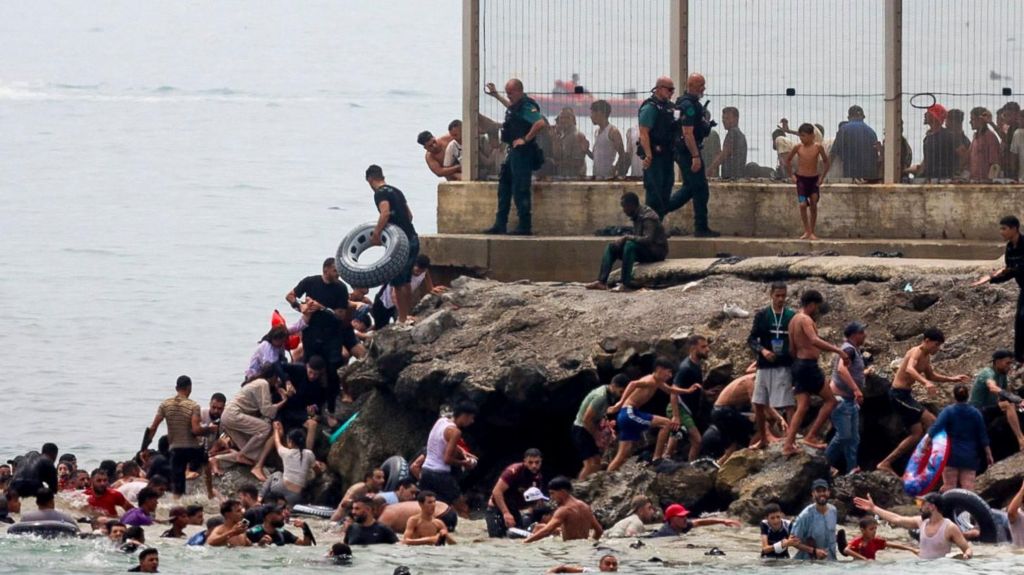
    Hundreds of migrants have crossed into the territory over recent days, with most completing the journey by swimming around the fortified sea-border fence that separates Ceuta from Morocco. By Thursday, recovery teams had recovered the bodies of nine migrants who drowned during the dangerous crossing, according to Spanish government sources speaking to Agence France-Presse.

    In response to the crisis, Madrid announced Thursday it would deploy military personnel to reinforce local security forces. The Spanish Interior Ministry confirmed armed forces will back up the Civil Guard to maintain public order in the densely populated exclave, which covers just 18.5 square kilometers. While the exact number of deploying troops was not released, officials confirmed Civil Guard numbers will nearly double from the current 80 officers, with additional diving teams and coastguard vessels also being dispatched to the area.

    Local Ceuta leader Juan Vivas confirmed that roughly 1,500 migrants have arrived in the enclave over the past three days, warning that local reception facilities have reached maximum capacity. “There is no more room for anyone,” Vivas told Spanish broadcasters Wednesday. Despite the overstretched infrastructure, on-the-ground AFP reporting Thursday evening found hundreds more migrants, including children, gathered on the Moroccan side of the border near the town of Fnideq, waiting for an opportunity to cross. Many migrants told reporters they had heard rumors the border had been opened, prompting their journey to Ceuta.

    Witnesses in Ceuta reported mobs of newly arrived migrants walking through local streets, greeting police and celebrating their arrival after leaving Morocco. Local law enforcement has largely taken a restrained approach, guiding arrivals to the overcrowded local reception center rather than turning them away. Local residents expressed sympathy for the vulnerable arrivals, with one young Ceuta resident telling AFP: “It really breaks my heart to see so many people suffering, and who knows how many have actually drowned along the way. When they arrive, they’re faced with the harsh reality that they have nothing and that people treat them as if they were nobody.”

    The crisis has spilled over into international diplomacy, after Italian Foreign Minister Antonio Tajani called Thursday for Spain to be temporarily suspended from the Schengen Area, the 29-nation European open-border agreement that eliminates routine internal border checks. Writing on social media platform X, Tajani argued that “Irregular and uncontrolled immigration poses a danger to national security,” adding that the Spanish government’s prior decision to grant citizenship to more than 500,000 undocumented migrants was “profoundly wrong” and encouraged transnational human trafficking networks.

    The call drew an immediate angry rebuke from Madrid, which summoned the Italian ambassador to deliver a formal protest. Spanish Foreign Minister Jose Luis Albares accused Tajani of weaponizing the humanitarian crisis for domestic political gain, saying the comments were “improper” for a friendly European partner. “We expect European solidarity, not partisan demagoguery,” Albares said.

    Domestically, Prime Minister Pedro Sanchez has faced intense pressure from right-wing opposition parties over the government’s handling of the surge. Opposition Popular Party leader Alberto Nunez Feijoo called the situation a national security crisis, saying the government cannot abandon its security duties. Far-right Vox party leader Santiago Abascal directly blamed Sanchez for the influx of migrants.

    Sanchez responded via X, saying his administration was “focussed on providing an immediate response to the crisis in Ceuta”, adding that “We are mobilising all necessary resources, working with Moroccan and international authorities, and preparing the necessary measures to restore normality as soon as possible.” A statement from Ceuta’s regional government confirmed Sanchez spoke with Vivas to receive a first-hand briefing on the severity of the situation, while Interior Minister Fernando Grande-Marlaska will travel to Ceuta Friday to personally oversee the government’s response.

    Irregular migration across the Morocco-Spain border, which includes Europe’s only two land borders with Africa at Ceuta and the nearby exclave Melilla, has long been a thorny politically sensitive issue between Madrid and Rabat, with large surges of arrivals occurring periodically.

  • Hundreds of migrants swim from Morocco to Spanish enclave of Ceuta

    Hundreds of migrants swim from Morocco to Spanish enclave of Ceuta

    A sudden and dramatic surge of irregular migrant crossings into Spain’s North African enclave Ceuta has triggered a full-blown humanitarian and security crisis, with local authorities warning that existing resources have been stretched far beyond their capacity over the past week.

    Juan Jesús Vivas, the president of the Ceuta territory, confirmed that hundreds of migrants have successfully crossed from Morocco into the enclave since the start of the week, with conflicting reports putting the total number of recent arrivals anywhere between hundreds and 3,000. Visual footage captured on Thursday shows migrants using inflatable rings and other makeshift flotation devices to swim across the short stretch of water separating Morocco from Ceuta, while other groups simply breached a gap in the fortified border fence and ran across the boundary.

    As the EU’s only land border with Africa, Ceuta and its neighboring enclave Melilla have long served as primary entry points for migrants seeking to reach mainland Europe and other European Union member states. The recent surge in crossings follows a landmark ruling earlier this month from Spain’s Supreme Court, which prohibits the immediate summary return of migrants intercepted at sea while attempting to reach Ceuta or Melilla back to Morocco. Spanish interior ministry officials have stated that criminal human smuggling networks are actively exploiting this ruling to encourage more undocumented migrants — most of whom are young people — to attempt the crossing.

    Discrepancies persist over the total scale of the latest influx. Spanish national news agency Reuters cited local media estimates putting Thursday’s arrivals alone at between 2,000 and 3,000, though Spain’s national Guardia Civil has not formally verified that figure. Spain’s public broadcaster RTVE, by contrast, has reported that “hundreds” crossed on Thursday, and that more than 1,500 migrants, the vast majority of them young Moroccan nationals, have arrived in Ceuta over the past two weeks.

    Vivas has drawn urgent attention to the escalating human cost of the crisis: RTVE reports he confirmed 60 bodies of migrants who died attempting the crossing have been recovered from surrounding waters in recent months. He added that the enclave’s migrant reception infrastructure is on the brink of collapse, with facilities specifically designed to house unaccompanied minor migrants currently operating at multiple times their maximum intended capacity. The current crisis has already prompted comparisons to the mass crossing event of May 2021, when roughly 8,000 migrants entered Ceuta over a period of just a few days, sending bilateral diplomatic relations between Spain and Morocco into a sharp downward spiral.

    Despite years of Spanish investments in upgraded border security — including enhanced surveillance systems, reinforced border barriers, and coordinated migration control efforts with the Moroccan government — irregular attempts to cross into the enclave have never stopped. Following the latest surge, both Madrid and Rabat have reaffirmed their commitment to strengthening joint action to address the crisis, including an agreement to process handovers of all irregular migrants who entered Ceuta unlawfully as quickly as possible. Spain’s Interior Minister Fernando Grande-Marlaska is scheduled to visit the enclave on Friday to assess the situation firsthand.

    The crisis has now drawn political backlash across the European continent, with Italian Prime Minister Giorgia Meloni calling for Spain to be suspended from the Schengen Area. In a public post on the social platform X, Meloni said the widely circulated images of mass crossings from Ceuta were deeply striking, and argued that unmanaged irregular migration represents a tangible threat to the security of all European borders. She added that Italy is ready to implement extraordinary emergency measures to protect its own borders and the safety of its citizens.

  • National Guard officer forged records and stole public money to facilitate secret second marriage

    National Guard officer forged records and stole public money to facilitate secret second marriage

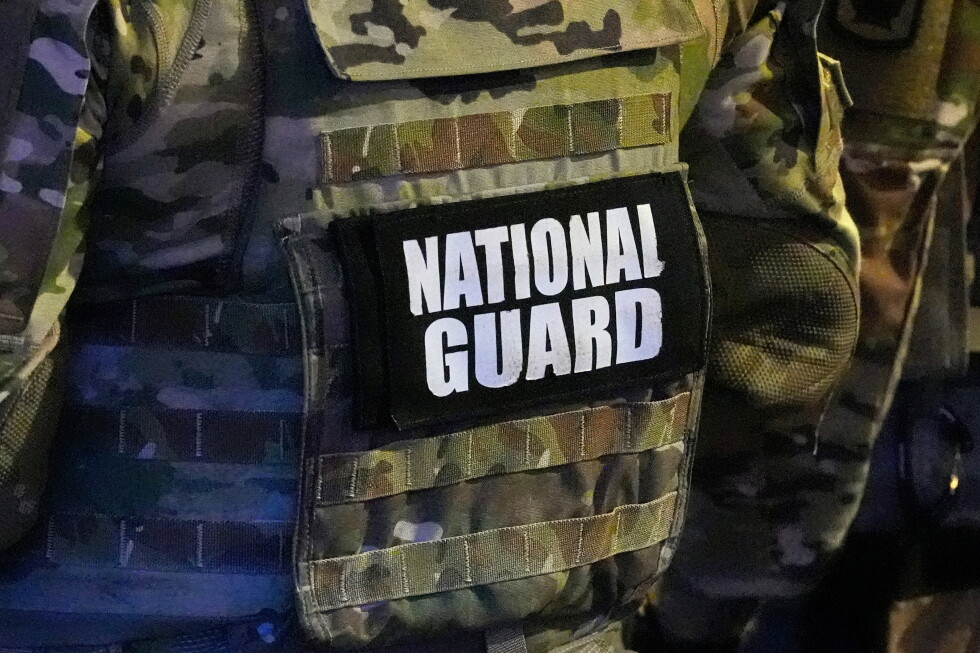
    A high-ranking U.S. National Guard officer has admitted to orchestrating an elaborate multi-year fraud and bigamy scheme that exploited government resources and forged official records to maintain a secret double life, federal prosecutors have confirmed. Forty-year-old Major Collin Welch entered a guilty plea this Tuesday to two key criminal charges: the theft of roughly $54,000 in public funds, and the illegal inducement of a Mongolian woman and her daughter to remain in the United States beyond the terms of their legal visas. He is currently awaiting a sentencing hearing at the U.S. District Court in Washington, D.C., with no date for the proceeding publicly announced as of yet.

    The deceptive scheme traces back to 2019, when Welch was deployed with the Alaska National Guard to a posting at the U.S. Embassy in Ulaanbaatar, Mongolia. It was during this assignment that he met the woman who would become his second wife, and their romantic relationship continued even after he completed his posting and returned to Alaska in 2021. He relocated to Arkansas the following year, and the pair held their first marriage ceremony in Mongolia in 2022. To secure this marriage, Welch created a forged divorce decree that falsely claimed his first marriage to his original spouse had been legally dissolved, court documents show.

    By 2023, Welch had moved to Washington, D.C., alongside his first family, having accepted a new position with the District of Columbia National Guard that required frequent international travel. To keep his double life hidden, he repeatedly misused his official government travel card to rent local hotel rooms in the Washington area, where he would take video calls with his second wife. This subterfuge prevented her from discovering he was actually living full-time with his first family in the district. He also submitted fraudulent reimbursement claims to the federal government and lied to his chain of command to get unauthorized approval for international trips to visit his second spouse, according to the official statement of facts filed alongside his plea agreement.

    Earlier this year, Welch used government funds to cover plane tickets for the Mongolian woman and her daughter to relocate to the United States. After their arrival, he held a second marriage ceremony in Virginia, once again lying about his marital status by claiming he had never been married before. He covered all their living expenses for an apartment in Northern Virginia, but the arrangement collapsed late last year when he attempted to pay rent using forged checks, resulting in the pair being evicted from the unit.

    Throughout the time the two were living in the U.S., Welch was fully aware that their tourist visas had long expired. To maintain the lie that their residency was legal, he forged a wide array of fake official records, including forged correspondence from U.S. Citizenship and Immigration Services, fake Social Security cards, and a falsified Department of Defense letter that falsely claimed the pair were enrolled in the U.S. military’s health insurance program.

    In a statement provided to the court, Welch’s defense attorney Gregory Rosen acknowledged that repeated long-distance deployments — including overseas assignments to Afghanistan and Djibouti, and years spent separated from his first family — created significant personal strain that contributed to Welch’s choices. Even so, Rosen emphasized that his client accepts full accountability for every illegal action he took, noting that this willingness to take responsibility reveals more about Welch’s character than the list of offensive acts alone can convey.