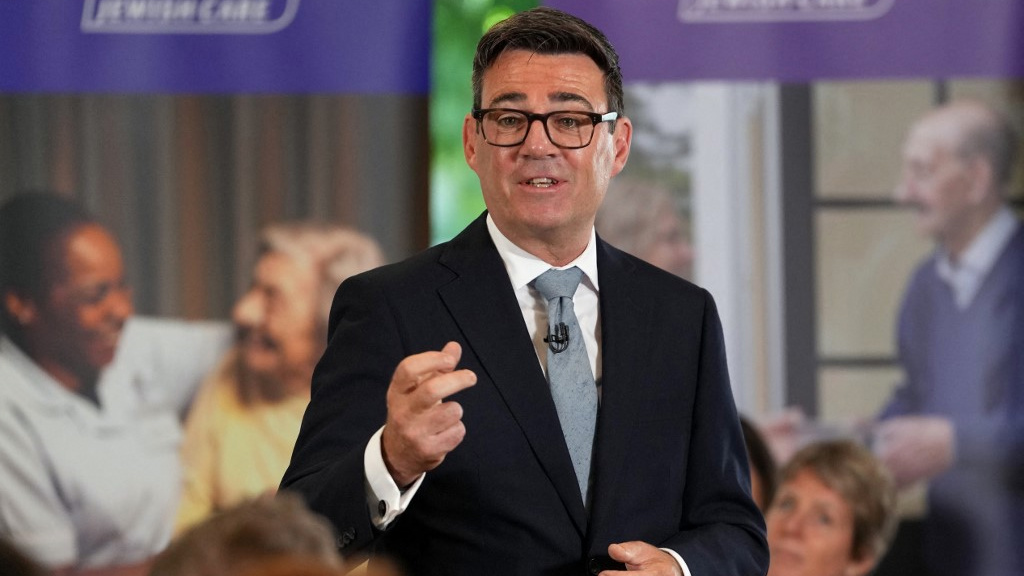
A major political dispute has erupted between the UK’s largest umbrella body for Muslim communities and the Andy Burnham-led government, after a senior cabinet minister repeated longstanding but unproven allegations to justify the administration’s refusal to work with the group.
The Muslim Council of Britain (MCB), which counts more than 500 affiliated Muslim organizations across the country, has publicly condemned Security Minister Dan Jarvis for parroting an old, unevidenced claim that the group has violated British fundamental values without offering concrete specifics. The controversy was sparked earlier this month, when Conservative MP David Simmonds submitted a parliamentary question asking the government to explain its refusal to engage with four Muslim organizations, including the MCB. In a written response published Tuesday, Jarvis reaffirmed the government’s position, stating that the administration has chosen to cut ties with groups that have adopted stances contradicting core UK values and have not formally withdrawn those positions.
Within days, the MCB hit back with an open letter to Jarvis, obtained by Middle East Eye (MEE), pointing out that the same vague allegation was first made by former Prime Minister Rishi Sunak in February 2024. The organization is demanding that Jarvis outline exactly which values the MCB has supposedly contradicted, arguing that a government cannot maintain a policy of non-engagement based on abstract, unspecified claims. The letter also notes a glaring contradiction in the current government’s stance: multiple senior figures in the current administration, including Prime Minister Andy Burnham himself, Defence Secretary, and Equalities Minister, have held formal and informal engagement with the MCB over the course of their political careers.
Burnham, who held engagement with the MCB when he served in the shadow cabinet in 2015, has a long public record of open dialogue with Muslim communities across the UK, a track record the MCB says it hopes he will maintain now that he holds office in Downing Street. “Prime Minister Burnham has a strong record of engaging honestly with communities across this country, and we hope that record continues now that he is in Downing Street,” the organization stated.
The MCB’s challenge comes on the heels of a revealing MEE investigation published earlier this week, which found that no official written records of a formal non-engagement policy with the MCB actually exist. Multiple government departments, including the communities ministry, Home Office, and Cabinet Office, all refused to release any documentation related to the policy in response to Freedom of Information Act requests. When MEE followed up for clarification on the scope and justification of the non-engagement rule, a spokesperson for the Office for Equality and Opportunity only confirmed the policy remains in place but offered no further details.
Mustafa al-Dabbagh, assistant secretary general of the MCB, told MEE that the so-called non-engagement policy is nothing more than an outdated smear that was resolved more than a decade ago. The roots of the boycott stretch back to 2009, when Gordon Brown’s Labour government briefly cut ties with the MCB after its deputy secretary general Daud Abdullah signed the Istanbul Declaration. The government claimed the document called for attacks on Royal Navy vessels enforcing an arms blockade off Gaza, a claim Abdullah repeatedly denied. The MCB quickly clarified that Abdullah had signed the declaration in a strictly personal capacity, after which Abdullah resigned and the 2010 Labour government restored formal engagement. Subsequent coalition and Conservative governments maintained ministerial contact until 2015, and civil servants continued meetings with the MCB until 2020.
It was in 2020 that the MCB published a high-profile dossier documenting hundreds of alleged cases of Islamophobia within the Conservative Party, including among sitting MPs, councillors, and Downing Street advisers. Shortly after that release, civil service engagement was halted, and the Conservative government implemented a full boycott. When Starmer’s Labour Party took power in 2024, the new administration retained the boycott, a decision the MCB says is unjustified given the issue that sparked the original boycott was resolved in 2010.
al-Dabbagh accused Jarvis of misleading Parliament by repeating the discredited smear. “This so-called policy of non-engagement is a relic of the past, built on a smear that has since been proven false, and the Labour government of the day accepted as much in 2010, restoring engagement,” he said. “Our door remains open to all who work for the good of Britain.”
In its formal letter to Jarvis, the MCB accuses the security minister of misrepresenting both the historical record and the MCB’s current positions. The group is demanding full transparency, asking: “What specific evidential basis and assessments underscore a decision that justifies treating a matter resolved by your predecessors in government as still valid 16 years later?” It added that British Muslims deserve clear accountability, noting that the MCB is the democratically selected representative body for more than 500 community groups across the UK.
MEE has confirmed that Jarvis intends to respond to the MCB’s letter, but the government has indicated it currently has no plans to reverse its policy of non-engagement with the organization.