博客

  • Hundreds of thousands line Amsterdam canals for the annual Pride boat parade

    Hundreds of thousands line Amsterdam canals for the annual Pride boat parade

    On a recent Saturday in the Dutch capital, hundreds of thousands of spectators packed the banks of Amsterdam’s iconic canals to cheer on the city’s legendary annual Pride canal boat parade, the centerpiece of this year’s combined World Pride celebration. The high-spirited event unfolded just seven days after a deadly extremist attack targeting a Pride gathering in Berlin left one attendee dead and 29 others wounded, prompting stepped-up security measures across major European Pride events this year.

    Among the 80 vibrantly decorated vessels taking part in the floating procession, one boat carried openly gay Dutch Deputy Prime Minister Rob Jetten. Clad in a crisp white button-down, a black life vest and a gold statement necklace, Jetten waved steadily to cheering crowds lining the waterway as pulsing techno music echoed from speakers along the parade route, joining participants in marking the global LGBTQ+ rights celebration.

    The Berlin attack, which authorities have classified as an Islamic extremist act, unfolded when 30-year-old suspect Abdul Ballout allegedly drove a van into a crowd gathered near the city’s Pride event last Saturday, before attacking additional people with a machete. The following day, Ballout was shot and killed by police during an arrest confrontation in a Berlin suburb. German prosecutors later confirmed the suspect had a documented history of attempting to travel to join the militant Islamic State group.

    In response to the attack, Amsterdam officials moved quickly to implement enhanced security protocols for the city’s World Pride events, while aiming to minimize disruption to attendees. As the parade kicked off, uniformed officers patrolled the canals aboard marked motorboats, and a police helicopter maintained a constant overhead patrol. The caution extended across Germany as well: the same day as Amsterdam’s parade, Hamburg held one of Germany’s largest annual Pride processions with doubled police staffing compared to 2023, with organizers projecting a turnout of roughly 250,000 attendees.

    For many visitors and participants, the decision to attend the Amsterdam event in the wake of violence was an intentional act of solidarity. Rod Lugtenburg, a 55-year-old tourist from Toronto who traveled specifically for World Pride, stood on Amsterdam’s historic Skinny Bridge wearing a rainbow-adorned maple leaf T-shirt as the boats passed. “For me, it’s about acceptance, being able to be who you are,” he said. “I have Dutch heritage and I have always loved the fact that the Dutch have been leading the way” in advancing acceptance and legal protections for the LGBTQ+ community, he added, noting “And Canada is right behind them, so I’m very proud.”

    Despite the Netherlands’ long-held global reputation as a leading haven of tolerance for LGBTQ+ people, the joyful celebration unfolded against a troubling backdrop: a steady rise in reported verbal and physical attacks targeting community members across the country. Just one day before the parade, an Amsterdam court convicted a man of using hate speech at a local preliminary Pride event earlier that week, sentencing him to 40 hours of community service.

    Participants in the parade spanned public and private groups, including official vessels from Dutch government ministries, national military and law enforcement agencies, alongside dozens of LGBTQ+ advocacy organizations and social clubs. The nation’s oldest LGBTQ+ rights group, COC Netherlands, marked its 80th anniversary of activism with a parade boat that carried a policy manifesto calling for continued progress on LGBTQ+ human rights across the country. The boat also featured a large portrait of Marsha P. Johnson, the iconic trans activist who played a central role in the 1969 Stonewall Uprising in New York City — the rebellion that ignited the modern global movement for queer equality.

    This report included contributions from Associated Press correspondent Geir Moulson in Berlin.

  • Hamburg Pride underway with increased security a week after a fatal attack in Berlin

    Hamburg Pride underway with increased security a week after a fatal attack in Berlin

    Just seven days after a deadly extremist attack shook the LGBTQ+ community near Berlin’s annual Pride celebration, one of Germany’s largest annual LGBTQ+ advocacy events — Hamburg’s Christopher Street Day (CSD) Pride parade — kicked off on Saturday with a dramatically expanded security presence to protect attendees.

    Organizers projected that roughly 250,000 participants and spectators would line the route through the center of Germany’s second-largest city, where dozens of parade floats made their way through downtown streets. Ahead of the event, Hamburg’s police chief confirmed that the number of officers deployed to secure the parade would be double the staffing level that was used for the 2024 event, a direct response to last week’s violence in the capital.

    This year’s Hamburg Pride carries the unifying rallying motto: “Queer in solidarity. Take a stand — for a future without fear.” In a moving show of solidarity with the Berlin community, organizers added a last-minute parade float representing Berlin Pride to the procession. Attendees on the Berlin float were asked to wear dark clothing as a quiet mark of respect for the victims of last week’s attack.

    Speaking to German broadcaster RTL television, Hamburg’s Deputy Mayor Katharina Fegebank addressed widespread anxiety that has rippled through both Germany’s queer community and broader society following the violence. “After the brutal attack on the CSD in Berlin, many are unsure in the queer community but also in society whether here and today is the right place,” Fegebank said. “I say, now more than ever.”

    The attack that prompted the heightened security unfolded on the evening of July 25, just hundreds of meters from the closing party of Berlin’s Pride celebration. A driver drove a rented van into a crowd of people before attacking additional bystanders with a machete-style weapon. The violence left one woman dead and multiple others injured, several of them critically. The 21-year-old identified as suspect Abdul Ballout, who was born in Germany to a family of Lebanese descent, was shot and killed during a confrontation with responding police officers the following day.

    Investigators later recovered a pre-recorded video in which a man matching Ballout’s description claims responsibility for the attack and pledges allegiance to the extremist group Islamic State. Prosecutors confirmed that Ballout traveled to Lebanon in 2025, with the explicit intention of crossing into Syria to join Islamic State ranks, and had already made contact with multiple individuals suspected of being members of the group before he returned to Germany to carry out the attack.

  • August’s total solar eclipse will sweep over Spain, Iceland and Greenland

    August’s total solar eclipse will sweep over Spain, Iceland and Greenland

    After more than a century without a total solar eclipse crossing its mainland, Spain is poised to welcome a breathtaking celestial event on August 12, capped by an even longer dramatic astronomical showcase next summer. To amplify the spectacle, the once-in-a-generation eclipse will coincide with two other extraordinary sky phenomena: a six-planet alignment and the peak of the annual Perseid meteor shower, creating a rare triple treat for stargazers across the Northern Hemisphere.

    When the sun, moon, and Earth fall into perfect straight-line alignment on August 12, daytime darkness will descend across parts of the Iberian Peninsula, Greenland, and Iceland near the hour of sunset. The moon’s dark, sun-blocking shadow, called the umbra, will begin its journey near the North Pole and track southward across 8,260 kilometers (5,130 miles) of mostly open Atlantic Ocean, taking 90 minutes to complete its path. The longest period of totality, clocking in at 2 minutes 18 seconds, will occur off Iceland’s west coast. By the time the umbra reaches coastal Portugal and mainland Spain, where crowds of astronomy enthusiasts are already gathering, totality will narrow to just around one minute before the eclipse concludes in the Mediterranean Sea. This event acts as a preview for an even longer total solar eclipse coming in 2027, which will offer up to six and a half minutes of totality as it crosses from southern Spain through North Africa and into the Middle East.

    While only viewers along the narrow path of totality will get to experience the full, jaw-dropping effect of the total eclipse, hundreds of millions of people across a vastly larger geographic area will be able to view a striking partial eclipse. The partial shadow of the moon will reach as far north as Alaska and Siberia, covering most of Canada, the northern United States, nearly all of Europe, and large swathes of West Africa. The degree of coverage decreases the further a viewer is from the path of totality: Dublin will see 94% of the sun blocked, Oslo will see 83%, Montreal 18%, New York 9%, and just 2% coverage will be visible in Norfolk, Virginia. Astronomers stress that proper eye protection via certified special eclipse glasses is non-negotiable for any viewing of a partial eclipse, even when only a tiny fraction of the sun is visible.

    The celestial magic does not end with the eclipse. Before dawn on August 12, six planets will align into a visible arc stretching across the pre-sky, and after nightfall, the annual Perseid meteor shower will reach its peak under a dark new moon. Forecasters note that bright streaking meteors could even pass through the frame of totality, with bright planets and distant stars visible in the darkened sky during the event.

    Eclipse-chasing enthusiasts from around the world are already planning their viewing spots, and many are chasing extra rare phenomena alongside the main event. Michael Zeiler, a veteran eclipse mapmaker who is attending his 13th total solar eclipse, will be positioned on a cruise ship in a Greenland fjord serving as a guest lecturer. He plans to point a video camera north to capture the northern lights if they appear during totality, calling a large solar outburst that triggers auroras the “icing on the cake” for his experience. Zeiler notes that his excitement stems from chasing these extremely rare celestial events.

    Major scientific organizations from across the globe are also leaning into the moment, planning public watch parties, live broadcasts, and cutting-edge research. The European Space Agency (ESA) will host a public celebration in Leon, Spain, and stream live coverage from the Astrophysical Observatory of Javalambre, with NASA, the Italy-based Virtual Telescope Project, and other groups also offering global live coverage. ESA Science Director Carole Mundell emphasized that the eclipse is more than just a scientific event or an astronomical alignment: it is a shared human experience that connects all people to the broader cosmos. Two of ESA’s space telescopes will observe the eclipsed sun and its faint outer atmosphere, the corona. While the agency’s Proba-3 mission — a pair of satellites that create artificial solar eclipses for research — will be in the wrong orbital position to observe the natural eclipse from Earth, it will attempt to capture before-and-after imagery of the sun for comparison.

    U.S. university research teams supported by NASA are also conducting atmospheric studies, launching more than 60 high-altitude balloons from sites in Spain and Iceland to measure changes in Earth’s atmosphere during the brief period of cooling and darkness caused by the eclipse. Project lead Angela Des Jardins of Montana State University noted that even just a few minutes of totality is enough to cause measurable atmospheric changes from the moon’s cold shadow. On a NASA high-altitude research plane, Southwest Research Institute scientist Amir Caspi will chase the eclipse’s shadow at 740 kph (460 mph), extending the total eclipse observation time to nearly three minutes for his team. Four specialized cameras will capture the corona across nine different wavelengths, with Caspi expecting to collect thousands of high-quality scientific images during the 180 seconds of extended observation. Even though the natural eclipse is short, Caspi emphasized that the data gathered will be incredibly valuable for solar research.

    For astronomy fans in Spain, this event is just the first of a rare run of celestial shows. In 2027, an exceptionally long total solar eclipse will cross the southern tip of Spain on August 2, offering up to 6 minutes 23 seconds of totality before tracking across Morocco, Algeria, Libya, Egypt, Saudi Arabia, Yemen, and Somalia. Then in January 2028, an annular “ring of fire” eclipse will complete a unique three-eclipse sequence for the country, what ESA’s Mundell calls a “lucky coincidence.”

    This rarity of this week’s event makes it all the more special: mainland Spain’s last full total solar eclipse occurred in 1912, just two days before the sinking of the Titanic. That 1912 event was a rare hybrid eclipse that shifted between annular and total, offering only a few seconds of totality for most of the mainland, leading many astronomers to date the last major total eclipse to 1905. For Andrei Zhukov of the Royal Observatory of Belgium, who has led more than 60 simulated artificial total eclipses as part of the Proba-3 mission over the past two years, any eclipse — natural or artificial — is a cause for excitement. “We’re looking forward to more eclipses, natural or artificial,” Zhukov said.

    This report was produced by The Associated Press Health and Science Department, which receives educational funding from the Howard Hughes Medical Institute Department of Science Education and the Robert Wood Johnson Foundation. The AP retains full editorial control over all content.

  • Europe’s wildfire crisis shifts as some 200,000 French return but new blazes force thousands to flee

    Europe’s wildfire crisis shifts as some 200,000 French return but new blazes force thousands to flee

    As climate change continues to push Europe’s temperatures well above global averages, a patchwork of progress and crisis has emerged across the continent’s wildfire response: while firefighters successfully corralled a massive blaze in southwestern France’s Gironde region that triggered France’s largest ever peacetime evacuation, fast-flaring new fires have displaced thousands more in southern France and coastal Greece.

    After days of intense containment work, firefighters announced Saturday that the Gironde wildfire, which has already consumed 420 square kilometers of pine forest west of Bordeaux — an area four times the size of Paris — had been held within its existing perimeter, allowing roughly 198,000 evacuated residents and tourists to return to their properties. The blaze is not yet fully extinguished, however: active burning sectors and deep-buried hot spots remain across 240 kilometers of fire edge, and crews have spent nights conducting controlled tactical burns to clear remaining fuel and prevent the fire from spreading beyond containment lines.

    The popular, upscale Cap Ferret peninsula remains under full evacuation order, a precautionary measure driven by its limited road infrastructure. Officials warn that a flare-up of a nearby hot spot could quickly cut off escape routes, trapping anyone who returns. “Today, the fire is still not fixed. It is contained,” Lieutenant Colonel Eric Pitault explained to reporters on Saturday. The ecological toll of the blaze has already extended far beyond human settlements: Allain Bougrain-Dubourg, president of France’s League for the Protection of Birds, estimates millions of wild animals have been displaced or killed by the fire.

    Just hundreds of kilometers away in France’s Mediterranean Var department, a blaze that officials had already declared fully extinguished earlier this week roared back to life on Friday, spreading across 10 square kilometers of dry brush in just six hours — a pace Var’s prefecture described as “faster than a horse at full gallop.” The sudden resurgence, which Var Prefect Simon Babre called “defies understanding,” consumed an additional 1,250 hectares of land in a matter of hours, erasing days of hard-won progress in a single afternoon. As of Saturday, defensive lines protecting at-risk communities held and no additional land had burned, but the fire remains active. Some 2,500 people are still displaced, and 1,300 firefighters remain deployed to the site. Across France Saturday, 20 departments were under orange heat warnings, most concentrated in the east and southeast, with temperatures forecast to hit 35 to 39 Celsius near the Mediterranean, and eight departments categorized as facing high wildfire risk.

    Across the Ionian Sea in Greece, strong gale-force winds have driven a fast-moving wildfire through the popular coastal resort of Porto Germeno, located on the Gulf of Corinth between Athens and Thebes. The blaze ignited Friday near the village of Agios Vasileios, and winds reaching speeds of 55 miles per hour pushed flames through dry vegetation quickly, forcing around 300 people to be evacuated by sea, with additional evacuation orders issued Saturday. Wildfire meteorologist Theodore Giannaros of the National Observatory of Athens called the level of damage “inconceivable,” and estimated 40 to 50 square kilometers of land has already burned, though official figures have not yet been released by Greek authorities.

    Officials have reinforced response efforts, bringing total deployment to 420 firefighters, 20 specialized forest fire teams, 19 fixed-wing aircraft and 11 helicopters. Multiple homes have been confirmed destroyed, but full damage assessments are still underway. Strong winds continue to complicate response efforts, making it too dangerous for aircraft to conduct water drops in high-risk areas. Greece’s fire service reported crews battled 73 separate blazes across the country on Friday alone, and the Athens region and parts of Evia island were placed under the highest possible wildfire alert level Saturday.

    Across the Iberian peninsula, the scale of displacement is even larger: at the peak of this summer’s fire season, wildfires in France and Spain combined have forced more than 330,000 people to flee their homes and vacation sites, stretching firefighting, aerial and emergency response resources thin across multiple simultaneous crises. Climate scientists have repeatedly warned that this season’s extreme wildfire activity is directly tied to human-caused climate change: data from the European Union’s Copernicus Climate Change Service confirms Europe is warming faster than any other continent on Earth, with temperatures rising more than twice the global average since the 1980s. Rising regional temperatures and prolonged multi-year drought have left vegetation parched across the Mediterranean, creating ideal conditions for fires to spread faster and burn with far greater intensity than historical averages.

  • Spain attacks ‘selfish’ response of some EU countries to Ceuta migrant crossings

    Spain attacks ‘selfish’ response of some EU countries to Ceuta migrant crossings

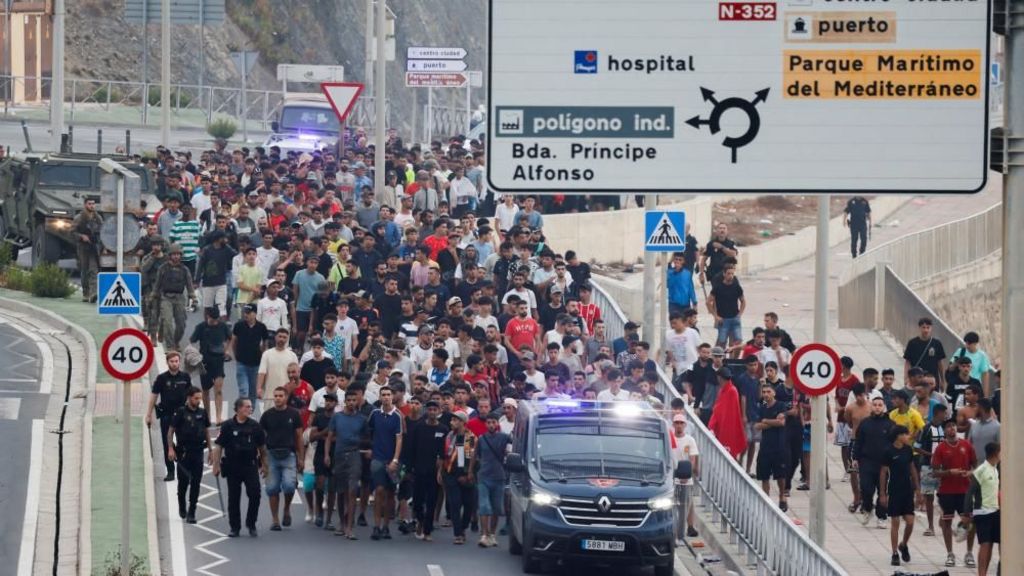
    A sudden mass influx of roughly 60,000 migrants into the Spanish North African enclave of Ceuta has sparked deep political rifts across the European Union, with Madrid publicly condemning the harsh, unilateral actions of several member states as selfish, polarizing and unlawful. The crisis, which unfolded on July 30 when thousands of migrants crossed into Ceuta from Morocco, has already claimed at least 67 lives, Spain’s Interior Minister Fernando Grande-Marlaska confirmed Saturday. By the time of his announcement, local authorities had nearly resolved the on-the-ground emergency, with almost all of the migrants escorted back across the border and daily life in Ceuta resuming, including the reopening of local businesses. In response to the crisis, Spain has also begun deploying an inflatable maritime barrier to block future unauthorized crossings and reinforced security at its second North African enclave, Melilla, which saw smaller-scale crossing attempts.

    Within 48 hours of the initial surge, the Spanish government announced it had fully resecured the Ceuta border and prevented any unapproved movement of migrants toward continental Europe, a fact later confirmed by EU officials who noted no irregular arrivals had reached mainland EU territory. Despite this rapid containment, several EU member states moved quickly to implement punitive measures against Spain. Italy, led by Prime Minister Giorgia Meloni, announced a 30-day temporary suspension of its participation in the EU’s Schengen open border arrangement with Spain, labeling the scenes of the migrant influx “shocking” and framing uncontrolled migration as a threat to European national security. Finland and Denmark quickly threw their support behind Italy’s action, with Czech Prime Minister Andrej Babiš going a step further to call for a full temporary suspension of Spain’s Schengen membership. Other states, including France and Portugal, moved to tighten internal border checks with Spain in response to the crisis.

    Spanish Prime Minister Pedro Sánchez has pushed back fiercely against these actions in an open letter to European Commission President Ursula von der Leyen, pointing out that Ceuta has never been part of the Schengen open border area, making the unilateral border suspensions legally unfounded. Sánchez accused the dissenting governments of acting out of prejudice, misinformation, domestic political opportunism and ignorance, rather than a commitment to European collective responsibility. “While most member states have extended support and solidarity to Spain during this crisis, others have chosen to launch unprovoked attacks,” he wrote, adding that “the European Union cannot afford this kind of selfish, polarising and unlawful reaction.” The Spanish prime minister called for an urgent meeting of EU interior ministers to reaffirm a core principle of the bloc: security of the EU’s external borders is a shared responsibility of all member states, not just the frontline states that share direct land or sea borders with third countries.

    The call for coordinated talks has gained broad traction across the bloc, with 22 of the EU’s 27 member states signing an open letter calling for emergency video conference talks to address the crisis. The group welcomed the ongoing cooperation between Spain and Morocco to facilitate the swift return of migrants, and argued that coordinated action is needed to mobilize existing EU funding and support instruments to help Spain maintain full border control and prevent future uncontrolled crossings. Von der Leyen has echoed criticism of the crisis, stating publicly that images from Ceuta were “unacceptable” and that “we cannot allow anyone to come to our Union without abiding by our rules.” German Chancellor Friedrich Merz also supported Spain’s border security efforts while demanding Morocco immediately take responsibility for accepting returned irregular migrants.

    Outside the EU, the crisis drew sharp comment from the United States, where the State Department framed the incident as a direct consequence of Spain’s liberal immigration policies. Former President Donald Trump labeled the situation a “catastrophe”, falsely claiming it amounted to an “invasion” of hundreds of thousands of people, even though the actual number of arrivals was roughly 60,000, almost all of whom have been returned.

    Spanish authorities have laid blame for the crisis on human trafficking gangs, who exploited a recent Spanish Supreme Court ruling to encourage mass crossings. In June 2026, the court ruled that migrants intercepted at sea attempting to reach Ceuta and Melilla could not be summarily returned to Morocco without full due process. Traffickers spread misleading interpretations of this ruling across social media, sparking the coordinated mass surge, Sánchez explained. He added that Moroccan authorities have been cooperating closely with Spain to resolve the crisis, despite longstanding diplomatic tensions over the two enclaves.

    Ceuta and Melilla, Spain’s two North African enclaves, form the only land border between the EU and Africa, making them a persistent flashpoint for irregular migration attempts by people seeking entry to the bloc. Migrants often cross by swimming several kilometers from Moroccan territory into Ceuta, and surges are common during the summer months, with crossings frequently organized via social media. The 2026 surge is by far the largest on record, dwarfing the 8,000 arrivals that sparked a 2021 diplomatic crisis between Spain and Morocco.

    Underlying demographic and economic pressures in Morocco have also contributed to the continued push for migration: the country faces persistent high youth unemployment, and saw widespread anti-government protests led by Gen Z activists in 2025, with demonstrators demanding better economic opportunities and improved public services. The current crisis also comes amid longstanding tensions over Spanish migration policy: earlier in 2026, the Spanish government approved a major regularization program granting legal status to 500,000 undocumented migrants already residing in Spain, allowing them to integrate into the formal workforce. Meloni, the right-wing Italian prime minister, criticized the policy at the time, claiming it would create spillover impacts for Spain’s neighboring countries. Just one month before the Ceuta crisis, the European Parliament approved a new set of stricter EU-wide migration rules granting broader powers to authorities to return irregular arrivals to their origin countries.

  • Infantino has lost UEFA’s ‘confidence’ despite withdrawal of ‘shabby deal’

    Infantino has lost UEFA’s ‘confidence’ despite withdrawal of ‘shabby deal’

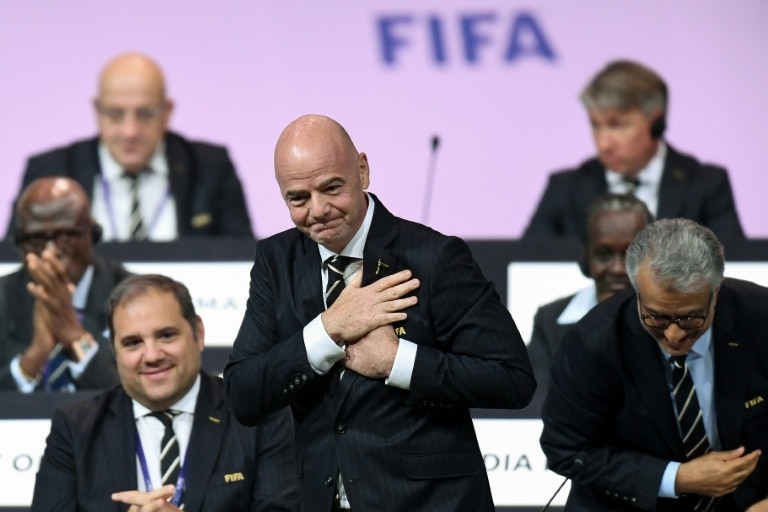
    The long-simmering tensions between global football’s two most powerful governing bodies have erupted into open confrontation after UEFA formally declared that FIFA President Gianni Infantino has lost the confidence of European football and a large swathe of the wider global football community. The break in trust follows the high-profile collapse of a controversial plan to allow private investment in FIFA’s flagship events, including the men’s World Cup and Club World Cup, which was scrapped only after widespread international backlash from confederations across the globe.

    Infantino’s proposal, which had been drafted behind closed doors, centered on the creation of a new commercial subsidiary called FIFA Forward Enterprise (FFE). Valued at an estimated $20 billion, the subsidiary was projected to raise up to $4.2 billion in private capital, with FIFA promising a $20 million one-time payout to each of its 211 member associations by early 2027, alongside increasing core funding for the 2027–2030 cycle from $8 million to $20 million per member. But the plan faced immediate and fierce opposition from UEFA, which derided the proposal as a “shabby, back room, opaque deal” and threatened a full boycott of all FIFA competitions if Infantino attempted to force the proposal through. Facing overwhelming opposition, Infantino and FIFA were forced to withdraw the plan entirely.

    In a hard-hitting official statement released after the withdrawal, UEFA made clear that the damage to trust could not be undone by the plan’s cancellation. The European governing body noted that the controversy comes just weeks after FIFA and Infantino celebrated what was widely deemed a successful expanded 48-team World Cup hosted across three North American countries, a high that has now been completely overshadowed by the private investment fiasco.

    UEFA’s statement argued that the 56-year-old Swiss Football administrator has broken core promises he made when he was first elected FIFA president in 2016. At the time of his initial election, Infantino pledged to bring full transparency to FIFA’s governance and emphasized that all FIFA funds belonged to its member associations, not to the FIFA president personally. “On both these promises, he has failed to deliver,” UEFA said. “The shabby, back room, opaque deal he hatched and tried to force through were anything but transparent. And with reserves standing at over $5 billion, he has also failed to use associations’ money for the benefit of the game.”

    The governing body added that secret, fast-tracked policy proposals have no place in global football governance, and it is time for a full reckoning to prevent similar oversteps from occurring in the future. “We cannot keep going on like this with secret schemes on fast track timescales,” the statement read. “In the coming days and weeks, UEFA will work with its member associations and in close cooperation with other confederations to reflect on how this happened and devise a plan to make sure that it cannot occur again. That review should be thorough and fundamental. No option should be off the table.”

    The collapse of the plan and the public loss of confidence marks a major turning point for Infantino, who was widely expected to win re-election unopposed for a third and final term as FIFA president next year. Political analysts of global football now expect the public rebuke could clear a path for a challenger to emerge and contest the election. This confrontation is the latest escalation of long-running tensions between UEFA and FIFA: UEFA president Aleksander Ceferin already boycotted the 2026 World Cup final in protest of FIFA’s policies earlier this year.

    While UEFA framed the withdrawal of the controversial proposal as a victory for the integrity of global football, the organization stressed that the fight to repair governance at FIFA is only just beginning. “This is a victory for the whole game. But it must not be the end of the story,” the statement concluded. “The proposal has gone. The task of rebuilding trust in FIFA has only just begun.”

  • Uefa has ‘lost confidence’ in Infantino’s Fifa leadership

    Uefa has ‘lost confidence’ in Infantino’s Fifa leadership

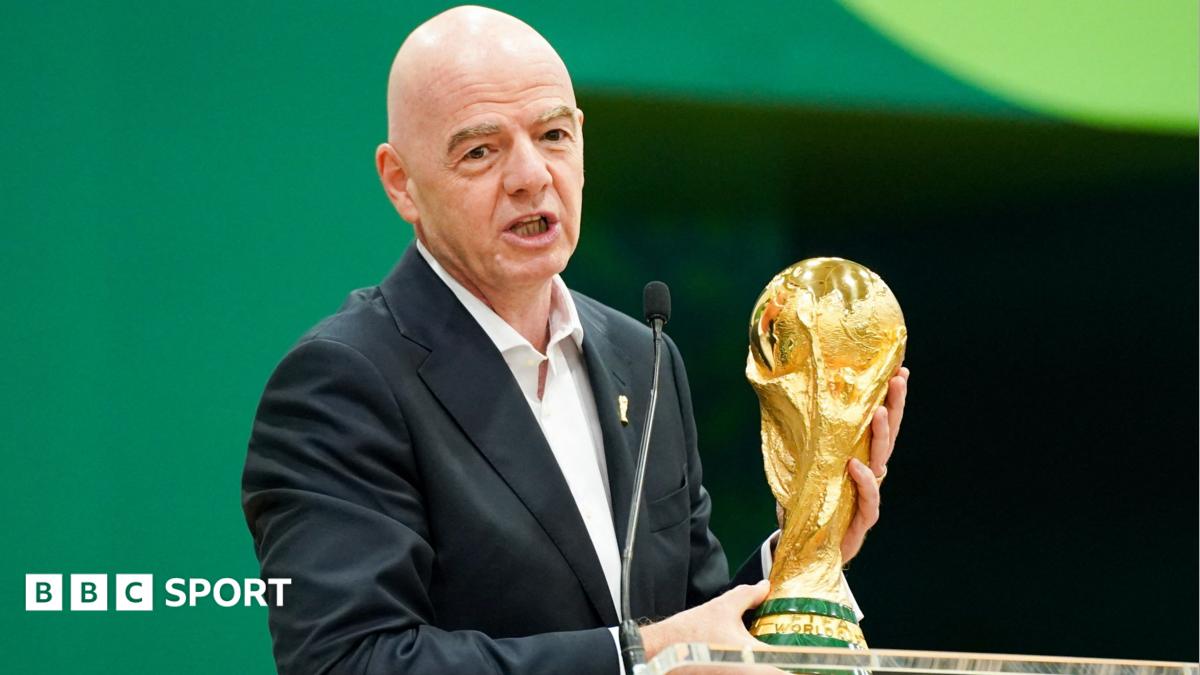
    The rift at the top of global football has deepened dramatically after European football’s governing body Uefa announced it has lost all confidence in Fifa president Gianni Infantino, in the wake of the abrupt scrapping of a controversial private investment plan for the body’s top competitions.

    Infantino, who has held the role of Fifa president since February 2016 and is currently seeking a fourth term in office ahead of the Fifa Congress scheduled for next March, confirmed on Saturday that the governing body would no longer move forward with the proposal to sell minority stakes in a new commercial subsidiary that would manage Fifa’s flagship tournaments including the men’s World Cup. The plan, which was first leaked to media earlier the same week, would have created Fifa Forward Enterprise (FFE), allowing external private investors to acquire non-controlling shares in the entity.

    Behind the proposal, developed with analysis from investment bank JP Morgan, was the argument that the World Cup – the world’s most widely viewed global sporting event – was currently under-monetized by Fifa. The plan projected that expanded tournaments would deliver an increased payout of up to €24 million (£20.5 million) per member association by the 2035-2039 cycle. Critics quickly pointed out that the proposal made no mention of investment or development for the women’s game, and the lead investor group was set to be led by Thrive Eternal, an American venture capital firm founded by Joshua Kushner, brother of former US President Donald Trump’s son-in-law Jared Kushner. The New York Post, which first broke the news of the plan’s withdrawal, reported that the entire ordeal had become a “brand nightmare” for Kushner.

    Opposition to the proposal spread rapidly across global football confederations within days. Uefa held a vote on Thursday, announcing it would boycott all future World Cups if the plan moved forward, stating that the World Cup “cannot be treated as an investment product”. Concacaf, the governing body for North, Central American and Caribbean football which hosted the 2024 men’s World Cup this summer, confirmed its members rejected the plan, with anonymous sources adding that the vast majority of regional associations had already lost confidence in Infantino. The Asian Football Confederation also joined the opposition, voicing solidarity with Uefa and Concacaf.

    Internal opposition also grew inside Fifa itself. Chief operating officer Kevin Lamour admitted that the governing body’s own administration had been “deceived” about the project. Carlos Cordeiro, Infantino’s senior adviser on global strategy and governance, resigned in protest, calling the proposal “a bad deal for football” that would “mortgage football’s future”.

    Shortly after Fifa confirmed the plan’s withdrawal, Uefa released a scathing, lengthy statement that marked one of the most severe public attacks ever launched against a sitting Fifa president. While the body welcomed the scrapping of the plan as “a victory for the whole game”, it went on to withdraw its confidence from Infantino’s entire leadership, noting that the move reflected the views of many other members of the global football family beyond Europe.

    Uefa directly called out Infantino for breaking 2016 campaign promises he made when first running for Fifa president, when he pledged that Fifa would operate with full transparency, and that Fifa’s funds belonged to member associations and must only be used for the development of global football. “On both these promises, he has failed to deliver. The shabby, back room, opaque deal he hatched and tried to force through were anything but transparent,” the statement read.

    The European body added that it would not tolerate “secret schemes of fast-track timescales cooked up by faceless individuals and of dubious benefit to the game”, calling for all individuals responsible for the proposal to be identified and held accountable. Uefa also announced it would work with member associations and other confederations to implement new safeguards to prevent similar attempted deals from moving forward in the future, and will propose reforms to Fifa’s existing Forward resource distribution programme to unlock idle funds held in Fifa’s bank accounts for grassroots football development. “We don’t need to sell off the family silver to pay for it,” the statement noted. “This is a victory for the whole game. But it must not be the end of the story. The proposal has gone. The task of rebuilding trust in Fifa has only just begun.”

    Chief football reporter Simon Stone notes that any hope Infantino held of limiting reputational damage from the failed plan has been entirely destroyed by Uefa’s open attack. While the Asian Football Confederation framed its criticism in more diplomatic terms, Uefa’s rebuke was unvarnished and harsh, using language like “shabby” and “opaque” to condemn the process. As of Monday morning, Fifa and Infantino have not issued any public response to Uefa’s statement. With the 2026 presidential election just months away, Infantino is now facing unprecedented pressure, with no visible public support rising to counter the widespread opposition across the sport’s leading governing bodies.

  • Migrants depart Spain’s N. Africa enclave as EU tightens borders

    Migrants depart Spain’s N. Africa enclave as EU tightens borders

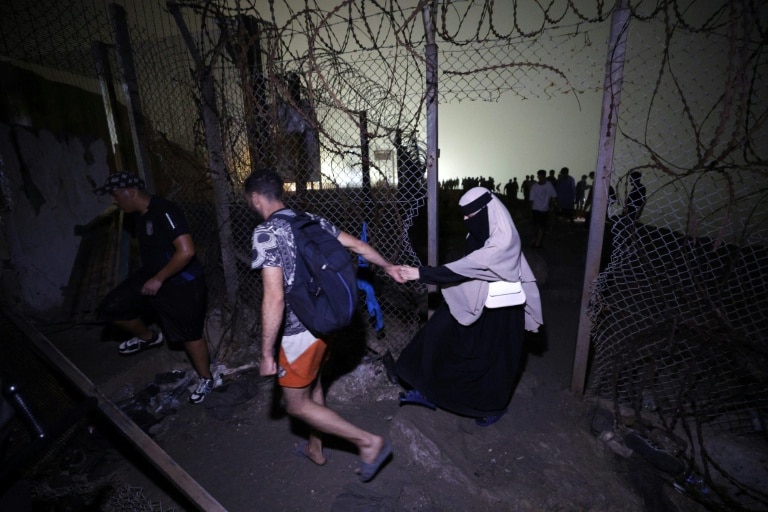
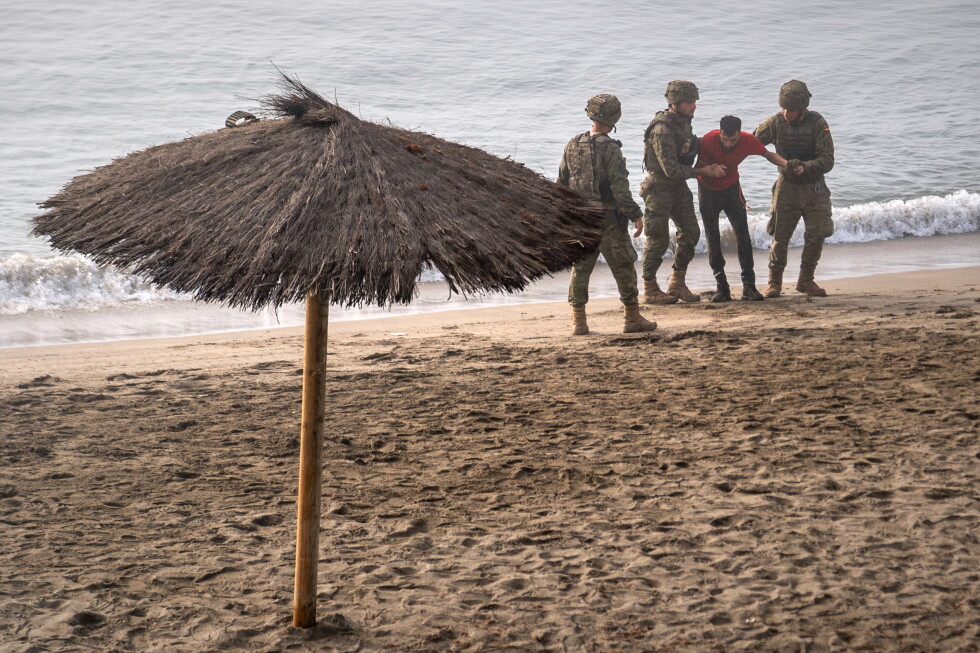
    A sudden, unprecedented wave of migration into Spain’s North African territory of Ceuta has sparked political upheaval across the European Union, with most of the 60,000 new arrivals having returned to neighboring Morocco by the end of the first week of the crisis. The mass crossing, which unfolded over just a few days, has reignited long-simmering divisions over EU border policy and exposed rifts between member states over how to handle irregular migration. By Friday evening, Spanish interior ministry data confirmed that more than 48,000 migrants had already crossed back into Morocco, with remaining arrivals steadily escorted out by Spanish security forces over the following day. AFP correspondents on the ground observed Spanish soldiers and police monitoring the border crossings closely, guiding any migrants who lingered on coastal paths back across the boundary without incident. To enter Ceuta, the vast majority of migrants swam around a small, partially submerged border barrier that extends into the Mediterranean Sea. The dangerous crossing claimed at least 34 lives, according to official tallies. For many of the migrants, the journey was driven by a desperate search for opportunity or family reunion. Nineteen-year-old Senegalese migrant Souleil Boyan told AFP that his only goal was to reach mainland Europe to find work and build a stable life. “We all know that in Africa there isn’t much opportunity,” Boyan explained as he waited for processing at a Ceuta migrant center alongside dozens of other sub-Saharan African arrivals. Forty-two-year-old Moroccan migrant Soufian, who works 12-hour daily shifts as a security guard for just 10 euros ($12) a day, said he crossed to see his ill mother who lives in Madrid. “Even though there’s no food, nothing at all, I’ll endure anything to see my mother,” he said, adding that for most migrants, the draw of a better future that is unavailable in their home countries is motivation enough to attempt the dangerous crossing. Soufian added that crossing took mere minutes after he learned the border had become passable from a friend, as his coastal hometown of Martil sits less than 40 kilometers from Ceuta. The unexpected mass influx triggered immediate political panic across the EU, with several member states moving quickly to tighten their own border controls with Spain. France ramped up checks along its shared border with Spain, announcing it would increase its police and gendarme presence fivefold to 334 officers by Saturday. Italy went further, suspending its participation in the Schengen Area’s visa-free free movement agreement with Spain for a period of one month. Multiple EU governments have even floated proposals to suspend Spain’s full membership in the Schengen zone in response to the crisis, though Spanish Foreign Minister Arancha González Laya has insisted the integrity of the border-free zone remains fully guaranteed. Spanish Prime Minister Pedro Sánchez blasted what he called the “selfish” response from some EU member states in a formal letter sent to the leaders of the European Commission and European Council, and called for an emergency video summit of the bloc’s interior ministers to address the crisis. Spain had already deployed hundreds of additional troops, police officers, drones, patrol boats, and divers to the centuries-old Spanish outpost to manage the surge. In the overnight hours leading into Saturday, AFP journalists saw dozens of migrants sleeping on Ceuta’s beaches and wandering the city’s coastal streets after crossing. At the border crossing, many departing migrants bid casual “adios” to Spanish officers before crossing back into Morocco. Scattered buoys and flippers left behind by migrants who swam the border still littered the shoreline and floated in shallow water near the fence, while security personnel patrolled the fog-shrouded coastal waters in rigid inflatable boats. To prevent future unauthorized crossings, Spanish authorities have already installed a new 500-meter pneumatic barrier near the main border post to reinforce perimeter security. The root cause of the sudden mass migration surge remains unclear, as Moroccan authorities have yet to release an official statement on the event. Ceuta, which spans just 18.5 square kilometers, and the nearby Spanish enclave of Melilla make up the EU’s only two land borders with the African continent. Past mass migration surges into Ceuta have coincided with diplomatic tensions between Spain and Morocco, including a 2021 incident that saw more than 10,000 migrants cross into the enclave over just 48 hours.

  • Death toll in Spain-Morocco border crisis in Ceuta reaches 67

    Death toll in Spain-Morocco border crisis in Ceuta reaches 67

    CEUTA, Spain – A devastating cross-border migration crisis between Spain and Morocco has entered a deadlier phase, with Spanish authorities confirming Saturday that the total number of fatalities has climbed to 67. The crisis unfolded earlier this week when tens of thousands of irregular migrants successfully breached the border defenses of Ceuta, a small Spanish autonomous territory located on the North African coast. In response to the unprecedented influx that has strained local resources and security capabilities, the Spanish government has announced urgent defensive measures: the construction of a new containment barrier along the breakwater fence that extends out into the adjacent sea. This barrier is designed to prevent additional unauthorized entries into the territory, as regional officials work to manage the ongoing humanitarian and security fallout from one of the most significant border events in the region in recent years.

  • Search resumes for missing climbers after avalanche on Pakistan’s Broad Peak

    Search resumes for missing climbers after avalanche on Pakistan’s Broad Peak

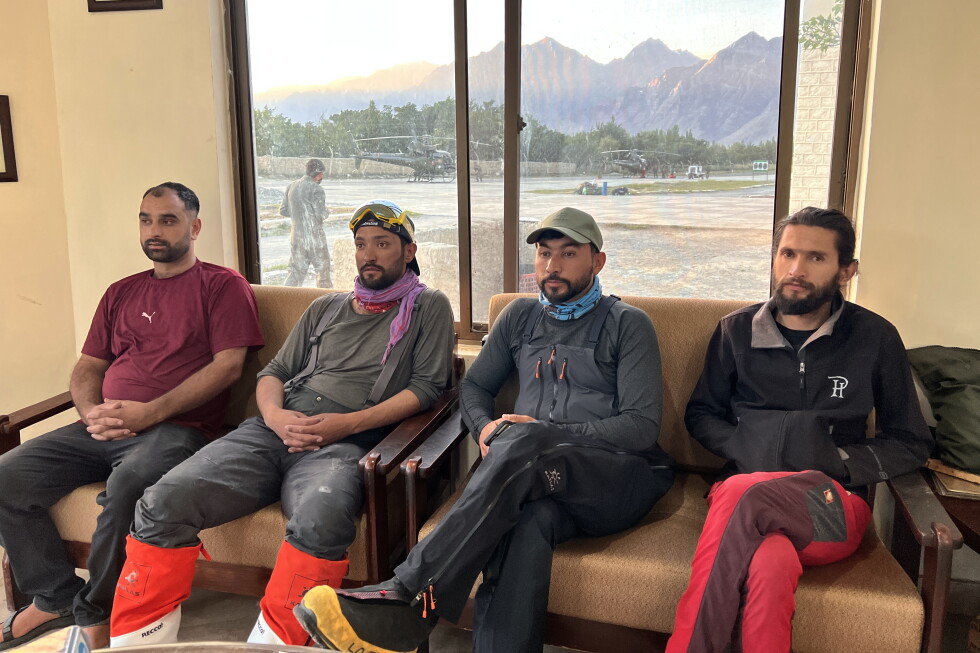
    ISLAMABAD, Pakistan – Rescue teams supported by military aviation assets have restarted search operations for six missing mountaineers who were swept away in a sudden avalanche on Pakistan’s Broad Peak, officials confirmed Saturday. The recovery effort comes one day after three of the four fatalities located so far were extracted from the disaster site, deepening a tragedy that has hit the global mountaineering community.

    Local law enforcement official Tahir Khan outlined the status of victim identification and transport Saturday. The remains of Omani climber Nathira Ahmed are being airlifted to Pakistan’s capital, Islamabad, for final processing and repatriation. Meanwhile, the bodies of American climber Mallory Geis and Nepalese climber Bahadur Gurung are currently held at a medical facility in Skardu, the primary urban hub for expeditions in Pakistan’s northern Gilgit-Baltistan region.

    Despite the continuation of ground and air search efforts, officials have acknowledged that optimism for finding the missing climbers alive is rapidly diminishing. Karrar Haidri, vice president of the Alpine Club of Pakistan, shared that the entire 10-member expedition lost all contact with its base camp on Thursday, moments after the avalanche hit the team as they were ascending the 8,051-meter mountain, one of the world’s 14 peaks over 8,000 meters.

    The full expedition roster, released by the Alpine Club, includes five Nepalese climbers, the Omani and American climbers, Pakistani climber Sohail Sakhi, a Chinese climber identified publicly only by the surname Wang, and a sixth foreign member whose identity has not yet been released to the public. The expedition was organized under the leadership of famed high-altitude mountaineer Nirmal Purja, a Nepal-born former British Army soldier known widely to the climbing community as Nims Dai. Purja earned global acclaim in 2019 when he completed ascents of all 14 of the world’s 8,000-meter peaks in a groundbreaking 189 days, a feat that was later chronicled in the popular Netflix documentary *14 Peaks: Nothing Is Impossible*. Purja’s record was ultimately broken in 2023 by another climber.

    Pakistan-based adventure travel firm Moving Mountains announced the expedition’s departure in late April, sharing that the team had departed for the remote starting town of Askole and extending well wishes for a safe summit bid. According to the company’s public profile of the team, the Broad Peak attempt marked Geis’ first effort to summit an 8,000-meter peak in Pakistan. For Sakhi, the expedition was planned to be his final major climb before retirement. A veteran guide for Moving Mountains, Sakhi is also an accomplished geographer and high-altitude photographer who has already summited many of the world’s most iconic high peaks.

    High-altitude climbing in northern Pakistan carries inherent and persistent risk: avalanches, falling rock and ice, extreme altitude sickness, and rapidly shifting weather patterns make accidents a regular occurrence for expedition teams operating in the region. Multiple experienced climbing teams are assisting military personnel in the ongoing search for the six missing climbers, with army helicopters conducting regular aerial scans of the avalanche path to locate any signs of the missing team members.