A devastating explosion at a Moscow restaurant has claimed at least three lives and left 15 other people wounded, regional law enforcement authorities have confirmed.
The incident unfolded shortly after 8:00 p.m. local time, which corresponds to 17:00 GMT, at a dining establishment located on Kudrinskaya Square, just a short distance from Moscow’s bustling city center. As of the latest updates, officials have not yet confirmed the exact cause of the blast. However, the independent Russian Telegram channel Baza has cited early on-site indications that the explosion originated in the restaurant’s kitchen area.
A witness who spoke to Baza shared chilling details of the aftermath, noting that the venue was hosting a wedding reception when the explosion occurred. Around 50 guests were in attendance at the event, the witness added, describing horrific scenes of bloodied victims being carried out of the damaged building by first responders.
In the immediate aftermath of the incident, local authorities moved quickly to close all vehicle access to roads surrounding Kudrinskaya Square. The disruption also extended to a planned community cycling event: dozens of cyclists had been assembling nearby for a scheduled evening group ride through the capital, which organizers called off following the blast.
Footage captured and released by Russian state-owned news agency RIA shows a heavy law enforcement presence at the cordoned-off site, with heavily armed officers deployed to secure the area and bar unauthorized public access. Investigations into the cause and circumstances of the explosion are ongoing.
博客
-
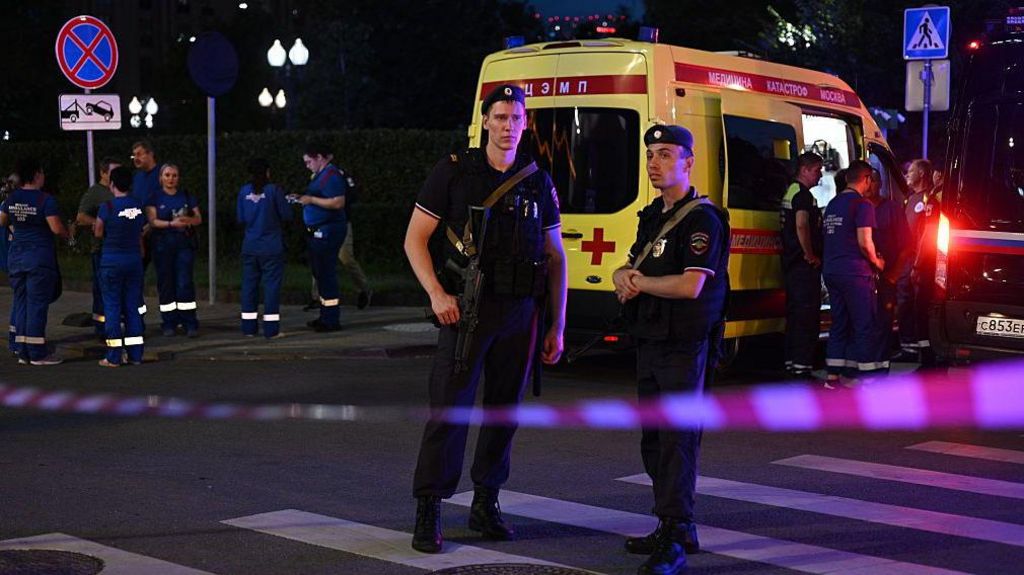
Three killed in Moscow restaurant explosion
-

3 people killed, 15 wounded in Moscow restaurant explosion
A devastating explosion ripped through a restaurant located in the heart of Moscow on Saturday, leaving at least three people dead and triggering an immediate emergency response, according to Russian state media reporting citing local government authorities. Beyond the fatalities, at least 15 people were wounded in the blast, with the extent of their injuries currently being clarified by medical and law enforcement teams. Multiple response teams, including specialist investigators, forensic evidence collection experts, and emergency service personnel, have deployed to the incident site on Kudrinskaya Square in central Moscow to secure the area and conduct a full probe, RIA Novosti, Russia’s state-run news agency, confirmed. The Moscow Investigative Committee, the body overseeing the official inquiry into the incident, told the outlet that authorities are still working to confirm multiple key details, including a final, definitive count of the dead and injured, and what exactly caused the explosion to occur.
-

Will Canada’s WestJet airline strike go ahead – and can I get a refund?
As Canada enters one of the busiest summer holiday travel weekends of the year, tens of thousands of passengers are bracing for widespread flight disruptions after flight attendants at WestJet, the country’s second-largest air carrier, issued a 72-hour strike notice that will expire early Sunday morning. Unless last-minute negotiations between the airline and the flight attendants’ union deliver a breakthrough deal, 6,400 cabin crew represented by CUPE 8125 will walk off the job starting 02:01 EST on Sunday.
The labour dispute centers on long-running disagreements over ground pay, a core compensation issue that has divided the two sides since collective bargaining first launched in September 2025. Last month, union members voted by an overwhelming 99% margin to authorize a strike, after years of contention over how the airline compensates crew for pre-departure work. According to CUPE 8125, WestJet flight attendants are often forced to work up to 35 unpaid hours each month completing routine ground duties, including passenger boarding, safety inspections, assisting mobility-impaired travelers, and waiting out ground delays. “Boarding, safety sweeps, assisting passengers, and ground delays are entirely on our dime,” union representatives explained on their official campaign website, pushing for sweeping changes to the current pay structure.
WestJet defends its existing pay model, which compensates crew based on block hours—time counted from when an aircraft pushes back from the departure gate to when it parks at the arrival gate. The airline notes this structure is the industry standard for cabin crew across North America, and argues that block hour wages already incorporate compensation for pre-takeoff and post-landing duties. The Calgary-based carrier, which operates services to more than 130 domestic and international destinations, adds that current hourly wages for flight attendants range from C$28 to C$58, putting total compensation in line with sector averages.
Alia Hussain, president of CUPE 8125, emphasized that the union’s top priority remains reaching a fair agreement without disrupting travel plans for thousands of summer vacationers. “We have been clear about what needs to change, and we have worked hard to reach a fair deal,” Hussain said, adding that “the parties are still too far apart on some key issues” as the strike deadline approaches. Both sides confirmed that active negotiations are still ongoing as of Saturday, leaving a narrow window to avoid a work stoppage.
In anticipation of a potential strike, WestJet has already begun proactive steps to minimize chaos for passengers. The airline pre-emptively canceled 81 scheduled flights on Saturday, with additional disruptions expected if the strike proceeds, to avoid stranding passengers and aircraft at airports across the country. WestJet has also rolled out fee-free change and cancellation policies for all passengers booked to travel between Thursday and Tuesday, allowing travelers to adjust their plans at no extra cost. “If a strike leads to cancellations or delays, impacted guests will be refunded or re-accommodated, as applicable,” the airline said in an official statement. The carrier has urged all passengers to check their flight status regularly via its mobile app and website before heading to the airport.
Under Canadian airline passenger protection regulations, WestJet is legally required to rebook impacted passengers on the next available flight operated by either its own fleet or a partner airline. If no suitable seats are available through those options, the carrier must arrange rebooking on a competing airline to get passengers to their destinations at no additional cost. The airline noted that regional WestJet Encore Q400 flights and WestJet codeshare flights operated by partner carriers will not be impacted by the strike, even if cabin crew walk off the job. The potential shutdown of core WestJet operations comes during one of the busiest long travel weekends of the Canadian summer, when millions of people travel to visit family and take vacations, raising the risk of cascading delays across the country’s air network if a strike proceeds.
-
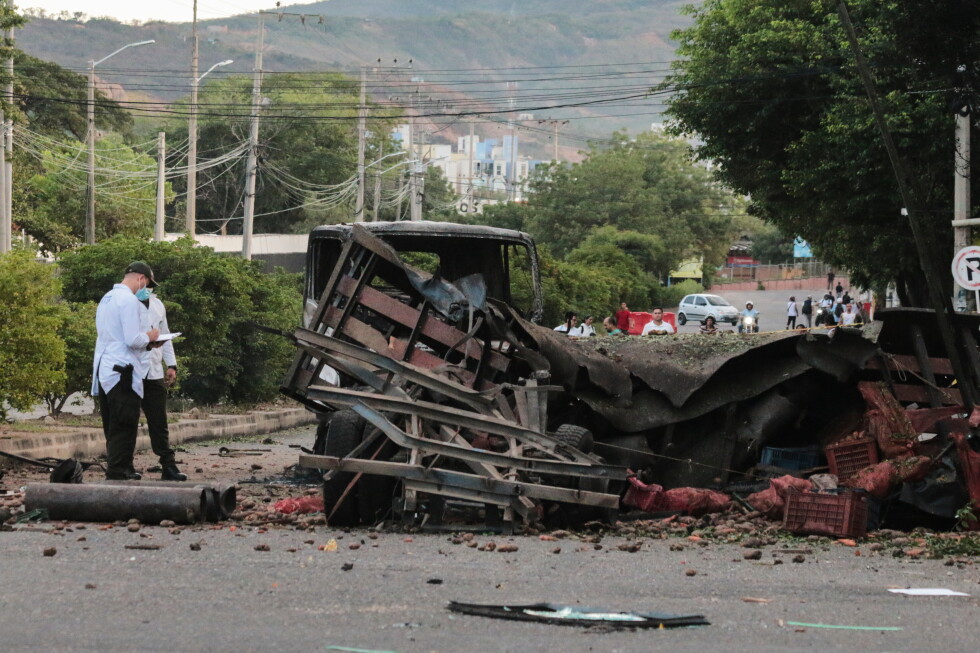
Truck explodes outside Colombia police base, injuring 11 officers and killing a dog
BOGOTÁ, Colombia – A pre-dawn explosive attack targeting a provincial police headquarters along Colombia’s volatile border with Venezuela has left 11 police officers injured and killed a working police dog, with the Colombian government placing blame squarely on the country’s last remaining major insurgent group, the National Liberation Army (ELN).
The blast unfolded Saturday morning in Cúcuta, a strategic border city that has long been a battleground for competing drug trafficking organizations and rebel factions fighting to control lucrative cross-border smuggling corridors. According to General William Rincon, director of the Colombian National Police, the explosive device was hidden in an unoccupied truck parked directly outside the Norte de Santander Provincial Police Headquarters. The powerful detonation destroyed most of the building’s roof and shattered glass across the structure.
Rincon condemned the assault in blunt terms, calling it “a vile terrorist attack” and affirming that law enforcement would not pause operations until all responsible parties are apprehended and held accountable through the judicial system.
Colombian Defense Minister Pedro Sanchez echoed the accusation against the ELN in a post on social platform X, announcing a $60,000 reward for any information that leads to the capture of the bombing’s planners and perpetrators.
The attack comes at a critical political juncture for Colombia, just one week before the inauguration of incoming president Abelardo de la Espriella, an ultra-conservative leader who has campaigned on an explicit promise to end all ongoing peace negotiations with the country’s remaining armed insurgent groups. De la Espriella will be sworn in next Friday in Cali, a city that has also seen recent rebel attacks in recent months.
Founded in the 1960s by a coalition of union leaders, student activists and peasant organizers fighting for structural social change, the ELN has waged a low-intensity insurgency against successive Colombian governments for nearly 60 years. Today, Colombian authorities estimate the group has roughly 6,000 active fighters operating across Colombia and in neighboring Venezuela, and has evolved far from its founding ideological roots. Outgoing President Gustavo Petro, a left-wing leader who made peace talks a core priority of his administration, has repeatedly accused ELN leadership of operating as “drug lords dressed up as guerrilla fighters,” as the group now derives most of its revenue from illegal activities including unregulated gold mining and cocaine trafficking.
Petro, who was elected in 2022, centered his security strategy on a policy called Total Peace, which launched parallel negotiation processes with multiple armed groups across the country. Talks with the ELN collapsed early last year, however, after the group launched a series of attacks in rural areas north of Cúcuta that killed an estimated 78 people and forced more than 56,000 residents to flee their homes.
Critics of Petro’s peace strategy argue that ceasefires granted to armed groups during negotiations allowed many factions to regroup, rearm, and expand their control over illegal smuggling routes and rural territories. The current security landscape was shaped in part by the 2016 peace deal between the Colombian government and the Revolutionary Armed Forces of Colombia (FARC), which led to the disarmament of more than 13,000 FARC guerrillas. While the deal ended decades of large-scale conflict, it also left a power vacuum in many remote rural regions that smaller groups including the ELN have moved aggressively to fill.
De la Espriella, the incoming president, has already laid out a starkly different approach to the ELN and other criminal groups, promising a massive increase in military pressure to counter insurgent activity. He has also pledged to resume the controversial aerial fumigation of coca crops, the raw material used to produce cocaine, a policy that was paused under Petro’s administration out of concern for environmental and public health impacts.
-

Italy putting nearly all major cities on highest heat alert
A sweeping heatwave, fueled by a strengthening North African subtropical anticyclone hovering over the Mediterranean, has pushed most of Italy’s major urban centers into the country’s highest temperature risk category, triggering urgent public health warnings across the continent as wildfires rage through multiple southern European nations.
Italian health authorities confirmed Saturday that 19 cities stretching from the northern industrial hub of Milan to the southern metropolis of Naples, including the capital Rome and canal city Venice, are already under a red alert for extreme heat. By the start of the coming week, that number will jump to 25 of Italy’s 27 major population centers, leaving only two locations – Reggio Calabria on the southern tip of the Italian mainland and the Sicilian city of Messina – on the second-highest amber warning level.
Officials stress that the risk of heat-related illness extends beyond traditionally vulnerable groups, which include older adults, infants and young children, and people living with chronic medical conditions. Even healthy, physically active people face dangerous health impacts from the current conditions, they warn. Residents in high-risk areas have been instructed to stay indoors between 11 a.m. and 6 p.m., avoid prolonged exposure to heat and direct sunlight, and maintain steady hydration to prevent heat stroke and other heat-related emergencies.
Italy’s extreme heat alert comes as a cascade of overlapping heatwaves across the continent has created tinder-dry conditions ideal for the spread of destructive wildfires. Across Greece, France, Portugal and Spain, thousands of firefighters are working around the clock to contain blazes that have already burned hundreds of thousands of hectares of land.
In southeastern France, local authorities reported Friday evening that a wildfire that had been contained for several days reignited in the Var region, forcing the evacuation of roughly 2,500 residents and visitors. In the southwestern Gironde region, by contrast, a large wildfire that displaced hundreds of thousands of people has finally been brought under control, allowing roughly 200,000 evacuated residents to return to their homes over the weekend.
In Greece, hundreds of people, the majority of whom were traveling tourists, were evacuated by sea from the coastal town of Viotia after wildfires surrounded the area, cutting off overland escape routes. EU climate data shows that 2026 is already on track to be an unprecedented year for wildfire damage across the Iberian Peninsula: Spain has seen more than 200,000 hectares of land burned by August, a total roughly five times the average amount burned over the same period in a typical year. Portugal has also recorded far more burned area than the seasonal average.
The cascading extreme weather events align with long-term climate trends documented by leading scientific bodies. The Copernicus Climate Change Service confirms that climate change is driving global temperature increases, and Europe is warming faster than any other continent – heating at twice the rate of the global average. This accelerated warming has triggered a steady rise in the frequency and intensity of summer heatwaves, increased strain on regional water supplies, and created more favorable conditions for large, destructive wildfires across the continent.
-

Brentford sign Sangare for club record fee
English Premier League side Brentford has officially announced the acquisition of highly-rated Malian central midfielder Mamadou Sangare from French club Lens, in a deal that breaks the club’s previous transfer record. The 24-year-old rising star has put pen to paper on a five-year contract with the west London club, which includes an optional 12-month extension that could extend his stay until 2031.
Brentford has not publicly disclosed the exact transfer fee, but confirmed that the sum paid for Sangare exceeds the previous club record of £42.5 million spent to sign Dango Ouattara from Bournemouth in the summer of 2024.
Speaking after the transfer was finalized, Brentford interim head coach Keith Andrews explained that the club had scouted Sangare for an extended period, and had prioritized adding him to the squad ahead of the new season. “Mamadou has been on our radar for quite some time, and he was a player we were really eager to bring to this club,” Andrews said.
After a series of loan spells that allowed him to develop his game and build consistency, Sangare delivered a breakthrough 2024-2025 campaign with Lens. He was a key contributor to the French side’s outstanding season, which saw them finish second in Ligue 1 and lift the Coupe de France for the first time in the club’s 120-plus year history. Across all competitions, the midfielder made 33 appearances for Lens during his single season with the club after moving there from Austria’s Rapid Vienna.
Beyond his club form, Sangare has also emerged as a core player for the Mali men’s national team. He has earned 16 senior caps for his country to date, and started all of Mali’s matches at the 2025 Africa Cup of Nations, where his defensive work rate and distribution drew widespread praise from football analysts across the continent.
Sangare’s journey to the Premier League began in the youth system of Austrian powerhouse Red Bull Salzburg, where he first caught the attention of European scouts after rising through the club’s development ranks. He gained early first-team experience through multiple loan spells, and a standout stint at Austrian side Hartberg earned him a permanent move to Rapid Vienna in 2023, which set up his transfer to Lens one year later.
Andrews noted that Sangare’s attitude and ambition aligned perfectly with Brentford’s squad culture, adding: “From all the conversations we’ve had with him, it’s clear he is extremely motivated to succeed here at Brentford. He’s a humble, hard-working young man, but he has the hunger and determination to build something special in his career. He checks every box we look for in a Brentford player, both on the pitch and in the dressing room. I have no doubt he will quickly become a fan favourite among our supporters.”
-

Lorena Wiebes wins opening stage of Women’s Tour de France
The fifth edition of the prestigious Women’s Tour de France kicked off in dramatic fashion on Saturday, with Dutch cycling star Lorena Wiebes of the SD Worx-Protime squad claiming the opening stage win on the roads surrounding Switzerland’s Lausanne.
The opening 137-kilometer route, which started and finished in the heart of Lausanne, treated spectators and competitors alike to stunning Alpine scenery, with the peloton winding past two glacial lakes set against the backdrop of the snow-dusted Swiss Alps. By the final sprint to the line, Wiebes outmatched the field to take the first yellow jersey of this year’s race, with Luxembourg’s Kim Le Court crossing just behind in second place.
Third place went to pre-race favorite Demi Vollering, who has already notched multiple major victories this season, including an overall win at the women’s Giro d’Italia. Vollering’s late attack forced Wiebes to make a tough chase, setting up one of the most dramatic opening stage sprints in recent race history.
In a post-race interview, an elated Wiebes shared her surprise at the result: “I can’t believe it. The entire SD Worx-Protime team worked incredibly hard to put me in this position. When Demi attacked, I immediately knew I had to stick with her. That sprint felt like it went on forever, but I’m so proud we pulled this off.”
Notable finishers in the opening stage include last year’s overall winner, French rider Pauline Ferrand-Prévôt, who crossed the line in eighth place, while Vuelta champion Paula Blasi claimed 12th position overall.
Over the next eight days, riders will compete across a total 1,175-kilometer route that travels from Switzerland into southern France. The race’s most challenging test comes on Friday, when competitors will tackle the iconic climb of Mont Ventoux, before the overall winner is crowned in Nice on the French Riviera on the final Sunday. The opening of the women’s race comes one week after Slovenian cycling great Tadej Pogačar secured his fifth overall title at the men’s Tour de France, wrapping up the men’s competition last weekend.
-
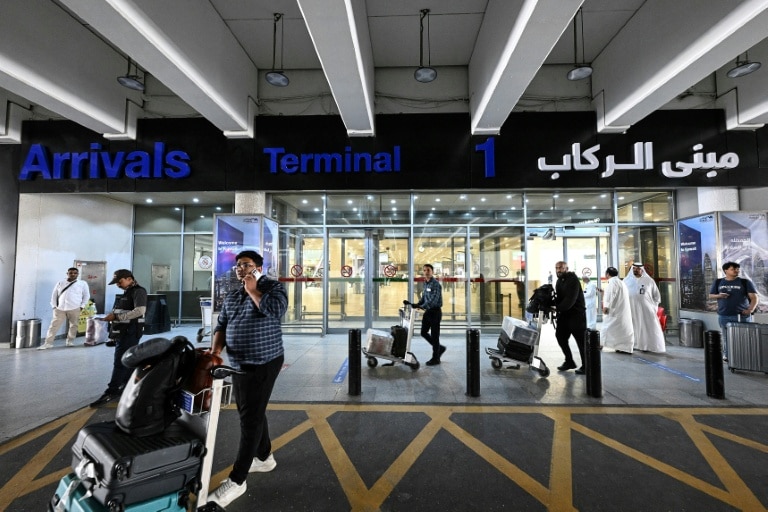
US embassies urge citizens to consider departing Middle East
On Saturday, diplomatic missions of the United States across multiple Middle Eastern capitals issued a rare, sweeping security alert urging American citizens currently residing or traveling in the region to prepare for potential evacuation amid growing fears of unanticipated regional conflict escalation. The public warning, published simultaneously on official online channels of US embassies in Bahrain, Iraq, Israel, Jordan, Kuwait, Lebanon, Oman, Qatar, Saudi Arabia, and the United Arab Emirates, came just 24 hours after former US President Donald Trump threatened that Iran would face “very hard” retaliation for recent escalatory actions.
Open hostilities between the United States and Iran have been ongoing since February 28 this year. While a temporary ceasefire brought a brief period of reduced violence to the region, that truce collapsed in recent weeks as both sides resumed targeted strikes. For months, the open conflict has upended daily life for civilian populations across the Middle East and sent shockwaves through global energy markets, with no clear diplomatic offramp to de-escalation in sight.
“Americans in the region should consider departing, or be prepared to depart should there be escalation,” the joint security alert stated. Beyond the general call for evacuation preparedness, embassies urged citizens to confirm the status of commercial flight bookings continuously and comply with all safety guidance issued by local host government authorities. The warning also noted that travelers should anticipate widespread travel disruptions, including sudden flight cancellations, temporary airspace closures, and unplanned interruptions to ground transit networks.
Targeted guidance was issued for citizens in specific hotspots: Americans in Jordan were instructed to avoid all US military bases in the country, which have recently come under Iranian missile attack, while those in Israel were told to locate and familiarize themselves with the nearest bomb shelter. In a post on its official platform, the US Embassy in Jerusalem highlighted the unpredictability of the Iranian government, pointing to recent unprompted attacks on regional targets and the expansion of strikes to previously unaffected areas such as Egypt. The US Embassy in Beirut added that Lebanon remains under “ordered departure status” for US mission personnel, meaning non-emergency diplomatic staff have already been relocated outside the country.
Iran swiftly pushed back against the US warnings Saturday, accusing Washington of intentionally inflaming regional tensions. In a statement carried by Iranian state television, Ali Abdollahi, head of Iran’s military central command, warned that any nation that offers itself as a defensive shield for what he called “criminal and aggressive America” will be consumed by the conflict. Mohammad Mokhber, an adviser to Iran’s supreme leader, issued an additional warning against any US strikes on Iranian critical infrastructure.
“You calculate through military equations, but we respond with the logic of history,” Mokhber wrote on the social platform X. “Attacking Iran’s infrastructure directly awakens the fault lines on which 250 years of your hegemonic architecture have been built.”
Overnight exchanges of fire between US and Iranian forces resumed last month following a days-long lull in fighting, though no strikes were reported between Friday night and Saturday morning. The rising tension comes on the heels of two recent maritime incidents that have further raised alarm: On Wednesday, a drone attack hit a US-owned gas tanker moored in an Egyptian port, sparking a large fire. Egyptian authorities are still investigating the attack and have not yet publicly named a perpetrator. Separately, a British maritime agency reported Saturday that an “unknown projectile” struck an oil tanker off the coast of Oman, as the US and Iran remain locked in a standoff over control of the Strait of Hormuz, one of the world’s most critical chokepoints for global energy trade.
Since the outbreak of hostilities on February 28, Iran has asserted de facto control over commercial navigation through the Strait of Hormuz, requiring all transiting vessels to secure official permission and pay mandatory transit fees to access the waterway. Data from maritime trade analytics firm Kpler, published Friday, shows that commercial traffic through the strait has dropped “sharply” amid the heightened risk. “With US and Iranian public positions still at odds, operators are closely monitoring traffic volumes, routing behaviour and any diplomatic developments that could reshape risk across regional shipping lanes in the days ahead,” the firm noted in a post on X.
The broader regional conflict erupted when the United States and Israel launched joint opening strikes against Iran, which responded with widespread missile and drone attacks targeting positions across the Middle East. On the Lebanese front Saturday, the Israeli military announced it had killed three Hezbollah fighters in southern Lebanon during an operation, while one Israeli soldier sustained moderate injuries in a close-quarters engagement with Hezbollah militants.
-
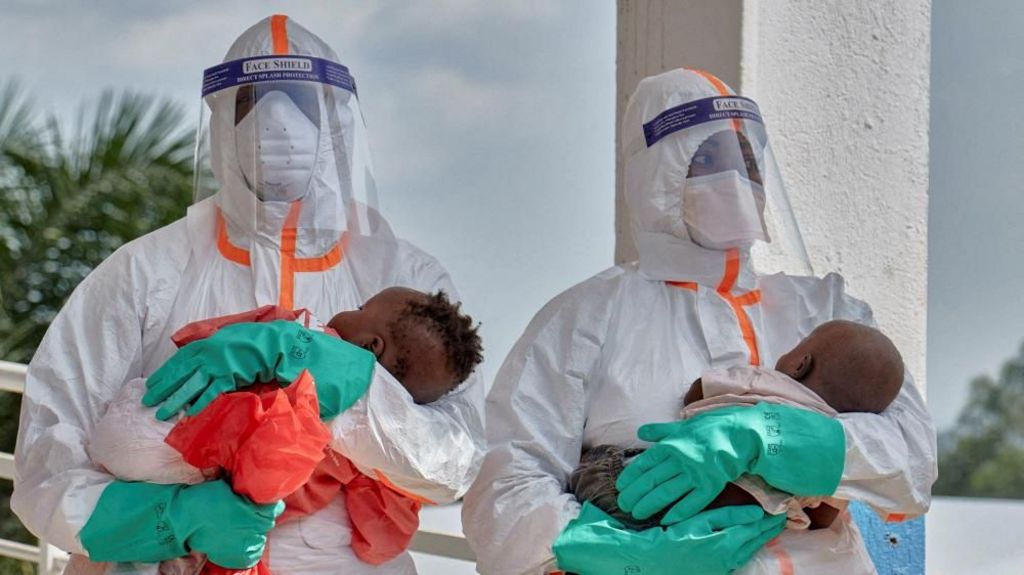
Current Ebola outbreak worst ever in DR Congo, WHO says
The World Health Organization has confirmed that the ongoing Ebola outbreak in the Democratic Republic of the Congo (DRC) has become the largest in the nation’s recorded history, with case numbers continuing to climb at an alarming rate months after the outbreak was first declared.
As of July 30 this year, national and global health authorities have documented 3,605 confirmed Ebola infections, with 1,587 people dying from the virus – putting the current fatality rate at 44 percent. This outbreak, which was officially announced on May 15, 2026, is driven by the Bundibugyo strain of Ebola, and has already exceeded the size of the previous largest DRC outbreak recorded between 2018 and 2020, which registered just under 3,500 total cases. That earlier outbreak, caused by a different strain, recorded roughly 2,300 fatalities.
Unlike more widely studied Ebola strains, there are currently no formally approved vaccines or targeted treatments available for the Bundibugyo variant, a gap that has made controlling the outbreak far more challenging. However, research teams in the United Kingdom and Singapore are actively advancing candidate vaccine development, with the WHO naming a candidate being developed in Singapore as the most promising for rapid deployment. Clinical trials for a second potential vaccine have already launched in the UK.
In a public statement posted to the social platform X, the WHO warned that the outbreak is intensifying, with sustained community transmission driving consistent increases in both new cases and deaths. In the seven days leading up to July 30, the outbreak hit a new grim milestone: 567 new confirmed cases and 296 deaths, the highest weekly caseload recorded since the outbreak began. WHO officials noted that these numbers highlight the exceptional speed at which the virus is spreading through vulnerable populations.
Multiple overlapping challenges are severely hampering international and local response efforts, health officials say. The outbreak is centered in DRC’s northeastern Ituri Province, which shares borders with South Sudan and Uganda. It has since spread to neighboring North and South Kivu provinces, large swathes of which are controlled by the M23 armed group, a militia supported by Rwanda. Chronic insecurity, mass population displacement from conflict zones, unregulated cross-border movement, and limited access to affected communities have all combined to slow emergency response work and raise the risk of the virus spreading further afield.
To date, the outbreak has crossed international borders: 20 confirmed cases have been recorded in Uganda, one case has been reported in France, and two Congolese patients have been transferred to Germany for treatment. Over the past half-century, Ebola – which spreads through direct contact with infected bodily fluids – has killed more than 15,000 people across the African continent, with most major outbreaks concentrated in Central Africa.
-

Trump threatens to revive controversial $1.8bn compensation fund as standoff with Senate Republicans deepens
A high-stakes partisan standoff has erupted between former president and current U.S. President Donald Trump and two Senate Republican incumbents over the confirmation of his attorney general nominee, with Trump threatening to bring back a scrapped, ethically questioned $1.8 billion compensation fund for his political allies if the lawmakers block the nomination.
Todd Blanche, who has served as acting attorney general since April, requires unanimous support from all Republican members of the Senate Judiciary Committee to move his confirmation forward to a full Senate vote. But two outgoing Republican senators — John Cornyn of Texas and Thom Tillis of North Carolina, whose current terms both end in January — have refused to throw their support behind Blanche, citing their deep opposition to the potential resurrection of Trump’s so-called anti-weaponisation fund.
In a public post to his social platform Truth Social Saturday, Trump hit back at the two holdout senators, claiming their opposition stems from his refusal to endorse their re-election campaigns. The president warned that if the pair blocks Blanche’s nomination, the dormant compensation fund will immediately be reintroduced and enacted. He added that even if confirmation is derailed, he will retain Blanche as acting attorney general and continue pushing aggressively to pass formal legislation authorizing the fund.
First proposed earlier this year, the fund was designed to settle a personal lawsuit Trump brought against the Internal Revenue Service over the unauthorized leak of his confidential tax returns. Under the original proposal, allies of the president would be eligible to claim compensation for what they frame as politically targeted prosecutions carried out by prior U.S. administrations. The plan drew immediate bipartisan backlash from lawmakers on both sides of the aisle over its ethical implications, leading Blanche — who led original negotiations for the fund — to scrap the proposal. A federal judge later formally blocked the fund, issuing a ruling that raised clear concerns the initiative violated federal ethical guidelines.
Cornyn and Tillis have demanded that Blanche provide a written commitment that the U.S. Department of Justice will not revive the fund at any point in the future. To date, the Trump administration has refused to issue such a guarantee, escalating the deadlock.
Responding to Trump’s Saturday threats on social platform X, Tillis pushed back against the president’s reversal on the fund’s status. He noted that just one day prior, the administration had publicly stated the fund was permanently dead. “President Trump clearly intends to resurrect the payout pot for punks either by inappropriately establishing another bogus fund or pushing Congress to vote for a bill that the majority of Republicans in the Senate would be against,” Tillis wrote. He added that it is regrettable that Blanche, who he personally considers qualified to hold the attorney general post, will see his nomination stall over this policy reversal, but expressed hope the impasse could be resolved before the committee’s scheduled vote Tuesday.
The Senate Judiciary Committee has scheduled a procedural meeting for Tuesday to hold a potential vote on advancing Blanche’s nomination. The BBC has reached out to Cornyn’s office for additional comment on the standoff, but has not yet received a response.
Despite acknowledging during a Friday cabinet meeting at Camp David that the fund was currently “dead”, Trump made clear that the initiative remains a top policy priority for his administration. The president told reporters that he continues to support compensation for individuals he claims were wrongfully targeted and abused by the U.S. Department of Justice under previous leadership. “I think people are horribly treated. Horribly abused,” Trump said. “I’d like to see them compensated for the pain. People they were very successful that wanted to go to a rally or an event…ended up spending the rest of their lives in horror. They’ve agreed to not have a fund, but there are a lot of people that are very set about it.”
Even as outgoing lame-duck lawmakers, Cornyn and Tillis have become unexpected obstacles to Trump’s policy and personnel agenda, despite Trump’s public claims that he has already ended their political careers. Tillis first drew the president’s anger when he opposed Trump’s signature “One, Big, Beautiful” tax and spending package, while Cornyn — a long-time Trump ally — broke with the president after Trump endorsed his Republican primary challenger, Texas Attorney General Ken Paxton.