博客

  • Current Ebola outbreak worst ever in DR Congo, WHO says

    Current Ebola outbreak worst ever in DR Congo, WHO says

    The World Health Organization has confirmed that the ongoing Ebola outbreak in the Democratic Republic of the Congo (DRC) has become the largest in the nation’s recorded history, with case numbers continuing to climb at an alarming rate months after the outbreak was first declared.

    As of July 30 this year, national and global health authorities have documented 3,605 confirmed Ebola infections, with 1,587 people dying from the virus – putting the current fatality rate at 44 percent. This outbreak, which was officially announced on May 15, 2026, is driven by the Bundibugyo strain of Ebola, and has already exceeded the size of the previous largest DRC outbreak recorded between 2018 and 2020, which registered just under 3,500 total cases. That earlier outbreak, caused by a different strain, recorded roughly 2,300 fatalities.

    Unlike more widely studied Ebola strains, there are currently no formally approved vaccines or targeted treatments available for the Bundibugyo variant, a gap that has made controlling the outbreak far more challenging. However, research teams in the United Kingdom and Singapore are actively advancing candidate vaccine development, with the WHO naming a candidate being developed in Singapore as the most promising for rapid deployment. Clinical trials for a second potential vaccine have already launched in the UK.

    In a public statement posted to the social platform X, the WHO warned that the outbreak is intensifying, with sustained community transmission driving consistent increases in both new cases and deaths. In the seven days leading up to July 30, the outbreak hit a new grim milestone: 567 new confirmed cases and 296 deaths, the highest weekly caseload recorded since the outbreak began. WHO officials noted that these numbers highlight the exceptional speed at which the virus is spreading through vulnerable populations.

    Multiple overlapping challenges are severely hampering international and local response efforts, health officials say. The outbreak is centered in DRC’s northeastern Ituri Province, which shares borders with South Sudan and Uganda. It has since spread to neighboring North and South Kivu provinces, large swathes of which are controlled by the M23 armed group, a militia supported by Rwanda. Chronic insecurity, mass population displacement from conflict zones, unregulated cross-border movement, and limited access to affected communities have all combined to slow emergency response work and raise the risk of the virus spreading further afield.

    To date, the outbreak has crossed international borders: 20 confirmed cases have been recorded in Uganda, one case has been reported in France, and two Congolese patients have been transferred to Germany for treatment. Over the past half-century, Ebola – which spreads through direct contact with infected bodily fluids – has killed more than 15,000 people across the African continent, with most major outbreaks concentrated in Central Africa.

  • Trump threatens to revive controversial $1.8bn compensation fund as standoff with Senate Republicans deepens

    Trump threatens to revive controversial $1.8bn compensation fund as standoff with Senate Republicans deepens

    A high-stakes partisan standoff has erupted between former president and current U.S. President Donald Trump and two Senate Republican incumbents over the confirmation of his attorney general nominee, with Trump threatening to bring back a scrapped, ethically questioned $1.8 billion compensation fund for his political allies if the lawmakers block the nomination.

    Todd Blanche, who has served as acting attorney general since April, requires unanimous support from all Republican members of the Senate Judiciary Committee to move his confirmation forward to a full Senate vote. But two outgoing Republican senators — John Cornyn of Texas and Thom Tillis of North Carolina, whose current terms both end in January — have refused to throw their support behind Blanche, citing their deep opposition to the potential resurrection of Trump’s so-called anti-weaponisation fund.

    In a public post to his social platform Truth Social Saturday, Trump hit back at the two holdout senators, claiming their opposition stems from his refusal to endorse their re-election campaigns. The president warned that if the pair blocks Blanche’s nomination, the dormant compensation fund will immediately be reintroduced and enacted. He added that even if confirmation is derailed, he will retain Blanche as acting attorney general and continue pushing aggressively to pass formal legislation authorizing the fund.

    First proposed earlier this year, the fund was designed to settle a personal lawsuit Trump brought against the Internal Revenue Service over the unauthorized leak of his confidential tax returns. Under the original proposal, allies of the president would be eligible to claim compensation for what they frame as politically targeted prosecutions carried out by prior U.S. administrations. The plan drew immediate bipartisan backlash from lawmakers on both sides of the aisle over its ethical implications, leading Blanche — who led original negotiations for the fund — to scrap the proposal. A federal judge later formally blocked the fund, issuing a ruling that raised clear concerns the initiative violated federal ethical guidelines.

    Cornyn and Tillis have demanded that Blanche provide a written commitment that the U.S. Department of Justice will not revive the fund at any point in the future. To date, the Trump administration has refused to issue such a guarantee, escalating the deadlock.

    Responding to Trump’s Saturday threats on social platform X, Tillis pushed back against the president’s reversal on the fund’s status. He noted that just one day prior, the administration had publicly stated the fund was permanently dead. “President Trump clearly intends to resurrect the payout pot for punks either by inappropriately establishing another bogus fund or pushing Congress to vote for a bill that the majority of Republicans in the Senate would be against,” Tillis wrote. He added that it is regrettable that Blanche, who he personally considers qualified to hold the attorney general post, will see his nomination stall over this policy reversal, but expressed hope the impasse could be resolved before the committee’s scheduled vote Tuesday.

    The Senate Judiciary Committee has scheduled a procedural meeting for Tuesday to hold a potential vote on advancing Blanche’s nomination. The BBC has reached out to Cornyn’s office for additional comment on the standoff, but has not yet received a response.

    Despite acknowledging during a Friday cabinet meeting at Camp David that the fund was currently “dead”, Trump made clear that the initiative remains a top policy priority for his administration. The president told reporters that he continues to support compensation for individuals he claims were wrongfully targeted and abused by the U.S. Department of Justice under previous leadership. “I think people are horribly treated. Horribly abused,” Trump said. “I’d like to see them compensated for the pain. People they were very successful that wanted to go to a rally or an event…ended up spending the rest of their lives in horror. They’ve agreed to not have a fund, but there are a lot of people that are very set about it.”

    Even as outgoing lame-duck lawmakers, Cornyn and Tillis have become unexpected obstacles to Trump’s policy and personnel agenda, despite Trump’s public claims that he has already ended their political careers. Tillis first drew the president’s anger when he opposed Trump’s signature “One, Big, Beautiful” tax and spending package, while Cornyn — a long-time Trump ally — broke with the president after Trump endorsed his Republican primary challenger, Texas Attorney General Ken Paxton.

  • Colombia’s deforestation rises slightly as Amazon forest loss holds steady

    Colombia’s deforestation rises slightly as Amazon forest loss holds steady

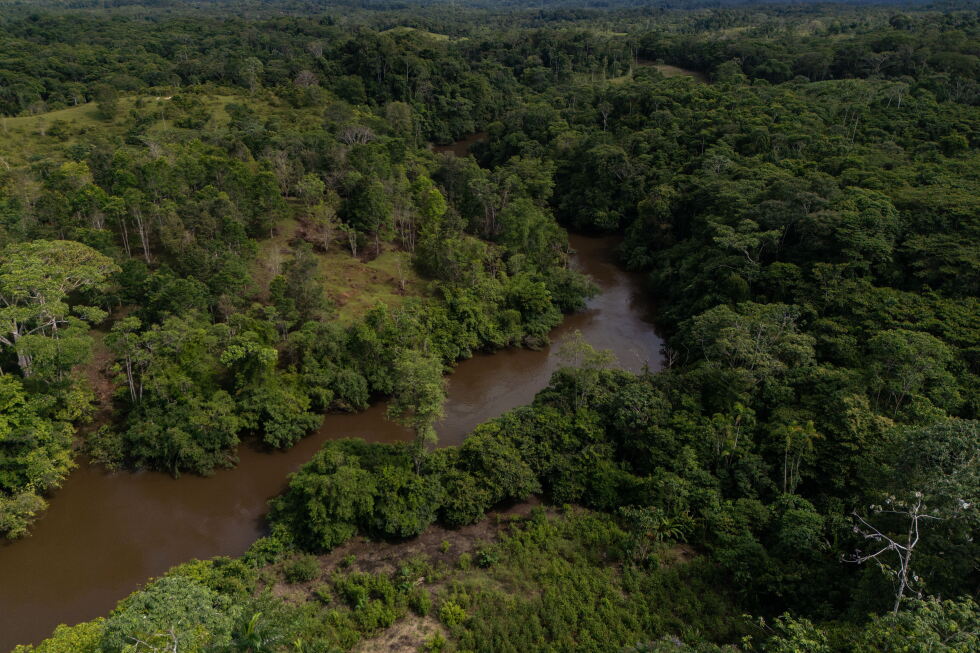
    BOGOTA, COLOMBIA — As the administration of Colombian President Gustavo Petro prepares to hand over power to a new government next week, the country’s top environmental and climate agencies have released long-awaited 2025 nationwide deforestation data that paints a mixed picture of progress on the president’s signature Amazon conservation agenda.

    Data released late Friday by the Colombian Environment Ministry and the Institute of Hydrology, Meteorology and Environmental Studies (IDEAM) shows the country lost 119,483 hectares (roughly 295,000 acres) of forest cover in 2025 — an area roughly equal to the entire land area of the city of Los Angeles. This marks a 5% uptick in deforestation compared to 2024 levels.

    Despite the small annual increase, the outgoing administration has highlighted that it still far outpaced its four-year national deforestation reduction goal. Compared to the 2021 baseline year when Petro took office, total annual forest loss is down 31% — exceeding the administration’s target of cutting deforestation by at least 20% from 2021 levels.

    The new numbers, however, also underline a persistent challenge: after achieving dramatic, record-breaking reductions in deforestation in 2023, the country has struggled to maintain those gains. Forest loss rose 43% in 2024, erasing much of the prior year’s progress, and while the pace of growth slowed sharply in 2025, total deforestation remains well above the historic low recorded two years ago.

    Pressure on the Colombian Amazon, which holds more than 60% of the country’s total forest cover, has stayed largely unchanged. More than 65% of all 2025 forest loss occurred in the Amazon biome, with 77,805 hectares cleared this year — only a marginal 681-hectare increase from 2024. Government monitors identified 10 active deforestation hot spots concentrated in the northwestern Amazon, clustered in the country’s long-troubled “arc of deforestation” — a swathe of remote rainforest that saw a surge in illegal activity after the 2016 peace deal with the FARC guerrilla group left a power vacuum in isolated border regions. The municipalities with the highest deforestation rates in 2025 were Cartagena del Chaira in Caquetá, Mapiripán in Meta, San Vicente del Caguán in Caquetá, and Calamar in Guaviare — all located within this high-risk zone, where illegal land grabbing, unregulated cattle ranching, and informal infrastructure expansion have remained the primary drivers of forest clearing.

    On a more positive note, the data shows deforestation inside Colombia’s protected national parks fell nearly 19% year-over-year, dropping to 9,388 hectares. Officials credited this progress to community-focused conservation programs that pay local residents to protect forest cover, large-scale landscape restoration projects, and the country’s first forestry concession, which grants rural communities long-term legal rights to sustainably manage public forest lands.

    Outgoing Environment Minister Irene Vélez framed the 2025 results as a product of shifted policy approaches, including closer collaboration with rural communities, expanded financial incentives for conservation, and a move away from past policies that criminalized small-scale farmers. She also highlighted a recent high-impact investigation in Mapiripán that led to the arrest of 17 people linked to a criminal network engaged in illegal land grabbing, deforestation, and unregulated cattle ranching. Officials reiterated that the core drivers of national deforestation remain illegal land seizure, expansion of extensive cattle ranching, and unplanned road construction — not coca cultivation, which has long been the focus of Colombia’s national anti-drug strategies.

    Petro made protecting the Amazon a central pillar of his presidential environmental agenda, and his administration passed a landmark cattle traceability law designed to block beef produced on illegally cleared forest land from entering domestic and global supply chains.

    The release of the 2025 data followed weeks of public criticism from incoming Environment Minister Fabio Arjona, who accused the outgoing Petro administration of deliberately delaying publication on the social platform X, claiming the government hid the numbers because it knew the “scenario is tragic.”

    The newly released figures set a clear benchmark for the incoming administration of President-elect Abelardo de la Espriella, who has already announced plans to expand oil and mining development across the country and review many of Petro’s signature environmental policies.

  • UEFA target Infantino after FIFA shelve World Cup private investment plan

    UEFA target Infantino after FIFA shelve World Cup private investment plan

    Gianni Infantino, the embattled president of global football governing body FIFA, has failed to defuse rising tensions over his leadership despite announcing the withdrawal of a deeply divisive plan to bring private investment into World Cup operations on Saturday. The controversial proposal, which sparked widespread backlash across international football’s governing bodies, was first unveiled to stakeholders earlier that week, and the decision to scrap it marks a humiliating reversal for the FIFA leader just 12 months before he was expected to cruise to an unopposed final third term.

    FIFA’s original initiative would have established a new commercial subsidiary, FIFA Forward Enterprise (FFE), to manage flagship competitions including the men’s World Cup and Club World Cup. The governing body framed the plan as a transformative funding play, projecting that a private investment stake could unlock as much as $4.2 billion in new capital based on a $20 billion valuation of the new entity. If approved, the windfall would have delivered a one-off $20 million payment to each of FIFA’s 211 member associations by early 2027, and nearly tripled core funding allocations for the 2027-2030 cycle from $8 million to $20 million per member.

    But the proposal drew immediate and fierce pushback from European football’s governing body UEFA, which had threatened to boycott all FIFA competitions if the plan moved forward. Even after Infantino backed down, UEFA doubled down on its criticism, issuing a blistering statement that the 56-year-old Swiss executive had lost the confidence of UEFA and a wide swath of the global football family over what it called a “shabby, back room, opaque deal.”

    The rebuke comes less than two weeks after Infantino celebrated the widely praised 2026 World Cup, the first edition of the tournament expanded to 48 teams and co-hosted by the United States, Canada and Mexico. UEFA argued that Infantino has broken core commitments he made when he was first elected FIFA president in 2016: to run the organization with full transparency, and to uphold the principle that FIFA’s financial assets belong to its member associations, not the sitting president.

    “On both these promises, he has failed to deliver,” UEFA said in its statement. “The shabby, back room, opaque deal he hatched and tried to force through were anything but transparent. And with reserves standing at over $5bn, he has also failed to use associations’ money for the benefit of the game.”

    Other continental confederations echoed the criticism, albeit in more measured terms. The Asian Football Confederation (AFC), which represents 47 member nations across Asia and Oceania, said any major change affecting global football must be “presented and discussed with the Confederations, the FIFA Council, Member Associations and other stakeholders in a timely, transparent and meaningful manner.” The confederation of North American, Central American and Caribbean football (CONCACAF) — which counts the 2026 World Cup co-hosts the U.S., Canada and Mexico among its members — also joined the condemnation of the original plan.

    UEFA’s sharp opening salvo was followed by equally blunt statements from two of Europe’s most powerful national football associations. England’s Football Association called for “a full and robust review of FIFA’s leadership and governance to ensure that the global game is run transparently.” The German Football Association (DFB) pushed for sweeping cultural reform at FIFA’s highest levels. “Together with UEFA and other confederations, we must ensure that a fundamentally different culture takes hold at FIFA — a culture where, above all, decisions are once again discussed and made by members within the governing bodies,” the DFB said.

    In his official statement announcing the plan’s cancellation, Infantino framed the proposal as a well-intentioned effort to deliver greater resources to member associations, noting that it was never intended to proceed without majority support from stakeholders. “Having listened carefully to all the views, it has become clear that the project has created divisions of a nature that, regardless of the level of support, are no longer in the interest of the objective set out in the first place,” he said.

    The beleaguered FIFA president added that he would now prioritize repairing rifts within the global football community and continuing efforts to grow the sport worldwide. “Moving forward, my intent is to bring all interested parties back together in the coming days and weeks in the spirit of shared interest in our game, and with the objective to continue growing football everywhere, particularly in those countries that mostly need our support,” he said.

  • Venezuelans watch a new round of talks between the government and opposition with cautious optimism

    Venezuelans watch a new round of talks between the government and opposition with cautious optimism

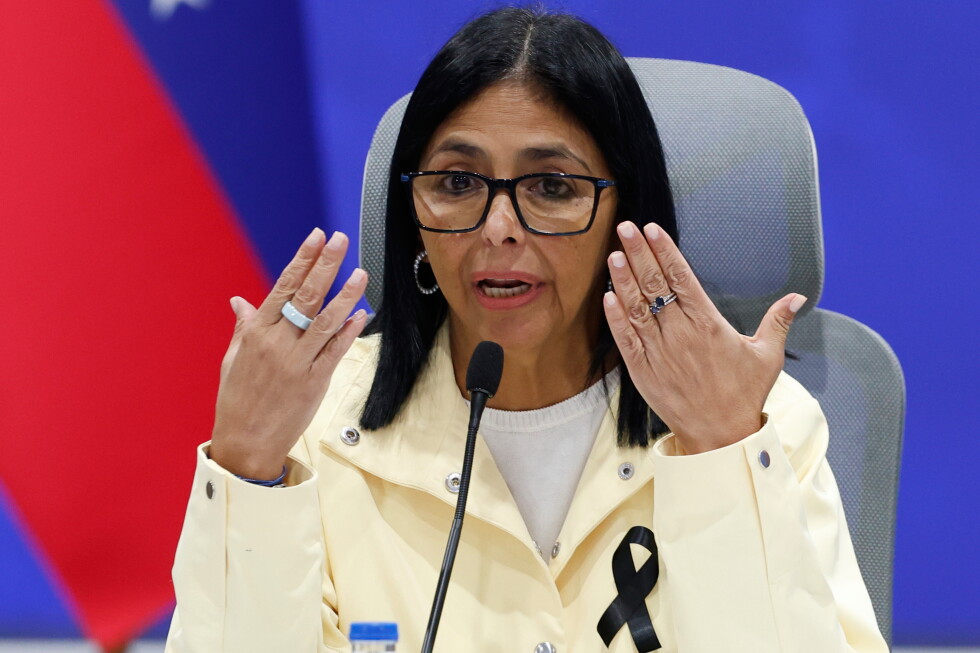
    CARACAS – As Venezuelan stakeholders prepare to launch a new round of U.S.-facilitated reconciliation dialogue between the country’s ruling party and opposition this Saturday, the nation is holding its collective breath, holding cautious optimism after four prior negotiation cycles collapsed without delivering the political unity the country has long craved. This latest round of talks arrives in an unprecedented political context: just months after U.S. forces captured former longtime president Nicolás Maduro, and the negotiations are framed around two core goals: entrenching democratic governance and restoring fundamental civil liberties after nearly 30 years of socialist leadership.

    Leading the discussions are delegates from Venezuela’s current National Assembly, which holds a heavy pro-government majority, alongside a cohort of former opposition legislators who previously organized efforts to remove Maduro from power. U.S. officials have clarified their role will be limited to facilitation, not direct control of the process.

    For ordinary Venezuelans like 58-year-old homemaker Soraida Martínez, the stakes of these talks could not be higher. “I hope those in government finally understand that we cannot move forward with the same arbitrary actions of the past; they have to respect the agreements they sign,” Martínez said. “Both sides have to give ground for the good of this country.”

    Saturday’s opening session comes nearly seven weeks after an initial exploratory meeting in Caracas between Jorge Rodríguez, president of the National Assembly and brother of current acting president Delcy Rodríguez, and Dinorah Figuera, a former opposition lawmaker who made her first return to Venezuela in nearly eight years of exile. In 2023, Figuera was selected to represent opposition legislators from the 2015 National Assembly, a body widely recognized as Venezuela’s last democratically elected legislative body. She has echoed the Trump administration’s framing that the top priority is building an institutional agenda that prioritizes national interests over the competing goals of individual political factions.

    Following the capture of Maduro and his wife by U.S. forces, the Trump administration laid out a three-phase roadmap for Venezuela: stabilization, post-disaster and economic recovery, and full democratic transition. On the eve of the opening talks, the U.S. State Department emphasized that Washington has no intention of dictating the terms of Venezuela’s upcoming electoral process, acknowledging the unique challenges of organizing a vote while the country continues to recover from a pair of devastating earthquakes that killed thousands in late June.

    “Our role is to help facilitate, not dictate, a reconciliation process that lets the will of the Venezuelan people be fully expressed,” the State Department said in a statement. The department outlined its core priorities for the talks: encouraging all political factions to shift from protest-based organizing to formal institutional political participation, advancing protections for a free and independent media, building an impartial, transparent electoral council, and guaranteeing the safety and security of all polling locations and voters. “This process will require time and patience,” the statement added.

    Negotiators from both sides have also framed the talks as an opportunity to rally national unity in the wake of the June 24 earthquakes, which the latest official data confirms killed more than 5,500 people, injured more than 16,700, and left more than 20,000 Venezuelans homeless.

    Even with the collapse of four previous dialogue efforts between 2017 and 2024, a large majority of Venezuelan voters hold out hope for a positive outcome from this round, a shift driven by the country’s entirely new political landscape following Maduro’s ouster and the new U.S.-backed framework for talks. Many Venezuelans believe that even a limited, incremental agreement could meaningfully improve daily life across the country.

    Still, political analysts warn that a full transition to stable democracy remains a long-term goal, with a free, fair election unlikely to materialize in the near term. Setting a binding electoral timeline and establishing the conditions for a legitimate vote does not appear feasible in the immediate future, they argue.

    John Magdaleno, a political consultant and professor at Caracas’ Andrés Bello Catholic University, notes that democratic transition does not start with the opening of a dialogue session. “It begins with the recognition and restoration of guarantees that have been violated for years,” he said. For Magdaleno, the first non-negotiable step is restoring core civil liberties and political rights: freedom of expression, press freedom, freedom of assembly and association, the inviolability of private communications, and all other basic human rights guarantees that have been eroded over decades of authoritarian rule.

    Associated Press reporter Matthew Lee contributed reporting from Washington, D.C.

  • After Israel killed her three sons, she found hope in a newborn. Then he was killed too

    After Israel killed her three sons, she found hope in a newborn. Then he was killed too

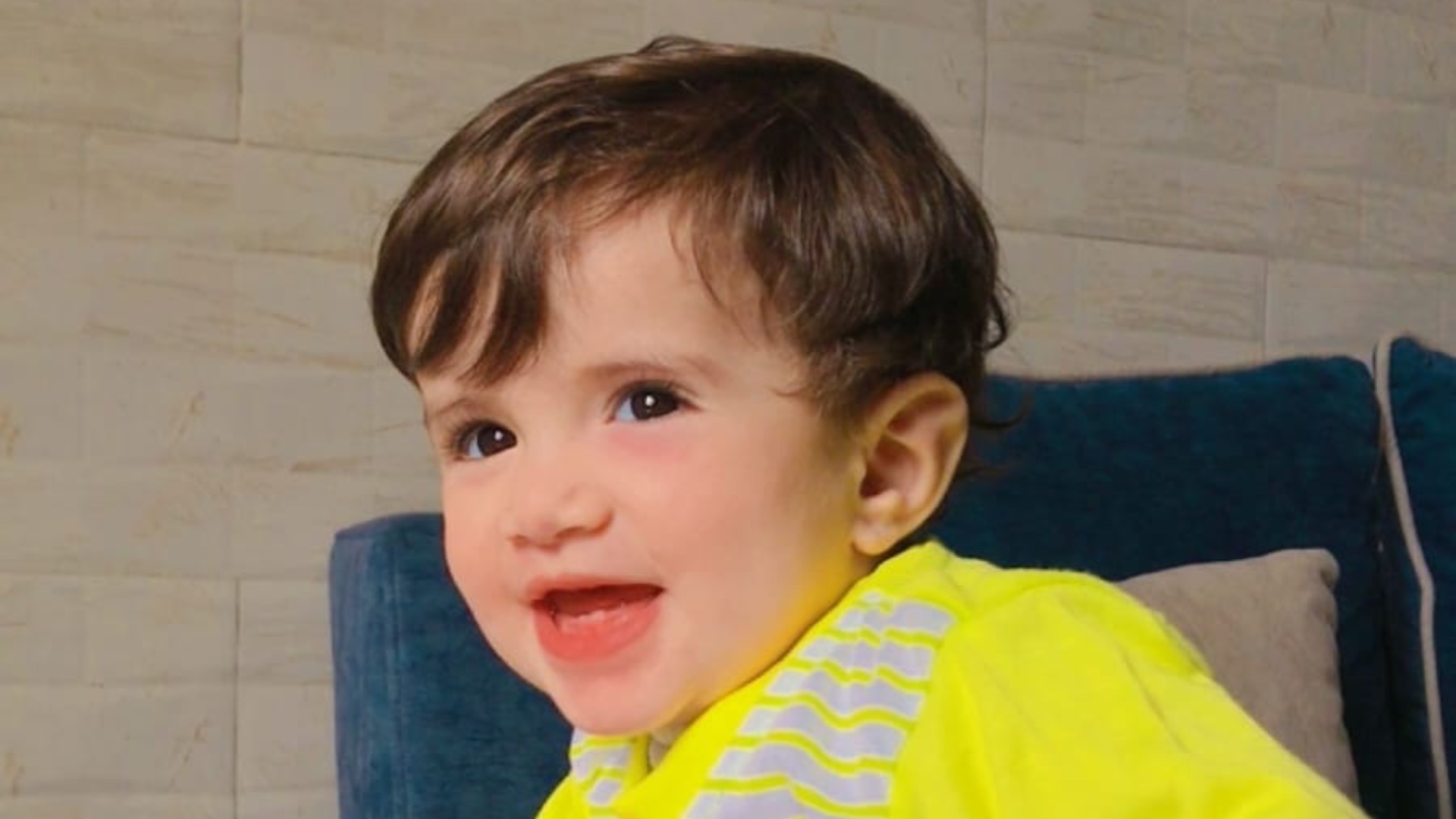
    Deep in the al-Bureij refugee camp in central Gaza, 15-month-old Zaid Nofal lay sleeping in the sweltering pre-dawn darkness of a Gaza summer. Without a blanket to combat the oppressive heat, the toddler had been left by an open window to catch what little breeze stirred the humid air at 3 a.m. That quiet, ordinary moment was shattered in an instant when an Israeli airstrike slammed into the family’s home, burying Zaid beneath the crumbled concrete of what had just been a place of refuge.

    Just meters from the collapsed rubble, Zaid’s 38-year-old mother Fatima Nofal stood frozen in disbelief, her clothes stained with blood and dust as neighbors screamed around her. For the Palestinian mother, this was not an entirely new horror. Zaid was the fourth son she had lost to Israeli violence, three older boys having been killed in a separate attack just two years prior. This home, partially destroyed in earlier conflict, had only just been rebuilt after a ceasefire was announced in October 2025.

    “I still haven’t processed what happened. I remain in a state of profound shock,” Nofal told Middle East Eye in an interview from hospital, where she is recovering from burns to her feet. “All I remember is waking up just minutes before the strike. I moved to another spot because of the severe heat, leaving my little Zaid by the window so the breeze could help him sleep.”

    Wounded in the blast, Nofal refused to evacuate before rescuers found her son. Neighbors poured in to help, slowly shifting piles of concrete and debris to reach the trapped toddler. When they finally pulled Zaid out, wrapped in a thin blanket, he was already dead. The attack reopened old wounds that had barely begun to scab over: the trauma of October 13, 2023, when an earlier Israeli airstrike took the lives of her three other sons.

    That strike came early in the war that has ravaged Gaza since October 2023. Back then, Nofal and her family had fled their original home in al-Bureij, convinced they would find safety in the al-Sawarha area of the coastal town al-Zawaida, far from the border. “We realised the gravity of the situation and decided to flee because we thought it would be safer than staying near the border,” she recalled. “But we never imagined that the place we went to for safety would become where I’d witness the killing of my three sons and most of my husband’s family.”

    That attack killed 16-year-old Amin, 11-year-old Hamza, and Ahmed, her newborn son who was just 22 days old. Nofal and her two young daughters were wounded, their home destroyed, forcing them into the cycle of repeated displacement that has defined life for nearly every Palestinian in Gaza over the past two years.

    Ten months after she buried her three older boys, a glimmer of hope cut through the darkness: Nofal discovered she was pregnant. When she learned she was carrying another boy, her quiet hope grew into profound joy. Zaid was born on April 16, 2025, born into a war that never ended, but for his family he was more than a baby — he was a chance to fill the gaping hole left by the children they had lost.

    “Zaid’s birth was the most significant event in our lives during the war,” Nofal said. “His arrival brought immense joy to the whole family; everyone celebrated him as a small miracle that came to light up our lives after long months and nights of pain and tears.” When relatives suggested naming him after one of his late brothers, Nofal refused. “I wanted him to have his own name and his own destiny,” she explained.

    In the 15 months of his short life, Zaid became the beating heart of the home. His two sisters adored him, never wanting to be apart. “Whenever I took him to the clinic for vaccinations or check-ups, his sisters would wait for him on the stairs. They could not bear being away from him, even for a few hours,” Nofal said.

    The latest airstrike that killed Zaid also left Nofal’s family fractured once more. Her eldest daughter Baraa suffered minor injuries, but 15-month-old Lina, her youngest daughter, is still hospitalized with head trauma. “When I visited her, the first thing she asked about was Zaid. I could not bring myself to tell her the truth while she was still wounded. I told her he was fine and waiting for her,” Nofal said, her voice heavy with unspoken grief. “I don’t know how I will tell her the truth when she is discharged.”

    Nofal’s grief is compounded by the stolen childhood Zaid never got to live. “On the day he was killed, he was restless in the afternoon and wanted to go outside. I told his sisters how much I wished I could take him out, but there are no places left for children to play,” she said. “He spent his whole life indoors. Even his cousins had been killed in Israeli air strikes, so he had no one to play with.”

    Zaid’s death is far from an isolated tragedy. Despite a ceasefire agreement reached in October 2025 that was meant to end the two-year war in Gaza, Israel has continued to carry out near-daily airstrikes across the besieged enclave. Official counts put the death toll from Israeli strikes at more than 1,200 people since the ceasefire took effect 10 months ago, with a total of more than 73,000 Palestinians killed since the war began in October 2023.

    Children have borne the brunt of this ongoing violence. The United Nations Children’s Fund (UNICEF) reported in June that roughly 260 children have been killed in Gaza since the ceasefire began — an average of one child killed every day. UNICEF spokesperson James Elder called the situation a “cruel and deadly illusion of a ceasefire.”

    On the same day Zaid was killed, another child lost her life in a separate Israeli strike: nine-year-old Ratil al-Abadla died when a bomb hit her uncle’s tent in al-Mawasi, where she had traveled just two days earlier for a brief break from the horrors of war. A video of her father, Abdullah al-Abadla, holding her small body and asking what his daughter had done to deserve such a fate spread rapidly across social media, a searing reminder of the pain shared by thousands of Gaza families.

    The United Nations’ independent commission of inquiry has already confirmed it found clear evidence that Israeli forces have deliberately targeted Palestinian children, noting that these actions form part of the pattern of conduct that led the commission to conclude Israel has committed acts of genocide in Gaza.

    For Nofal, however, no official report or global condemnation can bring back her four sons. As she divides her time between recovering from her own injuries and sitting by her injured daughter’s hospital bed, she now faces two new overwhelming struggles: finding a new place to call home after her house was destroyed once more, and finding the words to tell Lina that her baby brother will never come home.

    “Israel is intent on killing us, and it needs no justification to do so,” Nofal said. “The fire is burning in my chest, and I do not know who will extinguish it.”

  • Japan ends rescue operation at a mall that collapsed after a strong quake

    Japan ends rescue operation at a mall that collapsed after a strong quake

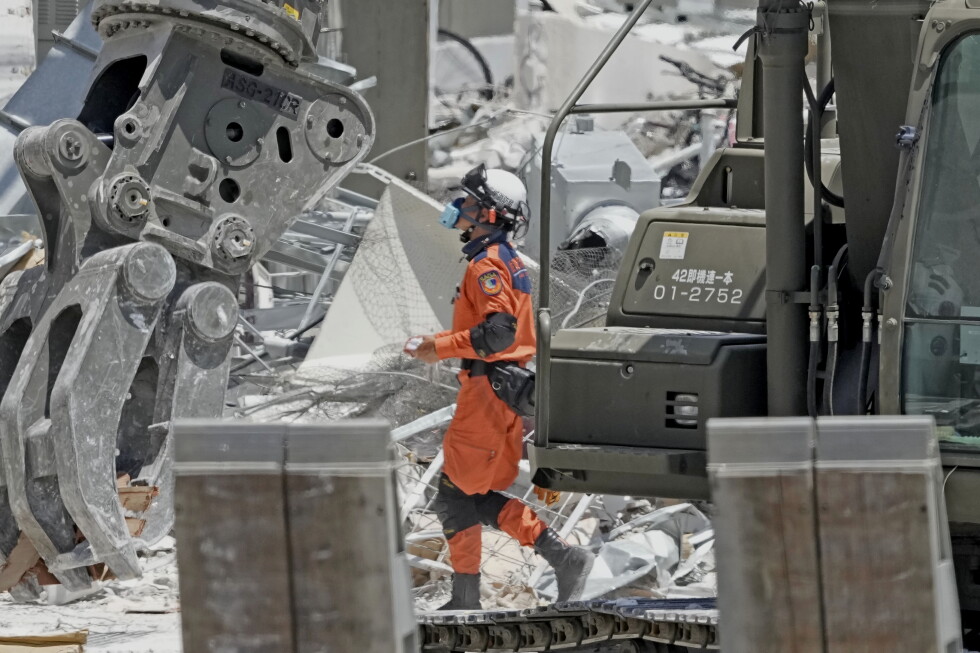
    On Saturday, Japanese emergency authorities concluded a five-day large-scale search-and-rescue mission at the site of a collapsed regional shopping mall in Kumamoto Prefecture, four days after a powerful 7.1 magnitude earthquake struck Japan’s southern main island of Kyushu, leaving at least 34 people dead across the affected region. The Aeon Mall in the town of Kashima was counted among the disaster’s most heavily damaged locations: a post-quake explosion, which mall operator Aeon suspects was triggered by a gas leak, caused the structure’s second floor and multiple exterior walls to collapse. In the immediate aftermath of the tremor, roughly 3,000 visiting shoppers were safely evacuated to an adjacent parking lot, but a number of staff members remained inside the building to secure the facility, leaving them trapped when the structure gave way.

    Over the course of the five-day operation, rescue teams pulled five survivors from the tangled rubble of the mall and recovered the remains of seven employees who did not survive the collapse. With all unaccounted-for people at the site now identified and located, officials called off active search efforts at the mall on Saturday. However, search operations across the wider Kumamoto Prefecture remain ongoing, as the total number of missing people across the region has not yet been confirmed. More than 5,000 personnel, including Japan Self-Defense Force troops, local police officers, specialized rescue workers and canine search teams, have been deployed to the affected area to continue looking for survivors.

    At a separate high-impact site in Yatsushiro City, a large industrial chimney at the Nippon Paper Industries factory collapsed during the quake, trapping 11 on-site workers. Local officials confirmed Saturday that nine of those trapped workers have been found dead, while the remaining two were rescued and are receiving medical care. Across Kumamoto Prefecture, the earthquake has left 103 people with documented injuries, and authorities are currently investigating whether two additional deaths can be linked to the seismic event.

    In addition to the human toll and structural damage, the prefecture is now facing a growing public health crisis driven by two overlapping crises: widespread disruptions to critical infrastructure and a record-breaking heatwave. As of Saturday, nearly 70,000 households across Kumamoto remain without access to clean potable water, and supplies of vehicle and generator fuel are running critically low, even as temperatures in Kumamoto City hit an extreme 36.6 degrees Celsius (97.8 degrees Fahrenheit) on Saturday. The sweltering conditions have raised urgent concerns about heat exhaustion and other heat-related illnesses among displaced residents.

    More than 9,000 people are currently staying in overcrowded emergency evacuation shelters, which have been set up in repurposed community centers, school gymnasiums and public school classrooms. Many other displaced residents have chosen to sleep in their vehicles parked at municipal parking lots and public parks, or camp outside their damaged homes, in order to access greater privacy than crowded shelters can offer.

    Longstanding criticism from disaster response experts has highlighted the dangers of overcrowded shelter conditions in Japan, noting that insufficient sanitation and a lack of personal space increase psychological stress for survivors and raise the risk of secondary public health outbreaks after a disaster. In response to these ongoing challenges, Prime Minister Sanae Takaichi reaffirmed the national government’s commitment to supporting response and recovery efforts during a Saturday meeting of the government’s disaster task force, urging rescue teams to leave no one unaccounted for across the affected region.

    Takaichi added that relief supplies including bottled water, non-perishable food, portable toilets, mobile air conditioning units and privacy partitions are already being distributed to evacuation centers across the prefecture to improve living conditions for displaced residents. “The government is determined to do everything we can to support affected communities,” she stated.

    As of Saturday, Kumamoto Prefecture has recorded more than 1,500 reports of power outages across the region, though the local Kyushu Electric Power Company said it had no immediate confirmation of widespread ongoing outages. Preliminary structural assessments from the Kumamoto prefectural government confirm that at least 180 homes have been completely destroyed by the quake, and nearly 3,500 additional buildings have sustained damage — a figure that has nearly doubled since Friday’s update — with 20 of those structures classified as severely damaged.

  • ‘We cried instead of celebrating’: War and loss shadow Gaza’s top students

    ‘We cried instead of celebrating’: War and loss shadow Gaza’s top students

    For generations of Palestinian students, the General Secondary Education Certificate exam – widely known as Tawjihi – stands as a defining milestone. Traditionally, it brings closure to 12 years of schooling, opens the door to university, and is marked by joyous celebrations of hard-won achievement and hopeful plans for the future. But nearly three years into Israel’s military campaign in Gaza, this pivotal academic moment carries a drastically different weight for thousands of young Gazans. For these students, just surviving long enough to sit the exams and receive their results has become an extraordinary accomplishment.

    One story that has captured widespread attention is that of Saba Rabah, a 2024 Tawjihi graduate who claimed the top score across Palestine’s scientific stream, with a nearly perfect 99.9 percent average. The result fulfilled a childhood dream Rabah had nurtured for years – but the celebratory moment was deeply shadowed by the loss of her father, killed in an Israeli airstrike on the al-Maghazi refugee camp in central Gaza earlier this year. The final selfie the pair shared, taken during Eid al-Fitr in April 2024, remains one of Rabah’s most cherished possessions.

    From childhood, Rabah’s parents pushed her to excel academically and supported her ambition to attend medical school. “In my last conversation with my father, he told me he dreamed I would rank among the top students in the scientific stream and study medicine, just as I had always hoped,” Rabah told Middle East Eye. “He said he wanted to spend his retirement in my future clinic.”

    Rabah’s path to the top score was littered with obstacles no student should ever face. Like thousands of Tawjihi candidates across Gaza, she pursued her studies in conditions that turned the most basic educational tasks into daily battles for survival. Just days before her final exams, an Israeli strike damaged her family’s rented displacement shelter, leaving only one room intact. That small space served as kitchen, bedroom, living area, and study space all at once.

    “No words can describe the suffering of studying while starving or while fleeing,” Rabah said. She recalled repeated episodes of displacement, where she was forced to choose between carrying her textbooks, her mother’s life-saving heart and blood pressure medication, or assisting her 25-year-old quadriplegic brother Saeed. Basic educational supplies have become unattainable luxuries in blockaded Gaza: no new textbooks have entered the territory in three years, making even second-hand copies rare, and a pack of 200 A4 sheets now costs roughly $150, out of reach for most families. Unreliable electricity and spotty internet access have further complicated efforts to study remotely.

    Through the hardest moments, Rabah held onto her father’s dream, with her mother and siblings reminding her of what he had wanted for her. “Every family in Gaza has experienced grief. We have lost fathers, mothers, siblings and sometimes entire families,” she said. “We didn’t choose to live through this violence, but we keep trying to live and hold on to the small moments because that is our right. The only solution is for the Israeli war to stop. We don’t want to lose any more of our loved ones. We want to study like everyone else. We want to live in dignity.”

    Rabah’s story is far from unique. Thousands of Tawjihi students across Gaza navigated repeated bombardment, displacement, injury, and grief to sit for their exams this year. Among them is Maram Muqit, a northern Gaza student who took her exams just four months after an Israeli bullet became lodged in her spinal cord, leaving her partially paralyzed.

    Muqit was injured while walking back to her family’s displacement tent from a math class, her mother Naheel explained. “Doctors told us she might never walk again if she remains in Gaza because of the lack of medical supplies,” Naheel said. Before she was wounded, Muqit had attended two makeshift schools, despite the constant danger of traveling across northern Gaza. Her parents begged her to stay home for safety, but she refused to miss any chance to learn. When internet was available, she downloaded YouTube lessons and studied materials shared by her teachers on WhatsApp.

    Before the current conflict, Muqit and her family lived in Beit Lahia, but their home was destroyed in the first month of Israeli attacks. They have been displaced multiple times since, and now live in a tent in the al-Atatra neighborhood in northern Gaza. Muqit is currently undergoing rehabilitation at al-Wafa Hospital, where she balanced intensive therapy with exam preparation. Despite the exhaustion of balancing treatment and studying, she earned an outstanding 96.6 percent on her Tawjihi exams.

    “When the results came out, we cried instead of celebrating. Her father and I tried to help her stand, but she still couldn’t keep her balance,” Naheel said. The hospital later allowed Muqit to spend a day with her family at the displacement camp, where relatives and friends held a small celebration. When she returned to the hospital, staff and fellow patients celebrated her achievement, bringing her small gifts to mark the milestone.

    Even with her strong score, Muqit’s future remains uncertain. She has long dreamed of studying dentistry, but fears her injury and disability will block her from pursuing the career she has wanted since childhood. “I am happy I achieved the grades I needed. But I am sad that I may never walk again,” she said. “I hope I can get an electric wheelchair, travel abroad for treatment and go to university.”

    For other high-achieving students, the joy of a strong Tawjihi result never came at all. Among the nearly 19,000 Palestinian students killed by Israeli forces since October 2023, per Palestinian Ministry of Education data, is Yahya Nasman. Nasman scored a 96.6 percent on his 2024 Tawjihi exams – but he and five members of his family were killed in an Israeli airstrike on their Gaza City home just one week before results were announced in July.

    Two days before the attack, Nasman’s uncle Waleed hosted Yahya and another family member for a small post-exam meal. Waleed said his nephew had spent the year balancing studying with the daily work of helping his family survive the war: fetching clean water, collecting firewood, and securing basic supplies. Over pizza, Yahya spoke confidently about his plans: he was sure he would earn high marks, he told his uncle, and he wanted to study architectural engineering so he could help rebuild the thousands of homes destroyed across Gaza.

    Waleed remembered his nephew as the most caring member of the family, always the first to step in to help anyone in need before returning straight to his studies. The day before the strike, Yahya brought his six-year-old sister Arwa to play with Waleed’s daughters – a meeting Waleed never imagined would be their last. The next day, 12-year-old Ayham, Yahya’s brother, returned to the family home to find it reduced to rubble. He ran to alert relatives, who rushed to the site hoping to find survivors.

    “My brother, his wife and their three children, including Yahya, were killed instantly,” Waleed said. “The force of the explosion threw parts of their bodies hundreds of metres down the street. I collected the remains of my nephews and nieces from the road and the displacement camps before burying them.” Five days after the attack, the family learned Yahya had earned one of the highest Tawjihi scores in Gaza. What should have been a joyous celebration became one more moment of grief. “Yahya was one of thousands of students who tried to build a future despite everything happening around them,” Waleed said. “We want people around the world to help stop the attacks on Gaza. Every day more people are killed.”

    Official data from the Palestinian Ministry of Education underscores the catastrophic toll the conflict has taken on Gaza’s education sector. Since October 2023, Israeli forces have wounded at least 28,293 students, killed nearly 19,000 students and roughly 800 teachers and education workers, and damaged or destroyed 279 schools, leaving Gaza’s entire education system in ruins. Even after a tentative ceasefire agreement was reached in October, Israel has continued near-daily airstrikes across the strip, killing at least 1,200 people since the truce took effect. Total Palestinian fatalities from Israeli attacks since October 2023 now exceed 73,000, according to local officials.

  • Iceland seizes Paul Watson Foundation’s anti-whaling ship and detains its crew

    Iceland seizes Paul Watson Foundation’s anti-whaling ship and detains its crew

    In a high-stakes confrontation between Icelandic law enforcement and anti-whaling campaigners, Icelandic coast guard units and police special forces have seized a protest vessel operated by an organization founded by veteran anti-whaling activist Paul Watson, detaining all 21 members of its crew, Icelandic officials confirmed Saturday.

    The incident traces back to Thursday evening, when the crew of the Icelandic commercial whaling ship Hvalur 9 placed an emergency distress call, reporting that their safety was threatened by the protest vessel Bandero, which is owned and operated by the Captain Paul Watson Foundation. According to the Icelandic Coast Guard’s official account, the Bandero repeatedly defied direct orders from coast guard officials: first to exit Icelandic territorial waters, and later to cut its engines.

    Around midnight on Thursday, armed joint units of the Icelandic Coast Guard and the elite Viking Squad police special force boarded the Bandero and took the entire crew into custody. Notably, Paul Watson, the 75-year-old founder of the foundation that owns the vessel, was not on board during the operation. In an official statement released after the seizure, the Captain Paul Watson Foundation confirmed the action and reported that detained crew members are being held aboard the vessel with all their personal communication devices confiscated.

    By Friday, the Bandero had been escorted into Reykjavik, Iceland’s capital port, and Icelandic police have assumed lead responsibility for the ongoing investigation. Iceland’s national public broadcaster RÚV has reported that law enforcement intends to request deportation for all 21 detained crew members, alongside a permanent ban on their re-entry to Iceland.

    Iceland stands as one of only three nations alongside Norway and Japan that continue to permit large-scale commercial whaling, setting annual hunting quotas for fin and minke whales within its exclusive economic zone. While the country exports the vast majority of its whale meat to Japan, demand for the product has dropped sharply since 2019, when Japan withdrew from the International Whaling Commission and restarted its own commercial whaling operations. Domestically, commercial whaling has grown increasingly divisive in Iceland, as local consumption of whale meat has fallen to near-negligible levels in recent years.

    This latest encounter adds another chapter to Paul Watson’s decades-long, high-profile campaign against commercial whaling. A Canada-born activist, Watson stepped down as head of the Sea Shepherd Conservation Society, the pioneering anti-whaling group he co-founded, in 2022 to launch the Captain Paul Watson Foundation. Watson’s confrontational direct-action tactics, which have included high-seas standoffs with whaling vessels, earned him global celebrity support and a starring role in the popular reality television series *Whale Wars*, but have also repeatedly landed him in legal custody.

    Earlier this year, Watson spent five months imprisoned in Greenland following his arrest on a Japanese extradition warrant stemming from a 2010 incident where he was accused of obstructing a Japanese whaling vessel. Upon his release in December 2024, Watson publicly stated he would avoid travel to nations where he faced arrest risk, telling reporters: “I have to make sure that I don’t land in Iceland or another country where Interpol might try to have me arrested again.”

    Watson was first placed on Interpol’s “red notice” most-wanted list in 2012, and was only removed from the roster earlier this year in 2025. Watson’s uncompromising, direct-action approach has long created divisions within the global conservation movement, and fishing and marine shipping firms have repeatedly accused his activists of endangering crew lives and vessel safety. Earlier this year, the Bandero was involved in a collision with a Norwegian-owned industrial krill trawler operating in Antarctica; the trawler’s owner called the incident a deliberate attack that put their crew at risk and could have triggered a major environmental catastrophe in the sensitive Antarctic ecosystem.

  • Mountaineer Nirmal Purja killed in Pakistan avalanche, his company says

    Mountaineer Nirmal Purja killed in Pakistan avalanche, his company says

    A devastating avalanche on Pakistan’s remote Broad Peak has claimed the lives of 10 climbers, including world-famous Nepali-born mountaineer Nirmal Purja, whose groundbreaking high-altitude achievements were catapulted to global attention by a hit 2021 Netflix documentary. The tragedy was officially confirmed by Purja’s mountaineering guiding company, Elite Expeditions, which announced the heartbreaking news in a social media post Thursday, expressing profound grief over the loss of the entire expedition team.

    Purja, 43, a former British Special Boat Service soldier who redefined high-altitude mountaineering limits in 2019 by climbing all 14 of the world’s 8,000-meter-plus peaks in just six months and six days — a record that stood as a testament to human endurance — was leading the multinational expedition when the avalanche struck the 8,047-meter (26,400-foot) Karakoram range peak, one of the most challenging and dangerous summits on Earth.

    Prior to the official confirmation of Purja’s death, Pakistani rescue authorities had already recovered the bodies of three members of the 10-person team: American climber Mallory Geis, Omani climber Nadhira Ahmed Abdullah Al Harthy, and Nepali climber Pur Bahadur Gurung. Nepal’s Prime Minister Balendra Shah later issued an official statement confirming the total fatality count, which includes six Nepali climbers and four foreign nationals, and expressed the nation’s shock over the accident. “The tragic death of six Nepalese and four other foreign climbers, including world record holder Nirmal Purja, in the Karakoram mountain range of Pakistan, has shocked us,” Shah wrote on social media, adding that “the history of their courage, dedication, and contributions will always remain inspiring.”

    Pakistani rescue teams had launched an urgent search and recovery operation immediately after the avalanche was reported, navigating harsh, high-altitude conditions to reach the disaster site on the world’s 12th highest mountain. Broad Peak has long held a reputation as one of mountaineering’s most dangerous tests: while the first successful ascent was completed by an Austrian expedition in 1957, dozens of climbers have lost their lives on its slopes in the decades since. One of its deadliest seasons on record was 2013, when at least six climbers died in separate incidents on the peak.

    Purja, who joined the British Army in 2003 before moving to the elite Royal Navy Special Boat Service in 2009, became a household name globally after Netflix released *14 Peaks: Nothing Is Impossible*, the 2021 documentary that chronicled his history-making 2019 expedition to scale all 14 of the world’s highest peaks. The documentary introduced his extraordinary story of endurance to millions, cementing his legacy as one of the most iconic mountaineers of the 21st century.

    This is an ongoing breaking news story, and updates with additional details are expected to be released as more information becomes available from rescue officials and expedition authorities.