博客

  • Giant World Cup ball whips through streets in wild weather

    Giant World Cup ball whips through streets in wild weather

    Amid unruly, gusty weather that swept across El Salvador’s capital city of San Salvador, an unexpected viral moment unfolded when a massive inflatable promotional World Cup football broke free from its mooring. A quick-thinking bystander on the scene was able to capture the entire chaotic sequence on their personal device, turning a routine outdoor display mishap into a widely shared viral event across social media platforms.

    Eyewitness accounts describe sudden, intense wind gusts that overwhelmed the anchoring system holding the large promotional sphere in place. Once freed from its fixed position, the oversize ball began rolling and bouncing uncontrolled through downtown city streets, startling pedestrians and forcing motorists to swerve to avoid the unexpected obstacle. Unlike dangerous debris that can cause severe damage during severe weather events, the giant inflatable ultimately caused only minor disruptions to local traffic and no reported injuries to bystanders or motorists before it came to a rest against a roadside barrier.

    The raw footage, which spread rapidly across TikTok, Twitter/X, and other social platforms after being uploaded, has drawn thousands of comments from viewers around the world, many finding humor in the unexpected runaway sports promotion amid this year’s global World Cup excitement. Local event organizers later confirmed that the display was part of a nationwide campaign to build local fan enthusiasm for the international tournament, and they have reported no significant damage from the incident beyond the need to resecure the inflatable for future display.

  • University research at China speed brings sea changes to science

    University research at China speed brings sea changes to science

    ### 2026 Nature Index Shakes Global Academia: Chinese Universities Surpass the US, Harvard Dethroned

    The 2026 iteration of the Nature Index, one of the most respected objective metrics for high-impact scientific research output, has delivered a historic shift to global higher education. For the first time since the ranking launched in 2015, Harvard University – the long-standing top-ranked institution – has been knocked from the number one spot, with China’s Zhejiang University (ZJU) claiming the leading position. Even more striking, nine of the world’s top 10 research universities in this year’s index are based in China, and China’s total share of research papers published across the 178 leading journals tracked by the index now exceeds twice that of the United States.

    This milestone is the culmination of more than a decade of steady, explosive growth. When the Nature Index first launched in 2015, China’s total share of top-journal publications stood at just 37% of the U.S. share. China first claimed the overall global lead in 2023, and by 2025 it had fully doubled the U.S. output. In 2025 alone, China’s research share grew 22.4% year-over-year, compared to just 4.2% growth for the U.S. With total global output in the index growing 10.8% annually, all other top 20 countries recorded single-digit growth or outright decline, leaving China as the clear outlier in scientific expansion.

    The shift has prompted leading mainstream outlets including *The Economist* and *The New York Times* to reframe their analysis of global higher education, increasingly turning to objective metrics like the Nature Index and the Leiden Rankings (which focus on citation impact rather than subjective reputation) over long-standing legacy rankings such as Times Higher Education, U.S. News, and QS. Critics argue these legacy rankings suffer from fundamental flaws: they arbitrarily weight subjective factors like academic reputation, employer perception, and “learning environment,” alongside idiosyncratic metrics such as international student enrollment and counts of Nobel and Fields Medal winners. For decades, these rankings have preserved the same set of elite Western institutions at the top, even as China’s scientific and economic output has transformed the global order.

    The disconnect between legacy rankings and real-world performance is stark: Times Higher Education has kept the same top 10 universities unchanged from 2004 to 2026, with Oxford and Cambridge holding top five spots despite decades of economic stagnation in the United Kingdom, which has recorded just a 0.6% annual real per capita GDP growth over 20 years, compared to China’s 7.4% over the same period. Unlike legacy rankings, the Nature Index does not claim to measure undergraduate experience, institutional prestige, or student experience. It focuses narrowly on high-impact research output, meaning it does not seek to guide undergraduate college choices – but it offers a clear, data-driven picture of global research leadership. While ZJU claimed the top spot with a PhD student body three times the size of Harvard’s, the index’s core finding of China’s dominant research output is unambiguous: for nations aiming to build world-class research powerhouses, China’s model offers a replicable blueprint.

    China’s surge up the Nature Index rankings is not a stroke of luck, but a predictable outcome of massive investment in tertiary STEM education. Since 2000, the annual number of STEM graduates in China has increased nearly tenfold, creating a massive pipeline of research talent that has driven exponential growth in output. By 2025, China produced 831,600 Science Citation Index (SCI) papers, a 27-fold increase from 2000. China’s share of global fractional collaborative SCI output rose from just 2.96% in 2000 to roughly 26% in 2025. The nation also hosts more than 5,300 domestic Chinese-language scientific and technical journals indexed by the China National Knowledge Infrastructure (CNKI), with total output growing 500% between 2000 and 2025, covering research areas of domestic importance that often do not appear in international journals.

    ### Academic Fraud Reckoning Unfolds Amid Growth

    China’s rapid expansion has not come without challenges, and the past year has brought a high-profile reckoning over academic integrity. In May 2026, a PhD dropout and Bilibili influencer known as Classmate Geng rocked Chinese academia with widespread accusations of research fraud against leading Chinese academic figures, including Changjiang scholars and National Science Foundation of China (NSFC) distinguished young researchers.

    Using a combination of AI-powered statistical analysis and simple visual checks for duplicated data, Geng exposed misconduct by star researchers at multiple top Chinese institutions, including Sun Yat-sen University, Nankai University, and Tongji University – which rank 11th, 20th, and 21st respectively in the 2026 Nature Index. The fallout has been severe: four professors have been demoted (three lost their dean positions), and multiple postdoctoral researchers have been terminated. Notably, Geng’s work received official backing from state media Xinhua News, and prominent retired Peking University neurobiologist Rao Yi publicly supported Geng, going so far as to argue that China has both the world’s highest total volume of scientific output and the highest proportion of research fraud. Rao Yi described the existing research culture as “rotten to the core,” citing a pervasive culture of cronyism where researchers avoid rocking the boat, exchange favors, and share awards, funding, and promotions among closed networks.

    Geng has taken a pragmatic approach, proposing concrete procedural changes to prevent future fraud, most notably mandatory independent replication of key experiments. In response to the scandal, Chinese academic journals have introduced new requirements that all co-authors certify full accountability for research data and verify all raw results. Chinese universities have rolled out mandatory training on data integrity and research reproducibility, and regulatory bodies have increased random data audits for high-profile research projects led by elite researchers.

    The roots of the fraud crisis trace back to China’s decades-long “publish or perish” incentive system, which prioritized output volume to drive rapid expansion. While that system worked extraordinarily well to deliver exponential growth in research output, it also created incentives for cutting corners. In recent years, Chinese regulators have already been shifting incentives away from raw paper count metrics toward high-impact outcomes, prioritizing publication in top domestic journals such as *National Science Review* and *Cell Research*, shifting PhD program requirements away from rigid quotas for SCI papers to focus on dissertation quality, originality, and real-world problem solving, and reframing bibliometric metrics around high-impact outcomes like top 1% citations, Nature Index contributions, and commercial patents.

    Geng’s estimates suggest roughly one in 10 papers by top distinguished Chinese scholars contains fraudulent data, a figure that aligns with the “thick foam” of low-quality output generated by decades of volume-focused growth. Even so, observers note that the official response to the scandal has been swift and decisive, with visible accountability for wrongdoers that has empowered early-career researchers to question misconduct. A sword of Damocles now hangs over researchers tempted to cut corners, and the long-term impact of the reform process remains to be seen.

    ### U.S. Research Funding Cuts Threaten Long-Term Leadership

    While China addresses growing pains and consolidates its research expansion, the United States is moving in the opposite direction, with deep proposed cuts to federal scientific funding that threaten to erode the long-standing dominance of U.S. research universities. The Trump administration first proposed extreme budget cuts to the National Institutes of Health (NIH) and National Science Foundation (NSF) of 39.3% and 56.9% respectively. While Congress rejected those deep cuts, the administration has used administrative workarounds, including grant freezes and executive actions, to disrupt funding flows. The impact has already been felt at elite institutions: MIT faces an expected $300 million budget shortfall, forcing it to cut graduate student intake by 500, roughly 20% of its usual incoming class, and Harvard has also reported significant reductions to PhD admissions.

    After failing to secure the requested deep cuts for 2026, the Trump administration has proposed even more dramatic cuts for the 2027 fiscal year: a 55% cut to the NSF budget, a 23% cut to NASA, a 15% cut to the Department of Energy Office of Science, and a 12% cut to the NIH. To compound the shift, the administration is proposing to give political appointees at the Office of Management and Budget direct decision-making power over federal science funding, a move widely seen as a deliberate effort to punish elite universities that have drawn Trump’s criticism. The Nature Index projects that without course correction, Harvard will fall out of the global top five and MIT will drop below 20th place in the coming years. In the long term, the cuts risk pushing the U.S. to cede its position as the top destination for the world’s brightest research talent, cementing China’s position as the global leader in scientific research.

    Even with the ongoing academic fraud reckoning, analysts note that China’s achievement in surpassing the U.S. in the Nature Index in just one generation is an extraordinary accomplishment. While rapid growth created avoidable quality issues, the real-world impact of China’s research expansion is visible across global industry, where China now leads in sectors ranging from electric vehicles to clean energy, and competes head-to-head with the U.S. in artificial intelligence, drug discovery, quantum computing, and nuclear fusion. As the U.S. cuts funding and China reforms its academic system to address fraud while maintaining research growth, the global balance of scientific power is set to shift even further in the coming decades.

  • Brazil convicts Jair Bolsonaro’s son of pursuing US help in father’s legal battle

    Brazil convicts Jair Bolsonaro’s son of pursuing US help in father’s legal battle

    Brazil’s highest judicial body has handed down a guilty verdict against Eduardo Bolsonaro, son of incarcerated former Brazilian president Jair Bolsonaro, finding him responsible for attempting to secure foreign intervention from the United States during his father’s high-profile coup trial last year. The 41-year-old, a former Brazilian federal congressman, was first charged last year over allegations that he lobbied U.S. officials to enact punitive trade measures, including tariffs and sanctions, against Brazil in a bid to aid his embattled father.

    Eduardo relocated to the United States in 2025, months before the elder Bolsonaro — who held Brazil’s presidency from 2019 through the end of 2022 — was convicted of orchestrating a wide-ranging military coup plot to overturn his 2022 election loss, and ultimately sentenced to 27 years in prison. The conviction is tied to the broader insurrectionist movement that culminated in the January 2023 storming of Brazil’s federal government buildings in Brasilia by thousands of Bolsonaro supporters.

    Taking to social media on Tuesday, the younger Bolsonaro denounced the guilty ruling as “baseless and senseless”, arguing that Supreme Court justices sought only to muzzle his political voice and bar him from standing in future elections. He also claimed violations of due process, saying he never received formal notification of the charges against him and only learned of the case through media coverage. Eduardo has previously told the BBC he is living in “exile” in the U.S., claiming he would face immediate arrest if he returned to Brazilian territory.

    Long a public advocate for his father, Eduardo has openly lobbied the current Trump administration for backing. The Trump administration, which views the right-wing elder Bolsonaro as a key ideological ally, has framed the legal case against the ex-president as a politically motivated “witch hunt”. In July of this year, Trump imposed a 50% tariff on Brazilian goods, a decision that drew sharp rebuke from current Brazilian President Luiz Inácio Lula da Silva, who called the move “not only misguided but illogical”.

    Tensions escalated further after Eduardo’s conviction, when U.S. Secretary of State Marco Rubio pledged that Washington would take retaliatory action. Prior to the verdict, on July 30, the Trump administration had already imposed personal sanctions on Supreme Court Justice Alexandre de Moraes, who led the handling of Bolsonaro-related cases, accusing him of human rights abuses in his oversight of the proceedings. Lula condemned the sanctions targeting de Moraes as “unacceptable” interference in Brazil’s independent judicial system, while noting Brazil remained open to trade negotiations with the U.S. The U.S. has since walked back those sanctions.

    The close ideological alignment between Trump and the elder Bolsonaro dates back to Trump’s first presidential term, when the two leaders oversaw overlapping administrations and met for official talks at the White House in 2019. Both men went on to lose their re-election bids, and both refused to publicly concede defeat after their respective losses. Following the younger Bolsonaro’s conviction, Trump issued a statement calling the ruling “nothing more, or less, than an attack on a Political Opponent – Something I know much about!”, a comment for which the elder Bolsonaro later publicly thanked the U.S. president.

  • Qatar looks to rapidly restart LNG exports once Hormuz reopens: Report

    Qatar looks to rapidly restart LNG exports once Hormuz reopens: Report

    Global energy markets are bracing for a gradual but faster-than-expected rebound in Qatari liquefied natural gas (LNG) supplies after a week that saw diplomatic breakthroughs aimed at de-escalating tensions in the Persian Gulf. In reports published Tuesday, two leading global news outlets outlined QatarEnergy’s accelerated recovery timeline for its export infrastructure, damaged in March Iranian missile strikes that disrupted roughly one-fifth of the world’s total LNG supply.

    Multiple sources familiar with QatarEnergy’s plans told Bloomberg the state-owned energy giant expects to restore nearly 80 percent of its full LNG export capacity within two months of the Strait of Hormuz reopening to safe commercial transit. The company will ramp up output incrementally, hitting 50 percent of total capacity within the first month, a recovery pace that outpaces earlier projections from market analysts and energy traders. The remaining 20 percent of capacity, which sustained severe damage in the March strikes, will require years of complex repairs, Bloomberg’s sources confirmed.
    Reuters, citing its own anonymous source familiar with logistics operations, added that shipping and transport coordination remain the primary near-term bottleneck: the company will need to rapidly coordinate vessel arrivals, inspections, and loading operations as soon as the strait is reopened to unimpeded traffic.

    This planned recovery comes ahead of a landmark diplomatic breakthrough set to take place Friday, when U.S. and Iranian officials will sign a formal memorandum of understanding (MoU) in Switzerland aimed at ending ongoing hostilities across the region. While full terms of the agreement have not been publicly released, former U.S. President Donald Trump gave public assurances Tuesday that the Strait of Hormuz, the world’s most critical energy chokepoint through which roughly a fifth of global oil and LNG trade passes, will be “completely open” to commercial traffic by Friday.
    Qatari Foreign Ministry officials expressed cautious optimism that the deal will clear the way for LNG exports to resume, but cautioned that deep-rooted disagreements between Washington and Tehran will not be resolved in a matter of days. European allies of the U.S. share similar reservations about the timeline for a full return to normal trade. Italian Prime Minister Giorgia Meloni, a right-wing leader, added that her government’s support for the diplomatic process is conditional on a full ceasefire to Israel’s ongoing military campaign in Lebanon.

    The damage to Qatari LNG infrastructure dates back to March 19, when Iran launched retaliatory missile strikes following joint U.S.-Israeli strikes on Iranian territory that have killed more than 1,265 people in Tehran since the outbreak of the wider regional conflict. Nearly all of Qatar’s LNG output is processed at the Ras Laffan industrial complex, the site that sustained the majority of the damage. Immediately after the strikes, QatarEnergy CEO Saad al-Kaabi told Reuters the attack wiped out 17 percent of the complex’s operating capacity, with full repairs expected to take up to five years and cost an estimated $26 billion. The company shuttered the entire facility shortly after the attack and notified long-term buyers it may be forced to invoke force majeure clauses, waiving liability for missed deliveries while reconstruction work proceeded.

    As the world’s second-largest LNG exporter, Qatar accounts for roughly 20 percent of global supplies. With no immediate alternative sources available to replace the disrupted volumes, energy analysts have warned that sustained supply cuts would hit consumer energy prices hardest in import-dependent markets across Asia and Europe.
    Shortly after the strikes, Qatari Prime Minister Sheikh Mohammed bin Abdulrahman al-Thani became the only major Gulf energy producer to call for an immediate, unconditional end to the U.S.-Israeli military campaign in Iran, breaking with other regional nations that only issued condemnations of Iran’s retaliatory strike. “Everyone knows who the main beneficiary of this war is, and dragging the whole region into this conflict is,” the prime minister stated at the time.
    Despite the ongoing damage and diplomatic uncertainty, Bloomberg reported in April that QatarEnergy has already taken preliminary steps to prepare for a resumption of full operations, running several production trains at reduced capacity to deliver small shipments to neighboring states while positioning the facility to ramp up output as soon as transit through the strait is restored.

  • Trump told Israel to let Syria attack Hezbollah in Lebanon

    Trump told Israel to let Syria attack Hezbollah in Lebanon

    On the sidelines of the G7 Summit held in Evian, France, former U.S. President Donald Trump made a striking and controversial proposal alongside Qatar’s ruling monarch, telling reporters that he believes Syria, under the leadership of Ahmed al-Sharaa, should invade Lebanon to eliminate the Iran-aligned Shia political and paramilitary group Hezbollah. Trump argued that Damascus could carry out the mission far more effectively than Israel, which has been locked in a prolonged, high-casualty conflict with Hezbollah along the Lebanon-Israel border.

    “Israel’s fighting Hezbollah too long and too many people are being killed,” Trump told reporters. “I suggested to Israel to let Syria take care of Hezbollah. He’s very capable. If Israel can’t do the job, without killing everyone else, he’ll do the job. Syria will do the job,” he added, referring directly to al-Sharaa.

    This is not the first time Trump has floated this provocative idea this month. He first raised the prospect of Syrian intervention in Lebanon in comments on June 7, when he claimed al-Sharaa “would love to help” with the operation against Hezbollah. Trump has repeatedly praised the Syrian leader in recent public remarks, framing him as “a very strong leader…a tough guy” who is firmly opposed to the group. “He is very good with Hezbollah; he does not like them,” Trump said of al-Sharaa during the G7 gathering.

    Experts and regional analysts warn that any Syrian military deployment into Lebanon would reignite a decades-old historical tinderbox. Syria first invaded Lebanon in 1976 at the start of the Lebanese Civil War, and maintained a partial military occupation of the country for nearly 30 years before withdrawing all forces in 2005. The proposal also carries major risks of escalating sectarian conflict across the region. Al-Sharaa’s core support base draws heavily from Salafist fighters, an ultra-conservative Sunni Islamist movement that adheres to a literalist interpretation of early Islamic tradition. By contrast, Hezbollah is Lebanon’s largest Shia political and military organization, backed by Iran, and fought alongside former Syrian President Bashar al-Assad throughout Syria’s 13-year civil war.

    Al-Sharaa, who is 43 years old, has a well-documented militant background: he spent roughly five years in a U.S. prison after traveling to Iraq to fight against the 2003 U.S.-led invasion, before going on to found al-Nusra Front, al-Qaeda’s official Syrian affiliate. His Hay’at Tahrir al-Sham coalition toppled Assad’s government in December 2024, bringing him to power in Damascus. Despite Trump’s claims, al-Sharaa’s transitional government has publicly stated it has no plans to deploy military forces into Lebanon. Syria remains economically and physically decimated after more than a decade of civil war, and is only in the earliest stages of reconstruction, backed by financial and political support from Gulf states including Saudi Arabia and Qatar.

    Al-Sharaa also faces pressing security challenges on his own country’s southern border. After Assad’s government collapsed, Israel seized control of a UN-monitored buffer zone in southern Syria, and carried out large-scale air strikes that reached as far as central Damascus last summer. Israeli forces have also fortified their position on Mount Hermon, the region’s highest peak, and regional security experts report that Israel has provided arms to local Druze leader Sheikh Hikmat Salaman al-Hajri in a bid to position itself as a protector of Syria’s Druze minority community. Al-Sharaa’s government has also expressed concern that any incursion into Lebanon could trigger retaliatory Iranian missile strikes and spark sectarian unrest among Syria’s own Shia minority; the country has already seen scattered outbreaks of sectarian violence targeting Alawites, Druze, and Christian communities in recent months.

    Trump’s latest remarks stand in direct contradiction to statements from his own senior diplomatic appointee. Tom Barrack, Trump’s ambassador to Turkey and special envoy to Syria, denied a March media report that claimed the Trump administration was lobbying Syria to invade eastern Lebanon to disarm Hezbollah. The original report, first published by Reuters, claimed the U.S. had approved a Syrian incursion into eastern Lebanon, and that Damascus was “cautiously considering” the proposed operation, despite the regime’s wariness of potential Iranian retaliation and domestic sectarian unrest.

    Regional security analysts have already warned that any Syrian military move into Lebanon would worsen already simmering sectarian tensions in the country, which have been significantly inflamed by months of sustained Israeli air and ground attacks on Hezbollah targets across Lebanon.

  • The bikers battling extreme heat and armed conflict to smuggle Iranian fuel to Pakistan

    The bikers battling extreme heat and armed conflict to smuggle Iranian fuel to Pakistan

    In the sweltering, dust-scoured badlands of Pakistan’s Balochistan province – the country’s largest, poorest and most sparsely populated region – 38-year-old Mazaar (a pseudonym used to protect his identity) prepares for another deadly 350-kilometer journey across one of the hottest landscapes on Earth. His small, worn motorbike groans under the weight of five 70-liter plastic canisters holding 272 kilograms of petrol, tied precariously to its frame with frayed rope, leaving barely any space for him to sit. This is the dangerous daily reality for thousands of ordinary Baloch people who have turned to smuggling subsidized Iranian fuel into Pakistan, a trade that has surged dramatically in recent months amid escalating regional conflict tied to US-Israeli tensions with Iran.

    For decades, cross-border fuel smuggling has been a quiet undercurrent of life along the 900-kilometer Iran-Pakistan border, but shifting geopolitics and economic chaos have supercharged the illicit trade. Rising tensions have disrupted oil shipments through the Strait of Hormuz, sending global fuel prices skyrocketing. That has driven explosive demand in Pakistan for far cheaper smuggled Iranian petrol and diesel, which benefits from heavy Iranian government subsidies for domestic consumers. Today, an estimated 2.4 million of Balochistan’s 15 million residents rely on the trade for their primary income, according to a leaked Pakistani intelligence report reviewed by Nikkei Asia in 2024 – a statistic that underscores how deeply the illicit business is woven into the province’s fragile economy.

    Mazaar is no organized crime kingpin; he is a former farmer driven into smuggling by crippling drought that destroyed his ability to earn a living tending crops. As the main breadwinner for his extended family, which includes his young child and several brothers, he has no other viable option for work. Temperatures in Balochistan regularly climb to 50 degrees Celsius during the hot season, turning the plastic fuel canisters soft and swollen, raising the constant risk of ruptures, leaks, catastrophic fire or even explosion. Dozens of smugglers die this way every year. Beyond the environmental and mechanical risks, the journey takes Mazaar through conflict-ridden territory where clashes between Pakistani security forces and separatist insurgents demanding greater regional autonomy have persisted for decades, with thousands of local residents having disappeared amid the violence. Even with these threats, Mazaar says he has no other choice: “We do this because we don’t have any other option. The weather is hot, the prices are high and we spend day and night on the road.”

    His story is not unique. Irfan, another smuggler whose name has also been changed for his safety, turned to the trade after a childhood polio infection left him with permanent mobility impairment in one leg and one hand. Unable to access most formal work, he transports diesel instead of petrol, saying the lower risk of ignition is the only small safety concession he can make: “I can’t carry petrol because what if it catches fire? If I can’t stand up, I’ll get badly burned.”

    Local economic leaders say deep-rooted systemic failure has left ordinary Baloch people with no alternative to the smuggling trade. Fida Hussain Dashti, former president of the Quetta Chamber of Commerce and Industry, notes that despite Balochistan’s vast territory and abundant mineral reserves, decades of underdevelopment have left it with poverty rates matching some of the world’s poorest regions. “Even a student who graduates with an MA degree ends up joining this oil business,” Dashti says. “People are helpless and have no other way. The Pakistani government should have done more to create employment opportunities in the region.”

    The impact of the booming smuggling trade is now being felt across Pakistan’s formal economy. In May 2025, Pakistan’s five largest oil refineries sent a formal letter to the federal government warning that cross-border smuggling was accelerating and urging official intervention. Earlier this month, the Oil Companies Advisory Council, which represents Pakistan’s domestic oil industry, confirmed that official domestic fuel sales have dropped to a 27-year low for this time of year, a decline directly tied in large part to the rise of cheaper smuggled Iranian fuel. An intelligence estimate cited by Nikkei Asia puts the annual value of smuggled fuel at nearly $1 billion, a staggering hit to formal industry and government revenue.

    Geopolitics has amplified the smuggling surge, according to analysts tracking illicit global markets. Paddy Ginn, a researcher with the Global Initiative Against Transnational Organised Crime, says large-scale smuggling is not just driven by desperate local workers – it is also enabled by powerful actors with ties to the Iranian government. “The main traffickers, we believe, are either part of or closely linked to IRGC [Islamic Revolutionary Guards Corps],” Ginn says, noting that the trade helps Iranian actors avoid US economic sanctions and capitalize on price hikes driven by regional conflict. The BBC requested comment from the Iranian government on these allegations but received no response.

    For Pakistan, the issue presents a complicated policy dilemma. The country currently serves as a mediator between Iran and the United States, working toward a permanent end to hostilities, and the large-scale smuggling trade creates awkward diplomatic and political pressures. Islamabad has periodically launched crackdowns on the illicit trade, but efforts to fully eliminate it have always stalled. The remote, rugged terrain of the border region makes comprehensive policing almost impossible, and many within Pakistan’s government recognize that the trade is a critical lifeline for millions of impoverished Baloch residents who have no other source of income. Multiple smugglers told the BBC that Pakistani security officials often turn a blind eye to the trade in exchange for small bribes – a claim the Pakistani government denies, noting that Prime Minister Shehbaz Sharif has ordered law enforcement to intensify crackdowns, with authorities seizing roughly $5 million worth of smuggled fuel over the past year.

    Even for the smugglers who rely on the trade, the recent regional conflict has eroded already meager profits. Mazaar says the price he pays for smuggled petrol has jumped sharply amid the tensions, but the price he can charge to downstream sellers has remained flat. After covering fuel for his bike, food, and motorbike lease costs, his daily income has fallen from 5,000 Pakistani rupees ($13) to 3,000 rupees ($7.80) – still roughly double Pakistan’s official minimum wage, but barely enough to support his large family. “The war started and we were ruined,” he says.

    As Mazaar and a group of 11 fellow motorbike smugglers set out from the Mastung open-air fuel market toward Sindh province, they are immediately hit by a brutal heat storm: a prolonged heatwave paired with blinding dust storms. When asked about the constant risk of deadly injury or death, Mazaar shrugs off the danger with a fatalism forged by poverty and lack of choice: “I don’t worry about it. I have to die one day anyway. I could die now. Who knows? That is Allah’s decision, whether he lets me live or takes my life.”

  • Why is newly renovated Reflecting Pool in Washington DC full of algae?

    Why is newly renovated Reflecting Pool in Washington DC full of algae?

    One of Washington D.C.’s most iconic historic landmarks, the Reflecting Pool, has encountered an unexpected and unflattering issue just days after wrapping up a major renovation project and being refilled with water. What was supposed to be a crisp, mirror-like surface that frames views of the Lincoln Memorial and Washington Monument has instead turned a murky, bright green, as a widespread algae bloom has taken over the entire basin.

    The renovation project, which was launched to fix long-standing issues of erosion, leaking, and outdated infrastructure, was intended to restore the Reflecting Pool to its original grandeur for millions of visitors who travel to the National Mall each year. But the rapid growth of algae has thrown a wrench into those plans, leaving park officials and visitors surprised by how quickly the problem developed after the pool was refilled.

    Algae blooms in standing bodies of water are often triggered by a combination of warm temperatures, excess nutrients in the water, and still conditions that allow the organisms to multiply unchecked. While the National Park Service has not yet released a formal explanation for what caused this early bloom, experts note that newly filled pools often have unbalanced water chemistry that can create ideal growing conditions for algae before natural filtration systems stabilize. Visitors to the National Mall have already begun sharing photos of the green-tinted pool on social media, sparking questions about how long it will take park crews to address the issue and restore the pool to its intended clear state.

    The mishap has drawn public attention to the challenges of maintaining large, outdoor public water features in urban areas, especially as shifting weather patterns and warmer seasonal temperatures create more favorable conditions for frequent algae outbreaks. For now, the landmark remains open to visitors, but park authorities are expected to roll out mitigation efforts in the coming days to clear the algae and bring back the Reflecting Pool’s famous reflective surface.

  • World Cup 2026: Iraq’s long-awaited return sparks pride at home and abroad

    World Cup 2026: Iraq’s long-awaited return sparks pride at home and abroad

    Decades of conflict and sectarian division have fractured Iraq along religious, ethnic and regional lines, but one shared passion cuts across every dividing line: football. For Iraqis, the beautiful game has long been far more than 90 minutes of competition on grass — it is the rare space where a fragmented people can come together as one, bound by national pride. That unifying magic last captured global attention in 2007, when Iraq defied all odds to claim the Asian Cup title at the height of the country’s bloodiest post-invasion violence. Now, 40 years after the national team made its first and only World Cup appearance, the Lions of Mesopotamia are back on football’s biggest global stage, set to kick off their campaign against Norway in Boston this Tuesday.

    The long-awaited return has reignited a wave of euphoria stretching from the neighborhoods of Baghdad and Basra to Iraqi diaspora communities across the globe, thousands of whose members have traveled to the United States to cheer on their side. While some pundits have labeled Iraq’s Group I — which also includes football powerhouse France and African contender Senegal — the tournament’s notorious “group of death”, head coach Graham Arnold, an Australian leading the national side, has rebranded it the “group of excitement”. For Arnold, the tournament represents a rare chance to demonstrate how far Iraqi football has come, pitting his side against some of the world’s top-ranked teams with nothing to lose and everything to gain.

    In downtown Boston, the vibrant blue and red of the Iraqi flag and national team jerseys have become a ubiquitous sight, as supporters from every corner of the world converge to cheer on their team. Among them is Sajjad Ismail, a 33-year-old Iraqi fan and social media vlogger who traveled thousands of miles to document Iraq’s historic return to the World Cup. Speaking to Middle East Eye, Ismail called the team’s qualification the fulfillment of a lifelong dream shared by every Iraqi. “Being here in this global gathering confirms that the love of Iraq unites its people wherever they are,” he said.

    Ismail remains optimistic about Iraq’s chances against the group’s formidable opponents, pointing to the skill and experience of the team’s professional roster. “There is no doubt that the group is tough, but Iraq possesses a distinguished group of professional players capable of making a difference at any moment,” he noted. What has moved him most, he added, is the sight of thousands of Iraqi fans gathering in celebration, singing, dancing and chanting in unified support of their nation. “That really brought pride to me,” he said. For Ismail, documenting the team’s journey is far more than routine sports content: “It’s a historic moment that Iraqis experience with all their emotions.”

    For another traveling fan, 38-year-old Salim al-Subaihawi, the journey to Boston was almost derailed by severe storms that disrupted flight schedules across the United States, leaving him stranded in Texas days before the opening match. Even that setback, however, has not dimmed his determination to make it to the stadium. “Alhamdulillah – Iraq has qualified for the World Cup. This is a huge event, something we are immensely proud of,” he said. In a rousing statement that sums up the mood of the entire Iraqi fanbase, al-Subaihawi declared: “Forty years we waited. Storms can’t stop us, flights can’t stop us. And in Boston, the world will hear one voice: ours.” Like Ismail, he is confident Iraq can hold its own against the group’s star-studded opponents: “Yes, we will face strong teams, squads packed with big-name stars. But Iraq has always thrived against the best. We know how to turn the game around and pull off massive results.”

    Back in the Iraqi capital Baghdad, the celebration of the national team’s historic achievement has taken on a creative new form. Local graffiti artist Ibrahim Kareem teamed up with a collective of volunteer artists to paint a massive 150-meter-long, 4.5-meter-high mural honoring the national team in Sadr City, one of Baghdad’s most densely populated neighborhoods. It is one of the largest public artworks dedicated to Iraqi football produced in the country in recent years.

    Kareem said the project was inspired by street art tributes to national teams he saw from fans around the world, and he wanted to bring that same energy to Baghdad. “This mural is our gift to the Iraqi national team on the occasion of their World Cup qualification,” he explained. “The idea came to me after I saw how fans in other countries were decorating their streets and alleyways with artwork in support of their teams. I was inspired, and I knew we could do the same here in Baghdad. We are a people of art, creativity, and passion.”

    What began as a solo project quickly grew into a community-wide effort, as designers, calligraphers and muralists volunteered their skills to bring the tribute to life. Kareem said the outpouring of public support exceeded all his expectations: “The response from the public has been incredible – far beyond what we expected. We never imagined we would complete a piece of this scale without the encouragement and motivation we received from the community and from social media. People kept urging us to keep going, to expand the work, and to give even more.”

    The excitement surrounding Iraq’s World Cup run extends far beyond the capital, resonating deeply with Iraqis across the country. In the southern city of Basra, 33-year-old Aqeel Jawad framed the national team’s appearance as a landmark moment of national pride after decades of hardship. “Iraq’s participation in the World Cup is more than just a sporting event or an ordinary appearance – it is a moment of pride for every Iraqi after so many years of waiting to see the Iraqi flag present among the world’s top teams and inside international stadiums,” he said. “It reflects Iraq’s ability, and the national team’s capability, to achieve great things despite the challenges our people have endured.”

    Like fans across the country, Jawad acknowledges the magnitude of the challenge Iraq faces in Group I, but he holds unshakable confidence in the team. “Iraq’s group is by no means an easy one, but football recognises nothing except what you give on the pitch,” he said. “Our confidence in the Lions is immense, they will surprise everyone. My prediction is that Iraq will advance to the second round and finish second in the group, behind France.” For a nation that has waited 40 years to return to the World Cup, the match results are only part of the story: the tournament has already proven once again that football’s unifying power can transcend even the deepest divisions, bringing Iraqis together at home and around the world.

  • ‘We fear for our lives’ – deadline for migrants to leave South Africa looms

    ‘We fear for our lives’ – deadline for migrants to leave South Africa looms

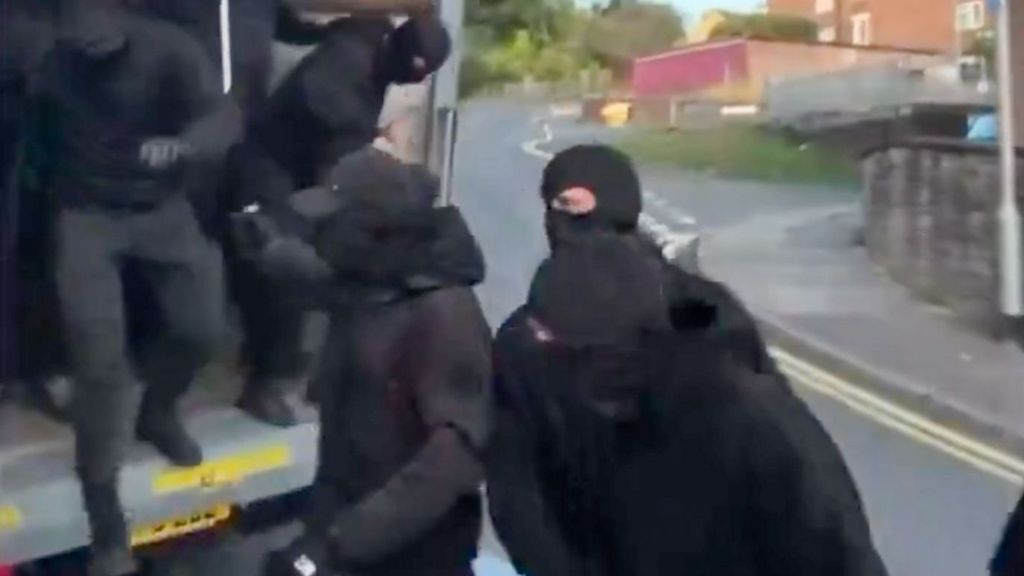
    As South Africa counts down to a self-imposed June 30 deadline for all undocumented migrants to leave the country, the nation has become a landscape of fear for thousands of foreign-born residents. What started as a series of mostly peaceful public protests led by anti-migrant groups and opposition political actors has erupted into widespread targeted intimidation, pushing even documented refugees and long-term residents to flee their homes and seek voluntary repatriation to their home countries.

    One of the thousands living in crisis is Esnat Joseph, a 36-year-old Malawian mother of one-year-old triplets. Sitting in an open-air Durban field where as many as 7,000 displaced foreigners have gathered over the past two weeks, the mother struggled to calm her crying infants as she recalled the armed attack that forced her family from their informal settlement home. “A group of 10 South African men showed up at my door carrying machetes and whips, telling me we had to go back to our country,” Joseph explained. “They grabbed my husband, cut his head and neck, holding his throat like they intended to kill him. By the grace of God he survived, but he is still recovering in a hospital.”

    Joseph, who moved to South Africa three years ago to work as a domestic servant before having her children, lost her passport and immigration paperwork in a robbery three years ago, leaving her with no formal legal status. Like hundreds of other Malawians stranded in Durban, she has signed up for a repatriation bus organized by the Malawian consulate, which has arranged voluntary departures with funding from public donations. She is far from alone: over the past four weeks, Ghana, Mozambique, Nigeria and Zimbabwe have all organized air and bus repatriation efforts, with roughly 3,500 foreign nationals having already chosen to leave South Africa voluntarily. South African authorities confirm that more than 500 recently repatriated Nigerians were in the country without valid documentation.

    Benjamin, a Nigerian returnee who arrived in Lagos last week after living nine years in South Africa, summed up the sentiment of many who have left. “South Africans do not welcome foreigners, especially Nigerians,” he told the BBC. “It is a place where your life can be taken at any moment, it is not safe to stay.”

    The June 30 deadline was first put forward by a coalition of anti-migrant groups including the organization March and March, as well as opposition party ActionSA. Marchers carrying wooden sticks have taken to streets across the country for months, chanting the Zulu phrase *Mabahambe*, which translates to “They must go.” Organizers reject accusations that their movement is xenophobic, arguing that they are pushing for enforcement of existing immigration laws and policy prioritization for South African citizens. “If you enter the country on a 30-day visitor visa and stay for 50 days, two years, even five years, you know you are breaking the law,” March and March leader Jacinta Ngobese-Zuma told reporters at a Durban rally. “South Africa cannot become a refugee camp for every struggling state on the continent. Every country puts its own citizens first, and we demand our government does the same.”

    Protesters’ anger is rooted in deep-seated economic hardship that has plagued South Africa for years. Official government data puts national unemployment at 32.7%, one of the highest rates in the world, with 350,000 jobs lost in the first quarter of 2026 alone, most held by young workers. Protesters argue undocumented migrants strain already overstretched public services, taking scarce jobs, education seats and hospital access from native citizens. “We fight to get our own kids into school, we struggle to get our elderly into hospital beds,” Mecha Ramorola, a protester at a Pretoria march, explained. “Scarce resources should go to South Africans first.”

    Despite this economic context, the current wave of tension has also been amplified by political opportunism, analysts note. South Africa is set to hold local government elections this coming November, and multiple parties have weaponized migration anxiety to win votes. A widely debunked claim that South Africa holds 15 million undocumented migrants, first pushed five years ago by ActionSA leader Herman Mashaba (who is currently campaigning to become mayor of Johannesburg), continues to circulate on social media. “Political parties are scraping the bottom of the barrel, lying to voters that all of South Africa’s problems can be fixed by getting rid of migrants,” said Sharon Ekambaram, a human rights lawyer with the movement Kopanang Africa Against Xenophobia. “This scapegoating has a long history in our politics, and it always gets worse around election season.”

    Worryingly, the current tension has echoes of past waves of deadly xenophobic violence that have struck South Africa: in 2008, anti-migrant riots killed 62 people (including 21 South African citizens) and displaced thousands more, with further outbreaks in 2015, 2016 and 2019. Just last month, the Mozambican government reported that five of its citizens had been killed in anti-foreigner attacks in Western Cape province, a claim South Africa’s foreign minister disputed, saying only two Mozambicans died and investigations into the circumstances are ongoing.

    Social media has played a major role in amplifying hostility in recent weeks. Viral videos showing protesters harassing foreign nationals have spread widely, including one clip of a Ghanaian man being ordered to leave the country that prompted the Ghanaian government to summon South Africa’s ambassador to demand improved protections for Ghanaian citizens. Another viral video features prominent anti-migrant activist Nkosikhona Ndabandaba, a Facebook creator with 1.4 million followers who is known publicly as Phakel’umthakathi, approaching a Congolese man at the roadside. Without asking for proof of his immigration status, Ndabandaba politely told the man: “June 30 is the deadline. You don’t have to wait until then. Leave now.” Ndabandaba has amplified fears further by warning that he cannot control public anger after the deadline passes.

    Critically, even foreign nationals with valid legal status in South Africa are being targeted. Dozens of documented refugees have camped outside Durban’s Home Affairs department to seek government protection. One Burundian mother of four, who has official refugee status, said she has been targeted regardless. “I have all the valid paperwork proving I can stay here, but we are all being chased out,” she said, wrapping herself in a blanket to ward off the southern hemisphere winter chill. “I fear for my life, my children are terrified. We get insulted just walking down the street, my kids get bullied even at school.”

    Even long-term residents with deep roots in the country live in fear. A Malawian beauty therapist who has lived in Cape Town for 16 years (and who does not have formal legal status) said even routine trips to the grocery store have become intimidating. She, her husband and their nine-year-old daughter were recently confronted by their Uber driver, who demanded to see their immigration papers and questioned their origin because of their accent. Her daughter has stopped attending school entirely because of the family’s fear of attack. She says she supports President Cyril Ramaphosa’s plans to reform immigration policy, but stresses that all people, regardless of status, deserve to be safe. “My child can’t even go to school because we are terrified,” she said. “We don’t know what will happen next.”

    President Ramaphosa has pushed back against the intimidation and scapegoating, warning in a recent national address that no individual or group has the right to demand proof of nationality from people in public spaces, and that the government will take action against vigilante harassment. “There is no place for xenophobia, racism, intolerance of any kind in South Africa,” he said, unveiling a five-point plan from his coalition government to address the migration crisis. The plan includes rejecting asylum claims from people who have already passed through other safe countries, introducing quotas for citizenship naturalization, expanding digital identity systems for non-citizens, and imposing jail sentences for employers that hire undocumented migrants for below-minimum wage work.

    Analysts say the policy targeting of underpaid informal work reflects a longstanding pattern of exploitation. “You see undocumented migrants taking jobs that South Africans won’t accept, paying less than the legal minimum, because migrants are desperate and open to exploitation,” noted Professor Shepherd Mpofu, an immigration analyst. Ramaphosa’s plan also includes cracking down on systemic corruption within South Africa’s border and immigration system, a problem that is well-documented. One 36-year-old Malawian salon owner in Johannesburg, who spoke on condition of anonymity for fear of retaliation, told the BBC she has been paying border officials bribes every few months for years to get her passport stamped without having to leave the country. She has now closed her salon and plans to return to Malawi to keep her young children safe.

    In Johannesburg, the government’s enforcement campaign, called Operation New Broom, has already resulted in the bulldozing of hundreds of informal roadside shops that officials say are mostly run by undocumented migrants, which they label hotbeds of criminal activity. During a recent visit to the area, Ethiopian migrants watched in horror as their life’s work was demolished, even after advance warning from authorities.

    Across the country, the growing pressure has left all foreign-born residents feeling trapped. Even the third-largest political party, uMkhonto we Sizwe (MK) led by former President Jacob Zuma, which holds major support in KwaZulu-Natal, has stopped short of endorsing the June 30 deadline but backed the movement’s core anti-undocumented migrant stance. “We all agree that undocumented migrants are breaking the law, they must leave the country peacefully without violence or intimidation,” MK member Bonginkosi Khanyile said.

    Still, fear is tangible nationwide. Long lines of vehicles are backed up at border posts with Mozambique as foreign nationals rush to leave before the June 30 deadline. Back at the open displacement camp in Durban, where aid groups have been distributing blankets and food to thousands of displaced people, terrified Malawian migrants can’t wait to leave. When the first repatriation bus pulled in on Sunday, crowds cheered and chanted the Zulu phrase *Siyahamba*, meaning “We are leaving.”

  • India: Why a country of 1.4 billion is not in the football World Cup

    India: Why a country of 1.4 billion is not in the football World Cup

    As the 2026 FIFA World Cup kicked off last week, one age-old question has resurfaced across Indian football circles, echoing the quiet frustration that fans of the Blue Tigers — India’s men’s national football team — have grown accustomed to over decades of disappointment.

    India has never advanced beyond the preliminary qualifying rounds of Asian Zone qualifiers for the World Cup, making the question of when (or if) the country will ever compete on soccer’s biggest global stage one of the most familiar refrains in the nation’s sporting discourse. The bitter irony, though, is impossible to miss: even without a national team competing in the tournament, the World Cup is celebrated with fevered passion across football-mad Indian states including West Bengal, Kerala, and Goa, and a growing cohort of accredited Indian journalists travel to cover the event in person every edition.

    “We constantly get asked in the press box whether India even plays football. Most global observers only know us as a cricket nation,” joked a veteran Indian football reporter who has covered four World Cups.

    India is not alone in its drought: neighboring China, the world’s second most populous nation, also failed to qualify for this year’s tournament. Still, FIFA has not overlooked the massive untapped market potential of both countries, dispatching a senior media rights delegation to India at the eleventh hour to lock in a live broadcast deal for the 2026 tournament, ensuring the matches reach millions of hungry Indian viewers.

    So, is a World Cup berth still an unreachable goal for Indian football? For Baichung Bhutia, former national team captain and one of the most iconic figures in Indian football history, a spot at the World Cup is not impossible — but it cannot be achieved through quick fixes.

    “Yes, India can absolutely qualify for the World Cup, nothing is impossible. The expanded 48-team format has increased the Asian quota to eight spots, plus a ninth for Iraq via the inter-confederation play-off this year, and teams like Uzbekistan and Jordan have already taken advantage of that opportunity. But getting there will require massive, consistent hard work,” Bhutia explained.

    Bhutia added that the country’s huge population means talent is not the bottleneck. “What we lack is the right development ecosystem. We do not have a serious, long-term focused grassroots football programme. Football is the world’s most popular team sport, and we have to give sustained development time to deliver results,” he said.

    Seventy-eight-year-old Shyam Thapa, who helped India claim bronze at the 1970 Asian Games — the nation’s last major continental football success — echoed Bhutia’s call for long-term grassroots investment, stressing that the foundation of success starts with getting more children involved in the sport. The former striker, famous for his iconic bicycle-kick goals, made no effort to hide his frustration with the current status quo, noting that middle and upper-middle-class parents across India increasingly push their children toward cricket rather than football, lured by the prospect of lucrative contracts in the Indian Premier League (IPL) cricket tournament.

    “I’ve run a youth academy for years, and I can confirm that the more children that play the game, the higher our chances of uncovering elite talent. But what has the All India Football Federation (AIFF) done to build this kind of system from the ground up?” Thapa asked. “Parents need to understand that a professional football career can also be very financially rewarding,” he added.

    A closer look at the nine Asian nations that qualified for the 2026 World Cup underscores just how steep the climb is for India. The qualified sides include Australia, Iran, Japan, Jordan, South Korea, Uzbekistan, Qatar, Saudi Arabia, and Iraq, with Jordan and Uzbekistan making their long-awaited World Cup debuts this year. Both debutants sit well above India in the current FIFA global rankings: Uzbekistan at 52nd and Jordan at 63rd, while India has plummeted to 136th after a steep 18-month decline.

    These rankings lay bare the scale of the challenge facing Indian football. When Kalyan Chaubey, the first former professional player to take the helm as AIFF president, took office in 2022, he struck a pragmatic tone: “I will not sell fans a dream that India will qualify for the World Cup in eight years. Instead, I promise to move Indian football forward from its current poor state.” Nearly four years later, progress remains elusive, with many critics arguing the AIFF has become a laughingstock over the past three years rather than driving rapid improvement.

    The Indian Super League (ISL), the domestic club competition launched in 2014 with massive fanfare and investment from business, Bollywood, and cricket figures, was once hailed as a catalyst for growth. The professionally run league attracted top foreign talent and grew a loyal fanbase, but its future is now deeply uncertain. The most recent ISL season was severely delayed after the AIFF failed to attract any commercial partnership bidders, leaving hundreds of professional players in limbo and sparking widespread public criticism. The federation ultimately was forced to run a shortened season without any commercial sponsors, and is now back to square one planning for the next campaign.

    Against this backdrop, Chaubey’s ambitious 2047 Vision — which pledged to bring 35 million children into organised football — increasingly looks like a forgotten campaign promise, with the gap between lofty strategic targets and on-field results growing wider by the year.

    A brief bright spot came in 2023, when the senior men’s national team climbed back into FIFA’s top 100 after winning an invitational tournament and the South Asian Football Federation (SAFF) Championship. But those hard-won gains have since evaporated. After raising hopes that India would reach the third round of 2026 World Cup Asian qualifiers for the first time in history, the team fell short, and later failed dramatically to qualify for next year’s AFC Asian Cup.

    For the near term, consistent qualification for the 24-team AFC Asian Cup is widely seen as the logical immediate priority for Indian football. In an off-the-record conversation with reporters several years ago, former national captain Sunil Chhetri, who came out of retirement in 2025, argued that the national program must set realistic, incremental goals.

    “We need to take this one step at a time. Right now, our goal should be to qualify for every AFC Asian Cup, because that will give us regular opportunities to play against stronger, higher-ranked opposition. Once we can establish ourselves among the top 15 to 20 teams in Asia, only then can we start aiming for a World Cup spot,” Chhetri said.

    For the moment, the short-term outlook remains gloomy, though AIFF leadership has pushed for a key policy change that could shift the trajectory of the national team: allowing overseas citizens of India (OCI cardholders) to represent India. Currently, players of Indian origin holding foreign passports must renounce their citizenship to play for India, a rule that Australia-born Ryan Williams already followed to impressive effect, delivering strong results after switching his international allegiance.

    If the rule change is approved, it could deliver a significant boost to the national team. Notably, four players of Indian origin are competing at this year’s World Cup for other nations: Tahsin Mohammed for Qatar, Nishan Velupillay for Australia, Sarpreet Singh for New Zealand, and Samuel Moutoussamy for Congo.

    For now, though, that change remains a distant possibility. Until India qualifies, Indian fans will once again watch the World Cup from the sidelines, cheering on global superstars like Lionel Messi and Cristiano Ronaldo, and marveling at the achievement of tiny Curaçao, the smallest nation ever to qualify for the tournament. The unavoidable question will linger in the back of every fan’s mind: If Curaçao can do it, why can’t India?