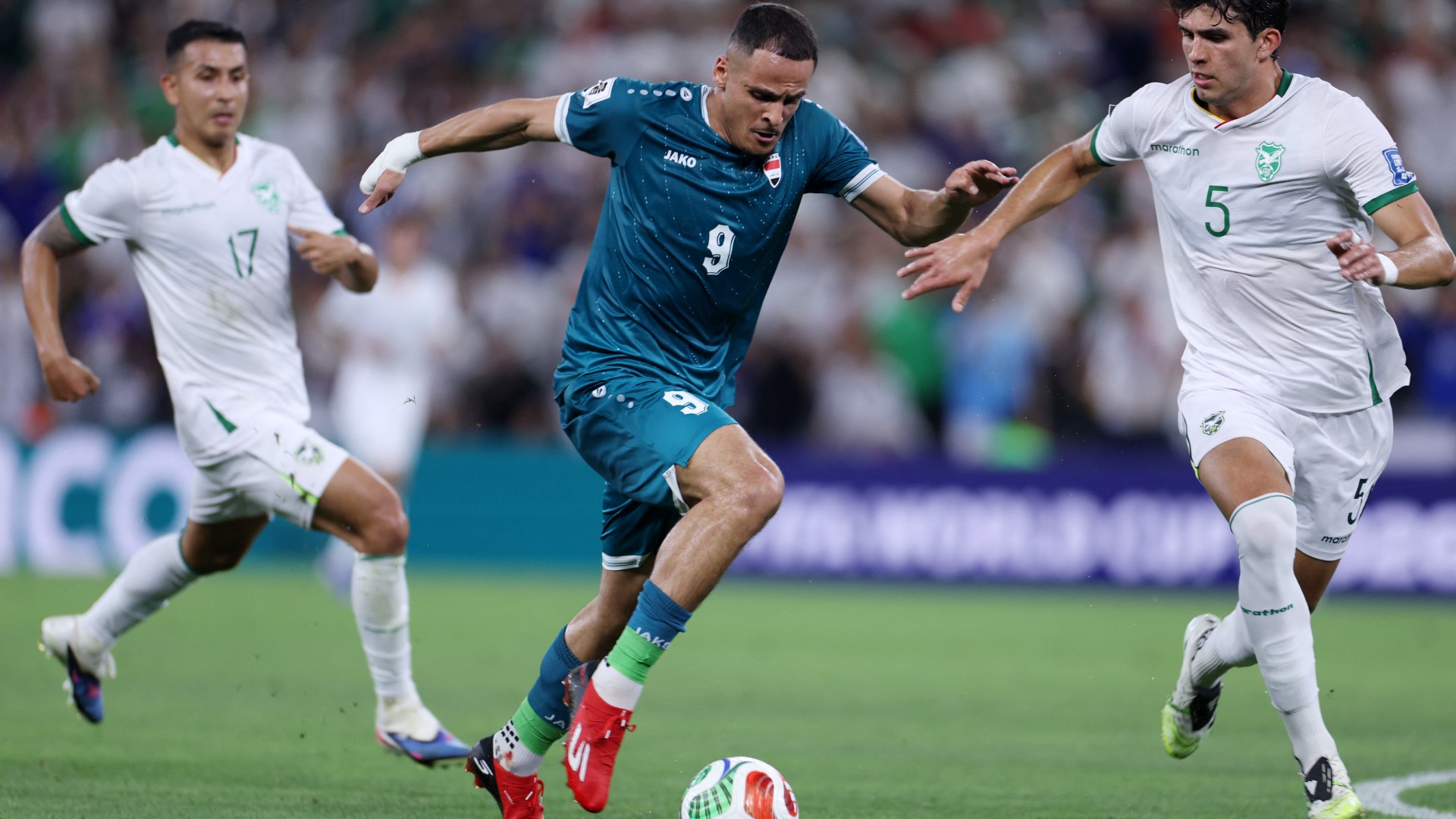
Decades of conflict and sectarian division have fractured Iraq along religious, ethnic and regional lines, but one shared passion cuts across every dividing line: football. For Iraqis, the beautiful game has long been far more than 90 minutes of competition on grass — it is the rare space where a fragmented people can come together as one, bound by national pride. That unifying magic last captured global attention in 2007, when Iraq defied all odds to claim the Asian Cup title at the height of the country’s bloodiest post-invasion violence. Now, 40 years after the national team made its first and only World Cup appearance, the Lions of Mesopotamia are back on football’s biggest global stage, set to kick off their campaign against Norway in Boston this Tuesday.
The long-awaited return has reignited a wave of euphoria stretching from the neighborhoods of Baghdad and Basra to Iraqi diaspora communities across the globe, thousands of whose members have traveled to the United States to cheer on their side. While some pundits have labeled Iraq’s Group I — which also includes football powerhouse France and African contender Senegal — the tournament’s notorious “group of death”, head coach Graham Arnold, an Australian leading the national side, has rebranded it the “group of excitement”. For Arnold, the tournament represents a rare chance to demonstrate how far Iraqi football has come, pitting his side against some of the world’s top-ranked teams with nothing to lose and everything to gain.
In downtown Boston, the vibrant blue and red of the Iraqi flag and national team jerseys have become a ubiquitous sight, as supporters from every corner of the world converge to cheer on their team. Among them is Sajjad Ismail, a 33-year-old Iraqi fan and social media vlogger who traveled thousands of miles to document Iraq’s historic return to the World Cup. Speaking to Middle East Eye, Ismail called the team’s qualification the fulfillment of a lifelong dream shared by every Iraqi. “Being here in this global gathering confirms that the love of Iraq unites its people wherever they are,” he said.
Ismail remains optimistic about Iraq’s chances against the group’s formidable opponents, pointing to the skill and experience of the team’s professional roster. “There is no doubt that the group is tough, but Iraq possesses a distinguished group of professional players capable of making a difference at any moment,” he noted. What has moved him most, he added, is the sight of thousands of Iraqi fans gathering in celebration, singing, dancing and chanting in unified support of their nation. “That really brought pride to me,” he said. For Ismail, documenting the team’s journey is far more than routine sports content: “It’s a historic moment that Iraqis experience with all their emotions.”
For another traveling fan, 38-year-old Salim al-Subaihawi, the journey to Boston was almost derailed by severe storms that disrupted flight schedules across the United States, leaving him stranded in Texas days before the opening match. Even that setback, however, has not dimmed his determination to make it to the stadium. “Alhamdulillah – Iraq has qualified for the World Cup. This is a huge event, something we are immensely proud of,” he said. In a rousing statement that sums up the mood of the entire Iraqi fanbase, al-Subaihawi declared: “Forty years we waited. Storms can’t stop us, flights can’t stop us. And in Boston, the world will hear one voice: ours.” Like Ismail, he is confident Iraq can hold its own against the group’s star-studded opponents: “Yes, we will face strong teams, squads packed with big-name stars. But Iraq has always thrived against the best. We know how to turn the game around and pull off massive results.”
Back in the Iraqi capital Baghdad, the celebration of the national team’s historic achievement has taken on a creative new form. Local graffiti artist Ibrahim Kareem teamed up with a collective of volunteer artists to paint a massive 150-meter-long, 4.5-meter-high mural honoring the national team in Sadr City, one of Baghdad’s most densely populated neighborhoods. It is one of the largest public artworks dedicated to Iraqi football produced in the country in recent years.
Kareem said the project was inspired by street art tributes to national teams he saw from fans around the world, and he wanted to bring that same energy to Baghdad. “This mural is our gift to the Iraqi national team on the occasion of their World Cup qualification,” he explained. “The idea came to me after I saw how fans in other countries were decorating their streets and alleyways with artwork in support of their teams. I was inspired, and I knew we could do the same here in Baghdad. We are a people of art, creativity, and passion.”
What began as a solo project quickly grew into a community-wide effort, as designers, calligraphers and muralists volunteered their skills to bring the tribute to life. Kareem said the outpouring of public support exceeded all his expectations: “The response from the public has been incredible – far beyond what we expected. We never imagined we would complete a piece of this scale without the encouragement and motivation we received from the community and from social media. People kept urging us to keep going, to expand the work, and to give even more.”
The excitement surrounding Iraq’s World Cup run extends far beyond the capital, resonating deeply with Iraqis across the country. In the southern city of Basra, 33-year-old Aqeel Jawad framed the national team’s appearance as a landmark moment of national pride after decades of hardship. “Iraq’s participation in the World Cup is more than just a sporting event or an ordinary appearance – it is a moment of pride for every Iraqi after so many years of waiting to see the Iraqi flag present among the world’s top teams and inside international stadiums,” he said. “It reflects Iraq’s ability, and the national team’s capability, to achieve great things despite the challenges our people have endured.”
Like fans across the country, Jawad acknowledges the magnitude of the challenge Iraq faces in Group I, but he holds unshakable confidence in the team. “Iraq’s group is by no means an easy one, but football recognises nothing except what you give on the pitch,” he said. “Our confidence in the Lions is immense, they will surprise everyone. My prediction is that Iraq will advance to the second round and finish second in the group, behind France.” For a nation that has waited 40 years to return to the World Cup, the match results are only part of the story: the tournament has already proven once again that football’s unifying power can transcend even the deepest divisions, bringing Iraqis together at home and around the world.