博客

  • Kyiv hits Russian oil sites as eight killed in both countries

    Kyiv hits Russian oil sites as eight killed in both countries

    Four years into Russia’s full-scale invasion of Ukraine, cross-border drone attacks have escalated sharply over the weekend, leaving at least eight people dead across both countries and marking one of the largest daily exchanges of unmanned strikes in the conflict. On Sunday, Ukrainian President Volodymyr Zelensky confirmed that Ukrainian forces had targeted key Russian maritime assets, including a Russian cruise missile carrier and three vessels belonging to Moscow’s shadow fleet of sanctioned oil tankers.

    Zelensky stated the missile-carrying vessel was hit at the Port of Primorsk, located in Russia’s northwestern Leningrad Region—an area that hosts critical Russian oil export terminals that have come under repeated Ukrainian attack in recent weeks. Past strikes on these facilities have sparked large-scale blazes that sent toxic black smoke plumes into the atmosphere, with Kyiv estimating the attacks have already cut off billions of dollars in Russia’s key oil export revenue. Of the three shadow tankers targeted, one was hit at Primorsk, while the other two were struck off Russia’s southern Black Sea port of Novorossiysk. Zelensky also released night-vision footage showing a Ukrainian naval drone approaching one of the tankers anchored off Novorossiysk to confirm the strike. Local Russian authorities in Leningrad Region confirmed a port fire following the Ukrainian attack, but have not released any details on the extent of damage to infrastructure or vessels.

    Shadow fleet tankers are aging, unregistered or under-documented vessels that Russia relies on to ship its crude oil to global markets after Western nations imposed sweeping price caps and trade sanctions on Russian energy exports following the 2022 invasion. Sunday’s strike marks a major escalation in Ukraine’s campaign to disrupt Russia’s energy revenue stream that funds its war effort.

    In a public statement on social media Sunday, Zelensky warned Moscow that Kyiv would expand retaliatory strikes on Russian energy infrastructure if Russia does not end its invasion. “Russia can end its war at any moment. Prolonging the war will only expand the scale of our defensive operations,” he said. Ukraine frames its strikes on Russian territory and energy assets as legitimate retaliation for ongoing Russian attacks on Ukrainian civilian infrastructure.

    The weekend exchange of drone fire was one of the largest single-day exchanges of unmanned attacks since the war began. Kyiv’s air force reported that Russia launched 268 drones and one ballistic missile at Ukrainian targets in the overnight barrage, while Russia’s Ministry of Defense claimed Ukraine launched 334 drones targeting Russian territory over the same period.

    Civilian casualties were reported on both sides. On Russian-controlled territory, two people were killed in the border region of Belgorod, one person was killed near Moscow, and a teenage civilian was killed in Russian-occupied southern Ukraine. On the Ukrainian side, two civilians died in attacks on the southern coastal Odesa Region, one was killed in the frontline Kherson Region, and another death was recorded in a strike on the major industrial city of Dnipro. Images released from Dnipro show the full roof of a five-story residential apartment building collapsed, with exposed wooden support beams and rubble scattered across the damaged top-floor units.

    Both sides have repeatedly denied intentionally targeting civilian populations. Since Russia launched its full-scale invasion in February 2022, tens of thousands of people have been killed, the vast majority of them Ukrainian civilians and soldiers. Data compiled by AFP from Ukrainian air force records shows that in April, Russia ramped up its long-range drone campaign to a record high, launching an average of more than 200 attack drones per day against Ukrainian targets. Diplomatic efforts to negotiate a ceasefire or end to the conflict have remained stalled for months, with neither side showing willingness to agree to major concessions to de-escalate the fighting.

  • Iran says US military operation ‘impossible’ as Trump mulls peace proposal

    Iran says US military operation ‘impossible’ as Trump mulls peace proposal

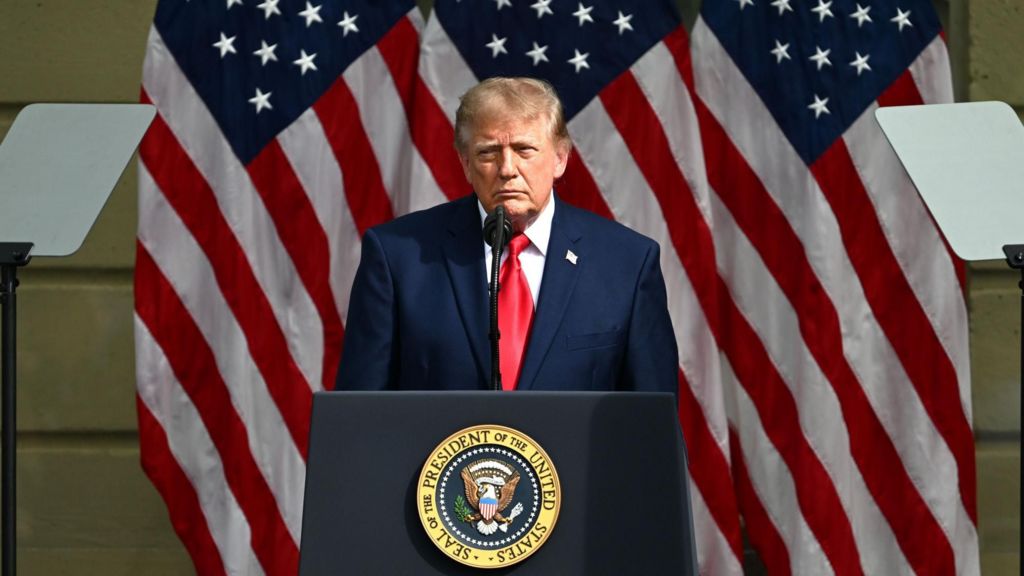
    Tensions between the United States and Iran have reached a new stalemate, with Tehran’s most powerful military force dismissing any large-scale US military operation as unfeasible, even as US President Donald Trump openly weighs military action against accepting Tehran’s new peace initiative.

    After weeks of frozen diplomatic progress following an April 8 ceasefire that has only produced one round of direct talks, Iran submitted a 14-point peace framework to mediator Pakistan earlier this month. The proposal, according to anonymous sources briefed on the text who spoke to US news outlet Axios, lays out a 30-day timeline for negotiations aimed at three core outcomes: reopening the strategically critical Strait of Hormuz, lifting the US naval blockade of Iranian ports, and bringing a permanent end to ongoing conflict across Iran and Lebanon.

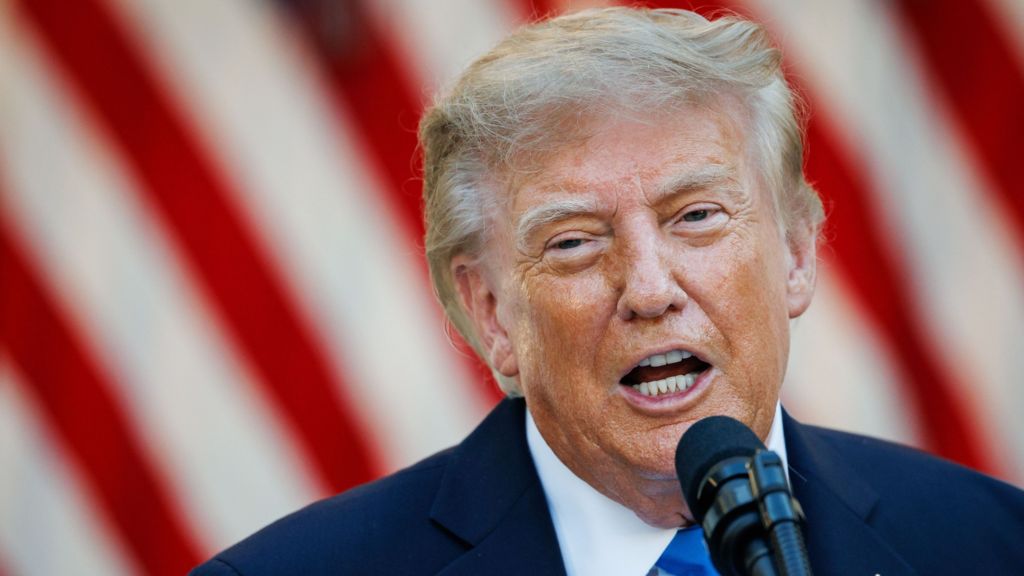
    Trump, however, quickly cast doubt on the proposal in a post to his Truth Social platform, arguing the plan would almost certainly be unacceptable because he believes Iran has not paid sufficient accountability for what he framed as 47 years of harmful actions against the global community. “I will soon be reviewing the plan that Iran has just sent to us, but can’t imagine that it would be acceptable,” Trump wrote. He has publicly framed his policy options as binary: either launch devastating military strikes against Iran, or pursue a negotiated settlement.

    In a formal statement released Sunday, Iran’s Revolutionary Guards pushed back, shifting the decision-making burden back to the White House. They argued Trump now faces only two options: an impossible large-scale military campaign, or accept what they called a bad deal with the Islamic Republic. “The room for US decision-making has narrowed,” the statement read.

    Iran’s senior diplomatic leadership echoed this framing a day earlier. Deputy Foreign Minister Kazem Gharibabadi told international diplomats in Tehran that the US now holds the responsibility to choose between diplomatic dialogue or sustained confrontation, adding that Tehran is fully prepared for either outcome.

    Trump, speaking to reporters during a stop in West Palm Beach, Florida Saturday, declined to outline specific triggers for new US military action, but did not rule it out. “If they misbehave, if they do something bad, but right now, we’ll see,” he said. “But it’s a possibility that could happen, certainly.”

    Hardline Iranian military figures have responded with aggressive rhetoric of their own. Mohsen Rezaei, a top military adviser to Iranian Supreme Leader Ali Khamenei, warned in a post to X that Iranian forces are fully capable of sinking US warships if attacked. “The US is the only pirate in the world that possesses aircraft carriers,” Rezaei wrote. “Our ability to confront pirates is no less than our ability to sink warships. Prepare to face a graveyard of your carriers and forces.” No US military vessels have been sunk by Iran during the current conflict, and no evidence supports a threat of such action to date.

    Diplomatic frictions have also flared over the issue of Iran’s nuclear program. Earlier this week, Axios reported that Trump’s special envoy Steve Witkoff has pushed to reinsert discussions of Iran’s nuclear activities into any new negotiation round. Iran’s permanent mission to the United Nations hit back Saturday, accusing Washington of blatant hypocrisy, pointing to the US’s own massive nuclear arsenal to criticize its restrictions on Tehran’s atomic program.

    The conflict has already reshaped global energy markets and inflicted severe economic pain on the Iranian people. Since the outbreak of war, Iran has controlled access to the Strait of Hormuz, a chokepoint through which roughly 20% of the world’s daily oil supplies pass, cutting off key global shipments of oil, natural gas, and agricultural fertilizer. The US has responded with a naval blockade of Iranian ports, and global crude oil prices have surged roughly 50% above pre-war levels.

    Iranian lawmakers are currently drafting legislation to formalize toll collection for vessels passing through the strait. Deputy parliamentary speaker Ali Nikzad announced that 30% of all collected tolls would be allocated to expanding military infrastructure, while the remaining 70% would go toward domestic economic development. “Managing the Strait of Hormuz is more important than acquiring nuclear weapons,” Nikzad said.

    For ordinary Iranians, the economic strain is growing steadily. US sanctions and the blockade have cut Iran’s oil exports dramatically, pushing national inflation past 50%. Amir, a 40-year-old resident of Tehran, spoke to AFP from outside the country, describing a population draining emergency savings to cope with the crisis. “Everyone is trying to endure it, but… they are falling apart,” he said. “We still have not seen much of the worst economic effects because everyone had a bit of savings. They had some gold and dollars for a rainy day. When they run out, things will change.”

  • Man Utd beat Liverpool to secure Champions League place

    Man Utd beat Liverpool to secure Champions League place

    One of English football’s most heated rivalries delivered a chaotic, unforgettable encounter at Old Trafford on Sunday, as Kobbie Mainoo’s 75th-minute finish handed Manchester United a dramatic 3-2 victory over Liverpool and locked in United’s spot in next season’s UEFA Champions League.

    The hosts got off to a blistering start, netting twice inside the opening 15 minutes to put Liverpool on the back foot. Brazilian forward Matheus Cunha opened the scoring in the 10th minute, his driven effort from the edge of the box deflecting off Alexis MacAllister and leaving Liverpool’s third-choice goalkeeper Freddie Woodman with no chance to save. Just four minutes later, Slovenian striker Benjamin Sesko bundled the ball over the line after Bruno Fernandes nodded a cross back across the six-yard box, doubling United’s lead. Fernandes nearly put the game out of sight before halftime, but he blazed a cross from Bryan Mbeumo just inches wide of the target.

    While United dominated the first half, Liverpool showed clear signs of their threat going into the break, with Cody Gakpo curling a chance just wide after cutting through United’s midfield. The tide shifted dramatically just after halftime, when two unforced United errors handed Liverpool the chance to level. Sesko was replaced by Ivorian winger Amad Diallo at the break, and Diallo gifted Liverpool their first goal just minutes in, playing a loose pass that Hungarian midfielder Dominik Szoboszlai pounced on. Szoboszlai ran unopposed from inside his own half before slotting calmly into the bottom corner to cut United’s lead to 2-1.

    Liverpool’s equalizer came shortly after, another self-inflicted mistake from United. Goalkeeper Senne Lammens played a loose pass that was intercepted by MacAllister, who quickly fed Szoboszlai. The Hungarian squared the ball to Gakpo for a simple tap-in, leveling the score at 2-2 just 18 minutes into the second half.

    With both sides throwing caution to the wind in search of a winning goal, it was United who found the decisive breakthrough. A sloppy clearance from MacAllister fell perfectly into the path of the onrushing Mainoo, who steered a cool finish past Woodman from the edge of the box to restore United’s lead.

    The result leaves United third in the table, six points clear of Liverpool and guaranteed a top-four finish that ends a two-year absence from the Champions League. This win also marks United’s first league double over Liverpool since the 2015-16 season, completing a staggering turnaround from 12 months ago, when Liverpool won their 20th top-flight title, finishing 14 places and 42 points ahead of United.

    For interim manager Michael Carrick, who took charge of the club in January, the result cements his case to be appointed permanent manager for next season. Carrick has already claimed statement wins over Arsenal, Manchester City, and Chelsea in his short tenure, and securing Champions League football – his primary stated goal – brings in significant revenue that makes his position hard to ignore.

    The result is also a personal triumph for Mainoo, who signed a new five-year contract with the club earlier this week after being overlooked by previous managerial candidate Ruben Amorim. The young England midfielder has been at the heart of United’s resurgence under Carrick, and his match-winning finish was the perfect celebration of his new deal.

    Liverpool, who went into the match depleted by injuries to key starting forwards Mohamed Salah, Hugo Ekitike, and Alexander Isak, suffered their 11th league defeat of the season. Despite the loss, Arne Slot’s side remain well positioned to claim a Champions League spot of their own, needing just three points from their final three remaining matches to secure qualification.

  • OPEC+ countries agree modest rise in production as Iran retains chokehold on key Strait of Hormuz

    OPEC+ countries agree modest rise in production as Iran retains chokehold on key Strait of Hormuz

    VIENNA — In a move that underscores ongoing efforts to balance volatile global energy markets, seven key OPEC+ oil-producing nations, including heavyweights Saudi Arabia and Russia, have greenlit a small, incremental production increase set to launch in June, framing the step as a deliberate contribution to sustained market stability. The coalition, which also counts Algeria, Iraq, Kazakhstan, Kuwait and Oman among its members, formalized the decision to add 188,000 barrels of crude per day to global supplies following a virtual negotiating session held on Sunday. Energy analysts widely characterize the output increase as largely symbolic, given the severe supply disruptions currently roiling the Persian Gulf. Amid escalating regional tensions tied to the ongoing U.S.-Israeli conflict, Iran has imposed restrictions on vessel traffic through the Strait of Hormuz — the strategic waterway that carries roughly one-fifth of the world’s total oil and natural gas trade. The blockage has sidelined the bulk of seaborne oil exports from Gulf producing states, removing millions of barrels of daily supply from the global market far outweighing the small planned output increase from OPEC+. The decision comes on the heels of a seismic shift in the global oil order: the United Arab Emirates’ historic announcement that it will exit OPEC, the 65-year-old oil cartel that commands roughly 40% of the world’s total crude production and holds outsized sway over global energy pricing. The departure has thrown long-standing alliance dynamics into uncertainty, forcing member and partner states to reassess their coordinated production strategies. Institutional context clarifies OPEC+’s structure: Iran holds a seat as one of OPEC’s 12 current core members, while Russia is not a formal cartel participant, instead collaborating with the Vienna-headquartered alliance through the broader OPEC+ partnership framework. Moving forward, the seven nations that approved the production hike say they will convene monthly review sessions to assess evolving market conditions, monitor member compliance with production quotas, and address any necessary production adjustments to offset past deviations. The next full review meeting is scheduled for June 7, when leaders will revisit market outlooks and adjust plans as needed in response to shifting global supply and demand dynamics.

  • Police officer lowered into crocodile-infested river to recover human remains

    Police officer lowered into crocodile-infested river to recover human remains

    In the aftermath of devastating floodwaters that swept through northeastern South Africa last week, a daring, high-stakes recovery operation led by elite South African police has yielded human remains from the belly of a massive 4.5-meter, 500-kilogram crocodile, in the search for a missing local businessman.

    The ordeal began when the unidentified man attempted to cross a submerged low-water bridge over the Komati River, located in South Africa’s Mpumalanga province. His vehicle quickly became trapped in the rushing floodwaters, and by the time first responders arrived at the scene, the car was empty. Authorities concluded the man had been swept away by the powerful current, according to Mpumalanga provincial police spokesperson Colonel Mavela Masondo, who shared details with South African national broadcaster SABC.

    Launching a large-scale search operation that deployed both drones and helicopters to cover the wide, fast-moving river, search teams spotted a cluster of crocodiles basking on a small exposed sandbar. As commander of the police diving unit, Captain Johan “Pottie” Potgieter told local news outlet News24 that years of field experience allowed his team to immediately identify one reptile as suspicious: unlike the other crocodiles that scattered at the noise of approaching aircraft, this giant animal stayed motionless on the bank, its abdomen visibly distended from a recent large meal.

    Teams humanely euthanized the suspected reptile before planning the dangerous recovery. In an operation police have labeled “highly dangerous and complex”, Potgieter was lowered via rope from a hovering helicopter directly to the sandbar, where he secured the massive crocodile before both he and the animal were hoisted back into the aircraft and flown to nearby Kruger National Park for examination. Potgieter acknowledged to News24 that the mission was an inherently tense experience: “The sharp-end of a crocodile is not the best place to approach it,” he said.

    Upon dissection, search teams recovered partial human remains from the crocodile’s digestive tract, along with six separate shoes. Potgieter noted that while the presence of multiple footwear suggests the crocodile may have claimed other victims in the past, crocodiles are opportunistic feeders that often swallow non-food debris that washes into their habitat, so the find does not confirm additional deaths.

    DNA testing is now underway to formally confirm whether the recovered remains belong to the missing businessman. Following the successful completion of the risky operation, South Africa’s acting police chief Lieutenant-General Puleng Dimpane publicly recognized Potgieter for his extraordinary bravery in carrying out the high-risk task.

  • Second unexploded shell found at illegal French rave: minister

    Second unexploded shell found at illegal French rave: minister

    A massive unauthorized rave that drew tens of thousands of partygoers to a former French military firing range has sparked public safety outrage after officials confirmed a second unexploded World War II-era shell was discovered at the site, just one day after the first dangerous ordnance prompted an emergency bomb disposal response.

    The unsanctioned gathering, commonly called a “free party” by organizers, launched Friday on the 10,000-hectare decommissioned firing range located near the central French town of Bourges, roughly 120 miles south of Paris. The rave was coordinated via encrypted messaging platforms, allowing crowds to converge quickly before authorities could block access, with conflicting estimates of attendance: organizers claim up to 40,000 people traveled to the site from France and nearby neighboring countries, while French Interior Minister Laurent Nunez pegs the total number at 17,000.

    Local authorities had explicitly warned the crowd that holding a dance event on the former military site was an extreme safety risk, as the ground still holds unaccounted-for unexploded ordnance dating back to World War II. Despite repeated warnings, partygoers entered the site anyway. On Saturday evening, bomb disposal squads were called to the location after the first unexploded shell was unearthed near a main road cutting through the party grounds.

    After conducting an aerial inspection of the site via helicopter Sunday, Nunez confirmed to reporters that a second unexploded shell had been located and that disposal experts were working to neutralize the new threat. “When the prefect warned that this was dangerous land, it was not a joke,” the minister emphasized.

    In a surprising twist, organizers have openly acknowledged they deliberately selected this specific firing range—located in Nunez’s own hometown—to stage the protest against a pending national bill that would dramatically increase criminal penalties for people who organize and participate in unauthorized free parties.

    Organizers have claimed the event has proceeded without major disruptions or safety incidents, but Nunez refuted this account. He told reporters that 12 attendees have already been transported to local hospitals, multiple for drug-related complications, and five participants have been taken into police custody. Authorities have so far issued more than 600 fines for trespassing on military land and participating in an illegal gathering.

    Once a little-known underground tradition, illegal raves have become a growing issue for French law enforcement. Nunez reported that officials recorded 337 unauthorized music events across the country in 2025. Most of these gatherings draw around 300 attendees, but roughly four percent attract crowds of more than 1,000, creating major public safety and logistics challenges for local communities.

    The gathering has already hardened the government’s commitment to passing stricter penalties for illegal rave organizers and participants. Back in April, France’s lower parliamentary house approved a draft bill that would impose up to six months of prison time for anyone directly or indirectly involved in organizing or facilitating unauthorised raves. The legislation’s broad definition of organizing extends even to sharing logistical information about planned events online. Nunez argued that current penalties are far too lenient, classifying violations as minor offenses that do little to deter organizers.

    By early Sunday afternoon, an AFP journalist on the ground observed that many performance stages had been cleared out and a large portion of attendees had begun departing the site. The incident has reignited national debate over balancing personal recreation freedoms with public safety, and is expected to speed up passage of the stricter rave regulation legislation.

  • Two US service members reported missing in Morocco, officials say

    Two US service members reported missing in Morocco, officials say

    In a developing incident reported over the weekend, two American service members have been declared missing while taking part in a large-scale multinational military exercise in southern Morocco, U.S. Africa Command (Africom) confirmed in a statement released Sunday.

    The missing service members were participating in African Lion 2026, the yearly joint military drill that brings together U.S. military personnel, NATO alliance partners, and multiple African partner nations. The exercise’s core mission is to enhance interoperability, strengthen tactical coordination, and deepen security cooperation across transatlantic and African defense forces.

    According to Africom’s official update, the two troops were reported missing Saturday in the area adjacent to the Cap Draa Training Area, located just outside the southwestern Moroccan city of Tan Tan. This coastal desert region near the Atlantic coast forms the primary training ground for large-scale maneuver drills during African Lion.

    A comprehensive search and rescue operation has been activated to locate the missing service members, with assets contributed by multiple nations. The mission draws on ground search teams, air reconnaissance sorties, and maritime patrol resources from the United States, Moroccan defense forces, and other participating partners. As of the latest update, the search remains ongoing with no further details released on the circumstances of the disappearance or the identities of the missing troops.

  • A cargo ship near Strait of Hormuz reports being attacked as Iran makes new peace proposal

    A cargo ship near Strait of Hormuz reports being attacked as Iran makes new peace proposal

    DUBAI, United Arab Emirates – A new suspected attack targeting an unidentified northbound cargo ship has been documented off the coast of Sirik, Iran, east of the strategic Strait of Hormuz, the United Kingdom Maritime Trade Operations (UKMTO), Britain’s leading maritime security monitoring agency, announced Sunday. This incident brings the total number of maritime attacks recorded in and around the world’s most critical energy chokepoint to at least two dozen since the outbreak of the ongoing Iran war, and marks the first reported assault in the region after a lull that began April 22, when another cargo vessel came under fire. All crew members aboard the targeted ship emerged unharmed, UKMTO confirmed, though no group has yet stepped forward to claim responsibility for the attack. The overall threat rating for commercial shipping transiting the area remains classified as critical, as Tehran has effectively disrupted normal traffic through the strait through a campaign of targeted attacks and threats against passing vessels. For months, Iranian officials have maintained that any non-U.S. and non-Israeli flagged vessels may safely pass the waterway only upon payment of a transit toll. The small assault craft used in these attacks, many operated by Iranian forces and outfitted only with twin outboard motors, are notoriously agile, difficult for international naval forces to detect, and have been linked to multiple assaults on commercial shipping in recent months. Tensions in the region remain high even as a fragile three-week ceasefire between U.S.-led forces and Iran has largely held. U.S. President Donald Trump told reporters Saturday that additional military strikes against Iranian targets remain on the table should diplomacy fail to resolve the standoff. Parallel to the maritime security escalation, Iran has submitted a new 14-point peace proposal to the United States through diplomatic intermediary Pakistan, which hosted direct, face-to-face negotiations between the two countries last month. The proposal, reported by Iranian state-linked security outlets Nour News and Tasnim, aims to reach a full end to hostilities within a 30-day timeline rather than just extend the current ceasefire. It calls for the U.S. to lift all sweeping economic sanctions on Iran, end the ongoing American naval blockade of Iranian ports, withdraw all U.S. military forces from the broader Middle East region, and force an end to Israeli military operations in Lebanon. Notably absent from the proposal is any mention of Iran’s controversial nuclear program and its stockpiles of enriched uranium – the core longstanding point of contention between Tehran and Western powers, which Iran has indicated it prefers to address in later negotiations. Pakistan continues to serve as a key go-between for the two adversaries, with the country’s prime minister, foreign minister and army chief all pushing for sustained direct dialogue between Washington and Tehran, according to two unnamed Pakistani officials authorized to discuss the sensitive diplomacy. On Sunday, Iranian Foreign Minister Abbas Abbas Araghchi also held talks with his Omani counterpart Badr al-Busaidi, whose government oversaw previous rounds of pre-war negotiations between the two sides. The strategic Strait of Hormuz, located at the mouth of the Persian Gulf, normally carries roughly 20% of the world’s daily traded oil and natural gas, alongside critical fertilizer shipments that global food markets depend on. Since the outbreak of war on February 28, Iran’s tightening grip on the waterway has sent shockwaves through global energy and commodity markets. During a visit to the strategically vital Larak Island port facilities Sunday, Iranian deputy parliament speaker Ali Nikzad reaffirmed Tehran’s uncompromising stance, saying, “Iran will not back down from our position on the Strait of Hormuz, and it will not return to its prewar conditions.” Nikzad does not hold formal decision-making authority in the Iranian legislature, but his comments signal the hardline position popular among Iranian political elites. The U.S. has responded by warning global shipping companies that any form of payment to Iran for safe transit – including digital assets – could expose them to harsh U.S. sanctions. Compounding pressure on Tehran, the U.S. naval blockade implemented April 13 has cut off most of Iran’s oil export revenue, a critical lifeline for the country’s already ailing economy. U.S. Central Command announced Saturday that 48 commercial tankers have already been ordered to turn back from Iranian ports. U.S. Treasury Secretary Scott Bessent told Fox News Sunday that Iran has collected less than $1.3 million in total transit tolls to date – a tiny fraction of the country’s pre-war daily oil export earnings. “They’re going to have to start shutting in wells, which we think could happen in the next week,” Bessent said, noting that Iran’s onshore oil storage facilities are rapidly filling to capacity. Iran’s domestic economic situation continues to deteriorate rapidly, with the national currency the rial hitting new record lows against the U.S. dollar Sunday. On the second day of Iran’s working week, the dollar traded at 1,840,000 rials in Tehran’s central Ferdowsi Street currency exchange, a sharp drop from the already record low of 1.3 million rials per dollar recorded last December. At that time, the currency collapse sparked widespread nationwide protests over the soaring cost of living. Iranian markets remain deeply unstable, with prices for basic consumer goods rising on a daily basis, and local media reports indicate that dozens of factories have failed to renew worker contracts after the Iranian new year in March, leaving thousands unemployed. Yousef Pezeshkian, son and senior adviser to Iranian President Masoud Pezeshkian, acknowledged the stalemate in a Telegram post over the weekend, writing that both the United States and Iran continue to view themselves as the war’s victor and remain unwilling to make concessions. In a separate development Saturday, the Norwegian Nobel Committee issued an urgent public appeal for Iran to immediately allow imprisoned 2023 Nobel Peace Prize laureate Narges Mohammadi to transfer to Tehran to receive specialized care from her personal medical team, after a sharp deterioration in the human rights lawyer’s health. The committee confirmed it is in regular contact with Mohammadi’s family and legal team, and warned that the activist’s life remains in imminent danger. Mohammadi, who is imprisoned in Zanjan prison in northwestern Iran, fainted twice in custody Friday, and was admitted to a local hospital, according to her personal foundation. Her legal team has said she is suspected to have suffered a heart attack in late March. This report included contributions from Associated Press correspondent Melanie Lidman in Tel Aviv, Israel, with additional reporting from Amir Vahdat in Tehran, Iran, and Munir Ahmed in Islamabad, Pakistan.

  • Russian strikes kill 10 as Zelensky says Ukraine hits oil tankers and terminal

    Russian strikes kill 10 as Zelensky says Ukraine hits oil tankers and terminal

    Over a 24-hour period, a fresh wave of Russian drone and missile assaults across multiple Ukrainian regions has left at least 10 civilians dead and 76 others injured, marking another escalation in the ongoing aerial campaign targeting Ukrainian populated areas. Fatalities were confirmed across five Ukrainian administrative regions, consistent with Russia’s sustained pattern of regular strikes on urban and civilian infrastructure throughout the country. Three fatalities were recorded in separate incidents in the southern Kherson region, according to the region’s governor. Two deaths each were reported in Odesa, Donetsk, and Zaporizhzhia, while one additional fatality was confirmed in the northeastern Sumy region. Ukrainian air defense forces reported they intercepted the vast majority of incoming Russian weapons, which included one ballistic missile and close to 270 attack drones launched in the assault.

    Parallel to these defensive operations against Russian strikes, Ukrainian authorities have confirmed a series of successful cross-border attacks targeting key Russian energy infrastructure and maritime assets. Ukrainian President Volodymyr Zelenskyy announced that a major oil terminal in northwestern Russia sustained extensive damage, while two Russian oil tankers were hit in strikes near the key Black Sea port of Novorossiysk. Zelenskyy confirmed the two damaged tankers were part of Russia’s so-called ‘shadow fleet’ of vessels operated to bypass Western price caps and sanctions on Russian crude oil exports. No official details on the extent of damage to the ships have been released by Russian authorities as of yet.

    Zelenskyy added in a Telegram post accompanying black-and-white footage that appeared to show a naval drone approaching one of the targeted tankers: ‘These tankers were actively used for transporting oil. Now they will not be.’ In recent weeks, Ukrainian forces have ramped up a coordinated campaign of long-range drone strikes on Russian oil export infrastructure spread across the country’s western and southern regions. Kyiv officials confirm these strikes have taken out billions of dollars in Russian oil export capacity. Over the weekend, Zelenskyy added that infrastructure at the Primorsk export terminal in Russia’s Leningrad region, located near the Finnish border, was also heavily damaged, alongside three vessels stationed at the facility.

    Russian officials reported that in total, Ukraine launched at least 334 drones in cross-border attacks over the same 24-hour period, with the Leningrad region facing the heaviest assault. While Moscow has largely sought to downplay the impact of Ukrainian long-range strikes on its territory, the Kremlin has openly acknowledged growing security concerns over the deep strike range of Ukrainian drones. Most notably, this security anxiety prompted the Kremlin to announce this week it would scale back its annual Victory Day military parade, scheduled for May 9 to mark the Soviet defeat of Nazi Germany in World War II, citing what officials described as an elevated ‘terrorist threat’ from Ukraine.

  • 2 US service members missing after military exercises in Morocco

    2 US service members missing after military exercises in Morocco

    A developing emergency is unfolding in southwestern Morocco, where two American service members have gone missing following their participation in a yeary multinational military exercise hosted in the North African nation, U.S. Africa Command (AFRICOM) announced in an official update Sunday.

    Joint search-and-rescue missions have been mobilized by the Moroccan government, U.S. military personnel and other partner nations that took part in the African Lion drills, according to AFRICOM’s public statement. The command confirmed that the circumstances surrounding the disappearance are still being probed, and search activities are continuing across the affected area.

    The incident was recorded on May 2 in the vicinity of the Cap Draa Training Area, located near Tan Tan along Morocco’s Atlantic coastline. The African Lion exercise kicked off across four different North and West African nations in April, with additional training activities hosted in Tunisia, Ghana and Senegal, and was originally scheduled to conclude in the first week of May.

    First launched in 2004, African Lion stands as the largest annual joint military training exercise led by the U.S. across the African continent. The event routinely draws senior military leadership from the U.S. and its key partner states across Africa, bringing together thousands of service members to coordinate on tactical training and security cooperation. U.S. military leaders have long framed the annual multinational exercise as a critical platform for deepening regional security partnerships, boosting participating forces’ operational readiness, and preparing for a range of unforeseen global crises.