A high-profile legal challenge has been brought against Columbia University by a cohort of current and former Palestinian students, faculty, and staff, who accuse the elite Ivy League institution of systemic anti-Palestinian discrimination and targeted repression of pro-Palestinian speech and organizing on its New York campus. The lawsuit was formally filed this week with the New York State Supreme Court, centered on allegations that unequal and punitive treatment of Palestinian community members began after the October 7, 2023 attacks led by Hamas in southern Israel and the subsequent Israeli military campaign in Gaza.
In the legal complaint, plaintiffs argue that Columbia has actively taken part in and amplified what they frame as racially, ethnically, and politically targeted targeting of Palestinians connected to the university. Prominent Palestinian activist and former Columbia graduate student Mahmoud Khalil publicly amplified the lawsuit via social media platform X, confirming that the action is rooted in the university’s discriminatory response to demonstrations in solidarity with Palestinians and Gaza. In his public post announcing the suit, Khalil expressed solidarity with fellow plaintiffs, noting that Columbia chose to reward critics of pro-Palestinian speech and silence campus community members while Gaza faced Israeli bombardment and widespread food insecurity.
Core allegations in the filing outline two contrasting failures by the university: that administrators declined to adequately shield Palestinian students, faculty and staff from on-campus harassment, while simultaneously subjecting pro-Palestinian activists to disciplinary processes riddled with bias and inequity. One key incident cited in the suit is the 2024 “Resistance 101” campus event, where Columbia reportedly hired private investigators to conduct surveillance on participating students. Following that surveillance, six students were suspended and removed from university-owned housing, per the complaint.
The legal filing also calls out Columbia’s failure to respond meaningfully to documented physical targeting of Palestinian students on campus. These incidents include multiple cases where students had their traditional keffiyeh scarves forcibly removed, and a January 2024 incident where a irritant, foul-smelling substance was sprayed at a peaceful pro-Palestinian gathering. Additionally, the lawsuit challenges Columbia’s controversial 2024 decision to request deployment of New York City Police Department officers to campus to clear pro-Palestinian protest encampments and arrest participating demonstrators.
The list of plaintiffs includes a range of current and former university affiliates: Hadeel Assali, a lecturer and former anthropology graduate student; Bahia Munem, a former lecturer; Mahdi Sabbagh, a current PhD candidate; Maryam Alwan, a 2025 graduate and former student organizer; and Layla Saliba, a 2025 graduate of Columbia’s School of Social Work. Saliba is no stranger to accusations of anti-Palestinian discrimination at the institution: she was among the students who brought an earlier federal civil rights complaint against Columbia in 2024, when she stated Palestinian students faced disparate poor treatment and called on the university to formally recognize anti-Palestinian racism on campus.
This new legal action comes after years of growing controversy surrounding Columbia’s management of pro-Palestinian protests against Israel’s military campaign in Gaza. In July 2025, Columbia struck a deal with the U.S. federal government to end multiple federal investigations into alleged violations of anti-discrimination law and unfreeze billions in federal research funding that had been paused by the administration. Under the terms of that agreement, Columbia agreed to pay $200 million to the U.S. government and an additional $21 million to resolve investigations opened by the Equal Employment Opportunity Commission over antisemitism allegations from Jewish employees. Notably, the university did not admit to any wrongdoing nor accept the federal government’s finding that it had violated Title VI of the U.S. Civil Rights Act.
Columbia had also previously resolved a separate 2026 lawsuit brought by Jewish plaintiffs, who alleged the university failed to protect Jewish and Israeli students from antisemitic harassment on campus. Despite these settlements, Palestinian activists and free speech advocates have consistently argued that Columbia imposes disproportionately harsh punishment on students and faculty who voice opposition to Israeli policy. Reuters reporting has confirmed that over the course of the university’s crackdown on pro-Palestinian organizing, dozens of students have faced arrests, suspensions, expulsions, and even revocation of their earned degrees.
The new lawsuit pursued by the Palestinian plaintiffs seeks monetary damages under the New York City Human Rights Law, a local statute that explicitly prohibits discrimination and harassment based on protected characteristics including race and national origin. As of press time, Columbia University has declined to issue any comment on the ongoing litigation, per local New York media, and did not respond to multiple requests for comment from Reuters.
博客
-

Palestinian students and staff sue Columbia University over discrimination
-

Hometown hero Hudson-Smith basks in Euro glory
The 2024 European Athletics Championships delivered a magical night of competition in Birmingham on Wednesday, headlined by a fairytale victory for local favorite Matthew Hudson-Smith, who reclaimed the men’s 400m title on the same track where he first began training at age nine.
Now 31 years old and born just a short distance away in Wolverhampton, West Midlands, Hudson-Smith added another chapter to his legendary European Championship career. Having already won 400m gold in 2018 Berlin and 2022 Munich, this victory marked his fifth European title overall. The result ties him with British athletics icons Roger Black, another 400m specialist, and long-distance legend Mo Farah for the most European gold medals won by a British male athlete, leaving him just one title behind compatriot Dina Asher-Smith.
In a fitting tribute to his connection to the venue, a temporary spectator stand at Alexander Stadium was named in his honor for these championships. From the opening gun, Hudson-Smith controlled the race, surging to the front early and holding off all challengers to cross the line in 44.17 seconds. The sellout crowd of 14,000 rose to their feet as he crossed the finish line, 0.23 seconds ahead of silver medalist Muhammad Abdallah Kounta of France, who is trained by British sprint legend Linford Christie. Dutch runner Jonas Phijffers rounded out the podium, taking bronze in a new national record of 44.41 seconds.
Reflecting on his emotional win, Hudson-Smith said: “My coach told me ‘This is your home — defend it’. I knew that for them to beat me they would have to pull off a super special moment. Nobody was going to beat me on this track. This is my home. I have been here since nine.”
The evening session featured three additional dramatic medal events across different disciplines. In the closing men’s 110m hurdles, Switzerland’s Jason Joseph claimed gold with a time of 13.12 seconds, prompting a joyful, sustained ringing of cowbells from the large group of Swiss supporters in the stands. France’s Just Kwaou-Mathey took silver in 13.16 seconds, while Poland’s Jakub Szymanski secured bronze with 13.26 seconds.
In the women’s 400m hurdles, Slovakian athlete Emma Zapletalova stepped into the spotlight left vacant by two-time defending champion Femke Bol, who switched focus to the 800m ahead of these championships. The in-form Zapletalova, who won bronze behind Bol at the 2023 World Athletics Championships, delivered a dominant performance to win gold in 52.91 seconds. Britain’s Emily Newnham took silver with a new personal best of 53.33 seconds, while Fatoumata Binta Diallo of Portugal claimed bronze in a national record of 53.55 seconds.
Finland made history in the women’s hammer throw, as Silja Kosonen secured the Nordic nation’s first ever European gold in the event. The former world under-20 champion, who finished fifth and fourth at the previous two senior European Championships, launched a personal best throw of 76.28 meters on her third attempt. From that point onward, no challenger was able to match her distance, leaving defending champion Sara Fantini of Italy to take silver with 74.35 meters, and Beatrice Nedberge Llano of Norway to claim bronze with 72.88 meters.
Beyond the medal rounds, Wednesday’s action also set the stage for a potential British podium sweep in the women’s 200m final on Thursday. Newly crowned 100m champion Amy Hunt, 2019 world champion Dina Asher-Smith, and Success Eduan all advanced from their semi-finals. Hunt, who is targeting four championship gold medals and will also compete in the women’s and mixed 4x100m relays, clocked a comfortable 22.37 seconds to win her semi. Asher-Smith, a two-time European 200m gold medalist who finished fifth in the 100m final, won her semi in 22.49 seconds. Defending champion Mujinga Kambundji of Switzerland, who is returning to elite competition after giving birth, finished seventh in her semi and missed out on the final, boosting British hopes of a top-three sweep.
“It’s amazing to have three British girls in the final,” said Eduan. “Me, Amy and Dina haven’t actually spoken about the possible cleansweep. We all just want to focus on our own races, but it would be amazing if that did happen.” Hunt added of her semi-final strategy: “The plan today was to come out and put down a hard first 150m, in order to practice it for tomorrow. I felt so strong from the turn and was just trying to look at the screen seeing where I was, what the time was.”
-

PSG down Aston Villa to retain UEFA Super Cup
The 2025 UEFA Super Cup delivered a tense, tightly contested clash in Salzburg on Wednesday, where Paris Saint-Germain, the reigning Champions League winners, edged out Europa League champions Aston Villa 2-1 to defend their continental title. This marked the French club’s second consecutive Super Cup victory, a year after they claimed the crown against England’s Tottenham Hotspur, cementing their reputation as the dominant force in European club football ahead of the new domestic season.
Both managers fielded largely strong starting lineups, eager to lay down an early marker for the year ahead. PSG’s first XI included nine of the players who lifted the Champions League trophy against Arsenal back in May, anchored by star midfielder Vitinha, new signing Joao Neves and captain Marquinhos. Recently recruited French left-back Lucas Digne, who completed his move to the Parisians from Villa just three days prior, started the match on the bench against his former side. For Villa, manager Unai Emery rested key World Cup contributors Ezri Konsa, Emi Martinez and Ollie Watkins, but handed competitive debuts to Brazilian midfielder Joao Gomes and 17-year-old striker Brian Madjo. The match also marked Boubacar Kamara’s first start for Villa since he suffered a season-threatening serious knee injury back in January.
It was Kamara who threatened first for the Premier League side, curling a low long-range effort just wide of PSG goalkeeper Matvey Safonov’s post in the 13th minute. The close call jolted PSG into action, and seven minutes later, winger Khvicha Kvaratskhelia broke the deadlock. After a saved initial effort was recycled back into the box, the Georgian cutting in from the left unleashed a powerful strike that beat Villa keeper Marco Bizot at the near post. Kvaratskhelia dominated Villa’s right flank for the next 15 minutes, creating another clear opening shortly after his opener that evaded onrushing PSG attackers.
Villa absorbed PSG’s pressure and grew into the game, and 17-year-old Madjo had multiple chances to level the score before finally finding the back of the net in first-half stoppage time. Scottish veteran midfielder John McGinn picked out the teenage striker in the penalty area, and Madjo fired a powerful left-footed effort into the top of the net to put Villa level at 1-1 on his senior competitive debut.
PSG manager Luis Enrique made a key substitution at half time, introducing Ballon d’Or winner Ousmane Dembele in place of new recruit Maghnes Akliouche to reinvigorate his side’s attack. Villa continued to push after the break, with McGinn forcing a sharp save from Safonov with a curling effort just after the restart. The game’s decisive moment came in the 61st minute, when French winger Desire Doue raced onto a through ball down the right flank before bending a clinical strike past Bizot into the far corner. The goal was initially ruled out for offside by the assistant referee, but a VAR review found Villa right-back Matty Cash kept Doue onside, and the decision was overturned, giving PSG their 2-1 lead.
Villa almost equalized instantly through 19-year-old substitute George Hemmings, but Safonov made a solid stop to preserve PSG’s lead. In the closing 15 minutes, Enrique introduced World Cup-winning midfielder Fabian Ruiz to shore up PSG’s central midfield and see out the result. Villa’s best late chance fell to striker Tammy Abraham, who just failed to make contact with a low cut-back inside the six-yard box in the final 10 minutes. PSG held on to secure the win, kicking off their new season with silverware as they target a third consecutive Champions League title to extend their European dynasty. The match also made headlines for its referee, Somalia’s Omar Artan, who took charge of the high-profile fixture just three months after he was infamously turned away upon arrival at Miami International Airport despite being a FIFA-listed World Cup referee.
-

Tourists rush to Mount Etna as Italian volcano erupts
Europe’s tallest active volcano, Mount Etna, has captured global attention after days of continuous ash and lava eruptions, triggering an unexpected surge in tourist footfall to Sicily’s eastern coast. Striking visual footage of glowing lava cascading down the volcano’s slopes has become a viral draw, drawing crowds of casual sightseers and adventure seekers alike—even as the ongoing activity has forced extended closures of nearby Catania Airport, the primary travel hub for visitors to the island.
Local tour guiding companies that specialize in guided nighttime hikes to view volcanic activity up close have reported a staggering spike in booking requests. Daniele Perricelli, a 41-year-old veteran guide who runs the firm Guide Etna, told Agence France-Presse on Wednesday that his team normally hosts a few dozen guests per evening during peak summer season. Currently, however, the company receives roughly 300 booking inquiries every day—three times the average volume. “They all want to come and see the lava flow, everyone is drawn to this unique beauty,” Perricelli explained.
Fellow local guide Ernesto Maria Magri described the event as a “touristic eruption,” noting that the lava flow remains observable from relatively safe lower-altitude zones, making it accessible to a broad range of visitors. Even local residents, who have witnessed dozens of Etna’s eruptions over the years, are flocking to the mountain to see the spectacle, though Magri added that many onlookers gather in disorganized, unregulated crowds that create additional hazards.
A growing number of visitors are choosing to hike the mountain without professional guidance, either because they cannot secure a spot with a registered guide or because they believe they can navigate the terrain safely on their own. This trend has sparked urgent safety warnings from local guides, who emphasize that the volcano remains geologically unstable, and only experienced professionals can read subtle signs of changing activity to avoid danger.
Perricelli warned that overcrowding on existing hiking trails has amplified risks, with up to 2,000 people attempting the climb each evening. He pointed to alarming examples of underprepared visitors, including some who attempted the hike in flip-flops, and called on Italian civil authorities to increase patrols and enforce safety regulations more strictly. High-profile visitors, including popular Italian television host Diletta Leotta, have also faced social media criticism for sharing photos taken within meters of active, glowing lava, prompting concerns that the images could encourage other tourists to take unnecessary risks.
Guides note that it is safe to approach cooled lava flows within a few meters at lower altitudes, but higher elevation zones closer to the active crater carry far greater risk. Under current Italian regulations, visitors are permitted to hike independently up to an altitude of 2,400 meters, but any climb beyond that point requires accompaniment by a licensed guide. The summit of Mount Etna sits at 3,324 meters.
Italy’s national civil protection agency has maintained a yellow alert for Mount Etna, the second-highest level on a four-tier warning scale that ranges from green (low risk) to red (extreme risk). A yellow alert indicates frequent ongoing eruptive activity and a risk of unexpected explosions. The sustained ash emissions from the eruption have forced repeated flight suspensions at Catania Airport, with hundreds of commercial flights cancelled since Saturday. As of Wednesday, airport authorities extended the suspension of all arrivals and departures through 2:00 pm GMT on Thursday.
Catania International Airport is a critical infrastructure hub for Sicily’s $10 billion annual tourism industry, handling roughly 12 million passenger transits in 2024. The region surrounding Mount Etna is one of Italy’s most popular tourist destinations, drawing millions of visitors each year for its volcanic landscapes, coastal towns, and cultural heritage.
-

Australia struggling at 74-4 after 1st session of Top End cricket test series against Bangladesh
DARWIN, Australia — In a stunning opening to Bangladesh’s first test match on Australian soil in 21 years, the visitors’ fast-bowling trio of Hasan Mahmud, Taskin Ahmed and Ebadot Hossain turned favorable pitch conditions in the Top End to their advantage, leaving host Australia in a precarious position at 74 for four wickets at the close of Thursday’s first session.
Australian captain Pat Cummins won the coin toss and elected to bat first, a decision that looked solid early as the hosts raced to 45 unbeaten without losing a wicket. But Hasan Mahmud turned the tide dramatically in two consecutive overs, starting with the dismissal of Darwin-born opener Jake Weatherald. Backed by a loud, partisan local crowd, Weatherald never found rhythm on the green-tinged wicket, and he threw away his wicket with a reckless slash at a wide delivery from Hasan, departing for 23 off 37 deliveries.
In Hasan’s next over, Australia lost their second opener, Travis Head, who chopped a round-the-wicket delivery back onto his stumps for 22, sliding the home side to 52 for two. Ebadot Hossain followed up with the key wicket of Australian star batter Marnus Labuschagne, caught by Bangladesh captain Najmul Hossain Shanto. The quick also came close to dismissing Steve Smith, but a dropped catch at third slip let the former captain off the hook.
All-rounder Cameron Green became Bangladesh’s fourth wicket just before the lunch break, as the visitors capitalized fully on their strong start to the opening match of the two-test Top End series. At the first interval, Steve Smith remained not out on seven.
This series also marks a key milestone for Australia’s pace attack, with captain Pat Cummins — playing just his second test in 13 months — reuniting with regular frontline fast bowlers Josh Hazlewood and Mitchell Starc. The group is backed by veteran off-spinner Nathan Lyon, along with all-rounders Green and Beau Webster, as Australia prepares for a grueling 12-month calendar packed with 20 test matches. After the Top End series against Bangladesh, Australia will embark on away tours to South Africa, India and England as part of this heavy schedule.
-
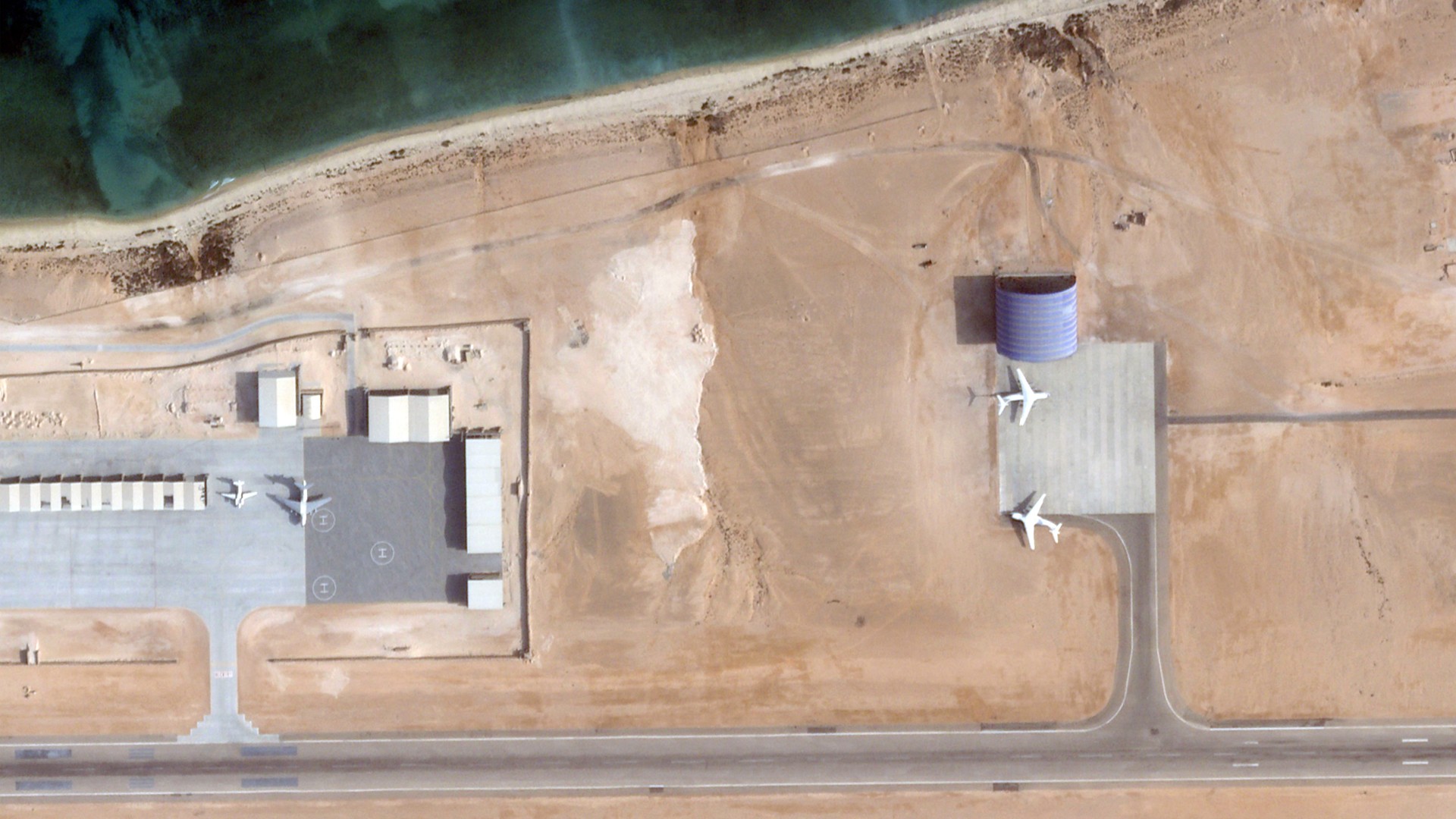
US strengthens military presence in breakaway Puntland amid battle for Red Sea
In early August, a landmark yet highly controversial military agreement was signed by Major General Claude Tudor, head of U.S. Special Operations Command Africa, and Saeed Abdullahi Deni, president of Somalia’s semi-autonomous northeastern region of Puntland. The core of the deal is an agreement to expand the existing U.S.-utilized military facility at Bosaso, a strategic port city sitting along the Gulf of Aden. In a short official announcement released by the Puntland government, the expansion is framed as a critical upgrade to enhance counterterrorism operations and bolster regional maritime security. The statement reaffirmed Puntland’s long-standing commitment to countering extremist threats that endanger security, stability and development across the region, Somalia as a whole, and the broader Horn of Africa.
Prior to this new deal, the U.S. had operated out of an air base in Bosaso originally constructed by the United Arab Emirates, which was primarily used by the Puntland Maritime Police Force (PMPF) — a regional counter-piracy force backed by the UAE that received partial training from Xe, the infamous U.S. private military contractor once known as Blackwater. Before the United Nations Security Council voted to lift its long-standing arms embargo on Somalia in late 2023, both the PMPF and the unlicensed Bosaso Air Base operated by the regional administration were in direct violation of UN Security Council Resolution 1425 and the embargo terms.
An October investigation by Middle East Eye into the facility, which sits adjacent to Bosaso International Airport, uncovered a wide range of UAE-owned military infrastructure on site. These assets include a fully operational radar facility, reinforced ammunition depots, a dedicated cargo handling zone built to accommodate IL-76 heavy transport aircraft, a field hospital, a vehicle storage yard holding dozens of tactical pickup trucks, multiple aircraft hangars, and the original dedicated hangar for the PMPF. The investigation also revealed that a large portion of weapons and heavy logistical materials transiting through Bosaso from the UAE are ultimately bound for Sudan’s Rapid Support Forces (RSF), the paramilitary group that has been engaged in a brutal civil war with Sudan’s official armed forces since April 2023, and faces widespread accusations of war crimes and acts of genocide.
Analysts widely view the expansion of U.S. military presence in Bosaso as directly linked to growing tensions around the Bab el-Mandeb Strait, the critical waterway connecting the Red Sea and Gulf of Aden that has become increasingly dangerous amid escalating regional confrontation linked to the wider Iran-Israel conflict. Many experts also interpret the move as reflecting Washington’s goal of launching more direct operations against Yemen’s Ansar Allah movement, more commonly referred to as the Houthis. The Puntland deal came shortly after the Houthis announced a maritime blockade of Saudi Arabia’s Red Sea ports, a retaliatory measure following Saudi airstrikes on Yemen’s Sanaa International Airport.
Currently, the U.S. maintains its largest permanent African military base at Camp Lemonnier in Djibouti, but Djibouti’s government has adopted strict policies to protect its own national security, refusing to grant Washington permission to launch strikes on Yemen from its territory out of fears that such action would put Djiboutian civilians at risk. This restriction has pushed the U.S. to pursue alternative footholds in the region, making the Puntland agreement strategically attractive.
The deal also carries significant legal and political ambiguity, as it directly bypasses the U.S.-backed Federal Government of Somalia in Mogadishu. Puntland has refused to recognize Somalia’s federal system since Somali President Hassan Sheikh Mohamud pushed through controversial 2024 constitutional changes that concentrated greater political power in the Mogadishu-based central government. Tensions boiled over into open conflict between June and July of this year, when at least seven armed clashes broke out between federal government forces and Puntland’s regional administration. Just days before the Puntland deal was announced, U.S. Africa Command (Africom) officials also held high-level meetings with leadership from Jubaland, another semi-autonomous southern Somali state that also rejects Mogadishu’s central authority.
Notably, the U.S. continues to publicly affirm its commitment to Somalia’s territorial integrity and national sovereignty, a stance it has maintained in the face of Israel’s formal recognition of the breakaway Somaliland region and Somaliland’s subsequent opening of a diplomatic mission in Jerusalem. Despite this public posture, the U.S.’s separate negotiations with breakaway Somali states are widely interpreted as exacerbating existing political divisions within the country.
Washington’s military footprint in Somalia has grown steadily since the 2001 launch of the global War on Terror, starting with the deployment of special operations forces, followed by the introduction of conventional troops, attack helicopters, surveillance aircraft, remote operating outposts, and armed drones. For over two decades, Africom has carried out drone and airstrikes against al-Shabaab leadership and Islamic State affiliates in Somalia in coordination with the federal government, while also providing training and equipment to the Danab Brigade, the elite special forces unit of the Somali National Army that has led most of Mogadishu’s major ground offensives against extremist groups.
During his first term in office, former President Donald Trump oversaw 219 airstrikes in Somalia under the banner of counterterrorism. Since his second inauguration, the U.S. has seen an unprecedented escalation of military activity in the country, with 205 strikes carried out to date. The Bosaso base expansion comes alongside a major shift in operational authority, as the Pentagon has delegated greater strike authority to Africom leadership. During a February 2025 visit to Africom headquarters, U.S. Secretary of War Pete Hegseth signed a classified directive eliminating the requirement for White House approval prior to carrying out drone strikes in Somalia.
This July, the U.S. also ended all financial and logistical support for the UN Support Office in Somalia, effectively discontinuing the African Union Support and Stabilisation Mission in the country.
Analysts argue that the decision to pursue a separate base expansion deal with Puntland represents more than just a continuation of the U.S.’s long-running counterterrorism campaign in the Horn of Africa. When considered alongside Washington’s withdrawal from multilateral peacekeeping missions in the country and the loosening of operational constraints on Africom, the expanded Bosaso facility signals that the U.S. is intensifying its strategic foothold in Somalia, and increasingly willing to exploit the country’s existing political fragmentation to advance its own regional security goals, rather than working to unify actors around a shared counterterrorism agenda.
-

Ecuador’s police seize a cocaine shipment with stickers of Norway’s soccer star Erling Haaland
QUITO, Ecuador — Global soccer superstar Erling Haaland has built an iconic public profile in recent years, his face gracing everything from billboards and collectible trading cards to global television broadcasts. The Norwegian striker became a viral social media sensation after netting seven goals across four matches at the 2026 FIFA World Cup, spawning endless memes and fan content across platforms. Now, law enforcement in Ecuador has found his likeness in an entirely unexpected context: printed on packaging for a massive cocaine shipment seized near the country’s northern border with Colombia.
Ecuadorian national police confirmed Wednesday that anti-narcotics officers arrested a truck driver following the seizure of 469 kilograms (1,034 pounds) of high-purity cocaine. The seizure unfolded along the Pan-American Highway, where agents launched a stop and search after receiving an anonymous tip about suspicious activity early Tuesday. A search of the vehicle uncovered 370 green rectangular drug packages hidden in a custom-built false compartment in the truck’s bottom. Law enforcement has so far offered no official explanation for why traffickers chose to adorn the packages with stickers of the golden-haired Norwegian striker, but the practice is well-documented in international drug trafficking circles.
Criminal networks commonly label drug shipments with the names and images of high-profile celebrities and star athletes, a tactic used to signal which cartel produced the narcotics and which recipient the shipment is intended for. Police released public footage of the seizure showing packages pouring out of the truck’s hidden compartment, with Haaland’s face clearly visible on the packaging stickers. The striker, who is affectionately nicknamed “pretty princess” and “babygirl” by legions of his online fans, was one of the breakout stars of the 2026 World Cup co-hosted by the United States, Mexico, and Canada. His combination of imposing physical stature, dead-eye finishing, and playful, goofy sense of humor turned him into a global viral favorite, with thousands of creative fan videos and memes circulating online in the months following the tournament.
Haaland is far from the first top soccer player whose image has been co-opted by drug smuggling operations. Law enforcement officials have previously found cocaine shipments marked with images of Argentine captain and eight-time Ballon d’Or winner Lionel Messi, confirming the trend of traffickers using high-profile sports figures for shipment branding.
The seizure, which took place in the Guagua Negro region near the border city of Tulcan, around 153 miles north of Ecuador’s capital Quito, also led to a second arrest. Police took a woman identified only as María R., who holds Colombian identity documents, into custody as part of the operation. According to drug enforcement estimates, the seized shipment carries a street value of nearly $842,000 in Ecuador, but would be worth more than $11 million if it reached the U.S. market, and upwards of $19.6 million (17 million euros) if distributed across Europe.
Ecuador has long served as a key logistical hub for international drug trafficking. Criminal networks based in the country stockpile, store, and ship narcotics north through Central American routes primarily to consumer markets in the United States, though significant volumes are also trafficked to Europe. Local Ecuadorian gangs work in alliance with major Colombian and Mexican cartels to manage these trafficking routes. Roughly 80% of all narcotics trafficked through Ecuador originate in Colombia, with the remaining 20% coming from neighboring Peru.
Data from Ecuadorian law enforcement shows consistent large-scale drug seizures across recent years. In the first half of this calendar year, police have already seized 80 tons of illicit drugs. In 2025, authorities confiscated nearly 215 tons of narcotics, the vast majority of which was cocaine, while seizures reached almost 295 tons in 2024.
-
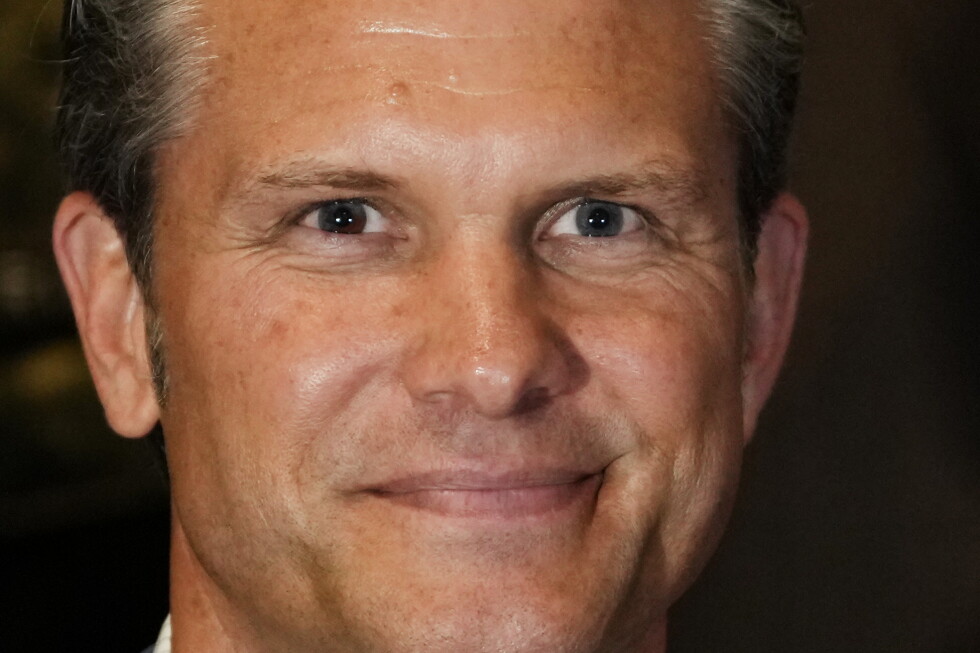
Hegseth says Colombia’s new president has requested US collaboration in anti-drug efforts
PANAMA CITY – During a regional gathering focused on counter-narcotics cooperation held this Wednesday, U.S. Defense Secretary Pete Hegseth made two key announcements that reshape security and diplomatic dynamics across the Western Hemisphere. First, he confirmed that Colombia’s newly inaugurated presidential administration under Abelardo de la Espriella — widely known by his nickname “El Tigre” — has formally requested American military collaboration for joint counter-narcotics operations targeting what Washington terms “narco-terrorism” within Colombian territory.
The announcement came on the sidelines of the Americas Counter-Cartel Coalition meeting, where Hegseth also revealed that Colombia will formally join the U.S.-led “Shield of the Americas” initiative as its 19th participating nation. The initiative, first launched during a March summit hosted by U.S. President Donald Trump for regional leaders aligned on aggressive cartel opposition, notably did not extend an invitation to de la Espriella’s predecessor, progressive former President Gustavo Petro.
“Through our newly inaugurated president — what our president likes to call President El Tigre — Colombia has formally asked the U.S. Department of Defense to partner with Colombian forces in the fight against narco-terrorism, authorizing joint military operations to dismantle terrorists and their operational networks,” Hegseth told attendees of the closed coalition gathering.
As of Thursday, de la Espriella’s administration, which was sworn in just last week, has not issued an official public response to Hegseth’s confirmation. The conservative Colombian leader had previously signaled his willingness to join the U.S.-backed anti-cartel initiative during his election campaign, however, aligning with his platform of tougher security policy against drug trafficking groups.
In a separate, sweeping address to coalition attendees, Hegseth issued a call for all participating Latin American nations to cut formal recognition of the International Criminal Court (ICC). The push comes amid long-standing tensions between the Trump administration and the global judicial body, which has issued arrest warrants for senior Israeli officials over alleged war crimes in Gaza and launched investigations into potential misconduct by U.S. military personnel in Afghanistan. The Trump administration has in turn launched a coordinated diplomatic campaign to undermine and dismantle the court in retaliation.
Hegseth defended U.S. military strikes targeting suspected drug traffickers across the Latin American region — operations that have drawn widespread international scrutiny over their legal compliance — claiming the actions “are entirely legal under international humanitarian law.” He also repeated the Trump administration’s talking point that ICC investigations infringe on national sovereignty, arguing the court seeks to strip regional governments and domestic judicial systems of their independent authority. It remains unclear from Hegseth’s remarks whether the ICC has actually opened any probes or taken any formal actions to block current U.S. counter-narcotics operations in the region.
-
‘If you’re not conservative, don’t come here’: The town making missiles for Trump
Tucked into the rolling Appalachian foothills of East Tennessee, Kingsport is a working-class community of 58,000 where local lore holds there is a ‘church on every corner.’ Christianity shapes nearly every facet of public life here, with a banner hanging above the city’s historic Lamplight Theatre declaring ‘Jesus first in all things’ as more than 300 local congregations provide spiritual grounding for residents. But alongside these houses of worship, another pillar of the local economy holds equal sway: the Holston Army Ammunition Plant, the only domestic U.S. producer of critical explosive and propellant components for Patriot missiles, warheads, and other heavy military systems, all tied directly to America’s ongoing costly conflict with Iran.
The Iran war, and its cascading impact on consumer prices from gasoline to groceries, has sent President Donald Trump’s national approval ratings plummeting to an all-time low of 32%, a 14-point drop from his 2025 inauguration. Even a share of Republican respondents have cited growing disillusionment with the administration’s foreign and economic policies, as inflation and energy costs squeeze household budgets nationwide. The conflict has pushed U.S. gas prices above $4 per gallon, a punishing increase that ripples through every sector of the economy that relies on transportation. Yet even amid these widespread frustrations, Kingsport remains a bastion of unshakable loyalty to Trump, who carried the city by overwhelming margins in all three of his election campaigns. The broader state of Tennessee has been a solidly Republican red state for more than 25 years, and that partisan loyalty runs deep here.
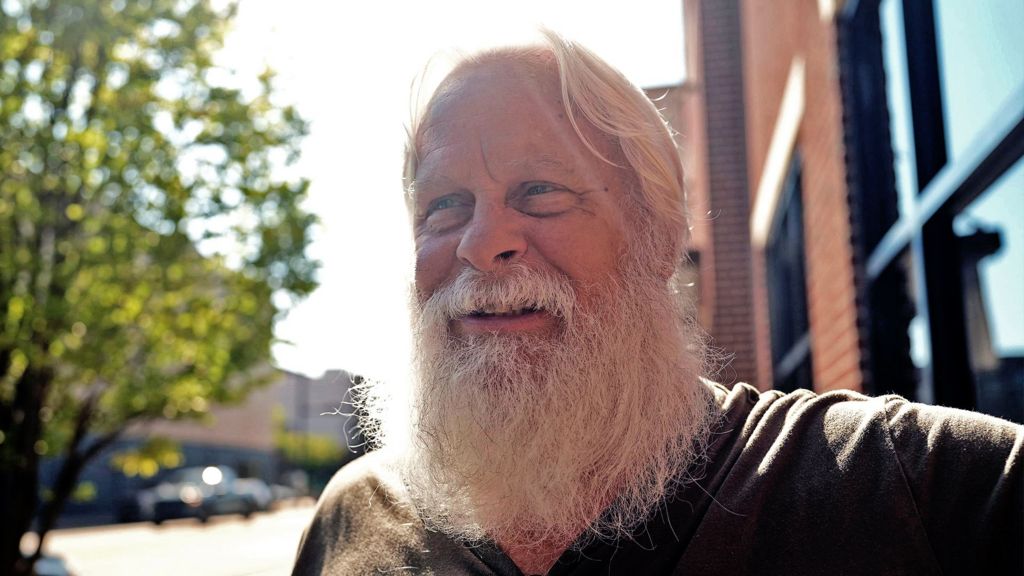
When it comes to the Iran conflict, the vast majority of Kingsport residents either openly back the U.S. military campaign or justify its necessity, despite Trump’s repeated 2024 campaign promise to end America’s era of endless foreign wars. Pam Robinson, a 65-year-old independent voter and former 20-year veteran of the local chemical industry, frames her support in simple terms: ‘If he can stop anyone from having a nuclear bomb, then I’m for it.’ David Carter, a 66-year-old retired veteran and devout Christian who works as a seasonal Santa Claus, argues that forward deployment prevents conflict from reaching U.S. soil: ‘The whole reason we go over there, and we keep everything under control there, is [so that] we don’t have it on our doorstep.’ Other residents take an even harder line: James Camper, a 63-year-old veteran wearing a branded Trump lanyard, said bluntly exiting a local discount grocery store, ‘Honestly, I think we should turn them into a parking lot and don’t worry about it anymore.’
Veterans make up roughly 10% of the regional population, and many more local households have family members serving on active duty. Robinson, who says her Christian faith guides all her political choices, notes that the remote nature of the conflict has softened local anger: the war has not devolved into large-scale ground combat with massive casualty numbers, a reality that has prevented widespread outrage from boiling over. ‘If it was hand-to-hand and more people were getting killed, people would be banging the doors down,’ she explained.
Kingsport’s unique status as a core U.S. munitions production hub gives residents a perspective on the Iran war that differs sharply from many other parts of the country. The Holston plant employs roughly 1,000 local workers, standing out as one of many large industrial complexes cutting through the region’s lush mountain landscape. Daniel Overstreet, a 53-year-old Kingsport resident, argues the plant will operate regardless of whether the U.S. is at peace or war, and frames Trump as constrained by legislative gridlock. ‘He said he would get the gas prices under control, and they were for a while,’ Overstreet explained. ‘He said he was gonna get food prices down, but he has no control over that. The president is basically a puppet for Congress and the Senate. His hands are tied, to a certain extent.’ That sentiment is widespread across the community: residents do complain about high prices, inflation, and other economic struggles, but very few hold Trump personally responsible for those hardships.
It was Trump who made the final call to launch military strikes against Iran in February 2026, after nuclear negotiations with the Iranian regime collapsed. In an eight-minute social media video announcing the operation, Trump framed the conflict as a matter of national self-defense, saying ‘the objective is to defend the American people by eliminating imminent threats from the Iranian regime’ and pledging that ‘Iran will never have a nuclear weapon.’
William Bogle, a 75-year-old local evangelist who has voted for Trump in every one of his campaigns, acknowledges that the economic strain is real even for his own household: his wife ‘has to stretch a grocery dollar until, you know, it’s big as a bedsheet.’ Even so, Bogle says Trump is ‘doing a good job,’ and that ‘I know he wants the country to prosper.’
This unwavering local support reveals a key undercurrent beneath national polling headlines: while Trump has lost support among traditional Republican and independent voters, his core base of self-identified MAGA adherents remains firmly loyal. As national observers watch to see how Trump’s sliding popularity will impact Republican candidates in the upcoming November midterm elections, this deeply conservative Bible Belt region remains reliably red, with almost no competitive electoral contests. During recent local primary elections, just one Democratic candidate appeared on the county commission ballot, with seven of 11 districts fielding only Republican candidates, many running unopposed.
Many residents say they cannot bring themselves to vote across party lines for moral reasons, with opposition to abortion ranking as the top deciding issue, alongside deep rejection of socialism and so-called ‘woke’ progressive policies. For most voters, these concerns outweigh any criticisms they may have of Trump’s performance in office. David Carter, the 66-year-old veteran and grandfather, concedes that Trump ‘needs to humble himself more,’ but says he will only back candidates who align with the community’s social values, including strict opposition to abortion rights.
Liberal and progressive voices do exist in Kingsport, but they make up a small, largely quiet minority. Adam Teague, a 44-year-old gay piercing artist and lifelong Baptist who is one of the few open Democrats in downtown Kingsport, says he has toned down public displays of his identity since Trump took office to avoid conflict: ‘Before Trump took office, I was wearing, like, rainbow shirts and everything. I kind of toned it down, just to feel safer.’
While Trump won the 2024 presidential election in part by building a broad coalition that included young voters, polling shows growing disillusionment among that demographic, a shift that is starting to appear even in deeply red Kingsport. Mary Herron, a 21-year-old college student who works part-time, said she has seen a quiet shift among her peers: ‘I am seeing a shift in the support … that’s kind of rare around here. But I’ve seen a handful of people who have been like, ‘Oh yeah, well, I voted for him, and now I’m not with him anymore.”
Her friend Emily Villalpando, 21, a biomedical science student who hopes to become a doctor, notes that most young people in the region inherited their political views from their parents, but that as they enter adulthood and take on financial responsibilities, the impact of inflation and economic policy hits much closer to home. Villalpando, Herron, and their friend Caden Bayless, the third member of their progressive college trio, cite women’s reproductive rights and aggressive immigration enforcement as top concerns, but they are skeptical that a major political shift will happen anytime soon in the region. Bayless says she holds out hope that the younger generation can drive change long-term, but ‘given where we live … it would be a very difficult change.’
Bogle, the local evangelist, summed up the region’s political culture in terms that echo that pessimism: ‘We live in a great place, and if you’re not conservative, don’t come here. Because you wouldn’t be a good fit. But if you’re conservative, come here, and we’ll embrace you.’ Like most residents across Kingsport, regardless of their views on specific policies, Bogle says he will continue to pray for Trump, a sentiment shared by even more moderate local voters such as Robinson. ‘All you can do is pray for your leaders, and God will give you what you want in the end,’ Robinson said.
-

Ayra Starr on her secret relationship and teasing Stevie Wonder
In an industry that often tries to box artists into prefabricated expectations, 24-year-old Nigerian sensation Ayra Starr has always carved her own path. Just weeks out of major, undisclosed surgery ahead of her highly anticipated new album *Starrgirl*, the Grammy and MOBO Award-nominated star defied medical odds: just seven days after leaving the hospital, she was already back in the dance studio, a thick bandage across her stomach, rehearsing for a run of upcoming live appearances, TV spots and fan events.
“I was hoping it would be a quick recovery, but it was more complicated than they expected,” she previously shared with fans. Speaking to *Today*, the US breakfast TV program, Starr framed her early return to work as a gift: “I’m healing. I have strength today. I’m so happy I was able to even be here today and be able to do this.” This display of unshakable tenacity is nothing new for the singer – it has been the defining thread of her already groundbreaking career.
Discovered at 18 performing cover songs on YouTube, Starr has spent the last six years shattering records for African women in global music: she was the first African woman to take home Best International Act at the MOBO Awards, the first Nigerian woman to cross one billion video views on YouTube, and in 2024, she made history as the first Afrobeats artist to perform on Glastonbury’s iconic Pyramid Stage – where she closed her set with a bold promise to return as a headliner. Beyond music, she’s expanded into fashion, closing out London Fashion Week for designer Di Petsa in 2025, and has earned nods from some of the biggest names in the industry, from Coldplay’s Chris Martin to Stevie Wonder.
When she arrives for an interview, it’s with an almost otherworldly self-assurance that never veers into arrogance. Quick with dry, cutting sarcasm and a playful sense of humor, she remembers teasing Stevie Wonder, the music legend, into a playful back-and-forth about zodiac signs after he called to congratulate her on a Grammy nomination. “I was trying to one-up him every single time, and he was trying to one-up me. It was almost like a battle,” she laughs. By the end of the chat, she’d jokingly told the Taurus icon that “Tauruses ain’t crap” – a bold, unapologetic move that sums up her approach to every relationship and opportunity.
That unfiltered authenticity has opened doors to collaborations with global superstars across genres: she opened for Coldplay on their *Music of the Spheres* world tour, worked with the likes of Tyla, David Guetta, Le Sserafim and Kelly Rowland, and *Starrgirl* features high-profile collaborations with Afrobeats legends Wizkid and Rema, former One Direction star Zayn Malik, and rising R&B talent KWN. The record marks her first release under a new deal with Jay-Z’s Roc Nation, following her 2025 relocation from Lagos to New York City – a move she described with characteristic wit in a Substack essay: “New York is basically a walk-in freezer with rent. It’s so cold it feels like the city is actively trying to unalive my motivation… I’m not scared, I promise.”
The upheaval of relocation was a deliberate choice: Starr wanted to step outside her comfort zone to expand her sound and pull in new influences. The result is a genre-blending project that juxtaposes classic Afrobeats rhythms with unexpected sonic textures. Take opening track *Where Do We Go*, which layers a hypnotic electronic pulse under a swaying Afrobeats beat, pairing a danceable rhythm with vulnerable lyrics about a toxic, on-again-off-again secret relationship.
“Like, the rebel I am, I love to juxtapose,” she explains. “I don’t like being normal and boring. So the idea of writing a heartbreak song on a beat like that, where you can dance to it, was just very enticing. I love things like that.” The lyrics, which explore the fear of starting over and settling for less than you deserve, act as a metaphor for the entire album: after the global runaway success of breakout hit *Rush* and second album *The Year I Turned 21*, Starr found herself trapped between satisfying casual listeners who wanted more of the same and growing as an artist for her core fanbase.
“Just like any other pop artist, passive listeners get attached to the songs they know – the popular songs. Then you’re stuck between creating for the passive listeners and creating for your core fans who want you to do more. So that can limit you, because you stop thinking as an artist and start thinking about making music just for consumers. But I’m not meant to conform. It’s just not who I am. I will rebel against every single preconception and every stereotype,” she says.
*Starrgirl* is thus a declaration of artistic autonomy, marking Starr’s evolution into full creative and personal control as she steps into womanhood. Standout track *Misunderstood* pushes back against critics who claimed she could never succeed on her own, while *Treasure* offers a soft, laid-back moment for Starr to celebrate how far she’s come, with lyrics sung in Yoruba that invite listeners to savor joy. The album’s most infectious cut, *Ms Paper*, takes a detour into Dominican bouyon music, a high-energy genre defined by frantic percussion – and it was recorded entirely by accident. After finishing a session with French-Congolese star Theodora on a sweltering February night in Los Angeles, the pair finished a boozy Congolese meal and were wrapping up for the day when inspiration hit. The studio AC was broken, leaving everyone delirious, sweating and half-dressed, but the chaotic energy created a track that already has fans buzzing after live snippets went viral.
Not everyone has celebrated Starr’s genre-bending new direction: back home in Nigeria, some critics have accused her of diluting Afrobeats heritage to chase global success. But Starr pushes back against the idea that she has to fit into a pre-set template. “People have a certain template they think I should follow, and it’s like, you cannot tell me how to dream,” she says. “I’m able to honour my culture, but also try new things, because that’s who I am.”
She visualizes this balance on the *Starrgirl* album cover, where she pairs a sleek, club-ready gold gown with a traditional Yoruba gele headwrap. Speaking to Capital Xtra, she explained the choice was intentional: “I wanted young girls in Kwara State or Erin-Ile to see this and feel represented. I’m not the first to do it, I won’t be the last to do it – but I want people to feel confident in their culture and wear [the gele] like the crown that it is.” The striking retro-futuristic look quickly went viral, spawning dozens of copycats and softening criticism of her new creative path.
For Starr, the entire project circles back to a mantra she spells out on the track *Amazing*: “If they’re gonna talk, I’ll give them something to talk about”. “That’s definitely my mantra,” she says. “And do you know what? I think I need to listen to myself more because I have all the answers in my music.”