Tucked into the rolling Appalachian foothills of East Tennessee, Kingsport is a working-class community of 58,000 where local lore holds there is a ‘church on every corner.’ Christianity shapes nearly every facet of public life here, with a banner hanging above the city’s historic Lamplight Theatre declaring ‘Jesus first in all things’ as more than 300 local congregations provide spiritual grounding for residents. But alongside these houses of worship, another pillar of the local economy holds equal sway: the Holston Army Ammunition Plant, the only domestic U.S. producer of critical explosive and propellant components for Patriot missiles, warheads, and other heavy military systems, all tied directly to America’s ongoing costly conflict with Iran.
The Iran war, and its cascading impact on consumer prices from gasoline to groceries, has sent President Donald Trump’s national approval ratings plummeting to an all-time low of 32%, a 14-point drop from his 2025 inauguration. Even a share of Republican respondents have cited growing disillusionment with the administration’s foreign and economic policies, as inflation and energy costs squeeze household budgets nationwide. The conflict has pushed U.S. gas prices above $4 per gallon, a punishing increase that ripples through every sector of the economy that relies on transportation. Yet even amid these widespread frustrations, Kingsport remains a bastion of unshakable loyalty to Trump, who carried the city by overwhelming margins in all three of his election campaigns. The broader state of Tennessee has been a solidly Republican red state for more than 25 years, and that partisan loyalty runs deep here.
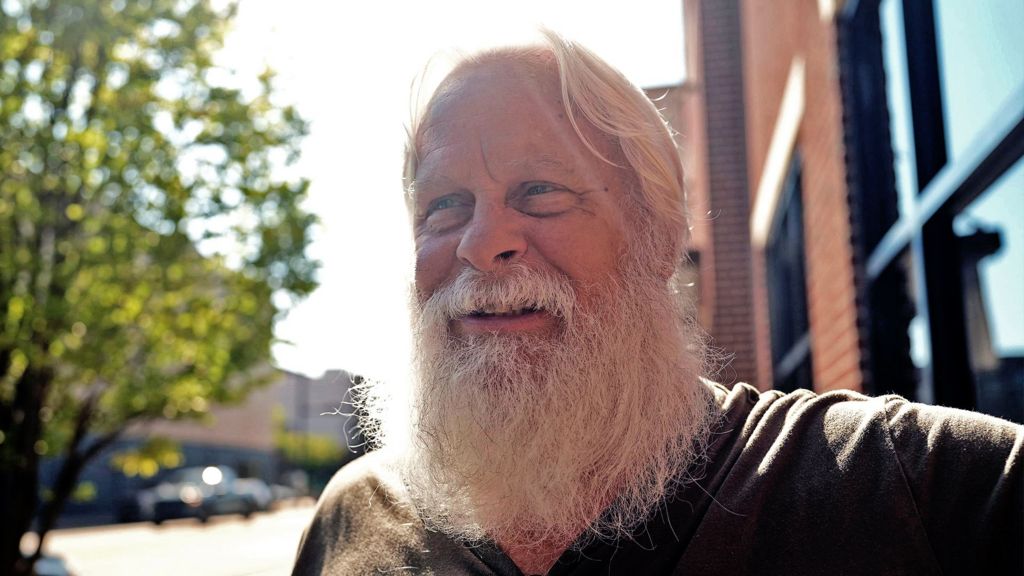
When it comes to the Iran conflict, the vast majority of Kingsport residents either openly back the U.S. military campaign or justify its necessity, despite Trump’s repeated 2024 campaign promise to end America’s era of endless foreign wars. Pam Robinson, a 65-year-old independent voter and former 20-year veteran of the local chemical industry, frames her support in simple terms: ‘If he can stop anyone from having a nuclear bomb, then I’m for it.’ David Carter, a 66-year-old retired veteran and devout Christian who works as a seasonal Santa Claus, argues that forward deployment prevents conflict from reaching U.S. soil: ‘The whole reason we go over there, and we keep everything under control there, is [so that] we don’t have it on our doorstep.’ Other residents take an even harder line: James Camper, a 63-year-old veteran wearing a branded Trump lanyard, said bluntly exiting a local discount grocery store, ‘Honestly, I think we should turn them into a parking lot and don’t worry about it anymore.’
Veterans make up roughly 10% of the regional population, and many more local households have family members serving on active duty. Robinson, who says her Christian faith guides all her political choices, notes that the remote nature of the conflict has softened local anger: the war has not devolved into large-scale ground combat with massive casualty numbers, a reality that has prevented widespread outrage from boiling over. ‘If it was hand-to-hand and more people were getting killed, people would be banging the doors down,’ she explained.
Kingsport’s unique status as a core U.S. munitions production hub gives residents a perspective on the Iran war that differs sharply from many other parts of the country. The Holston plant employs roughly 1,000 local workers, standing out as one of many large industrial complexes cutting through the region’s lush mountain landscape. Daniel Overstreet, a 53-year-old Kingsport resident, argues the plant will operate regardless of whether the U.S. is at peace or war, and frames Trump as constrained by legislative gridlock. ‘He said he would get the gas prices under control, and they were for a while,’ Overstreet explained. ‘He said he was gonna get food prices down, but he has no control over that. The president is basically a puppet for Congress and the Senate. His hands are tied, to a certain extent.’ That sentiment is widespread across the community: residents do complain about high prices, inflation, and other economic struggles, but very few hold Trump personally responsible for those hardships.
It was Trump who made the final call to launch military strikes against Iran in February 2026, after nuclear negotiations with the Iranian regime collapsed. In an eight-minute social media video announcing the operation, Trump framed the conflict as a matter of national self-defense, saying ‘the objective is to defend the American people by eliminating imminent threats from the Iranian regime’ and pledging that ‘Iran will never have a nuclear weapon.’
William Bogle, a 75-year-old local evangelist who has voted for Trump in every one of his campaigns, acknowledges that the economic strain is real even for his own household: his wife ‘has to stretch a grocery dollar until, you know, it’s big as a bedsheet.’ Even so, Bogle says Trump is ‘doing a good job,’ and that ‘I know he wants the country to prosper.’
This unwavering local support reveals a key undercurrent beneath national polling headlines: while Trump has lost support among traditional Republican and independent voters, his core base of self-identified MAGA adherents remains firmly loyal. As national observers watch to see how Trump’s sliding popularity will impact Republican candidates in the upcoming November midterm elections, this deeply conservative Bible Belt region remains reliably red, with almost no competitive electoral contests. During recent local primary elections, just one Democratic candidate appeared on the county commission ballot, with seven of 11 districts fielding only Republican candidates, many running unopposed.
Many residents say they cannot bring themselves to vote across party lines for moral reasons, with opposition to abortion ranking as the top deciding issue, alongside deep rejection of socialism and so-called ‘woke’ progressive policies. For most voters, these concerns outweigh any criticisms they may have of Trump’s performance in office. David Carter, the 66-year-old veteran and grandfather, concedes that Trump ‘needs to humble himself more,’ but says he will only back candidates who align with the community’s social values, including strict opposition to abortion rights.
Liberal and progressive voices do exist in Kingsport, but they make up a small, largely quiet minority. Adam Teague, a 44-year-old gay piercing artist and lifelong Baptist who is one of the few open Democrats in downtown Kingsport, says he has toned down public displays of his identity since Trump took office to avoid conflict: ‘Before Trump took office, I was wearing, like, rainbow shirts and everything. I kind of toned it down, just to feel safer.’
While Trump won the 2024 presidential election in part by building a broad coalition that included young voters, polling shows growing disillusionment among that demographic, a shift that is starting to appear even in deeply red Kingsport. Mary Herron, a 21-year-old college student who works part-time, said she has seen a quiet shift among her peers: ‘I am seeing a shift in the support … that’s kind of rare around here. But I’ve seen a handful of people who have been like, ‘Oh yeah, well, I voted for him, and now I’m not with him anymore.”
Her friend Emily Villalpando, 21, a biomedical science student who hopes to become a doctor, notes that most young people in the region inherited their political views from their parents, but that as they enter adulthood and take on financial responsibilities, the impact of inflation and economic policy hits much closer to home. Villalpando, Herron, and their friend Caden Bayless, the third member of their progressive college trio, cite women’s reproductive rights and aggressive immigration enforcement as top concerns, but they are skeptical that a major political shift will happen anytime soon in the region. Bayless says she holds out hope that the younger generation can drive change long-term, but ‘given where we live … it would be a very difficult change.’
Bogle, the local evangelist, summed up the region’s political culture in terms that echo that pessimism: ‘We live in a great place, and if you’re not conservative, don’t come here. Because you wouldn’t be a good fit. But if you’re conservative, come here, and we’ll embrace you.’ Like most residents across Kingsport, regardless of their views on specific policies, Bogle says he will continue to pray for Trump, a sentiment shared by even more moderate local voters such as Robinson. ‘All you can do is pray for your leaders, and God will give you what you want in the end,’ Robinson said.