博客

  • Watch: Why are ICE agents getting controversial shock gloves?

    Watch: Why are ICE agents getting controversial shock gloves?

    As tensions around U.S. immigration enforcement continue to surge to new heights, a new piece of equipment issued to Immigration and Customs Enforcement (ICE) agents has ignited fierce debate across the country: electrified shock gloves. The BBC’s North America correspondent Sarah Smith has launched an in-depth exploration of this development, digging into what the rollout of the controversial gear means for the agency, its operations, and the ongoing national conversation over immigration policy.

    For years, ICE has been at the center of a polarizing national debate, with critics arguing that its enforcement tactics are overly aggressive and violate human rights, while supporters maintain that the agency is simply carrying out necessary work to uphold national immigration laws. The addition of shock gloves to agents’ standard equipment comes at a moment when public friction over immigration enforcement has reached a fever pitch, with protests over detention conditions, deportation policies, and border security continuing to make headlines across the nation.

    Shock gloves, which deliver controlled electric shocks to subdue individuals, are classified as less-lethal weapons, but their deployment by ICE has already drawn sharp criticism from immigration advocacy groups, who warn that the new gear could lead to increased instances of excessive force against detainees and undocumented migrants. Smith’s reporting examines both the agency’s justifications for rolling out the equipment – which officials frame as a way to improve agent safety and reduce the need for lethal force in confrontations – and the growing concerns from opponents who argue that the new tools will only escalate violence in already tense enforcement interactions. As the debate over immigration continues to shape national political discourse, this small but controversial change to ICE’s equipment arsenal has become another flashpoint in the larger fight over how the United States manages its immigration system.

  • ‘The right to stay’: Albania’s Italian diaspora sails back to support the Flamingo Revolution

    ‘The right to stay’: Albania’s Italian diaspora sails back to support the Flamingo Revolution

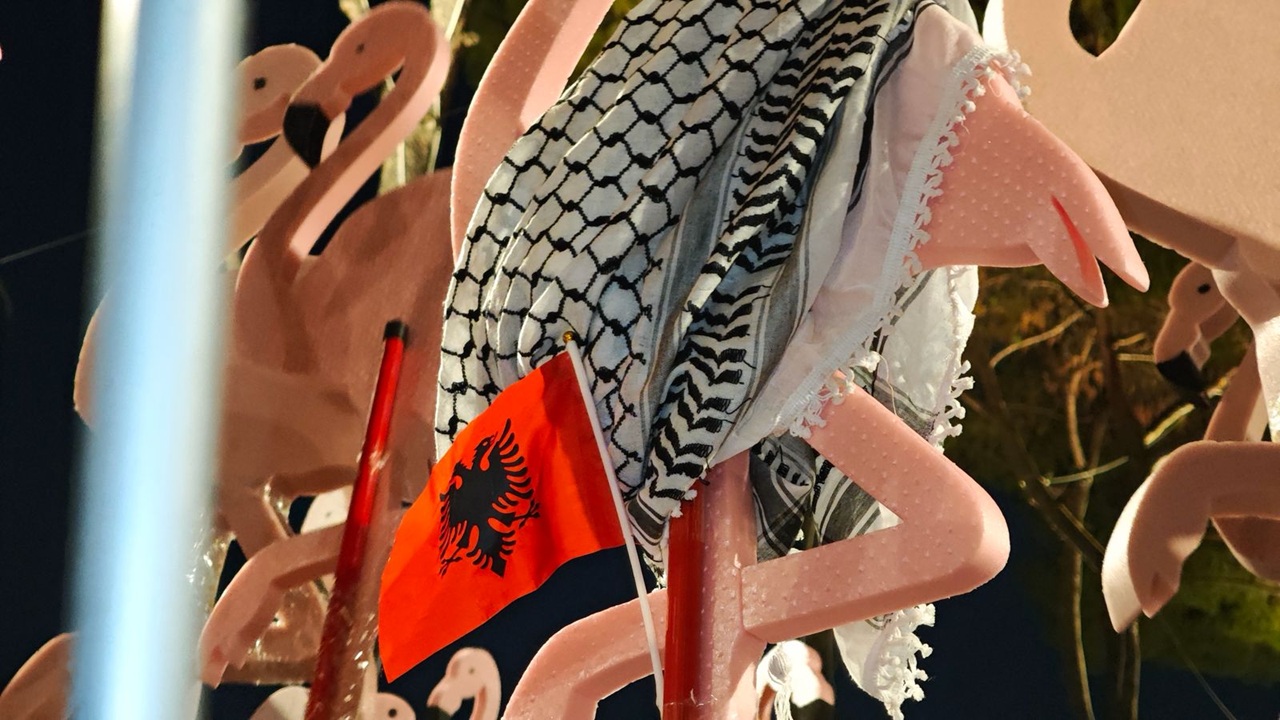
    Thirty-two years after a mass wave of Albanian migration crossed the Adriatic Sea to reach southern Italy’s shores, a new journey is preparing to traverse that same body of water in the opposite direction. On August 20, a three-vessel flotilla of activists from the Albanian diaspora in Italy and the Italian branch of Global Sumud Flotilla will depart from the Italian port of Brindisi, bound for Albania, to stand in solidarity with the Flamingo Revolution — a growing grassroots movement opposing foreign-backed luxury tourism projects that threaten ecologically sensitive protected lands.

    The upcoming voyage is a joint effort by three organizing groups: Mesdhe, an Italian-Albanian activist collective, Palestina e Lire (Free Palestine), an Albania-based pro-Palestine advocacy group, and Global Sumud Flotilla Italy, the national wing of an international civil society network that works to break Israel’s naval blockade of the Gaza Strip and deliver humanitarian aid to the besieged enclave. For organizers, the voyage is far more than a show of support for on-the-ground Albanian activists; it is an effort to connect overlapping global struggles over land dispossession, ecological destruction, and foreign control of natural resources across the Mediterranean region.

    The choice of departure date and location carries deep historical and symbolic weight. Brindisi sits in Italy’s southern Puglia region, the first landing point for hundreds of thousands of Albanians who fled the country following the 1991 collapse of its communist regime. The most infamous of those mass crossings came on August 8, 1991 — exactly 32 years before the voyage’s social media launch — when the cargo ship *Vlora* docked in Bari, Puglia’s capital, carrying roughly 20,000 Albanian refugees crammed into its hold. The arrival triggered one of the fastest, largest repatriation operations in Italian history: more than 17,400 of those refugees were deported within days, after being confined to Bari’s Stadio della Vittoria without adequate food, water, or medical care. Hundreds were hospitalized for dehydration, and violent clashes with police ended with officers opening fire on refugees attempting to escape the overcrowded facility. Tens of thousands more Albanians crossed the Adriatic to southern Italy in the months that followed, reshaping the cultural and social fabric of Puglia forever.

    Today, the same systemic corruption that pushed that generation of Albanians to flee their home country is now selling off Albania’s most precious natural assets to foreign investors, organizers argue. As Albanian activists enter their 68th day of continuous protest against the proposed developments, the diaspora is sailing back to stand with the movement demanding the right for Albanians to remain on and control their own land.

    The Flamingo Revolution takes its name from the ecologically rich Narta Lagoon, one of the sites targeted for private luxury development. At the center of the controversy is Sazan Island, a former military outpost where Jared Kushner, the son-in-law of former U.S. President Donald Trump and head of investment firm Affinity Partners, is backing a $1.4 billion luxury resort project. A second Kushner-linked development is planned near Zvernec, located within the protected Narta-Vjosa coastal landscape — a living ecosystem that hosts more than 200 species of migratory birds, including the iconic pink flamingos that give the movement its name, and has been home to Indigenous coastal communities for generations.

    For diaspora activists, the voyage is a convergence of personal memory and contemporary political struggle. “I am part of the Albanian diaspora in Italy. And our memory is also made of the sea,” explained Clara Osma, an Italian-Albanian organizer with Mesdhe and Palestina e Lire, in an interview with Middle East Eye. “It is the memory of the ships of the 1990s, of the stadiums where Albanians were locked up when they arrived, of deportations and the first systems of administrative detention. The diaspora preserves that history. And this is where, for me, memory meets what is happening today with the Flamingo Revolution and why we decided to sail. Because 30 years later, we see another generation of Albanians asking, essentially, for the right to stay, and we want to come back.”

    Enton Nazeraj, an Italian-Albanian artist participating in the mobilization, noted that the protest movement has also helped him reconnect to a fragmented identity shaped by decades of migration. “As the son of immigrants, I feel at home within the revolution. That is why I am taking part in this action. In the revolution I found my identity,” he said.

    Tony La Piccirella, an Italian organizer with Global Sumud Flotilla Italy, grew up alongside Albania’s diaspora community in Puglia, and frames the struggle as shared across the Adriatic. “I was born just before the arrival of the Vlora, so I have never known a Puglia without an Albanian presence. They are precisely the friends I grew up with,” he explained. Organizers point to similar fights against destructive luxury development in Puglia itself, where local and environmental groups are challenging a proposed $115 million Four Seasons resort near Ostuni, a project developed by Israeli real estate firm Omnam. The proposal has faced repeated legal challenges from environmental organizations, with the Puglia regional government even joining the opposition — a situation that mirrors long-running fights against destructive coastal development in other parts of Italy, including Sardinia’s Tavolara region.

    For activists, these local fights are part of a global pattern of resource dispossession that connects the Albanian coast to the Gaza Strip. Organizers emphasize that the same financial and political actors pushing for the destruction of Albanian ecosystems for luxury profit are also behind controversial plans to reshape Gaza after years of war. Kushner has led a $25 billion initiative to redevelop Gaza into a global commercial and tech hub, a plan widely criticized by activists and scholars for facilitating the forced displacement of Palestinian people and erasing Indigenous Palestinian cultural and political identity.

    “The same people who finance the oppression of the Palestinian people, planning to build a tourist hub on the rubble of Gaza, are the ones who aim to bury the ecosystems of Sazan Island under a luxury resort,” Mesdhe wrote in the movement’s official launch statement.

    The three vessels being used for the voyage carry their own history of international solidarity. The boats were originally deployed by the Global Sumud Flotilla for aid missions to Gaza, but were damaged and abandoned after Israeli forces attacked the flotilla and captured participating activists earlier this spring. Restored and repurposed for the journey to Albania, the boats now serve as floating symbols of connected resistance, linking the struggle for Palestinian self-determination to the fight to protect Albania’s coasts.

    “The fact that a piece of the Albanian diaspora is returning in support of the Flamingo Revolution, using boats born from solidarity with Palestine, is very powerful,” La Piccirella said.

    For the Mesdhe collective, the core meaning of the voyage is simple: it reverses the historic flow of displacement that has shaped the Adriatic for three decades. “We are returning not as tourists or investors, but as a diaspora organised around the right of people to remain on their land,” the group said.

  • Two dead after military helicopter crashes in Texas

    Two dead after military helicopter crashes in Texas

    A deadly crash of a U.S. Army AH-64 Apache attack helicopter in central Texas has claimed the lives of two people on board, military and local law enforcement officials have confirmed.

    Local emergency dispatch received a 911 call reporting aircraft wreckage in an open field south of the small village of Salado at approximately 13:33 local time (18:33 GMT). First responders rushed to the remote crash site immediately, where they confirmed both casualties had died at the scene.

    According to statements from U.S. military authorities, the downed helicopter was assigned to Fort Hood, one of the largest active U.S. Army bases located in close proximity to the crash area. Bell County Sheriff’s Office spokesperson Cliff Coleman noted that when law enforcement and firefighting teams arrived, they encountered a large blaze that was spreading at a rapid pace, requiring urgent containment efforts.

    As of the latest update, official investigations into the root cause of the crash are still in the early stages, while coordinated emergency response operations continue to secure and clear the site. Brigadier General Ethan Diven, acting commanding general of the 1st Cavalry Division, which oversees aviation units based at Fort Hood, released an official statement following the incident.

    “Our immediate priority is securing the site and supporting the initial response efforts,” Diven said, adding, “Our thoughts are with the crew and their families as we await further information.” No additional details on the identities of the deceased or the nature of the flight the helicopter was conducting have been released to the public as the investigation progresses.

  • Brazil Supreme Court upholds laws that led to downfall of Amazon soy moratorium

    Brazil Supreme Court upholds laws that led to downfall of Amazon soy moratorium

    RIO DE JANEIRO – In a divided decision that threatens one of the Amazon rainforest’s most successful deforestation-reduction measures, Brazil’s Supreme Court announced Wednesday it has upheld state laws that strip tax incentives from farmers and companies that participated in the decades-long voluntary soy moratorium. While the court ruled the landmark anti-deforestation pact itself is constitutionally permissible, the ruling creates a major barrier to its survival, just months after most major industry traders pulled out of the agreement.

    The soy moratorium, first launched in 2006 in response to advocacy from global environmental groups and international soybean buyers, was never a binding legal mandate. Instead, it represented a voluntary commitment among major grain traders: they pledged not to purchase soy grown on Amazon land cleared after July 2008, a policy the Brazilian government later formally endorsed. For nearly 20 years, the agreement delivered extraordinary results: a July 2024 study published in the journal *Science* found the moratorium cut deforestation in high-risk Brazilian soy-producing regions by 35% in its first decade, without reducing overall agricultural productivity. Brazil is the world’s top soybean producer, accounting for roughly 40% of global supply; most of the country’s soy cultivation takes place in central and northern states that overlap with the Amazon biome, including Mato Grosso, Para, and Rondonia. The South American nation is projected to produce 171.5 million metric tons of soy in the 2024-25 growing season, per U.S. Department of Agriculture data, with China as the largest export destination.

    The Amazon, Earth’s largest tropical rainforest, plays an irreplaceable role in regulating the global climate. Researchers have repeatedly warned that accelerating forest loss could speed up global warming and disrupt agricultural systems thousands of miles away, from the U.S. Midwest to large swathes of Europe. After declining steadily from the record deforestation rates of the 1990s and early 2000s, forest clearing surged again during former President Jair Bolsonaro’s 2019-2022 administration, which drew widespread international condemnation for rolling back environmental protections. Under current President Luiz Inácio Lula da Silva, deforestation has once more fallen to its lowest level in 15 years.

    Critics of the moratorium, led by large-scale soy producers in top-growing states, have long argued the agreement placed unnecessary burdens on business. Brazil’s national environmental code requires Amazon landowners to preserve 80% of their property as native forest, allowing legal clearing of the remaining 20%. The moratorium, by contrast, prohibits any purchase of soy from recently deforested land, even when that clearing complies with national law. In response to producer lobbying, Mato Grosso and other major soy-producing states passed laws earlier this year that revoke tax benefits for any company or farmer that abides by the moratorium’s stricter rules. Within months, all major grain traders withdrew from the pact.

    Wednesday’s court decision has drawn mixed reactions from stakeholders across the political and environmental spectrum. Angela Barbarulo, legal coordinator for Greenpeace Brazil, called the court’s affirmation of the moratorium’s constitutionality “enormously important,” but noted the ruling is fatally undermined by its endorsement of state laws that penalize actors for adopting stricter environmental standards than required by law. “There is an apparent contradiction between recognizing the environmental importance of the soy moratorium while simultaneously validating state laws that can weaken its effectiveness,” Barbarulo said. “When it comes to protecting the Amazon, we should not allow state legislation to create loopholes or incentives that undermine environmental commitments built collectively.”

    The Brazilian Association of Vegetable Oil Industries (ABIOVE), which represents major soy traders, said the ruling resolves years of legal uncertainty and validates the right of private companies to adopt voluntary sustainability commitments. However, the organization referenced the moratorium in the past tense, indicating Wednesday’s decision is unlikely to bring traders back to the pact. ABIOVE added that it hopes the decision paves the way for “a new phase of dialogue among different parts of the supply chain, with a focus on legal certainty, competitiveness and sustainability.”

    Producers who have long opposed the agreement celebrated the ruling. The Mato Grosso Soy Producers Association said the decision reinforces state governments’ authority to push back against private environmental rules that go beyond national legal requirements, and pledged to continue fighting any future efforts to reimpose the moratorium’s restrictions.

    Climate researchers warn that if the moratorium collapses completely, up to 1.4 million hectares (3.5 million acres) of Amazon rainforest – an area roughly the size of Portugal – could be cleared for soy production over the next decade, erasing years of progress on reducing forest loss.

  • Colombia sides with Morocco over Western Sahara as it aligns with Israeli foreign policy

    Colombia sides with Morocco over Western Sahara as it aligns with Israeli foreign policy

    Within its first days in office, Colombia’s newly inaugurated far-right government has triggered international backlash by upending years of prior regional diplomacy, taking a sharp pro-Washington and pro-Israel turn that reverses the foreign policy legacy of former progressive president Gustavo Petro. The shift was first cemented last week, when Vice President Jose Manuel Restrepo and Foreign Minister Omar Bula Escobar formally announced the policy reversal following closed-door talks with senior Moroccan government representatives. In an official post on the social platform X, Escobar confirmed that Colombia now “recognizes Morocco’s sovereignty over its Sahara,” abandoning the previous administration’s diplomatic support for an independent Sahrawi state. Alongside this announcement, Bogota revoked its formal recognition of the Sahrawi Arab Democratic Republic and froze all diplomatic ties with the Polisario Front, the Western Saharan independence movement—undoing Petro’s 2022 decision to restore diplomatic relations with the SADR. The Western Sahara dispute has stretched across five decades: after Spain withdrew from the territory in 1975, Morocco annexed and has since maintained control over roughly 80% of the region. The United Nations has repeatedly classified Western Sahara as a non-self-governing territory, upholding the international legal principle that the Sahrawi people hold an inalienable right to self-determination through a UN-supervised referendum. The first formal international recognition of Morocco’s claim came in 2020, when then-U.S. President Donald Trump exchanged recognition for Rabat agreeing to normalize formal diplomatic relations with Israel under the Abraham Accords. Colombia’s decision to adopt the terms of the 2020 U.S.-brokered deal marks the most dramatic break yet from the Petro administration’s foreign policy, which positioned Colombia as a vocal critic of Israeli policy in Gaza. During his term, Petro drew global attention for describing Israel’s military campaign in Gaza as “genocide” and a “crime against humanity”; in May 2024, his administration severed full diplomatic relations with Tel Aviv and backed international criminal court efforts to hold Israeli leadership accountable for alleged war crimes. In stark contrast, new Colombian President Abelardo de la Espriella framed his incoming administration’s priorities around conservative Christian values ahead of his inauguration, gathering his cabinet for a religious retreat where he emphasized, “To build a great nation, we must put God at the centre of every decision.” Observers have already noted that his government’s first foreign policy actions have centered the strategic interests of the U.S. and Israel instead. Controversially, the new government made these high-stakes diplomatic announcements on the same day that Colombian emergency responders were working through the aftermath of the country’s deadliest earthquake in over a decade. The 7.4 magnitude quake, which struck central Colombia on Monday, has killed at least 250 people, injured more than 2,500, and left thousands of residents unaccounted for as rescuers comb through collapsed infrastructure. Even amid this domestic crisis, the Colombian foreign ministry released a second announcement: it recognized Israel’s 1981 annexation of the occupied Syrian Golan Heights, arguing that Israeli control of the territory is critical to Israel’s national security. With this decision, Colombia joined the United States as the only two United Nations member states to formally recognize Israeli sovereignty over the Golan Heights. Israel seized the majority of the strategic plateau from Syria during the 1967 Six-Day War, and unilaterally extended Israeli law and civil administration to the territory in 1981. The UN Security Council adopted Resolution 497 immediately after the annexation, which formally declared Israel’s decision “null and void and without international legal effect” and has been reaffirmed by the global body repeatedly in the decades since. In response to Bogota’s dual announcements, Syria has already filed formal protest letters with both the UN Secretary-General and the UN Security Council, delivered this Wednesday. A coalition of regional states including Turkey, Saudi Arabia, Qatar, Kuwait, Iraq, Palestine and Oman have also publicly condemned Colombia’s decisions, joining widespread international pushback against the policy reversal. This report was produced by Middle East Eye, an outlet that provides independent, in-depth coverage of the Middle East, North Africa, and global affairs. For information on republishing this content and associated fees, interested parties can submit a query via MEE’s official contact form, and more details about the organization’s work is available on its website.

  • Trump’s spokesperson Karoline Leavitt to step down

    Trump’s spokesperson Karoline Leavitt to step down

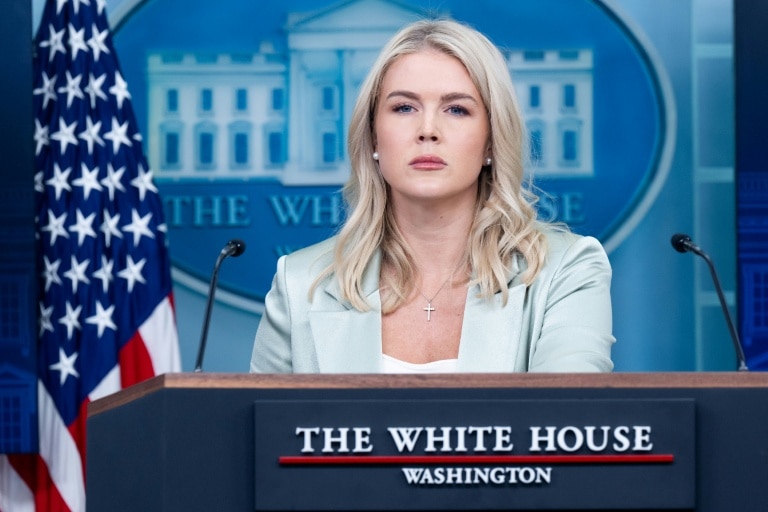
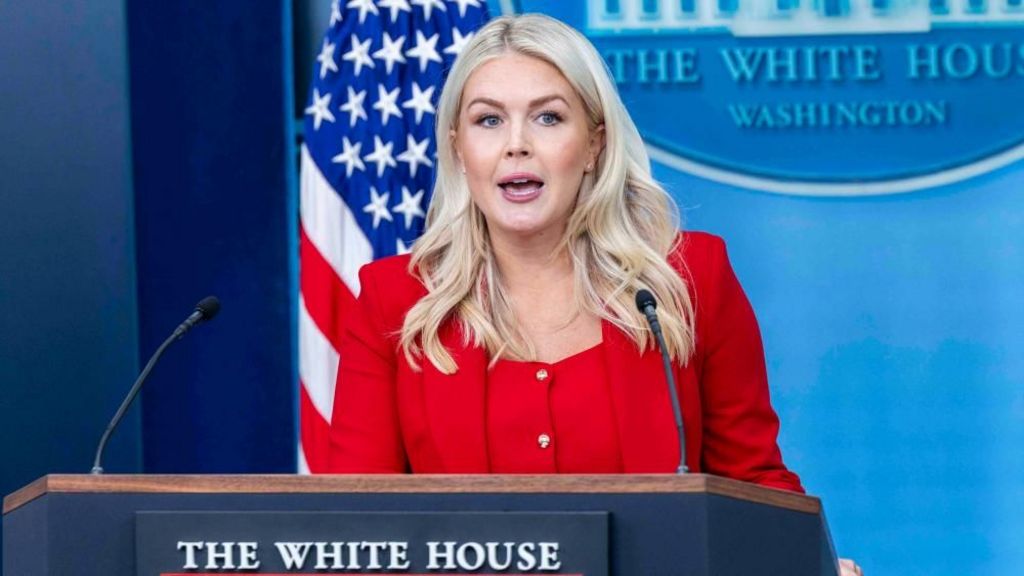
    U.S. President Donald Trump announced Wednesday that 28-year-old White House Press Secretary Karoline Leavitt, the youngest person to ever hold the top presidential spokesperson role in American history, will depart her post at the end of this month. In a social media statement confirming the move, Trump confirmed that Leavitt will transition to a new position as one of his top senior outside advisors, and highlighted her ongoing influence within the Republican Party. The announcement comes just weeks after Leavitt returned to her White House duties following the birth of her second child, and comes amid sinking approval ratings for Trump and growing concerns that the Republican Party could lose control of Congress in the upcoming November midterm elections.

    Widely known for her sharp, often confrontational retorts to journalists during daily press briefings, Leavitt has built a reputation as one of Trump’s most fiercely loyal allies. Over her tenure in the press secretary role, she delivered sharp, quick-witted and unapologetically aggressive performances during the regular, often combative briefings that she revived after the practice faded during Trump’s first presidential term between 2017 and 2021.

    Leavitt explained her decision to step down in a concurrent social media post, noting that after returning to work following her daughter Viviana’s birth in May, she realized she could not meet the intense demands of the press secretary role while also being the attentive parent her two young children need. Trump echoed that framing in his announcement, saying Leavitt was leaving her current role to prioritize more time with her young family.

    Leavitt’s personal connection to the Trump movement stretches back nearly a decade. A veteran of Trump’s first White House term, she served as a junior member of the press office before his 2021 departure, then stepped into the role as national spokesperson for his 2024 presidential re-election campaign. She earned Trump’s public praise for her unflinching, steely performances in cable news interviews during that campaign, which helped cement her status as a rising star in pro-Trump conservative circles.

    During her time as press secretary, Leavitt oversaw a fundamental shift in how the White House interacts with the national press corps. In February 2025, she drew widespread shock and criticism from journalists when she announced the White House would take over control of selecting which reporters receive access to close-up coverage of Trump, including in the Oval Office and on Air Force One — a responsibility that had previously been held by the independent White House Correspondents’ Association. She also oversaw a major shift in press credentialing, approving access for dozens of right-wing, pro-Trump outlet while reducing the presence of traditional mainstream news organizations that regularly ask critical questions of the administration in press briefings.

    The move to delay Leavitt’s maternity earlier this year came amid extraordinary circumstances. Just days before Viviana’s scheduled birth in May, an assailant attempted to storm the White House Correspondents’ Dinner in an alleged assassination attempt targeting Trump. Leavitt chose to delay her leave to manage the administration’s response to the incident before stepping away for maternity leave.

    Before her rise to national politics, Leavitt grew up in New Hampshire, where her family owned and operated a local ice cream shop. She first emerged as a public pro-Trump voice in 2017, when she wrote a letter to her university campus newspaper protesting a professor who had publicly criticized Trump during a lecture. After Trump’s 2020 re-election defeat, she launched an unsuccessful bid for a U.S. House seat in New Hampshire in 2022, running on a staunchly pro-Trump, pro-gun platform.

    Leavitt made clear Wednesday that her exit from the press secretary role does not mark the end of her political work. “My fight is entering a new phase, but it is far from over,” she wrote, adding that she believes “our country is facing an existential threat from an increasingly extremist Democrat Party that seeks to destroy everything great about America.” In her statement, she also expressed gratitude for the opportunity to serve as press secretary, noting she was proud of her work holding what she called “the liberal media” accountable and sharing what she frames as the truth of the Trump administration’s policy successes with the American public.

  • New indictment alleges Nick Reiner was lying in wait before killing parents Rob and Michele Reiner

    New indictment alleges Nick Reiner was lying in wait before killing parents Rob and Michele Reiner

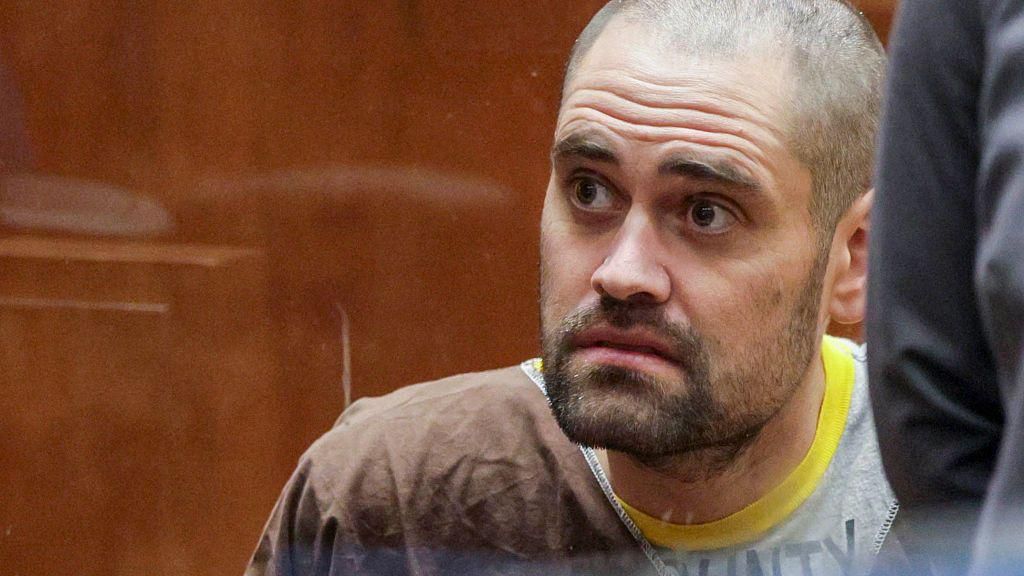
    A shocking development has emerged in the high-profile double murder case of iconic Hollywood filmmaker Rob Reiner and his wife Michele Singer Reiner, with a new grand jury indictment formally alleging that the couple’s son Nick laid in wait before carrying out the fatal attacks. Thirty-two-year-old Nick Reiner, who stands accused of fatally stabbing the 78-year-old director and his 70-year-old photographer wife inside their Los Angeles home last December, entered a not guilty plea on Wednesday to the updated charges. The revised indictment includes two counts of first-degree murder paired with a special circumstance allegation of premeditated murder by lying in wait, alongside an additional special aggravation that Reiner personally used a knife, a deadly weapon, to commit the crimes.

    The unsealed grand jury indictment allows California prosecutors to bypass the standard preliminary hearing process that would typically be held to determine if there is sufficient evidence to proceed to trial. While the indictment does not outline new granular details of Reiner’s alleged actions on the night of the couple’s death, prosecuting officials described the alleged crime as an unfathomable breach of the trust the victims placed in the accused. Prosecutors stated in a release: “This was a profound betrayal by someone who was loved and trusted by the very people he is accused of killing.”

    Returned by the grand jury on July 20, the addition of the lying-in-wait special circumstance makes Reiner legally eligible for the death penalty, a punishment currently under a temporary moratorium across the state of California. As of Wednesday, prosecutors have not yet confirmed whether they will formally seek capital punishment in the case. Los Angeles County District Attorney Nathan Hochman emphasized that the indictment moves the case one step closer to a resolution for the victims. “We hope that by having a grand jury return an indictment in this case it will bring us one step closer to a trial and achieving justice,” Hochman said.

    Rob Reiner, one of Hollywood’s most beloved directors, was widely known for his decades-spanning career and landmark films including *This Is Spinal Tap*, *Misery*, and *A Few Good Men*. He and Michele Singer Reiner, a professional photographer, were found dead on December 14 inside their home in Brentwood, an affluent upscale neighborhood in Westside Los Angeles. Authorities confirmed at the time that their bodies were discovered by the couple’s daughter, and Nick Reiner was taken into custody at a Los Angeles location the same day. An autopsy conducted by the Los Angeles County Medical Examiner ruled the couple’s deaths were caused by multiple sharp force injuries consistent with a stabbing. Nick Reiner first entered a not guilty plea to the initial murder charges against him back in February, and he is scheduled to return to the Los Angeles courtroom for his next procedural hearing on September 15.

    In the months following the tragedy, the couple’s eldest son Jake Reiner opened up about the devastating personal toll of the killings and the subsequent charges against his brother. Writing in a post on the online publishing platform Substack this past April, Jake Reiner shared that his entire world “collapsed” in the wake of the tragedy. “Nothing compares to losing both of them at the same time and, on top of that, having your brother be at the centre of it,” he wrote.

  • Messi’s most iconic moments as he ponders retirement

    Messi’s most iconic moments as he ponders retirement

    Global football icon Lionel Messi is confronting an uncertain future in the sport he has dominated for nearly three decades, opening the door to potential retirement following the passing of his father and long-time support system, Jorge Messi.

    The 39-year-old Argentina captain, currently contracted to Major League Soccer side Inter Miami through 2028, shared his grief and uncertainty in an emotional public tribute to his late father. “I don’t know how to carry on,” Messi said. “I used to just play football, and now I’m really not sure if I’ll carry on doing it for much longer.” Across his 20-plus-year senior career, Messi has amassed a historic 921 goals across stints with Barcelona, Paris Saint-Germain, Inter Miami and the Argentina men’s national team, a tally that places him among the greatest players to ever step onto a pitch.

    As the football world waits for Messi’s final decision on his next steps, BBC Sport has recounted the most memorable, career-defining moments that turned a young Argentine prospect into a global sporting legend.

    Messi’s rise to household name status began in 2007, when 19-year-old him delivered a stunning performance in one of football’s most heated rivalries: El Clasico between Barcelona and Real Madrid. On March 10 that year, the teen scored all three of Barcelona’s goals to secure a 3-3 draw at Camp Nou, capped by a blistering last-minute finish that came after he dribbled past multiple Real Madrid defenders. This match remains widely cited as the moment that announced Messi’s arrival as a generational talent.

    Just over a month later, Messi scored what many analysts still call the best goal of his entire career, during a Copa del Rey semi-final first leg against Getafe on April 18, 2007. Starting the play with the ball in his own half, Messi wove past roughly five opposing defenders, rounded the onrushing goalkeeper, and slotted the ball into the empty net — a run of play that drew immediate comparisons to Diego Maradona’s iconic 1986 World Cup goal against England. Barcelona went on to win the match 5-2.

    Two years later, Messi silenced the doubters who claimed he could not perform against elite English opposition in the Champions League. Ahead of the 2009 Champions League final against Manchester United, the striker had failed to score in 10 previous European appearances against Premier League clubs. That narrative ended when he rose above United’s defense to head home a cross from Xavi, securing a win in the first Champions League final widely billed as a head-to-head between Messi and Cristiano Ronaldo. He would go on to score in another Champions League final victory over Manchester United two years later, claiming the third of his four Champions League titles.

    Messi’s knack for record-breaking and explosive multiple-goal displays first became clear in the 2010 Champions League quarter-finals, when he scored four goals in a 4-1 home win over Arsenal, marking the first time he hit that mark in his senior career. The pick of the four was a deft chip over Arsenal goalkeeper Manuel Almunia to complete his hat-trick. Two years later, he upped the ante with a five-goal haul in a 7-1 round of 16 win over Bayer Leverkusen. To date, Messi ranks second on the all-time Champions League scoring charts with 129 goals, trailing only Ronaldo.

    At just 24 years old, Messi became Barcelona’s all-time leading top scorer, breaking a 60-year-old record held by Cesar Rodriguez. In a 5-3 win over Granada on March 20, 2012, he equalled Rodriguez’s 232-goal record with his first strike of the game, broke the record with his second, and extended his new mark with a third. By the time he left Barcelona in 2021, he had pushed the club’s all-time scoring record to 672 goals — a mark 446 goals clear of the next closest player in the club’s history.

    The same year, Messi delivered a calendar-year scoring performance that earned him a place in the Guinness Book of World Records. By December 22, 2012, he had hit 91 goals across 69 matches for club and country: 79 for Barcelona and 12 for Argentina. That unprecedented haul earned him an unmatched fourth consecutive Ballon d’Or, cementing his status as the world’s best player.

    Two years later, Messi broke another long-standing Spanish record, becoming La Liga’s all-time top scorer with a hat-trick in a 5-1 win over Sevilla on November 22, 2014. He equalled Telmo Zarra’s 251-goal record (set in 1955) with a free kick, before breaking it and extending the mark with a third goal. He ended his La Liga career with 474 goals, 163 clear of Ronaldo’s 311 for Real Madrid.

    One of the most iconic moments of Messi’s El Clasico legacy came in April 2017, when he scored a last-minute winner against Real Madrid at the Santiago Bernabeu to secure a 3-2 Barcelona win. The goal marked his 500th for Barcelona, pushed Barcelona to the top of the La Liga table, and spawned one of the most famous celebrations in football history: Messi pulled off his Barcelona shirt and held it aloft for the home Real Madrid crowd to see.

    In 2021, one of football’s longest unbroken partnerships ended when financial restrictions tied to La Liga’s salary cap forced Barcelona to let Messi leave on a free transfer, after 21 years, 672 goals and 35 club trophies. A tearful Messi told reporters at his exit press conference: “My family and I were convinced we were going to stay here, at home. I don’t want to leave this club – it’s a club I love and this is a moment I didn’t expect.” After widespread speculation of a move to Manchester City, he signed with Paris Saint-Germain.

    The second act of Messi’s career brought the international success that completed his legacy. In July 2021, at 34 years old, he won his first senior international trophy when Argentina beat Brazil 1-0 in the Copa America final at Rio de Janeiro’s Maracana stadium. He was named player of the tournament after scoring four goals, and would go on to win a second Copa America three years later.

    Two years after that first international title, Messi claimed the trophy that had eluded him throughout his career: the FIFA World Cup. In what is widely called the greatest World Cup final in history, Argentina drew 3-3 with France before winning on penalties, with Messi scoring two goals and converting his spot kick in the shootout. He was named player of the tournament after scoring seven goals, becoming the first player to score in every knockout round of a World Cup. The victory closed the debate over his status as the greatest of all time, and is widely cited as the crowning moment of his career.

    Messi has extended his record for the most Ballon d’Or awards to eight, picking up two more after leaving Barcelona: one during his time at PSG and another after joining Inter Miami, with the 2023 award coming off the back of his World Cup triumph and a Leagues Cup title with MLS side. “I couldn’t imagine having the career I’ve had and everything I’ve achieved, the fortune I’ve had to be part of the best teams in history,” he said after winning his eighth award. “All of them are special for different reasons.”

    Most recently, at the 2026 World Cup, Messi added another entry to his World Cup goal record, pushing his all-time tally to 21 to become the tournament’s leading scorer before France’s Kylian Mbappe surpassed the mark in the bronze medal match against England. Though Argentina ended the tournament with a runner-up finish after losing to Spain in the final, Messi’s individual performance at 39 years old added another chapter to his legacy on the sport’s biggest stage.

  • Marc Anthony, Chayanne and more to play benefit concert for Venezuela and Colombia earthquake relief

    Marc Anthony, Chayanne and more to play benefit concert for Venezuela and Colombia earthquake relief

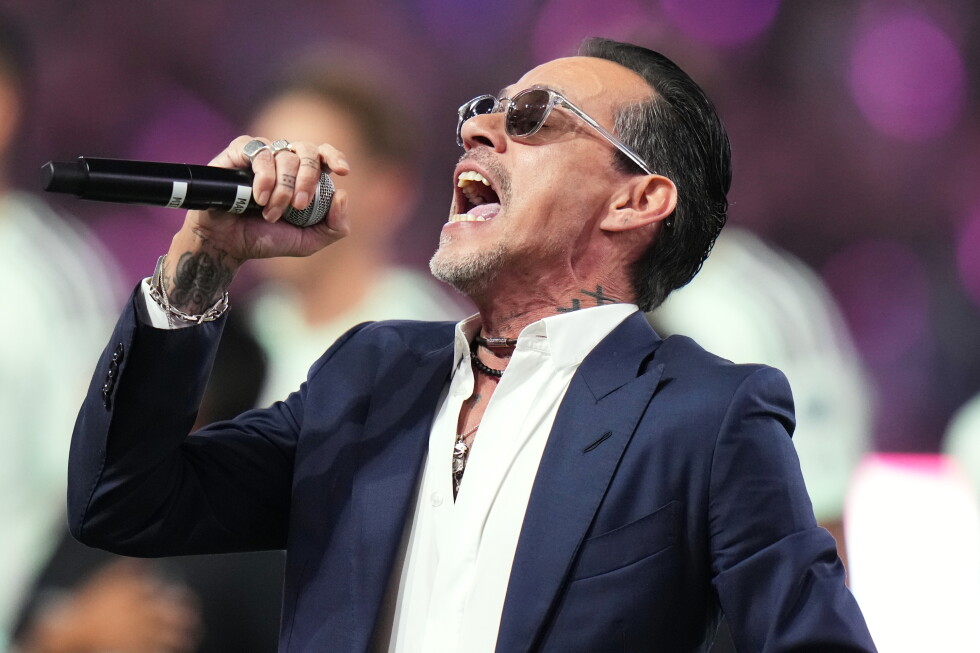
    A star-studded roster of Latin music’s biggest names will gather in Miami next month for a global benefit livestream aimed at lifting up communities shattered by back-to-back devastating earthquakes across Venezuela and Colombia. Scheduled for August 16 at the Kaseya Center, the “Unidos por Los Nuestros” (United for Our Own) concert will bring together performers spanning multiple genres and nationalities, with all proceeds directed to both immediate humanitarian relief and long-term recovery projects.

    What began as a relief effort focused solely on Venezuela expanded rapidly after a second major disaster struck neighboring Colombia in late July. The initiative was first launched in response to twin 7.2 and 7.5 magnitude earthquakes that hit northern Venezuela just 39 seconds apart on June 24, which killed at least 6,300 people. Just six weeks later, a 7.4-magnitude quake rocked western Colombia, leaving at least 181 people dead, more than 2,500 injured, and widespread destruction across hard-hit regions including the iconic salsa hub Cali. Organizers quickly moved to add Colombian survivors to the concert’s beneficiary list, uniting two affected nations under a single fundraising mission.

    All funds raised through ticket sales and online donations will support a range of recovery priorities, from rebuilding destroyed homes and repairing damaged schools and community gathering spaces to providing dedicated support for children and access to critical mental health services. Five respected international nonprofits — All Hands and Hearts, CARE, Global Empowerment Mission, Techo, and World Central Kitchen — will manage on-the-ground implementation of the programs. Marc Anthony, the multi-Grammy Award-winning artist whose Maestro Cares Foundation co-administers the concert funds alongside the Univision Foundation, emphasized that collective action to support people facing crisis is a shared global responsibility. Anthony, who previously led fundraising efforts after Hurricane Maria devastated Puerto Rico in 2017, noted, “The need is immense.”

    For Venezuela, the benefit concert arrives at a critical juncture, as global public and media attention has already started to fade from a humanitarian crisis that experts warn will last for years. Rodner Figueroa, co-founder and vice president of the I Love Venezuela Foundation, a partner of Global Empowerment Mission, explained that sustaining awareness and funding remains the biggest ongoing challenge. “The need in Venezuela continues to be at a scale that is unbelievable,” Figueroa said, adding that six weeks after the quakes, tens of thousands of displaced survivors still lack adequate housing, clean drinking water, sanitation infrastructure, and ongoing medical care, with many searching for missing loved ones without any official government support.

    The concert lineup features dozens of prominent artists drawn from across Latin America, including Marc Anthony, Luis Fonsi, Chayanne, Feid, Jay Wheeler, Piso 21, Gente de Zona, Elena Rose, Gilberto Santa Rosa, Ricardo Montaner, Mau y Ricky, and Olga Tañón. The roster spans iconic salsa, reggaeton, and pop acts, with performers hailing from Venezuela, Colombia, Argentina, Cuba, and Puerto Rico. Medellín-born urbano artist Feid, who committed to the fundraiser before the Colombian earthquake struck, has already mobilized his more than 14 million Instagram followers to back relief efforts for his home country. A host of prominent Latin television personalities, journalists, and public figures will co-host the event, including legendary “Sábado Gigante” host Don Francisco and former Miss Universe Dayanara Torres.

    The 6 p.m. ET show will be broadcast live globally across multiple platforms, including Univision, ViX, WAPA, TelevisaUnivision radio stations, iHeartLatino, and Venevision Play for audiences in Venezuela. Viewers can make direct donations during the broadcast by scanning an on-screen QR code, texting the code UNIDOS to 707070, or visiting the official Univision donation website.

    “Unidos por Los Nuestros” is not the only major benefit event planned for earthquake recovery. A separate high-profile benefit concert led by renowned Venezuelan conductor Gustavo Dudamel is scheduled for August 23 at the Hollywood Bowl in Los Angeles, marking Dudamel’s final performance with the Los Angeles Philharmonic before he takes up leadership of the New York Philharmonic. That event, titled “A Concert for Venezuela,” will feature guest artists including Beck, Natalia Lafourcade, and Carlos Vives, with proceeds going to recovery funds managed by the United Nations Development Programme and the CAF Development Bank of Latin America and the Caribbean. Additional independent relief efforts have already launched across the global music community: Venezuelan band Rawayana founded Fundación El After to support affected young people shortly after the Venezuela quake, Colombian superstars including Shakira, Karol G, Ryan Castro, and J. Balvin mobilized massive social media support for Colombian relief immediately after their country’s quake, and Metallica’s charitable foundation donated $100,000 to Venezuelan relief efforts through humanitarian organization Direct Relief.

  • Trump says White House press secretary Karoline Leavitt to leave post

    Trump says White House press secretary Karoline Leavitt to leave post

    In a surprise announcement shared via social media, former and current U.S. President Donald Trump has confirmed that White House Press Secretary Karoline Leavitt will leave her administration post at the end of this month, ending a tenure that made history as the youngest person to ever hold the high-profile communications role.
    Leavitt, 28, who welcomed her second child, a daughter, back in May and just returned to work from maternity leave last month, made the decision to step down to prioritize raising her two young children alongside her husband Nicholas Riccio. Trump described Leavitt as one of his most trusted long-term aides, noting he fully understands and respects her choice to shift focus to family life. Following her departure from the White House communications team, Leavitt will take on a new position as one of Trump’s top outside advisors, and will remain an influential voice within the national Republican Party, the president added.
    In a public post on X shared after Trump’s announcement, Leavitt called her time as White House Press Secretary “the honor and adventure of a lifetime.” She acknowledged that balancing the demands of one of the most high-pressure roles in U.S. politics with new motherhood has been a rewarding but extremely challenging chapter of her life. “Since returning to the White House after the birth of my daughter, I have felt in my heart that I cannot be the best mom my two young children deserve while devoting the constant time, energy, and attention required of the White House Press Secretary,” she wrote, framing her departure as a bittersweet but necessary choice to start a new life chapter.
    Leavitt’s professional history has long been tied to Trump and the Republican Party. She got her start in Trump’s first presidential term, working first as an assistant press secretary and speechwriter before moving on to serve as communications director for top House Republican Elise Stefanik of New York. In 2022, she ran for a congressional seat in New Hampshire, winning a competitive Republican primary but ultimately falling to incumbent Democratic Congressman Chris Pappas in the general election. After her unsuccessful congressional bid, Leavitt took on a role as a spokesperson for MAGA Inc., a prominent pro-Trump fundraising organization, before stepping in as national press secretary for Trump’s successful 2024 presidential campaign. She assumed the role of White House Press Secretary one year ago, making history as the youngest person to ever hold the position.
    As of the announcement, no candidate has been publicly named to replace Leavitt as White House Press Secretary, and the administration has not yet shared a timeline for naming her successor.