博客

  • Megan Solomon: Woman accused of murdering partner Leon Strickland released on bail

    Megan Solomon: Woman accused of murdering partner Leon Strickland released on bail

    A 33-year-old former Aboriginal community board member who stands accused of fatally stabbing her long-term partner has been granted bail by Victoria’s highest court, in a ruling that cited highly unusual personal and procedural circumstances as justification for the decision.

    Megan Solomon is charged with the murder of 43-year-old Leon Strickland, who died following a single stab wound to the heart during an altercation at the couple’s shared home in the small eastern Victorian country town of Orbost in December 2024. Police allege the romantic pairing, which began in 2011, had long been a volatile, mutually abusive dynamic, with both parties telling loved ones they had been on the receiving end of family violence from the other.

    Court documents outline that the fatal confrontation unfolded on the evening of December 11, when an argument escalated after Strickland allegedly attempted to headbutt Solomon in their kitchen. Prosecutors allege that after Strickland laughed at the small paring knife Solomon had picked up during the clash, she stabbed him once through the chest, piercing his aorta and causing a fatal 5-centimeter wound. Following the stabbing, Solomon immediately contacted emergency services and began administering CPR to Strickland as he lost consciousness, court documents confirm.

    Solomon applied for bail ahead of her scheduled murder trial, which is not set to begin until February 2027. After a two-day hearing, Supreme Court Justice Amanda Fox granted the bail application on Thursday, ruling that Solomon’s unique circumstances qualified as extraordinary grounds for release ahead of trial.

    Key factors that swayed the court’s decision included the comprehensive support network already arranged for Solomon: she has secured pre-approved housing and dedicated mental health counselling, and has received an offer to return to her role at the Victorian Aboriginal Education Association. The court also noted Solomon had no prior criminal convictions, an extensive, well-regarded professional history working in Aboriginal community health and education, and a record of significant contributions to Indigenous communities across the state through her service on the boards of multiple Aboriginal and Koori community organizations.

    Justice Fox further found there was no credible evidence to support claims that Solomon would pose a risk of interfering with witnesses if released, and the court heard that her physical and mental health had declined sharply during her time in pre-trial custody.

    During the hearing, Homicide Squad Detective Senior Constable Cassandra Syddall told the court that hundreds of audio recordings recovered from Solomon’s phone document the couple’s “extremely toxic” relationship. Syddall highlighted two particularly aggressive recorded statements from Solomon, including one where she said “I wish someone would punch your head in so you can understand better” and another where she urged “you should just kill yourself, no one would miss you.”

    Justice Fox confirmed in her ruling that Solomon’s legal team will mount a self-defence argument at trial, noting that the question of whether prosecutors can prove the necessary murderous intent will ultimately be decided by a jury. Solomon will next appear in court for a case management hearing in October 2025.

    Strict bail conditions have been imposed to govern her release: she is barred from leaving Victoria, must report to local police twice weekly, and is prohibited from entering Orbost except for visits to her father’s residence.

  • Outflanked by AI, stars fade for South Korea’s blind fortune-tellers

    Outflanked by AI, stars fade for South Korea’s blind fortune-tellers

    Nestled in the quiet alleys of Mia Village on the northern outskirts of Seoul, 86-year-old Song Oh-soon sits in her cramped studio — which doubles as both her home and consultation space — waiting for clients who rarely come. Song is one of the fewer than 20 remaining visually impaired fortune-tellers in a community that once hosted 70 to 80 practitioners, a centuries-old tradition that is now being rapidly outcompeted by the artificial intelligence tools that define modern South Korean life.

    For generations, this enclave of blind fortune-tellers drew crowds of South Koreans from all walks of life, who traveled here seeking guidance on everything from chronic illness and financial struggles to romantic troubles and existential questions about fate. Today, however, most people opt for the convenience of AI-powered divination chatbots and mobile fortune-telling apps, leaving the village’s narrow lanes quiet and its traditional shopfronts dark behind faded, weathered signs.

    Unlike the automated algorithms that have captured most of the modern fortune-telling market, Song has remained deliberately offline. She still relies on braille copies of the ancient “Four Pillars of Destiny” astrology text and the empathetic, attentive listening she has honed over 40 years of practice — a human touch she argues no AI can replicate. Over her decades of work, she has talked suicidal visitors through their darkest moments, even drawing on her own experience: after losing her sight to childhood illness before the Korean War, Song once contemplated ending her own life before finding purpose in fortune-telling. “I persuaded them to keep living,” she told AFP. “I also once wanted to die, but I found this work and survived.”

    Contrary to common assumptions, interest in fortune-telling has not declined in South Korea — it has simply shifted online. Data from startup analysis firm InnoForest shows the national fortune-telling industry is actually growing, reaching a total value of 1.4 trillion won (approximately $986 million) in 2024. A 2024 survey from market researcher Embrain confirms that most modern consumers now turn to popular AI tools including ChatGPT and Gemini for fortune readings, rather than seeking out in-person consultations.

    Occasionally, though, people still seek out the human connection that only a traditional practitioner can offer. Oh Ji-hye, a 44-year-old university professor, relied on AI fortune-telling during her daily commute for years before she reached out to Song for a phone consultation amid rising anxiety about her career. “It felt good that someone rather than AI was concentrating on and listening to my story,” Oh explained.

    Mia Village’s story of fortune-telling by visually impaired practitioners dates back to 1966, when the first blind fortune-teller settled in the neighborhood. When Song arrived in 1984, the area was booming alongside Seoul’s rapid post-war economic growth: low rent and steady foot traffic created a thriving hub for the trade, which for decades was one of the only viable career paths open to visually impaired people in South Korea, particularly women facing systemic discrimination. “Back when I lost my sight, there was nothing else I could do besides this job,” Song recalled. “Nowadays, if a visually impaired person is musically talented, they can pursue a career in music.”

    Song’s lifetime has tracked South Korea’s extraordinary transformation: from the devastation of the 1950–1953 Korean War and decades of military rule to the 1990s Asian financial crisis, and finally its rise as a global economic powerhouse and leading producer of AI microchips. Rising prosperity has changed client needs too: people who once came to fortune-tellers for guidance on untreatable illnesses now rely on modern hospitals instead. But the biggest shift has come from technology itself: AI offers free or low-cost readings that undercut Song’s 50,000-won sessions, and most remaining traditional practitioners have no online presence, making them invisible to users searching for services on major search platforms.

    “I don’t think people are less interested in fortune-telling,” Song observed. “But these days, they look online, so they do not come all the way to us.” For now, despite the loneliness of declining clientele, Song holds to her core belief that fate is not predetermined. “If you put in the effort and make wise judgements, good fortune will come your way three times in your life,” she said.

  • Jailed whistleblower David McBride walks free on parole, provides sad update

    Jailed whistleblower David McBride walks free on parole, provides sad update

    A former Australian military lawyer whose leaks of classified defence documents sparked explosive allegations of war crimes by Australian troops in Afghanistan has walked free from a Canberra prison on parole, only to disclose a devastating personal health battle that has tempered celebrations among his long-time supporters.

    David McBride, 62, was released from custody on Thursday morning, more than two years into a five-year and eight-month sentence handed down in 2024 after he was convicted on three criminal charges, including theft of classified material and unauthorised disclosure of top-secret defence documents. The former soldier turned legal officer became eligible for parole on August 13 this year, and his application was ultimately approved by Australia’s Attorney-General Michelle Rowland.

    A spokesperson for the Attorney-General’s Department confirmed the parole approval in a brief statement, noting that the federal government follows standard procedure for individual parole matters and does not disclose specific private details of such cases. Under the terms of his release, McBride will serve the remaining portion of his sentence in the community under strict supervision and specified release conditions.

    McBride’s release marked a hard-won victory for transparency campaigners who had lobbied for his early release, led by The Information Rights Project, a non-profit charity founded by Gabriel Shipton – the brother of imprisoned WikiLeaks founder Julian Assange. Through the organisation, McBride shared his first public remarks since securing parole, opening with an outpouring of gratitude to those who stood by him throughout his incarceration.

    “Firstly, I would like to thank my incredible family: Sarah, James and Georgie McBride, who never gave up on me and whose fighting spirit, love and humour inspired me every day,” McBride said. “Second, I’d like to thank all my amazing supporters from around Australia and the world who sent me such inspirational messages.” He also extended thanks to Attorney-General Rowland for approving his parole, and to fellow incarcerated people at the Alexander Maconochie Centre who “showed me humour, respect and character.”

    But the joy of his first taste of freedom in two years was overshadowed by somber health news McBride shared publicly: he had been diagnosed with early-stage, treatable lung cancer and is preparing for surgery to remove a portion of the lung, followed by an extended period of physical recovery.

    “While I am fit and well in most respects, I feel I should inform those who may be interested that I have been diagnosed with treatable lung cancer, in its earliest stages, and will presently undergo an operation to remove part of my lung, after which I will require some extended physical recovery,” he said. “In this, I’m grateful to the relevant medical and corrective staff who discovered the cancer at such an early stage.”

    Looking ahead to his first days of supervised freedom, McBride expressed a simple, deeply personal excitement: “And I’m looking forward to hugging my dog, Jake. Hopefully he will remember me.”

    McBride’s 2014 leak of classified defence documents to journalists formed the basis of the Australian Broadcasting Corporation’s landmark 2017 investigation *The Afghan Files*, which exposed credible allegations that Australian Army special forces personnel had committed multiple extrajudicial illegal killings of Afghan civilians during the country’s deployment in the War in Afghanistan. Throughout his high-profile criminal trial, McBride maintained that his actions were motivated by a commitment to public accountability, and he never accepted that his choice to disclose the documents constituted unlawful conduct. He has launched an appeal against his conviction following his sentencing last year.

  • Why do US elections cost so much money?

    Why do US elections cost so much money?

    The United States stands alone among global democracies in the massive scale of money that flows through its political elections. Washington D.C.’s political ecosystem is uniquely molded by cash infusion and lobbying influence, and the billions poured into state and federal contests are not merely used to cover administrative costs for voting access — they are deployed to control public narrative and swing electoral outcomes.

    According to OpenSecrets, a nonpartisan organization that tracks U.S. campaign finance, total spending by individuals, organized groups, and independent outside spenders for the 2024 presidential and congressional election cycle is approaching nearly $5 billion — a staggering jump from pre-2010 levels when the figure never exceeded $1 billion.

    This explosive growth in campaign spending traces directly back to the 2010 U.S. Supreme Court *Citizens United v. FEC* ruling, which eliminated longstanding caps on independent political spending by corporations, labor unions, and special interest groups. The court’s majority argued that political spending qualifies as protected free speech under the First Amendment, writing that “the Government may not suppress political speech based on the speaker’s corporate identity” and that “no sufficient governmental interest justifies limits on the political speech of nonprofit or for-profit corporations.”

    The ruling cleared the way for the creation of Super Political Action Committees (Super PACs), independent groups that can raise and spend unlimited sums from corporations, wealthy individuals, and organizations to support or oppose political candidates. While traditional PACs face strict federal contribution caps of $5,000 per election cycle from individual donors and cannot accept corporate funds, Super PACs face no such limits — they are only barred from formally coordinating spending with the candidate they support, a restriction that campaign finance experts say is often loosely enforced.

    “Basically they can take over $100 million if they wanted to from a single individual, and spend all that money in support of a candidate,” explained Anna Massoglia, a campaign finance expert, in an interview with Middle East Eye. “And as long as they disclose the spending, and whoever the donor is — at least the immediate donor — then that is perfectly legal.”

    Direct individual donations to official candidate campaigns remain capped at $3,500 per federal election cycle, and individual contributions to national party committees are capped at $44,300. But earlier this year, the Supreme Court further loosened campaign finance rules by allowing candidates to control independent party funds allocated to their races, a decision former President Donald Trump hailed as a major victory for political speech.

    Even with disclosure rules on paper, a massive share of independent political spending comes from so-called “dark money” groups that hide their original donors. Since the *Citizens United* decision, these anonymous actors have spent more than $4 billion on federal elections alone, according to Massoglia’s research. Dark money groups often avoid formal disclosure requirements by running issue ads that praise or criticize candidates without using explicit phrases calling for a vote for or against them, allowing them to shield their funding sources. Many route donations through nonprofits or shell companies to further hide the identity of major contributors.

    The role of unlimited independent spending played a central role in a stunning 2024 Democratic Senate primary upset in Michigan, where progressive first-time candidate Abdul El-Sayed defeated centrist incumbent Congresswoman Haley Stevens. If El-Sayed wins the general election in November, he will become the first Muslim U.S. senator in American history.

    Stevens, backed by the Democratic Party establishment and Michigan’s sitting governor, attracted more than $50 million in outside corporate and special interest spending to defeat El-Sayed — with the pro-Israel lobby’s United Democracy Project (UDP), a Super Pac affiliated with the American Israel Public Affairs Committee (AIPAC), alone contributing $30 million to her campaign. By contrast, El-Sayed received just over $5 million in outside spending, mostly from progressive advocacy groups. That figure does not include direct donations raised by each candidate’s official campaign, all spent on a single primary contest rather than the general election.

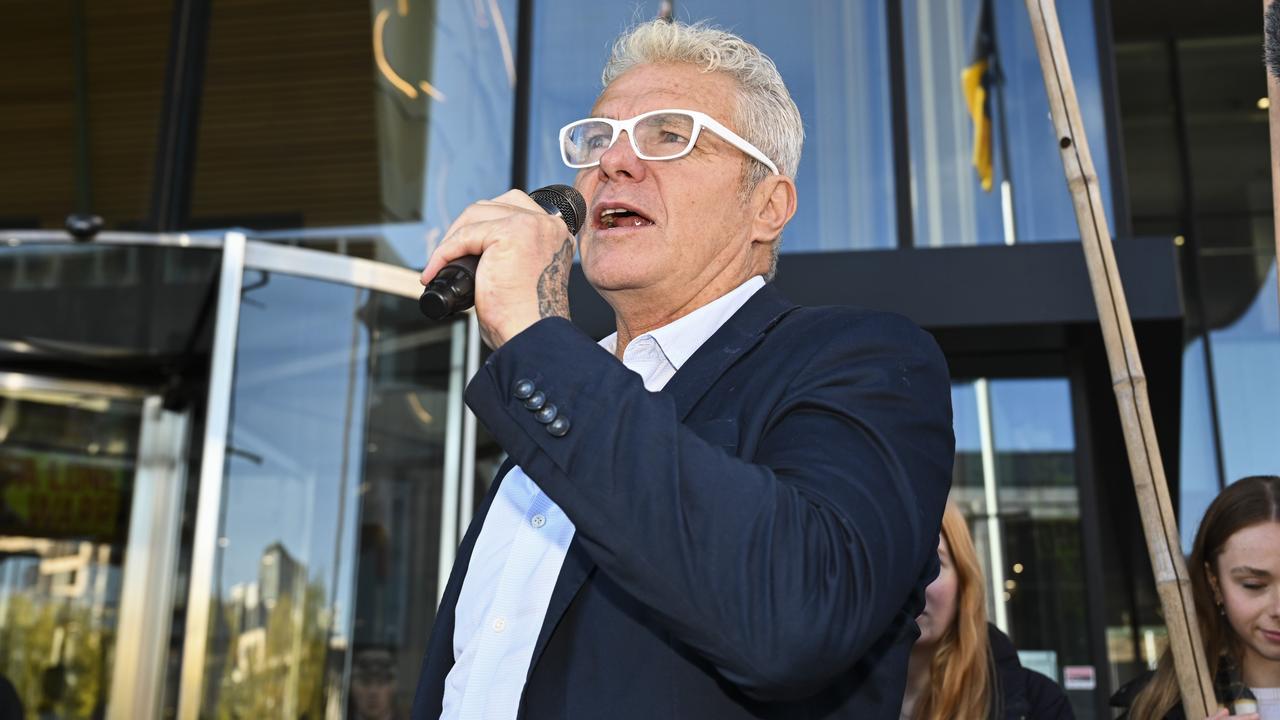
    Conventional political wisdom holds that overwhelming spending almost always guarantees victory: Craig Holman, a government affairs lobbyist for consumer advocacy non-profit Public Citizen, notes that candidates who outspend their opponents win roughly 95% of the time. El-Sayed’s victory, therefore, marked a rare exception to the rule that has defined post-*Citizens United* U.S. elections.

    In the 2024 cycle, outside spending by Republican-aligned groups has already far outpaced Democratic spending, accounting for 65% of total independent expenditures compared to 29% for pro-Democratic groups. The Make America Great Again Super PAC, formed to support Donald Trump’s 2024 presidential bid, has raised more than $410 million, making it the cycle’s top fundraiser. Nearly 91% of all 2024 outside spending comes from ideological or single-issue groups focused on causes ranging from gun rights and anti-abortion policy to oil and gas development and defense policy.

    For years, consistent top spenders in U.S. elections have included the U.S. Chamber of Commerce, which advocates for corporate interests, the National Association of Realtors, which works to shape property law, and the Pharmaceutical Research and Manufacturers of America, which lobbies on health policy. Big tech giants including Meta and Amazon have rapidly increased their election spending in recent cycles. AIPAC, already the third highest-spending PAC in the 2024 cycle, counts its Super PAC arm UDP among the top 15 highest-spending independent groups across all industries — making it the most influential foreign interest-focused group in U.S. electoral politics. For the 2026 election cycle, an Americans for Tax Fairness report found that as of March 1, nearly 80% of all billionaire contributions to Super PACs go to Republican candidates and causes, with top donors including Tesla and SpaceX CEO Elon Musk, Wall Street fund manager Jeffrey Yass, and tech entrepreneur Greg Brockman.

    Critics argue that the current system of unlimited campaign spending fundamentally undermines American democratic representation. Because U.S. House terms last only two years, presidential terms four, and Senate terms six, elected officials are forced to fundraise continuously from the earliest days of their terms to prepare for their next campaign. “It allows wealthy individuals, wealthy groups, corporations, and even foreign interests to invest heavily into who is elected to our government. If [candidates] want to remain in office, they know where the money is coming from,” Holman said.

    Northwestern University law professor Michael S Kang, who studies campaign finance regulation, noted that while fundraising can help grassroots unknown candidates get on their feet, the outsized role of money systematically favors wealthy interests. “There are people who say that fundraising is kind of a proxy for popularity, but that’s not really true, because we come from different communities and different communities have different amounts of wealth, and so the way that the role and the importance that money plays in politics has a way of favouring the wealthy [gives them] outsized influence,” he explained.

    Not all analysts agree that money distorts election outcomes: a 2016 paper from conservative think tank the Manhattan Institute argued that political donations rarely change candidates’ policy positions, noting that donors typically give to candidates who already share their ideological views and are already positioned to win.

    In the wake of El-Sayed’s Michigan primary win, grassroots groups such as Mop Up Michigan have gained traction pushing for campaign finance reform, calling for bans on corporate donations to candidates and greater transparency for political ad funding. A small number of U.S. states, including Arizona, have implemented stricter disclosure rules to shine a light on dark money, but experts say these efforts have had limited success, as dark money groups continuously develop new tactics to hide their funding sources.

    While both major political parties have introduced campaign reform bills in recent Congresses, no major federal reform legislation has been signed into law. The Brennan Center for Justice at NYU Law has proposed small donor public financing, a system that would match small individual campaign contributions with public funds to incentivize candidates to court widespread grassroots support rather than a small number of wealthy mega-donors. Still, the system requires more outreach work from candidates, who often find it easier to rely on unlimited ad spending from supportive Super PACs.

    Holman argues that current U.S. campaign finance regulation is effectively useless, pointing to the large legal loophole for unlimited spending by independent nonprofit groups opened by Supreme Court rulings. “The biggest effort is to reform the court system, because it’s the courts that have destroyed our campaign finance laws,” he said.


  • Ebola outbreak on track to be deadliest ever, WHO chief says

    Ebola outbreak on track to be deadliest ever, WHO chief says

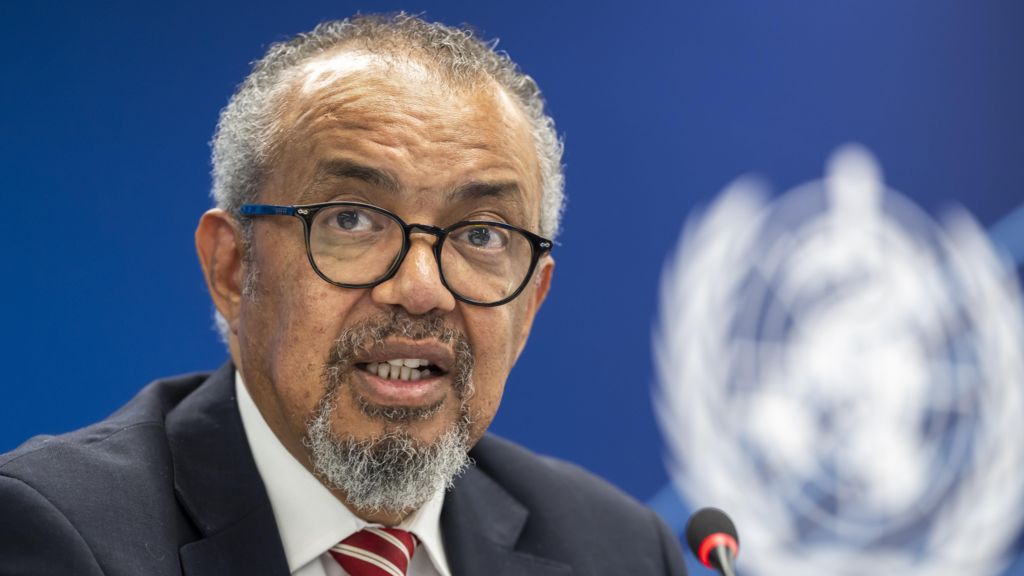
    The world faces a rapidly escalating public health crisis in the eastern Democratic Republic of Congo (DRC), where the 2026 Ebola outbreak is projected to become the deadliest in recorded history if current infection trends hold, World Health Organization (WHO) Director-General Tedros Adhanom Ghebreyesus has announced.

    Speaking to reporters, Tedros explained that at the current rate of transmission, the outbreak will eclipse the devastating 2014-2016 West African Ebola epidemic, which claimed more than 11,000 lives across the region. As of the latest WHO update, the 2026 outbreak – officially declared on May 15 – has already confirmed at least 4,300 cases and recorded over 2,000 deaths.

    While the WHO has set an ambitious goal to reverse the outbreak’s spread within a three-month window, agency officials have stressed that this target only refers to bringing community transmission under control, not eradicating the virus entirely. A key complicating factor that has fueled the outbreak’s rapid growth is its unrecognized early spread: health officials confirmed this week that the virus began circulating as early as February, three full months before the outbreak was formally declared. Early cases were misdiagnosed as more common local illnesses, including malaria and typhoid, allowing undetected transmission to continue for months.

    “We are chasing the virus, and the virus is ahead of us,” Dr Mohamed Janabi, WHO Regional Director for Africa, told reporters during a press briefing in Bunia, the DRC city closest to the outbreak’s epicenter.

    Compounding challenges for frontline response teams, the 2026 outbreak is caused by the rare Bundibugyo strain of Ebola, a variant that has only been linked to two small, previously documented outbreaks in 2007 and 2012. No vaccines or antiviral therapies have received full regulatory approval specifically for this strain, leaving response teams with no standard, proven tools to stop transmission or treat infected patients.

    Widespread regional instability in eastern DRC has further undermined containment efforts, Janabi added. Ongoing conflict has restricted access to affected communities, meaning health workers can only reach roughly 30% of confirmed cases to provide care and implement infection control measures.

    Ebola is an extremely virulent viral pathogen with a high mortality rate. Symptoms develop between 2 and 21 days after initial exposure, beginning with sudden flu-like manifestations including fever, headache and fatigue that easily mimic more common tropical illnesses like malaria. As infection progresses, patients develop severe vomiting and diarrhea, often leading to acute organ failure and death. The virus spreads between humans through direct contact with infected bodily fluids, such as blood or vomit.

    Despite the severe challenges, there are emerging signs of progress in research and development for targeted countermeasures. The UK’s Medicines and Healthcare products Regulatory Agency (MHRA) has granted regulatory approval to launch the first human clinical trials for an investigational Bundibugyo Ebola vaccine. The candidate is being developed by a research team at the University of Oxford, built on the same stable mRNA-vectored platform that powered the Oxford-AstraZeneca COVID-19 vaccine. Three additional independent research groups are also working on alternative Bundibugyo vaccine candidates, though those are still in pre-clinical development and have not yet entered human testing.

    Separately, the WHO is sponsoring a clinical trial based in the DRC to test whether two existing antiviral therapies can improve survival rates for patients infected with the Bundibugyo strain, as global health authorities work to scale up evidence-based care while long-term vaccine development progresses.

  • Flyhalf Richie Mo’unga to join the New Zealand All Blacks on rugby tour of South Africa

    Flyhalf Richie Mo’unga to join the New Zealand All Blacks on rugby tour of South Africa

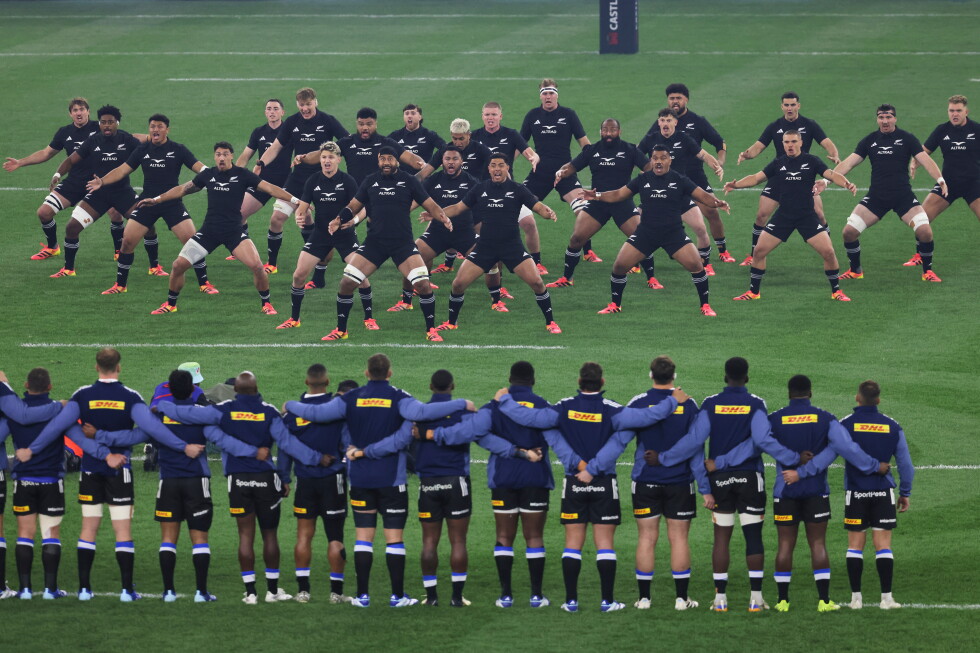
    WELLINGTON, New Zealand – Three years after stepping away from full-time international rugby, and following an injury crisis that hit the New Zealand All Blacks squad ahead of their high-stakes four-test rivalry tour against South Africa, veteran playmaker Richie Mo’unga has been called back to the national side as an injury replacement.

    The 32-year-old flyhalf, whose last appearance in the black jersey came in the 2023 World Cup final – a heartbreaking 1-point defeat to the Springboks that capped his 56-test international career to that point – spent the past three seasons playing club rugby in Japan with the Toshiba Brave Lupus. He returned to his home country earlier this year to get match fit in New Zealand’s domestic National Provincial Championship (NPC) turning out for his longtime provincial side Canterbury.

    Under All Blacks selection rules, Mo’unga was not eligible for national team selection until he completed a required stint of domestic NPC play, a barrier that was only cleared recently ahead of the tour, which has been billed as a new chapter in rugby’s greatest modern rivalry between the All Blacks and Springboks.

    Mo’unga departed Christchurch on Thursday to link up with the touring squad, which is already in South Africa ahead of three tests against the world champion Springboks on home soil, followed by a fourth test to be played in the United States. His call-up comes in response to two separate injury concerns in the All Blacks touring group: starting center Billy Proctor was forced to withdraw with a shoulder injury, while Damian McKenzie – one of four flyhalves originally named to the touring party – is carrying a minor ankle injury that has raised selection questions for the test series.

    The All Blacks have already gotten their tour off to a strong start in warm-up matches, picking up two lopsided wins against South African franchise teams. They opened the tour with a 38-21 victory over the Stormers in Cape Town, then followed that performance with a dominant 54-0 shutout of the Sharks in Durban, building momentum ahead of the first test against the Springboks.

  • Travis Kelce shares first details from his wedding to Taylor Swift: ‘Best night of my life’

    Travis Kelce shares first details from his wedding to Taylor Swift: ‘Best night of my life’

    NFL superstar Travis Kelce has opened up for the first time about his star-studded private wedding to global pop icon Taylor Swift, describing the July 3 ceremony at New York’s iconic Madison Square Garden as the most memorable night of his life. Speaking to reporters this Wednesday at the Kansas City Chiefs’ preseason training camp in Missouri, the three-time Super Bowl champion shared the first public details of the nuptials, which were officiated by beloved comedic actor Adam Sandler.

    Kelce expressed that exchanging vows at the legendary Manhattan arena, widely considered the mecca of professional sports venues, fulfilled a lifelong childhood dream for him. “It was kind of cool to live out my childhood dream of being in that venue, the mecca of all sports venues, being able to get married there,” he told assembled media. He thanked all guests for attending, calling the celebration “a crazy night” that exceeded every one of his expectations.

    The high-profile couple made a deliberate choice to keep the vast majority of their wedding details out of the public eye, and no official photos from the indoor stadium ceremony have been released to date. Despite the strict privacy measures, multiple reports confirmed that a roster of A-list celebrities from across entertainment, sports and fashion attended the event, including acclaimed actors Hugh Grant and Jason Sudeikis, breakout singer Benson Boone, and supermodel Gigi Hadid.

    Kelce also referenced a prior personal connection to Madison Square Garden that made the venue extra meaningful. Last year, when the New York Knicks made a historic run to their first NBA championship in nearly 60 years, Kelce was unable to attend a playoff game due to mandatory Chiefs minicamp commitments. It was Swift who took his spot, sitting courtside for the stunning Game 4 Finals comeback win over the San Antonio Spurs, where the Knicks pulled off a one-point 107-106 upset. This marked Kelce’s first time referring to Swift as his wife in a public setting.

    The tight end also extended gratitude to MSG leadership for accommodating their request for an intimate, private event. “I can’t thank the owners of MSG enough for allowing us to get the opportunity to do that, knowing that we wanted a private event and everything, and it was perfect,” he said. He added a lighthearted joke about the unseasonably hot weather that coincided with the Independence Day weekend wedding, quipping that “the AC was cooking” inside the arena to combat the regional heatwave.

    The wedding was surrounded by intense public speculation in the lead-up to the event, even after organizers closed off a section of midtown Manhattan to accommodate the gathering. Rumors swirled for days that the couple had already wed in a smaller secret ceremony, or that the MSG event was just an engagement party rather than an official wedding. Those rumors were put to rest hours after celebrity guests began arriving in formal wear, when large screens on the outside of the arena made a public announcement confirming the couple had officially married.

    Now, just weeks ahead of the 2026 NFL regular season kickoff, Kelce said he has closed the chapter on his “fun off-season” and is fully focused on returning to football. At 36 years old, set to turn 37 this October, Kelce is coming off the first season in a decade that the Chiefs failed to qualify for the NFL playoffs. Widespread rumors have suggested the upcoming season could be his last before retirement, but Kelce has not confirmed any plans to step away from the game.

    “I have still got a lot of love for this game,” he said. “I want to go out there and prove to myself that I can play at a better level than I did last year.” Describing the football field as his “sanctuary”, Kelce emphasized that he values the daily grind of training camp and the process of building team chemistry ahead of the new season. “You need to have this time of grinding with the guys, being around them all day, starting to create that chemistry and standard for how we are going to do things. This year it’s ramped up even more,” he added.

  • Essendon’s Dean Solomon labels coaching rift rumours ‘an episode of Home and Away’

    Essendon’s Dean Solomon labels coaching rift rumours ‘an episode of Home and Away’

    Ahead of the impending appointment of Essendon Football Club’s new permanent senior head coach, interim boss Dean Solomon has forcefully pushed back on recent public speculation that he is locked in a bitter internal rift with leading candidate Mark McVeigh, dismissing the unsubstantiated claims as nothing more than overblown daytime soap opera drama.

    The rumours of internal friction first emerged in a Seven Network report Wednesday evening, which claimed tension was brewing between Solomon, McVeigh and another high-profile contender, former Essendon senior coach James Hird. The report further speculated that if McVeigh secured the permanent head coaching role, Solomon would be forced out of the club, despite his existing contract running through 2027.

    Addressing the speculation directly for the first time during media comments Thursday morning, Solomon said he had no understanding of how the rumours originated. He emphasized that his decades-long personal and professional relationship with the candidates makes any talk of conflict completely unfounded. “Mark McVeigh has been one of my best mates since we were 15 years old, and I’ve known James Hird since I was 17,” Solomon explained. “I have no clue where all this talk has come from. It honestly feels like something straight out of an episode of *Home and Away*.”

    McVeigh currently stands as one of four shortlisted candidates for the permanent Essendon head coaching position, alongside fellow assistant coaches Jaymie Graham from Fremantle and Murray Davis from Adelaide, plus Hird. Solomon reiterated that the club is conducting a rigorous, transparent evaluation process for all contenders, and stressed that the club does not need to hire an insider to fill the role. “It doesn’t need to be someone with past ties to Essendon,” he noted. “What we truly need is just the right person that can move this club forward.”

    Solomon dropped out of contention for the full-time role last week, following a severe string of poor on-field results after he stepped into the interim position earlier this season. The interim coach also opened up about the uncertainty surrounding his own future with the club, noting that he is still working through personal and professional considerations. His wife and children reside in northern New South Wales, and he has been separated from his family for 10 to 11 months during his time filling the interim role. “Is this arrangement sustainable long term? Probably not,” Solomon admitted.

    He acknowledged that the new permanent head coach, set to be announced in just two weeks, will almost certainly want to bring in his own hand-picked support staff to build a team for the next two to three seasons. “I think continuity is really important for any football program,” Solomon said. “Once the new senior coach is appointed, I’ll sit down with him and we’ll work through what my next step looks like together.”

  • Colombia enters ‘final phase’ of quake search as toll hits 265

    Colombia enters ‘final phase’ of quake search as toll hits 265

    Three days after Colombia’s strongest earthquake in a century struck, rescue teams entered what national officials have termed the “final phase” of search operations on Wednesday, racing against the critical 72-hour window that experts identify as the period with the highest odds of pulling trapped survivors alive from collapsed infrastructure.

    The 7.4-magnitude seismic event, which hit central and western Colombia on Monday, has already left 265 people dead, more than 3,500 injured, and nearly 500 unaccounted for, according to updated local government data. Official assessments confirm over 11,000 residential structures have been completely destroyed, leaving thousands of families homeless, with many forced to sleep outdoors amid ongoing aftershock fears and persistent power outages.

    In the hard-hit city of Pereira, rescue crews have centered their urgent efforts on the rubble of a collapsed bakery, where they hold out hope for street vendor Pablo Loaiza, who has been trapped since the quake struck. Using specialized vibration-detecting equipment, teams detected faint potential signs of life from Loaiza, drawing anxious family members to the site to wait for updates. Relatives reported that Loaiza appeared to respond to rescuers’ instructions to knock twice, then three times from beneath the debris—a small, hopeful development that drew quiet applause from gathered onlookers. “They tell us it could be him,” said Sara Loaiza, Pablo’s 16-year-old niece, her voice breaking. “My heart is about to burst out of my chest.”

    Across affected regions including Cali and Pereira, emergency teams and volunteer rescuers have prepared to work through their third consecutive night, relying on a combination of bare-hand digging, heavy cranes, and sniffer dogs to navigate unstable rubble. Operations pause every half hour to let crews fall silent and listen for any signs of trapped people, a painstaking process that has already yielded three rescued survivors and three recovered bodies in the area, according to volunteer Johana Sanchez.

    Cali Mayor Alejandro Eder clarified that entering the final phase of search operations does not mean efforts to find survivors will end entirely. “That doesn’t mean there won’t be survivors afterwards, but it is more difficult,” he explained Wednesday, acknowledging the grim reality of post-72-hour rescue efforts.

    The disaster has prompted urgent action from Colombia’s newly sworn-in presidential administration, which has declared an “economic emergency” in affected regions and ordered three days of national mourning. “We will do what is necessary,” government spokesperson Abelardo de la Espriella said in a public statement, vowing that the country would “emerge again as a country and as a society.”

    For residents across the impacted zone, the immediate aftermath has been marked by uncertainty and loss. In the mountain town of El Cairo, residents gathered at community-run soup kitchens Tuesday as power outages continued, with most still refusing to return to damaged homes. “People don’t want to go inside their homes, people don’t want to sleep, people don’t know what to do,” local resident Adriana Gonzalez told reporters.

    In nearby Roldanillo, Yuliana Mendez sorted through the rubble of the beauty supply store where she worked, one of hundreds of local businesses destroyed by the quake. “It’s like starting over from scratch,” she said. In Pereira’s Providencia neighborhood, lawyer Ana Paulina Crosthwaite joined other residents hauling salvageable belongings from their condemned apartment block, still reeling from the sudden upheaval. “We’re in a state of shock,” she said. “We’re not prepared to tell our children that we have to pack whatever we can and start a new life.”

    Amid the widespread devastation, a wave of grassroots solidarity has swept across Colombia, with ordinary citizens mobilizing to support affected communities. Thousands of residents have traveled to impacted neighborhoods to deliver bottled water, non-perishable food, and emergency supplies, while long lines of donors formed outside blood banks across the country to contribute to emergency medical efforts. “It’s about wanting to help your community, your city and your country,” said Ferney Cabrera, one of the dozens of donors who turned out to give blood.

  • ‘Imposing ignorance’: US climate science under siege

    ‘Imposing ignorance’: US climate science under siege

    As the world grapples with unprecedented record-breaking heat across oceans and continents, the second-term Trump administration has escalated its long-running campaign against climate science, with two high-profile recent actions that have sparked alarm among the scientific community. The latest blow came this week, when the U.S. National Oceanic and Atmospheric Administration (NOAA) announced it would cancel production of its 2026 Arctic Report Card – a widely cited annual benchmark analysis of polar climate change that the agency has published continuously since 2006.

    The 2025 edition of the report card, released just months before the cancellation, delivered a stark warning: the Arctic had just wrapped its warmest year since systematic record-keeping began, with far-reaching consequences ranging from accelerating glacier melt and sea ice collapse to shifting vegetation patterns and disruptions to global weather systems. Unlike lower latitudes, the Arctic warms up to four times faster than the global average due to a well-documented effect called Arctic amplification, and changes in the polar region do not stay isolated at the North Pole. For example, massive amounts of freshwater released by melting sea ice dilute the salt concentration of North Atlantic surface waters, making them less dense and slowing the Atlantic Meridional Overturning Circulation – the ocean current system that keeps European winters far milder than they would otherwise be.

    In a statement announcing the cancellation, NOAA offered no explanation for the decision beyond saying that “Coordination of the 2026 Arctic Report Card will not be facilitated through NOAA.” The agency added that all historical data from past report cards would remain available to the public.

    Shortly before the report card cancellation, the U.S. National Academy of Sciences (NAS) – an independent, congressionally chartered leading scientific body – removed a chapter on climate science from an online reference manual for federal judges. The move came after former President Trump took to his social platform Truth Social to denounce the chapter as “fraudulent, biased and misleading,” claiming the NAS was controlled by “Radical Left Democrats.”

    In a public statement, the NAS acknowledged the decision followed “considerable scrutiny,” noting that “questions about the processes used to develop the chapter warrant an independent review, and the chapter will not appear on our website while that review is underway.” A NAS spokesperson told Agence France-Presse this week the organization expects to wrap up the review by fall 2026. The removal drew particular attention because just weeks earlier, the NAS had released a landmark comprehensive review of climate attribution science – the field that links individual extreme weather events to human-caused climate change – which confirmed the science is robust for most extreme weather phenomena. That conclusion is a central piece of evidence in dozens of ongoing lawsuits against major oil and gas companies currently working their way through U.S. court systems.

    These two recent developments are just the latest in a consistent pattern of actions by the Trump administration to suppress research and documentation linking fossil fuel use to human-caused climate change. Early in the administration’s second term, widespread mass layoffs and deep budget cuts targeted federal climate research agencies, and in February 2026, the administration rescinded the 2009 “endangerment finding” – the foundational regulatory determination that greenhouse gas pollution poses a proven threat to human health and requires federal oversight. The rescission immediately eliminated federal vehicle emissions standards, and the same regulatory framework underpins existing pollution limits for coal and gas power plants, a change that comes as the global AI boom drives a surge in new natural gas plant construction to power data centers.

    Carly Phillips, senior scientist at the non-profit Union of Concerned Scientists, called the recent actions part of a years-long broad attack on climate attribution science, a campaign that also includes efforts by congressional Republicans to ban climate accountability lawsuits against fossil fuel companies entirely. “Judges need reliable scientific information about climate change so that they can evaluate those cases on their merits,” Phillips told AFP.

    Rick Spinrad, former NOAA administrator under the prior administration, framed the cancellation of the Arctic Report Card as a deliberate effort to suppress critical information. “The Arctic is a bellwether of climate change,” Spinrad said. “They’re imposing ignorance on the system in the hopes that that will address the challenges that are real associated with climate change.”

    Leading climatologist Michael Mann, co-author of the new book *Science Under Siege*, argued the administration’s campaign against climate science is ultimately futile, given the overwhelming accumulation of evidence and the visible impacts of climate change that the public experienced firsthand this summer, from deadly heat domes across North America and Europe to devastating wildfires from Canada to the Mediterranean. “It’s a losing effort given the piling up of evidence and the fact that people are seeing and feeling the consequences of climate change so dramatically this summer,” Mann told AFP. “But that doesn’t mean they won’t continue to try.”