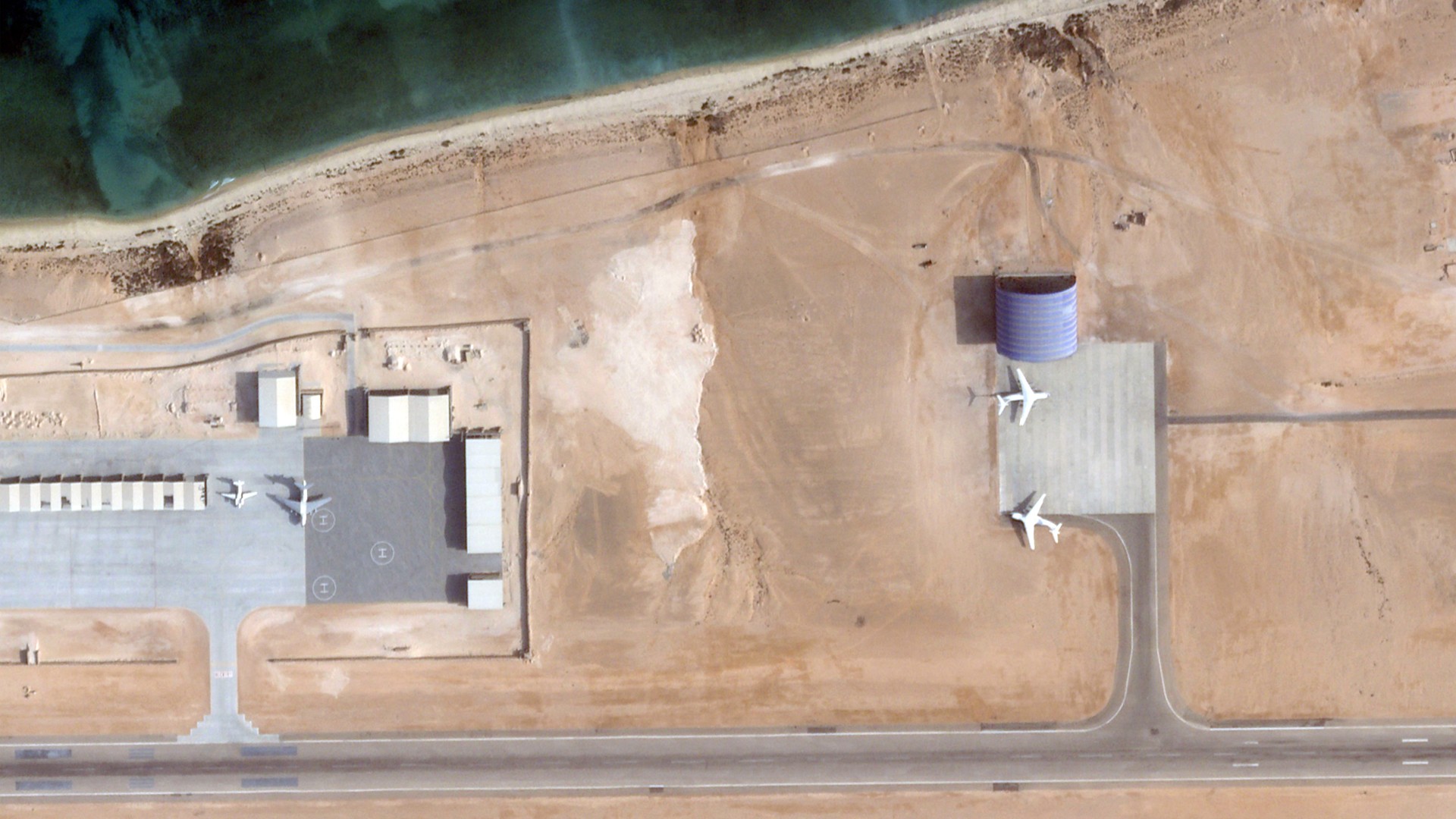
In early August, a landmark yet highly controversial military agreement was signed by Major General Claude Tudor, head of U.S. Special Operations Command Africa, and Saeed Abdullahi Deni, president of Somalia’s semi-autonomous northeastern region of Puntland. The core of the deal is an agreement to expand the existing U.S.-utilized military facility at Bosaso, a strategic port city sitting along the Gulf of Aden. In a short official announcement released by the Puntland government, the expansion is framed as a critical upgrade to enhance counterterrorism operations and bolster regional maritime security. The statement reaffirmed Puntland’s long-standing commitment to countering extremist threats that endanger security, stability and development across the region, Somalia as a whole, and the broader Horn of Africa.
Prior to this new deal, the U.S. had operated out of an air base in Bosaso originally constructed by the United Arab Emirates, which was primarily used by the Puntland Maritime Police Force (PMPF) — a regional counter-piracy force backed by the UAE that received partial training from Xe, the infamous U.S. private military contractor once known as Blackwater. Before the United Nations Security Council voted to lift its long-standing arms embargo on Somalia in late 2023, both the PMPF and the unlicensed Bosaso Air Base operated by the regional administration were in direct violation of UN Security Council Resolution 1425 and the embargo terms.
An October investigation by Middle East Eye into the facility, which sits adjacent to Bosaso International Airport, uncovered a wide range of UAE-owned military infrastructure on site. These assets include a fully operational radar facility, reinforced ammunition depots, a dedicated cargo handling zone built to accommodate IL-76 heavy transport aircraft, a field hospital, a vehicle storage yard holding dozens of tactical pickup trucks, multiple aircraft hangars, and the original dedicated hangar for the PMPF. The investigation also revealed that a large portion of weapons and heavy logistical materials transiting through Bosaso from the UAE are ultimately bound for Sudan’s Rapid Support Forces (RSF), the paramilitary group that has been engaged in a brutal civil war with Sudan’s official armed forces since April 2023, and faces widespread accusations of war crimes and acts of genocide.
Analysts widely view the expansion of U.S. military presence in Bosaso as directly linked to growing tensions around the Bab el-Mandeb Strait, the critical waterway connecting the Red Sea and Gulf of Aden that has become increasingly dangerous amid escalating regional confrontation linked to the wider Iran-Israel conflict. Many experts also interpret the move as reflecting Washington’s goal of launching more direct operations against Yemen’s Ansar Allah movement, more commonly referred to as the Houthis. The Puntland deal came shortly after the Houthis announced a maritime blockade of Saudi Arabia’s Red Sea ports, a retaliatory measure following Saudi airstrikes on Yemen’s Sanaa International Airport.
Currently, the U.S. maintains its largest permanent African military base at Camp Lemonnier in Djibouti, but Djibouti’s government has adopted strict policies to protect its own national security, refusing to grant Washington permission to launch strikes on Yemen from its territory out of fears that such action would put Djiboutian civilians at risk. This restriction has pushed the U.S. to pursue alternative footholds in the region, making the Puntland agreement strategically attractive.
The deal also carries significant legal and political ambiguity, as it directly bypasses the U.S.-backed Federal Government of Somalia in Mogadishu. Puntland has refused to recognize Somalia’s federal system since Somali President Hassan Sheikh Mohamud pushed through controversial 2024 constitutional changes that concentrated greater political power in the Mogadishu-based central government. Tensions boiled over into open conflict between June and July of this year, when at least seven armed clashes broke out between federal government forces and Puntland’s regional administration. Just days before the Puntland deal was announced, U.S. Africa Command (Africom) officials also held high-level meetings with leadership from Jubaland, another semi-autonomous southern Somali state that also rejects Mogadishu’s central authority.
Notably, the U.S. continues to publicly affirm its commitment to Somalia’s territorial integrity and national sovereignty, a stance it has maintained in the face of Israel’s formal recognition of the breakaway Somaliland region and Somaliland’s subsequent opening of a diplomatic mission in Jerusalem. Despite this public posture, the U.S.’s separate negotiations with breakaway Somali states are widely interpreted as exacerbating existing political divisions within the country.
Washington’s military footprint in Somalia has grown steadily since the 2001 launch of the global War on Terror, starting with the deployment of special operations forces, followed by the introduction of conventional troops, attack helicopters, surveillance aircraft, remote operating outposts, and armed drones. For over two decades, Africom has carried out drone and airstrikes against al-Shabaab leadership and Islamic State affiliates in Somalia in coordination with the federal government, while also providing training and equipment to the Danab Brigade, the elite special forces unit of the Somali National Army that has led most of Mogadishu’s major ground offensives against extremist groups.
During his first term in office, former President Donald Trump oversaw 219 airstrikes in Somalia under the banner of counterterrorism. Since his second inauguration, the U.S. has seen an unprecedented escalation of military activity in the country, with 205 strikes carried out to date. The Bosaso base expansion comes alongside a major shift in operational authority, as the Pentagon has delegated greater strike authority to Africom leadership. During a February 2025 visit to Africom headquarters, U.S. Secretary of War Pete Hegseth signed a classified directive eliminating the requirement for White House approval prior to carrying out drone strikes in Somalia.
This July, the U.S. also ended all financial and logistical support for the UN Support Office in Somalia, effectively discontinuing the African Union Support and Stabilisation Mission in the country.
Analysts argue that the decision to pursue a separate base expansion deal with Puntland represents more than just a continuation of the U.S.’s long-running counterterrorism campaign in the Horn of Africa. When considered alongside Washington’s withdrawal from multilateral peacekeeping missions in the country and the loosening of operational constraints on Africom, the expanded Bosaso facility signals that the U.S. is intensifying its strategic foothold in Somalia, and increasingly willing to exploit the country’s existing political fragmentation to advance its own regional security goals, rather than working to unify actors around a shared counterterrorism agenda.